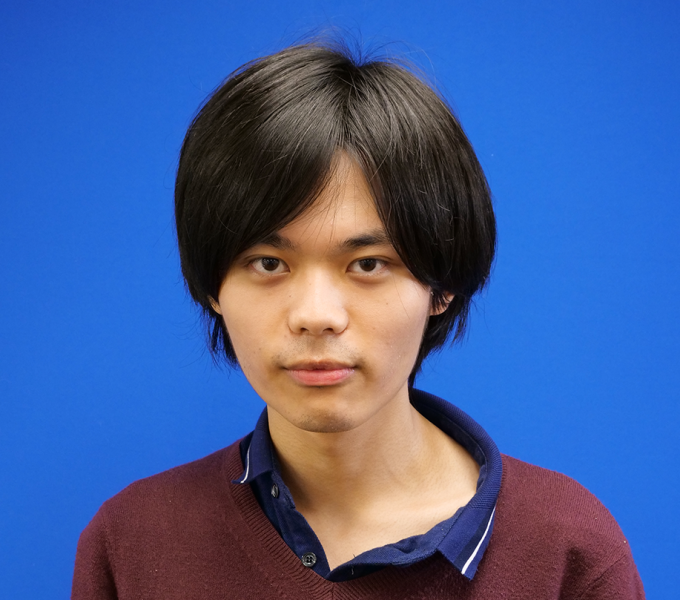
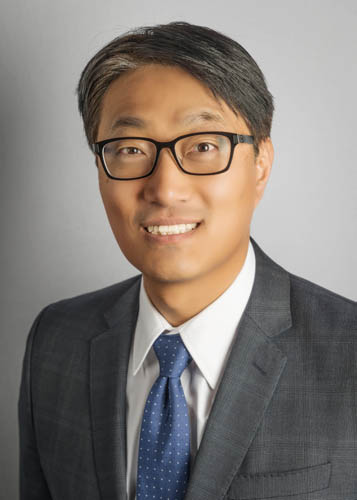
Christian Seubert is an Associate Professor at the Department of Applied Psychology II, University of Innsbruck. He specializes in work psychology, precarious employment, corporate health management, and statistical methods like multilevel and structural equation modeling. Research Interests: Job insecurity, workplace health, work design, cognitive styles, and burnout prevention. Projects: Burnout Assessment Tool (BAT), Humanitarian Work Psychology, and workplace evaluation studies funded by the Federal Chamber of Labor and Tyrolean Science Fund. Teaching: Courses on applied psychology, work across the lifespan, advanced research methods, and organizational psychology. Publications: Over 15 recent articles address precarious employment, burnout, and work design, with keywords spanning occupational health, work psychology, and statistical modeling. Software: Develops R scripts for multilevel SEM and statistical analysis.
Hiroki Iwamoto is an Assistant Professor at Waseda University's School of Creative Science and Engineering, Department of Industrial & Management Systems Engineering since 2023. Previously, he held research and teaching positions at Keio University and Tokyo Keizai University. His academic work bridges Business Administration, Social Systems Engineering, and Statistical Science with applications in Accounting. Education: Ph.D. in Engineering (2021, Keio University) Research Interests: Management Strategy Human Resource Management Creating Shared Value (CSV) Statistical Quality Control Business Analytics Recent Research Trends: Focus on advanced statistical methods like Mahalanobis-Taguchi Systems, DEA-R models, and SMOTE for small-sample anomaly detection. His work connects quality management with corporate social responsibility and human capital analytics. Scientific Awards 22th Asian Network for Quality Best Paper Award (2024) 21th Asian Network for Quality Best Paper Award (2023) 20th Asian Network for Quality Best Paper Award (2022) 2015 Japan Academy of Management Information Student Award Teaching: Delivers courses on Business Data Analysis, Multivariate Analysis, and Science/Engineering Literacy. Professional memberships span Japanese Society of Applied Statistics, Japan Industrial Management Association, and Bayesian SEM research communities.
Joseph E. Gonzales serves as Chair and Associate Professor in the Department of Psychology at the University of Massachusetts Lowell, College of Fine Arts, Humanities and Social Sciences. He holds dual affiliations as an Associate of the Center for Women and Work (CWW) and Faculty Member of the Center for Health Statistics. Education: Ph.D. in Quantitative Psychology, University of California, Davis M.A. in Experimental Psychology, California State University, Stanislaus B.A. in Experimental Psychology, California State University, Stanislaus His methodological research spans latent variable modeling, longitudinal data analysis, and intensive multivariate dynamics, with specific focus on time series analysis of daily diary data, measurement model validity, unobserved subgroup identification, and innovative research design frameworks. He pioneers choose-your-own-adventure paradigms to study complex behavioral phenomena while advancing statistical methodologies for ergodicity and measurement invariance. Publication trends reveal strong integration of computational paradigms with psychological theory, particularly in developing novel methods for sensitive topics like sexual assault behavior and criminal decision-making, alongside foundational contributions to structural equation modeling and affective dynamics modeling. Honors include: University of Massachusetts Lowell Faculty Mentoring Graduate Students Award (2021) University of Massachusetts Lowell Teaching Excellence Award (2020) Summer Internship Program in Research for Graduate Students (2015) ETS-NAEP Testing, Evaluation, Assessment, & Measurement Fellow (2014) Society of Measurement and Experimental Psychology Graduate Student Poster Travel Award (2014) American Psychological Association Student Travel Award (2014) Western Psychological Foundation Student Scholarship Award (2012) Dean’s Medal of Excellence (2010) Graduate Student of the year (2009) As Co-PI on a $2.5M AHRQ R01 grant (2022-2027), he models moral distress impacts on nurses' health and safety culture. He previously led an American Psychology-Law Society grant (2021-2022) analyzing attention dynamics in virtual court hearings. His graduate student mentoring earned university recognition in 2021. Through the Center for Women and Work and Center for Health Statistics, he drives interdisciplinary collaboration on gender, work psychology, and health measurement systems.
Brian F. French is a Regents Professor and Berry Family Distinguished Professor at Washington State University (WSU), affiliated with the College of Education, Sport, and Human Sciences . He serves as Director of the Learning and Performance Research Center and Psychometric Laboratory . His research focuses on educational and psychological measurement, including psychometric methods, validity evidence, and fairness in testing decisions. He holds fellowships with the American Psychological Association and membership in the Washington State Academy of Sciences. Education : Ph.D. in Educational Psychology, Purdue University M.S. in Educational Psychology, Purdue University B.A. in Psychology and Spanish, Seattle University Research Interests : French specializes in psychometric methodologies such as Structural Equation Modeling, Item Response Theory, and Multilevel Modeling. He addresses fairness in testing through studies on measurement invariance and Monte Carlo simulations. His work spans education, psychology, agriculture, and medicine. Recent Articles Trends : His recent work emphasizes validation studies (e.g., risk assessment tools), cross-cultural adaptations (e.g., Spanish scales), and simulation-based evaluations of measurement invariance. He also explores educational interventions and the impact of teacher effectiveness on student outcomes. Awards & Service : Fellow, American Psychological Association Member, Washington State Academy of Sciences Editor, Measurement, Statistics, and Research Design section of the Journal of Experimental Education Chair, GRE Research and Technical Advisory Committee Advising & Grants : French collaborates across disciplines (e.g., education, agriculture, medicine) on grants related to measurement and validation. His lab focuses on developing rigorous psychometric frameworks for diverse assessment contexts. Labs/Teams : He directs the Learning and Performance Research Center and Psychometric Laboratory , which advance methodological innovations in educational and psychological measurement.
Professor Nigel Wilding holds a position in the School of Physics at the University of Bristol. His research focuses on computational and theoretical studies of complex fluids and soft matter systems, employing advanced simulation techniques to investigate phase transitions, colloidal systems, and liquid crystal behavior. He earned his BSc and PhD from the University of Edinburgh. His work bridges statistical mechanics, material science, and applied mathematics, with applications to both fundamental and applied problems in condensed matter physics. Key research themes include molecular dynamics of liquid crystals, critical phenomena in fluids, and the development of novel simulation methodologies (e.g., DL_MONTE library). His contributions address challenges in interfacial physics, active matter systems, and the thermodynamic behavior of polydisperse colloidal suspensions. Professor Wilding's laboratory is based at the HH Wills Physics Laboratory, Bristol. His interdisciplinary approach integrates computational modeling with theoretical analysis, addressing topics like hydrophobic solvation, phase coexistence in multi-component systems, and the role of many-body interactions in material properties. Publications from 2020 onward highlight advancements in simulating hard-sphere mixtures, active Brownian particles, and critical drying phenomena. His work frequently appears in top physics and chemistry journals, emphasizing rigorous computational methods and their validation against experimental observations.
Douglas Flint is a Professor in the Faculty of Business Administration at the University of New Brunswick, specializing in the Human Resources Area. He joined the faculty in 2001 and teaches courses in Organizational Behaviour, Human Resource Management, and Strategic Human Resource Management across BBA and MBA programs. His research expertise spans organizational justice and downsizing. Dr. Flint's research interests focus on fairness in workplace systems and restructuring impacts. He has consulted for major organizations including Bell Canada and Royal Bank, applying research to HR practices. His work examines monitoring systems, procedural fairness, and cross-cultural justice evaluations. His scientific contributions demonstrate consistent focus on justice perception measurement and applications across industries. Recent work explores cultural variations in justice judgments using advanced statistical modeling. Dr. Flint maintains active industry engagement through consulting projects that bridge academic research and organizational practice.
Alfonso J. Martinez is an Assistant Professor of Psychology at Fordham University's Department of Psychology. His research focuses on advanced statistical methodologies in psychometrics, particularly Bayesian approaches, latent variable modeling, and diagnostic classification systems. He contributes to improving measurement techniques in educational and psychological assessments through innovative model development and validation. His work addresses challenges in personality assessment, rapid guessing behavior in testing, and the application of structural equation modeling (SEM) across diverse contexts. He actively publishes in high-impact journals, with a focus on methodological advancements and their practical implications for assessment design. While no specific academic awards are listed, his prolific publication record reflects dedication to advancing statistical methodologies in psychology. His teaching and professional affiliations include involvement with academic organizations central to psychometric research and educational measurement.
Sarah D. Newton is currently the Associate Director of the Research Methods, Measurement, and Evaluation (RMME) Online Programs at the University of Connecticut, holding dual roles as an Instructor in RMME and a Postdoctoral Research Associate in Educational Psychology. She earned her Ph.D. in Educational Psychology (2020), M.A. in RMME (2018), M.S. in Criminal Justice (2011), and B.A. in Criminology (2009), all from Central Connecticut State University and the University of Connecticut. Her research focuses on multilevel modeling methodologies, including model evaluation, information criteria performance, latent variable modeling, reliability and validity theory, and economic evaluation. She has contributed to advancing understanding of software package comparisons for multilevel analysis and has explored applications in education policy and science literacy through projects like the GlobalEd2 initiative. Her publications span academic journals and edited volumes, addressing topics from gifted education to criminogenic thinking profiles. She has received no explicitly mentioned awards but maintains an active role in the RMME program, advising on online curriculum development and quantitative research practices. Her work bridges statistical rigor with practical educational challenges, emphasizing methodological innovation and evidence-based approaches to policy and pedagogy.
Wei Wei is a Part-Time Lecturer at the University of Pittsburgh's Dietrich School of Arts and Sciences. Their research focuses on asthma epidemiology, genetic and epigenetic factors influencing respiratory diseases, and computational methods for analyzing high-dimensional biological data. Key areas of interest include asthma endotypes, gene-environment interactions, and the development of bioinformatics tools for precision medicine. Wei Wei collaborates on projects involving transcriptomic profiling of nasal and skin tissues, spatial transcriptomics for disease characterization, and machine learning approaches for predicting disease outcomes. Their work integrates multi-omics data to understand complex conditions such as asthma, cystic fibrosis, and systemic sclerosis. Notable contributions include studies on the impact of sociocultural stressors on asthma prevalence in Hispanic populations and the role of CD8+ T-cells in severe asthma pathogenesis. Publications span topics like environmental exposure effects, drug response biomarkers, and methodological advancements in epigenetic analysis. Wei Wei's research is supported by interdisciplinary collaborations within the university and external health initiatives.
Dr. Brooke Jenkins is an Assistant Professor at Chapman University's Crean College of Health and Behavioral Sciences. She holds a Ph.D. from the University of California, Irvine, and her academic journey includes degrees from California State University, Fullerton (BA, MA) and Chapman University (MS). Dr. Jenkins serves as a Principal Investigator at the UCI Center on Stress & Health, focusing on the interplay between emotion, stress, and health. Her research examines how positive emotions confer health benefits through physiological mechanisms (e.g., autonomic nervous system activity, antibody response) and health behaviors (e.g., sleep, medication adherence). She develops interventions to regulate emotions and investigates health outcomes like pain, asthma symptoms, and surgical recovery in diverse populations including children with cancer, asthma, or chronic illness. 2024-2025 : Investigated neighborhood socioeconomic effects on asthma exacerbations and affect variability's role in mental/physical health. 2023 : Validated affect scales and studied opioid prescription disparities in pediatric settings. 2022-2021 : Analyzed pain assessment tools, provider-patient interactions, and pandemic resilience factors. Dr. Jenkins employs advanced methods like multilevel modeling, structural equation modeling, and nonlinear analytics. She has received funding from the Kay Family Foundation for her work and collaborates with institutions including the Children's Hospital of Orange County and UC Irvine . Her teaching includes Child Development (PSY 323) and Advanced Research Design (PSY 304) .
Dr. Monika Donker serves as Assistant Professor in the Department of Youth and Family within Utrecht University's Faculty of Social and Behavioural Sciences. Her academic base is the Martinus J. Langeveld Building (Heidelberglaan 1, Room E2.28) in Utrecht, Netherlands. As an active researcher, she contributes to the Dynamics of Youth (DoY) initiative and leads investigations within the InTransition project focusing on parent-adolescent interactions and adolescent autonomy development. Her research expertise spans emotion dynamics, interpersonal relationships, and psychophysiological measurement techniques. Specializing in longitudinal and dynamical systems approaches, she examines teacher-student relationships, parent-child interactions, and adolescent development through multimodal methodologies including heart rate monitoring and behavioral coding. Her work integrates personality theory with developmental frameworks to understand stress responses in educational and family contexts. Analysis of her recent publications reveals strong thematic continuity in educational and developmental psychology, with increasing emphasis on pandemic-related family dynamics and physiological assessment methods. Her scholarly output demonstrates methodological sophistication through integration of self-report, observational, and physiological data streams, particularly in classroom and family settings. Professional activities include presentations at major international conferences (EARLI, SAA, ISPA), service on the PhD council of the Faculty of Social Sciences, and membership in the Educational Committee of the Interuniversity Centre of Educational Sciences (ICO). She completed a visiting research period at the University of Konstanz (Germany) under Prof. Thomas Goetz in 2018. Her technical proficiency encompasses advanced statistical software (MLwiN, Mplus, HLM, AMOS, SPSS, R) for multilevel and structural equation modeling. Current media engagements include expert commentary on teacher emotional experiences and research dissemination regarding parent-adolescent relationships during the COVID-19 pandemic.
Theresa Munyombwe is a Lecturer in Biostatistics at the School of Medicine, University of Leeds. Since joining in 2008, she has combined teaching with research focused on applied health statistics, particularly observational data and patient-reported outcome measures (PROMs). Education: PhD in Biostatistics MSc in Biometry BSc in Biological Science (Hons) PGCert in Statistics Her methodological expertise spans latent variable modelling, structural equation modelling, multilevel modelling, and longitudinal data analysis. She has provided statistical support to the Dentistry School (2008-2014) and School of Healthcare (2015-2018), covering study design, data management, and software demonstrations (SPSS, STATA, R). Current research explores electronic health data applications. She supervises master's and PhD students while leading undergraduate/postgraduate modules.
Kwanghee Jung is an Associate Professor in the Department of Educational Psychology, Leadership, & Counseling at Texas Tech University's College of Education. He holds a Ph.D. from McGill University and serves as a Research Associate at TTU. His expertise centers on advanced statistical methodologies, including structural equation modeling, multilevel analysis, and latent growth curve modeling, applied across human development, mental health, and brain imaging research. Jung has pioneered applications of generalized structured component analysis (GSCA) and constrained principal component analysis (CPCA) in diverse fields. His research integrates quantitative rigor with technological innovation, such as developing BlocklyXR for extended reality storytelling and investigating biometric authentication via smartphone sensors. He actively addresses educational challenges through projects like competency-based curriculum implementation studies in Kenya and flipped learning approaches for entrepreneurship education. Jung’s work emphasizes methodological precision, having authored studies on bootstrap confidence interval methods for GSCA and cross-validation indices. His contributions span academic publications, software tools (e.g., WEB GESCA), and practical applications in VR/AR development for education and healthcare training (e.g., VRescuer for disaster response).
Dr. Patricio Troncoso is a Lecturer in Youth Studies at the University of Edinburgh’s Moray House School of Education and Sport. He holds a PhD in Social Statistics, an MSc in Public Policy, and a Bachelor’s in Sociology. His research focuses on children’s educational and social outcomes, including inequalities in attainment, school behavior, mental health, and social care experiences. He has held academic positions at institutions like the University of Glasgow, Heriot-Watt University, and the University of Manchester, contributing to projects such as the ESRC-funded Scottish Centre for Administrative Data Research (SCADR). Patricio’s work emphasizes quantitative methodologies, including multilevel modeling, longitudinal analysis, and structural equation modeling. His research often addresses socio-economic disparities affecting children and families, leveraging administrative data and randomized controlled trials. Key areas include the impact of poverty on mental health, school exclusions, and the effectiveness of educational interventions like the Good Behavior Game. He is affiliated with the Advanced Quantitative Research in Education (AQRiE) and Children and Young People thematic hubs. Patricio is open to supervising PhD students in topics such as educational inequalities, quantitative methods, and child welfare. His research has been published in journals like Journal of Adolescent Health and Social Science & Medicine , with a focus on policy-relevant insights.
Asko Tolvanen is a Professor at the University of Jyväskylä's Faculty of Education and Psychology, specializing in advanced quantitative methodologies like structural equation modeling, multilevel modeling, and mixture modeling. His research focuses on educational and developmental psychology, with particular attention to student-athlete well-being, academic skill progression, and mental health dynamics. He leads multiple research groups including InterLearn (psychological aspects of learning), STAIRWAY (educational transitions), and Winning in the Long Run (sports psychology). Key projects include DETECT (disinformation detection education), AGE-X (aging and physical activity), and SportEX (elite sports gender equality). Publications emphasize longitudinal studies on burnout, motivation, and intervention efficacy in educational and sports contexts. Active in cross-cultural comparisons (e.g., teacher education emotional intelligence studies) and health-related research (e.g., asthma's psychosocial impact). His work bridges statistical rigor with practical applications in education, sports, and public health, supported by collaborative teams and national/international funding.