Caroline Samer is an Associate Professor at the University of Geneva (UNIGE) Faculty of Medicine and serves as the Head of the Division of Clinical Pharmacology and Toxicology at the Hôpitaux Universitaires de Genève (HUG) . She also acts as the Delegate to the Dean's Office for Data Issues since July 2023. Medical Degree (2001), PhD in Pharmacogenomics, Postdoctoral Fellowship in Molecular Pharmacology (Sydney) President of the Swiss Society for Clinical Pharmacology and Toxicology (SSPTC) and Swiss Society of Pharmacology and Toxicology (SSPT) Vice-President of Swissethics and the Geneva Research Ethics Committee (CCER) Her research focuses on personalizing drug therapy through pharmacogenomics and precision medicine , emphasizing gene-environment-disease interactions and omic technologies . Key themes include drug interactions , pharmacokinetic modeling , and therapeutic information . Recent publications highlight her work in pharmacogenomics , drug safety , and clinical pharmacology , with a focus on opioids , antiaggregants , and drug metabolism . Her collaborations span oncopediatrics , internal medicine , medical informatics , and pharmaceutical sciences . She leads the Samer-Daali Research Group , which integrates in vitro , in vivo , and in silico models to advance personalized therapy . Her work is supported by institutional affiliations with the Faculty Center of Translational Investigation in Biomarkers and CIOMS .
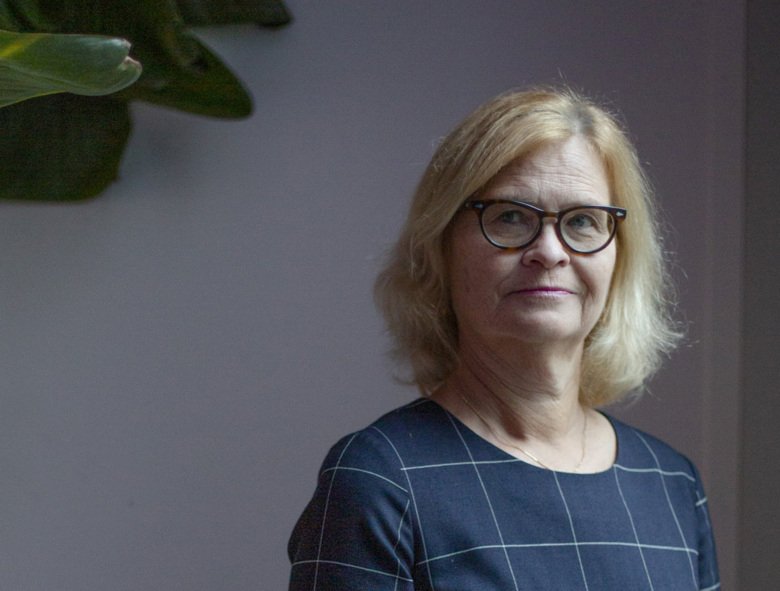
Associate Professor Jenni Ilomaki holds a position at Monash University's Centre for Medicine Use and Safety. With expertise in clinical pharmacy, epidemiology, and public health, she leads a research group analyzing administrative claims data. Her work spans collaborations with governmental and non-governmental organizations globally, yielding over 150 peer-reviewed publications and $4 million in grants. She previously served as Chair of ASCEPT's Pharmacoepidemiology Special Interest Group and currently serves as Science Lead for the Monash Addiction Research Centre and Executive Editor of the British Journal of Clinical Pharmacology. Education includes a Bachelor of Science (Pharmacy) from the University of Kuopio (1999) and Master of Science (Pharmacy) from the University of Kuopio (2004). She completed a PhD in alcohol epidemiology at the University of Eastern Finland (2011) and a postdoc at the University of South Australia (2011-2014). Notable recognitions include Young Epidemiologist of the Year (2011) and the Ronald D. Mann Best Paper Award (2021). Key research focuses on quality use of medicines, medicine safety, large population studies, and innovative epidemiological methods. Major projects include developing clinical decision support tools for cardiovascular prevention, analyzing preventable hospitalizations in aged care, and investigating psychotropic medication trends in youth. Her work contributes to UN Sustainable Development Goals related to health equity and non-communicable disease reduction. Recent publications emphasize drug repurposing (e.g., SGLT2 inhibitors), opioid prescribing patterns, hip fracture outcomes, and dementia detection algorithms. She chairs multinational studies on stroke and myocardial infarction cost burdens, demonstrating interdisciplinary impact across pharmacology, epidemiology, and health economics.
Dr. Philip A. Rea is a Professor of Biology and Rebecka and Arie Belldegrun Distinguished Director of the Life Sciences & Management Program at the University of Pennsylvania's School of Arts and Sciences. With over 100 publications and two co-authored books, his work spans fundamental biochemical research and science communication, focusing on life sciences implementation challenges. Education: D.Sc. (2020) and D.Phil. in Plant Biochemistry (University of Oxford), B.Sc. First Class Honors in Biological Sciences (University of Sussex) Dr. Rea's research explores transport phenomena and cellular detoxification, including vacuolar proton pumps and ABC transporters in plants, yeast, and nematodes. His work has significant applications in phytoremediation and combating parasitic diseases. His recent publications and book Managing Discovery in the Life Sciences (2018) analyze the transition from laboratory discovery to market success through case studies like statins, ivermectin, and metformin. These works highlight serendipity in biomedical innovation and investor-driven discovery management. Scientific Awards: Jesse H. Neal Award (2025) for technical/scientific content AAAS Fellow (2013) for membrane transport research National Academies Cozzarelli Prize (2010) for original research Multiple teaching honors including Lindback Foundation Award (2014) and Ira H. Abrams Award (2009) Society for Experimental Biology President's Medal (1990) Teaching: Proseminar in Management and the Life Sciences (LSMP 1210) Biochemistry (BIOL 2810) Focus on problem-solving with incomplete datasets
Professor Maria Eriksdotter is a leading academic in geriatrics and dementia research at the Karolinska Institutet , holding the Department of Neurobiology, Care Sciences and Society . She also serves as a Senior Consultant in Themes Inflammation and Ageing at Karolinska University Hospital Huddinge and previously as Dean of KI South (2019–2023). Her work spans translational research, clinical trials, and national registry development, with a focus on Alzheimer's disease, cholinergic therapies, and aging. Her research group pioneered NGF cell therapy for Alzheimer's patients, demonstrating safety and cognitive stabilization in clinical trials. She chairs the SveDem registry , tracking over 100,000 dementia patients to refine diagnostics and care. Studies from SveDem revealed mortality reduction with cholinesterase inhibitors and highlighted pandemic-era diagnostic delays. Recent publications analyze dementia subtypes , comorbidities , and precision medicine in neurodegeneration. Her work intersects neuroimaging , epidemiology , and public health policy , addressing ageism and improving geriatric care systems. Collaborations span Karolinska University Hospital , NSGene Inc , and international institutions.
Andrew Ewald, Ph.D., serves as the Virginia deAcetis Professor and Director of the Department of Cell Biology at Johns Hopkins University School of Medicine. His research focuses on understanding collective cell behaviors in tissue development and disease progression, with emphasis on breast cancer metastasis mechanisms. Dr. Ewald earned his B.S. in Physics from Haverford College and Ph.D. in Biochemistry and Molecular Biophysics from Caltech, followed by postdoctoral training at UCSF. The Ewald Lab develops innovative 3D culture systems to model tumor initiation, invasion, and metastasis, integrating cutting-edge microscopy, genetics, and bioinformatics. Research themes include: Cellular dynamics of breast cancer metastasis Molecular toolkits driving invasion programs Tumor microenvironment interactions (immune cells, fibroblasts) KRAS-dependent invasion heterogeneity Biomechanical regulation of dissemination Publication analysis reveals consistent focus on metastasis mechanisms using advanced organoid models, computational approaches, and in vivo systems. Recent work emphasizes spatial dynamics of cell migration, microenvironmental regulation of invasion, and therapeutic targeting of metastatic processes. Dr. Ewald founded the Cancer Invasion and Metastasis Program (CIM), coordinating >40 faculty across Johns Hopkins to translate basic research into clinical trials. Collaborations include patient advocacy groups (METAvivor, BCRF) and federal networks (NCI CTD2, PSOC). He currently advises seven graduate students investigating metastasis biology and epithelial dynamics.
Raymond J. Hohl, MD, PhD is the Director of the Penn State Cancer Institute and Professor in the Department of Molecular and Precision Medicine at Penn State College of Medicine. Holding the Rice Family Foundation Professorship, he is also affiliated with the One Health Microbiome Center and Penn State Neuroscience Institute. With over three decades of experience, Dr. Hohl is an internationally recognized expert in isoprenoid metabolism and clinical pharmacology, serving as a medical oncologist, hematologist, and clinical pharmacologist with extensive experience in clinical and translational research. Education: Medical School: Rush Medical College (Illinois) - 1984 Fellowship: Hematology/Oncology, University of Chicago Hospitals - 1991 Residency: Internal Medicine, University of Chicago Hospitals - 1987 Dr. Hohl's research centers on the isoprenoid pathway and its applications to human health and disease, particularly in cancer. His work has established him as an international expert in isoprenoid metabolism, with significant contributions to understanding geranylgeranyl pyrophosphate, bisphosphonates, and lovastatin in cancer treatment. His research spans brain tumors, prostate cancers, and hematological malignancies, emphasizing translational applications from bench to bedside. He has published over 167 research outputs and maintains an h-index of 44 with nearly 7,400 citations. Dr. Hohl's recent publications demonstrate a strong focus on hematopoietic stem cell transplantation, multiple myeloma treatment, and GVHD prophylaxis. His work bridges clinical oncology with pharmacological interventions, examining how drug combinations can improve outcomes in transplant patients and those with hematological malignancies. There's a clear trajectory toward optimizing treatment protocols through clinical trials and translational research, with significant contributions to understanding the role of the isoprenoid pathway in cancer pathogenesis and treatment. Scientific Awards: Carver Clinician, Scientist Award (1991) Clinical Pharmacology Faculty Development Award, Pharma Foundation (1992) Laureate Award, American College of Physicians (2001) Outstanding Research Award in Clinical Pharmacology, Central Society for Clinical Research (1995) Outstanding Research Award, GCRC Program Directors' Association (1996) Paul E. Carson, Pharmacology Award (1988) Young Investigator Award, American Society of Clinical Oncology (1992) Dr. Hohl has supervised numerous students through the MD/PhD Program and Physician Scientist Training Program. He has secured significant research funding as Principal Investigator on multiple National Cancer Institute grants including 'Targeting the chondrosarcoma extracellular matrix for drug delivery' and the 'Career Development Program.' He serves as Co-PI on the Cancer Center Support Grant continuously funded since 2000. His research team focuses on isoprenoid metabolism and its applications in cancer treatment, particularly examining how compounds like bisphosphonates and statins can be leveraged therapeutically. At Penn State, he leads the Next-Generation Therapies program at the Cancer Institute and directs clinical and translational research initiatives.
Liesbeth Ruijgrok serves as a Researcher within the Pharmacy department at Erasmus University Medical Center (Erasmus MC) in Rotterdam, Netherlands. Her academic work bridges pharmaceutical science with clinical applications, focusing on optimizing drug therapies for complex medical conditions through rigorous translational research. Her primary research spans Pharmacology, Toxicology, and Pharmaceutical Sciences with specialized expertise in Adrenal Insufficiency management, Preeclampsia pathophysiology, Drug-Drug Interactions, and advanced Drug Delivery Systems. She pioneers innovative approaches including pharmaceutical 3D printing for personalized hydrocortisone formulations, functional respiratory imaging for aerosol deposition analysis in pediatric asthma, and mechanistic studies of statins in hypertensive pregnancy disorders. Her work consistently addresses critical therapeutic challenges in pharmacokinetics and pharmacodynamics. Analysis of her 2024 publications reveals a strong trend toward solving real-world pharmacotherapy problems through technological innovation and mechanistic understanding. Key themes include cost-effective manufacturing of personalized medicines, precision drug delivery for respiratory diseases, and repurposing existing drugs for novel indications like preeclampsia. Her collaborative studies frequently integrate clinical data with pharmaceutical technology to enhance therapeutic outcomes. No scientific awards were documented in the available profile information. No details regarding student mentorship, research grant funding, or laboratory infrastructure were provided in the source materials. Her research appears to be conducted through multidisciplinary collaborations within Erasmus MC's clinical departments rather than a dedicated independent laboratory.
Margaret Hostetter is an Adjunct Professor at Yale University's School of Medicine, serving as Physician-in-Chief at Yale-New Haven Children's Hospital and Chair of the Department of Pediatrics since 2002. She leads the Yale Child Health Research Center and specializes in pediatric infectious diseases, particularly Candida albicans and Streptococcus pneumoniae. Her research focuses on fungal pathogenesis, biofilm formation, and mechanisms of host invasion. Hostetter holds five patents and has received prestigious awards including membership in the National Academy of Sciences' Institute of Medicine. Education: Fellowship: Boston Children's Hospital, Harvard (1980) Residency/Internship: Boston Children's Hospital, Harvard (1978) Research Interests: Hostetter’s work explores Candida albicans pathogenesis, including adhesion, biofilm inhibition (e.g., via statins), and interactions with the gastrointestinal tract. Her lab investigates mitochondrial proteome roles in fungal morphogenesis and E-cadherin cleavage mechanisms disrupting intestinal barriers. Grants & Activities: Program Director, NIH-funded Pediatric Scientist Development Program NIH Peer Review Member (2008–2011) Former Chair, Division of Pediatric Infectious Diseases, University of Minnesota Awards: E. Mead Johnson Award for Pediatric Research Institute of Medicine Membership (2001) NIH Blue Ribbon Panel Appointment (2003) Labs/Teams: Directs the Yale Child Health Research Center, focusing on translational pediatric research and mentoring physician-scientists.
James Flory is an Associate Professor of Population Health Sciences at Weill Cornell Medical College , Cornell University. With an MD and MSCE from the University of Pennsylvania (2009) and a BA from Columbia University (2002), he specializes in pharmacoepidemiology and clinical research related to diabetes management, drug safety, and healthcare policy. Education: M.D., University of Pennsylvania School of Medicine, 2009 M.S.C.E., University of Pennsylvania School of Medicine, 2009 B.A., Columbia University, 2002 His research focuses on the intersection of diabetes pharmacology , cardiovascular risk , and health services research . He has contributed extensively to understanding drug safety (e.g., sulfonylureas, SGLT2 inhibitors, TRK inhibitors), medication adherence , and clinical decision-making in diabetes and oncology settings. His methodological work includes instrumental variable analysis , pragmatic trial design , and real-world data validation . James Flory's recent publications examine temperature-related diabetes complications , AI in clinical decision support , and policy impacts on medication utilization . His work combines epidemiological methods with health informatics to address critical questions in diabetic care , drug safety surveillance , and health equity .
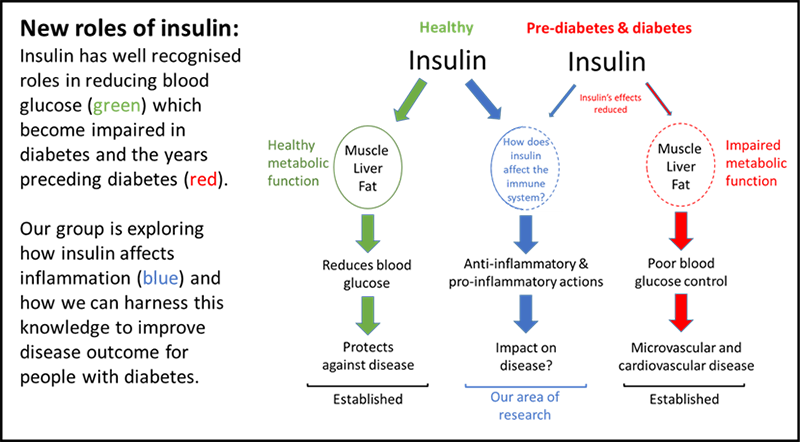
Matthew C. Gage is a Senior Lecturer and Research Group Leader at the Royal Veterinary College, University of London, within the Department of Comparative Biomedical Sciences. His research program investigates insulin's dual roles in glucose regulation and immune modulation, with implications for diabetes and cardiovascular disease. Funded by the British Heart Foundation, Diabetes UK, and Society for Endocrinology, Gage's work bridges molecular mechanisms and therapeutic applications. Education includes: PhD in Biochemistry, University of Leeds (2006) BSc (Hons) Biological Sciences with Molecular Genetics, University of Warwick (2002) Research explores insulin's immunomodulatory functions in macrophages, nuclear receptor signaling (particularly LXRα phosphorylation), and metabolic inflammation. His group employs preclinical models to identify novel therapeutic targets for cardiometabolic disorders, emphasizing macrophage polarization, endothelial dysfunction, and tissue-specific insulin resistance. Publications primarily focus on immunometabolism, nuclear receptor biology, and vascular pathophysiology. Recent trends highlight macrophage-centric mechanisms in diabetes complications, fatty liver disease, and therapeutic interventions like SGLT2 inhibitors and statins. Awards and honors: BHF Researcher Engagement Award Finalist (2018) UCL Cardiovascular Symposium 1st Prize (2016) 3x Diabetes UK Young Investigator Finalist (2009, 2011, 2014) Gage leads the Cardiovascular and Renal Biology research group, supervises PhD candidates, and serves as Year 3 Leader for Biosciences. He coordinates public engagement through school outreach, patient talks, and institutional fundraising initiatives.
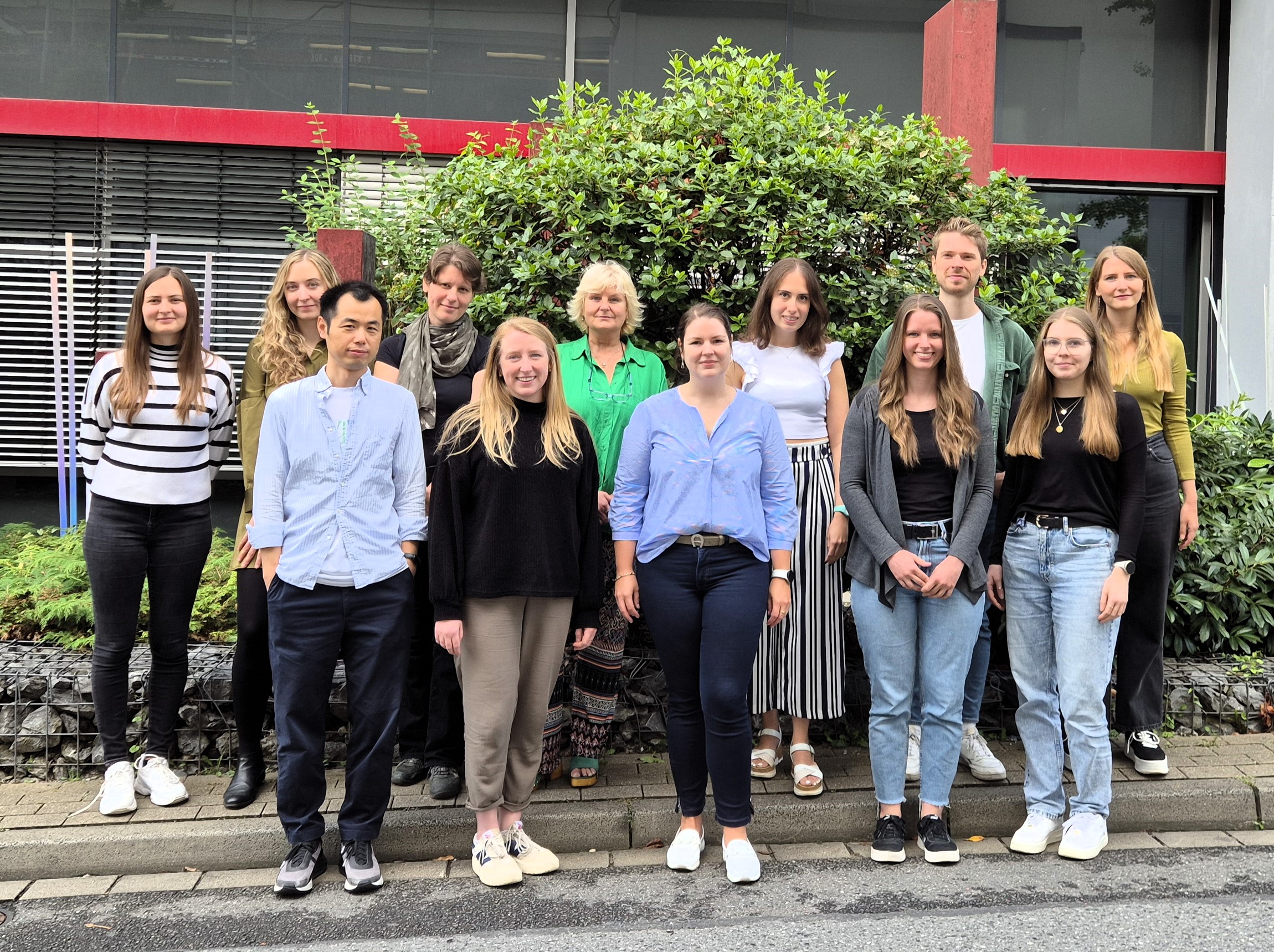
Barbara M. Grüner is a Professor at the West German Cancer Center within University Hospital Essen, leading the Research Group on Cell Plasticity and Metastasis. Her work focuses on uncovering molecular mechanisms of cancer metastasis and therapeutic resistance using advanced in vivo models and DNA-barcoding technology. Institution: University Hospital Essen Lab Location: WTZ-F R1.001, Hufelandstr. 55, 45147 Essen Contact: barbara.gruener@uk-essen.de Research Interests center on: Molecular basis of cancer cell metastasis Therapeutic intervention strategies Cell plasticity during tumor progression Mechanisms of drug resistance Mitochondrial dynamics in metastatic cells Chromatin accessibility in metastatic gene expression Selected Publications highlight work on proteomic drug analysis (2023), statins in cancer plasticity (2021), mitochondrial vulnerabilities (2020), and chromatin regulators of metastasis (2016). Her lab actively recruits PhD, MD, and Postdoc researchers. Team Members include postdoctoral fellows (Dorsch, Urban, Baginska), PhD students (Conroy, Jung, Martinez Cruz, Munteanu), technicians (Hahn, Meyer), and alumni contributors (Biller, Dujardin).
Dr. Lihi Atzmony Maoz is an Assistant Professor at Yale School of Medicine's Department of Dermatology. She specializes in treating advanced skin cancer and genetic skin diseases, providing comprehensive care for a wide range of dermatological conditions. Education: BSc in Medical Science, Tel Aviv University (2006) MD, Tel-Aviv University (2012) Internship, Tel Aviv Sourasky Medical Center Residency, Rabin Medical Center (2017) Post Doctoral Fellowship, Yale University (2019) Dr. Atzmony Maoz's research primarily focuses on the pathogenesis and treatment of genetic skin diseases, particularly Darier Disease and Porokeratosis, as well as exploring new treatment modalities for non-melanoma skin cancer. Her work bridges clinical dermatology with cutting-edge genetic research, investigating somatic mutations and molecular pathways underlying rare skin disorders. She has published extensively on topics including Darier disease, bullous pemphigoid, vascular malformations, and novel therapeutic approaches for genetic skin conditions. Analysis of Dr. Atzmony Maoz's recent publications reveals a strong emphasis on genetic dermatology, with particular focus on somatic mutations in conditions like Darier disease. Her research combines clinical observations with molecular analysis, often identifying specific genetic variants that underlie persistent skin lesions. She has also contributed to pharmacological research, investigating novel treatments like TRPV3 inhibitors for keratoderma and statins for skin cancer. Dr. Atzmony Maoz actively collaborates with prominent researchers at Yale including Dr. Keith Choate, Dr. Dhanpat Jain, and Dr. Jonathan Leventhal, demonstrating strong institutional connections within the dermatology and genetics research communities. Clinically, she treats patients at multiple Yale Medicine Dermatology locations in Connecticut, specializing in advanced skin cancer and genetic skin diseases while advancing knowledge through her research activities.
Britton Trabert, PhD, is an Associate Professor at the University of Utah School of Medicine, with dual appointments in Obstetrics & Gynecology and Population Health Sciences. As a Huntsman Cancer Institute Investigator and former Earl Stadtman Tenure-Track Investigator at NCI, she leads research at the intersection of reproductive epidemiology and gynecologic cancers. Education: BS in Biology (Iowa State University), MSPH in Epidemiology (Emory University), MS in Biostatistics (University of Michigan), PhD in Epidemiology (University of Washington) Research Interests: Her work focuses on ovarian cancer prevention , endometrial cancer etiology , and hormonal influences on cancer progression , integrating pharmacoepidemiology , molecular epidemiology , and reproductive health frameworks. Current projects examine aspirin use, microbiome interactions, and environmental risk factors like light exposure. Publications: Recent articles address etiologic heterogeneity , inflammatory dietary patterns , and hormonal biomarkers in gynecologic cancers. She co-developed risk prediction models for ovarian and endometrial cancers. Honors: Notable awards include the Sallie Rosen Kaplan Postdoctoral Fellowship , T32 Reproductive Health Training Grant, and Earl Stadtman Tenure-Track Appointment .
Kala Visvanathan, MD, MHS, FRACP is a Professor at Johns Hopkins University with dual appointments in the Bloomberg School of Public Health and the School of Medicine. She serves as Director of the Cancer Epidemiology Track in the Department of Epidemiology and Director of the Clinical Cancer Genetics and Prevention Service at the Johns Hopkins Sidney Kimmel Cancer Center. Dr. Visvanathan is also a senior member of the Women's Malignancy Program and Cancer Prevention and Control Program at the Sidney Kimmel Cancer Center. MHS, Johns Hopkins Bloomberg School of Public Health (1998) FRACP, Royal Australasian College of Physicians (1996) MD, University of Sydney (1989) Dr. Visvanathan is a physician-scientist conducting translational research focused on breast and gynecologic cancer risk and prevention to improve health outcomes and address disparities. Her research interests include improving risk stratification through novel biomarkers, evaluating inflammatory markers and genetic alterations, identifying early biological changes associated with disease progression, and evaluating prevention strategies in both general and at-risk populations. She has recently focused on developing strategies to reduce disparities in breast and ovarian cancer prevention and treatment. Analysis of Dr. Visvanathan's recent publications reveals a strong focus on cancer epidemiology across multiple organ sites, with particular emphasis on breast cancer. Her research integrates population-based studies, clinical trials, and molecular approaches to address critical questions in cancer prevention and risk assessment. A notable trend is her increasing emphasis on health disparities, with numerous studies examining social determinants of health and outcomes in minority populations. AACR-Glaxo Welcome Oncology Scholar Award for Clinical/Translational Research (1999) First Prize in Clinical section Johns Hopkins Fellow Research Day (2001) ASCO Career Development Award (2005) JHSPH Teaching Excellence Award (2012, 2014, 2018, 2019) Inducted into Delta Omega Honorary Society for Public Health (2017) Baltimore Orioles Birdland Community Hero Award (2017) AACR Journal Award (2019) Dr. Visvanathan is an active member of multiple national research groups including the NCI Cohort Consortium, ECOG Breast Committee, and NRG co-operative trials Prev/Epi/Beh Committee. She has thrice co-chaired national guidelines on breast cancer prevention and currently serves on the NCCN Genetic/Familial guideline committee. Her grant portfolio includes major projects such as the Finnish Database study on breast and ovarian cancer outcomes, the CLUE 1&II Population Based Cohort, and research assessing economic burden among specific populations. Dr. Visvanathan leads multiple research initiatives including the BOSS HIGH RISK FAMILIAL COHORT and projects assessing breast and ovarian cancer outcomes using large administrative databases. Her work integrates epidemiological approaches with clinical applications through the Clinical Cancer Genetics and Prevention Service at the Sidney Kimmel Cancer Center, where she develops and implements prevention strategies for high-risk individuals.
Anne Tybjærg-Hansen serves as a Clinical Professor in the Department of Clinical Medicine at the University of Copenhagen's Faculty of Health and Medical Sciences. Her research is conducted within the Clinical Biochemistry division, with physical locations at Blegdamsvej 9 (2100 Copenhagen Ø) and Blegdamsvej 3 (2200 Copenhagen N). She maintains an active research profile with 403 documented publications, primarily focused on cardiovascular genetics and epidemiology. Her research interests center on Cardiovascular Genetics , Genetic Epidemiology , and Mendelian Randomization methodologies. Tybjærg-Hansen investigates the genetic underpinnings of atherosclerosis, valvular heart disease, dementia risk, and familial hypercholesterolemia using large population cohorts including the Copenhagen General Population Study and Copenhagen City Heart Study. Her work bridges genetic discoveries with clinical applications, particularly in risk prediction and primary prevention strategies. Analysis of her recent publications reveals a strong emphasis on translating genetic findings into clinical practice, with particular focus on cardiovascular risk prediction models, gene-disease causal relationships, and therapeutic implications of genetic variants. Her collaborative network spans multiple international consortia, with frequent co-authorship with prominent researchers including B.G. Nordestgaard and R. Frikke-Schmidt. Her research group actively contributes to major clinical guidelines and has established significant expertise in Mendelian randomization approaches to establish causality in disease mechanisms. Current projects include developing absolute risk charts for aortic valve disease prevention and investigating the relationship between lipid metabolism and various disease outcomes.