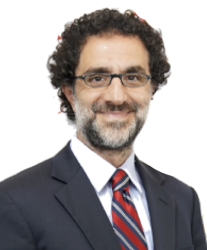
Jonas Bylander is a Professor at Chalmers University of Technology in the Department of Microtechnology and Nanoscience, specifically within the Quantum Technology division. He leads a research group focused on developing quantum computers using superconducting circuits.
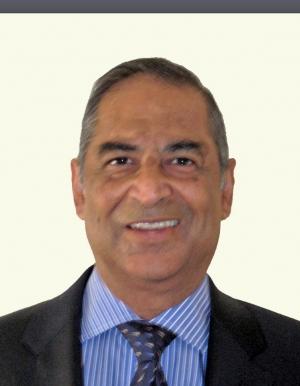
Lakshmi N Sankar serves as Regents Professor and Sikorsky Professor in the Guggenheim School of Aerospace Engineering at Georgia Institute of Technology, where he directs the Computational Fluid Dynamics Laboratory and teaches aerodynamics, helicopter theory, and wind energy courses. His research program spans unsteady viscous flow modeling for aircraft, helicopters, and wind turbines since joining the faculty in 1982 after industry experience at Lockheed Martin. Education: Ph.D., Aerospace Engineering, Georgia Institute of Technology, 1977 MSAE, Aerospace Engineering, Georgia Institute of Technology, 1975 B. Tech., Aeronautical Engineering, Indian Institute of Technology, Madras, India, 1973 Research Focus: Professor Sankar's work centers on Computational Fluid Dynamics for rotorcraft aerodynamics and wind energy systems , with significant contributions to icing phenomena and unsteady flow modeling . His recent publications reveal intensifying focus on adverse weather effects (rain/icing), eVTOL conversion challenges, and high-fidelity hybrid modeling techniques for rotorcraft performance prediction. Publication Trends: Analysis of his 2022-2025 publications shows dominant themes in rotorcraft icing (35%), weather impact studies (25%), and advanced CFD methodologies (20%), with growing interest in drone applications and mathematical aspects of fluid dynamics. His work consistently bridges theoretical mathematics with practical aerospace engineering challenges. Scientific Recognition: AIAA Fellow and AHS Technical Fellow NASA Group Achievement Award (2007) and Space Act Software Release Award (2003) Multiple Sigma Gamma Tau Teaching Awards (2005-2015) Dean George C. Griffin Faculty of the Year (2014-2015) Sikorsky Professorship (2018-Present) Mentorship and Collaboration: As recipient of Georgia Tech's Graduate Research Assistant Development Award, he has cultivated extensive student mentorship. His research integrates with the Vertical Lift Research Center of Excellence and Center for 21st Century Universities, securing major industry and NASA funding for rotorcraft innovation. Current projects include physics-based modeling of ice accretion and eVTOL retrofit feasibility studies. Research Infrastructure: The Computational Fluid Dynamics Laboratory serves as his primary research hub, complemented by collaborations through the Vertical Lift Research Center of Excellence where his team develops next-generation modeling tools for military and civilian rotorcraft applications under federal funding programs.
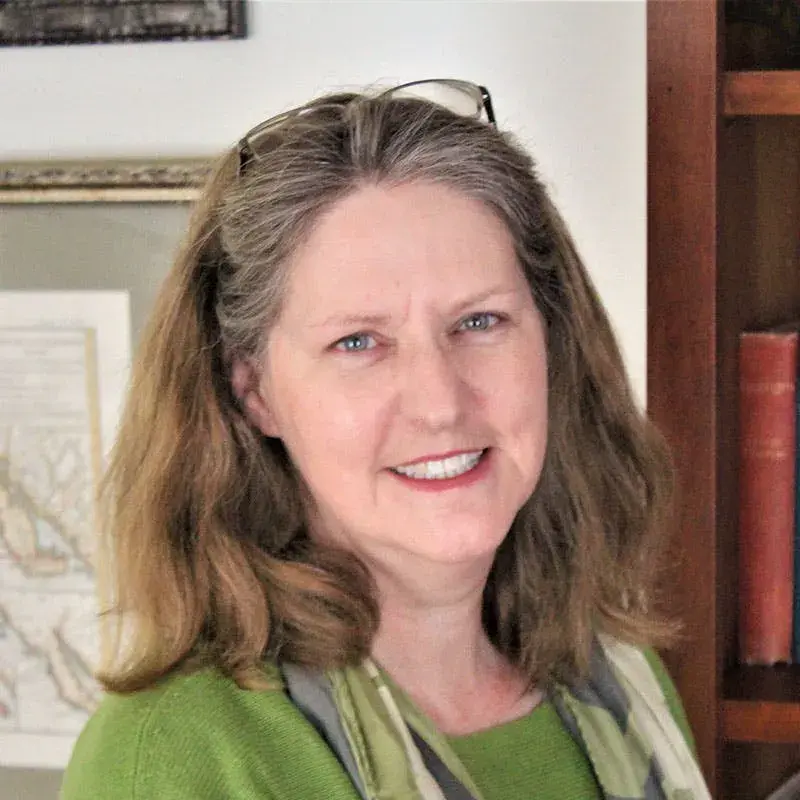
Alison Louise Bailey is a Professor and Division Head in Human Development & Psychology at UCLA's Graduate School of Education and Information Studies. She specializes in developmental psycholinguistics, focusing on multilingual education, academic language pedagogy, and assessment practices for English learners. Education: Ed.D. and Ed.M. from Harvard University; B.A. (Hons) in Linguistics with a minor in American Literature from The University of Hull, England Her research explores language learning progressions, equity in educational assessment, and the intersection of language with STEM disciplines. She leads two U.S. Department of Education-funded ExcEL Peer Network projects and collaborates on NSF and W.T. Grant Foundation grants. Recent publications emphasize translanguaging, automated language assessment, and bias mitigation in educational technologies. Her work integrates Bayesian modeling for dual-language immersion outcomes and examines racial injustices in assessment systems. Awards: Bobbie and Mark Greenfield Distinguished Faculty Award, Haynes Foundation Faculty Fellow, Harold and Lois Haytin Award, Ann C. Rosenfield Distinguished Community Partnership Prize She contributes to national assessment policy as a NAEP Reading Standing Committee member and NCME Classroom Assessment Task Force Co-Chair, advocating for culturally responsive assessment frameworks.
Professor Yongcheol Shin is a faculty member in the Department of Economics at the University of York. His academic background includes a BA (Hanyang University), MA (Hanyang University), and PhD (Michigan State University). He specializes in applied and theoretical econometrics, focusing on financial and macroeconomic modeling. Education: BA (Hanyang University), MA (Hanyang University), PhD (Michigan State University) His research spans econometric theory and applications in finance and macroeconomics. Key areas include nonlinear panel data modeling, cointegrating VAR models, regime-switching models, and statistical hypothesis testing for time series. Recent work addresses interactive effects in panel data and multilevel factor models. Recent publications (2023) focus on panel data analysis, canonical correlation, and unit root testing. These studies reflect his expertise in econometric methodology and its application to financial economics, macroeconomics, and trade dynamics. Scientific awards include: 2018 Maekyung-KAEA Economist Award He leads the ESRC-funded project 'New Cross-Sectionally Dependent Panel Data Methods for the Analysis of Macroeconomic and Financial Networks' (2020-2024), collaborating with researchers like J. Chen and W. Wang.
Paul Erhart is a Professor in Condensed Matter and Materials Theory at the Department of Physics, Chalmers University. He received his PhD from Technische Universität Darmstadt in 2006, followed by postdoctoral and staff positions at Lawrence Livermore National Laboratory from 2007, before joining Chalmers in 2011. His research bridges computational physics, materials science, and machine learning to tackle fundamental problems in materials design and characterization. Dr. Erhart's research focuses on computational materials science with particular emphasis on condensed matter physics, nanomaterials, and quantum materials. His work spans from developing computational methods like machine-learned potentials (GPUMD, neuroevolution potentials) to studying fundamental phenomena in perovskites, 2D materials, thermal transport, and plasmonics. He has pioneered approaches connecting simulation with experimental techniques through correlation functions and has made significant contributions to understanding phase transitions, defect physics, and electronic structure in complex materials systems. Analysis of his recent publications reveals a strong trend toward integrating machine learning with traditional computational physics methods. His work increasingly focuses on developing and applying neuroevolution potentials to study thermal properties, phase transitions, and optical phenomena in materials. There's also a clear emphasis on connecting computational results with experimental observations, particularly in neutron scattering, Raman spectroscopy, and plasmonic sensing applications. His research spans fundamental materials physics to applied areas like hydrogen sensing and sustainable materials development. Dr. Erhart has contributed to numerous software packages essential to the computational materials science community, including WulffPack for Wulff constructions, Dynasor for extracting dynamical structure factors, calorine for neuroevolution potential models, and ICET for alloy cluster expansions. His collaborative work spans multiple institutions and disciplines, reflecting the interdisciplinary nature of modern materials research. His contributions to understanding perovskite materials, thermal transport phenomena, and plasmonic systems have established him as a leading researcher in computational materials science.
Michael Feig serves as Professor in the Department of Biochemistry & Molecular Biology at Michigan State University, leading the Feig Lab within the BioMolecular Science Gateway initiative. His research bridges computational modeling and molecular biology to investigate protein behavior in cellular contexts, with particular emphasis on molecular dynamics simulations and machine learning applications. His academic background includes: Ph.D. (1999) from the University of Houston M.S. (1994) from Technical University of Berlin Feig's research program focuses on computational biophysics of protein systems, specializing in molecular dynamics simulations of crowded cellular environments, bacterial microcompartments, and intrinsically disordered proteins. His lab develops advanced modeling techniques including coarse-grained approaches (COCOMO2) and machine learning frameworks to predict protein properties and conformational landscapes. Current work explores temperature-dependent structural ensembles, enzyme cargo loading mechanisms in engineered microcompartments, and biomolecular condensate physics under shear flow. Analysis of his 15 most recent publications (2024-2025) reveals three dominant research thrusts: (1) integration of deep learning with molecular dynamics for protein structure prediction, (2) engineering of bacterial microcompartments for synthetic biology applications, and (3) fundamental studies of macromolecular crowding effects on diffusion and phase separation. His work consistently emphasizes methodological innovation with biological relevance, notably through enhancements to the CHARMM simulation platform. His scientific recognition includes: Alfred P. Sloan Fellowship (2005) As principal investigator of the Feig Lab, he directs research teams in computational biophysics projects supported by active funding mechanisms. While specific grant details aren't provided, his continuous publication pipeline and lab infrastructure indicate sustained research support. His mentorship spans graduate students in the Cell & Molecular Biology Program, with recent work involving multi-institutional collaborations on bacterial microcompartment engineering and protein phase separation. The Feig Lab operates at the intersection of high-performance computing and molecular biology, maintaining strong connections with experimental groups for method validation. Current initiatives include developing generative models for temperature-dependent protein conformations and investigating cytoplasmic protein capture mechanisms in microcompartments, with potential applications in metabolic engineering and nanobiotechnology.
Abhijit Sarkar is a Professor in the Department of Civil and Environmental Engineering at Carleton University, Ottawa. His work centers on computational dynamics and probabilistic modeling, with office MC 3076 in the Minto Centre for Advanced Studies in Engineering and contact details including phone (613) 520-2600 x6320 and email abhijit_sarkar@carleton.ca . Education: D.Phil. from University of Oxford M.Sc. from Indian Institute of Science (IISc) B.E. from Calcutta University Professional Engineer (P.Eng.) designation His research drives innovation in uncertainty quantification for complex engineering systems. Core interests include dynamics of nonlinear structures, probabilistic mechanics for stochastic finite element methods, and Bayesian inference frameworks for parameter estimation. He pioneers scalable high-performance computing solvers for large-scale systems and sparse learning algorithms to address overfitting in statistical modeling. Recent publications (2022-2024) reveal three dominant trends: (1) Bayesian model calibration for stochastic compartmental systems applied to epidemiology and aerospace, (2) domain decomposition techniques for scalable uncertainty quantification in stochastic PDEs, and (3) sparse learning methods for nonlinear aerodynamic encoding. Key applications span wind turbine vibration analysis, flutter margin prediction, MEMS resonator optimization, and geospatial pandemic modeling. Scientific awards: No awards, fellowships, or medals listed in the source material Graduate supervision includes 6 current students (Ajay Kumar, John Clarabut, Nastaran Dabiran, Sakhi Mittal, Michael Pantano, Brandon Robinson) and 18 graduated students across 17 years (2006-2023). His research leverages high-performance computing for projects in structural dynamics, aeroelasticity, and computational epidemiology, frequently co-supervised with Dominique Poirel and Chris Pettit. Notable grants focus on wind tunnel validation for nonlinear systems and pandemic spread modeling. Based in the Minto Centre for Advanced Studies in Engineering, his computational mechanics group develops algorithms for stochastic dynamics using Carleton University's high-performance computing infrastructure. Collaborations span aerospace engineering (flutter analysis), civil infrastructure (seismic wave propagation), and public health (Covid-19 modeling).
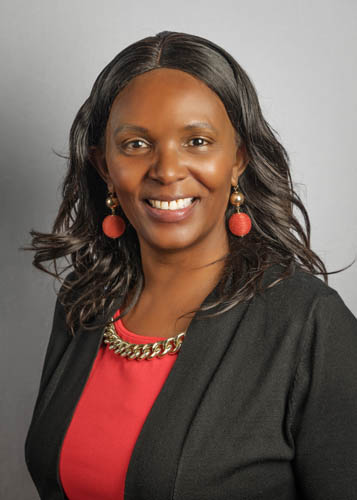
Faith Maina is a Professor in the Department of Curriculum & Instruction at Texas Tech University (since 2015). Previously, she served as a Professor at the State University of New York, Oswego (2000–2015), where she also directed the McNair Post-Baccalaureate Program. She holds a Ph.D. from the University of British Columbia (Canada), an M.A. from Trent University (Canada), and a B.Ed. from Kenyatta University (Kenya). Her research focuses on cultural and linguistic diversity in classrooms, culturally responsive teaching, and preparing diverse learners for STEM careers. Key areas of expertise include social justice in education, multicultural curriculum integration, and teacher empowerment through action research. Maina has authored and edited works such as Nurturing Reflexive Practice in Higher Education (2014) and contributed to studies on Kenyan educational contexts, gender dynamics, and community-based research. She has received prestigious awards, including the Carnegie African Diaspora Fellowship (2018) and Fulbright Scholar (2011).
Kenan Hazirbaba is a Teaching Professor in the Department of Civil Engineering at the University of Texas at Tyler. With extensive teaching experience, he specializes in geotechnical engineering and offers courses in statics, mechanics of materials, soil mechanics, foundation design, and seismic site response. Ph.D. in Civil, Architectural, and Environmental Engineering from The University of Texas at Austin (2005) M.S. in Civil Engineering from Bogazici University (1999) B.S. in Civil Engineering (with distinction) from Istanbul Technical University (1996) Hazirbaba's research focuses on applied and experimental geotechnical engineering, particularly the behavior of saturated soils under cyclic loading and non-traditional soil stabilization techniques. His work addresses critical challenges in cold regions, including freeze-thaw effects on soil mechanics and seismic response in permafrost areas. His publications highlight expertise in geofiber-reinforced sands, synthetic fluid stabilization, and seismic design of earth-retaining structures. Research has secured over $2 million in funding from state and non-governmental agencies, emphasizing practical solutions for civil engineers. Hazirbaba is a Registered Professional Engineer in Alaska and promotes undergraduate research engagement. His certifications and applied research bridge academic theory with real-world engineering applications.
Emmanuelle Tourme-Jouannet is a Professor at Sciences Po Law School, where she leads research in critical international law theory and ecological justice. Affiliated with the Law School's Research Center, she directs the international research program "Justice and International law in a global world" and serves as co-editor-in-chief of the Journal of History of International Law. Her academic foundation includes: Master in International Law, Université Paris II (Panthéon-Assas) Master in Philosophy of Law, Université Paris II (Panthéon-Assas) Master in Political Philosophy, Université Paris IV (Sorbonne) PhD in Law, Université Paris II (1993) Professor Tourme-Jouannet's work fundamentally interrogates international law through decolonial lenses , examining colonial legacies, recognition theory, and ecological transformation. Her scholarship bridges legal history , philosophy , and human rights , with increasing focus on environmental justice since 2021. She pioneers frameworks for ecological international law while maintaining critical analysis of capitalism's relationship with global legal structures. Analysis of her 15 most recent publications reveals three dominant trajectories: (1) Decolonization through recognition theory (2019-2023), (2) Ecological reimagining of international law (2021-2024), and (3) Historical critiques of colonial international law (2011-2021). These strands converge in her argument for a reconstructed international society based on justice rather than power. Her scientific recognition includes: Université Paris II’s doctoral award Chancellerie des Universités de Paris’ Maurice Picard Prize Académie des sciences morales et politiques’ Dupin-Ainé Prize Professor Tourme-Jouannet has directed major academic programs including the Master in International Law at Paris I and the French-American double degree with Columbia/Cornell. She supervises doctoral candidates through Sciences Po's PhD program and leads the IREDIES-CERDIN research initiative. Her editorial leadership spans the European Journal of International Law and Harvard's Global Law and Policy Institute. Current research focuses on implementing ecological rights frameworks through the "Un droit sans conditions pour le vivant" project, positioning her at the forefront of international law's response to the planetary crisis.
Imad L. Al-Qadi is the Grainger Distinguished Chair in Engineering and Director of the Illinois Center for Transportation (ICT) at the University of Illinois at Urbana-Champaign (UIUC). He holds a Ph.D. in Civil Engineering from Penn State and has held faculty positions at Virginia Tech and Penn State. His research focuses on sustainable transportation infrastructure, pavement mechanics, and advanced materials. Al-Qadi leads initiatives like the Illinois Autonomous and Connected Track (I-ACT), a high-speed test facility for autonomous vehicles and energy harvesting systems. Key roles include: Director of ICT, advancing multimodal transportation infrastructure Pioneer of the Smart Road and full-scale pavement testing Founder of the Academy of Pavement Science and Engineering Research interests span: Highway/airfield sustainability Tire-pavement interaction Energy harvesting Electric vehicles' infrastructure impact Leadership roles include past presidency of ASCE's Transportation and Development Institute and editorship of the International Journal of Pavement Engineering. He has authored over 1,000 publications, including 390 refereed papers, and secured over 180 research grants from federal agencies and industry. Awards include NSF Young Investigator Award (1994), TRB Crum Award (2023), and 2024 Executive Leadership Fellow. His work is internationally recognized, with honorary professorships at institutions in China, Sweden, and the UK.
Alan M. Taylor is a prominent Research Fellow at National Bureau of Economic Research (NBER) and Centre for Economic Policy Research (CEPR) . He holds a permanent affiliation with Columbia University in the United States, where he contributes to economics research. His research spans financial history , macroeconomic policy , international trade , and capital market dynamics . Key themes include credit cycles , monetary policy , economic crises , and historical financial systems . He has extensively analyzed the trilemma of exchange rates, monetary policy, and capital mobility, and pioneered work on long-term rate of return data across capital assets. His recent publications focus on financial stability , credit booms , and macroeconomic consequences of pandemics . Collaborative works with economists like Òscar Jordà, Moritz Schularick, and Kevin H. O'Rourke demonstrate interdisciplinary engagement. His empirical methodology emphasizes local projections , historical econometrics , and long-run equilibrium modeling in international finance.
Dr. Kerstin Steiner is an Associate Professor at the Law School, La Trobe University. She holds adjunct roles at the University of Melbourne's Asian Law Centre and Centre for Indonesian Law, Islam and Society. Her leadership roles include Director of Research (2021), Acting Head of Law School (2019), and mentorship in promotions programs. Education: PhD, Melbourne University LLM, Melbourne University LLB, University of Bielefeld, Germany Graduate Certificate in Higher Education, Monash University Research Interests: Dr. Steiner specializes in comparative legal studies focusing on Southeast Asia, particularly intersections of law with politics, economics, and society, with a strong emphasis on Islam's role in judicial systems. She has conducted groundbreaking work on legal pluralism, religious governance, and anti-corruption frameworks in Malaysia and the Philippines. Key Research Trends: Her recent work (2023-2025) highlights evolving legal challenges in Southeast Asia, including digital hate speech mitigation, Islamic financial systems, and constitutional reforms in pluralistic societies. Earlier research (2017-2020) centered on corruption dynamics (e.g., 1MDB scandal), Shariah court systems, and gender equity in legal frameworks. Awards: VC Cultural Quality Award (2024), Distinguished Scholar Award (PHISO, 2018), Multiple Research Excellence Awards (2017) Grants: $100k+ for international study tours; ARC Discovery Project (2016-2020) on Islam, Law, and the Philippine State Labs/Teams: La Trobe Asia Steering Committee, International Legal Studies Research Group (ILSRG), Working Group on Islamophobia
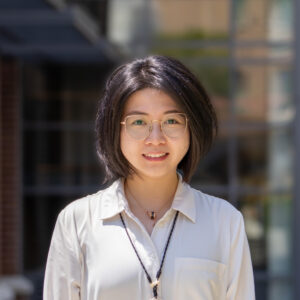
Dr. Hengrui Cai is an Assistant Professor of Statistics at the University of California Irvine (UCI), affiliated with the Donald Bren School of Information and Computer Sciences. She holds a Ph.D. in Statistics from North Carolina State University (NCSU) and a B.S. in Statistics from Zhejiang University. Her research focuses on causal inference, reinforcement learning, and graphical models, with applications in precision medicine, healthcare analytics, and epidemiology. She develops interpretable solutions for individualized decision-making, particularly in healthcare settings such as ICU patient treatment optimization and pandemic analysis. Notable achievements include the NSF CDS&E-MSS Award (2024), ICS Research Awards (2023–2024), and recognition for contributions to causal discovery and policy evaluation. Dr. Cai advises graduate and undergraduate students on projects involving causal AI, machine learning, and healthcare data analysis. She teaches courses like 'Causal Machine Learning' and 'Introduction to Probability and Statistics,' emphasizing interdisciplinary approaches to real-world problems. Her work integrates statistical theory with practical applications, exemplified by software tools like ANOCE-CVAE for causal mediation analysis and the Sepsis EHR Benchmark Environment for reinforcement learning. Dr. Cai collaborates widely, contributing to projects such as quantifying the impact of the 2020 Hubei lockdowns on virus spread in China through causal graph analysis.
David Aers is the James B. Duke Distinguished Professor of English at Duke University, with affiliations in the Department of English, Religious Studies, and Divinity School. He holds academic appointments since 1994, including directorship of the Medieval and Renaissance Studies Center since 2019. His expertise spans medieval and early modern literature, theology, and political culture, with a focus on Christian tradition and its intersections with ethics, gender, and community. Education: PhD from the University of York (1971) and BA from the University of Cambridge (1968). Research interests include late medieval English writing (e.g., Chaucer, Langland), theological doctrines like election and sin, and the evolution of Christian thought across the medieval/early modern divide. His recent works explore themes like enemy love in theology, gender identity, and the legacy of Constantinian Christianity. Recognition includes the Duke Distinguished Professorship. Teaching spans courses on Milton, medieval literature, and historical theology. He has served as editor for journals like Journal of Medieval and Early Modern Studies and contributed to academic service through editorial roles and professional committees. Labs/Teams: Leads the Medieval and Renaissance Studies Center, fostering interdisciplinary research in premodern cultures.