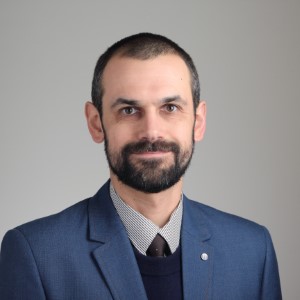
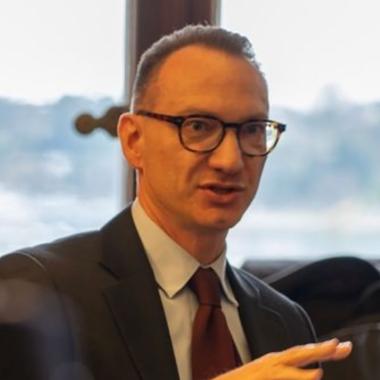
Edmunds Brock is an Associate Professor at the Faculty of Law , University of Latvia, serving as Vice-Dean for Studies and Head of the Study Field 'Law' . He directs the professional bachelor's and master's study program 'Pre-Trial Investigation' and teaches courses including Public International Law, EU Institutional Law, and International Criminal Law. University: University of Latvia Academic Rank: Associate Professor Roles: Vice-Dean for Studies, Head of Study Field 'Law', Director of Pre-Trial Investigation Program His research interests focus on State liability law, the application of international and EU law in national courts, international environmental law, and EU asylum law. His work examines judicial enforcement of EU norms, Arctic maritime disputes, and historical legal claims related to Latvia's continuity as a state. Scientific awards or honors are not explicitly mentioned in the provided texts. He has published extensively in academic volumes and journals, with recent works addressing EU legal integration, Arctic sovereignty, and state responsibility doctrines.
Klavdia Ballard Evans serves as Associate Professor of Strategy within the Department of Management and Marketing at St. Mary's University, where her academic work bridges theoretical rigor with practical applications in corporate governance and social strategy. Her educational foundation includes: Ph.D. in Strategic Management, University of Houston, Bauer College of Business (2016) M.B.A., Louisiana State University, E.J. Ourso College of Business (2009) B.S., Nicholls State University (2004) B.B.A. in Accounting and Audit, Mari-El State Polytechnic University, Russia (1997) Dr. Evans' research interrogates corporate governance structures , stakeholder dynamics , and the strategic valuation of socially generated assets/liabilities . Her methodology combines institutional theory with empirical analysis of board compositions, revealing how community influentials and interlocks shape corporate social performance. This work positions social capital as a critical driver of competitive advantage within complex organizational ecosystems. Her publication trajectory demonstrates sustained focus on governance-performance linkages, with the 2016 Organizational Dynamics article establishing stakeholder management as a strategic resource and the 2014 Academy of Management Proceedings paper dissecting community influentials' role in board decision-making. These contributions collectively advance understanding of how social capital transforms into tangible business value. Her scholarly recognition includes: University of Houston Teaching Excellence Award (2015) University of Houston research grant for board composition analysis Jesse Jones Dissertation Completion Grant As an award-winning educator, Dr. Evans delivers undergraduate and graduate instruction in strategic leadership and policy development, enriched by her industry experience at The Central Bank of the Russian Federation, Whitney Bank, and Brinker International Inc. Her pedagogical approach integrates real-world governance challenges with theoretical frameworks, supported by externally funded research examining functional board expertise and corporate social performance.
Gabriel H. Teninbaum is a Professor of Legal Writing and the Assistant Dean for Innovation, Strategic Initiatives, and Distance Education at Suffolk University Law School. He leads the #1 ranked legal technology program in the U.S. per National Jurist Magazine and has taught over 10 courses globally, including at MIT. He founded the educational technology startup SpacedRepetition.com, recognized among the Top 20 Legal IT Innovations globally. Education: BA from Georgetown University, MM from Cambridge College, JD from Suffolk University. Teninbaum's research focuses on legal technology, conflict of laws, medical apology programs, and legal pedagogy. His work explores the intersection of technology and law, including spaced repetition methodologies for legal education. He has also written on insurance law, premises liability, and constitutional law. Recent publications emphasize legal technology innovations like spaced repetition, conflict of laws in Massachusetts, medical apology programs, and international human rights. His scholarship spans tort law, insurance law, and legal criticism. Scientific Awards: SpacedRepetition.com named a Top 20 Legal IT Innovation globally by ALM/Legal Week Intelligence. Teninbaum has served on the Mass. Access to Justice Commission's Web/Tech Working Group and as a Faculty Associate at Harvard's Berkman-Klein Center. He previously worked as a trial attorney and U.S. Secret Service technician.
Joseph Franco is a Professor of Law at Suffolk University Law School , where he has served since 2003. Previously, he was an Associate Professor of Law at the same institution from 1996 to 2003. His professional background includes roles at the United States Securities and Exchange Commission (1988-1996) as Assistant General Counsel, Special Counsel, and Staff Attorney, as well as legal practice at Fried, Frank, Harris, Shriver & Jacobson (1985-1990). Education : BA, University of Notre Dame MA and JD, Yale University Research Interests : Franco specializes in Securities Regulation , Corporate Finance , and Investment Company Regulation . His work explores the intersection of Contract Law and Corporate Transactions , with a focus on regulatory frameworks, fiduciary duties, and market governance. He analyzes the economic rationale for securities disclosure, antifraud prohibitions, and the commoditization of governance structures in investment vehicles. Publications Trends : His scholarly output spans Corporate Law , Securities Regulation , and Investment Compliance , emphasizing regulatory design, ethical legal practice, and investor protection mechanisms. Professional Affiliations : Admitted to practice in New York , the U.S. Supreme Court , and multiple federal appellate and district courts, Franco brings extensive legal expertise to his academic role.
Dr. Clara Iglesias Keller is a Research Fellow at the Politics of Digitalization group at the Weizenbaum Institute for the Networked Society (Berlin) and a Visiting Professor at IDP (Brazil). Her work bridges law, political science, and digital ethics, focusing on democratic resilience in the face of disinformation, platform governance, and digital constitutionalism. LLM in Information Technology and Media Law, London School of Economics (2011) Doctor in Public Law (equivalent to summa cum laude), Rio de Janeiro State University (2020) Her research explores digital threats to democracy , including algorithmic governance, AI regulation, and judicial responses to disinformation. She emphasizes cross-national comparisons of digital policies and institutional frameworks for social media accountability. Recent publications analyze AI regulation in Brazil , co-regulation models , and surveillance risks in public health . Her work often intersects with constitutional law and administrative law , addressing how states can protect free speech while combating digital harms. Doctor in Public Law (summa cum laude equivalent), Rio de Janeiro State University (2020) Senior Fellow at Leibniz Institute for Media Research | Hans-Bredow Institute (2019-2020) She leads the Technology, Power and Domination research group at Weizenbaum Institute and co-founded the Platform Governance Research Network . Her teaching and advisory roles include positions at Brazilian universities and expert contributions to national AI regulatory frameworks.
Professor Rajabrata Banerjee is a Professor of Applied Economics at UniSA Business, University of South Australia, where he serves as a Research Degree Supervisor. His office is located at City West Campus (WL3-62) and he can be contacted at Rajabrata.Banerjee@unisa.edu.au. Professor Banerjee's research interests span Applied Economics, Financial Inclusion, Mental Health Economics, Development Economics, Behavioral Finance, and Socioeconomic Inequalities. His work demonstrates a strong focus on the intersection between economic behavior, financial systems, and psychological wellbeing, particularly during crisis periods like the COVID-19 pandemic. He has developed expertise in measuring financial inclusion through innovative hybrid indices and examining the relationship between financial behavior and mental health. His publication record shows consistent scholarly output with significant contributions in 2025, 2024, and 2023. His research demonstrates a clear trend toward interdisciplinary work connecting economics with psychology, public health, and development studies. Recent publications focus on financial behavior's impact on mental health, socioeconomic inequalities, and the mental health consequences of job loss during pandemics, indicating his responsiveness to contemporary global challenges. As a Research Degree Supervisor, Professor Banerjee guides graduate students through their academic journey, though specific details about his supervisees are not provided in the available information. His work with organizations like the World Bank Group and the South Australian Department for State Development suggests engagement with practical policy applications of his research. Professor Banerjee's research methodology frequently employs advanced econometric techniques including panel threshold regression, principal component analysis, and instrumental variable approaches. His work spans multiple geographic contexts including Australia, ASEAN countries, East Asia, and developing economies globally, demonstrating both regional expertise and international perspective.
Kars de Graaf serves as a Professor within the Faculty of Law , specializing in Public Trust and Public Law with emphases on Energy and Sustainability. His academic work bridges Dutch administrative frameworks and environmental governance, contributing significantly to national legal discourse through 391 research outputs and active participation in policy implementation. De Graaf's research fingerprint reveals dominant expertise in Environmental Legislation (100%), Courts (96%), and Administrative Law (92%), with strong focus on Netherlands-specific legal contexts. His work addresses critical intersections of public authority, sustainability transitions, and legal procedure—particularly regarding the Environmental Act (Omgevingswet) and nitrogen policy crises. Recent scholarship analyzes accelerating legal protection in spatial domains, environmental permitting mechanisms, and the evolution from energy-saving regulations to comprehensive sustainability frameworks. Analysis of his 15 most recent publications shows consistent engagement with Dutch environmental jurisprudence, revealing trends toward practical implementation challenges of the Environmental Act, innovative regulatory instruments like BOPA, and evolving litigation strategies around nitrogen policy. His work demonstrates increasing focus on balancing agricultural interests with environmental constraints through administrative law mechanisms. As an active public intellectual, de Graaf regularly contributes expert commentary to Dutch media on environmental litigation developments, including farmer-court conflicts and NGO legal strategies. His professional activities include keynote addresses, conference organization (notably the European Environmental Law Forum), and advisory roles in governmental implementation of the Environmental Act—demonstrating significant influence on both academic and practical dimensions of Dutch administrative law.
Maximilian Huemer is a Doctoral Researcher at the Faculty of Law, University of Helsinki, focusing on transport law, passenger rights, and sustainable mobility regulation. His work intersects with EU law and multimodal transport frameworks. Research Interests: Transport Law and Regulatory Compliance EU Passenger Rights Legislation Sustainable Mobility Policy and Decarbonization Multimodal Transport Frameworks Legal Compatibility in Cross-Border Transport Activities: Active in academic presentations, including oral presentations at Nordic Maritime Gathering 2023, InterTran Research Seminar, and other EU transport law events. Collaborates with scholars like Eftestöl, Bask, and Wyatt. Contact: Email: maximilian.huemer@helsinki.fi | ORCID: 0009-0007-6472-7814
Professor Julie-Anne Tarr is a distinguished academic at Queensland University of Technology (QUT), holding the position of Professor in the Faculty of Business and Law, School of Accountancy. With a diverse background spanning academia and industry across multiple countries including the United States, Australia, and the Pacific region, Professor Tarr brings extensive practical experience to her academic work. Her educational background includes: JD (Juris Doctor) from Cornell University PhD from the University of Queensland LLM from Monash University Bachelor of Arts from the University of Wisconsin, Madison Professor Tarr's research interests focus on regulation and incentivization of disclosure in legal contexts, particularly in insurance, emerging technology, and commercial law. Her work spans several key areas: Insurance law, risk, and regulation, with particular focus on emerging technologies Consumer protection in complex contracts and financial services Governance, ethics, and corporate oversight in nonprofit organizations and social enterprises Biotechnology and medical research governance Legal philosophy, comparative law, and history Her research output demonstrates a clear trajectory toward increasingly complex technological intersections with traditional legal frameworks. Professor Tarr has pioneered work in drone regulation and insurance, blockchain applications in insurance, and the legal implications of autonomous vehicles. Her recent publications show a strong emphasis on how emerging technologies challenge existing regulatory frameworks and insurance models, requiring innovative legal solutions. Professor Tarr has received numerous prestigious awards for her scholarly contributions: BILA 2024 Prize recipient for 'most notable contribution to literature in the field of law as it affects insurance' Kulp-Wright Book Award Finalist (2023) for 'Drone Law and Policy' British Insurance Law Association 2022 Prize Finalist Multiple QUT Vice Chancellor Performance Awards (2017, 2014, 2010) QUT David Gardiner Outstanding Teacher of the Year nominee (2014) As an educator and supervisor, Professor Tarr has guided numerous PhD and Master's students through their research journeys. Her supervisions span topics including tax treatment of cross-border donations, home loan information disclosure, director financial literacy, drone liability frameworks, and corporate culture's relationship to fraud. She has also held significant leadership roles, including Chair of the Australian Business Deans Council (2019) and Editor for Insurance & Transport at the Australian Business Law Journal (2015-present). Professor Tarr's research is supported by her affiliations with multiple research centers at QUT: Centre for Future Enterprise (Chief Investigator) Australian Centre for Philanthropy and Nonprofit Studies (Senior Fellow) Australian Centre for Health Law Research (Chief Investigator) Behavioural Economics Studies Center (Affiliate)
Maria Esmeralda Bucalo serves as Associate Professor of Jurisprudence (GIUR-05/A) at the Department of Law, Università degli Studi di Palermo. Her office is located at Via Maqueda, 172 - 2nd floor - room no. 59, with regular Friday office hours from 9:00 to 11:00 by reservation. She actively coordinates academic activities including study visits to London for Master's Degree in Law students. Professor Bucalo's research focuses on constitutional law, digital rights, and bioethics. Her recent scholarship examines constitutional reform of Articles 9 and 41, AI/deepfakes regulation, freedom of expression in digital spaces, euthanasia jurisprudence (particularly the Mortier v. Belgium case), and soft law governance. Her work demonstrates strong engagement with European Court of Human Rights jurisprudence and comparative analysis of Italian and international legal frameworks. Analysis of her 15 most recent publications reveals three dominant research threads: (1) Constitutional evolution in digital contexts (60% of works), particularly addressing AI regulation and platform governance; (2) End-of-life legislation and bioethics (25%), with emphasis on European human rights standards; (3) Historical analysis of constitutional gender equality provisions (15%). Her scholarship consistently bridges doctrinal analysis with contemporary social challenges, showing particular expertise in reconciling traditional constitutional principles with emerging technological realities. Professor Bucalo actively supervises student activities including study abroad programs and coordinates remedial classes in Constitutional Law and Fundamental Freedoms for the Corporate Legal Consultant Degree Program. Her teaching schedule reflects regular engagement with both undergraduate and graduate law students at UniPa.
Maria Miceli is a Full Professor (academic rank: Professor) at the University of Palermo within the School of Legal, Economic and Social Sciences . Her research focuses on Roman Law and its enduring influence on modern jurisprudence , constitutional systems , and civil liability statutes . Research Trends: Analysis of Roman legal paradigms (e.g., Aquilian liability, exceptio doli, bona fides) and their adaptation in contemporary European law, with particular emphasis on property rights , judicial impartiality , and constitutional balance of power . Contact: maria.miceli@unipa.it | Office hours: Wednesdays and Fridays 9:00–13:00
Giuseppa Palmeri is a Professor of Jurisprudence at the Department of Law , University of Palermo . She teaches Private Law Institutions and holds office hours on Tuesdays from 10:00 to 11:30. Her research focuses on Private Law , Family Law , and Human Rights , with particular emphasis on legal reforms affecting minors, gender identity, and cross-border legal recognition. 2025: Analyzed family relations reforms and minor protections in Italian law. 2023: Authored monographs and articles on civil liability for magistrates and private law frameworks. 2019: Explored surrogacy agreements and pet custody in divorce cases. 2014: Discussed transgender rights, environmental compensation, and constitutional rulings. Her recent publications address legal transcriptions of birth certificates, affective unions, and multicultural family law challenges. She has served as a legal expert in cases involving fundamental rights, family dynamics, and technological integration in administrative procedures.
Rachele Sartorio Crocetta is a contract part-time lecturer at the University of Palermo (UNIPA) within the School of Medicine and Surgery , specifically in the Department of Biomedicine, Neuroscience and Advanced Diagnostics . Her office hours are held via Skype ( rachele.sartorio@gmail.com ). Department: Biomedicine, Neuroscience and Advanced Diagnostics Academic Rank: PartTime Lecturer Email: rachele.sartorio@unipa.it Dr. Sartorio's research focuses on neuroscience, psychiatry, and clinical psychology , with particular emphasis on psychosis, schizophrenia, and related cognitive impairments. She investigates the interplay between genetic liability and environmental risk factors (e.g., cannabis use, childhood maltreatment), neurocognitive mechanisms (emotion recognition, working memory), and transgender health . Her work extends to pandemic-related mental health impacts, burnout in healthcare professionals, and stigma toward psychiatric disorders. Her 15 most recent publications (2021–2025) demonstrate a transdiagnostic approach to psychosis research, integrating genetic analysis , neuropsychological assessment , and epidemiological studies . Key themes include environmental risk factors , cognitive biomarkers , gender-specific mental health , and pandemic resilience . As a part-time lecturer, she contributes to academic instruction while maintaining active research involvement in the EU-GEI consortium, focusing on first-episode psychosis and gene-environment interactions . No scientific awards or student advising details are publicly documented in the available data.
Marco Roscini serves as Professor of International Law at the University of Westminster, where he leads the LLM International Law program and teaches Public International Law, UN Law, and International Humanitarian Law. He concurrently holds appointments as Senior Fellow at NATO Cooperative Cyber Defence Centre of Excellence and Visiting Professor at the University of Trento. Previously, he held the Swiss Chair of International Humanitarian Law at the Geneva Academy (2022-2024) and was appointed director of The Hague Academy's 2025 Centre of Studies on AI and International Law. Education: PhD, Sapienza University of Rome His research examines critical intersections between traditional international law frameworks and contemporary security challenges. Primary focus areas include: International law of armed conflict and cyber operations Use of force doctrines in digital warfare Nuclear non-proliferation and disarmament regimes Historical evolution of non-intervention principles Recent scholarship analyzes how AI systems impact self-defense assessments and how historical intervention doctrines apply to cyber contexts. Publication trends reveal progressive deepening of cyber law expertise, evolving from foundational cyber use-of-force analysis (2014) to current AI integration (2025). Nuclear non-proliferation remains a consistent thread, while historical methodology increasingly informs contemporary cyber challenges. Recent works emphasize state responsibility for cyber operations and proportionality in digital targeting. Scientific Awards: No major scientific awards listed in available information Advising and Grants: Prof. Roscini has supervised six doctoral students to completion, with research spanning sanctions regimes, Security Council decision-making, and cyber privacy. His externally funded projects include: Cyber Warfare (Leverhulme Trust, 2012) Cyber Security (Geneva Academy, 2014) International Law of Foreign Intervention (Fritz Thyssen Stiftung, 2016 & 2018) He contributes to the "International Law at Westminster" and "Cyber security" research groups, fostering interdisciplinary collaboration on digital-age legal challenges through NATO courses, OSCE critical infrastructure meetings, and Sino-European cyber law working groups.
Daniel Danau is a Senior Lecturer ("Maitre de Conférences") at the School of Economics, Management, Geography and Regional Planning, University of Caen Normandy, France. He obtained his HDR (Habilitation à Diriger des Recherches) in 2017 and has held visiting professorships at Università degli Studi di Roma 'Tor Vergata' (2015, 2021-2023) and Università di Macerata (2017). His research focuses on asymmetric information , risk and uncertainty , and contract theory applications in public-private partnerships and infrastructure projects. Current academic responsibilities: Head of "Décisions et Politiques Publiques" Master's program since 2019 Key research areas: contract design , principal-agent problems , infrastructure financing His recent work includes the 2025 Economic Theory publication on sequential screening mechanisms and the ANR-funded project on climate adaptation of transport infrastructure . He co-authored multiple high-impact publications in Journal of Industrial Economics , European Journal of Operational Research , and International Journal of Game Theory between 2009-2025. Scientific awards: HDR (2017), Prime d'encadrement doctoral et de la recherche (2018-2020), Robert Solow Fellowship (2007) Selected grants: Visiting fellowship at Macerata (2017), Tor Vergata visiting professorship (2015) He serves on multiple university governance bodies including CREM's "Conseil d'unité" and "Conseil d'UFR SEGGAT" since 2019. His expertise spans public economics , microeconomic theory , and transport infrastructure financing .