معرفی
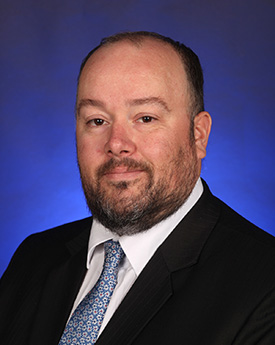
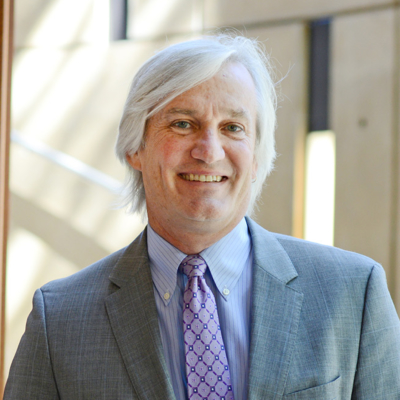
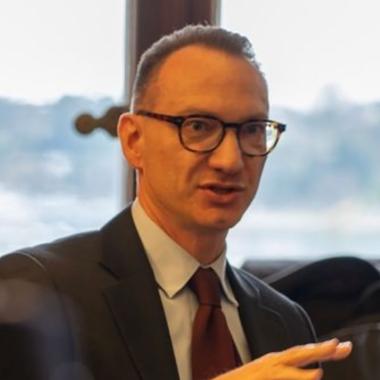
Marco Roscini serves as Professor of International Law at the University of Westminster, where he leads the LLM International Law program and teaches Public International Law, UN Law, and International Humanitarian Law. He concurrently holds appointments as Senior Fellow at NATO Cooperative Cyber Defence Centre of Excellence and Visiting Professor at the University of Trento. Previously, he held the Swiss Chair of International Humanitarian Law at the Geneva Academy (2022-2024) and was appointed director of The Hague Academy's 2025 Centre of Studies on AI and International Law.
Education:
- PhD, Sapienza University of Rome
His research examines critical intersections between traditional international law frameworks and contemporary security challenges. Primary focus areas include:
- International law of armed conflict and cyber operations
- Use of force doctrines in digital warfare
- Nuclear non-proliferation and disarmament regimes
- Historical evolution of non-intervention principles
Recent scholarship analyzes how AI systems impact self-defense assessments and how historical intervention doctrines apply to cyber contexts.
Publication trends reveal progressive deepening of cyber law expertise, evolving from foundational cyber use-of-force analysis (2014) to current AI integration (2025). Nuclear non-proliferation remains a consistent thread, while historical methodology increasingly informs contemporary cyber challenges. Recent works emphasize state responsibility for cyber operations and proportionality in digital targeting.
Scientific Awards:
- No major scientific awards listed in available information
Advising and Grants:
Prof. Roscini has supervised six doctoral students to completion, with research spanning sanctions regimes, Security Council decision-making, and cyber privacy. His externally funded projects include:
- Cyber Warfare (Leverhulme Trust, 2012)
- Cyber Security (Geneva Academy, 2014)
- International Law of Foreign Intervention (Fritz Thyssen Stiftung, 2016 & 2018)
He contributes to the "International Law at Westminster" and "Cyber security" research groups, fostering interdisciplinary collaboration on digital-age legal challenges through NATO courses, OSCE critical infrastructure meetings, and Sino-European cyber law working groups.