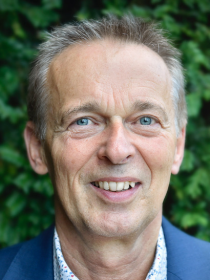
Professor Marat Shterin is a Professor of Sociology of Religion at King's College London's Department of Theology & Religious Studies, within the Faculty of Arts & Humanities. He joined King's in 2006 after earning his PhD in Sociology from the London School of Economics and Political Science (LSE), where he also taught and conducted research. Prior to academia, he taught History and served as headmaster at a Moscow School of Arts. His research focuses on religion's role in social and political contexts, particularly in Russia and post-Soviet states, examining religious radicalization, state management of religious diversity, and new religious movements. Education: PhD in Sociology from LSE (year not specified), Master's/undergraduate degrees implied by academic progression. Research interests include: Origins/consequences of religious innovation Religious minorities and radicalization Russian Orthodoxy and Islam dynamics Religion's intersection with identity, ethnicity, and nationhood His recent publications analyze Russian Muslim communities, anti-extremism legal frameworks, and the caliphate's ideological influence. He has contributed to edited volumes on populism and religion, and served on international expert panels for the Russian Ministry of Education and Science. Shterin engages actively with media (BBC, CNN) and consults for government agencies on faith-related issues. Teaching focuses on advanced sociological perspectives of religion in global contexts, including new religious movements and religion's role in contemporary society. He supervises PhD students on topics within social scientific frameworks.
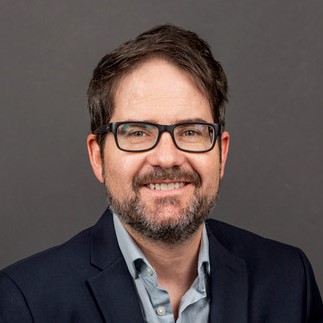
Dr. Joop W. Koopmans is Associate Professor of Early Modern History at the Faculty of Arts, University of Groningen. His research explores intersections between politics, media, and regional identity in early modern Europe, with a focus on the Dutch Republic and Frisia. He co-edits the Nieuwe Encyclopedie van Fryslân and leads interdisciplinary projects on topics like Authority and Persuasion . Co-editor, Nieuwe Encyclopedie van Fryslân (2009–2016) President, Royal Frisian Society Coordinator, Master History & Heritage Consultancy at University of Groningen Research Interests Koopmans’ expertise spans: Early modern European media and news representation Legitimation of authority through print Regional identity formation in the Dutch Republic Political pamphlets and public discourse Ceremonial culture and historical propaganda Recent Publications His work emphasizes media’s role in shaping historical narratives, including analyses of Europische Mercurius frontispieces and 18th-century Dutch newspapers. Books like Early Modern Media and the News in Europe (2018) and Het nieuws verbeeld (2021) highlight his contributions to understanding news as a tool for political and cultural communication. Scientific Awards 2018: Membership, Frisian Academy Teaching & Supervision Koopmans lectures in the University of Groningen’s Bachelor and Master History programs and the Erasmus Mundus Euroculture Master’s. He supervises PhD students and participates in peer-review for academic journals.
Charles Hatfield is a Professor of English at California State University, Northridge (CSUN), where he has taught since 2001. He is a foundational figure in comics studies, co-founding the Comics Studies Society (CSS) in 2015 and serving as its inaugural President until 2018. His academic work bridges comics scholarship, disability studies, and pop culture pedagogy, with notable contributions to curriculum development including the creation of CSUN's Comics and Graphic Novels course (ENGL 333) and the Pop Culture Minor. His educational background includes: Ph.D. (2000) from the University of Connecticut M.A. (1991) from the University of Connecticut B.A. (1988) from the University of California, Santa Barbara Professor Hatfield's research centers on comics as a legitimate academic discipline, with expertise in Jack Kirby's legacy (evidenced by his award-winning monograph Hand of Fire ), disability representation in visual narratives, and transmedia adaptation. His interdisciplinary approach integrates cultural studies, children's literature, and word-image analysis, significantly advancing the theoretical frameworks for comics scholarship. His work challenges traditional literary boundaries while emphasizing comics' cultural and pedagogical value across genres including science fiction and fantasy. His scholarly recognition includes: CSUN's Preeminent Scholarly Publications Award (2014) As an educator, Hatfield has designed over thirty courses at CSUN since 2001, establishing ENGL 333 as a cornerstone General Education offering and co-developing the department's Pop Culture Minor. He actively mentors students through specialized seminars like ENGL 525GS (Graphic Self) and curricular innovation. His leadership extends to co-editing the Studies in Comics and Cartoons series for Ohio State University Press and securing institutional support for major initiatives such as the "Comic Book Apocalypse" exhibition featuring Jack Kirby's original art. Professor Hatfield maintains active roles in academic communities through the Comics Studies Society (which he led from 2015-2018), the International Comic Arts Forum (1997-2009), and the MLA Forum for Comics and Graphic Narratives (2010-2014). His curation of large-scale exhibitions and collaborative projects demonstrates his commitment to building interdisciplinary networks that bridge academia, artistic practice, and public engagement in comics studies.
Dr. Vicent Moreno serves as Chair and Associate Professor of Spanish Education within the Department of English & Philosophy at Arkansas State University's College of Liberal Arts and Communication. A native of Valencia, Spain, he brings over two decades of U.S. teaching experience and holds a Ph.D. from Indiana University. His academic credentials: Ph.D. from Indiana University M.A. from West Virginia University B.A. from Universitat de València Research specialties span Contemporary Spanish Peninsular literature , Cultural production and marketing , Sociology of literature , and Literature and new technologies . He investigates 20th-21st century Spanish literary responses to socio-economic transformations, digital media's influence on narrative forms, and Catalan cultural identity. His methodological approach employs Bourdieusian field theory to analyze literary legitimation and market dynamics, with additional focus on film studies and foreign language pedagogy. Analysis of his fifteen publications (2010-2020) reveals consistent engagement with literary awards systems, digital literature, and contemporary Spanish authors like Belén Gopegui and Andrés Neuman. Key thematic threads include transatlantic literary fields, neoliberal cultural production, and technology's reshaping of authorship—particularly evident in works examining Generación Nocilla and social media's literary impact. No documented scientific awards appear in available materials, though his scholarly influence is demonstrated through extensive publication output and departmental leadership. Dr. Moreno maintains strong commitment to student mentorship in Spanish language and literature education, with notable emphasis on technology integration in pedagogy. While specific grant details remain unspecified, his sustained research productivity across fifteen years indicates successful acquisition of academic funding. No dedicated research laboratories or collaborative teams are referenced in the provided documentation.
Assoc. Prof. Dr. Aydoğan Kutlu serves as a full-time Associate Professor in the Department of Political Science and Public Administration at Kastamonu University's Faculty of Economics and Administrative Sciences since 2025, following progressive academic appointments from Research Assistant (2011) to Doctoral Lecturer (2017-2022) and Department Chair (2022-2023). His academic journey includes a PhD (2019), Master's (2011), and BA (2006) in Political Science from Ankara University's Faculty of Political Sciences. His research concentrates on History of Political Thought , Political Movements , and Comparative Political Institutions , with particular emphasis on Turkish political development, republican theory, and conceptual history. Kutlu's scholarly output reveals consistent engagement with foundational political concepts like sovereignty, social contract theory, and nationalist ideologies across historical contexts. Analysis of his 15 most recent publications (2016-2025) demonstrates a methodological focus on conceptual-historical analysis applied to Turkish political evolution, comparative regime studies, and philosophical examinations of democracy. His work frequently bridges classical political philosophy with contemporary Turkish political challenges, especially regarding republican institutions and democratic transitions. Administratively, Kutlu holds significant responsibilities including Graduation Commission Chairmanship (2022-present), Remote Education Coordinator (2022-present), and Disability Student Unit Representative (2024-present) at Kastamonu University. He has taught diverse courses including Contemporary Political Philosophy, History of Political Thought, and Turkish Political Problems across undergraduate and graduate levels.
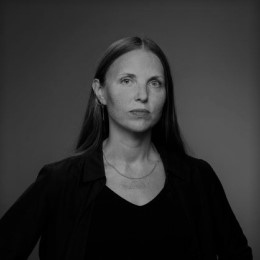
Ragnhild Sollund is a Professor in the Department of Criminology and Sociology of Law at the University of Oslo. As a leading scholar in green criminology, her work focuses on wildlife crime, animal rights, and species justice. She leads the CRIMEANTHROP research project (2019-2023), examining the implementation of international wildlife conventions across multiple countries. With publications in multiple languages including English, Spanish, Portuguese and Chinese, Sollund has established herself as an international expert on environmental crime and the ethical treatment of animals within criminal justice systems. Sollund earned her PhD from the University of Oslo in 2003 with her dissertation 'Framework, space and mobility. Immigrant women's working lives.' Her academic journey began with research on migration and police treatment of ethnic minorities before evolving toward her current focus on green criminology and wildlife crime. She previously worked as a researcher at NOVA and led projects on refugee situations and immigrant women in the labor market. Professor Sollund's research spans multiple critical areas within green criminology, with particular emphasis on the illegal trade in endangered species across Norway, Colombia, and Brazil. Her work examines how international conventions like CITES and the Bern Convention are implemented in practice, often revealing significant gaps between policy and enforcement. She pioneers the concept of 'species justice,' arguing that conventional criminology must expand to recognize animals as victims of crime rather than mere property. Her scholarship challenges anthropocentric legal frameworks and advocates for ecojustice approaches that recognize the intrinsic value of non-human life. Analyzing Sollund's recent publications reveals a consistent trajectory toward developing theoretical frameworks that integrate species justice into criminal justice systems. Her work demonstrates how wildlife crime operates within transnational networks while exposing the systemic failures in enforcement. A recurring theme is the examination of anthropocentrism and speciesism in legal systems, with increasing attention to gender dimensions of wildlife trafficking. Her scholarship connects practical policy analysis with philosophical considerations about humanity's relationship with other species, particularly in the context of the Anthropocene. Sollund's significant contributions to criminology have been recognized with prestigious awards including: The Lifetime Achievement Award from The American Society of Criminology, Division of Critical Criminology and Social Justice (2021) Choice Outstanding Academic Title for 'Green harms and crimes. Critical criminology in a changing world' (2016) Energy Globe Award, Norway, for research into illegal trade in endangered animal species (2015) These honors reflect her pioneering role in establishing green criminology as a legitimate and vital subfield of criminological inquiry. Professor Sollund has secured substantial research funding throughout her career, most notably leading the CRIMEANTHROP project funded by the Research Council of Norway's FRIPRO program (2019-2023). She previously served as project manager for 'Global Care Workers in the Welfare State' (2006-2010) and was a partner in the EU-funded EFFACE project (2012-2016). Her international collaborations span institutions in the United Kingdom, Germany, Spain, Colombia, and the United States. As an editorial board member for multiple journals including Critical Criminology and International Journal for Crime, Justice and Social Democracy, she plays a significant role in shaping scholarly discourse in her field. Sollund leads the CRIMEANTHROP research team, which includes collaborators from multiple countries examining wildlife crime enforcement across different legal systems. She is actively involved with the Global Criminology research group at the University of Oslo and has established connections with indigenous communities in Colombia through her Southern Green Cultural Criminology work. Her research methodology often involves interdisciplinary collaboration between criminologists, ecologists, and social scientists to address the complex challenges of wildlife crime and conservation. She has also served as a subject matter expert for the European Parliament Development Committee and as a World Bank expert on trade in endangered animal species.
Katarina Winter is a Lecturer in Criminology at the Department of Criminology, Stockholm University. With a PhD in Sociology, her research focuses on knowledge production processes and expert-public dynamics, particularly in the context of digital crime prevention and drug policy. She is affiliated with the Victimological Research Group and contributes to interdisciplinary projects bridging sociology and choreography. PhD in Sociology (2019) from Stockholm University Lecturer in Criminology at Stockholm University Her research explores how digital technologies and biomedical frameworks shape public policy and citizen participation. Key projects include: Promises and consequences in security technology (2023-2025) Digital crime prevention in Swedish municipalities (2022-2023) Risks of injection drug use (2022-2024) Scientific state or state science? (2016-2021) Her publications analyze sociotechnical imaginaries in security apps, media framing of harm reduction, and conversational coproduction mechanisms. She serves as associate editor for Nordic Studies on Alcohol and Drugs and co-founded the Green Criminology working group at Stockholm University.
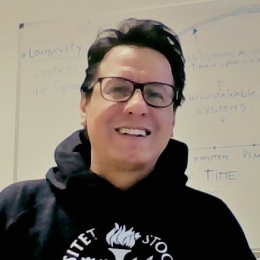
Jorge Ernesto Rodriguez Morales is a researcher in environmental politics and governance at the Department of Economic History and International Relations at Stockholm University. He holds a PhD from the University of Salamanca-Spain, specializing in energy and environmental governance, and has collaborated with institutions including USAL, ULB, Lund University, KTH, SEI, and the IPCC. His research interests focus on the political economy of environmental governance, climate change adaptation and mitigation pathways, and sociotechnical transitions for sustainable development. Currently, he investigates the governance of climate change adaptation under uncertainty in Latin America as part of the "Glocalizing Climate Governance" research program led by Professor Lisa Dellmuth. His recent publications reveal a strong focus on comparative environmental policy analysis, particularly examining bioenergy governance in both the United States and Brazil, as well as policy transfer processes for renewable energy adoption in developing countries. His work demonstrates interdisciplinary approaches bridging political science, environmental studies, and economics to address complex sustainability challenges. Rodriguez Morales has contributed to significant research projects including "Glocalizing Climate Governance" (ongoing) and "The Role of Integrated Governance for a Just and Legitimate Adaptation to Climate Risks" (completed). His methodology often involves historical analysis of policy evolution, institutional dynamics, and the interplay between private economic drivers and regulatory frameworks in environmental governance.
Tora Berge Naterstad is a Doctoral Research Fellow at the Department of Political Science , University of Oslo, with affiliations to the Faculty of Social Sciences and the Norwegian Institute of International Affairs (NUPI) . Her work focuses on Russia, authoritarian regime legitimation, nationalism, and philosophy of science. Education : Not explicitly stated in scraped text. Research Interests : Naterstad examines how authoritarian regimes like Russia use traditional values, biopolitics, and cultural narratives to legitimize power. Her work bridges international relations and critical political theory. Publications : Her recent articles explore Putin’s ideological shifts, the intersection of nationalism and reproduction, and post-Soviet space policy, reflecting interdisciplinary themes in political science and cultural studies. Projects : She contributes to the Values-based regime legitimation in Russia (LEGITRUSS) project, analyzing Russia’s evolving political strategies.
Friedemann Pestel is currently holding a professorship at the Department of History, Faculty of Humanities, University of Tübingen, where he represents the chair of Prof. Dr. Jan C. Jansen from Summer Semester 2024 to Summer Semester 2025. Previously, he served as a Research Assistant at the Chair of Modern and Contemporary History of Western Europe at Albert-Ludwigs-Universität Freiburg from 2013 to 2024. Dr. Pestel completed his habilitation in Modern and Contemporary History in 2022, earning the Venia Legendi. His academic journey includes: PhD (Promotion) in 2013 1. Staatsexamen for teaching at gymnasiums in History and French in 2009 Studies in History, Romance Studies (French, Italian), and Educational Sciences at Friedrich-Schiller-Universität Jena (2004-2009) Study period at École normale supérieure in Paris (2006-2007) Friedemann Pestel's research spans multiple interconnected fields of historical inquiry with a focus on transnational and global perspectives. His work examines European and Atlantic history from the 18th to 21st centuries, particularly the Age of Revolutions (1770-1850), the history of the music industry and musician mobility, political migration and counter-revolution, European conceptual history, compensation history, transnational history, cultural transfer, and memory studies. His habilitation project 'Global Players: Orchestra Tours and the International Music Industry in the 20th Century' exemplifies his interdisciplinary approach, investigating how orchestras functioned as key institutions in the globalization of classical music. Analysis of Pestel's recent scholarly output reveals a consistent focus on transnational historical processes, particularly examining music as a lens for understanding broader political, economic, and cultural dynamics. His work frequently explores how musical institutions and practices intersect with political regimes, national identities, and international relations across the long 19th and 20th centuries. Recent publications demonstrate increasing engagement with global and postcolonial perspectives, particularly in studies of Haitian history and Atlantic world connections. Dr. Pestel has received numerous prestigious awards and fellowships, including: Karl-Ferdinand-Werner-Fellow at the German Historical Institute Paris (2024) Guest Scholar at the Pacific Regional Office of the German Historical Institute Washington (2022/23) Feodor Lynen Research Fellowship of the Alexander von Humboldt Foundation (2022/23) Junior Fellow at the Freiburg Institute for Advanced Studies (FRIAS) (2020/21) Stipendiat in the Elite Program for Postdocs of the Baden-Württemberg Foundation (2019-2022) As an active researcher and educator, Pestel has organized numerous conferences and workshops on transnational history, musical globalization, and European memory. He has also curated exhibitions, including 'Vienna and New York: 175 Years of Two Philharmonics' (2017-2018). His teaching covers diverse topics including the Age of Revolutions, European integration history, political violence, and memory studies. Pestel collaborates extensively with international scholars, particularly through projects examining global musical connections and European memory politics.
Shirin Khanmohamadi is a Professor in the Department of Comparative and World Literature at San Francisco State University, where she has served since completing her PhD in Comparative Medieval European Literature at Columbia University in 2005. Previously earning a BA with Honors in Literature and Society from Brown University (1997) and an MA in English Literature with Postcolonial Studies focus from the University of Texas at Austin (2000), her academic career bridges medieval European studies with contemporary theoretical frameworks. Brown University - BA, Literature and Society/ MCM (Honors) 1997 University of Texas, Austin - MA, English Literature (Postcolonial Studies) 2000 Columbia University - PhD, Comparative Medieval European Literature 2005 Her research establishes critical frameworks for understanding medieval ethnographic writing through postcolonial and anthropological lenses, focusing on cross-cultural representations in travel narratives and epic literature. Key contributions include: Dialogic ethnography in William of Rubruck's Mongol account Islamicate prestige appropriation in Charlemagne legends Material culture transfer in chansons de geste Autoethnographic methodologies in Gerald of Wales' works Ecocritical analysis of medieval artifacts Bakhtinian 'sideways glances' in crusade narratives She serves as Editor of Exemplaria: Medieval/Early Modern/Theory , with current research supported by NEH Faculty Awards (2022-2023) for her project Splendorous Saracens: Appropriating Islamicate Prestige . Her book In Light of Another's Word: European Ethnography in the Middle Ages (2013) redefined premodern ethnographic poetics.
Amy H. Liu is a Professor and Interim Chair in the Department of Government at the University of Texas at Austin , affiliated with the College of Liberal Arts . Her research sits at the intersection of language politics and ethnic politics , with regional expertise in Southeast Asia , Eastern Europe , and Greater China . She has secured grants for course development on ethnic politics in Taiwan and Eastern Europe , and her work engages with machine-assisted coding , text analysis , and survey data to study topics like ethnic trust , language regimes , and political incorporation of migrants . Research Themes : Language and political trust, ethnic minority recognition, comparative political methodology, and state-society relations. Grants : Funded by the Center for Russian, East European, and Eurasian Studies and the Center for Asian Studies. Teaching : Courses on the politics of language, Eastern European governance, and comparative race/ethnicity. Publications span journals like PNAS Nexus , British Journal of Political Science , and Asian Politics and Policy . She also co-edited volumes on regional movements in Southeast Asia and ethnic politics in cabinets . Her work employs comparative case studies and survey experiments , including fieldwork in Asia, Europe, and the U.S.
Paul Tracey serves as Professor of Innovation and Organisation, Vice Dean for Research and Impact, and Co-Director of the Cambridge Centre for Social Innovation at Cambridge Judge Business School, University of Cambridge. He is also a Fellow of Hughes Hall and maintains visiting positions at the University of Melbourne's Department of Management and Marketing and Memorial University's Centre for Social Enterprise in Newfoundland. His academic credentials include a BA and PhD from Stirling University, with prior appointments as Assistant Professor of Entrepreneurship at Warwick Business School, and positions at Oxford University's School of Geography and Newcastle University's Centre for Entrepreneurship. Professor Tracey's research examines entrepreneurship, institutional change, regional innovation, and social innovation through the lens of organizational theory. His work investigates how organizations navigate complex institutional environments, particularly focusing on social innovation as social-symbolic work, legitimation strategies in authoritarian contexts, and the role of purpose in for-profit firms. He explores how social problems are constructed and how organizations build legitimacy through symbolic and practical actions. His recent publications (2021-2025) reveal a strong focus on peacekeeping innovation, climate security, social media activism, and UN Sustainable Development Goal implementation. Recurring themes include meta-organizational innovation in global governance, anti-stigma organizing in digital spaces, and the tension between protective disguise and advocacy in restrictive political environments. His work consistently bridges theoretical rigor with practical implications for social enterprises and global institutions. Professor Tracey serves as Associate Editor for the Academy of Management Review and sits on editorial boards of leading journals including Academy of Management Journal and Strategic Organization. He actively contributes to the Cambridge Corporate Governance Network and holds fellowships at Clayton State University's Center for Social Innovation & Sustainable Entrepreneurship. As Co-Director of the Cambridge Centre for Social Innovation, he leads interdisciplinary initiatives connecting academic research with practical social enterprise applications. His work emphasizes translating theoretical insights into actionable frameworks for addressing societal challenges through innovative organizational forms and collaborative governance approaches.
Grigory Alekseevich Yavlinsky is a Professor at the Department of Applied Economics, Faculty of Economic Sciences, National Research University Higher School of Economics (HSE), where he has worked since 2005. His expertise spans socio-economic policy, Russian economic system development, and institutional economics. Doctor of Economics, Central Economics and Mathematics Institute (2005) Candidate of Economic Sciences (1978) Specialist in Labor Economics, Moscow Institute of National Economy (1973) His research focuses on socio-economic policy, Russian domestic and foreign policy, privatization, and the interplay of moral principles with global financial systems. His recent publications emphasize macro-level socio-economic analysis and institutional legitimacy. He has been involved in numerous research projects, including theories of modernization reforms, legitimization of private property, and post-Soviet economic recessions. His 2017 article 'Потеря будущего' and 2013 book 'Периферийный капитализм' highlight systemic challenges in Russian economic development. Honorary Diploma of HSE (2012) Yavlinsky teaches socioeconomics to economics and applied mathematics students, covering property relations and macroeconomic strategy. He also chairs expert councils on economic reforms and leads the Russian United Democratic Party 'Yabloko' (founded in 1993).
Dr. Kwame Badu Antwi-Boasiako serves as Professor and Chair of the Department of Government within the College of Liberal and Applied Arts at Stephen F. Austin State University. His full-time position includes teaching responsibilities in public policy, program evaluation, research methods, and American government. Research interests focus on: Traditional institutions and democratic development in African contexts Decentralization frameworks and governance models Terrorism dynamics and counter-extremism strategies Diversity implementation challenges in public sector organizations Policy evaluation methodologies and comparative governance analysis Publications demonstrate consistent focus on African governance systems, counterterrorism policy, and development challenges. Recent works (2022-2024) exhibit increased attention to Ghanaian political history and rural development, while maintaining long-standing expertise in security studies and diversity management. The scholarly output includes significant contributions through book reviews that critically engage with contemporary political and policy discourses.