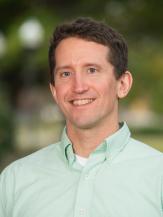
William Lunn is a Professor and Program Coordinator for Exercise and Sport Science at Southern Connecticut State University within the College of Health & Human Services. His teaching interests include exercise physiology, exercise metabolism, nutrition, and research methods. His research focuses on protein metabolism, high-intensity interval training (HIIT), nutritional ketosis, and performance testing validation. Research & Grants Grant: "Effects of a Whole-Food Nutritional Supplement on Glycemic Response in Euglycemic Adults" sponsored by Soquel, Inc. (2019–Present). Key Presentations 2022: "Lipid-Protein Co-Ingestion Before High-Glycemic Challenge Attenuates Glycemic Response in Normoglycemic Adults" at the American College of Sports Medicine Annual Meeting. 2018: "Where Chocolate Milk Has Brought Me: Postexercise Recovery, HIIT, Low-Carb Diets, and Protein Metabolism" at the New England American College of Sports Medicine/National Strength & Conditioning Association meeting. 2023: "Cannabidiol Supplementation Alleviates Anxiety, Mitigates Pain, Extends Endurance, and Facilitates Greater Exercise Exertion" at the American College of Sports Medicine Annual Meeting. Scientific Contributions Collaborated on studies about chocolate milk for recovery, CBD supplementation, and insole technology for athletic performance. Developed validation protocols for exercise testing equipment and body composition analysis.
Vegard Bø Bahus is a Senior Lecturer in Administrative Law at the Department of Accounting and Law, UiS School of Business, University of Stavanger. He is actively engaged in legal scholarship with a focus on administrative, immigration, animal welfare, and mental health law. His research interests span key areas of public law, including: Administrative and regulatory law Immigration and residence rights under the EEA framework Animal welfare and rights in Nordic jurisdictions Legal and ethical issues in mental health care access Professional regulation in animal health The recent publications reflect a strong trend toward interdisciplinary legal analysis, particularly in bioethics, human rights, and Nordic comparative law. His work frequently appears in authoritative legal commentaries and academic books, often addressing pressing societal and policy challenges. Vegard Bø Bahus has co-authored works on church ethics and labor mobility, indicating broader engagement with legal and moral discourse. His collaboration on the 2024 Nordic Animal Law volume highlights regional scholarly networks. While no formal advising or grant activity is detailed, his sustained output suggests active contribution to legal education and policy development.
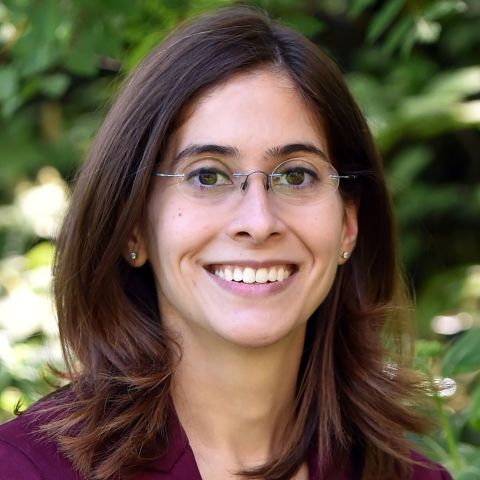
Rachel Bayefsky is a Professor at the University of Virginia School of Law, specializing in constitutional law, federal courts, civil procedure, and legal theory. Her scholarship explores the interplay between judicial authority and institutional legitimacy, with a focus on concepts like dignity, standing doctrine, and equitable remedies. She has contributed to leading journals including the Cornell Law Review and Georgetown Law Journal , and her book Dignity and Judicial Authority (Oxford University Press, 2024) synthesizes her work on legal dignity. Education: J.D., Yale Law School (Editor-in-Chief, Yale Law Journal); D.Phil., University of Oxford (Rhodes Scholar) Bayefsky’s research bridges doctrinal analysis with philosophical inquiry. She examines how judicial institutionalism—preserving courts’ sociological legitimacy and procedural efficiency—intersects with constitutional interpretation and statutory construction. Her recent work on 'tester' plaintiffs and Article III standing addresses evolving challenges in public-law litigation. She also investigates administrative law, emphasizing the role of dignity in cost-benefit analysis and regulatory frameworks. Her publications reveal trends in constitutional adjudication, including debates over tangible harm, institutional legitimacy, and the scope of judicial remedies. Notable awards include the Rhodes Scholarship . At UVA, she teaches courses on international law, federal courts, and international civil litigation, and has been featured in media outlets like SCOTUSblog and podcasts such as Short Circuit. Her career spans clerkships with Justice Ruth Bader Ginsburg and federal appellate and district judges, as well as litigation at Akin Gump and teaching at Harvard Law School.
Nathan Myers is a Professor in the Department of Political Science and Director of the Master of Public Administration program at Indiana State University's College of Arts & Sciences. His work bridges public administration, health policy, and emergency management, with a focus on improving governmental responses to public health crises and pandemics. Dr. Myers holds a Ph.D. in Public Affairs from the University of Nevada - Las Vegas (2009). His educational background includes a BA from Knox College and an MPA from the University of Illinois at Springfield. Myers' research focuses on public health emergency preparedness, health security and resilience, and the governance of biotechnology. His work examines how political polarization affects pandemic response, the importance of community-level preparedness, and the intersection of genetic counseling with public policy. He employs interdisciplinary approaches, drawing from public administration, political science, and health policy to address complex challenges in health security. His research emphasizes practical applications for improving governmental capacity during health emergencies. His extensive publication record reveals consistent themes in public health emergency preparedness, with a growing focus on One Health frameworks that integrate human, animal, and environmental health considerations. Recent work examines antimicrobial resistance, pandemic surveillance systems, and the political challenges of maintaining robust public health infrastructure. His scholarship consistently addresses the tension between efficiency and resilience in governmental systems, arguing for approaches that prioritize long-term preparedness over short-term cost savings. Dr. Myers has received significant recognition for his work: Provost's Award for Excellence in Student Learning Assessment and Improvement (2025) Provost's Award for Excellence in Academic Assessment (2017) As Director of the Master of Public Administration program, Myers mentors graduate students in public administration and policy analysis. His grant activities demonstrate strong engagement with community resilience, including "Building Community Resilience in the Wabash Valley Region" (2025-2026), which received funding from both the Community-Engage Alliance and Indiana State University. Earlier work includes NIH-funded research on genetic counseling and telemedicine. Myers actively contributes to institutional governance through service on the University Assessment Council and Leadership Team, where he served as Secretary from 2018-2021. He also served on the West Central Indiana Area Health Education Center Advisory Board (2011-2021), including leadership roles as President and Vice President. His professional activities reflect a commitment to bridging academic research with practical applications in public health and administration.
Moh H. Malek is a Professor in the Department of Health Care Sciences within the Eugene Applebaum College of Pharmacy and Health Sciences at Wayne State University. He holds a Ph.D. in Exercise Physiology from the University of Nebraska-Lincoln and completed postdoctoral training in Molecular/Cellular Exercise Physiology at the University of California, San Diego School of Medicine. His academic journey includes an M.S. in Exercise Physiology from California State University Fullerton and a B.A. in Biology and Psychology from The Claremont Colleges (Pitzer College). Dr. Malek's research focuses on exercise physiology with particular emphasis on electromyography, muscle physiology, mitochondrial function, fatigue threshold assessment, and statistical methods in kinesiology. His work bridges fundamental physiological mechanisms with practical applications in exercise science. He has made significant contributions to understanding neuromuscular fatigue mechanisms, the effects of various interventions on exercise performance, and mitochondrial bioenergetics in aging and disease contexts. His research integrates both human and rodent models to explore fundamental physiological processes. His publications demonstrate consistent productivity with recent work focusing on mitochondrial transplantation in skeletal muscle bioenergetics, electromyographic fatigue threshold methodologies, and the interplay between cognitive and physical fatigue. Dr. Malek has published extensively in the Journal of Strength and Conditioning Research, Muscle and Nerve, and other prominent physiology journals. His research program has evolved from foundational work on electromyographic fatigue threshold testing to more recent investigations of mitochondrial function in aging and disease, reflecting both continuity and expansion of his scholarly interests. Among his notable scientific achievements are receiving the Distinguished Graduate Faculty Award, being named the first faculty in his department to receive the Charles H. Gershenson Distinguished Faculty Fellow honor, and earning the Outstanding Graduate Mentor award from Wayne State University. He also received the President's Award for Excellence in Teaching and the Century Citation Club honor. Dr. Malek has mentored numerous graduate students, with several DPT students completing research projects under his primary mentorship. His teaching responsibilities include Advanced Exercise Physiology, Research Design & Methodology, and Research Practicum courses. He has also contributed significantly to the academic community through textbook authorship, including "NSCA's Essentials of Personal Training" and "Advanced Statistics for Kinesiology and Exercise Science."
Jacob Wenger serves as an Associate Professor within the Department of Plant Science at the Jordan College of Agricultural Sciences and Technology, California State University, Fresno. His office is located in Ag Sciences 222, and he can be reached at 559.278.7754. His academic credentials include: B.S. from Manchester University Ph.D. from The Ohio State University Professor Wenger's research focuses on sustainable insect pest management in California's tree nut industry, particularly almonds, pistachios, and walnuts. He employs a multidisciplinary approach combining genetic analyses, field trials, and laboratory experiments to study pest ecology and adaptation. Current research projects encompass: Gut-content analysis to identify alternative hosts of the western leaffooted bug Genetic transformation techniques targeting navel orangeworm Development of silica-based insecticides for post-harvest pest control in nuts and beehives His primary research domains are Agricultural Entomology and Molecular Ecology, with emphasis on integrated pest management solutions. In his teaching capacity, Professor Wenger instructs courses such as Economic Entomology (PLANT 162), Integrated Pest Management (PLANT 163), and Advanced Plant Health Management (PLANT 261). He also supervises graduate thesis research (PLANT 299) and thesis continuation (PLANT 299C), indicating active mentorship of students in the Plant Science program.
Sverrir Steinsson is Assistant Professor at the University of Toronto's Munk School of Global Affairs & Public Policy. He holds a PhD in Political Science from George Washington University, an MA in International Affairs, and a BA in Political Science from the University of Iceland. His research focuses on digital technology's impact on institutional structures, the transformative effects of war on political systems, and small-state behavior in international relations, particularly Iceland's geopolitical strategies. Steinsson's work examines how digital platforms reshape power dynamics among users, businesses, and states, as well as how conflict and war influence state formation and empires. He has pioneered 'Shelter Theory' to analyze small states' reliance on alliances and international frameworks for survival. His research spans topics like Nordic cooperation, transatlantic relations, and historical conflicts such as the Cod Wars. Key publications include analyses in the American Political Science Review , International Organization , and Cooperation and Conflict . His articles explore themes like institutional evolution in digital spaces, Iceland's security dependencies, and theoretical frameworks for understanding small-state diplomacy. Steinsson’s academic contributions emphasize interdisciplinary approaches blending institutional theory with contemporary geopolitical challenges. His current projects continue investigating digital governance, small-state resilience, and historical patterns of state formation under conflict conditions.
Dimitrios Betsakos is a Professor at the Department of Mathematics , Aristotle University of Thessaloniki , Greece. His academic journey began with a degree in Mathematics (1990) from Aristotle University, followed by a PhD in Mathematics (1996) from Washington University in St. Louis. He has held various academic positions, including Postdoctoral Fellow at the University of Helsinki (1998-1999), Visiting Assistant Professor roles at Aristotle University and the University of Crete (1999-2002), and progressively advanced to Assistant, Associate, and Full Professor at Aristotle University (2002-). His research focuses on Complex Analysis , Dynamic Theory , and Geometric Function Theory , exploring topics like harmonic measure, symmetrization, and hyperbolic geometry. His work connects analysis with probability, particularly through Brownian motion and Markov processes. The 15 most recent publications (2004-2021) span geometric versions of Schwarz’s lemma, harmonic measure, hyperbolic metrics, and condenser capacity. These studies often involve collaborations and address extremal problems, inequalities, and applications of complex analysis to differential equations. He has supervised numerous doctoral and postgraduate students, including Kelgiannis Georgios , Tsantaris Athanasios , and Sachpazis Stylianos , guiding research on topics like holomorphic functions, geometric transformations, and hyperbolic metrics. His teaching includes courses on Real Analysis and Complex Analysis. Current research projects include geometric versions of Schwarz’s lemma under hyperbolic metrics and capacity estimation problems, reflecting his long-term engagement with conformal invariants and analytic number theory.
Chas Morrison is an Assistant Professor at Coventry University’s Research Centre for Peace and Security, specializing in conflict and disaster response. His academic career combines practical experience with NGOs in East Africa and South Asia, focusing on humanitarian reconstruction and civilian protection. He teaches postgraduate courses in project management and operating in challenging environments. Research Interests: Conflict Response, Disaster Reconstruction, Civil Society, Civilian Protection. Key projects include studies on civilian protection in Syria’s urban sieges, post-earthquake Nepal’s community-led reconstruction, and faith groups in Sri Lanka’s conflict dynamics. His work emphasizes participatory approaches, challenging donor-centric frameworks and advocating for technology-driven innovations in crisis management. Notable contributions include research on Buddhist extremism in Sri Lanka and the role of youth in peacebuilding in Bosnia. Projects funded by the EU, IIED, and DEC highlight his engagement with global humanitarian challenges. Morrison’s vision prioritizes listening to affected communities and leveraging new technologies to transform disaster and conflict response systems.
Fahreen Alamgir is a Senior Lecturer in the Department of Management at Monash Business School, Monash University, Melbourne, Australia. She serves as Coordinator of the Governance and Regulation Research Network (GARNET), an interdisciplinary network located in the Centre for Global Business. Dr. Alamgir actively supervises PhD students working on projects related to decent work and modern slavery, violence and inequality in the social economy, and decolonial feminism and research methods. Her research takes interdisciplinary approaches focusing on poverty, governance, and gender issues, examining organizational challenges from perspectives of social justice, rights, and capability. She investigates how communities respond to globalization and sustainable development initiatives within local organizational realities, with current research concentrating on global value chains and employment relations in the Bangladeshi apparel industry. Her work contributes to UN Sustainable Development Goals related to business and sustainability through exploring dynamics between business, community, and state. Dr. Alamgir's publication portfolio reveals strong thematic consistency across her work, with recurring focus on structural violence, labor rights in global supply chains, postcolonial feminism, and ethical organizational practices. Her recent publications demonstrate increasing engagement with Rohingya refugee issues, Bangladeshi labor conditions, and critical perspectives on international business practices. The interdisciplinary nature of her work bridges management studies, gender studies, development studies, and political economy. Among her notable achievements are: Dean's Award for PRME Research Excellence (2018) Best Dissertation Award in Academy of Management Conference - Critical Management Studies Division (2014) Best Paper in Critical Business Ethics (2022 and 2018) Best Paper in Critical International Business (2023) Dr. Alamgir has secured competitive research grants for studying employment conditions of women workers in ready-made garment factories. She has served as Chief Investigator on significant projects including 'Apparel Industry Action and Evidence to Enhance Factory Workers' Conditions and Pay' (2023-2024) and 'Understanding international sourcing practices of iconic brands in Australia: the case of ready-made garments in Bangladesh' funded by Oxfam Australia (2019-2020). Her industry engagement spans non-profit organizations, voluntary sector, trade union federations, state-owned enterprises, and global apparel supply chains. She maintains active editorial responsibilities as Associate Editor for Organization Journal (since 2023), Editorial Board Member for Human Relations Journal (since 2020), and previously for Organization Journal (2018-2023). Her geographic expertise covers South Asia, Australia, and New Zealand, with particular focus on Bangladesh's garment industry and Afghan women's experiences.
Weijia Li is an Assistant Professor (Lecturer) in the Department of Economics at Monash University, affiliated with Impact Labs. Their research focuses on Political Economics, Development Economics, and Economic History, with a particular emphasis on corruption dynamics, autocratic governance, and institutional evolution. Li holds a Ph.D. in Economics from the University of California, Berkeley, and a Bachelor's in Economics and Finance from Tsinghua University. Key research contributions include analyzing the political boundaries of corruption in party-state systems, fiscal capacity erosion, and the origins of meritocracy in autocracies. Their work has been published in journals like the Journal of Comparative Economics and Economic Journal . Awards: Asia-Pacific Prize in Economic History (2020), multiple Dean’s Purple Letters for Teaching Excellence (2021-2022), and the CASBS Summer Institute honor (2019). Teaching: Recognized for excellence in education, including a Learning and Teaching Prize (2021). Collaborations: Active in cross-country research networks, particularly in political and development economics. Li actively supervises PhD students and contributes to policy-relevant research on institutional design and governance.
Dr. Barry Hayes is a Senior Lecturer (Associate Professor) in Power Systems Engineering at University College Cork (UCC), Ireland. He leads a research team focusing on grid integration of sustainable energy technologies and future power system operation/planning. Previously held roles include Lecturer at University of Galway (2016-2018) and Marie Sklodowska-Curie Research Fellow at IMDEA Energy (2013-2016). Holds a PhD in Electrical Power Systems Engineering from University of Edinburgh (2013). Research interests include smart grids, distribution network management, demand-side flexibility, non-intrusive load monitoring, and energy communities. Active in IEEE standards development (P2030 smart grid interoperability) and serves as Associate Editor for IEEE Transactions on Energy Markets, Policy and Regulation. Has secured €1.03M SFI grant (2024-2029) for disruptive energy tech research, plus other grants including €506K from Disruptive Technologies Innovation Fund. Supervised PhD students in power systems and energy markets. Collaborates with Irish energy industry and international partners through MaREI Centre. Publications emphasize grid integration challenges, P2P energy trading, and smart meter applications. Notable recognition includes Elsevier's Most-Cited Article award (2022). Engages in public science communication via RTÉ and advises community-owned renewable energy projects.
Andreas Winter is an ICREA Research Professor at Universitat Autònoma de Barcelona and holds a Hans Fischer Senior Fellowship at TUM-IAS, Technical University of Munich. He specializes in quantum and classical information theory with affiliations at the University of Cologne's Department of Quantum Information and Computation. His research examines fundamental limits in quantum communication, entropy applications, and quantum computing foundations. Education: Diploma in Mathematics, Freie Universität Berlin Ph.D. in Mathematics, Universität Bielefeld Research: His interdisciplinary work bridges quantum Shannon theory, thermodynamics, and discrete mathematics, exploring quantum channel capacities, information tradeoffs, and cryptographic protocols. Recent publications demonstrate advances in quantum coding efficiency and high-dimensional quantum systems. Awards: 2022: Hans Fischer Senior Fellowship, Alexander von Humboldt Prize, QCMC Quantum Award 2017: IEEE Information Theory Paper Award 2012: Whitehead Prize (LMS) 2007: Philipp Leverhulme Prize Leadership: Leads the Quantum Information Theory Focus Group at TUM-IAS, collaborating with Prof. Holger Boche on quantum communication frameworks.
Dr. Dawn P. Coe is an Associate Professor in the Department of Kinesiology at the University of Tennessee, Knoxville, within the College of Education, Health, and Human Sciences. Her research focuses on pediatric exercise physiology, particularly the impact of physical activity on youth cognition and academic success, as well as physical activity assessment in outdoor settings. Dr. Coe holds a PhD in Kinesiology from Michigan State University, an MA in Physical Education & Sport from Central Michigan University, and a BS in Kinesiology from the University of Michigan. She is a Fellow of the American College of Sports Medicine (ACSM) and a Certified Clinical Exercise Physiologist. She actively contributes to national committees, including the ACSM and NASPEM (North American Society for Pediatric Exercise Medicine), serving as president-elect of NASPEM. Her research explores physical activity’s role in academic achievement, motor competence, and health outcomes in diverse populations, including children with disabilities. Key themes include optimizing physical activity in early childhood environments, playground design, and family-centered outdoor activity programs. Professional Roles: NASPEM President-Elect, ACSM Committee Member Awards: ACSM Fellowship, Clinical Exercise Physiologist Certification Dr. Coe’s work extends to community engagement, such as developing interventions like the Active Families in the Great Outdoors program. Her studies frequently address disparities in physical activity access and outcomes among youth with disabilities, emphasizing inclusive practices and environmental adaptations.
Cristiana Dias de Almeida is an Assistant Professor and Director of the Bachelor's degree in Social Work at Lusofona University's Faculty of Economics, Social and Business Sciences. She holds a PhD in Social Work (2022) from the Portuguese Catholic University and University of Coimbra, with a thesis analyzing network governance in social care policies. Her academic career includes roles at Miguel Torga Higher Institute, Catholic University of Braga, and as a Guest Lecturer at the University of Coimbra. Education includes a PhD (2022), Master's in Sociology (2009), and Bachelor's in Sociology (2002). Her research focuses on social policies, network governance, homelessness intervention, domestic violence, and aging in prison populations. She is affiliated with Intrepid Lab - CETRAD, exploring transdisciplinary development studies. Her articles critically examine Portugal’s welfare state challenges, policy-practice gaps, and innovative social interventions. Key contributions include studies on poverty, homelessness, and governance effectiveness. Awards include a FCT-funded Doctoral Fellowship (2017-2022). Advising includes directing social work programs and supervising research on social care systems. Grants and fellowships highlight her sustained academic engagement. Her work bridges policy analysis with grassroots implementation, emphasizing equity and institutional collaboration. Labs/Teams: Active in Intrepid Lab - CETRAD, focusing on transdisciplinary research for societal development challenges.