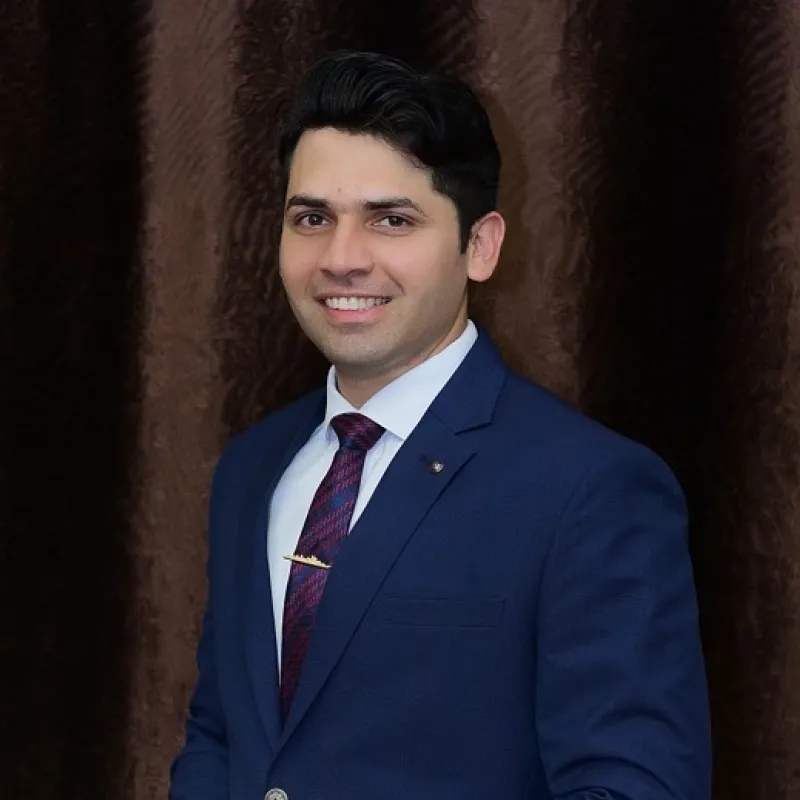
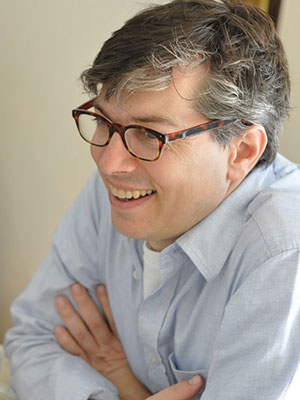
Lynn Wu is an Associate Professor at the Wharton School of the University of Pennsylvania, focusing on the intersection of artificial intelligence, analytics, and innovation. She teaches MBA, undergraduate, and doctoral courses on emerging technologies' transformative impact on business and society. Education: B.S. in Finance and Computer Science, MIT M.S. in Computer Science, MIT Ph.D. in Management Science, MIT Sloan Her research explores how AI and digital platforms reshape productivity, workforce dynamics, and innovation strategies, with applications in antitrust policy and startup ecosystems. Key trends in her publications include AI's role in post-IPO innovation, robotics' impact on managerial roles, and social media's ability to mitigate funding disparities. Scientific Awards: Kauffman Best Paper Award (2019) Sandy Slaughter Early Career Award (2019) AIS Early Career Award (2018) ISR Best Published Paper (2014) Best Paper Awards at ICIS (2009), HICSS (2013), etc. She has collaborated with IBM, Google, Meta, and advised the U.S. Department of Justice and World Bank, with her work cited by The New York Times , The Economist , and Harvard Business Review .
Morgan Edwards is an Assistant Professor at the University of Wisconsin-Madison's La Follette School of Public Affairs, specializing in human-centered energy responses to the climate crisis. Her work bridges policy analysis, systems modeling, and equity considerations across global, national, and local scales. Education: PhD in Engineering Systems (MIT), SM in Technology and Policy (MIT), BS in Environmental Science and Economics (UNC Chapel Hill) Research focuses on: Equity implications of energy transitions Systems modeling for climate policy Natural gas leak detection and mitigation Coal power phaseout strategies Negative emissions technology assessment Her lab develops tools connecting global climate goals with local action, emphasizing partnerships with underserved communities. Recent publications analyze methane mitigation, corporate climate-tech investments, and equity challenges in electrification.
Kerry Fang is an Associate Professor in the Department of Urban & Regional Planning at the University of Illinois Urbana-Champaign. Her research focuses on economic development, land use policy, and their socio-environmental consequences, with interdisciplinary methods spanning economics, statistics, geography, sociology, and computer science. She examines global contexts including the U.S., China, Australia, and Russia. Education: PhD, Urban and Regional Planning and Design, University of Maryland, College Park (2018) MA, Land Management, Zhejiang University (2013) BA, Land Management, Zhejiang University (2011) Research Interests: Corruption in economic development projects Land use programs for coastal resilience Text-mining of planning literature Her work bridges theory and practice, addressing questions like regional inequality and policy efficacy in job creation and innovation. Her recent articles explore topics such as communication networks in development projects, minority-owned business data utilization, and integrating urban data science into economic development curricula. These contributions highlight interdisciplinary approaches to urban challenges. No scientific awards were explicitly mentioned in the provided text. Teaching and Advising: Teaches courses like UP 545: Economic Development Policy and Land Use and Environmental Planning. She advises students on topics intersecting economic development and spatial policy, though specific advisee names are not listed. Labs/Teams: No specific lab or team affiliations were detailed, though her work likely involves collaborations with interdisciplinary research groups.
Rahul Kapoor is a Professor at the Wharton School of the University of Pennsylvania, where he also serves as the Chair of the Management Department. His research focuses on innovation management, business ecosystems, and technology strategy, with a particular emphasis on how firms navigate technological and organizational challenges in dynamic industries. University: University of Pennsylvania School: Wharton School Department: Management Department Academic Rank: Professor His research explores the interplay between organizational design, external collaboration, and innovation outcomes. Recent work includes studies on forecasting strategies, ecosystem interdependencies, and the role of setbacks in technology development. He has contributed to leading journals such as Strategic Management Journal and Research Policy , with a recurring focus on technology ecosystems and modular innovation. Kapoor’s research spans both theoretical and applied dimensions. He has examined how firms can optimize value creation in business ecosystems, the impact of organizational design on invention sourcing, and the dynamics of technology emergence. His studies often integrate historical case analyses and simulation models to uncover patterns in innovation management. Scientific Awards: Inaugural Academy of Management Emerging Scholar Award Strategic Management Journal Best Paper Prize Wharton Teaching Excellence Award (multiple years) Editorial Roles: Associate Editor, Strategic Management Journal Contributing Editor, Strategy Science Teaching: Undergraduate, MBA, Executive MBA, and PhD courses on technology and innovation strategy Leadership in Wharton’s Executive Education programs He has advised firms on innovation initiatives and draws on over seven years of industry experience in high-tech, including roles at Texas Instruments and co-founding a startup, to inform his academic work.
Prof. Dr. Frank T. Piller is a University Professor and Co-Leader of the Institute for Technology and Innovation Management (TIM) at RWTH Aachen University, where he also serves as Academic Director of the Executive MBA program at RWTH Business School. He leads a research team of approximately 30 doctoral students, 5 postdocs, and over 20 student researchers within the TIME Research Area of the School of Business and Economics. His educational background includes a doctoral degree in Operations Management from the University of Würzburg (1999) and a Habilitation degree from TUM Business School (2004) on "Innovation and Value Co-Creation." Prior to joining RWTH Aachen in 2007, he was a Research Fellow at MIT Sloan School of Management and faculty at TUM Business School. Prof. Piller is recognized as one of the world's leading experts in customer-centered value creation, specializing in mass customization, personalization, and customer co-creation. His current research focuses on how established companies can transform in response to disruptive business model innovations, with particular emphasis on digital transformation (Industry 4.0), AI-augmented innovation, and sustainable business models. He is particularly known for his work on innovation ecosystems, platform-based business models, and stakeholder-oriented technology development. His recent publications demonstrate a clear trajectory toward integrating artificial intelligence with traditional innovation management frameworks, exploring how AI transforms manufacturing systems, innovation processes, and business models. His work increasingly addresses the challenges of digital transformation in established industries while maintaining focus on customer co-creation and mass customization principles. His scientific achievements have been recognized with numerous awards: Co-Creation Award of the PDMA Nomination for "Innovating Innovation" Prize by Harvard Business Review and McKinsey "Lecturer of the Year" by Executive MBA students at TU Munich RWTH Aachen Rector's Prize for Excellent Teaching (since 2010) Grant for innovative "Flipping the Classroom" teaching concept ERC Synergy Grant for SAFER Grid project (2025-2031) Prof. Piller maintains an extensive research network spanning academia and industry. He collaborates with numerous corporations including 3M, Adidas, BASF, EON, J&J, P&G, Siemens, and Vodafone, as well as many technology startups across Europe and North America. As a co-founder, supervisory board member, and investor in innovative startups, he actively transfers research into practice. His research has received significant funding, most notably the prestigious ERC Synergy Grant for the SAFER Grid project. He leads the Technology and Innovation Management Group (TIM) within the TIME Research Area at RWTH Aachen, which comprises over 100 senior and junior researchers working at the intersection of innovation, technology management, marketing, and entrepreneurship. The institute is a leading European research institution for strategic, behavioral, and computer-supported technology and innovation management.
Adeel Tariq is a Post-Doctoral Researcher at the Industrial Engineering and Management department of LUT School of Engineering Sciences , Lappeenranta University of Technology, Finland. He completed his Ph.D. (2019) and MBA (2014) at the School of Management , Asian Institute of Technology, Thailand. Research Focus: Technology and innovation management, digital transformation, sustainable development, knowledge management, and leadership studies. Peer Review: Active reviewer for journals including Leadership & Organization Development Journal , Journal of Intellectual Capital , and European Journal of Innovation Management . Collaborations: Regular co-author with Waqas Tariq, Muhammad Saleem Sumbal, and Marko Torkkeli on topics like digital governance, fintech, and SME sustainability.
Juanita Gonzalez-Uribe is an Associate Professor in Finance at the London School of Economics and Political Science (LSE), specializing in entrepreneurship, private equity, innovation, and accelerators. She serves as Co-Director of LSE's Financial Markets Group and Programme Director for Financing the Real Economy, while also being a Research Fellow at the Centre for Economic and Policy Research (CEPR) and co-organizer of the WE_ARE Women in Economics seminar series. Her research explores how private markets and public policy can catalyze high-growth entrepreneurship globally, with a focus on Latin America, the UK, and the U.S. Key areas include venture capital, private equity, innovation dynamics, and business accelerators. Recent publications analyze leadership effects in startups, bankruptcy reorganization incentives, and policy interventions for private finance. She advises corporations, governments, and academic institutions on entrepreneurship training, open innovation, sustainability, and impact policy. Gonzalez-Uribe also engages in public speaking and delivers courses like FM414E Private Equity, Venture Capital and Entrepreneurial Finance and FM476 Entrepreneurial Finance . Her interdisciplinary work spans corporate finance, regulatory innovation, and economic resilience.
Klaus Schmidt is a Professor of Economics at Ludwig Maximilian University of Munich, holding the chair in the Department of Economics within the Faculty of Economics. His research focuses on theoretical and applied aspects of contract theory, game theory, and industrial organization, with significant contributions to understanding venture capital finance, privatization, and fairness in economic behavior. His educational background includes a Ph.D. in Economics from the University of Bonn (1991) with the dissertation "Commitment in Games with Asymmetric Information" and Habilitation (1994) with "Contracts, Competition, and the Theory of Reputation". Early academic support included scholarships from Studienstiftung des Deutschen Volkes (1982-87) and a German Academic Exchange Service grant (1988/89). Professor Schmidt's research centers on contract theory applications across diverse domains. His work on fairness and reciprocity (notably with Ernst Fehr) revolutionized behavioral contract theory, while contributions to venture capital finance and privatization established foundational frameworks for analyzing incomplete contracts in real-world settings. He employs rigorous game-theoretic modeling to address incentive problems in procurement, privatization, and organizational design. His publication record since 1991 reveals consistent focus on contract-theoretic problems, with increasing emphasis on behavioral aspects after 1999. Key thematic clusters include venture capital finance (2002-2003), fairness/reciprocity (1999-2000), and privatization/incomplete contracts (1995-1996), demonstrating evolution from pure theory to policy-relevant applications. Gossen Prize of the German Economic Association (2001) Commerzbank Prize of the Berlin-Brandenburg Academy of Sciences (2001) Teaching Prize of the Bavarian ministry of science (2000) Walter-Adolf-Jörn Prize (1993) German Academic Exchange Service Grant (1988/89) Studienstiftung des Deutschen Volkes Scholarship (1982-87) Professor Schmidt has secured major research funding including German Science Foundation grants for "Incomplete Contracts" (1999-present) and "Venture Capital Finance" (1998-present). His teaching excellence was recognized with Bavaria's highest teaching award (2000), and he maintains active collaboration with leading economists including Ernst Fehr and Monika Schnitzer. While specific student mentorship details aren't documented, his extensive publication record and seminar leadership indicate significant academic supervision.
David Belasco serves as an Adjunct Professor of Entrepreneurship at the Marshall School of Business, University of Southern California, where he teaches "Taking the Leap – Entrepreneurial Mindset," "Power, Players & Platforms in Global Sports," and "The Game is Life" in collaboration with Pete Carroll and Dean Varun Soni. He maintains active involvement in USC Athletics through recruiting, mentoring student-athletes, and supporting coaching staff. His academic foundation includes an undergraduate degree from the University of Southern California and a Juris Doctor from the University of Pennsylvania Law School, where he served as an editor of The Law Review. Professor Belasco's scholarly focus centers on entrepreneurial cognition and sports industry dynamics, examining leadership frameworks in startup environments and the global integration of sports leagues, media platforms, and cultural ecosystems. His interdisciplinary approach bridges business strategy with athletic enterprise development. His distinguished recognition includes: Four Golden Apple Teaching Awards Peer Achievement Award USC Mentoring Award With dual expertise in law and venture creation, Belasco practiced at Latham & Watkins before founding and exiting enterprises in environmental services and manufacturing sectors. His industry experience directly informs his pedagogical methodology and student mentorship philosophy.
Dr. Michael Gyensare is a Lecturer in the Department of Leadership and Management at the University of Kent. His research focuses on entrepreneurship, organizational behavior, and leadership dynamics, with particular emphasis on expatriate thriving, psychological contracts, and sustainable HRM practices in both global and African contexts. His scholarly work spans topics like entrepreneurial phronesis, cultural intelligence in international assignments, and polychronicity in venture performance. Recent publications examine green HRM strategies, frugal innovation in emerging markets, and the impact of chronic health challenges on entrepreneurial outcomes. His 2025-2024 publications reveal trends in entrepreneurial cognition, cross-cultural management, and resilience-building in volatile environments. Awards: No specific honors identified in the provided text.
Alexandre Poulain is a Full Professor in the Department of Biology at the University of Ottawa and Vice Dean for Research and Infrastructure in the Faculty of Science. His multidisciplinary research bridges biogeochemistry, microbial physiology, and environmental toxicology. Education: B.Sc. (Angers, France), M.Sc. (INRS, Canada), Ph.D. (Université de Montréal, Canada), Postdoc (MIT, USA) Research Interests: Mercury cycling in Arctic and temperate ecosystems, microbial metal transformations, biosensor development for contaminants, redox reaction dynamics, bioremediation using environmental microbes, and mercury-organic matter interactions. His lab (2017-2025) has produced 15 recent publications on mercury biogeochemistry in oil sands, rice paddies, and Arctic lakes, alongside arsenic speciation studies and pesticide impacts on pollinators. Current students explore archaeal mercury regulators, acidothermophilic biosensors, and microbial remediation. Scientific contributions include: NSERC Postdoctoral Fellowship (2007-2009) Co-PI on Microbright, a startup commercializing microbial water treatment Developed portable arsenic biosensor tested in Cambodia Co-edited mercury-climate synthesis in Nature Communications
Scott Stern is the David Sarnoff Professor of Management at the MIT Sloan School of Management, specializing in the economics of innovation and entrepreneurship. His research focuses on entrepreneurial strategy, innovation-driven ecosystems, and policy. Stern holds a BA from NYU and a PhD from Stanford. He is a leading scholar in regional innovation ecosystems, having co-founded MIT’s Regional Entrepreneurship Acceleration Program (REAP) and co-led the U.S. Cluster Mapping Project. Stern’s work bridges academia and practice, advising startups and governments on innovation strategies. He has been awarded the Kauffman Prize Medal (2005) and the Jamieson Prize (2024). Education: Bachelor of Arts in Economics, New York University Doctor of Philosophy in Economics, Stanford University Research Interests: Stern explores how innovation and entrepreneurship differ from traditional economic activities, emphasizing their strategic and policy implications. Key areas include entrepreneurial ecosystems, regional competitiveness, and the role of institutions in fostering innovation. His frameworks, such as Entrepreneurial Strategy, are taught in MIT Sloan’s curriculum and published in textbooks. Recent Work: Stern’s recent studies address the impact of clusters, the Startup Cartography Project, and the effects of policy on entrepreneurship. He co-authored Entrepreneurship: Choice and Strategy (2024), blending academic rigor with practical insights. Awards and Recognition: Kauffman Prize Medal for Distinguished Research in Entrepreneurship (2005) Jamieson Prize (2024) 2021 Innovation in Entrepreneurship Pedagogy Award Grants and Initiatives: Stern directs the National Bureau of Economic Research’s Innovation Policy Working Group and advises the Social Progress Index. His executive education courses, including Strategy for Startups , integrate theory and practice for leaders. Labs and Teams: Stern collaborates with institutions like the National Academy of Sciences and co-leads MIT’s innovation initiatives, fostering cross-sector partnerships to advance entrepreneurship and policy.
Jan van den Ende is a Full Professor of Management of Technology and Innovation at the Rotterdam School of Management (RSM), Erasmus University. He is also Professor of Horticulture Innovation and a Visiting Professor at LUISS Università Guido Carli in Rome, Italy, reflecting his broad academic engagement across disciplines and institutions. His research centers on the development of new products and services, with a focus on idea management , control of NPD projects , design management , and sustainable innovation . His work is deeply interdisciplinary, spanning innovation management, organizational studies, and strategic management, as reflected in his publications in top journals such as Research Policy , Harvard Business Review , and IEEE Transactions on Engineering Management . The trends in his recent publications highlight a sustained focus on innovation processes in complex environments, including project-based organizations, multinational enterprises, and high-tech industries like video games. His research increasingly explores socio-organizational dynamics such as status, resource scarcity, and entrepreneurial incubation. He has held long-standing editorial roles in leading journals including: Research Policy (Editor since 2003) IEEE Transactions on Engineering Management (Editor since 2007) Journal of Management Studies (Editor since 2009) Service Business (Editor since 2012) He teaches in MBA and Executive Education programs for global firms such as ASML, FrieslandCampina, IFF, and MAN, bridging academic research with industry practice. He has supervised 25 academic works, indicating a strong commitment to mentoring the next generation of scholars. His work contributes to UN Sustainable Development Goals, particularly those related to sustainable economic growth and innovation. He earned his PhD from Delft University of Technology.
Chris H. Wiggins serves as Associate Professor of Applied Mathematics at Columbia Engineering and Chief Data Scientist at The New York Times. He is a founding member of Columbia's Data Science Institute executive committee and Department of Systems Biology, with additional affiliations in Statistics, Foundations of Data Science, Health Analytics, Computational Social Science, and Education. His educational background includes: PhD in Theoretical Physics from Princeton University (1993-1998) Courant Instructor position at NYU (1998-2001) Wiggins' research bridges data science ethics , systems biology , and applied mathematics , focusing on societal implications of technology. His work examines disinformation ecosystems, ethical product design frameworks, and algorithmic accountability through interdisciplinary lenses combining computational methods with social science perspectives. His publications reveal a consistent emphasis on ethical infrastructure in data science, particularly how social media platforms can implement Tukey-inspired principles through measurable objectives. This reflects his broader mission to operationalize ethics in technology development. Award highlights: Fellow of the American Physical Society Columbia’s Avanessians Diversity Award Wiggins co-founded hackNY (2010), establishing semesterly student hackathons and the Fellows Program connecting students with NYC startups. His advisory work focuses on creating structured pathways for academic-industry collaboration in data science education. He leads Columbia's Computational Social Science initiatives and hackNY's educational infrastructure, fostering communities where students develop real-world data science solutions while engaging with ethical challenges.
Paolo Landoni is a Full Professor at the Department of Management and Production Engineering (DIGEP) within the College of Management and Production Engineering at Politecnico di Torino. His research focuses on entrepreneurship, business model innovation, business incubators/accelerators, sustainability, and social impact startups. He serves as Scientific Director/Responsible for numerous EU-funded and commercial research projects including SEED2SCALE, ESSENTIAL, and Open Sustainable Innovation. Key research areas: Entrepreneurship, Business Model Innovation, Incubators, Sustainability Supervises PhD students in topics spanning sustainable procurement, social startups, and innovation ecosystems Recipient of EU Horizon 2020 and MSCA funding Active in teaching courses on Entrepreneurship since 2019/20 His recent publications analyze sustainable public procurement, financial sustainability in microfinance, blockchain for social good, and incubator effectiveness. He collaborates with institutions like the LINKS Foundation and consults for corporate innovation projects.