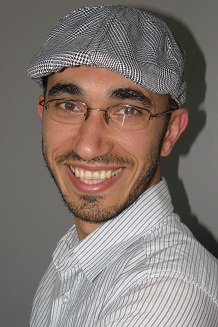
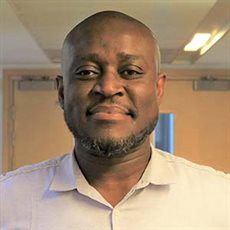
Alan Wassyng is a Professor in the Department of Computing and Software at McMaster University's Faculty of Engineering. With over four decades of academic contributions, he specializes in formal methods, safety-critical systems, and software assurance cases. Key research intersections: Automotive software safety Medical device software certification Cyber-physical systems engineering Model-driven development with domain experts His scholarly work emphasizes rigorous methodologies for software verification, particularly through tabular expressions and Workflow+ models. Recent projects include a $2M GM Canada partnership to advance automotive safety systems. Teaching leadership spans interdisciplinary capstone projects in biomedical engineering, covering software design, safety-critical development, and mechatronics applications.
Dr. José Garcia-Bravo is an Associate Professor at the Purdue Polytechnic Institute, Department of Mechanical Engineering Technology, specializing in fluid power systems, additive manufacturing, and smart manufacturing using Industrial Internet of Things (IIoT) technologies. His work bridges applied research with educational innovation, including the development of a miniature electro-hydraulic excavator arm and the Fluid Power Student Club. Education: Ph.D. in Engineering (Fluid Power), Purdue University, 2011 M.Sc. in Engineering, Purdue University, 2006 M.A. in Teaching of Spanish, Purdue University, 2004 B.Sc. in Mechanical Engineering, Universidad de Los Andes, 2002 His research interests span fluid power & motion control, digital twins, reverse osmosis systems, and mixed reality applications in manufacturing. He focuses on optimizing hydraulic systems for heavy-duty vehicles, embedding sensors in 3D-printed components, and advancing water purification technologies. Recent publications highlight innovations in digital hydraulics, bio-based packaging materials, and reverse osmosis efficiency. He has secured patents for 3D-printed lens gratings and processes for additive manufacturing. Scientific Awards: Purdue Polytechnic Outstanding Faculty in Learning Award (2019) Purdue Polytechnic Outstanding Faculty in Engagement Award (2022) Dr. Garcia-Bravo actively engages in globalizing fluid power education, facilitating student exchanges with Latin American countries and contributing to international standards for hydraulic components through ISO committees.
Overview ASSILA Ahlem is a Researcher-Lecturer at CESI, specializing in Human-Machine Interaction (HMI), Augmented Reality (AR), and Virtual Reality (VR). She holds a PhD in Computer Science from Université de Valenciennes (2016) and a postdoctoral position at Institut Image ARTS ET METIERS PARISTECH (2017). Her research focuses on usability evaluation, digital twin technology, and BIM-integrated XR systems. She has supervised multiple engineering and master’s projects, including AR application development for network management. Research Contributions Developed frameworks for integrating subjective/objective usability metrics using ISO standards Proposed maturity models for BIM-based AR/VR systems Explored digital twin applications in manufacturing and construction industries Education & Responsibilities Teaches computer science at all engineering levels (L1-M2) at CESI Reims, including algorithmics, HMI design, and project-based learning. Served as pilot for engineering program cycles (2017–2020). Active in organizing international conferences (e.g., HCI 2020, Flexible Automation 2018) and peer review for journals like IJISE and IEEE VR. Awards & Recognition No specific awards listed, but recognized for contributions to HCI and industry-relevant research. Advising & Grants Supervised over 10 student projects including PFEs and internships. Actively participates in jury panels for engineering thesis defenses and academic promotions across multiple institutions. Labs & Collaborations Member of the CESI Chair for Industry and Services of Tomorrow, focusing on technology integration in construction and manufacturing sectors.
Niels Taubert is a researcher at Bielefeld University, affiliated with both the Institute for Studies of Science (ISOS) and the Faculty of Sociology . He serves as Head of the Bibliometrics Working Group and holds a research associate position in the Department of Political Sociology (AG Straßheim). His work focuses on bibliometrics, open access, scientific communication , and the digital transformation of academic publishing . His research examines: Open science infrastructure development Publication data analysis Institutional repository systems Academic data governance Global OA adoption trends Science policy implementation Article trends show strong emphasis on: Open access transformation Bibliometric data systems Interdisciplinary research evaluation Academic communication structures Research data management Science of science He contributes to: CRIS portal for university research Kompetenznetzwerk Bibliometrie OpenAlex metadata integration Open science policy development
Federica FERRAGUTI is an Associate Professor at the Department of Engineering Sciences and Methods, University of Modena and Reggio Emilia. Her research focuses on robotics, control systems, and automation, with a particular emphasis on collaborative robotics, surgical robotics, and industrial applications. She teaches courses such as Industrial and Collaborative Robotics, Automatic Controls, and Collaborative Robotics for Smart Industry. Her work integrates advanced control strategies, safety protocols, and human-robot interaction principles to enhance automation in both industrial and medical contexts. Research Interests: Federica’s research spans robotics control, human-robot collaboration, surgical robotics, and safety-critical systems. She develops novel algorithms for motion planning, trajectory generation, and real-time control, with applications in manufacturing and healthcare. Her recent work includes AI-driven augmented reality systems for surgery, energy-efficient safety frameworks, and intuitive robot-assisted welding solutions. Publications: Over 40 peer-reviewed articles in journals and conferences, including work on collaborative robotics safety, real-time surgical AR integration, and industrial automation. Key contributions include high-velocity walk-through programming for industrial robots and energy-based control architectures for shared autonomy. Labs/Teams: Active in the ARSControl research group, focusing on advanced robotics systems. Collaborates with industry partners on projects like MyWelder, an intuitive welding system for SMEs. Engages in EU-funded initiatives like the SARAS project for surgical teleoperation.
Cristian Secchi is a Full Professor in the Department of Engineering Sciences and Methods at the University of Modena and Reggio Emilia. His research focuses on robotics, control systems, and human-robot collaboration with an emphasis on safety, automation, and industrial applications. He teaches courses such as Industrial and Collaborative Robotics and Control of Robotic Systems. Research Interests: Design and implementation of control architectures for collaborative robots. Development of safe human-robot interaction frameworks compliant with ISO/TS 15066 standards. Integration of AI (e.g., large language models) into robotic motion planning. Autonomous systems for urban environments and surgical robotics. Publications highlight advancements in: Energy-efficient trajectory planning. Adaptive control strategies for uncertain environments. Multimodal human-robot communication. Diagnosis of mechanical systems via signal analysis. He leads the ARSControl research group and actively contributes to evolving production systems through smart modular technologies. His work bridges theoretical control frameworks with practical industrial and medical applications.
Alireza Shokri is a Professor of Digital Operations and Supply Chain Excellence and Head of the Operations, Supply Chain and Logistics Management subject group at Northumbria University's Department of Operations, Marketing and Systems. He directs the Centre for Digital Supply Chain Excellence and serves on the UK National Digital Supply Chain Programme's Academic Advisory Board. Previously, he led the BA (Hons) International Business Management Programme and held practitioner roles in the food sector. He earned his PhD in Lean Six Sigma applications from Teesside University (2011), following degrees in Agriculture Engineering (University of Zanjan) and Food Technology (Teesside University). His research focuses on digital supply chains, operational excellence (OPEX), Lean Six Sigma, and sustainability in manufacturing. Key projects include a £1.3M Digital Catapult-funded initiative on spare parts supply chains and a British Academy-funded study on green Lean Six Sigma. He has led EU-funded projects (GETM3/GEMT4) totaling €2.2M and collaborates with organizations like the NHS and SMEs. Shokri is an editorial board member for the International Journal of Lean Six Sigma and reviews for top journals like the International Journal of Operations and Production Management. He is a Chartered Quality Institute member, Fellow of the Higher Education Academy, and certified Lean Six Sigma Green Belt. Supervising three PhD students, his work bridges academia and industry, emphasizing 'Research in Practice'.
Sharon Cook is a Professor of Ergonomics and Human Factors at Loughborough University, serving as Academic Integrity Lead and Mental Health First Aider. Her career spans roles at the UK Atomic Energy Authority, Leyland DAF, and the Institute for Consumer Ergonomics. She holds fellowships from the Chartered Institute of Ergonomics and Human Factors (CIEHF) and the Higher Education Academy (FHEA). Education: BSc in Ergonomics & Business Admin, MSc in Industrial Design (Engineering). Research focuses on inclusive design, human factors in transportation, and aging populations. Key areas include Mobility-as-a-Service (MaaS), dementia-inclusive design, and ergonomic safety in vehicles. Publications highlight trends in VR for empathy modeling, inclusive service design, and accessibility challenges in public transport. Recent work explores MaaS exclusion barriers for older travelers and dementia patient participation in design. Awards include CIEHF’s 2023 Lifetime Achievement Award, 2024 Teaching Best Practice Award, and 2007 Queen’s Anniversary Prize. She actively contributes to ISO Automotive User Interest Group, SAE Human Factors Committee, and ANEC Accessibility Working Group. PhD supervision emphasizes real-world design applications. Technical expertise includes Digital Human Modelling (DHM) for field-of-view assessments and wearable simulations for occupational health awareness. Labs/Teams: Collaborates with Loughborough’s Institute for Consumer Ergonomics and SKInS project (wearable simulations for occupational health).
Professor Vincent Wade is a prominent academic and co-founder of the ADAPT SFI Research Centre, holding the Professorial Chair of Computer Science (established 1990) and a Personal Chair in Artificial Intelligence at Trinity College Dublin's School of Computer Science and Statistics. He co-directs the DREAL Centre for Research Training and leads ADAPT, a globally recognized centre for digital media technology and AI research. His work spans intelligent systems, personalisation, machine learning, and ethical AI applications in healthcare and education. Research interests include AI-driven personalisation, multimodal interaction, knowledge graphs, and ethical considerations in digital technologies. He has published over 350 peer-reviewed papers, earned the prestigious Provost Innovation Award (2018), and holds patents in personalisation technologies. He co-founded EmpowerTheUser, a TCD spin-out focused on simulation-based learning analytics. Major Achievements: 2018 Provost Innovation Award (Trinity College Dublin) 2010 European Language Label Award Fellow of Trinity College Dublin Over 350 scientific publications Key Contributions: Developed the ADELE corpus for social conversation analysis Pioneered cross-site personalisation frameworks Advanced adaptive e-learning systems through platforms like Slicepedia and AMASE His research bridges technical innovation with societal impact, addressing challenges in healthcare, education, and digital ethics.
Daniel Prajogo is a Professor in the Department of Management at Monash University, Faculty of Business and Economics. His research and teaching focus on quality, operations, supply chain, and innovation management. He has published extensively in top-tier journals and has led numerous funded research projects with industry and international partners. Education: Bachelor of Electrical Engineering, Sepuluh Nopember Institute of Technology, Indonesia Master of Quality Management, RMIT University, Australia (Best Graduate Award) PhD in Business Management, Monash University, Australia (2003) His research interests span quality management, operations and supply chain management, innovation, and strategic management , with recent work extending into healthcare systems, sustainability, and biotechnology applications. He has made significant contributions to understanding supply chain resilience, lean implementation, and ethical business practices. His recent publications reflect a strong trend in interdisciplinary research , bridging operations with healthcare, sustainability, and international development. Themes include crisis response (e.g., pandemic disruptions), innovation in emerging industries (e.g., seaweed biotechnology), and ethical supply chain dynamics. His work often integrates theoretical frameworks with practical industry applications. Scientific Awards and Recognition: Best Graduate Award, RMIT University Listed among the top 25 Supply Chain Management scholars in Asia (IJPE, 2018) Daniel Prajogo has secured multiple research grants from the Australian Research Council and industry bodies such as JAS-ANZ and ISCRR. He actively supervises research students and collaborates internationally, particularly with Indonesian institutions. His current projects focus on strengthening health resilience, sustainable marine biodiversity, and Australia-Indonesia industrial partnerships. He leads research initiatives that often function as virtual labs or collaborative networks, particularly in the areas of supply chain innovation, healthcare operations, and sustainable development . These involve cross-institutional and cross-border teams, emphasizing real-world impact and policy relevance.
Dr. Siamak Shahandashti is a Senior Lecturer in the Department of Computer Science at the University of York, UK. He leads the Cyber Security & Privacy Research Group and is actively involved in academic governance roles including Chair of the Physical Sciences Ethics Committee and Programme Lead for the MSc Cyber Security programme. His research focuses on applied cryptography, privacy-preserving technologies, electronic voting systems, and blockchain applications. He holds a PhD in Computer Science and has contributed to over 40 peer-reviewed publications. Education: PhD in Computer Science, MSc in Telecommunications Engineering, BSc in Electrical Engineering. Professional qualifications include a PGCert in Academic Practice. Research interests span cyber security fundamentals, usable security mechanisms, and the intersection of cryptography with real-world systems. Notable projects include verifiable electronic voting systems and DoS-resilient blockchain protocols. He has led funded projects on e-voting scalability and contributed to standards reviews for ISO/IEC protocols. Award-winning educator in cyber security curriculum development, with active roles in admissions and academic ethics compliance. His work bridges theoretical cryptography with practical implementations, emphasizing user-centric security design principles. Labs/Teams: Cyber Security & Privacy Research Group (lead), Departmental Ethics Team (lead). Collaborations include institutions in Australia, France, and across Europe.
Timo Oksanen is a Visiting Professor at Aalto University's Department of Electrical Engineering and Automation. His research focuses on agricultural automation, robotics, and control systems, with a strong emphasis on ISO 11783 vehicle network standards and autonomous systems. He collaborates with industry partners to develop next-generation agricultural machinery solutions, including automated guidance systems, sensor integration, and cybersecurity protocols. Oksanen leads the Autonomous Systems research group and has authored over 100 publications since 2009. Key research areas include precision agriculture technologies, machine learning applications in farming, and the integration of OPC UA with agricultural communication standards. Recent work addresses challenges in autonomous vehicle navigation, dust-resistant vision systems, and safety-critical perception architectures for automated field operations. Notable projects include the AGRIX initiative for ISOBUS-compatible implements and the development of a next-generation task controller using OPC Unified Architecture. Oksanen has also contributed to international standards for tractor-implement communication and four-wheel steering systems. His work bridges academic research with industrial applications, addressing both technical innovations (e.g., LIDAR-based object detection) and operational efficiency improvements in farm machinery fleets.
Dr. Nana Osei Bonsu is an Assistant Professor in Responsible Business & Sustainability at the Centre for Responsible Business, Birmingham Business School, University of Birmingham. He is also the Deputy Programme Director of the Undergraduate Business Management Suite (Singapore). His work integrates academic research with policy and practice in sustainability. PhD in Land-Use & Sustainable Forestry Research, University College Dublin (2016) MSc in Environmental Resource & Sustainable Management, University College Dublin (2010) BSc in Environmental, Health & Safety Management, Athlone Institute of Technology, Ireland (2008) PGC in Managing Development, Open University Postgraduate studies in Environment Decision-Making and Occupational Health & Safety Management, Open University Sciences - Laboratory Technology, University of Cape Coast, Ghana (1999) Dr. Osei Bonsu's research focuses on sustainability policy and governance, with emphasis on net-zero emissions, circular economy, electric vehicle transition, and the UN Sustainable Development Goals (SDGs). His interdisciplinary approach incorporates social innovation, nexus thinking, and scenario development to address complex environmental and socio-ecological challenges, particularly in low- and middle-income countries. He explores the interplay between global value chains and responsible business practices, sustainable transportation, land-use planning, and biodiversity conservation. His recent publications reflect a strong trend in sustainability transitions, particularly in urban mobility, equitable access to clean technologies, and policy integration across environmental, social, and economic dimensions. He investigates how businesses and governments can co-create sustainable futures through innovation and inclusive governance. Editor, Forest Policy and Economics journal Reviewer for Futures Journal , Journal of Sustainable Forestry , and others Member, Chartered Institute of Environmental Health (CIEH) Appointed Member, CIEH Air Quality Panel (advising UK government on air pollution policy) Dr. Osei Bonsu has led and contributed to research projects funded by the European Commission and has professional experience in infrastructure, transport, and environmental health policy with UK local authorities. He previously worked as a Research Scientist on EU FP-7 project INTEGRAL at University College Dublin. He has also advised multinational corporations on environmental, health, and safety management systems aligned with ISO standards. His current research includes a study on the sustainability of Britain's low-carbon economy and zero-emission vehicle global value chains.
Chris Harper is a Senior Research Fellow at the Bristol Robotics Laboratory, affiliated with the Faculty of Engineering and Technology at the University of the West of England. His work focuses on safety assurance in robotics and autonomous systems, with expertise spanning civil aerospace, rail, defense systems, and nuclear energy. AAIP Assistive Robotics in Healthcare CAV Forth ROBOPILOT SafeMRX Research Expertise: With over 25 years in system safety assurance, Harper specializes in safety case development, hazard identification, fault tree analysis (FTA), failure modes & effects analysis (FMEA), and simulation-based safety validation techniques. Key Contributions: He contributed to ISO 13482, the first international safety standard for mobile service robots, and developed the Environmental Survey Hazard Analysis (ESHA) method for autonomous systems. Publications: His work spans safety verification methodologies, swarm intelligence applications, and formal methods integration in autonomous vehicles. Recent articles highlight simulation-based assertion checking and ISO standardization efforts. 15+ years in robotics safety research ISO technical committee participation ESHA method development PhD in robotics safety methodology
Associate Professor Wayne Wobcke is a faculty member in the School of Computer Science and Engineering at the University of New South Wales (UNSW), where he has been employed since 2002. His academic career includes previous positions at the University of Sydney until 1998, British Telecom Labs in the UK for three years, and the University of Melbourne for one year. He holds a PhD in Computer Science from the University of Essex (1989), an MSc from the University of Queensland (1985), and a BSc (Hons) in Mathematics/Computer Science from the University of Queensland (1984). Dr. Wobcke's research spans both theoretical and practical aspects of artificial intelligence and data science. His work encompasses intelligent agents, data mining, agent-based modeling, dialogue management, personal assistants, recommender systems, and computational social science. He has collaborated extensively with industry through three Cooperative Research Centres (Smart Internet Technology CRC, Smart Services CRC, and Data to Decisions CRC), where he served as a Programme Manager and Project Leader for over 10 years. Notable achievements include developing a voice-controlled mobile application for email and calendar interaction (a precursor to Apple's Siri) and deploying a people-to-people recommender system for online dating on one of Australia's largest dating sites. His recent research focuses on data science in humanitarian contexts and machine learning applications in official statistics, conducted in collaboration with BPS (Statistics Indonesia) and STIS (Politeknik Statistika, Indonesia). His publication record shows a consistent trajectory of impactful research, with recent work concentrating on poverty targeting, domain adaptation, natural language processing for recommender systems, and political opinion mining. Scientific Awards: Best Paper Nomination, 11th Workshop on Argument Mining (2024) UNSW Arc Postgraduate Research Supervisor Award (2017, 2018) AAAI Deployed AI Application Award, Twenty-Sixth Annual Conference on Innovative Applications of Artificial Intelligence (2014) Best application paper runner up, 17th Pacific-Asia Conference on Knowledge Discovery and Data Mining (2013) Dr. Wobcke has successfully supervised numerous research students, with Irwan Rahadi currently working on 'Causal Modelling and Machine Learning for Official Statistics'. His grant portfolio includes significant funding from the Australian Research Council and various Cooperative Research Centres, totaling over $3.7 million since 2003. He teaches COMP9414 Artificial Intelligence and COMP9727 Recommender Systems at UNSW.