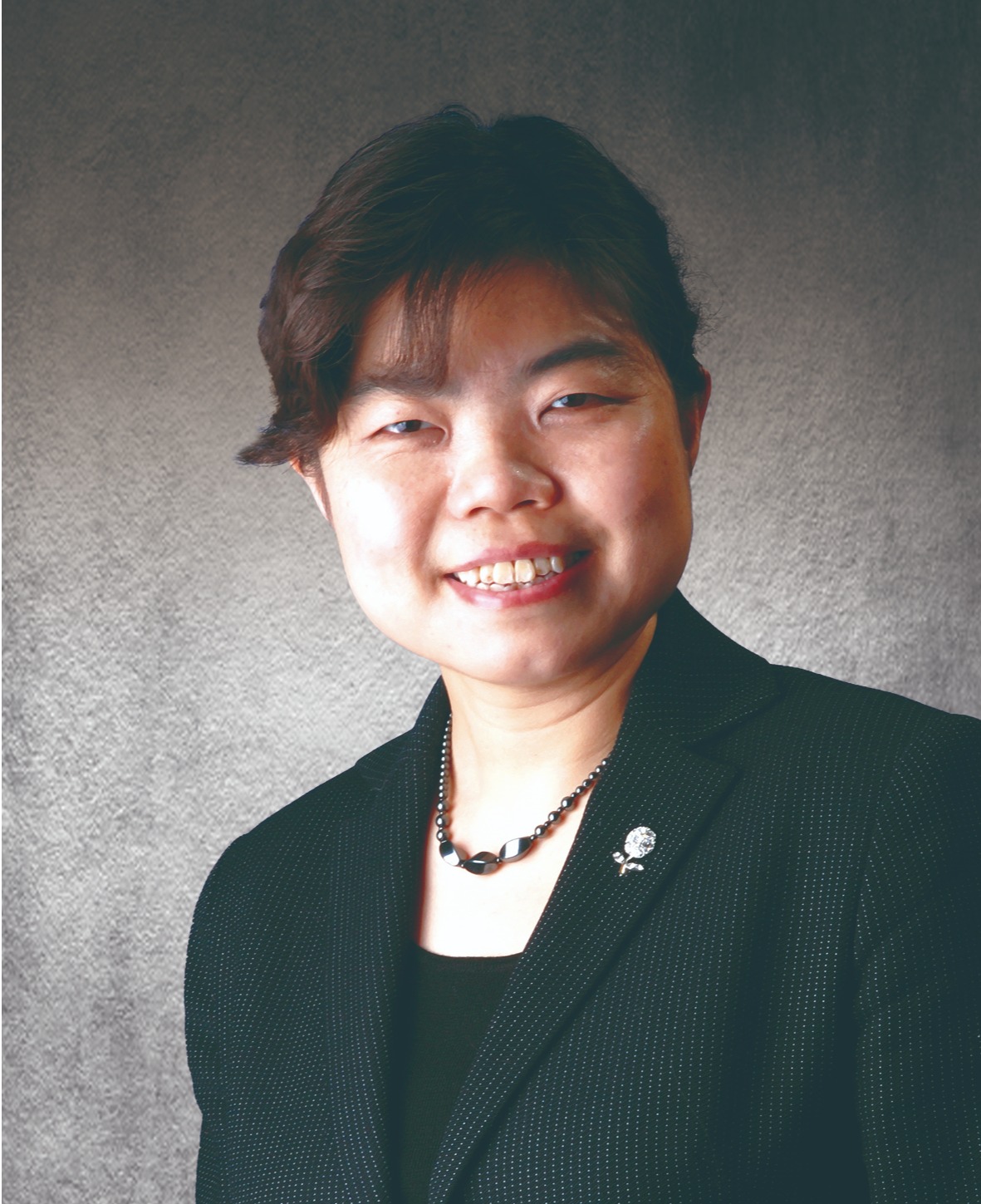
Yuwen Gu is an Assistant Professor in the Department of Statistics at the University of Connecticut. Their research focuses on high-dimensional statistics, variable selection, model combination, nonparametric methods, causal inference, and optimization techniques. Their recent publications highlight advancements in quantile regression, sparse modeling, and high-dimensional data analysis. Notable trends include applications of kernel methods, distributed computing for large-scale statistics, and regularization techniques for insurance and multi-source data. Yuwen Gu's work also explores interdisciplinary domains, such as bioacoustic signal processing in ecological studies, though their primary contributions remain in statistical methodology and computational efficiency.
Professor Nora Brambilla holds the Chair of Theoretical Physics - Computational Field Theory, Nuclear and Hadron Many-Body Systems at the Technical University of Munich's Department of Physics within the TUM School of Natural Sciences. Her research program at T30f focuses on developing and applying effective quantum field theories to understand the dynamics of the strong interaction in both high-energy particle physics and low-energy nuclear physics contexts. Her research interests center on Effective Field Theories (EFTs) and Renormalization Techniques with applications across multiple domains of physics. She develops non-relativistic effective field theories for heavy-quark processes, quarkonium and exotics XYZ physics at major accelerator experiments including those at CERN's Large Hadron Collider, the B factory in Japan, and the tau-charm factory in China. Her work also encompasses EFTs for strong interactions at finite temperature and density with applications to heavy-ion experiments at RHIC in the USA and LHC at CERN, as well as cosmological environments. She conducts high-order perturbative calculations in QCD for precision determination of Standard Model parameters and explores non-perturbative methods with applications to confinement mechanisms. A current focus involves matching traditional QCD lattice calculations with quantum computing to obtain observables of strongly correlated systems in and out of equilibrium. Her recent publications reveal a strong trend toward applying effective field theory techniques to dark matter physics, quarkonium suppression in heavy-ion collisions, and the interface between quantum computing and strong interaction physics. The research demonstrates increasing interdisciplinary connections between particle physics, nuclear physics, cosmology, and quantum information science. Elected Fellow of the American Physical Society (2012) Vice-President Marie Curie Association (2002-2005) Humboldt Fellowship for Long Term Cooperation (2002-2003) Marie Curie Fellowship (1998-1999) Alexander Von Humboldt Fellowship (1997) Professor Brambilla is a founding member of the International Quarkonium Working Group (2002) and the Quark Confinement and the Hadron Spectrum conference series (1994). She serves on the Theory Advisory Committee of the Panda Experiment at GSI-Darmstadt (since 2009). Her teaching portfolio includes advanced courses in quantum mechanics, effective field theories, and seminars on the physics of strong interactions for both winter and summer semesters through 2025.
Dr. Chris Dockery is a Professor of Chemistry at Kennesaw State University's Department of Chemistry and Biochemistry within the College of Science and Mathematics. Since 2022, he has served as Faculty Director of General Education and previously held leadership roles including Interim Chair (2022-2024) and Assistant Department Chair (2011-2022). His research focuses on forensic chemistry with emphasis on gunshot residue analysis using laser-induced breakdown spectroscopy (LIBS) , chemometrics, and environmental applications. His work addresses critical needs in Rapid forensic methodologies Chemical fingerprinting Error rate characterization for legal admissibility Student training in analytical chemistry Notable collaborations include research with Dr. G.E. Potts (e-cigarette analysis) Dr. M.B. Rosenberg (LIBS applications) Dr. S.L. Morgan (forensic dye analysis) His educational background includes a Ph.D. in Analytical Chemistry (University of South Carolina, 2005) B.S. in Chemistry (Berry College, 2001)
Dr. John Linhoss is an Assistant Professor in the Department of Biosystems Engineering at Auburn University, where he joined in 2021. Previously, he spent 8 years at Mississippi State University as an Extension Associate and Assistant Extension Professor. His research focuses on precision animal management, poultry housing design, environmental control systems, and spatial statistics. He leads a $298,000 USDA-funded grant evaluating natural vs. artificial lighting impacts on broiler welfare and environmental outcomes. Education: Ph.D. in Engineering Technology, Mississippi State University M.S. in Soil & Water Science, University of Florida B.S. in Biology, Birmingham-Southern College Research Interests: Optimization of lighting conditions in poultry houses Development of biochar-based litter amendments Sensors and instrumentation for precision farming Spatial modeling for environmental control systems Animal welfare through environmental design LCA (Life Cycle Assessment) frameworks for sustainable poultry production His recent work emphasizes interdisciplinary collaboration with Poultry Science departments, the National Poultry Technology Center (NPTC), and USDA ARS to address industry challenges. He actively seeks graduate students with hands-on experience in precision livestock farming, sensors, or animal housing management. Grants and Advising: $298K USDA grant on broiler lighting strategies (2023–present) Advised Chris Marty and Matt Rowland (MS graduates, 2021) and currently collaborates with post-doctoral researcher Maryam Mohammadi-Aragh Focuses on applied research with industry partnerships Labs/Teams: Collaborates with Auburn University’s National Poultry Technology Center (NPTC), Poultry Science Department, and USDA ARS Poultry Research Unit on environmental and engineering solutions for poultry production systems.
Dr. Shahzad Mumtaz is a Lecturer at the School of Natural and Computing Sciences, University of Aberdeen, where he contributes to research and education in computational health and data science. His work bridges artificial intelligence and healthcare, focusing on real-world applications in medical data modeling and digital health tools. Research Interests: His research spans biomedical informatics, machine learning, natural language processing, electronic health records (EHR), phenotype libraries, and medical image analysis. He is particularly active in developing tools for clinical data standardization, such as the Carrot tool for OMOP CDM, and in AI-driven solutions for fraud detection, deepfake identification, and clinical decision support. His interdisciplinary work integrates computer science with public health and clinical medicine. Publication Trends: His recent publications (2023–2025) emphasize AI applications in healthcare, including deep learning for fake medical image detection, NLP for financial text analysis, and vision transformers for weather and skin cancer classification. He frequently collaborates on large-scale health data initiatives like CO-CONNECT and the UK Phenotype Library, reflecting a strong focus on scalable, interoperable digital health infrastructure. Scientific Contributions: Core contributor to the CO-CONNECT project for national health data access during the pandemic. Developer of the Carrot tool for improving OMOP data curation. Active in advancing phenotype library standards and EHR-based research. Advising and Grants: While no formal students or grants are listed in the provided text, his extensive collaborative work suggests active involvement in research teams and potential supervision of graduate researchers. He is likely engaged in funded projects related to health data science and AI, given the scale and scope of his publications. Labs and Teams: Dr. Mumtaz is affiliated with research initiatives at the University of Aberdeen focused on biomedical informatics and trusted research environments. He collaborates with multidisciplinary teams across the UK, particularly in projects involving NHS data, digital phenotyping, and AI safety in healthcare.
Dr Simon Place is a Senior Lecturer at Cranfield University, affiliated with the National Flying Laboratory Centre. He holds a PhD in reliability and safety assessment of helicopter transmission systems and is a Chartered Engineer (CEng) and Member of the Institute of Mechanical Engineers (MIMechE). His expertise lies in air transport safety, airworthiness, aviation operations, and maintenance human factors. PhD, Cranfield University (research on helicopter transmission reliability) MSc in Flight Dynamics, Cranfield University BSc in Engineering Science & Technology, Loughborough University Dr Place's research focuses on safety and risk assessment, reliability analysis, and human factors in aviation maintenance. He has led projects for clients such as DSTL, UK Ministry of Defence, QinetiQ, and international civil aviation authorities. His work bridges theoretical modeling with practical applications in aircraft systems and safety. His recent publications (2023–2024) emphasize aerodynamic modeling of the Saab 340B, flight simulation, and landing gear health assessment using flight data and prognostics. These works reflect a strong trend toward data-driven, hybrid approaches combining simulation, optimization, and real-time monitoring for proactive maintenance and safety enhancement. His scientific recognitions include: Chartered Engineer (CEng) Member of the Institute of Mechanical Engineers (MIMechE) Dr Place leads airborne laboratory training and contributes to MSc modules in Airworthiness, Safety Assessment of Aircraft Systems, and Safety & Accident Investigation. He collaborates extensively with researchers like James Whidborne and Mushfiqul Alam. He has no known grants listed, but his applied research suggests active funding from defense and aviation sectors. He advises research students, though specific names are not provided. He is a key member of the Safety and Accident Investigation Centre at Cranfield, leveraging first-hand experience in military and airline operations and accident investigation. His team focuses on real-world aviation safety challenges, certification, and design improvement.
Hans A. Winther is an Associate Professor at the Institute of Theoretical Astrophysics, University of Oslo, specializing in theoretical cosmology with a focus on large-scale structure formation. He holds a Master’s (2010) and PhD (2013) from the University of Oslo, followed by postdoctoral research at the University of Oxford and the University of Portsmouth. His work bridges cosmological theory with advanced numerical simulations, emphasizing modified gravity, dark matter models, and N-body codes. Winther leads courses such as AST5220 Cosmology II and AST1010 Introduction to Astronomy , integrating computational tools like FML and MG-PICOLA . His research includes developing simulation frameworks for modified gravity (e.g., ISIS , SCALAR ) and axion-like dark matter. He actively contributes to the Euclid mission through simulations and data analysis, addressing nonlinear cosmological structures and parameter constraints. Notable projects include the FML C++ library for parallel grid-particle algorithms and the MG-PICOLA code for fast modified gravity simulations. His work underscores the interplay between theory and computation in cosmology, aiming to test gravity and dark matter hypotheses using observational data from surveys like Euclid and LSST.
Maicol Ochoa is a Researcher affiliated with the University of Maryland College Park's Department of Chemistry & Biochemistry and the National Institute of Standards and Technology (NIST). His research focuses on quantum science, nanoscale systems, and applied mathematics, with applications in silicon-based quantum devices and quantum simulations. He holds a B.S. in Chemistry and M.S. in Mathematics from Universidad Nacional de Colombia, and a Ph.D. in Chemistry and Chemical Biology from Cornell University. His postdoctoral work included roles at UC San Diego and the University of Pennsylvania. Affiliations: IPST (Institute for Physical Science and Technology), Department of Chemistry & Biochemistry, NIST Research Themes: Quantum thermodynamics, nanoelectronics, electronic structure calculations, and many-body theory in silicon quantum devices His work explores phenomena such as energy conversion in nanoscale systems, quantum coherence effects, and the development of protocols for Fermi-Hubbard model parameter extraction. He has presented at leading conferences like the APS Global Physics Summit and the Silicon Quantum Electronics Workshop, and authored over 20 peer-reviewed publications in journals like Physical Review B and Journal of Applied Physics . He was honored with the 2022 PML Distinguished Associate Award for his contributions to quantum science. He collaborates internationally, including with the Nicolaus Copernicus University in Poland, and mentors students through the MathQuantum RTG and TREND REU programs, focusing on computational methods in quantum device modeling and nanoscale transport.
Professor David M W Powers is a leading academic at Flinders University of South Australia, holding the Professor of Computer and Cognitive Science position. He serves as Visiting Professor at Beijing University of Technology and contributes extensively to editorial and program committees, including as Editor-in-Chief of Springer's Cognitive Science and Technology series. PhD in Computational Psycholinguistics (UNSW) Founding President of ACL SIGNLL and CoNLL conference series Recipient of 15+ major research grants including multiple ARC and NSF awards His research spans Artificial Intelligence, Cognitive Science, Robotics, and Biomedical Engineering with a focus on: Embodied Conversational Agents Brain-Computer Interfaces Parallel Logic Programming Evaluation Metrics in Machine Learning Assistive Technologies for disability support AI in Health and Education Recent publications emphasize optimization algorithms for autonomous systems (AUV routing models) and evaluation methodology advancements . Scientific awards include the Loebner Prize Bronze Medal and multiple ARC grants totaling over $30M in funding. Teaching roles include coordination of courses in Artificial Intelligence, Computational Intelligence, and Human-Computer Interaction . Professional engagements span leadership roles in ACL, ACM, and IEEE, with significant industry collaboration through startups like YourAmigo Pty Ltd.
Kristian Debrabant is an Associate Professor at the Department of Mathematics and Computer Science, Faculty of Science and Engineering, University of Southern Denmark. He is also affiliated with the STEM Center for Educational Research – FNUG, highlighting his dual engagement in research and pedagogical development. His academic credentials include a Dr.rer.nat. degree, reflecting a strong foundation in mathematical sciences. Department: Department of Mathematics and Computer Science Position: Associate Professor in Computational Science Additional Affiliation: STEM Center for Educational Research – FNUG Email: debrabant@imada.sdu.dk ORCID: https://orcid.org/0000-0003-2901-162X His research lies at the intersection of numerical analysis and stochastic modeling, with a focus on developing and analyzing numerical methods for stochastic differential equations (SDEs). Key areas include Runge-Kutta methods, exponential integrators, weak and strong convergence, and applications in computational science. He also contributes to interdisciplinary work, such as urban traffic modeling and environmental systems. Recent publications show a consistent trend in advancing numerical schemes for SDEs, particularly those with non-standard noise (e.g., fractional Brownian motion), stiff systems, and non-globally Lipschitz coefficients. His work spans theoretical developments in convergence and order conditions to practical implementations in finance, ecology, and engineering. The integration of B-series and tamed schemes reflects a deep engagement with both classical and modern numerical frameworks. Kristian Debrabant supervises PhD students, as indicated by the 'PhD supervision (2)' note in his profile. While specific grant details are not listed, his publication record and active research suggest ongoing funding support. His involvement with the STEM Center implies leadership or significant contribution to educational innovation in STEM disciplines.
Dr. Philipp Deindl is a Physician Scientist at the University Medical Center Hamburg-Eppendorf (UKE) , specializing in Neonatology and Pediatric Intensive Care Medicine . He operates within the Faculty of Medicine and contributes to the Section Neonatology and Pediatric Intensive Care Medicine . Academic focus on neonatal pain assessment Research in pediatric sedation protocols Expertise in mechanical ventilation training Editorial contributions to pediatric pain scales His 2025-2024 research includes: AI-based neonatal pain detection systems Gentamicin pharmacokinetics in neonates Impact of maternal thyroid disorders on neonates Standardization of endotracheal tube placement His work appears in Frontiers in Pediatrics , European Journal of Pain , and Pediatric Research . Professional Memberships : Gesellschaft für Neonatologie und Pädiatrische Intensivmedizin (GNPI) Deutsche Gesellschaft für Kinderheilkunde und Jugendmedizin (DGKJ) European Society of Paediatric and Neonatal Intensive Care (ESPNIC) Deutsche Interdisziplinäre Vereinigung für Intensiv- und Notfallmedizin (DIVI)
Füsun COŞKUN is an Assistant Professor at Ahi Evran University's Vocational School of Technical Sciences, Department of Plant and Animal Production, where she has been employed full-time since 2012. She previously served as Department Head from 2012-2013. Education: PhD in Animal Science, Ankara University (2003-2008) MSc in Animal Science, Ankara University (2000-2003) BSc in Animal Science, Ankara University (1995-2000) Research Focus: Her primary expertise is in Small Animal Breeding and Improvement, with specific emphasis on goat and sheep production systems. Research areas include lactation performance in Maltese goats, milk quality assessment, somatic cell count analysis, breeding strategies for Akkeci sheep, and sustainable animal husbandry practices. She employs mathematical modeling for performance prediction and investigates traditional Turkish animal practices. Publication Trends: Her 61 publications demonstrate evolving focus from cultural animal practices (2012-2016) to quantitative animal science (2017-present). Recent work emphasizes dairy goat production, milk composition analysis, and breeding efficiency, utilizing advanced statistical models and sustainable approaches. Awards: Session Best Paper Award, Eminent Association of Researcher in Biological and Medical Sciences (2017) Grants & Projects: Has led 11 research projects including: Malta Keçisi Oğlaklarının Besi Performansının Belirlenmesi (2023-2024) Somatik Hücre Sayısının Keçi Sütü Kalitesine Etkisi (2021-2022) Akkeci Female Kids Early Breeding (2016) Maltese Goat Milk Composition Analysis (2014-2016) Advising: Supervised Master's student Mercan Karakaş (2020) on somatic cell count detection methods in ruminant milk. Collaborations: Extensive work with researchers including Mehmet Ertuğrul (Ankara University) and Orhan Yılmaz (Ardahan University) on animal breeding and ethology projects.
Renata Słota is a Professor at the Institute of Computer Science within the Faculty of Computer Science at AGH University of Science and Technology in Kraków, where she serves as Vice-Dean of the Faculty of Development. Her office is located at D-17, ul. Kawiory 21, room II, 3.34, with contact details including phone +48 12 328 33 35 and email rena@agh.edu.pl. She also contributes to academic governance as a member of the Disciplinary Council for Technical Information Technology and Telecommunications. Her research centers on distributed data management and cloud computing , with pioneering work in digital cultural heritage systems , blockchain-based decentralized authority , and scientific workflow automation . Notable contributions include integrated frameworks for 3D Cultural Heritage objects management, consensus mechanisms for collaborative data sharing, and multi-cloud data access solutions. Her work bridges theoretical advances with practical applications in cultural preservation and scientific computing. Analysis of her 2020-2026 publications reveals dominant trends in decentralized data governance , cultural heritage digitization , and hybrid cloud workflow management . Key themes include blockchain applications for organizational structures, semantic interoperability for quality-oriented data access, and reproducibility frameworks for computational experiments. Her research consistently addresses real-world challenges in global data accessibility and fault tolerance. Professor Słota actively participates in major research initiatives including the Onedata project for global data federation and the Scalarm platform for distributed parameter studies, demonstrating leadership in data-intensive computing environments and collaborative infrastructure development.
Sun Jing is an Associate Professor at the Department of Management Science and Engineering, School of Economics and Management, Tsinghua University. Her research spans strategic decision-making, service operations management, statistical data mining, and total quality management. She has extensive academic leadership experience, including roles in ISO standardization committees and the Chinese Quality Association. Ph.D. in Management from Beijing University of Aeronautics and Astronautics (1999) M.Sc. and B.Sc. in Technology Economics & Systems Engineering from Tianjin University (1994, 1991) Her recent work focuses on statistical process control for autocorrelated systems, Six Sigma methodologies, and healthcare quality management. She has received multiple national awards for her contributions to quality engineering and education, including the National Standardization Innovation Contribution Award (2014) and Ministry of Education Humanities and Social Sciences Research Award (2009). ISO/TC69/SC7/WG2 Chair (2017–Present) Former ISO/TC69/SC7 Chair (2008–2016) Keynote speaker at international conferences (INFORMS, Korea-China Quality Symposium) She has led technical reports on higher education quality, two-sigma integration performance evaluation, and case studies for organizations like Beijing Daxing International Airport. Her teaching includes courses on data modeling, quality management, and decision analytics.
Dr. Moritz Lindner is a Senior Postdoctoral Research Fellow at the Nuffield Laboratory of Ophthalmology , part of the Medical Sciences Division at the University of Oxford . Affiliated with St Cross College , his work focuses on optogenetic gene therapy for restoring vision in retinal blindness models. University: University of Oxford Department: Nuffield Laboratory of Ophthalmology College: St Cross College Lindner's research spans retinal neurobiology , visual electrophysiology , and gene therapy . His recent publications analyze trends in vision restoration technology , retinal pathology , and neuroengineering . Scientific Awards: Goodger and Schorstein Postdoctoral Scholarship (2018) Knoop Junior Research Fellow (2016) German Research Foundation Fellowship (2016) BONFOR Gerok Fellowship (2015) Travel Award of the German Retina Society (2015) Doctorate (summa cum laude) (2012) Poster Award of the German Physiological Society (2012) Lindner collaborates with Professor Mark Hankins and is part of the Retinal Neurobiology and Optogenetics Group . He has developed tools like ERGtools2 for visual electrophysiology data analysis.