Thijs Defraeye is a Senior Scientist at Empa (Swiss Federal Laboratories for Materials Science and Technology) and Adjunct Professor at Dalhousie University. He holds a PhD in Building Physics from KU Leuven (2011) and a Master's in Civil Engineering (2006). His work focuses on optimizing food supply chains through multiphysics simulations and digital twins, addressing challenges in refrigerated transport, postharvest quality preservation, and energy-efficient food processing. He leads the SimBioSys group, developing solutions for perishable goods logistics and electrohydrodynamic technologies. Research interests include: Biophysics of food systems Digital twin applications in agriculture Electrohydrodynamic drying Thermal management in cold chains Sustainable food technologies Recent work emphasizes reducing food loss through physics-based modeling of refrigerated containers, ventilated packaging optimization, and scalable evaporative cooling systems. His studies bridge engineering principles with biological processes, aiming to enhance global food security and environmental sustainability.
Dr. Theophilus A. Benson is a Professor of Electrical and Computer Engineering at Carnegie Mellon University (CMU) and CMU-Africa. His research focuses on improving network performance and availability in data centers, clouds, and edge networks. He leads projects addressing the digital divide in Africa through initiatives like the African Internet Observatory (AIO), which analyzes connectivity challenges and infrastructure resilience. His work spans programmable networks (eBPF/P4), CDN optimizations, and network management frameworks. Education: B.S. from Tufts University, Ph.D. from University of Wisconsin-Madison, Postdoc at Princeton University. Research Interests: Network state management, programmable substrates, digital equity, measurement systems, and network security. His group develops tools like NetEdit (eBPF management), JSBench (mobile web performance), and the African Internet Observatory's probe network. Recent Trends: Publications emphasize eBPF management frameworks, African network analysis, and data-driven CDN improvements. Key projects include subsea cable impact studies, QUIC protocol analysis, and deploying measurement probes across Africa. Awards: NSF CAREER Award, Google/FA Faculty Awards, SIGCOMM Test of Time Award, and DARPA ISAT membership. Advising & Grants: Active in mentoring MS/PhD students and postdocs. Current grants include NSF funding for data-driven web performance and IoT security. Collaborations with Meta and industry partners enhance real-world system deployments. Labs & Teams: Leads the AIO initiative with local African stakeholders. Research group includes collaborators from National Taiwan University and partnerships with institutions like TU Delft (keynote on eBPF).
Tristan Kershaw is a Senior Lecturer at the University of Bath's Department of Architecture & Civil Engineering. His research focuses on climate resilience, building physics, and urban microclimate adaptation. He holds an MPhys (2004) and PhD in low-temperature solid-state physics (2008) from the University of Exeter. His work explores how urban design and green/blue infrastructure can mitigate climate change impacts on buildings and communities. He has led projects funded by EPSRC, the Royal Academy of Engineering, and the EU, addressing topics like heatwave mitigation, sustainable land management, and climate adaptation in underserved regions. Key contributions include the CIBSE Napier Shaw Medal (2012) for developing probabilistic future weather models. His research emphasizes long-term building sustainability, thermal comfort, and nature-based solutions for urban resilience. He collaborates internationally and actively supervises doctoral students in climate change resilience, urban heat islands, and zero-carbon design. Education: MPhys (Exeter, 2004), PhD (Exeter, 2008) Affiliations: Centre for Climate Adaptation & Environment Research (CAER), Centre for Regenerative Design & Engineering (RENEW) Grants: EPSRC-funded projects on urban green infrastructure and heatwave impacts Recent projects include designing climate-resilient buildings in Qatar and developing urban models for thermal observation. His work aligns with UN SDGs related to climate action (SDG13) and sustainable cities (SDG11).
Dr. Mohsin Malik is an Associate Professor of Project Management at Swinburne University of Technology (since 2023) in Melbourne, Australia. Previously, he held roles as Senior Lecturer (2018–2022) at Swinburne and Lecturer (2016–2018) at the University of Melbourne. He earned his PhD in Technology Management from the University of Western Australia (2012). His research focuses on organizational dynamics for innovative outcomes in digital contexts, sustainability in supply chains, and project management practices aligned with UN Sustainable Development Goals (SDG-9, SDG-12, SDG-3). Key areas include digital transformation, lean management, agile project management, and supply chain resilience. Dr. Malik’s work has been published in top-tier journals like the International Journal of Project Management, Information & Management, and IEEE Transactions on Engineering Management. He currently serves as Senior Associate Editor of the International Journal of Physical Distribution & Logistics Management and has secured grants totaling over AUD 1M, including a 2025–2028 project on digital transformation in Indian/Australian organizations funded by DFAT. His research explores topics such as socio-cognitive dynamics in digital transformation, lean socio-technical systems, and agency theory in international development projects. Recent projects include analyzing digital platform interactions for Australian artists and evaluating virtual healthcare barriers during the pandemic. He actively supervises doctoral and master’s students focusing on digital governance, social sustainability, and project monitoring frameworks. Dr. Malik is a globally recognized scholar, with over 23 years of academic and industry experience. He collaborates with organizations like the Victorian Music Development Office and the Australian Academy of Science, emphasizing real-world impact through research.
Jeff Sadler is an Assistant Professor in the Department of Biosystems & Agricultural Engineering at Oklahoma State University, where he also serves as an Extension Specialist for Water Resources with OSU Extension. He leads the WaDE (Water Data and Education) Lab, focusing on data science and machine learning applications in water resources. Education: PhD in Civil and Environmental Engineering, University of Virginia (2019) MS in Civil Engineering, Brigham Young University (2015) BS in Civil Engineering, Brigham Young University (2013) Research Interests: Jeff’s research lies at the intersection of data science and water resources. He specializes in machine learning, particularly physics-guided and process-aware deep learning, for modeling stream temperature, water quality, flood dynamics, and hydrological forecasting. His work emphasizes real-time decision support, reproducible modeling, and integrating domain knowledge into data-driven systems. Recent Research Trends: His recent publications demonstrate a strong focus on advanced deep learning architectures (e.g., graph neural networks, recurrent models), data assimilation, multi-task learning, and surrogate modeling for environmental systems. Applications center on the Delaware River Basin and coastal Virginia, with implications for climate change adaptation and infrastructure resilience. Scientific Awards: No awards explicitly listed in the provided text. Advising and Grants: Jeff mentors graduate students and supervises master's and doctoral research. He is actively funded through multiple grants from the USDA, NOAA, and USGS, supporting projects in water quality monitoring, rural health, evapotranspiration forecasting, and integrated hydrological modeling. Labs and Teams: He leads the WaDE Lab, which develops data-driven tools for water resource education and management. He has collaborated extensively with researchers from the U.S. Geological Survey, University of Virginia, and other institutions on cyberinfrastructure, reproducible modeling, and environmental machine learning.
Timothy Menzies is a full Professor in the Department of Computer Science at North Carolina State University's College of Engineering. He serves as the director of the Irrational Research lab (mad scientists r'us) and holds editorial positions as editor-in-chief of the Automated Software Engineering journal and associate editor for IEEE Transactions on Software Engineering. With over 300 publications and more than 24,000 citations, Menzies is a globally recognized leader in software engineering research. Menzies' research focuses on developing computer systems that make optimal decisions with minimal data, specializing in artificial intelligence, intelligent agents, data sciences, analytics, and software engineering. His pioneering work in data-driven, explainable, and minimal AI for software systems has redefined defect prediction, effort estimation, and multi-objective optimization. He is particularly known for his contributions to empirical software engineering, emphasizing transparency and reproducibility. As the co-creator of the PROMISE repository, he helped establish modern empirical software engineering by demonstrating that small, interpretable AI models can outperform larger, more complex ones. Menzies' recent publications reveal several key trends in his research: a growing emphasis on ethical considerations in AI deployment, particularly in sensitive domains like legal systems; continued innovation in software analytics with a focus on hyperparameter optimization tailored specifically for software engineering tasks; exploration of causal relationships in software analytics; and development of techniques that work effectively with limited data, including landscape analysis, surrogate learning, and active learning approaches. Mining Software Repositories Foundational Contribution Award (2017) Carol Miller Graduate Lecturer Award (2016) IBM Faculty Award (2016, 2017) ACM Fellow (2025) ASE Fellow (2024) IEEE Fellow Professor Menzies has advised 24 Ph.D. students throughout his career, with recent completions including Andre Motta (April 2025) and Xueqi Yang (October 2024). His research has secured over $19 million in funding from prestigious agencies including NSF, DARPA, and NASA, as well as industry partners like Meta, Microsoft, and IBM. Current grants focus on improving machine learning model efficiency, adapting empirical software engineering methods to computational science, vulnerability detection, and software analytics at scale using transfer learning across 10,000+ GitHub projects. Menzies has developed innovative approaches to help developers navigate the challenges of AI implementation while maintaining ethical standards and practical effectiveness. As director of the Irrational Research lab, Menzies leads a team focused on creating AI tools that are not only intelligent but also fair, transparent, and trustworthy. The lab's work emphasizes practical applications of AI in software engineering while addressing the human factors involved in developer-AI collaboration. Current projects include developing methods for better fuzzing with L3harris, improving vulnerability detection through smart pruning techniques, and creating AI platforms for workforce empowerment through credential gap diagnostics.
Professor Leila Alinaghian is a Professor of Business Relations and Impact at Cranfield School of Management, Cranfield University, where she also serves as Director of the Full-time MBA program. She joined Cranfield in August 2015, bringing expertise in inter-organizational relationships, sustainability, and social impact. PhD in Engineering, Manufacturing and Management, University of Cambridge MPhil, University of Cambridge Postgraduate Certificate in Academic Practice, Cranfield University Her research centers on advancing understanding of business relationships and networks in driving sustainability and social impact. She explores topics such as social procurement, social enterprise-corporate collaborations, supply chain resilience, and institutional change in procurement practices. Her work integrates theories from operations management, strategic management, and institutional theory. Leila's recent publications reveal a strong focus on sustainability and social value creation within supply chains. Her research employs diverse methodologies including social network analysis, systematic literature reviews, and qualitative case studies. Key themes include ESG controversies, institutional work, cognitive capital in resilience, and value co-creation in service ecosystems, primarily within sectors like automotive, healthcare, and consumer goods. Research nominated for best PhD research award at Academy of Management Research nominated for best paper award at Strategic Management Society Trust Scholar at University of Cambridge Senior Fellow of the Higher Education Academy Leila is actively involved in supervising PhD and DBA students and serving on doctoral review panels. She has collaborated with multinational firms in healthcare, pharmaceuticals, aerospace, and fast-moving consumer goods. She contributes to the advancement of the social procurement agenda through initiatives like the Buy Social Corporate Challenge. She is a member of the Academy of Management, British Academy of Management, European Operations Management Association, and Strategic Management Society. She leads modules in postgraduate and executive development programs at Cranfield School of Management and is currently recruiting doctoral students in Social Impact Supply Chain Management and Social Enterprise-Corporate relationships.
Josep Llach is a Senior Lecturer at the Barcelona School of Management, Universitat Pompeu Fabra, and a part-time Professor Agregat in the Department of Business Administration, Management and Product Design at the University of Girona. He is an active researcher in innovation management, organizational innovation, sustainability, and operations, with extensive involvement in European and national research projects. University: University of Girona Department: Department of Business Administration, Management and Product Design Secondary Affiliation: Barcelona School of Management, Universitat Pompeu Fabra Academic Rank: Senior Lecturer Part-Time: Yes His research focuses on the intersection of innovation, quality, and sustainability in manufacturing and service firms. He studies how lean practices, digital transformation, circular economy strategies, and green technologies impact firm performance. His work often employs advanced statistical methods such as structural equation modelling and fuzzy-set qualitative comparative analysis. The recent publications highlight a strong trend toward sustainability, digital transformation, and methodological robustness in empirical models. His work spans industries including manufacturing, hospitality, and education, with a methodological emphasis on survey-based research and configurational analysis. Scientific Awards: Emerald Literati Awards – Most Outstanding Paper in 2018 for 'Creating value through the balanced scorecard: how does it work?' Top Downloaded Paper 2018–2019: 'Socially responsible companies: Are they the best workplace for millennials?' Josep Llach has directed five doctoral theses and actively mentors PhD students. He collaborates with the Catalan University Quality Assurance Agency (AQU) as a methodological secretary in accreditation processes. His research is supported by multiple national and European grants, particularly through participation in the European Manufacturing Survey. He is a member of the Grup de Recerca Avançada sobre Dinàmica Empresarial i Impacte de les Noves Tecnologies a les Organitzacions (GRADIENT), a research group focused on organizational dynamics and the impact of new technologies.
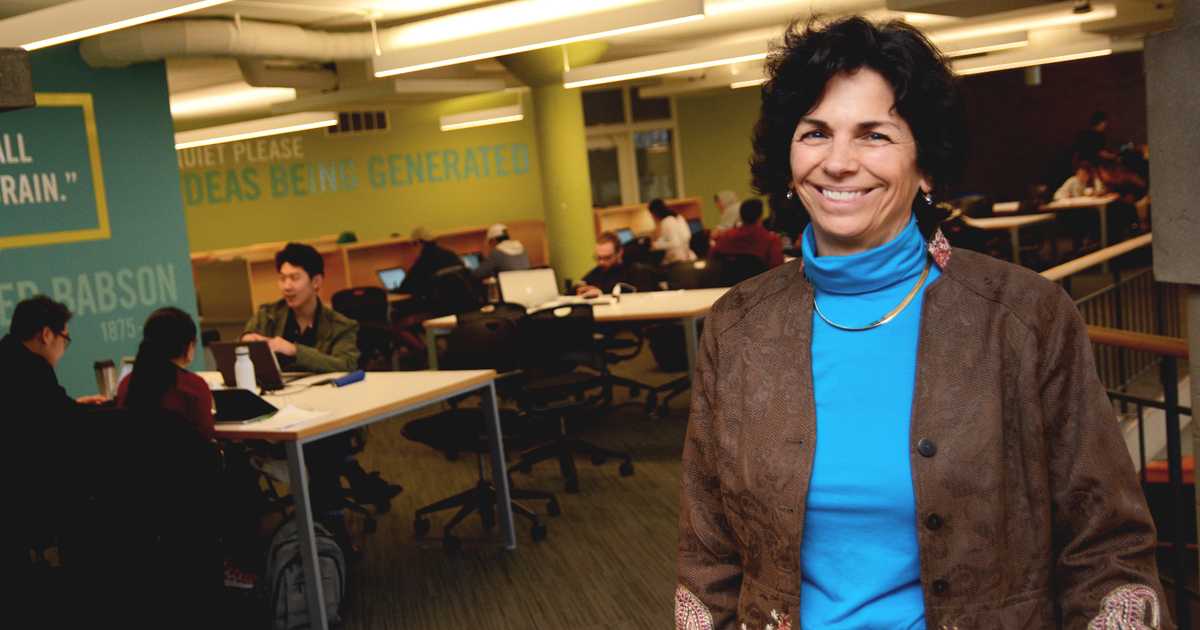
Gina O’Connor is a Professor of Innovation Management at Babson College’s Entrepreneurship division, joined in 2019 after 29 years at Rensselaer Polytechnic Institute’s Lally School of Management. Her research focuses on breakthrough innovation capabilities in large mature companies, with a particular emphasis on organizational design and talent management for innovation functions. Dr. O’Connor holds a PhD in Marketing and Corporate Strategy from NYU, an MBA from Saint Louis University, and a BA in Business from Saint Louis University. She has published extensively in journals like Journal of Product Innovation Management , Organization Science , and Harvard Business Review , where she argues that innovation requires more than R&D spending—it necessitates a distinct organizational function with dedicated people, processes, and metrics. Her work on breakthrough innovation has been recognized through the Crawford Fellow award (2018) and multiple best paper awards. Gina co-authored Grabbing Lightning: Building a Capability for Breakthrough Innovation , named a top business book by Strategy+Business . She speaks frequently at global conferences including ISPIM Berlin, Academy of Management, and Innov8rs events. Scientific awards include: Elsevier BV Top Scholars (2021), MIT Sloan Management Review’s 'Twelve Essential Insights of the Decade' (2017), and multiple teaching awards from Rensselaer Polytechnic Institute. She advocates for professionalizing innovation as a distinct career path and consults for US and European companies on strategic innovation systems.
Ann Vereecke is a Full Professor and Partner at Vlerick Business School, concurrently serving as a Professor at Ghent University. She holds a Doctorate in Management from Ghent University, an MBA from Vlerick, and a Masters in Engineering. As Director of the Research Centre for People in the Smart Digitised Supply Chain, she focuses on Industry 4.0, digital technologies, and global supply chain strategies. Her expertise spans operations management, logistics, and strategic manufacturing networks. She teaches MBA, Master’s, and executive programs at Vlerick, emphasizing practical applications for industry. Her research explores supply chain digitization, international manufacturing strategies, and the integration of digital twins and Industry 4.0 technologies. Recent work highlights trends in smart supply chains and the transformative impact of AI-driven solutions. She actively advises companies across industries through executive education and research projects. Ann serves on corporate boards (WhatsCooking?, bpost, North Sea Port, Tessenderlo Group) and editorial boards (International Journal of Operations and Production Management). Her board roles reflect her expertise in operational excellence and strategic governance. Her articles analyze supply chain collaboration, social responsibility in logistics, and the dynamics of global manufacturing networks. Recent insights address digital twins in supply chain resilience and Industry 4.0 adoption strategies.
Rebecca Rees is a Professor of Social Policy at University College London’s Social Research Institute. She is an internationally recognized research methodologist specializing in evidence synthesis, stakeholder participation, and policy-relevant research. Her work bridges social policy, public health, and environmental sustainability. She serves as Associate Director of the EPPI-Centre and leads patient/public engagement initiatives in the Department of Health and Social Care Reviews Facility. Key Roles: Director of Social Science Research Unit, Academic Head of Learning and Teaching (2017-2021), Co-Chair of IOE Research Ethics Committee. Research Focus: Qualitative/mixed-methods systematic reviews, stakeholder engagement, research ethics, and policy development. Her research spans public health , environmental management , and education policy , with a focus on synthesizing diverse evidence to inform policy solutions. Recent work includes systematic reviews on mobile learning in health education, active travel interventions, and obesity perceptions among youth. Rees has secured over £4 million in funding from government bodies, UK Research Councils, and charities. She contributes to training programs for researchers globally through collaborations like the Cochrane and Campbell Collaborations. Awards & Fellowships: Research Councils UK Academic Fellowship (2007-2012) HEA Academic Fellowship (2007)
Sara Shafiee is a Senior Researcher at the Department of Civil and Mechanical Engineering , Technical University of Denmark (DTU) . She specializes in product configuration systems, manufacturing engineering, and AI-driven innovation. Her work bridges technical systems with organizational agility, emphasizing sustainability and customer-centric design. External Roles: Founder & CEO of DivERS (Jan 2021–) External Lecturer at Copenhagen Business School (2022–2024) Senior Business Consultant at Haldor Topsoe AS (2017–2019) Research Focus: Her work addresses challenges in product configuration systems, generative AI applications, and sustainable construction. Key themes include: Optimal product design through recommendation systems Agile methodologies in knowledge-intensive development Environmental impact monitoring via configurators Publications Trends (2023–2025): Recent work explores AI-driven manufacturing optimization, consumer-centric innovation strategies, and the integration of environmental monitoring into design systems. High-impact areas include generative AI applications (13K+ downloads) and modular construction configurators. Awards: Agnes & Betzy Award (2025) Nordic Women in Tech Leadership Award (2022) Best Digital Startup (Venture Cup Denmark, 2021) Innovation Fund Denmark Role Model (2018) Advising & Grants: Supervised PhD projects on recommendation systems and configurator design. Lead PI of the RECODE project (DFF Grant DKK 10M+, 2024–2027) focusing on deep learning for engineer-to-order systems. Labs & Teams: Core member of DTU’s Design and Manufacturing Systems group, collaborating with industry partners like Haldor Topsoe and DivERS to develop scalable configurator solutions.
Prof. Nicole V. S. Ratzinger-Sakel holds a Professorship at the Institute of Auditing and Accounting within the University of Hamburg Business School. Her research focuses on audit market dynamics, auditor independence, corporate governance structures, and sustainability reporting innovations. She is based at Moorweidenstr. 18, Hamburg, in office 1027. Key research areas include analyzing audit quality through fee structures, joint audit configurations, and the evolving role of auditors in non-audit services. She investigates integrated reporting frameworks and their impact on stakeholder communication. Her work addresses regulatory challenges in financial reporting and internal audit effectiveness. Professional contact includes phone +49 40 42838-4014 and email nicole.ratzinger-sakel@uni-hamburg.de . Administrative support is provided by Cornelia Hartwig in office 1035.
Rebecca Dziedzic is an Assistant Professor in the Department of Building, Civil, and Environmental Engineering at Concordia University. Her research focuses on asset management, water system sustainability, and infrastructure resilience. She holds a PhD in Civil and Environmental Engineering from the University of Toronto. Dr. Dziedzic's work integrates machine learning, data science, and policy analysis to address challenges in urban infrastructure systems. Her research explores topics such as water distribution network optimization, climate change adaptation in infrastructure, and circular economy strategies for construction. Recent projects include predicting water main breaks using multivariate models, developing frameworks for energy-efficient pump operation, and assessing carbon footprints in industrial facilities. Dr. Dziedzic supervises graduate students in Civil Engineering (MASc/PhD) and maintains an active research group through the UrbanLinks initiative. Her work has been published in over 30 peer-reviewed articles, with a strong focus on smart city technologies, disaster risk reduction, and sustainable infrastructure design.
Jun.-Prof. Dr. Sylvia Hubner-Benz is an Assistant Professor of International Management at the University of Paderborn, leading the Management International Management department within the Faculty of Business Administration and Economics. Her research focuses on cross-cultural dynamics in entrepreneurship, innovation, and virtual teamwork, with projects like SeeHerTech addressing female visibility in high-tech sectors. She teaches core courses such as 'International Business' (BSc) and 'International Comparative Management' (MSc), emphasizing practical application and global perspectives. Research interests span international management, cultural diversity, and technology's role in entrepreneurship. She leads the BMBF-funded SeeHerTech project (2024–2027), developing AI tools to support female entrepreneurs' communication strategies. Collaborations include the Technical University of Munich and industry partners like coolnis and UFUNDI. Her teaching integrates real-world projects, such as the X-Culture program for intercultural virtual teams. She has published extensively on topics like robot leadership, entrepreneurial ethics, and gender stereotypes in recruitment. Current research explores human-AI collaboration, leadership behavior in robotics, and innovation in Asian business contexts. Grants include Federal Ministry of Education and Research (BMBF) funding for SeeHerTech. Her work bridges academic research with practical tools, aiming to enhance international teamwork and equity in tech industries.