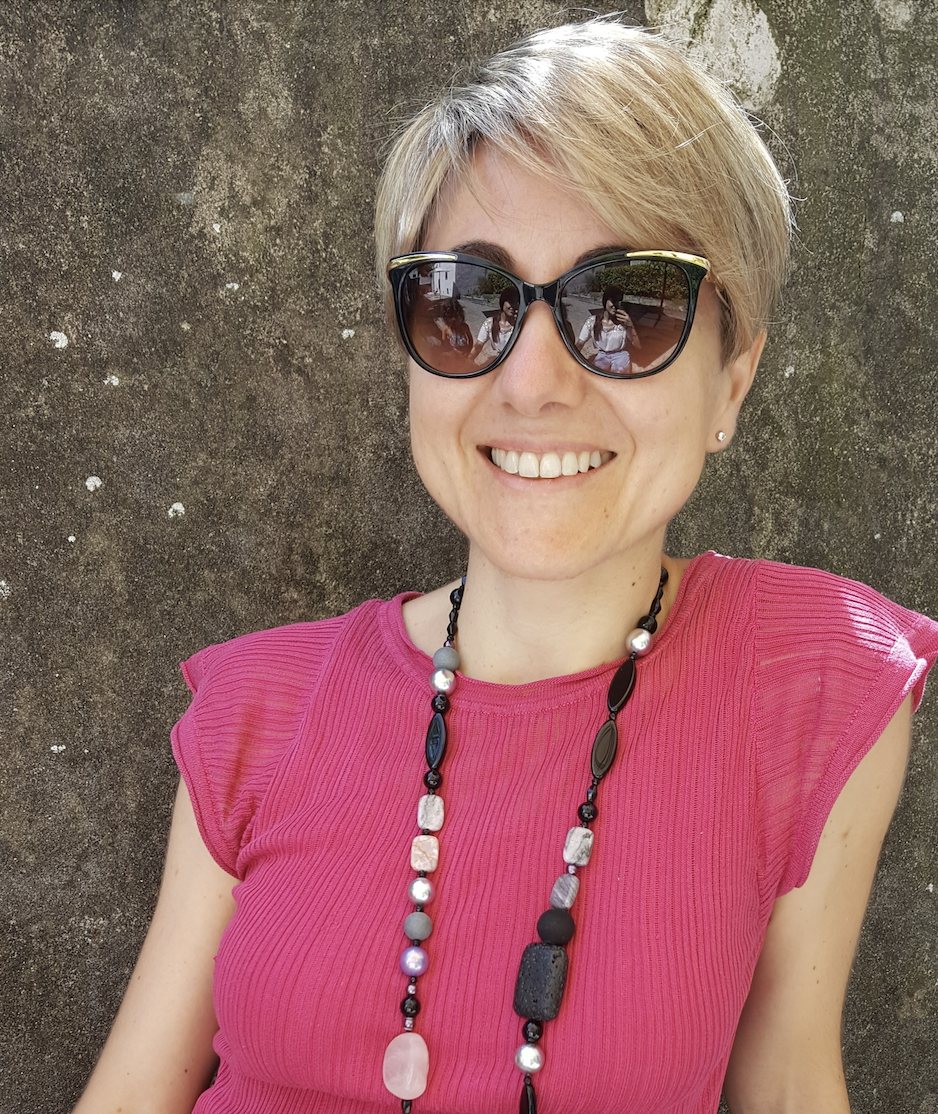
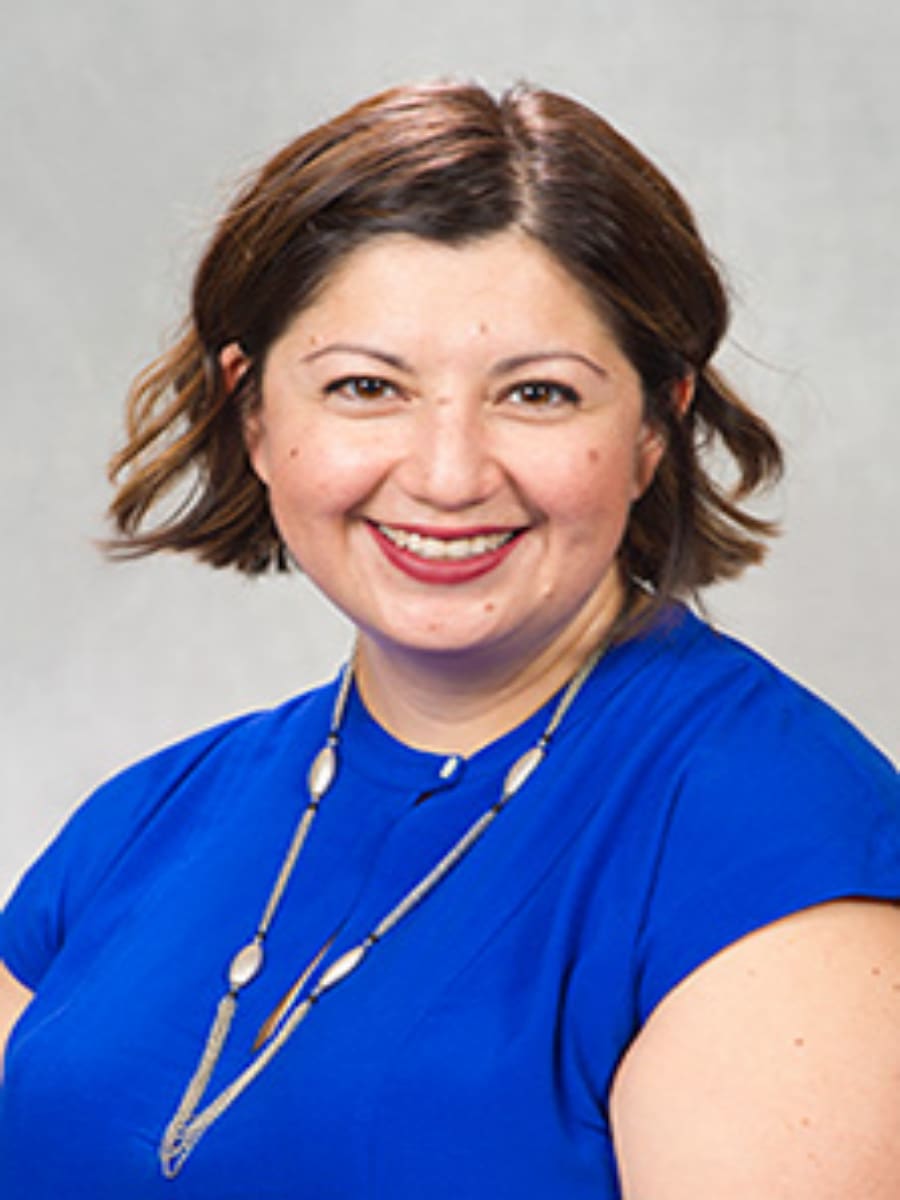
Dr. Elisa Pellegrino is a senior Post-Doc in Phonetics at the Department of Computational Linguistics , affiliated with Zeppelin University and the Digital Society Initiative of the University of Zurich . Her research focuses on voice individualization, vocal accommodation, and the role of speaker-specific information in speech temporal variability. Role: Senior Post-Doc in Phonetics University: Zeppelin University School: Faculty of Arts and Social Sciences Department: Department of Computational Linguistics Email: elisa.pellegrino@uzh.ch Research Interests: Prosody and speech rhythm in native and second language acquisition Vocal accommodation in cross-dialectal interactions Speaker individuality and forensic phonetics Age-related speech temporal variability Speech disorders and Parkinson’s disease Applications of speech technology in linguistics and education
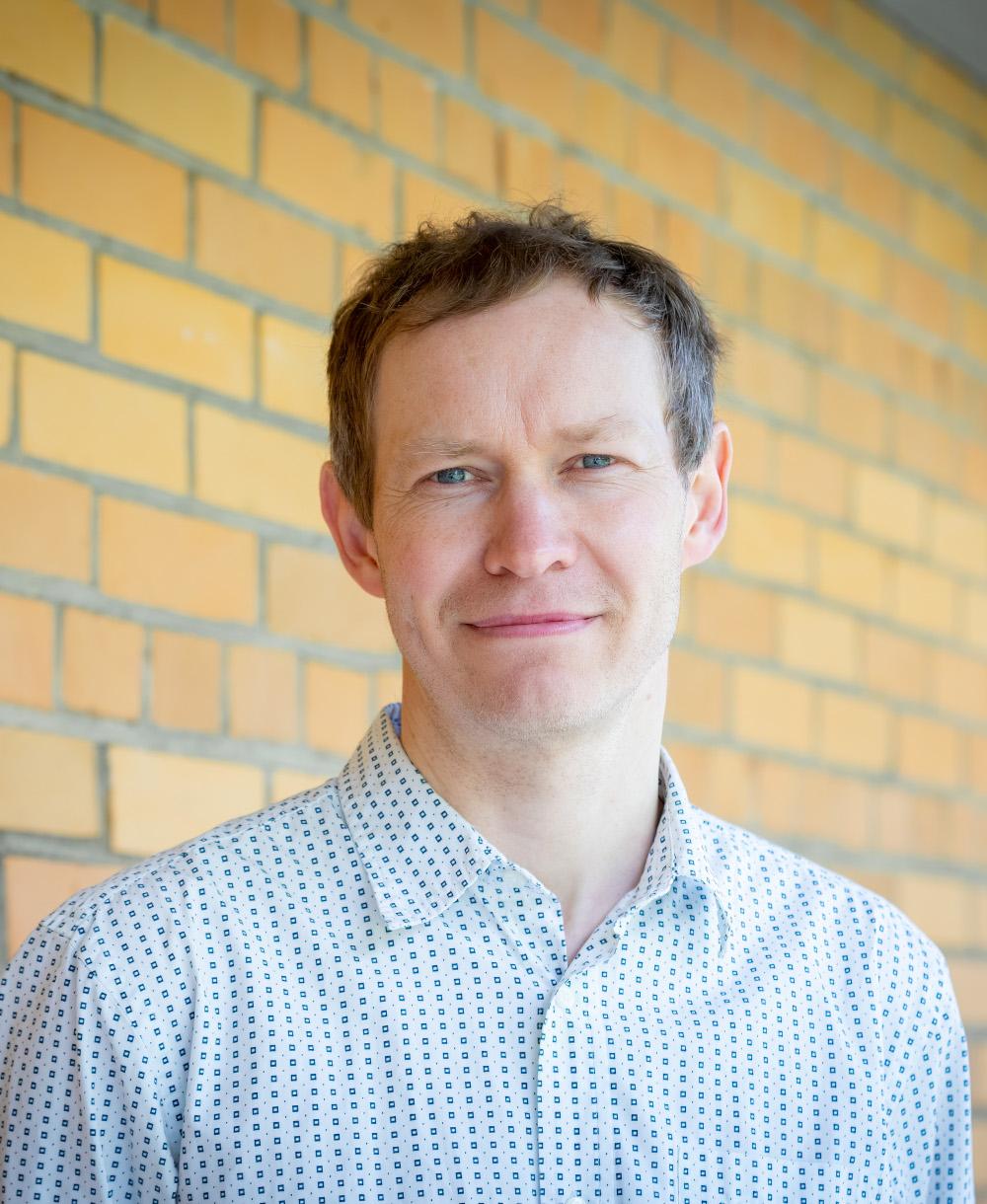
Tanel Alumäe is a Tenured Associate Professor of Speech Processing and Head of the Laboratory of Language Technology at Tallinn University of Technology (TalTech). He holds a PhD in Information and Communication Technology from TalTech (2006) and has conducted research at institutions like LIMSI/CNRS, Aalto University, and Raytheon BBN Technologies. His research focuses on speech processing, speaker and language recognition, and low-resource language technologies. Affiliations: Department of Software Science, School of Information Technologies, TalTech. Education: PhD in ICT (2006), MSc in Informatics (2002), Diploma in Computer & Systems Engineering (1999). Research interests include speech recognition, speaker diarization, spoken language translation, and combating DeepFake voices. He leads teams achieving top results in competitions like IARPA BABEL, NIST LRE, and Interspeech challenges. His work emphasizes open-source tools and equitable AI solutions. Key Awards: Best Student Paper at Odyssey 2024 and TSD 2018. Keeletegu Awards (2019, 2011) for contributions to Estonian language technology. Grants & Leadership: Managed the National Programme for Estonian Language Technology (2011–2017). Serves as Secretary of the Northern European Association for Language Technology (NEALT) and Area Chair for ICME, EACL, and Interspeech conferences. Labs & Teams: Directs the Laboratory of Language Technology, focusing on practical applications of speech and language technologies.
Megumi Kameyama was a Senior Research Scientist at the Artificial Intelligence Center (AIC) of SRI International. Her research focused on discourse semantics, computational models for information extraction, and mismatch resolution in machine translation. She contributed to projects like FASTUS, MIMI, and GEMINI, addressing challenges in spoken dialogue summarization and cross-lingual translation. Key projects included the NSF-funded Mismatch Resolution in Machine Translation (1996-1999), where she co-led efforts to develop logical and statistical approaches for resolving linguistic discrepancies between languages. Her work emphasized real-time systems and robust context modeling, particularly for Japanese-English translation and dialogue analysis. Dr. Kameyama maintained active involvement in software development, including MIMI for spoken dialogue extraction and FASTUS for text analysis. Her publications explored dialogue structure, context dependency, and system robustness in natural language processing. She passed away on January 23, 1999.
Afra Alishahi is a Full Professor at Tilburg University's Department of Cognitive Science and Artificial Intelligence within the Tilburg School of Humanities and Digital Sciences. Her research focuses on computational models of human language acquisition and grounded language learning, leveraging neural models to explore how language processing and acquisition occur. She has held roles including Assistant Professor at Tilburg University (since 2011) and Postdoctoral Fellow at Saarland University (2008-2011). Her work bridges computational linguistics, cognitive science, and artificial intelligence, with contributions to understanding language learning mechanisms through models that integrate visual, auditory, and linguistic data. Education: PhD (university unspecified), with prior academic roles in Iran and Germany. Awards: CoNLL 2017 Best Paper Award, 2023 Outstanding Paper Award, NWO Aspasia Grant (2015), and NWO Natural Artificial Intelligence Grant (2015). Her research has been supported by grants such as the Dutch National Research Agenda-funded project on interpreting deep learning models for text and sound. Research Interests: Grounded language learning, interaction effects in language acquisition, and neural model interpretability. Key areas include multi-modal learning (e.g., linking speech to visual scenes), computational modeling of child language learning, and probing neural networks for linguistic knowledge. She co-organized workshops like BlackboxNLP (2018-2020) and has authored over 60 publications, including influential works on phonology encoding in neural models and gender disambiguation in machine translation. Teaching: Courses include Cognitive Models of Language Learning , Computational Linguistics , and Language, Cognition & Computation . She advises master's theses and leads projects in data science and AI. Lab/Team: Leads research on computational modeling, collaboration with interdisciplinary teams (e.g., with Grzegorz Chrupała, Afsaneh Fazly), and involvement in initiatives like the Interpreting Deep Learning Models for Text and Sound project.
Seung Kyung Kim serves as an Assistant Professor (Lecturer) in the Department of Linguistics at the University of Utah, a position held continuously since July 2022. She actively teaches undergraduate courses including Language & Culture, Language Myths, Introduction to Phonetics and Phonology, and Introduction to Sociolinguistics across multiple semesters from 2023-2024, demonstrating consistent engagement in the university's academic mission within the linguistics discipline. Her research centers on psycholinguistics with specialized expertise in speech production and comprehension mechanisms, extending into second language acquisition, sociolinguistics, and phonetics. Kim investigates how social factors—particularly accent variation, emotional prosody, and ideological frameworks—impact real-time language processing through methodologies like eye-tracking and auditory-visual priming. Her work reveals critical insights into incremental processing in native and non-native speakers, especially regarding Korean case marking systems and cross-linguistic transfer effects. Analysis of Kim's publication trajectory from 2013-2024 shows evolving focus from foundational studies on emotional prosody in word recognition toward contemporary investigations of linguistic bias in veracity judgments and sociolinguistic variation. Her research consistently bridges cognitive processing with social representation, exemplified by the dual-route speech perception model integrating linguistic and social information. Recent work demonstrates methodological rigor through preregistered replication studies examining Polish-accented English comprehension. No scientific awards or major grants are documented in available records, though her scholarship appears in high-impact journals including Studies in Second Language Acquisition and The Journal of the Acoustical Society of America. While teaching records confirm active curriculum delivery across eight distinct courses with multiple sections annually, information regarding student advising, research laboratories, or collaborative teams remains unspecified in current materials.
Tetsunori Kobayashi is a Professor in the School of Fundamental Science and Engineering at Waseda University, Japan, where he has served since 1997. He is renowned for pioneering research in human–robot interaction, spoken language processing, and multimodal conversational systems, leading to over 230 refereed papers and an h-index of 35 (Google Scholar). Education: 1980 B.Eng. in Electrical Engineering, Waseda University 1982 M.Eng. and 1985 Dr.Eng. from Graduate School of Science and Engineering, Waseda University Research Interests: His work spans intelligent robotics , perceptual information processing , pattern recognition , image and audio processing , and conversational AI . He develops algorithms for real-time dialogue systems, multi-party conversation facilitation robots, and non-autoregressive speech recognition leveraging CTC and pre-trained language models. Recent Publication Trends: Since 2020 his group has advanced non-autoregressive end-to-end ASR (Mask-CTC, Intermpl, BECTRA), noise-robust attention , multi-look-ahead conversational ASR , and neural speaker diarization . They integrate BERT-style pre-training with CTC losses to accelerate inference while maintaining accuracy. Parallel work explores vision-and-language topics such as scene-graph generation, video semantic indexing, and personalized summarization for spoken news delivery. Scientific Awards: IEICE Fellow 2023 – for multi-modal multi-party conversation research IPSJ Fellow 2016 – for pioneering robot conversation studies JST Award for Academic Start-ups 2024 Best Paper Awards from IEICE, IEEE BTAS, ACM SIGGRAPH VRCAI, and several IPSJ workshop prizes Advising & Grants: He has mentored dozens of PhD and Master’s students who now lead in academia and industry. Major funded projects include JST CREST on conversational robotics, NEDO and JST-support for AI-based speech interfaces, and industry collaborations with NHK, OKI, and NEC. Labs & Teams: Kobayashi heads the Perceptual Computing Laboratory at Waseda, conducting interdisciplinary research with domestic and international partners such as MIT, ATR, and NHK Science & Technology Labs.
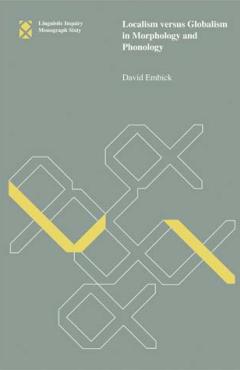
David Embick is a Professor in the Department of Linguistics at the University of Pennsylvania's School of Arts & Sciences. He received his Ph.D. from the University of Pennsylvania in 1997 and has established himself as a leading scholar in theoretical and experimental linguistics. Ph.D., University of Pennsylvania, 1997 Professor Embick's research spans both theoretical and experimental linguistics, with a focus on syntactic theory, morphological theory (particularly Distributed Morphology), and the syntax/morphology interface. His work explores syntax and phonological form, argument structure, lexical knowledge, and language processing in the brain. He has developed significant research in language and autism using MEG neuroimaging techniques. His theoretical contributions include the Localist approach to morphology and phonology, which contrasts with Globalist theories like Optimality Theory. His recent publications reveal a strong trend toward integrating theoretical linguistics with experimental psycholinguistics, particularly in morphological processing and spoken word recognition. Embick's work bridges theoretical syntax and morphology with cognitive neuroscience, examining how linguistic structures are represented and processed in the brain. His research on autism spectrum disorders has produced important insights into auditory processing differences in this population. Professor Embick leads the XMorph (Experimental Morphology) Lab at Penn, which investigates lexical and morphological representation and processing. The lab works closely with Meredith Tamminga's Language Variation and Cognition Lab and collaborates with Tim Roberts at the Children's Hospital of Philadelphia on autism spectrum disorder research. His lab has produced significant work on morphological priming, semantic transparency effects, and the representation of inflectional morphology in the mental lexicon. Embick has advised several doctoral students including Ava Creemers (2020), Robert J. Wilder (2018), and Amy Goodwin Davies (2018), whose dissertation topics focused on morphological processing, speech perception, and lexical representation respectively. His collaborative research spans multiple institutions and disciplines, connecting theoretical linguistics with cognitive neuroscience and clinical applications.
Linda J. Richards serves as the Chair of the Department of Neuroscience and Edison Professor of Neuroscience at Washington University School of Medicine. Her career spans decades of groundbreaking research in brain development, particularly focusing on interhemispheric connections of the mammalian brain. She leads the Brain Development and Disorders Laboratory, which investigates both normal brain wiring and conditions where this wiring is altered. Professor Richards earned her Bachelor of Science (Honours) from The University of Melbourne in 1990, followed by her PhD from the same institution between 1991-1994. Her educational background laid the foundation for her pioneering work in developmental neurobiology. Her research interests center on the development, plasticity, and function of long-range connections in the cerebral cortex, with particular focus on the corpus callosum - the largest fiber tract connecting the brain's hemispheres. She investigates how cellular and molecular mechanisms regulate brain wiring during development and how these processes are altered in congenital corpus callosum dysgenesis (CCD), which occurs in approximately 1 in 4,000 people. Her work explores the underlying causes of CCD, the mechanisms of long-range axonal plasticity, and how structural changes in brain wiring impact cognition and behavior. Analysis of Professor Richards' recent publications reveals a consistent focus on corpus callosum development and disorders across multiple model systems. Her work spans from basic molecular mechanisms involving transcription factors like the Nuclear Factor I (NFI) family to human clinical studies of corpus callosum disorders. She employs diverse methodologies including genetic analysis, neuroimaging, behavioral assessments, and comparative studies across mammalian species. A notable trend is her increasing focus on translating basic science findings into understanding human conditions, particularly through genetic studies of CCD patients and their families. 2020: Cajal Club, Krieg Cortical Kudos Discoverer Award, Pinckney J Harman Memorial Lecture 2019: Appointed Officer (AO) of the Order of Australia for distinguished service to medical research and education in developmental neurobiology 2016: Elected Fellow of the Australian Academy of Health and Medical Sciences 2015: Elected Fellow of the Australian Academy of Science 2017-2018: President of the Australasian Neuroscience Society 2010: Nina Kondelos Prize from the Australasian Neuroscience Society 2004: Charles Judson Herrick Award from the American Association of Anatomists Professor Richards is deeply committed to neuroscience advocacy and mentorship. She has contributed significantly to establishing major international neuroscience initiatives including the International Brain Initiative, the Australian Brain Alliance, and the Australian Brain Bee Challenge. As a board member of the International Brain Bee and member of the Dana Alliance for Brain Initiatives, she actively promotes neuroscience education and public engagement. Her lab provides training opportunities for numerous graduate students, postdoctoral fellows, and research staff who contribute to her diverse research programs. Professor Richards leads the Brain Development and Disorders Laboratory, which focuses on three primary research areas: activity-dependent mechanisms of early brain wiring, cellular and molecular mechanisms of early brain wiring (particularly involving NFI transcription factors), and human corpus callosum disorders. Her lab employs innovative approaches including studies of the fat-tailed dunnart (a marsupial model with postnatal brain development), advanced imaging techniques, and partnerships with individuals who have corpus callosum disorders to understand how brain wiring impacts cognitive, social, and emotional function.
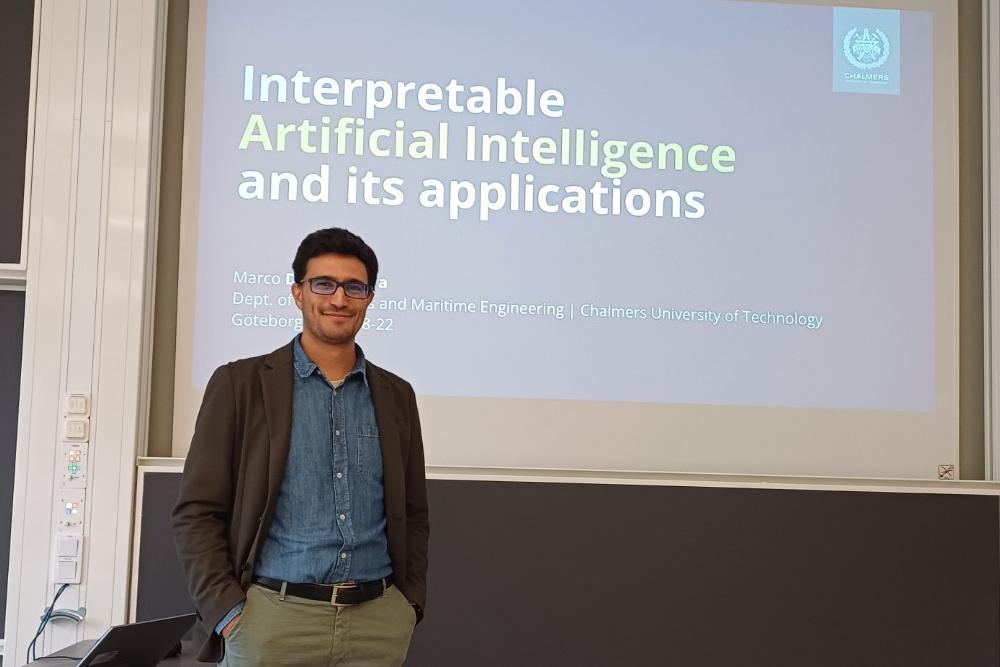
Marco L. Della Vedova is a Senior Lecturer in Applied Artificial Intelligence at Chalmers University of Technology, Sweden. He works in the Vehicle Engineering and Autonomous Systems division within the Department of Mechanics and Maritime Sciences, as part of Prof. Mattias Wahde's research group. Since 2025, he has served as Director of the Data Science and AI master's programme (MPDSC) at Chalmers, where he teaches courses including Introduction to Artificial Intelligence and Digitalization in Sports. Dr. Della Vedova earned his academic foundation at the University of Pavia, Italy, where he completed his BSc (2006), MSc (2009), and PhD (2013) in Computer Engineering. His doctoral research focused on "Real-Time Physical Systems and Electric Load Scheduling" under Prof. Tullio Facchinetti. During his PhD studies, he spent a year at U.C. Berkeley hosted by Prof. Francesco Borrelli at the Model Based Predictive and Distributed Control Lab. His research spans multiple AI domains with a strong emphasis on interpretability. Dr. Della Vedova develops interpretable methods for conversational AI, naturalness evaluation of forests using canopy height models, and geospatial applications. His work bridges theoretical AI with practical societal benefits, particularly in environmental monitoring, transportation systems, and orienteering. He has previously contributed to cloud computing, hate speech detection, and cyber-physical energy systems, demonstrating his interdisciplinary approach to AI research. Dr. Della Vedova's publication record reveals a consistent trajectory of impactful research across multiple domains of artificial intelligence. His recent work shows a strong focus on interpretability in AI systems, with significant contributions to natural language processing, geospatial analysis, and causal inference. The research demonstrates both theoretical depth and practical applications, particularly in environmental monitoring and social media analysis. His methodology often combines traditional machine learning approaches with novel interpretability techniques, creating bridges between complex AI systems and human understanding. Dr. Della Vedova has received several prestigious recognitions for his work: Best PhD thesis award from the Order of the Engineers of Bergamo (2013) Italian champion of Il Cervellone (2012) Top Italian performer in IEEEXtreme 6.0 programming competition (148th overall globally, 2012) Premio Arturo Schena award from Fondazione Credito Valtellinese (2010) With over 50 students supervised through bachelor's and master's theses, Dr. Della Vedova has established himself as a dedicated mentor in the AI community. His current PhD students include Minerva Suvanto working on interpretable NLP and Vivien Lacorre developing AI for railway infrastructure inspection. His supervision spans diverse topics from forest naturalness evaluation to hate speech detection and transportation optimization. Beyond formal supervision, he actively contributes to educational initiatives including serving as Director of Chalmers' Data Science and AI master's program and developing innovative teaching methods that connect theoretical concepts with real-world applications. Dr. Della Vedova is deeply embedded in both academic and professional communities. He leads the Applied Artificial Intelligence research group at Chalmers while maintaining strong connections with European research networks through projects like the ERASMUS+ EUrienteering initiative. His interdisciplinary approach is reflected in collaborations across computer science, environmental science, and social sciences. Notably, he applies his AI expertise to orienteering both as a researcher developing localization methods and as a licensed Event Advisor for the International Orienteering Federation, demonstrating how his professional and personal interests converge in innovative ways.
Gregory R. Hancock is a Professor and Program Director of Quantitative Methodology: Measurement and Statistics at the University of Maryland, College Park. He also serves as Director of the Center for Integrated Latent Variable Research (CILVR) and is an Affiliated Professor at the Center for Advanced Study of Language. Holding a Ph.D. from the University of Washington (1991), his research focuses on structural equation modeling, latent growth models, experimental design, and power analysis. He has co-edited influential volumes such as Structural Equation Modeling: A Second Course and contributed to Psychometrika , Multivariate Behavioral Research , and other top journals. His awards include the Jacob Cohen Award for Teaching (2011), Fellowships from the APA and APS, and multiple recognition for mentorship. Hancock has led over 200 workshops globally and served on editorial boards for major journals. His work emphasizes methodological rigor in quantitative research, with contributions to latent variable models, measurement invariance, and longitudinal methods. Key Contributions: SEM applications, growth curve modeling, and statistical pedagogy Labs/Teams: Center for Integrated Latent Variable Research (CILVR) Funding/Grants: Not explicitly listed, but implied through extensive workshop leadership and editorial commitments
Stuart Shieber is the James O. Welch, Jr. and Virginia B. Welch Professor of Computer Science in the School of Engineering and Applied Sciences at Harvard University. He is a prominent researcher in computational linguistics and natural language processing, with significant contributions across multiple related fields including theoretical linguistics, computer-human interaction, automated graphic design, and the philosophy of artificial intelligence. Professor Shieber's research interests focus primarily on computational linguistics, examining natural language from the perspective of computer science. His work spans scientific and engineering goals, utilizing foundational formal and mathematical tools. He has made significant contributions to grammar formalisms, psycholinguistics, semantics, and synchronous grammars with applications in machine translation and sentence compression. Beyond computational linguistics, his research extends to automatic layout of charts and maps, novel interaction techniques for document reading and diagram layout, online auction mechanisms, library book access prediction, biological evolution tree reconstruction, and the philosophical basis for Turing's test for machine intelligence. His recent publications demonstrate a continued focus on neural language models, syntactic agreement mechanisms, readability assessment, conversational understanding, and bias detection in language models. His research has evolved from traditional grammar formalisms to incorporate modern neural network approaches while maintaining a strong theoretical foundation. The trend shows increasing attention to ethical considerations in NLP, particularly around bias detection and mitigation, alongside continued theoretical work on language structure. Presidential Young Investigator award (1991) Presidential Faculty Fellow (1993) John L. Loeb Associate Professorship in Natural Sciences (1993) Harvard College Professorship (2001) Fellow of the American Association for Artificial Intelligence (2004) Fellow of the Association for Computing Machinery (2014) Fellow of the Association for Computational Linguistics (2017) Professor Shieber has advised numerous PhD students who have gone on to successful careers at institutions including UCSD, Cornell University, Microsoft Research, Google, and various academic institutions. His work on open access and scholarly communication policy, particularly his development of Harvard's open-access policies, led to his appointment as the first director of the university's Office for Scholarly Communication. He is also the founding director of the Center for Research on Computation and Society and a faculty co-director of the Berkman Center for Internet and Society. His laboratory work has focused on advancing computational linguistics through both theoretical and applied research, with numerous patents and co-founding of Cartesian Products, Inc., a high-technology research and development company. His future work appears to be focusing on the intersection of neural network approaches with traditional linguistic theory, particularly in understanding and mitigating bias in language models, while continuing his long-standing interest in the theoretical foundations of language processing.
Dr. Antje Strauß is a Researcher at the Department of Linguistics, University of Konstanz, where she serves as Principal Investigator for a DFG-funded project on theta oscillations and prelexical abstraction since October 2018. Her work bridges speech processing, auditory cognition, and neural oscillations, with a focus on lexical and sublexical mechanisms in noisy environments. PhD in Neural Oscillatory Dynamics of Spoken Word Recognition (2011–2014, Max Planck Institute) Magistra Artium in German Philology and Philosophy (2004–2010, Albert Ludwig University) Her research explores how brain rhythms like alpha and theta oscillations support auditory selective inhibition, speech segmentation, and predictive processing. She has pioneered studies on cued speech applications for enhancing speech-in-noise perception and developed the Fharvard corpus—a phonemically-balanced resource for audiology research. Recent publications highlight her expertise in neural oscillations, auditory perception, and speech-in-noise intelligibility. Collaborative work spans institutions like CNRS, MPI CBS, and Freiburg Institute for Advanced Studies. Post-doctoral fellow at Zukunftskolleg, University of Konstanz (2016–2018) Post-doctoral fellow at CNRS, GIPSA-lab (2015–2016) She contributes to peer review for journals including Journal of Neuroscience , Cortex , and PLOS Biology , and maintains memberships in the Society for the Neurobiology of Language, European Society for Cognitive Psychology, and related organizations.
Grzegorz Chrupała is an Associate Professor at the Department of Cognitive Science and Artificial Intelligence , Tilburg University, where he leads research in computational approaches to multimodal communication. Previously, he was a postdoctoral researcher at Saarland University's Spoken Language Systems group and earned his PhD from Dublin City University's School of Computing. His research bridges biological and artificial computation , focusing on enabling machines to learn language from multimodal data (speech, gestures, visual-auditory stimuli) as children do naturally. This involves developing and interpreting deep learning architectures, analyzing emergent representations, and advancing speech technology for under-resourced languages. Key themes include Visually grounded speech modeling Feature attribution and model interpretability Human-inspired learning paradigms BlackboxNLP workshop leadership His recent publications examine speech model reliability , lexical tone encoding , and contextual dependencies in NLP systems. He mentors a team of PhD candidates and alumni working on topics like user-centric interpretability, bioacoustics, and disentangled speech representations. He also serves on the board of the Dutch Open Speech Technology Foundation, chairs Interspeech 2025 tutorials, and contributes as an Action Editor for TACL.
Ewan Dunbar is an Assistant Professor of Computational Linguistics at the University of Toronto (downtown campus), affiliated with St. Michael's College. He holds appointments in the Department of French, Department of Linguistics, and Department of Computer Science. His research explores human speech perception, technological advancements in speech processing, and related areas such as unsupervised learning and language acquisition. Educational Background: While specific degrees aren't listed, his research and appointments indicate advanced training in linguistics and computational sciences. Research Interests: Dunbar focuses on how humans perceive speech, developing computational models of speech perception, and advancing unsupervised learning techniques. He leads the Perceptimat Research Group and organizes the Zero Resource Speech Challenge, a machine learning competition promoting unsupervised approaches to speech processing. Awards: He has received notable grants including the 2028 NSERC Discovery Grant, 2028 NSERC Discovery Launch Supplement, and 2023 Connaught New Researcher Award, all supporting his work on computational psycholinguistics and speech perception models. Advising & Grants: While specific student names aren't listed, his grants indicate involvement in mentoring undergraduates (e.g., 2024 NSERC Undergrad Studentship Grant). His labs focus on creating speech perception tools and benchmarks like Perceptimatic. Labs/Teams: Director of the Perceptimat Research Group, organizer of the Zero Resource Speech Challenge.
Valerie San Juan is an Assistant Professor in the Psychology Department at Bradley University's College of Liberal Arts & Sciences. With a Ph.D. in Developmental Psychology and Education from the University of Toronto, she completed postdoctoral research at both the University of Toronto (under Dr. Patricia Ganea) and the University of Calgary (with Drs. Susan Graham and Suzanne Curtin), supported by the Eyes High Fellowship and SSHRC grants. Education: Ph.D. in Developmental Psychology and Education, University of Toronto Her research focuses on children's social cognitive development and language acquisition, particularly how children understand others' mental states and integrate this knowledge into social interactions. Using innovative methods like computer-based games and eye-tracking technology, she investigates perspective taking, desire reasoning, and false-belief understanding in children aged 2-6 years. Recent publications demonstrate her expertise in referential communication, epistemic verb development, and social category inference. Her work appears in top journals including Journal of Experimental Child Psychology , Cognitive Development , and Journal of Child Language . These studies consistently examine how children's cognitive control, language development, and social understanding interact. Scientific Awards: Eyes High Fellowship program (University of Calgary) Social Sciences and Humanities Research Council of Canada (SSHRC) grant As director of the Social Minds and Language Lab (S.M.A.L.L.), she mentors undergraduate researchers and collaborates with local families to conduct community-based developmental studies. Her teaching portfolio includes Principles of Psychology, Experimental Psychology, and Developmental Psychology courses.