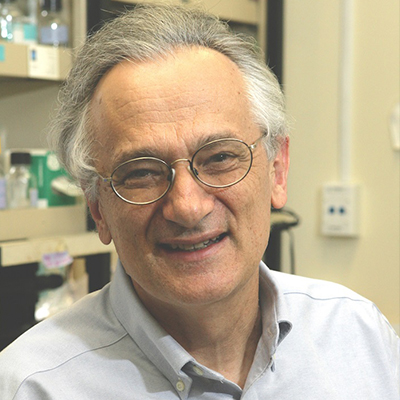
Steven Clarke is a Distinguished Professor in the Department of Chemistry and Biochemistry at UCLA, where he has been a faculty member since 1978. He directs the UCLA Cellular and Molecular Biology Training Program and investigates protein methylation's role in aging and disease states. His work spans biochemical, genetic, and molecular approaches across organisms including Saccharomyces cerevisiae , Caenorhabditis elegans , and Arabidopsis thaliana . Clarke earned his Ph.D. in Biochemistry and Molecular Biology from Harvard University, where he worked with NSF Fellow Peter Mitchell at Glynn Research Laboratories on mitochondrial amino acid transport. He completed postdoctoral work as a Miller Fellow at UC Berkeley with Dan Koshland, studying bacterial chemotaxis receptors. His research has identified key methyltransferases like protein L-isoaspartyl repair methyltransferase and PRMT9, while exploring connections between methylation, insulin signaling, and longevity pathways. His laboratory has produced over 250 publications since 2000, focusing on protein methylation (PRMT7/9), aging mechanisms (isoaspartyl damage, methionine addiction), ribosomal modification , and stress response pathways . Recent work examines PCMTD1/2 in proteostasis, COQ5 in coenzyme Q biosynthesis, and novel methyltransferases in Trypanosoma brucei. Current graduate students include Eric Pang (biochemistry/structural biology) and Cindy Wang (biochemical-computational hybrid). Undergraduates Celeste Medina-Seymour, Elizabeth Oroudjeva, Olivia Pacheco, and Jasmine Winter contribute to projects involving yeast, plant, and nematode models. His team's interdisciplinary approach combines biochemical assays, mass spectrometry, and computational methods to uncover methylation's impact on cellular function.