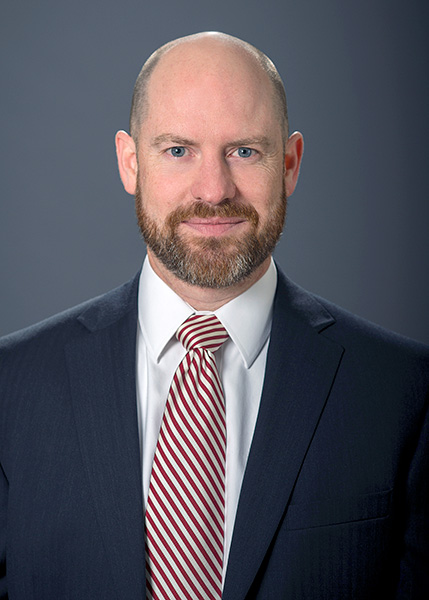
Jonathan Campbell is Professor and Director of the PsyD program at Western Carolina University's College of Education and Allied Professions. A licensed psychologist with over 20 years in neurodevelopmental disabilities, his research focuses on autism spectrum disorder (ASD), peer attitudes, and law enforcement interactions. He previously trained at Yale Child Study Center and served on Kentucky's ASD Advisory Council. Education: PhD in Clinical Psychology, University of Memphis MA in Clinical Psychology, Western Carolina University BA in Psychology, University of North Carolina at Chapel Hill Research Focus: Develops assessment tools for ASD stigma, evaluates training programs for law enforcement, and studies inclusive education models. Editorial board member for four psychology journals. Clinical Expertise: Conducts validity studies of ASD screening instruments and develops interventions for school-clinical coordination.
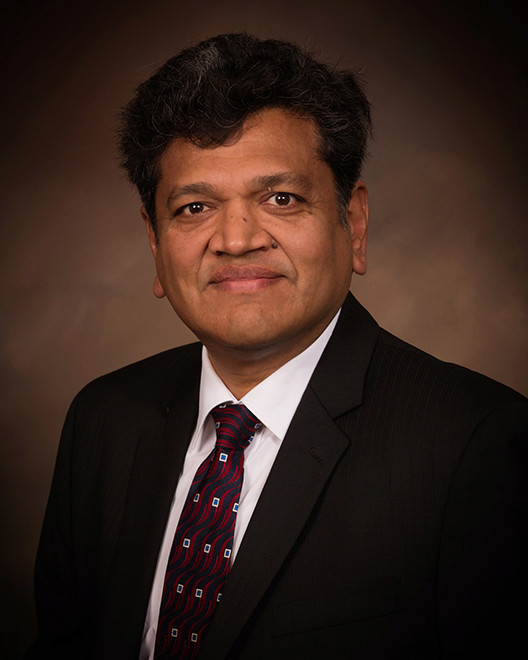
Sneha Kumar Kasera is an Associate Dean for Academic Affairs and Professor at the John and Marcia Price College of Engineering, affiliated with the Kahlert School of Computing. She leads the ANSR Lab, founded in 2003, focusing on advanced networked systems research. Her work spans networks and systems, including mobile/pervasive systems, wireless security, IoT, crowdsourcing, and spectrum management. She has held leadership roles in conferences like IEEE WoWMoM, ACM WiSec, and ACM MobiCom. Kasera’s research emphasizes practical applications of networking and security, with contributions to spectrum sharing, dynamic zone protocols, and privacy-preserving technologies. Her professional activities include program co-chair roles for major conferences and editorial positions for IEEE Transactions. She advises numerous PhD and MS students, many of whom hold prominent roles in academia and industry. Kasera’s lab develops open platforms like POWDER for experimental wireless research, addressing real-world challenges in network design and security. Key research themes include spectrum monitoring, deep reinforcement learning for network optimization, and privacy-aware systems. Her publications highlight advancements in 5G/6G networks, wireless localization, and IoT ecosystems. Her work bridges theoretical contributions with scalable, deployable solutions for modern communication challenges.
Fabrizio Giuliano is a Researcher at the University of Palermo in the School of Mathematics and Computer Science , focusing on Wireless Networks , Internet of Things (IoT) , and Network Protocols . His academic activities include teaching courses like Computer Networks , Internet of Things , and IoT and Cloud Security to students in Informatics, Biomedical Engineering, and Cyber-Physical Systems programs. Research Interests : Giuliano's work spans Wireless communication (LoRaWAN, Sigfox, WiFi, ZigBee) Smart water distribution systems and energy-autonomous IoT Interference detection and cross-technology coexistence 5G network infrastructure Augmented Reality for accessibility Privacy-preserving smart grid systems Publication Trends : His recent articles (2025–2023) focus on AI integration in IoT testbeds Scalable water distribution monitoring Information-theoretic analysis of fNIRS signals Interference mitigation in LPWANs Context-aware 5G architectures Hybrid VLC/WiFi networks Academic Contributions : Giuliano has edited theses on fNIRS signal analysis and IoT-integrated biosensors , reflecting his interest in biomedical applications of wireless systems.
Phillip Neil Quisenberry is a Professor of Sociology and serves as Chair of the Division of Social Sciences at McKendree University. His academic leadership spans theoretical criminology and empirical research on deviant behavior within contemporary social contexts. His educational credentials include: Ph.D. from the University of Kentucky M.A. from the University of South Florida B.A. from Western Kentucky University Dr. Quisenberry's research centers on hate crimes , juvenile delinquency , deviance , and criminological theory , with particular emphasis on testing the General Theory of Crime across diverse behavioral contexts. His work critically examines how communication styles influence violence and substance abuse, while his environmental criminology studies investigate the physical structure-crime relationship through broken windows theory frameworks. This dual focus bridges micro-level behavioral analysis with macro-level community dynamics. His publication record from 2003-2015 demonstrates consistent theoretical innovation, connecting classical criminological frameworks to modern phenomena like distracted driving and campus substance use. The research portfolio reveals three dominant trajectories: rigorous testing of self-control theory, analysis of speech-violence-substance use intersections, and environmental criminology applications to urban planning. These threads collectively advance understanding of crime causation while maintaining practical relevance for criminal justice policy. Dr. Quisenberry actively supports academic discourse as a member of the American Society of Criminology and Midwest Sociological Society , providing peer review services for the Journal of Contemporary Ethnography , Roxbury Publishing, and Sage Publishing. His institutional commitment extends to advising the Spectrum Alliance student organization and Alpha Kappa Delta sociology honor society, fostering both scholarly development and campus community engagement.
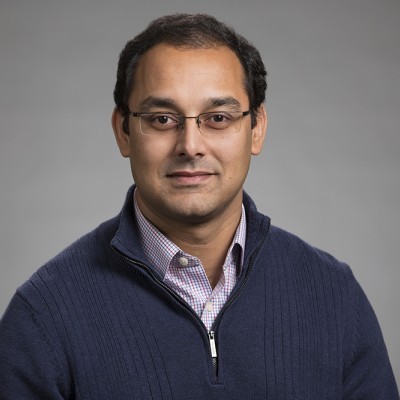
Aveek Dutta is an Associate Professor in the Department of Electrical and Computer Engineering at the University at Albany's College of Nanotechnology, Science, and Engineering. He co-directs the Mobile Emerging Systems and Application (MESA) Lab and holds a PhD in Electrical Engineering from the University of Colorado Boulder (2013), an MS from the same institution (2008), and a Bachelor of Technology from Kalyani University (2002). Dr. Dutta's research spans wireless communications, cognitive radio, signal processing, and radio astronomy. His work focuses on developing advanced techniques for interference cancellation, spectrum sharing, and signal processing in non-stationary wireless environments, with applications in 5G networks, radio astronomy, and vehicular communications. His publications demonstrate consistent focus on wireless system optimization, featuring recent work on reconfigurable intelligent surfaces, MU-MIMO capacity optimization, eigenwave multiplexing, and blockchain applications for spectrum management. Research often bridges theoretical foundations with practical implementations in communication platforms.
Dejun Yang is an Associate Professor in the Department of Computer Science at Colorado School of Mines. He directs the NEMOS (Networking and Mobile Sensing) Lab, focusing on advancing networking, mobile sensing, and edge computing through interdisciplinary approaches involving game theory, optimization, machine learning, and algorithm design. His work addresses challenges in resource allocation, security, and privacy across domains like IoT, quantum internet, and blockchain-based systems. Education: B.S. in Computer Science, Peking University (2007) Ph.D. in Computer Science, Arizona State University (2013) Research Interests: Networking and satellite communications Edge computing security and SLA enforcement Incentive mechanisms for crowdsourcing and blockchain Quantum internet resource distribution Privacy-preserving mobile sensing Recent Article Trends: His 2023-2025 work emphasizes blockchain payment networks (e.g., fee-aware routing, crypto capital incentives) and edge computing SLA markets. Earlier studies focused on crowdsourcing mechanisms and spectrum auctions. Scientific Awards: Recipient of Best Paper Awards at GLOBECOM’15, ICC’12, ICC’11, MASS’11, and a Best Paper Runner-Up at ICNP’10 (2010-2015). Lab & Collaboration: Leads the NEMOS Lab, which develops innovative solutions for mobile sensing, edge computing, and secure distributed systems. Active in interdisciplinary collaborations involving industry partners and academic institutions.
Associate Professor Michael Nagel is a leading academic at the University of the Sunshine Coast (UniSC), Australia, affiliated with the School of Education and Tertiary Access. He holds an Associate Professorship in Primary and Early Childhood Education, specializing in human development, educational psychology, and neurological development in children. His research explores sex differences in learning, adolescent development, and teacher education, with a focus on bridging theory and classroom practice. Dr. Nagel has authored over 20 influential books, including editions of Educational Psychology and Teaching: Making a Difference , which are used globally in universities like Harvard and Oxford. He has delivered over 100 keynote addresses and conducted workshops in 300+ schools, emphasizing practical strategies for educators and parents. Notably, he served as Australia’s national travelling scholar for the Middle Years of Schooling in 2012 and regularly presents at Generation Next events on adolescent well-being. His scholarly contributions extend to media appearances on programs like Sunrise and A Current Affair , alongside writing for parenting forums and magazines like Child and Jigsaw , reaching over a million readers. Professional memberships include the International Neuropsychological Society and the Learning and Brain Society. His work prioritizes real-world applications, such as fostering student engagement and addressing challenges like screen time and stress in education.
Dr. Roxanna Dehaghani is a socio-legal researcher and Senior Lecturer at the Cardiff University School of Law and Politics . Her work focuses on improving protections for vulnerable and neurodivergent suspects in criminal justice systems, spanning intersections of criminal justice, human rights, and legal psychology. Research Themes : Vulnerability theory, neurodivergence in police custody, procedural justice, legal aid reform, and multi-jurisdictional criminal justice analysis Key Projects : Conceptualizing appropriate adult safeguards, examining pre-trial processes, collaborating with National Appropriate Adult Network and National Police Chief's Council Her recent publications analyze fair trial rights for vulnerable suspects, neurodivergence in criminal courts, and policy impacts of custody practices. She has received significant grants from the British Academy , ESRC , and Learned Society of Wales , including the Dillwyn Medal (2024). Dehaghani serves as Book Review Editor for the Howard Journal of Crime and Justice and co-chairs the Vulnerability Research Network . She actively mentors emerging scholars and has trained police/custody staff on vulnerability assessment.
David Brady is a Teaching Professor in the Department of Electrical and Computer Engineering at Northeastern University. His research focuses on signal processing, wireless communications, underwater acoustics, and renewable energy systems. Key contributions include work on cognitive radio networks, photovoltaic inverter optimization, and scattering system analysis using Cramer-Rao bounds. He has extensive experience in underwater acoustic communication systems and multiuser detection techniques. His work spans theoretical analysis and practical implementations in communication systems. Education details are not explicitly provided in the text, but his professional roles indicate advanced academic qualifications in electrical engineering. His research interests emphasize interdisciplinary applications of signal processing, with notable contributions to photovoltaic grid integration and ontology-driven cognitive radio systems. Recent articles highlight advancements in transmitter/receiver imbalance compensation, multipath channel modeling, and collaborative network adaptation. His publications span over three decades, demonstrating sustained contributions to communication technologies and renewable energy systems. No scientific awards are listed, but his prolific publication record speaks to his research impact. Brady has advised no formally listed students, though his teaching role likely involves mentoring engineering students. His work involves collaborations in SAR (Synthetic Aperture Radar) waveform design and acoustic telemetry systems, indicating involvement in applied research teams. He maintains an active presence in both academic and applied engineering domains.
Dr. Ghazanfar Ali Safdar is a Senior Lecturer in Computer Networking at the University of Bedfordshire's School of Computer Science and Technology (part of the Faculty of Creative Arts, Technologies and Science). He holds a PhD from Queen's University Belfast (2005) and has extensive industry experience with organizations like Schlumberger and Siemens. His research focuses on energy-efficient wireless protocols, cybersecurity in communication networks, and green networking. Key areas include cognitive radio networks, 5G/6G technologies, IoT, and D2D communications. He has led projects on interference mitigation in LTE systems and spectrum sensing for cognitive radios. Editorial Roles: Associate Editor for IET Networks, Editor-in-Chief for EAI Transactions on Energy Web Supervised 9+ PhD students (e.g., on Femtocells, Energy Management in LTE, and V2X Security) Awards: Vice Chancellor’s Course of Year Award (2017), Best Teacher Nomination (2018) His technical expertise spans OPNET simulation, antenna design for wearables, and security protocols for vehicular networks. Current research includes history-assisted spectrum sensing and connected vehicle cybersecurity.
Jacob Bembe is an Assistant Professor at the Vogel School of Engineering within Bryan College, specializing in Engineering & Technology . With nearly two decades of experience as a process technology engineer, research engineer, and senior lecturer, his expertise spans telecommunications, IoT, and wireless networks. He holds a Ph.D. in Information and Telecommunication Technology Engineering from KAIST, an M.Eng in Electrical and Electronics Engineering from the University of Johannesburg, and a Postgraduate Diploma in Satellite and Software Engineering from Stellenbosch University. Education : Ph.D., M.Eng, Postgraduate Diploma, B.S. Dr. Bembe’s research focuses on 5G network efficiency , IoT connectivity , and cloud computing . His recent work examines wireless standards, low-power wide area networks, and network densification. Though no formal awards are listed, his publications highlight collaborations with institutions in South Africa, Uganda, and South Korea. Dr. Bembe also co-authored a 2024 study on small cell efficiency in 4G/5G networks. His publications reveal trends in telecommunications , smart systems , and energy-efficient networking . He has contributed to wireless sensor networks, mobile TV broadcasting, and heterogeneous network design, prioritizing scalable and sustainable solutions for emerging technologies.
Dr. Jordan Hyatt is Associate Professor of Criminology and Justice Studies at Drexel University, where he also directs the Center for Public Policy. He holds a PhD from University of Pennsylvania and JD from Villanova Law School. His research focuses on evidence-based criminal justice interventions through randomized experiments. His extensive scholarship examines prison reform , re-entry programs , and drug treatment interventions with emphasis on Scandinavian models, parole efficacy, monetary sanctions, and field research methodologies. Recent work highlights dignity-based reforms, pandemic impacts on corrections, and therapeutic approaches for high-risk populations. Hyatt's publications demonstrate persistent focus on improving reintegration and public safety through policy partnerships. His current research analyzes linguistic barriers in prisons, vaccine hesitancy in correctional settings, and autism interactions with justice systems.
Dr. Magali-Fleur Barnoux is a Senior Lecturer in Forensic Psychology and Intellectual and Developmental Disabilities (IDD) at the Tizard Centre, School of Social Sciences, University of Kent. She is a Chartered Psychologist with the British Psychological Society and serves as the Director of Studies for the MA/PGDip/PGCert in IDD and Forensic Issues. Her office is located in Cornwallis North East, Room 211, Canterbury, CT2 7NF. Undergraduate Degree: Psychology-Sociology, University of Leeds (2003) MSc in Forensic Psychology, University of Kent (2010) PhD in Forensic Psychology, University of Kent (2015) Postgraduate Certificate in Higher Education, University of Kent (2019) Dr. Barnoux's research centers on individuals with intellectual and developmental disabilities who interact with the criminal justice system, particularly as perpetrators, victims, or witnesses. She has extensive expertise in deliberate firesetting behavior among this population, focusing on its aetiology, characteristics, and assessment. Her work spans forensic settings including prisons, probation, secure hospitals, and police services. She has developed assessment tools such as the Adapted Firesetting Assessment Scale and contributed to typologies for autistic individuals in psychiatric care. Her research has significant applied value, informing policy and practice through collaborations with the Home Office, Ministry of Justice, NHS England, and the National Autistic Society. Her recent publications reflect a strong trend in understanding firesetting behavior chains, psychopathy in autistic populations, and improving psychiatric and community care for people with IDD and autism. She also investigates challenging behavior management using positive behavioural support and applied behavioural analysis in forensic contexts. University of Kent Faculty of Social Sciences Research Prize (2015) ESRC Outstanding Impact in Society Award (2016) Dr. Barnoux supervises PhD students in Forensic IDD and accepts new candidates. She has secured multiple research and enterprise grants and leads applied research projects. She also undertakes consultancy, including expert witness work, autism assessments, and bespoke training. She is a key contributor to the mATCH Study, which examines autistic individuals detained in hospitals. Her professional engagement includes presenting at international conferences and contributing to policy-relevant research reports.
Mira Burri is a Tenured Professor of International Economic and Internet Law at the Faculty of Law, University of Lucerne, where she also serves as Director for Internationalization. She is the principal investigator of the ERC project 'Trade Law 4.0: Trade Law for the Data-Driven Economy' (2021–2026) and a member of the National Research Council of the Swiss National Science Foundation (SNSF) since 2022. University: University of Lucerne School: Faculty of Law Position: Tenured Professor Email: mira.burri@unilu.ch Office: Frohburgstrasse 3, CH-6002 Luzern, Raum 4.A31 She teaches courses including International Law of Contemporary Media, Digital Copyright, Internet Law, International Intellectual Property Law, and International Trade Law. She also lectures at IMD Lausanne, the World Trade Institute, and the University of Göttingen’s LIPIT programme. Education: Law Degree – University of Sofia Master of Advanced European Studies (MAES) – Europe Institute, University of Basel Doctorate in EU Competition Law – awarded Professor Walther Hug Prize (2006/2007) Habilitation (2015) – venia docendi in international economic law, European and international communications and media law, and Internet law Research Interests: Mira Burri’s research lies at the intersection of law, technology, and globalization. She specializes in international economic law, digital trade, Internet governance, and intellectual property in the digital age. Her work explores how traditional legal frameworks adapt to the challenges posed by data-driven economies, artificial intelligence, and digital platforms. She investigates regulatory responses to digital monopolies, cross-border data flows, and the balance between free trade and cultural diversity. Publication Trends: Her recent publications reflect a strong focus on digital transformation in trade and cultural law. Themes include big data governance, digital copyright, platform regulation, and the classification of digital services. Her editorial and authorial work emphasizes interdisciplinary approaches, combining legal analysis with insights from economics, media studies, and policy. She consistently contributes to high-impact journals and edited volumes on global trade law, digital rights, and cultural policy. Scientific Awards and Recognition: Professor Walther Hug Prize (2006/2007) for doctoral thesis Advising, Grants, and Leadership: As principal investigator of the ERC-funded 'Trade Law 4.0' project, Prof. Burri leads a major research initiative on trade law in the data-driven economy. She has secured significant research funding and supervises a research team exploring legal frameworks for digital trade. She advises international organizations including UNESCO, the European Parliament, the Canadian government, the International Centre for Trade and Sustainable Development, EFTA, and the World Economic Forum on digital innovation, cultural diversity, and Internet governance. Labs, Teams, and Networks: She is a member of the editorial boards of the International Journal of Cultural Property and Arts and International Affairs . She participates in the EU Expert Network for Culture and Audiovisual, the TaPP Network, and the Digital Trade & Data Governance Hub (Washington D.C.). Her research is supported by institutional affiliations with the University of Lucerne’s Faculty of Law and its international networks, fostering interdisciplinary collaboration on digital governance.
Eirik Østerud is a Professor at the Department of Private Law, Faculty of Law, University of Oslo, where he also serves as Acting Dean of Research. His academic career has been deeply rooted in competition law, with a focus on EU/EEA competition regulations and their application in Norwegian legal contexts. Born in 1978, Østerud earned his Cand. jur. (Norwegian law degree) in 2005 and completed his Ph.D. in 2010 from the University of Oslo's Faculty of Law. His doctoral thesis, 'Identifying Exclusionary Abuses under Article 82 EC – the Spectrum of Tests,' examined the prohibition on abuse of market dominance in EU competition law. Prior to his permanent academic appointment, he worked at BA-HR law firm from 2010 to 2013. Professor Østerud's research centers on competition law, with particular expertise in abuse of dominance, merger control, and the intersection of competition law with digital markets. His work addresses critical issues such as the application of competition rules to digital platforms, liability for competition law infringements, and the evolving regulatory landscape in Norway and the EEA. He has made significant contributions to understanding how traditional competition law principles apply to modern economic challenges, especially in data-driven markets. His publication record demonstrates a consistent focus on practical applications of competition law, with numerous articles analyzing Norwegian competition authorities' approaches, Supreme Court decisions, and the harmonization of Norwegian competition law with EU/EEA frameworks. Recent work increasingly addresses digital economy challenges, reflecting the evolving nature of competition law in the 21st century. Østerud is actively involved in the academic community through his participation in research groups including the Labor Law Group and the Market, Innovation and Competition (MIK) group at the University of Oslo. His work bridges theoretical competition law principles with practical enforcement considerations, making him a key contributor to Norway's competition law scholarship and practice.