Jennifer Lippincott-Schwartzمشاهده پروفایل
استاد پژوهش
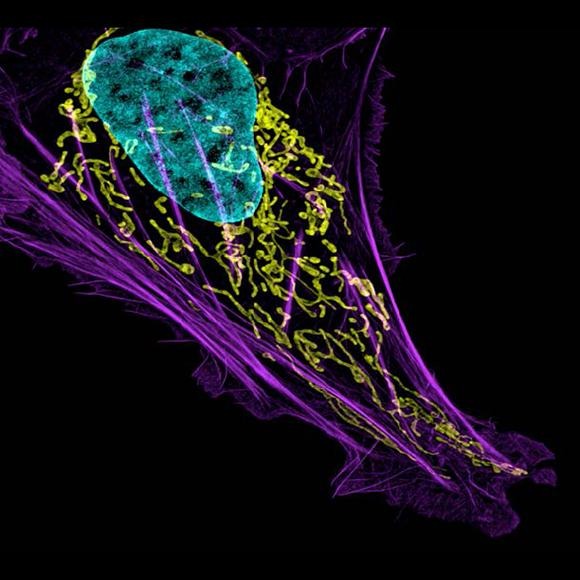
Jennifer Lippincott-Schwartz is a Research Professor leading the Lippincott-Schwartz Lab at the Janelia Research Campus of the Howard Hughes Medical Institute. Her laboratory focuses on understanding how diverse cell types comprising organs operate individually and interdependently to enable organ development, remodeling, healing, and computation. The lab employs cutting-edge fluorescence-based microscopy technologies to study subcellular organelle organization and trafficking pathways across different spatial scales. Dr. Lippincott-Schwartz's research centers on the dynamic interplay between membrane-bound organelles, membrane-less organelles, cytoskeletal structures, and metabolism in relation to cell type-specific organization and function. Her work spans multiple scales, from investigating fundamental cellular behaviors like cell crawling, surface polarization, cell-cell fusion, cytokinesis, viral budding, and intercellular transfer to understanding how these processes contribute to organ-level functions. She has pioneered numerous imaging techniques, particularly in the development and application of fluorescent protein technologies. The publication record reveals a consistent focus on advancing microscopy techniques and applying them to fundamental cell biological questions. Early work established foundational principles in fluorescent protein technology, while more recent publications demonstrate sophisticated applications of super-resolution microscopy, single-particle tracking, and correlative light-electron microscopy to study organelle dynamics, cytoskeletal organization, and cellular signaling. There is a clear trajectory from method development to increasingly complex biological applications, with recent work exploring neuronal calcium signaling, mitochondrial dynamics, and intermediate filament organization. Dr. Lippincott-Schwartz leads an interdisciplinary, international team comprising experts in cell biology, physics, chemistry, mathematical modeling, engineering, and computer science. Her lab actively collaborates with other Janelia research groups and project teams, reflecting the highly collaborative nature of modern cell biological research. The lab maintains strong connections with the Johns Hopkins University graduate program, participating in the joint Janelia/Johns Hopkins graduate program and hosting students through the Janelia summer undergraduate program.