Dr. Adam Martin is a Senior Lecturer in Popular Music at the School of Arts and Humanities , University of Huddersfield, UK. He specializes in collaborative creativity, music production, and the intersection of physical/virtual spaces in musical practice. His research spans electronic music, experimental sound, and climate crisis engagement through art. PhD in Music Production from Leeds Conservatoire Focus on site-specific music and virtualization technologies Active in conference presentations and invited talks (e.g., Institute of Contemporary Music Performance, ICMC 2024) Over the last five years, Adam has produced 21 research outputs including journal articles, digital products, and performances. His 2024 work explores: Virtual acoustics for historical instrument replication (Dulcitone 1804) Climate crisis responses through multisensory art installations Temporal and affective dimensions in collaborative songwriting Current projects involve transposing place-based music into virtual environments and analyzing materiality in experimental compositions.
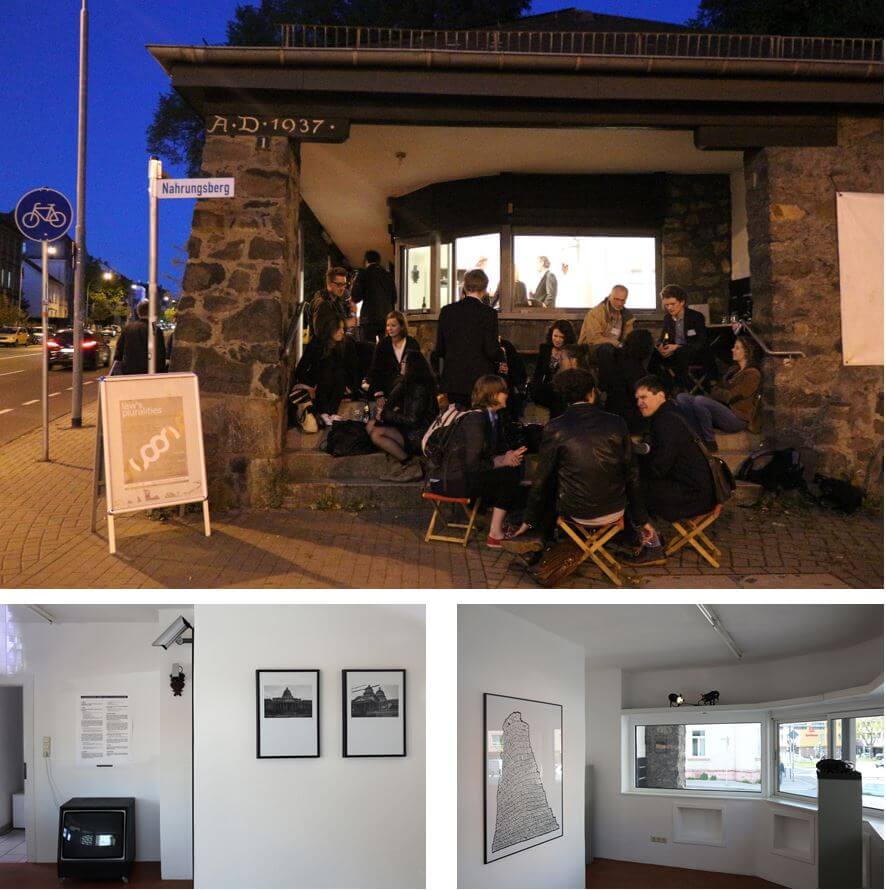
Prof. Dr. Raul Gschrey is a Professor of New Media/Media Education at Frankfurt University of Applied Sciences, affiliated with the Department of Social Work and Health. His office is located in Building 10, Room 409, with consultations available by appointment. He teaches undergraduate and graduate courses including 'Introduction to Aesthetic Work (New Media)', 'Video/Photography/New Media Projects', and 'Participatory Approaches to Social Spaces' in the BA Social Work and MA Performing Arts in Social Fields programs. His educational background includes a PhD from Justus-Liebig-Universität Gießen (2012-2016) focusing on photographic constructions of human faces across art and science, a First State Examination in Art/English Education from Goethe-Universität Frankfurt (2011), and a Magister degree in English Studies/Art Education (2009). Since 2005, he has conducted media education work at Gallus Zentrum Frankfurt alongside university teaching. Gschrey's research explores the intersection of artistic practice, media theory, and social spaces. Primary domains include: Media/Art Education : Developing pedagogical frameworks for aesthetic work with digital media Curatorial Studies : Examining exhibition-making as knowledge production Surveillance Technologies : Analyzing CCTV systems and biometric identification through artistic interventions Urban Spaces : Investigating gentrification, border politics, and architectures of control Visual Culture : Researching historical/contemporary photographic practices and composite imagery His publications consistently engage with power structures in visual culture, particularly surveillance infrastructures and border regimes. Recent works demonstrate increasing focus on: Legal-cultural dimensions of artistic practice Curatorial strategies for visualizing abstract social systems Critical examinations of facial recognition technologies Urban spatial politics in gentrifying landscapes Gschrey maintains memberships in scholarly networks including the International Surveillance Studies Network (since 2010), Netzwerk Kritische Migrationsforschung (since 2011), and Deutscher Werkbund (since 2016). He has exhibited internationally at venues including ZKM Karlsruhe, Museum für Kommunikation, and Goldsmiths London, while curating projects for institutions like Historisches Museum Frankfurt and Frankfurter Kunstverein.
Zeal Harris is a Lecturer in Arts and African American Studies at California State University at Fullerton and Otis College of Art & Design. Based in Los Angeles, her work synthesizes influences from Southern Black folk art, Asian scroll painting, Persian miniatures, Mexican ex-votos, and Afrofuturist literature. She explores themes of policing, surveillance, corruption, prison abolition, and ancestral narratives through autobiographical and symbolic visual storytelling. Current projects: Pantheon of Akatas (ancestral-mother-maroons and ethnogenesis), I Be Livin’ Black Love (black-feminist-themed illustrations). Research Interests : Zeal Harris’ artistic practice interrogates systemic racialized policing, migration histories, and Afrofuturist speculative futures. Her works blend personal anecdotes with collective memory, using urban-vernacular aesthetics to critique power structures and reimagine liberation narratives. Exhibitions & Recognition : Her works have been exhibited internationally at venues such as the California African-American Museum, Prizm Art Fair, Ghetto Biennale (Haiti), Caribbean Culture Center of the African Diaspora (New York), and Mesa Contemporary Arts Museum (Arizona). Media highlights include Art News Magazine, LA Weekly, Los Angeles Times, Huffington Post, and the book Creative Souls: African-American Artists in Greater Los Angeles .
Anna Waligórska is a Polish painter and public art specialist affiliated with the Academy of Fine Arts in Gdańsk , where she holds a faculty position within the Faculty of Painting . Her practice spans mural painting, stained glass, illustration, and large-scale installations. Academy of Fine Arts in Gdańsk (Faculty of Painting, 2005) PhD in Arts (2013) Habilitation (postdoctoral degree, 2022) Her work explores themes of intimacy , nature dichotomies , and visual palimpsests , with dynamic compositions that balance transparency and layered meaning. Key projects include: Public art for Pomorska Kolej Metropolitalna (Gdańsk Metropolitan Railway, 2012 competition winner) "Rowerzystki" (Cyclists) steel installation (2019) Mural for University of Gdańsk's Biology Department (2015) Keywords across her 2016–2024 works include contemporary painting , public art , botanical motifs , and intergenerational dialogue . Her awards include the International Outdoor Gallery Competition (2012), and her works appear in the National Museum in Gdańsk , State Art Gallery in Sopot , and the Nahim Isaias Museum in Ecuador .
Marcin Zawicki is a Professor at the Faculty of Painting, Academy of Fine Arts in Gdańsk (ASP Gdańsk), where he has taught since 2010. He graduated with distinction from the same institution in 2010 and defended his doctoral thesis "Chorography" in 2015. In 2021, he received habilitation and became a full professor. Since 2022, he also runs the Guest Studio at the Academy of Fine Arts in Warsaw. His research explores painting mediated through photography of sculptural realizations , examining material transformation across mediums. Core themes include the ontology of painterly matter and pre-verbal engagement with imagery, described as seeking the moment when painting "becomes the element that most deeply fulfills my assumptions." Zawicki has received numerous awards including multiple Rector's Awards (2010–2019), honorable mentions at the Bielska Jesień Biennale (2013, 2019), and international recognition like the Strabag Artaward (2021). He was thrice nominated for Pomorskie Sztormy awards (2017–2019) and ranked 8th in the 2018 Kompas Młodych Sztuki ranking. Key affiliations include membership in Gdańsk Cultural Council (since 2020), direction of independent Tajna Galeria (2018–2020), and collaborations with institutions like Institute of Urban Culture. His monumental installations (e.g., "Life", "Chorography") and set designs (e.g., film "The Forest") demonstrate interdisciplinary practice.
Dorit Margreiter is a Lecturer at the Academy of Fine Arts Vienna , Department of Fine Arts. Her practice spans film, video installations, and spatial structures , often interrogating intersections between architecture, fiction, and urban environments. Academic Affiliation: Academy of Fine Arts Vienna Role: Lecturer in Fine Arts Contact: d.margreiter@akbild.ac.at Research and Artistic Focus includes: Installation Art examining neon signage and obsolete urban spaces Film Studies through works like Boulevard (2019) analyzing Las Vegas's architectural symbolism Conceptual Art exploring spatial inequality (e.g., Poverty Housing , 2009) Collaborative Projects such as The She Zone (2007) with Anette Baldauf Exhibition Highlights feature: Representation at La Biennale di Venezia (2009) Key installations: zentrum (2006), 10104 Angelo View Drive (2004) Curatorial projects with MAK, mumok, and international biennials
Claudia Lomoschitz is a research-based artist, filmmaker, and choreographer currently serving as a university assistant and lecturer at the Academy of Fine Arts Vienna, Department of Education in the Arts. She teaches courses such as Kunst und Kunstgeschichte im Kontext II and supervises bachelor theses, contributing significantly to art education and performance studies. Her research and artistic practice are deeply interdisciplinary, focusing on embodied politics, reproductive fantasies, and queer-feminist historiographies . She investigates how bodies are politicized through performance, particularly in relation to lactation, death, care, and resistance under capitalism. Her work bridges art, science, and theory, engaging with quantum physics, biopolitics, and feminist epistemologies. The body of her recent creative-scholarly output reveals a strong thematic focus on queer care practices, the materiality of the void, reproductive autonomy, and critiques of neoliberal health and consumer culture . Her performances and installations often use bodily fluids, molecular metaphors, and mythic narratives to destabilize normative understandings of life, death, and care. Claudia Lomoschitz has presented her work internationally, including at MAK Vienna, Universitat Politècnica de València, Schwules Museum Berlin, and Angewandte Vienna. Her artistic projects have been exhibited at prominent venues such as brut Vienna, Belvedere 21, Tanzquartier Vienna, and Kunstraum Niederösterreich. She is currently completing her dissertation on the cultural implications of lactation and queer nursing under the supervision of Elke Krasny, further solidifying her role as a scholar-artist at the intersection of performance, feminism, and cultural critique. She has co-produced works with SOAKED and brut Wien, supported by the City of Vienna’s Department of Cultural Affairs.
Kirin Makker is Professor of American Studies at Hobart and William Smith Colleges, where she has been a faculty member since 2008. She holds a Ph.D. in Regional Planning from the University of Massachusetts Amherst and integrates architecture, art, and critical theory in her interdisciplinary scholarship and teaching. Her educational background includes: Ph.D., Regional Planning, University of Massachusetts Amherst M.Arch., University of Maryland College Park M.A., English Language and Literature, University of Massachusetts Amherst B.A., English Language and Literature, minor in History, University of Texas at Austin Kirin Makker’s research centers on critical space theory, feminist art, and the intersections of race, gender, and architecture. Trained as both an architect and a scholar, she bridges creative practice—such as hand drawing, sewing, and installation art—with academic inquiry. Her work interrogates how social power is embedded in architectural spaces and design history, particularly focusing on women’s and Black histories in urban planning and modernist design. She emphasizes participatory and collaborative methods, often leading community-based art projects that challenge dominant narratives in design culture. Her recent publications, such as Womb Chair Speaks (2021) and A Clamoring Revolt (2022), explore the feminist reclamation of iconic mid-century furniture, critically examining how objects like Eero Saarinen’s Womb Chair reflect and reinforce patriarchal and racialized spatial ideologies. These works combine scholarly analysis with creative intervention, reflecting a trend in her research toward interdisciplinary, performative, and public-facing scholarship. Kirin Makker actively engages in public scholarship and has been featured in media outlets such as Good Morning America . Her project Womb Chair Speaks includes pop-up sewing circles, exhibitions, and collaborative storytelling, emphasizing community, dialogue, and reimagining space through collective labor. She mentors students through creative and research projects, though specific advisees are not named in the provided text. She also leads initiatives that connect academic work with public engagement, including digital platforms like her Linktree and Instagram, where she shares resources on race, gender, and space.
Jaime Neves is an Assistant Professor at the School of Arts, Universidade Católica Portuguesa, and a researcher at the Research Center for Science and Technology of the Arts (CITAR). He holds a PhD in Film Studies with a focus on monochromatic aesthetics in cinema after Technicolor, awarded in 2015. His academic and creative work bridges film theory, audiovisual narrative, and cinematic perception. PhD in Film Aesthetics, School of Arts (2015) Researcher at CITAR – Research Center for Science and Technology of the Arts Active contributor to film literacy and educational strategies Neves' research centers on the role of color in black-and-white cinema, exploring chromatic stimuli, narrative functions, and perceptual awareness. He investigates hybridism, democratization of media, and the evolution of cinematic forms from large to small screens. His work integrates artistic practice with theoretical inquiry, emphasizing the emotional and cognitive impact of visual and auditory elements in film. His recent publications (2022–2024) reflect a strong thematic continuity on monochromatic cinema, color positioning, and changing viewing habits. These works span conference proceedings, journals, and book chapters, often published in Portuguese and Spanish academic venues. The articles demonstrate a deep engagement with audiovisual perception, narrative structure, and the cultural significance of cinematic form. He was awarded a film festival prize in 2018 for the short film "By the Sea" , highlighting his creative contributions alongside scholarly output. Prize at Film Festivals for 'By the Sea' (2018) Neves actively supervises students, including a curricular internship on film direction and production. He is involved in significant research projects such as CITAR (2020–2025) and INSERT (2022–2023), where he served as Co-Principal Investigator for an inclusive film literacy initiative. He regularly participates in academic events, delivers invited talks, and serves on examination juries. His public engagement includes media contributions on audiovisual heritage and the future of cinema. He is a member of a vibrant research network at CITAR, collaborating with scholars in digital arts, sound, and performance. His ongoing work suggests a trajectory focused on the integration of artistic practice, pedagogical innovation, and critical film studies.
Rafael Gil Salinas is a Full Professor in the Department of History of Art at the Faculty of Geography and History, Universitat de València. He is a leading figure in Spanish art history, with a focus on modern and contemporary visual culture, gender studies in art, and Valencian artistic heritage. His work bridges academic research and public engagement through museum studies and cultural criticism. His research interests center on art history from the 18th century to the present , particularly the roles of women artists, public sculpture, artistic identity, and the evolution of visual culture in Spain. He has extensively studied the representation of gender , the development of landscape painting , and the institutionalization of art in Valencia . His scholarship reflects a deep commitment to uncovering marginalized voices in art history and re-evaluating canonical narratives. The recent body of his publications, especially from 2021 to 2024, reveals a strong thematic focus on female artistic creation in Europe and Spain , the symbolism of space and emptiness , and the modernization of Spanish art . These works collectively emphasize interdisciplinary approaches, combining art history with gender theory, cultural studies, and museology. His writing spans academic monographs, exhibition catalogs, and critical reviews, contributing significantly to both national and international discourse. Rafael Gil Salinas leads the research group VALuART: Valencia, University and Art. Art, Museums and Visual Culture, since 1750 to today , which explores the interplay between art institutions, academic research, and public engagement. This group has produced influential studies on Valencian museum networks, art collections, and cultural policy. He earned his PhD from the Universitat de València in 1991 with the thesis Creando el gusto arte y coleccionismo privado en Valencia: del siglo XVIII a nuestros días , supervised by Dr. Carmen Gracia. This foundational work established his expertise in art collecting and private patronage in the Valencian region. Rafael Gil Salinas has not only contributed through publications but also through institutional leadership and curation. His involvement in major projects on public sculpture, urban ornamentation, and the international influence of Valencian artists (e.g., Joaquín Agrasot, Joaquín Sorolla) demonstrates a sustained engagement with both historical and contemporary art dynamics. He has also contributed to the understanding of Spanish political posters, the role of the Ateneo Mercantil, and the cultural significance of university spaces like La Nau.
Sally Doughty is Associate Professor in Dance and Reader in Dance and Improvisation at De Montfort University, where she is also Deputy Head of the School of Humanities and Performing Arts and Director of the Centre for Interdisciplinary Research in Dance (CIRID). She is affiliated with the Arts, Design and Performance Research Institute and leads practice-based research projects supported by Arts Council England and Knowledge Transfer Partnerships. MA by Independent Study: improvisation as a creative tool in the rehearsal process BA (Hons) Performing Arts: Dance Sally Doughty’s research centers on improvisation, corporeal and extended archives, memory, and reflective practice in dance. She explores how the dancer’s body functions as a living archive and investigates autobiographical and cognitive dimensions of performance. Her pedagogic research focuses on developing reflective and analytical skills in movement improvisation, using technology to enhance learning. She is a leading voice in practice as research, emphasizing the documentation and articulation of artistic processes. Her recent publications and performances reflect a sustained inquiry into hybrid artist-academic identities, audience co-authorship, and the materiality of performance. Works like Please Do Touch and Body of Knowledge explore tactile engagement and embodied memory, while her writing in Oxford Handbook of Improvisation and Dance Fields addresses epistemological and disciplinary questions. Her research outputs span performances, exhibitions, and scholarly texts, demonstrating a commitment to interdisciplinary and practice-led methodologies. Scientific awards include: DMU Teacher Fellow (2010) DMU Vice-Chancellor’s Distinguished Teaching Award (2009) Sally supervises multiple PhD students and has secured funding for numerous practice-based research studentships through M3C, M4C, and internal bursaries. She has led externally funded projects such as the Management KTP with FABRIC and Arts Council England grants for Please Do Touch , Body of Knowledge , and Renaissance . She also provides professional consultancy, including for Dance4 and Leicester City Council, influencing regional cultural strategy. She is actively involved in research groups including the Centre for Interdisciplinary Research in Dance (CIRID) and the Arts, Design and Performance Research Institute. She has curated symposia such as Dance Improvisation: The Estranged Cousin and leads initiatives that bridge academic research with professional dance practice.
Roberto Pinto is an Associate Professor in Contemporary Arts at the Department of the Arts, University of Bologna, where he has taught since 2012. He holds a graduate degree in Art History from La Sapienza University in Rome. His research focuses on public art, exhibition history, and the interplay between art and literature. He has curated major international exhibitions, including the 5th Gwangju Biennial and the 3rd Tirana Biennial, and currently coordinates the Artline public art project in Milan. Pinto has authored influential books such as Nuove geografie artistiche (2012) and Artisti di Carta (2016), and his curatorial work emphasizes interdisciplinary collaboration and socially engaged art practices. His recent articles explore themes like immersive exhibitions, political commitment in art, and the legacy of 1990s cultural movements. His pedagogical activities include teaching courses like Forme e funzioni dell'arte contemporanea and supervising thesis seminars. He has contributed to numerous art magazines and collaborates with institutions such as Radio Popolare. Notable exhibitions he curated include Subway Arte (1998) and Salon des Refusés (2003), which highlight his commitment to experimental and alternative art spaces. His work often bridges theory and practice, addressing global art dynamics and the role of art in public discourse. Pinto’s research also extends to historical analysis of exhibitions, such as his study of the Magiciens de la terre exhibition, and contemporary artists like Flavio Favelli and Jeremy Deller. He actively engages with Bologna’s academic community through office hours and public lectures, emphasizing critical dialogue in art education.
Suchan Kinoshita is a Professor of Painting at the University of Münster (Kunstakademie Münster) . Holding the Professorship for Painting, they also serve as Vice-Rector/Deputy Rector. Their work spans interdisciplinary art practices, focusing on installation art, spatial design, and the intersection of architecture and visual arts. Studied Rhythmik and Neues Musiktheater at Musikhochschule Köln (1981-1985) Participated in the Jan van Eyck Akademie's postgraduate program (1988-1990) Acted as advising researcher at Jan van Eyck Akademie (1997-2002) Kinoshita's research explores interdisciplinary art practices , particularly installation art and spatial design . Their recent exhibitions (2012-2022) demonstrate a focus on transforming environments through art, including works like Architektonische Psychodramen and Operating Theatre . These projects often blend architecture , sculpture , and psychogeography . Notable awards include the Prix de Rome (1993) and PS1 Stipendium (1994) . Their students include emerging artists like Juri Lechthoff , Leila Orth , and Daniel Tripp .
Sven Lütgen is a Teaching Professor at the Muthesius Academy of Fine Arts in Kiel, Germany, specializing in Sound Art, Intermedia, and Spatial Strategies. He co-founded the SITE magazine and exhibition project in Düsseldorf and has contributed extensively to interdisciplinary artistic practices through teaching, performances, and publications. Education : Fine Art at Düsseldorf Art Academy (master student of Alfonso Hüppi), Media Art at Karlsruhe University of Art and Design. His research focuses on the intersection of electronic music, visual correspondences, and spatial sound installations. He explores augmented reality, multimedia environments, and interdisciplinary collaborations between art and technology, emphasizing the dissolution of boundaries between creative fields. Lütgen’s academic publications include contributions to Acoustic Turn (2007), Zwölf-Magazin (2008), and Vermischungen (2002), reflecting his expertise in sound studies and intermedia art. His work has been recognized with awards such as the iF Communication Design Award and the Europrix Top Talent Award. Scientific Awards : iF Communication Design Award Europrix Top Talent Award iF Design Award Gold Award from the DDC Studio scholarship from the Düsseldorf Art Academy Foundation for Art and Culture of the State of North Rhine-Westphalia Bonn Art Fund
Jenny E. Sabin is the Arthur L. and Isabel B. Wiesenberger Professor in Architecture and Chair of the Department of Design Tech at Cornell University's College of Architecture, Art and Planning. She directs the Sabin Lab at Cornell AAP, focusing on trans-disciplinary research in computational design, digital fabrication, and bioinspired systems. Sabin earned her M.Arch from the University of Pennsylvania and a BFA in ceramics and interdisciplinary visual art from the University of Washington. Her research explores intersections of architecture and science, specializing in adaptive materials, responsive environments, robotic fabrication, and sustainable design. Key research themes include bioinspired design strategies, material computation, and ecological building systems like the NSF-funded HelioSkin photovoltaic system. Her work translates biological principles from cell biology and mathematics into architectural applications. Sabin's publications demonstrate a consistent focus on interdisciplinary approaches spanning architecture, biology, and computational design. Her 2017 co-authored book LabStudio established frameworks for biology-architecture collaboration, while her articles investigate material innovation and design methodologies at multiple scales. Pew Fellowship in the Arts (2010) MoMA PS1 Young Architects Program Winner (2017) Architectural Record’s Innovator Award (2016) NSF EFRI ODISSEI Grant (2013-18) NSF EFRI-SEED Grant (2010-14) She leads multiple NSF-funded projects including 'Energy Minimization via Multi-Scalar Architectures' and directs the Sabin Lab's research in computational design. Her studio has executed installations for Nike, Cooper Hewitt Museum, and Centre Pompidou, while her 'eSkin' project develops adaptive building systems for energy efficiency.