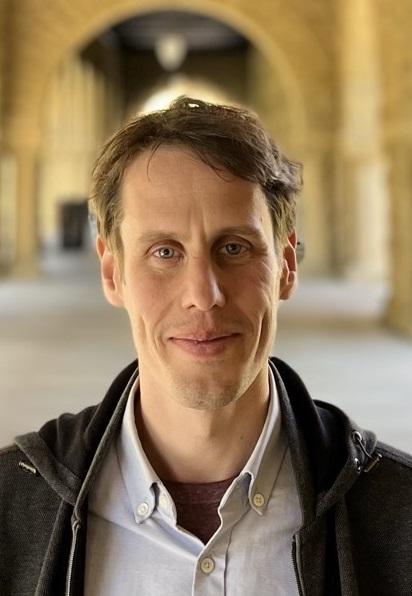
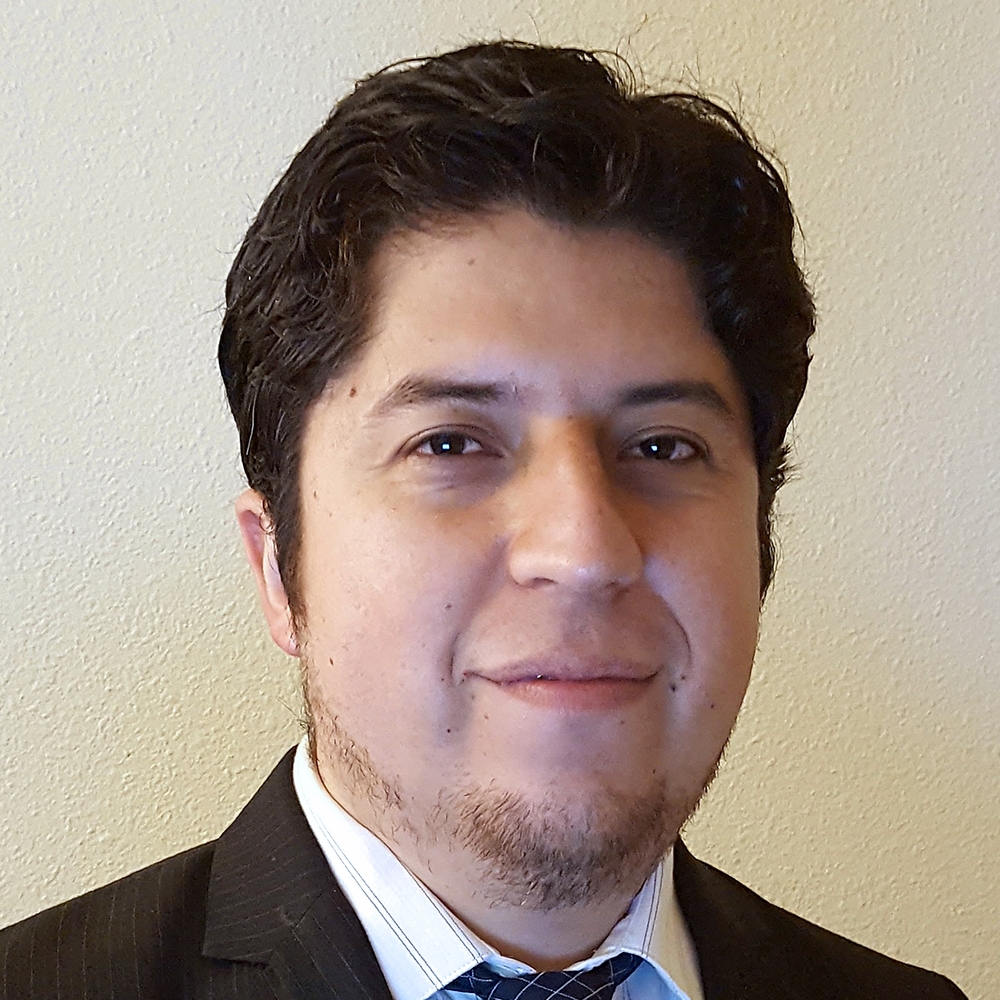
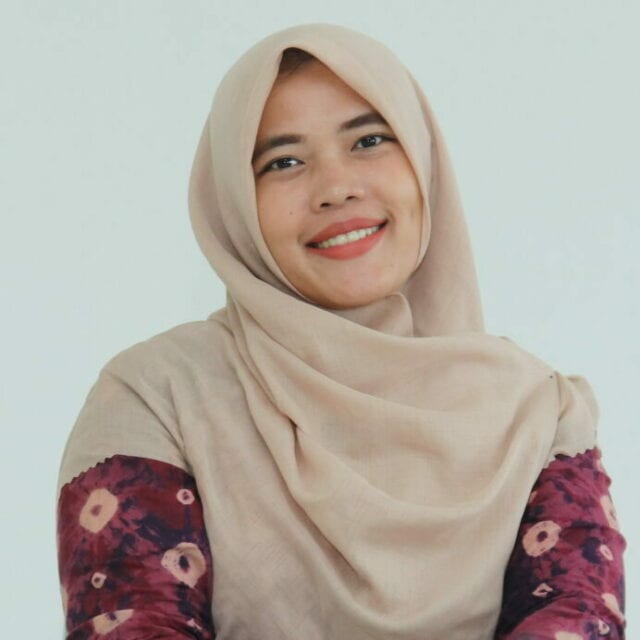
Dr. Andres Luque Ayala is an Associate Professor in the Department of Geography at Durham University. His work bridges urban geography, climate governance, and smart city studies, with a focus on reimagining city-nature relationships in the Anthropocene. He holds a PhD in Geography (Durham, 2013), an MSc in City Design and Social Science (LSE, 2004), a Master’s in Environmental Management (Yale, 2003), and dual 5-year degrees in Political Science and Anthropology (Universidad de los Andes, Colombia, 1999). Research Focus: Climate change mitigation in cities, critical analysis of smart urbanism, socio-political dimensions of urban infrastructures, and nature-based solutions for urban resilience. Projects: Smart Urban Resilience (2019-2021, UKRI/CONACYT), INCLUsive Decarbonisation (2020-ongoing, Research Council of Norway), Naturvation (2016-2021, EU Horizon 2020). Teaching: Social Dimensions of Risk and Resilience, Cities and Climate Governance, Urban Geography. Students: Hannah Morgan (PhD), Helen James (PhD).
Prof. Dr.-Ing. Joachim Denzler is a Professor leading the Chair for Digital Image Processing (Lehrstuhl für Digitale Bildverarbeitung) at Friedrich-Schiller-Universität Jena. His research spans computer vision, machine learning, medical imaging, and remote sensing applications across diverse domains including biomedical analysis, environmental monitoring, and facial recognition systems. His research interests focus on explainable AI, causal discovery, physics-informed neural networks, and bias mitigation in deep learning models. He has made significant contributions to fine-grained classification, concept activation vectors, and privacy-preserving techniques in facial recognition. His work often bridges theoretical computer vision with practical applications in medical diagnostics, environmental science, and infrastructure monitoring. His recent publications demonstrate a strong trend toward causal discovery methods, physics-informed neural networks, and addressing bias in machine learning systems. His work spans both theoretical advancements in model interpretability and practical applications in medical imaging, environmental monitoring, and infrastructure safety. The interdisciplinary nature of his research is evident from collaborations with ecologists, neuroscientists, and civil engineers. Best Paper Award at International Conference on Pattern Recognition (ICPR) 2024 Prof. Denzler actively mentors numerous PhD students and postdoctoral researchers, with frequent co-authors including Maha Shadaydeh, Niklas Penzel, Gideon Stein, and Tim Büchner appearing as first authors on significant publications. His laboratory has secured research funding across multiple domains including medical imaging, environmental monitoring, and AI safety. His work on CausalRivers represents a major contribution to benchmarking causal discovery methods with real-world time series data. The Chair for Digital Image Processing maintains strong industry and clinical partnerships, particularly in medical imaging applications for facial palsy analysis and neonatal care. Prof. Denzler's team has developed novel techniques for dam deformation monitoring using remote sensing data and created advanced methods for analyzing plant diversity effects on ecosystem functioning.
Mathieu Brédif is a Permanent Researcher at LASTIG, Gustave Eiffel University, affiliated with the National School of Geographic Sciences (ENSG) and IGN. He serves as co-chair of ISPRS Working Group II/3 on Point Cloud Processing (2016-2020) and chaired ISPRS Working Group III/5 on Graphics and Remote Sensing (2012-2016). His academic appointments include Assistant Professor at École Polytechnique teaching Image Analysis and Computer Vision (INF573) and 3D Computer Graphics (INF443) since 2019-2020. Telecom ParisTech PhD (2005-2010) Stanford University Master in Computer Science (2004) École Polytechnique Engineering Degree (2000-2005) Brédif's research focuses on Lidar processing, 3D reconstruction, and geovisualization , with significant contributions to point cloud analysis, urban scene modeling, and historical image integration. His work bridges computer vision, photogrammetry, and geographic information systems, emphasizing practical applications in urban planning and cultural heritage. He has developed novel algorithms for point cloud inpainting, visibility estimation, and distributed 3D reconstruction. His publications reveal consistent focus on urban modeling through point cloud processing (58% of works), image-based rendering techniques (22%), and geovisualization systems (15%). The research trajectory shows increasing emphasis on deep learning applications for LiDAR data since 2016, alongside continued development of geometric algorithms for photogrammetric processing. ANR project leadership in geospatial data valorization (structurAtion et vaLorisation du patrimoinE géoGraphique - 9) iSpace&Time 4D web GIS development (5) European project participation in high-volume point cloud analysis (8) Brédif actively mentors doctoral candidates, currently supervising Melvin Hersent, Alexane Nghien, and Florent Geniet, with 8 completed PhDs including Pierre Biasutti and Murat Yirci. His laboratory work centers on the GEOVIS research team , developing the iTowns open-source framework for 3D geospatial visualization, which powers the Géoportail's 3D data engine and supports multiple ANR projects in cultural heritage visualization.
Najmaddin Akhundov is an Assistant Professor in the Decision Sciences and Marketing Department at the Robert B. Willumstad School of Business, Adelphi University. His expertise lies in operations research, with a focus on integer programming, stochastic optimization, and simulation-based methods applied to scheduling, logistics, energy systems, and risk management. Education: Ph.D., Industrial and Systems Engineering, University of Tennessee (2022) M.S., Systems Design Engineering, University of Waterloo (2015) B.S., Industrial Engineering, Baku Engineering University (2011) Research Interests: Dr. Akhundov’s research spans both methodological and applied domains. Methodologically, he advances integer programming , algorithmic development , simulation-based optimization , and stochastic programming . Application-wise, he tackles complex scheduling problems (staff, maintenance, power generators, production), reverse and last-mile logistics, evacuation planning, sustainable port management, and risk-informed maintenance planning. Recent publications (2019-2024) reveal a consistent trajectory toward integrating advanced optimization techniques with real-world operational challenges. Studies range from exploiting symmetry in job sequencing to configuring last-mile distribution networks, pricing risk in energy markets, and optimizing surveillance strategies against invasive species. Collectively, these works highlight a commitment to bridging theory and practice in operations research. Awards & Honors: INFORMS ENRE Best Publication Award in Natural Resources (2022) Harvey J. Greenberg Research Award – Honorable Mention, INFORMS Computing Society (2022) Graduate Fellowship Award, University of Tennessee (2018-2022) Best Graduate Presentation, Dana Knox Student Research Showcase (2018) Study Abroad Fellowship, Ministry of Education of Azerbaijan (2013-2015) Merit-Based Scholarships from Azercell Telecom and Baku Engineering University Teaching & Mentoring: At Adelphi, Dr. Akhundov teaches courses such as Management of Production/Operations and Statistical Methods, having previously taught Applied Operations Research, Optimization Techniques, and Mathematical Programming with MATLAB. While no specific advisees are listed in the provided text, his active research program and course offerings indicate ongoing engagement with both undergraduate and graduate students. Laboratories & Teams: While no dedicated laboratory is explicitly mentioned, his collaborative work with researchers from the University of Tennessee, University of Waterloo, and multiple international partners suggests participation in interdisciplinary research teams focused on optimization and logistics.
Dr. Dasha Moschonas is a Post-Doctoral Research Fellow at University College London's Bartlett School of Sustainable Construction. She is a design researcher, architect, and planner specializing in the intersection of social and technical dimensions of urban challenges, with particular expertise in participatory design approaches for infrastructure and public space projects. Her work spans multiple continents including Serbia, Netherlands, UK, Australia, Belgium, Indonesia and Fiji. Her educational background includes: PhD in Architecture, Monash University, Melbourne (2017-2021) MSc in European Spatial Planning and Environmental Policy, Cardiff University (2014-2016) MSc in Environmental and Society Studies, Radboud University Nijmegen (2014-2016) Master of Architecture, University of Belgrade (2010-2012) Bachelor of Architecture, University of Belgrade (2007-2010) Moschonas's research focuses on participatory design methodologies in urban contexts, particularly for water and sanitation infrastructure in informal settlements. She has developed expertise in nature-based solutions, co-designing with nature, and playful methodologies that foster community engagement. Her work bridges academic research and practical implementation, often working directly with communities to address climate resilience and social inclusion challenges in urban environments. Her publication record shows a consistent focus on inclusive design approaches across multiple urban challenges. The publications demonstrate a progression from her PhD work on water infrastructure in informal settlements toward broader applications including transport infrastructure, nature-based solutions, and child-friendly urban design. A strong theme throughout is the integration of gender and social inclusion perspectives into technical design processes, with particular emphasis on community engagement methodologies that empower local residents in decision-making. Moschonas is actively involved in research projects addressing Sustainable Development Goals including Reduced Inequalities (10), Sustainable Cities (11), Climate Action (13), Gender Equality (5), Clean Water (6), Industry Innovation (9), and Partnerships (17). Her current work includes the project 'Listen, Learn and Leap: Nature-based solutions for climate resilience in East African cities'. She has professional experience at Arup as an Urban Designer and Researcher (2022-2024), where she worked on climate adaptation, play, social value, child-friendly cities, active travel, and inclusion projects. She also serves as a Senior Associate with Architecture Sans Frontieres - UK since November 2022.
Dr. hab. Lidiya Dubis serves as Professor in the Department of Landscape Shaping and Design at John Paul II Catholic University of Lublin (KUL), operating within the Institute of Mathematics, Informatics and Landscape Architecture under the Faculty of Natural and Technical Sciences. Her institutional address is Konstantynów 1 H, 20-708 Lublin, with active supervision of diploma theses and research projects focused on Eastern European spatial dynamics. Her research centers on landscape architecture and spatial development, investigating how terrain morphology and geodiversity shape urban-rural planning. She examines tourism potential in protected areas, particularly Ukraine-Poland border regions, with emphasis on geotourism infrastructure and sustainable development. Her interdisciplinary approach integrates geomorphological analysis with practical spatial planning applications across Carpathian and Polesie ecosystems. Publication analysis reveals consistent focus on transboundary geotourism development, with recurring themes of geological heritage conservation and climate-terrain interactions. Her work bridges academic research and policy through the Polish Academy of Sciences' Task Force for Rural Areas, demonstrating practical application of landscape architecture principles in regional development contexts. Professor Dubis has supervised over 40 diploma theses (2016-2021) on spatial development concepts for Polish communes, village planning, and water reservoir tourism. Her research collaborations span Ukraine and Belarus, notably in the planned international Polissia Geopark project. She actively participates in conferences like the International Scientific Conference 'Geography, Economics and Tourism' while contributing to national spatial planning frameworks. As member of the Polish Academy of Sciences' Task Force for Rural Areas, she influences national spatial development policies. Her current work emphasizes transboundary cooperation for geological heritage conservation, particularly through the Ukraine-Poland-Belarus Polissia Geopark initiative, while addressing climate change impacts on landscape evolution in Eastern European regions.
Mustafa Alattar serves as an Assistant Professor in the Department of Engineering at the American University of Iraq, Sulaimani (AUIS), where he has been employed since 2021. He holds a Ph.D. in Civil Engineering from Lehigh University (USA) and an M.A. from the University of Babylon. His academic qualifications include: Ph.D. in Civil Engineering, Lehigh University, USA M.A., University of Babylon, Iraq Dr. Alattar's research centers on hydrology with specialized focus on surface water-groundwater interactions, employing advanced modeling frameworks like MODFLOW-OWHM to analyze water budgets across the United States and Iraq. His work addresses critical water resource challenges including baseflow recession dynamics, groundwater mapping through multi-source data integration, and climate variable impacts on regional hydrology. Recent publications demonstrate increasing emphasis on Iraq's water systems, particularly groundwater dynamics in the Euphrates basin and climate analysis of precipitation-temperature patterns. His 11 publications from 2013-2024 reveal a clear research trajectory: early work focused on flood routing in Iraqi rivers using Saint Venant equations, evolving into large-scale US water budget modeling, and culminating in recent composite modeling approaches for baseflow analysis and Iraq-specific groundwater dynamics. The consistent thread is integrated hydrological modeling addressing both theoretical advancements (e.g., composite Boussinesq equations) and practical water management applications in data-scarce regions. No scientific awards are documented in the available information. The provided materials do not indicate any student advisees or research grant funding. Professional activities include membership in the American Geophysical Union where he presents research annually. Prior to AUIS, he served as research/teaching assistant at Lehigh University and the Institute of Technology in Baghdad, plus industry experience as a CAD Engineer for Nippon Koei Co., Ltd. on Iraqi infrastructure projects.
Eric Avila is a Professor at the University of California, Los Angeles (UCLA) with joint appointments in Chicano Studies and Urban Planning. He holds the Waldo E. Neikirk Term Chair in Undergraduate Education and has been teaching at UCLA since 1997 after earning his Ph.D. in History from UC Berkeley. His research examines urban cultural history through the lenses of race, space, and representation in 20th-century America, with a geographic focus on Los Angeles. His scholarship explores the cultural impact of urban development phenomena like freeway construction and suburbanization, particularly within Chicano communities. Key thematic interests include racial identity formation, cultural responses to urban renewal, and the role of popular culture in shaping urban imaginaries. Avila's publications predominantly analyze patterns of spatial inequality, community resistance, and cultural expression in modern cities. His work frequently intersects history, urban studies, and ethnic studies, employing interdisciplinary approaches to examine how built environments reflect and reinforce social dynamics. Notable Awards & Grants: Ford Foundation Postdoctoral Fellowship (1999-2000) Donald J. Pfluger Local History Award (2006) Warren Fellowship, Harvard University (2004-2005) Visiting Fellowship, Stanford University (2007-2008) UCLA Center for the Study of Women Faculty Development Grant (2009-2010) No information is available regarding student advising, research teams, or laboratory affiliations in the provided text.
Jingen Zhou serves as an Assistant Professor in the Department of Operations, Supply Chain and Information Management at KEDGE Business School, bringing international expertise from academic and professional experiences across the United States, Japan, China, and Australia. His doctoral research at the Australian Maritime College (University of Tasmania) established his specialization in maritime supply chain systems. Dr. Zhou's scholarly foundation includes a PhD in Management Science and Commerce with explicit focus on Maritime Supply Chain, reflecting his deep engagement with global maritime systems. His research portfolio demonstrates consistent thematic alignment with operational challenges in maritime contexts. His primary research thrust centers on maritime supply chain risk management, where he integrates collision avoidance technologies, ship AIS data analytics, and climate change risk assessment. This work frequently examines cruise industry dynamics through empirical studies in Shanghai and China, addressing pandemic impacts and supply chain resilience. His methodological approach combines Bayesian networks, deep learning, and complex network analysis to solve real-world navigation and logistics problems in coastal and riverine environments. Recent publications reveal a clear trajectory toward data-driven maritime solutions, with 14 articles published between 2023-2025 spanning marine traffic prediction, cruise network analysis, and multimodal hub optimization. His work consistently employs empirical methodologies focused on Asian maritime contexts, particularly China's evolving port and cruise ecosystems, while leveraging cutting-edge computational techniques for risk assessment. Dr. Zhou actively contributes to academic discourse as a reviewer for multiple journals and maintains collaborative research ties with industry partners and international scholars. His pre-KEDGE research involvement in Australian and Chinese projects demonstrates sustained engagement with maritime logistics challenges across different regulatory and operational environments.
Dr. Christian Klassert is a researcher at the Department of Economics, Helmholtz Centre for Environmental Research (UFZ) in Leipzig, Germany, where he serves as co-speaker of the Working Group Social-Science Water Research. His work spans international water security projects focusing on Jordan, India, and Germany. Current Position: Postdoctoral Researcher, Department of Economics, UFZ (since 09/2021) Previous Positions: Researcher at UFZ (2017-2021), Researcher at Leipzig University (2014-2017), Research Assistant at UFZ Bioenergy Department (2011-2014), Visiting Postdoctoral Scholar at Stanford University (2022-2023) Dr. Klassert holds a PhD in Economics from Leipzig University (2021), where he received summa cum laude honors for his thesis on decentralized private water service provision in intermittent supply systems in Jordan. He also earned a European Master in Law and Economics and LL.M. from the Universities of Hamburg, Ghent, and Haifa, and a German academic law degree from Mainz University where he ranked second in his state-wide examination. His research combines coupled human-natural systems modeling, agent-based modeling, and econometrics to assess water security impacts of unequal urban water access and agricultural droughts. Klassert contributes to major international projects including the Jordan Water Project, FUSE Project in India's Upper Bhima Basin, and agricultural drought adaptation research through UFZ Graduate Schools AGRI-TRANSFORM and Thirsty Cities. His interdisciplinary approach integrates economic, social, and environmental dimensions of water security challenges. Analysis of his publication record reveals a strong focus on urban water security, particularly examining informal water markets, household water demand under intermittent supply, and the water-energy nexus. His work increasingly incorporates climate change impacts on water resources and agricultural systems, with a growing emphasis on equity dimensions of water access and infrastructure planning. The geographic scope of his research spans the Middle East (particularly Jordan), South Asia (India), and Europe (Germany). Dr. Klassert received the UFZ Research Award in 2022 for his interdisciplinary work assessing future water crisis risks in Jordan. He serves as a reviewer for prestigious journals including Nature Water, One Earth, and Water Resources and Economics, and co-chairs the Working Group Human Systems Modeling within the MultiSector Dynamics community of practice. His research is supported through multiple international projects including the UFZ Graduate Schools AGRI-TRANSFORM and Thirsty Cities, Future Earth project NexusFootprints, Belmont Forum projects FUSE and Jordan Water Project, and BMUB project JordanCap. These projects involve extensive international collaboration with research institutions in Germany, the United States, Jordan, and India. Klassert's work is conducted within the Department of Economics at UFZ, which focuses on interdisciplinary environmental economics research. His projects often involve close collaboration with stakeholders through workshops and participatory approaches, particularly in the Food-Water-Energy Nexus research in Amman, Jordan and Pune, India.
Chao Fu is a Professor in the Department of Economics at the University of Wisconsin-Madison, holding the Mary Claire Aschenbrener Phipps Distinguished Chair in Economics. Her research focuses on labor economics, empirical microeconomics, and structural econometric modeling. Labor Economics Empirical Microeconomics Structural Estimation Education Policy Crime Economics Dr. Fu's work spans diverse topics including labor market dynamics , health insurance systems , college choice mechanisms , and crime deterrence . Her methodological approach often combines structural modeling with empirical validation, as seen in her studies on post-disaster neighborhood rebuilding and teacher labor markets. Recent trends in her publications emphasize education policy design (e.g., public school teacher equilibrium markets) and intergenerational economic interactions (e.g., childcare and long-term care models). She has contributed to top journals such as the Journal of Political Economy and Econometrica. Mary Claire Aschenbrener Phipps Distinguished Chair in Economics Dr. Fu teaches advanced labor economics courses (Econ 450, Econ 750) and mentors graduate students. Her current work in progress includes studies on teacher labor market information friction and income-driven college loan repayment sustainability.
Jorge Macedo is an Assistant Professor and Frederick L. Olmsted Early-Career Professor at the School of Civil and Environmental Engineering , Georgia Institute of Technology. He received his B.S. and M.S. in civil engineering and soil mechanics from the Peruvian National University of Engineering (2007-2011), followed by M.S. (2014) and Ph.D. (2017) in Geoengineering from UC Berkeley. Education: B.S. Civil Engineering (2007), Peruvian National University of Engineering M.S. Soil Mechanics (2011), Peruvian National University of Engineering M.S. Geoengineering (2014), UC Berkeley Ph.D. Geoengineering (2017), UC Berkeley His research focuses on geotechnical earthquake engineering , advanced numerical modeling (FEM, FDM, MPM), performance-based design , and mining geotechnics . He applies machine learning and reliability tools to assess seismic risks, particularly in liquefaction and residual drift modeling. Recent work examines nonergodic ground motion models, slope stability under subduction earthquakes, and mine tailings behavior. The 2025-2024 publications highlight trends in machine learning for hazard assessment , nonergodic ground motion modeling , and mine tailings analysis . Articles address slope systems, liquefaction effects, and physics-informed neural networks in seismic analysis. Scientific Awards: Young Researcher Award (2023), ISSMGE Technical Committee NSF CAREER Award (2022) Dr. Macedo's work bridges academic research with industry applications , including collaborations with Golder Associates and contributions to geotechnical asset management in Georgia. He actively participates in curriculum development, emphasizing data analytics and computational skills.
Helmia Adita Fitra serves as an Assistant Professor in the Department of Urban and Regional Planning at Sumatra Institute of Technology (ITERA), Indonesia, and concurrently pursues doctoral studies at Humboldt University Berlin's Geography Department. With academic roots at Diponegoro University, she has been integral to ITERA since 2016, progressing from junior lecturer to her current faculty position while maintaining active research and administrative engagement. Her educational foundation: Bachelor's Degree in Urban and Regional Planning, Diponegoro University Master's Degree in Urban and Regional Planning, Diponegoro University Fitra's research centers on migration dynamics and regional development, with deep expertise in socio-spatial segregation, community resilience, and participatory planning. Her work bridges theoretical urban studies with practical Indonesian contexts, particularly examining how communities navigate energy crises, industrial transformations, and pandemic-induced migration. She employs geospatial methodologies to analyze urban morphology and social behavior patterns in rapidly developing Southeast Asian cities. Her publication portfolio reveals consistent focus on Lampung Province case studies, integrating geographic information systems with socio-economic analysis. Key thematic threads include urban spatial restructuring, MSME adaptation to Industry 4.0, community energy resilience, and residential segregation drivers. Notable honors include: DAAD-GCSMUS doctoral scholarship (2021) DAAD-GCSMUS pre-doctoral scholarship (2020) Two competitive research grants from ITERA (2017, 2018) Cultural exchange scholarship at Catholic Kwandong University (2014) As a journal reviewer and research group member at ITERA, she contributes to academic discourse while advancing her doctoral thesis on pandemic-era return migration in Lampung. Her professional networks span the Global Center of Spatial Methods for Urban Sustainability, Indonesian Planner Association, and Asian Cities Climate Change Resilience Network, reflecting her commitment to sustainable urban futures. Fitra maintains active collaboration through ITERA's Research Group of Innovation, Planning and Governance of Regional Development, where she investigates governance frameworks for resilient regional planning in Indonesia's evolving urban landscapes.
Maarten Bassier is an Assistant Professor (tenure track) at KU Leuven, affiliated with the Department of Civil Engineering within the Faculty of Engineering Technology. He is based at the Geomatics unit operating at the Ghent and Aalst Campuses. His academic profile combines research, teaching, and institutional service, with significant contributions to the field of digital construction technologies. As senior academic staff, he serves on both the Council of the Faculty of Engineering Technology and the Civil Engineering Department Council, actively participating in institutional governance while maintaining a robust research program focused on Scan-to-BIM methodologies and geospatial applications in construction. Dr. Bassier's research centers on Scan-to-BIM methodologies, which involve converting 3D scans of existing buildings into Building Information Models. His work bridges geomatics, computer vision, and civil engineering, with applications in construction progress monitoring, infrastructure inspection, and heritage documentation. He applies machine learning techniques to automate aspects of the modeling process, particularly semantic segmentation of point clouds and integration of UAV (drone) data. His research increasingly incorporates deep learning approaches for object detection, segmentation, and completion in complex built environments, with practical applications spanning road construction, bridge inspections, and electrical substation modeling. His interdisciplinary approach connects civil engineering with computer science to solve practical construction challenges through digital innovation. Bassier's recent publication record demonstrates a strong focus on automating the Scan-to-BIM process through advanced computational techniques. His work spans multiple application domains while maintaining a consistent methodological thread of integrating sensing technologies with semantic understanding of construction environments. The trajectory of his research shows increasing sophistication in machine learning applications, moving from basic point cloud processing to complex semantic understanding and automated model generation. His publications appear in high-impact journals across civil engineering, remote sensing, and computer vision domains, reflecting the interdisciplinary nature of his work. SESAME - Semantic Segmentation of Electrical Substations and Derived Models for Engineering (2024-2026) - Promotor UAV-assisted bridge inspections (2022-2027) - Co-promotor XR-empowered dynamic reality modeling for AECO applications (2021-2026) - Co-promotor Digitization in road construction: automating as-built models (2020-2026) - Co-promotor SCAN-to-BIM Automation of as-built BIM production through digitization and machine learning (2020-2025) - Co-promotor As a member of the Division Digital and Sustainable Civil Engineering and the Subdivision Geomatics Ghent, Dr. Bassier contributes to KU Leuven's research ecosystem focused on digital transformation in civil engineering. His teaching portfolio includes courses on BIM, industrial measurements, Scan-to-BIM, 3D modeling, and geomatics, preparing the next generation of civil engineers for the digital construction landscape. His work represents the cutting edge of digital construction technologies, with practical applications that address real-world challenges in infrastructure development and maintenance.
Dr. Aleksandra Stupar is a Full Professor at the Department of Urban Planning, Faculty of Architecture, University of Belgrade. She has been serving as the head of the Doctoral Studies program since 2024 and previously led the Department of Urban Planning from 2017-2024. She received all her academic degrees (bachelor's, master's, and doctoral) from the Faculty of Architecture, University of Belgrade. Her research focuses on urban phenomena, urban innovations, urban transition, and urban history. Professor Stupar has made significant contributions to understanding post-socialist urban transformations, particularly in Belgrade and other cities in the region. Her work bridges theoretical urban studies with practical applications in urban planning and sustainable development. Professor Stupar's scholarly output includes two award-winning books—'City of Globalization – Challenges, Transformations, Symbols' (2009) and 'City – Forms and Processes' (2016/2019/2024)—27 scientific articles, more than 20 book chapters, and over 60 conference papers. Her recent publications demonstrate a strong focus on sustainable urban regeneration, community planning, climate change adaptation, and the transformation of post-socialist urban spaces. 2017 – Ranko Radović Award for 'City – Forms and Processes' 2009 – Award for best publication at the 18th International Urbanism Salon 2008 – ISOCARP/Gerd Albers Award 2005 – Best paper award at World Sustainable Building Conference 16 awards for urban planning projects at International Urbanism Salons (2001-2025) Professor Stupar has been actively involved in numerous international research projects including LINA PLATFORM (2025-2029), Danube Ruralscapes (2025-2027), COST EU Actions (2024-2028), Urban Oases (2024), and CrAFt (2022-2025). She has served as a guest lecturer at prestigious institutions including University of Helsinki, Yildiz Technical University, University of Tampere, and Sapienza Università di Roma. As an active member of ISOCARP, AESOP, and EAUH, she contributes significantly to international urban planning discourse.