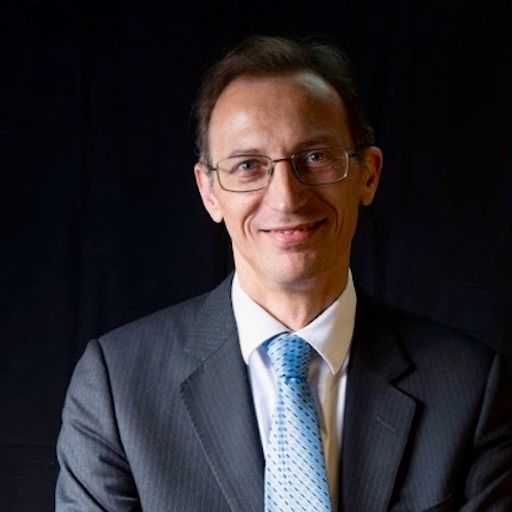
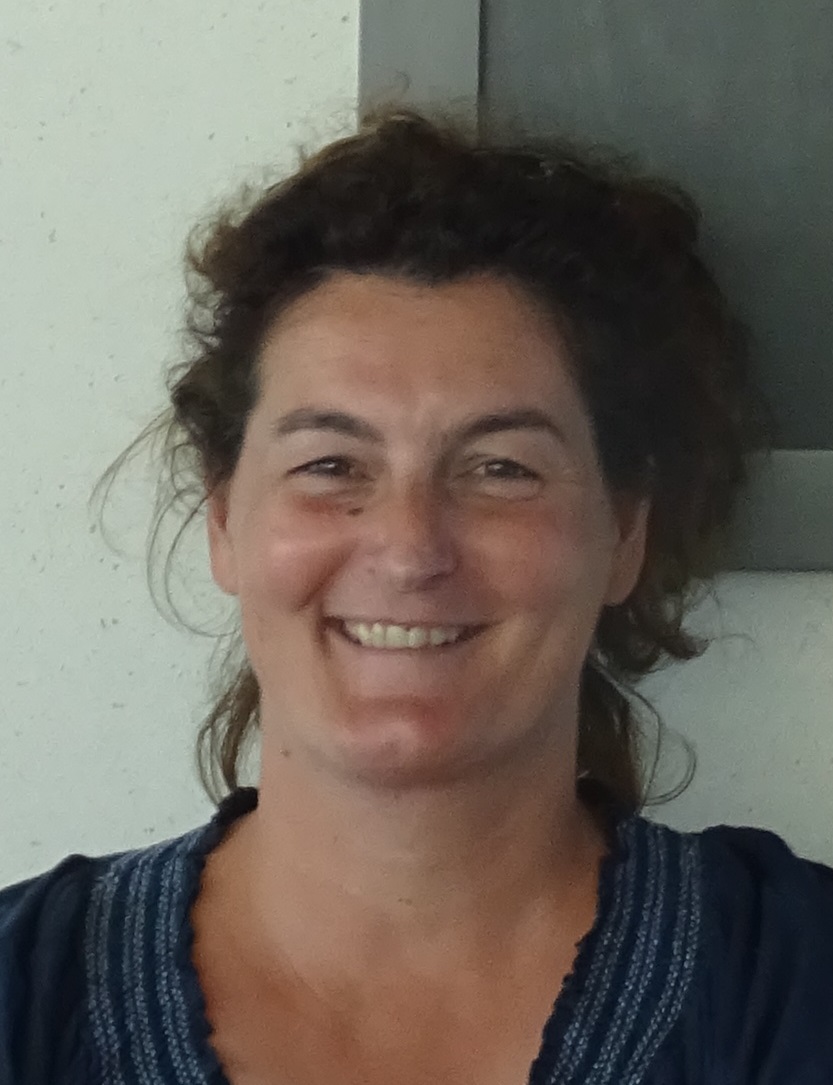
Etienne Wasmer is a Professor of Economics at New York University Abu Dhabi and an affiliated researcher at the Department of Economics and the Laboratory for Interdisciplinary Evaluation of Public Policies (LIEPP) at Sciences Po, Paris. He holds concurrent roles as a CEPR Research Fellow and IZA Research Fellow. His work spans Labour Economics, Urban Economics, and Macroeconomics, with a focus on policy evaluation and public finance. Key roles include co-directing LIEPP (2011-2017) and advising the French government on labor market policies, including the Bozio-Wasmer Mission on social security exemptions. Research Interests: Labour Market Dynamics and Frictions Urban Housing and Spatial Economics Macroeconomic Policy and Growth Public Policy Evaluation Awards: Prix de l'Association Française de Sciences Economiques (2010) Prix Wolowski (2011) Prix Maurice Allais (2023) Grants and Projects: ERC and ANR-funded research projects Co-leadership of Project Liberty's Institute Contributions to global policy reports on labor markets and taxation His work bridges theoretical models with empirical analysis, addressing issues like housing markets, telework dynamics during the pandemic, and tax policy reforms. Collaborations include NYUAD, Sciences Po, and institutions like the French Prime Minister's Office.
Ludovic Hamon is an Associate Professor at the IUT de Laval, Le Mans Université, France, since 2014. He is affiliated with the LIUM computer science laboratory and previously worked in the LARIS and LISA laboratories. His research focuses on virtual and augmented environments for learning, human motion analysis in educational contexts, and game mechanics. He teaches courses in relational databases and programming languages (C++/C#) at the DUT level. Key responsibilities include supervising student internships, managing research project calls, and mentoring students like Quentin Couland and Jean DELEST DJADJA. Education: PhD in Automation and Applied Computer Science from Université d’Angers (2011), with post-doctoral work at IRISA’s EXPRESSION team (2012–2014). Research interests include gesture learning through virtual environments, haptic simulators in dental education (EVAGO project), and automated motion evaluation in simulations. Publications emphasize applications of virtual/augmented reality in education, motion capture for skill assessment, and gamified tools like Albiziapp for collaborative learning. He contributes to conferences such as EC-TEL, CELDA, and GALA, focusing on technology-enhanced learning systems and human-computer interaction in educational settings. Lab affiliations include LIUM (computer science) and collaborations with LARIS and IRISA. His work bridges computational methods with pedagogical innovation, particularly in healthcare training and gesture-based learning.
Sylvie LETNIOWSKA-SWIAT is an Associate Professor at the University of Artois, affiliated with the Faculty of Historical and Geographical Sciences. Her research focuses on peri-urban spaces , borders , cross-border spaces , territorial vulnerability , and spatial discontinuities , particularly in Amazonian regions like the lower Oyapock and Maroni rivers. Doctorate in Human Geography (2002, University of Lille) Member of API commission n°6s23 (Geography) since 2018 External member of COS committees (2019-2023) Her work spans interdisciplinary analysis of border dynamics, territorial structuring, and environmental challenges in transboundary Amazonian territories. Recent projects include MOSAIC (planetary health) and IMoLoCAY (coastal relocation in French Guiana). She has contributed to numerous research reports and collaborative publications. She teaches Geography at the University of Artois and has led administrative roles including department director (2009-2012) and CAPES jury participation (2009-2012). Her research integrates cartographic analysis and spatial modeling to understand environmental risks and cross-border interactions.
Sebastien Larribe serves as a Lecturer in planning and urbanism at the Department of Planning, Polytechnic School of the University of Tours. His administrative roles include: Head of the Environmental Planning Engineering specialty (2024–present) Vice President in charge of real estate (2021–2024) Head of the Environmental Planning Engineering specialty (2017–2023) His research focuses on: Agile methodologies Information representation systems Teaching responsibilities span spatial planning, urban planning, information systems, database management, project management, agile methods, and urban development models. Additional institutional roles include Quality and Sustainable Development Officer, Humanities/Economics/Legal/Social Sciences Officer, and Deputy Director for studies and educational resources at the DAE. No scientific awards were documented in the source material. Student advisement and grant activities are unmentioned in the provided text. Research labs or specialized teams are not specified in the available information.
Matthieu LE BAILLY is a Professor at Université de Franche-Comté, affiliated with the CNRS UMR 6249 Chrono-Environnement. His research focuses on paleoparasitology, parasitology, bioarchaeology, and paleoecology, aiming to trace the evolution of human and animal parasites through time using coprology, immunology, and molecular biology. Key projects include studies on ancient parasite biodiversity, host-parasite relationships, and paleoclimatic impacts on parasite prevalence. Notable contributions include analyses of intestinal parasite resistance in ancient soils, interdisciplinary approaches to Neolithic lifeways, and the application of AI to paleoparasitological data. His work spans global archaeological sites, from Peru to Russia, and integrates bioarchaeological and environmental datasets. Recent publications (2021–2025) highlight advancements in understanding parasite migration, Roman urban defense systems, and climate change effects on Neolithic parasite ecosystems. He advises three PhD/Master’s students and collaborates on projects like Mont’Prospect2.0 and Néolithisation du Nord-Ouest de la Russie (2NOR). Labs/Teams: Chrono-Environnement (CNRS/UFC), with multidisciplinary collaborations in environmental archaeology and paleoparasitology.
Benjamin Auder is a statistical researcher affiliated with the Institut de Mathématiques d'Orsay (IMO) at Université Paris-Saclay , specializing in the probabilités-statistiques team. He holds an engineering position focused on applied statistics projects and computational infrastructure. Education: PhD in statistical modeling from CEA Cadarache (2008-2011), MSc in Sherbrooke (2006-2007), and engineering studies at ENSIMAG (Grenoble). Key roles include: Research collaboration at Lokad (2011-2012) optimizing forecasting engines Co-administration of laboratory computing clusters Teaching: Database Systems (Paris-Sud), C++ (ENSTA), Probability (Polytech) Research interests span statistical methodologies, clustering algorithms, computational tools, and database systems. Notable projects include mixmod classification library and epclust energy load classification. Active in open-source software development for statistical computing.
Jérémy Froidevaux is an Assistant Professor at the University of Franche-Comté, affiliated with the Chrono-environment Research Unit (UMR 6249 CNRS/UFC). His research focuses on conservation biology, eco-acoustics, and bat ecology, with emphasis on evaluating anthropogenic impacts on biodiversity, optimizing monitoring protocols, and assessing conservation measures' effectiveness. Key projects include studies on renewable energy infrastructure (wind turbines, solar farms) and their effects on bat populations. He leads the Silent·Cities initiative, analyzing urban soundscapes during global crises like the 2020 pandemic. Collaborative efforts with international teams address issues like light pollution, electromagnetic field exposure, and biodiversity policy implementation. His academic contributions span 150+ peer-reviewed articles, including work on bat activity patterns at power lines, solar farm impacts, and species-level trait datasets for European bats. Froidevaux advises graduate students, such as Samantha Aguillon, and actively participates in cross-disciplinary initiatives like the Réunion Island Night Environment Observatory. His work bridges ecological research with practical conservation solutions, advocating for evidence-based policies in renewable energy planning and habitat management.
Bruno Cousin is an Associate Professor at Sciences Po's Urban School , affiliated with the Center for European Studies and Comparative Politics (CEE) and serving as the College Head of the Department of Sociology across Sciences Po’s seven campuses. He is the Holder and Scientific Director of the Chair of Cities, Housing, Real Estate , focusing on urban sociology , elite sociability , and international comparative studies . His research examines inequality , segregation , and the practices of upper classes in global cities like Paris and Milan. Previously a postdoctoral researcher at Harvard University and lecturer at the University of Lille , he contributes to the UrbEur doctoral program at the University of Milan-Bicocca . His work spans residential segregation , spatial justice , and elite social networks , with recent publications on economic elites , super-rich housing , and urban electoral dynamics . His research themes include comparative urban sociology , elite self-interest , and global inequality . He co-edited D'une ville à l'autre , analyzing international urban comparisons , and authored Les riches sont convaincus de savoir ce que pensent les pauvres , exploring elite perceptions of poverty. His methodological approaches combine ethnographic observation , interviews , and comparative analysis . As part of the Cities are Back in Town group, he investigates urban renewal and residential patterns of elites. His international collaborations include studies on super-rich geographies and islamophobia in Italy. Current projects include World Elite Database (WED) analyses and global super-bourgeoisie research, reflecting his commitment to transnational sociological inquiry .
Marie-Dominique Van Damme is a Lecturer at the French National School of Geographic Sciences (ENSG), IGN's School of Geomatics, and is in charge of research and studies in the MEIG research team within the LASTIG research laboratory. She has been an IGN Teacher-Researcher at ENSG-Géomatique since August 2019, and from March 2025 will return to full research activities at LASTIG while continuing to teach programming with GIS, modeling, databases, and integration of heterogeneous data at ENSG. Dr. Van Damme earned her Computer Engineering degree with an information systems option from the National Conservatory of Arts and Crafts in 2010. Her professional experience includes: August 2019 – present: IGN Teacher-Researcher at ENSG-Géomatique May 2012 – July 2019: Research engineer at LASTIG, MEIG team May 2005 – April 2012: Project Manager at the National Forest Inventory June 2000 – April 2005: Web developer at Risc Group Her research focuses on semantic integration of heterogeneous geographic data, data matching, and the application of these techniques to mountain rescue scenarios. She has led and participated in several significant research projects including: CHOUCAS Project (ANR, 2017-2022): Multi-source semantic integration of landmark objects for mountain rescue LANDSENSE (H2020, 2016-2020): Crowd and community sourcing for land use monitoring UrCLIM (ERA4CS, 2017-2020): Retrieving land cover data for urban climate studies IntForOut (ANR, 2024-2027): Current project on trajectory analysis Dr. Van Damme has developed several software tools to support her research, including Tracklib (a Python library for GPS trajectory manipulation) and MultiCriteriaMatching (a Java library for multi-criteria data matching based on Belief Theory). Her recent publications show a strong focus on spatial data quality, landmark ontology development, mountain rescue applications, and the use of crowdsourced data for geographic information. The research trends indicate a progression from foundational work on data matching algorithms to applied research in emergency response scenarios, particularly mountain rescue operations. She has supervised numerous students including PhD candidate Mathieu Mehdi ZRHAL (defended 2023), research engineers, and multiple internship students working on geospatial projects related to mountain rescue, data integration, and GIS development. She has also led the pedagogical responsibility for the first-year master's degree in geomatics at Gustave Eiffel University from August 2019 to March 2025. Dr. Van Damme's work bridges theoretical research in geographic information science with practical applications in emergency response, demonstrating the real-world impact of geospatial technologies.
Fabio Porzia is an Associate Member at Patrimoine, Littérature, Histoire (PLH), a research unit affiliated with the University of Toulouse - Jean Jaurès. His academic work focuses on ancient history, archaeology, and religious studies, with particular emphasis on the ancient Levant and Mediterranean worlds. Dr. Porzia holds a Master's degree in Biblical Sciences from the Pontifical Biblical Institute in Rome and a PhD in Ancient Sciences from the University of Toulouse - Jean Jaurès. His doctoral thesis, "Governing with the Book. A Certain Idea of Ancient Israel," supervised by Corinne Bonnet and Stefania Mazzoni, critically examined the concepts of "identity" and "ethnicity" in the study of ancient Israel. The thesis called for a complete revision of the identity approach to ancient Israel, supported by methodologies adequate to in fieri processes and modern anthropological sciences. Porzia's research interests span ancient Israel studies, Levantine archaeology, epigraphy, religious studies (particularly ancient polytheism), identity and ethnicity in ancient contexts, Phoenician studies, and biblical studies. His work challenges traditional approaches to understanding ancient identities, advocating for methodologies more attuned to the fluid and dynamic nature of cultural formation in antiquity. He has made significant contributions to the study of divine names and epithets in the ancient Mediterranean, exploring how religious concepts traveled and transformed across cultural boundaries. His current research focuses on the wide spectrum of interactions existing between different communities of the southern Levant region. His recent publications reveal a strong focus on digital approaches to ancient religious studies, particularly through the Mapping Ancient Polytheisms (MAP) project. This ERC Advanced Grant initiative represents a major interdisciplinary effort to create comprehensive digital resources for studying religious phenomena across the ancient Mediterranean world. His work bridges traditional philological and archaeological methods with innovative digital humanities approaches, creating new pathways for understanding religious continuity and change in antiquity. Fabio Porzia serves as the responsible for the MAP project (Mapping Ancient Polytheisms), an ERC Advanced Grant project focused on epigraphic and literary sources in the Levant from the first millennium BC. This ambitious research program brings together scholars from multiple disciplines to create a comprehensive digital mapping of ancient religious phenomena, examining how divine names and epithets functioned as interfaces between religious systems and human agency across the Mediterranean world.
Thomas Devogele is a Professor at the University of Tours, France, where he serves as Head of the Computer Science Department within the Faculty of Sciences and Technology. He is also Head of the Master 2 in IT and apprenticeships program and deputy director of LIFAT (Tours Fundamental and Applied Computer Science Laboratory). His academic career spans more than two decades, having previously served as an Assistant Professor at the French Naval Academy from 1998 to 2010. His primary research focuses on Geographic Information Systems (GIS), spatio-temporal data mining, and moving object analysis. Dr. Devogele's work specializes in trajectory data-mining, similarity measures between lines or trajectories using Fréchet distance, classification and outlier detection of trajectories, and spatio-temporal database integration. He currently leads research projects DOPAN and PERSONAE. His recent publications (2021-2025) demonstrate an expansion of his research into cycling infrastructure analysis, blockchain applications for business processes, personalized web service recommendations, and health data narratives (particularly tuberculosis in Gabon), while maintaining his core expertise in trajectory analysis and spatial data. His work bridges theoretical computer science with practical applications in transportation, public health, and urban planning. Dr. Devogele has supervised numerous PhD students who have gone on to successful academic and industry careers, including Fournier Sébastien (Assistant Professor at Université de Provence), Noyon Valérie (Leader of GIS department at the city of Niort), and Etienne Laurent (Assistant Professor at Tours University). His teaching responsibilities include Software Engineering, Object-Oriented Programming (Java), Geographic Information Systems, Artificial Intelligence, and Database courses for Computer Science students at the Blois campus. He has made significant contributions to the field through his extensive publication record spanning from 1996 to the present.
Isabelle Bloch is a full Professor at Télécom Paris (Institut Polytechnique de Paris) and Emeritus Professor at the University of Bordeaux . She heads the Image, Modeling, Analysis, Geometry, Synthesis (IMAGES) research team within the Information Processing and Communication Laboratory (LTCI) in the Image, Data, Signal (IDS) Department . Education & Affiliations Professor – Télécom Paris, Institut Polytechnique de Paris (current) Professeure Émérite – University of Bordeaux (honorary) Research Interests Her work lies at the intersection of computer science, applied mathematics and medicine . Core themes include mathematical morphology , fuzzy and bipolar logics , 3-D image interpretation , discrete 3-D geometry & topology , information fusion , structural pattern recognition , spatial reasoning and medical imaging . Recent projects extend these concepts to explainable AI , argumentation theory , computational musicology and robotic surgery guidance . Scientific Awards Blondel Medal (2008) – awarded by the French Electrical & Electronics Engineering Society to outstanding young scientists. Grants & Collaborative Projects While specific grant numbers are not listed in the text, Prof. Bloch coordinates and participates in large-scale interdisciplinary projects funded by national (ANR) and European programs, spanning medical AI, pediatric oncology imaging, neuro-informatics and ethical AI. Labs & Teams She leads the IMAGES team (≈ 25 researchers) inside the LTCI – a joint research unit of Télécom Paris and CNRS. The group develops theory and open-source software in mathematical morphology, deep learning and symbolic AI, and collaborates closely with clinical partners at Necker–Enfants Malades Hospital, AP-HP and Gustave Roussy.
Clément Bosquet is a Professor of Economics at the Sorbonne Economics Centre (CES), Université Paris 1 Panthéon-Sorbonne. He leads the scientific program 'International Economics and Labour Markets' at CES and is the Principal Investigator (PI) of the ANR research grant SINEMOB. His primary research interests span urban economics, economic geography, economics of science, and labour economics, with a focus on topics like spatial inequality, academic collaboration networks, and gender disparities in academia. He advises multiple PhD students and has authored/co-authored numerous peer-reviewed articles in top journals. Education details are not explicitly provided in the text, but his career trajectory indicates advanced academic training in economics. His research has explored themes such as birthplace effects on economic outcomes, peer effects in academic research, and the structure of labour markets. He has contributed to policy-relevant studies on gender gaps in academic promotions and the evaluation of research outputs via bibliometric tools. Notable projects include the SINEMOB grant and collaborative work on econometric methods (e.g., the GLM variance assumption paper). He maintains an active role in teaching, overseeing courses in economics while emphasizing administrative efficiency and student consultation processes. His work bridges theoretical economic models with empirical analysis, addressing both micro and macroeconomic challenges. Laboratory affiliations include the Centre d’Économie de la Sorbonne (CES), where he contributes to interdisciplinary research initiatives. His publications highlight a commitment to understanding the spatial dimensions of economic activity, the dynamics of academic institutions, and methodological advancements in econometric techniques.
Maria Papadopoulou serves as an Associated Researcher at the LISTIC laboratory of University Savoie Mont Blanc, France, specializing in the intersection of philological traditions and computational methods. Her work bridges Classics, Linguistics, and Digital Humanities through innovative applications of Semantic Web technologies for cultural heritage documentation. Her research focuses on ontology and terminology development for material culture studies, particularly ancient Greek dress and Chinese ceramics. She pioneers humanist-centered approaches to knowledge representation, creating tools like Tedi for multilingual terminology ontologization. Her methodology emphasizes accessibility for non-technical scholars while maintaining computational rigor in semantic modeling. Analysis of her publication trends reveals consistent innovation in domain-specific ontologies, with increasing emphasis on cross-cultural applications (Greek/Chinese) and pedagogical frameworks for digital humanities. Her work demonstrates how formal ontologies can resolve ambiguities in historical terminology while preserving cultural context. Scientific recognition includes: Best paper award at SEMAPRO 2018 for advancing multilingual terminology platforms Papadopoulou actively mentors through post-graduate instruction across international institutions including University Savoie Mont Blanc, Liaocheng University, and Nanjing University NUAA. Her teaching materials integrate AI applications with classical philology, reflecting her commitment to training next-generation digital humanists. She operates within the LISTIC laboratory's interdisciplinary framework, collaborating with computer scientists and domain experts to develop the TAO CI project for cultural heritage terminology. Her current work focuses on scaling ontology-based dictionaries for global humanities research while addressing challenges of semantic interoperability across linguistic traditions.
Michela Bussotti serves as a Director of Studies at the French School of the Far East (EFEO) in Paris, specializing in Cultural History of China with particular focus on the 15th-19th centuries. She has been authorized to supervise research since 2011 and maintains an active research profile at the intersection of book history, printing techniques, and visual culture in imperial China. Her academic journey began with university studies at Ca' Foscari University in Venice, followed by advanced studies and a doctorate at the École Pratique des Hautes Études in Paris. She previously held positions at the University of Liège's Center for Chinese Studies (2000-2001) and taught at the EPHE's Section of Historical and Philological Sciences (2007-2012) before joining EFEO's permanent staff. Bussotti's research centers on the history of books, illustration, and publishing in China, with special expertise in Chinese printing techniques and local history of the Huizhou region during the late imperial period. Her work bridges material studies with cultural history, examining how books functioned as cultural artifacts in Chinese society. She has made significant contributions to understanding Sino-European cultural exchanges in the realm of book production and visual representation. Her recent publications demonstrate consistent focus on Chinese book history and printing techniques, with increasing attention to comparative perspectives between Chinese and European printing traditions. These works reveal her expertise in analyzing both technical aspects of printing and their cultural contexts, particularly regarding the Huizhou region's distinctive publishing traditions. Stanislas Julien prize from the Académie des Inscriptions et Belles-Lettres (2003) As an educator, Bussotti has conducted seminars at the EHESS since 2014 on Cultural History of China and History of Visual Culture of East Asia. She has supervised research since 2011 and co-organized significant academic initiatives including the Workshop on Local Primary Sources on Late Imperial China (900-1900). Her digital scholarship includes valuable online resources, particularly the database on Huizhou genealogies available through both EFEO and the National Library of China websites.