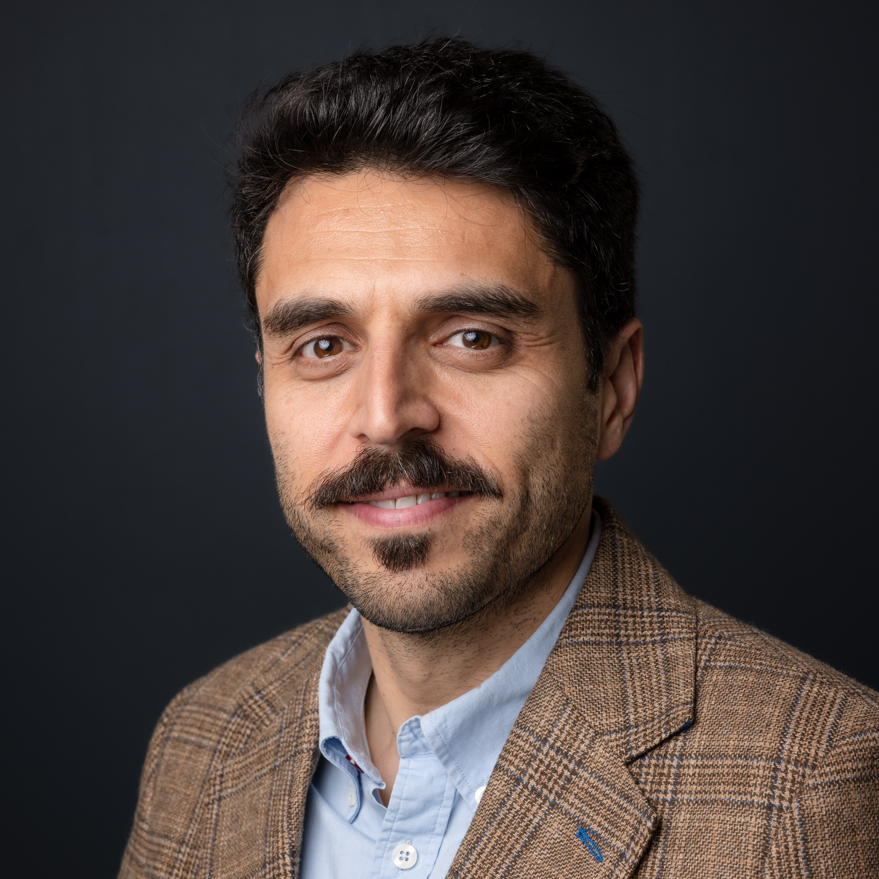
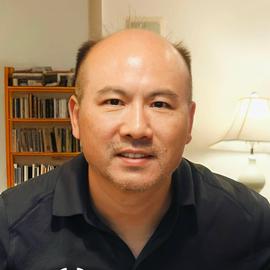
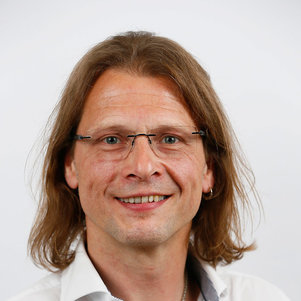
Associate Professor Mohsen Kalantari is a Geospatial Engineering academic at the University of New South Wales (UNSW) School of Civil and Environmental Engineering , with concurrent roles as co-founder of the startup Faramoon . His career spans roles at the University of Melbourne's Department of Infrastructure Engineering and Victorian government's land administration initiatives through DELWP. Education : PhD in Geomatics Engineering (2008, University of Melbourne), Master of GIS Engineering (2004), Bachelor of Surveying Engineering (2001) His research bridges geospatial engineering with construction automation , focusing on 3D cadastre , BIM-GIS integration , and smart cities . Recent publications show trends in underground land administration , digital twins , and LADM standard implementations . Scientific Awards : National educational recognition (2019), Victorian educational grants (2018), and prestigious fellowships (2012) As a supervisor , he guides PhD candidates in topics ranging from BIM for waste management to underground cadastral systems . His industry engagement includes partnerships with the United Nations , Open Geospatial Consortium , and Singapore Land Authority .
Peter Benner is a Professor and Director at the Max Planck Institute for Dynamics of Complex Technical Systems in Magdeburg, where he leads the Computational Methods in Systems and Control Theory group. He also holds an Honorarprofessor position for Mathematics at Otto-von-Guericke Universität Magdeburg since 2011. Benner has previously served as Managing Director of the Max Planck Institute during multiple periods (2013-2014, 2021-2022, and 2025-2026), demonstrating his leadership in the field. Benner's research focuses on Scientific Machine Learning, Numerical Linear and Multilinear Algebra, Model Order Reduction and Reduced-order Modeling, Numerical Methods in Systems and Control Theory, PDE Constrained Optimization, High-performance and Power-aware Computing, and Mathematical Software development. His work bridges theoretical mathematics with practical engineering applications, particularly addressing challenges in large-scale dynamical systems. Analysis of his recent publications reveals a strong emphasis on developing efficient computational methods for complex systems. Benner has pioneered approaches combining model order reduction with tensor methods to tackle high-dimensional problems in uncertainty quantification and PDE-constrained optimization. His work shows a consistent trend toward integrating data-driven techniques with traditional model-based approaches, particularly for nonlinear and parametric systems. Throughout his career, Benner has actively mentored students and collaborated with researchers worldwide, delivering numerous invited talks at prestigious institutions and conferences across Europe, North America, and Asia. His research has received significant funding, supporting the development of mathematical software and computational methods for industrial applications. Benner leads the Computational Methods in Systems and Control Theory department at the Max Planck Institute, which focuses on developing and implementing advanced numerical methods for large-scale dynamical systems. The group maintains strong connections with both theoretical mathematics and practical engineering applications, particularly in fluid dynamics, energy systems, and control theory.
Yiping Lu is an Assistant Professor in the Department of Industrial Engineering and Management Sciences at Northwestern University's McCormick School of Engineering. His research focuses on developing interdisciplinary approaches combining domain knowledge (differential equations, stochastic processes), machine learning, and experiments. Key interests include scientific machine learning (AI4Science), stochastic simulation, and robust machine learning. Education: Ph.D. in Applied and Computational Mathematics, Stanford University (2023) B.S. in Computational Mathematics, Peking University (2019) Research Highlights: Hybrid research integrating ML with scientific domains like PDEs and inverse problems Development of Physics-Informed Learning frameworks Contributions to deep learning theory (ResNets, neural collapse) Advances in kernel operator learning and adversarial robustness Awards: CPAL Rising Star Award (2024) University of Chicago Data Science Rising Star (2022) Stanford Interdisciplinary Graduate Fellowship (2021) Labs/Teams: SCALE Lab (Scientific Computation and Learning at Northwestern) Collaborations with NYU's Courant Institute and Stanford
Anna Choromanska is an Associate Professor in the Department of Electrical and Computer Engineering at NYU Tandon School of Engineering, with affiliations to NYU Center for Data Science (CDS), NYU Center for Urban Science and Progress (CUSP), NYU Center for Advanced Technology in Communications (CATT), and the C2SMART Center. Her research focuses on deep learning optimization, generalization, and applications in autonomous driving and large-scale data analysis. She holds an Alfred P. Sloan Fellowship and NSF CAREER Award, and her work impacts industries like NVIDIA and Facebook. She directs the Learning Systems Laboratory (LSL), emphasizing interdisciplinary experimental/theoretical work. Research Interests: Machine Learning fundamentals, DL optimization, continual learning, autonomous vehicle systems, large data analysis. Her lab explores DNN learning dynamics, training architecture design, and scalable algorithms. Professional Impact: Over 50 invited talks, workshop organization for top ML conferences, and contributions to open-source projects like Vowpal Wabbit. Her algorithms are deployed in production systems at Facebook and Baidu. Awards: NSF CAREER Award Alfred P. Sloan Fellowship IBM Global University Program Academic Award (2x) Columbia University Presidential Fellowship Advising & Labs: Leads LSL, supervising interdisciplinary projects in optimization and autonomy. Actively involved in NYU's Modern AI seminar series and industry partnerships through CATT. Personal Interests: Accomplished pianist, salsa dancer, and fashion design enthusiast with notable performances and certifications in dance and music.
Professor Kay O'Halloran serves as Chair Professor and Head of Department of Communication and Media within the School of the Arts at the University of Liverpool since August 2019. She concurrently holds the position of Co-Director for the Digital Media and Society Institute (DMSI), demonstrating significant leadership across academic and research domains. Her career spans prestigious institutions including Curtin University (2013-2019) and National University of Singapore (1998-2013), where she directed the Multimodal Analysis Lab and served as Deputy Director of the Interactive & Digital Media Institute. PhD from Murdoch University (1996) Postdoctoral position at Martin Luther University (1997-1998) Visiting Distinguished Professor at Shanghai Jiaotong University (2017-2020) Professor O'Halloran's research focuses on multimodal discourse analysis, particularly the interaction of language with visual and mathematical resources. Her pioneering work in systemic functional multimodal discourse analysis (SF-MDA) has significantly impacted mathematics education and digital communication studies. Current research emphasizes digital tools for multimodal analysis and mixed methods approaches to big data analytics, addressing contemporary challenges in misinformation and public health communication. Her recent publications reveal strong thematic concentration in pandemic-related communication analysis, misinformation resistance mechanisms, and multimodal argumentation across social and cultural contexts. The 15 most recent articles demonstrate consistent application of multimodal frameworks to urgent societal issues including public health crises, political discourse, and digital literacy challenges. Founding editor of Routledge Studies in Multimodality book series (57+ volumes) Over 150 publications in leading international journals 50+ plenary/keynote presentations globally Competitive funding from National Research Foundation, MOE Singapore, US Air Force, ARC, NHMRC, and others Professor O'Halloran has directed interdisciplinary research teams comprising social scientists, computer scientists, and designers. Her leadership extends to developing commercial multimodal analysis software (Multimodal Analysis Image and Video) adopted internationally. Current projects include Eurovision 2023 wellbeing evaluation and COVID-19 misinformation immunity development, demonstrating continued relevance to contemporary societal challenges.
Nebiyou Tilahun is an Associate Professor and Director of Graduate Studies in the Department of Urban Planning and Policy at the University of Illinois at Chicago (UIC), within the College of Urban Planning and Public Affairs (CUPPA). He leads the Mobility Urban Systems and Equity Lab , focusing on equitable transportation solutions. His roles include teaching courses such as Transportation Planning Methods, Spatial Statistics, and Plan Making Studio. Dr. Tilahun holds a PhD in Civil Engineering from the University of Minnesota (2010), with earlier degrees in Civil Engineering (B.Sc., 2001; M.Sc., 2005). His career includes post-doctoral research at UIC’s Urban Transportation Center and the University of Minnesota’s Humphrey School of Public Affairs, as well as professional experience at the Washington State Department of Transportation. Research Interests : His work bridges transportation equity, urban planning, and policy evaluation. Key areas include: Transport accessibility and equity Automated traffic enforcement (e.g., speed/red-light cameras) Social networks and travel behavior Disability and mobility challenges Intergenerational poverty and spatial mobility Recent Research Trends : His publications emphasize equity in urban systems, such as analyzing racial disparities in traffic stops, evaluating automated camera efficacy, and exploring how residential choices shape young adults’ travel patterns. He also investigates transit accessibility gaps in Chicago and the role of technology in urban informatics. Labs/Teams : Directs the Mobility Urban Systems and Equity Lab, which develops tools like the Chicago Accessibility Explorer to visualize transit equity. Collaborates on projects like Seeing Cities Through Big Data , applying data science to urban planning challenges. Grants/Advising : While specific grants are not detailed here, his lab’s work implies funding in transportation equity and technology. No advisees are listed in the provided materials.
Prof. Dr. Michael Ulbrich is a full professor and Chair of Mathematical Optimization at the Technical University of Munich (TUM), within the School of Computation, Information and Technology. He has held this position since 2006 and previously served as Dean of Studies (2007–2010) and Vice Dean of the Faculty of Mathematics (2012–2015). His research focuses on nonlinear optimization, optimal control, and numerical analysis, with applications in fluid dynamics, shape optimization, and PDE-constrained systems. He leads projects in the DFG SPP 1962 and IGDK 1754, and has received prestigious awards including the Howard Rosenbrock Prize (2015) and the Doctoral Award from the TUM Association of Friends (1996). Ulbrich is Editor-in-Chief of Optimization and Engineering and contributes to multiple journals. His work bridges theoretical foundations and practical applications, including CO2 sequestration, fluid-structure interaction, and distributed optimization algorithms. Education: PhD (1996), Habilitation (2002) in Mathematics at TUM. Research stays at Rice University (USA) under DFG funding. Research Areas: Semismooth Newton methods, PDE-constrained optimization, optimal control of Navier-Stokes equations, and distributed parameter systems. Awards: Rosenbrock Prize, Teaching Excellence Awards, and recognition for doctoral work. Leadership Roles: Department Head of Mathematics (2022–), Member of TUM Senate (2019–2022), and Co-Chair of GAMM 2018. Ulbrich has authored influential textbooks like Semismooth Newton Methods for Variational Inequalities and Nichtlineare Optimierung . His recent projects include OptiGeoS (2024–2026) and collaborations on nonsmooth optimization and stochastic algorithms. His academic contributions span over 100 publications, emphasizing both algorithmic innovation and rigorous mathematical analysis.
Dr. Alyas Widita is an Assistant Professor in the Urban Design program at Monash University, Indonesia. He is actively involved in research and teaching, focusing on urban planning, transportation, and smart city technologies. He serves as the Program Coordinator for Urban Design and teaches courses such as Urban Design Studio: Smart City and Smart City Technologies. Education: Ph.D. in City and Regional Planning, Georgia Institute of Technology, United States Dr. Widita's research centers on the built environment, transportation systems, and urban analytics, with a strong emphasis on developing Asian cities. His work explores congestion impacts of mass transit, ride-hailing effects on vehicle ownership, rural-urban migration, walking behavior, and spatial patterns of MSMEs. He employs advanced data analytics and causal evaluation methods to inform urban policy. His recent publications span high-impact journals such as Transport Reviews , Journal of Planning Education and Research , and Travel Behaviour and Society . The research trend shows a consistent focus on data-driven urban policy, sustainable mobility, and equity in urban development across Indonesia and Southeast Asia. Scientific Awards and Recognition: No specific awards listed, but research widely cited and featured in media outlets. Dr. Widita has secured and contributed to multiple research projects funded by international and national agencies, including the World Bank, Korea Transport Institute (KOTI), Central Bank of Indonesia, and Georgia Department of Transportation. He is currently leading or co-leading projects on Jakarta’s subsidence, flood risk management using remote sensing, and the Citarum River revitalization. He collaborates extensively with researchers across disciplines and institutions. His work contributes to UN Sustainable Development Goals, particularly those related to sustainable cities and communities. He is accepting PhD students interested in the built environment, transportation, and urban analytics in developing Asia. He is involved in key labs and research teams including the Citarum Action Research Program (CARP), Intelligent and Dynamic Remote Sensing for Flood Risk, and interdisciplinary urban analytics initiatives at Monash Indonesia.
Dr. Baijian "Justin" Yang serves as the Associate Dean for Research at Purdue Polytechnic Institute and is a Professor in the Department of Computer and Information Technology at Purdue University. He earned his Ph.D. in Computer Science from Michigan State University, with Master's and Bachelor's degrees in Automation (EECS) from Tsinghua University. Dr. Yang has established himself as a leader in multiple interdisciplinary research domains. Dr. Yang's educational background includes: PhD in Computer Science, Michigan State University (2002) MS in Automation (EECS), Tsinghua University (1998) BS in Automation (EECS), Tsinghua University (1995) His research interests span multiple cutting-edge domains with practical applications: Cybersecurity : Developing novel approaches for threat intelligence, security education, and network defense Big Data : Creating innovative algorithms for dimension reduction, regression with categorical variables, and tensor decomposition Applied Machine Learning : Implementing AI solutions in healthcare, manufacturing, and forestry applications Digital Forestry : Using UAV imagery and remote sensing for forest management and tree species classification Dr. Yang's publication record demonstrates significant impact across multiple disciplines, with recent work focusing on spatial transcriptomics analysis (SiGra), delirium detection using limited-lead EEG, and visual localization technologies. His research bridges theoretical advances with practical applications in healthcare, manufacturing quality control, and environmental monitoring. The interdisciplinary nature of his work is evident in collaborations spanning computer science, healthcare, forestry, and manufacturing domains. His scientific achievements have been recognized with numerous awards: 2023 HRSA Building Bridges to Better Health Competition Winner (Phase 1) and 2nd place ($100,000 prize) in Phase 3 2023 Outstanding Faculty Award in Engagement, Department of Computer and Information Technology, Purdue University 2021 Leadership in Manufacturing Award, Manufacturing Times Digital (MxD) 2021 Good to Great Award, Purdue Polytechnic 2020 Outstanding Faculty Award in Discovery, Department of Computer and Information Technology 2019 University Faculty Scholars, Purdue University As an educator and mentor, Dr. Yang has advised numerous graduate students through their PhD and Master's research. His leadership extends to significant service roles including serving as Faculty Champion for the Holistic Safety and Security research impact area at Purdue Polytechnic from 2018 to 2021, board membership with ATMAE (2014-2016), and participation in the IEEE Cybersecurity Initiative Steering Committee (2015-2017). He holds valuable industry certifications including CISSP, MCSE, and Six Sigma Black Belt, demonstrating his commitment to bridging academic research with industry practice. Dr. Yang leads multiple research projects including "Digital Forestry" for developing tools to quantify forest function, "CHEESE" (Cyber Human Ecosystem of Engaged Security Education), and "CICI" (Supporting Controlled Unclassified Information with a Campus Awareness and Risk Management Framework). His work on "Applied Machine Learning" focuses on solving real-world problems, while his "Dimension Reduction and Memory Amnestic Big Data Regression" project innovates computational algorithms for large-scale data analysis.
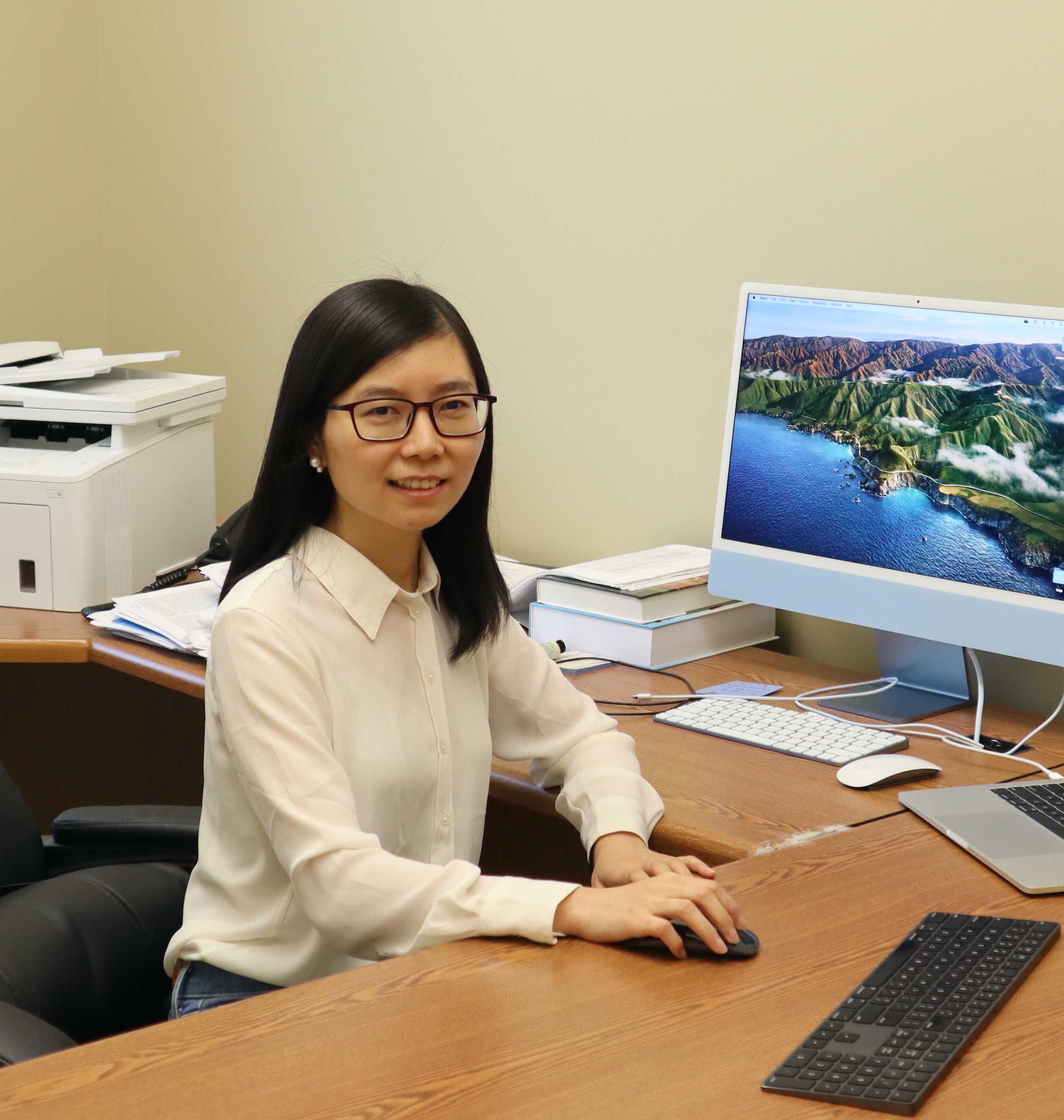
Dr. Li Chen is an Alfred and Helen Lamson/BORSF Endowed Associate Professor in the School of Computing and Informatics at the University of Louisiana at Lafayette. She leads the CELESTIAL research lab, focusing on distributed systems and networking for machine learning and AI. Her research interests include federated learning, cloud computing, and resource optimization. Dr. Chen holds a Ph.D. from the University of Toronto and has received awards such as the NSF EPSCoR RII Track-4 grant and the BoRSF Endowed Professorship. Education: Ph.D. (2018), M.A.Sc. (2015) in Electrical and Computer Engineering from University of Toronto; B.Eng. (2012) in Computer Science from Huazhong University of Science and Technology. She also visited Hong Kong Polytechnic University (2013-2014). Research spans federated learning frameworks (e.g., SEAFL, FedClust), cloud resource scheduling (e.g., Hadar, HarmonyBatch), and applications in weather forecasting (e.g., MMST-ViT). Her work is supported by NSF, Louisiana BoRSF, and industry partners like XRMedix. Awards include the Alfred and Helen Lamson/BORSF Endowed Professorship (2024-2027), NSF EPSCoR grant (2024-2026), and best paper recognitions at IEEE conferences. She advises a diverse group of graduate students and has supervised alumni now in academia and industry. Teaching includes courses on computer networks, operating systems, and distributed systems. She organizes workshops and tutorials (e.g., 2023 Summer Tutorial on ML & Meteorology) and serves on conference committees such as INFOCOM and IWQoS.
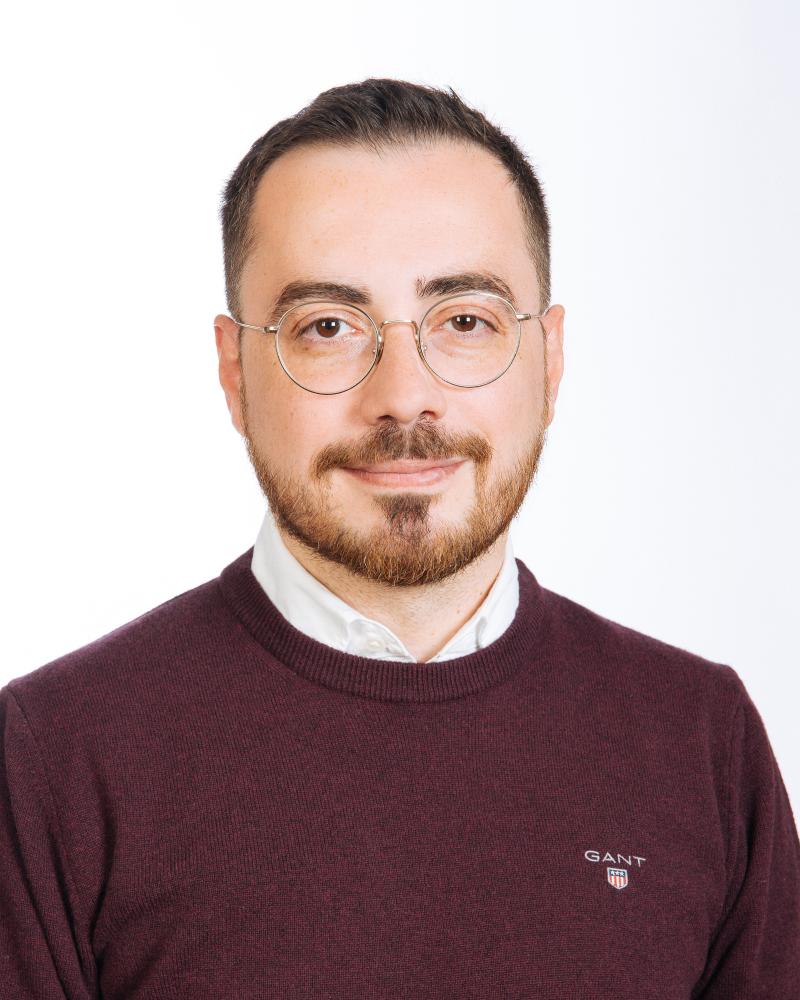
Dr. Pavlos Tafidis is a Lecturer in Transport (Systems) Engineering at the School of Engineering, University of Edinburgh. His work integrates interdisciplinary approaches to advance transport planning and engineering, with a focus on smart and sustainable mobility solutions. PhD in Transport Engineering, Hasselt University (2022) M.Sc in Transport Planning, Aristotle University of Thessaloniki (2015) M.Eng in Transportation, Aristotle University of Thessaloniki (2013) He leads projects like "BikeHood" (Science Foundation of Ireland), developing Ireland’s first cycling neighborhood, and contributes to initiatives such as "REALLOCATE" (Horizon 2020) and "CISMOB" (Interreg Europe). His research emphasizes accessible mobility solutions, equity in transport infrastructure, and urban livability. Recent publications analyze cyclist crash hotspots using machine learning, electric bike route preferences via GPS data, and traffic-emission correlations in Dublin. His expertise spans digital twins, virtual reality, and geospatial analysis. Dr. Tafidis teaches courses including Transport Engineering 3, Transport and Society, and Multi-Scale Energy Demand, affiliated with the School of Engineering and Edinburgh Future Institute.
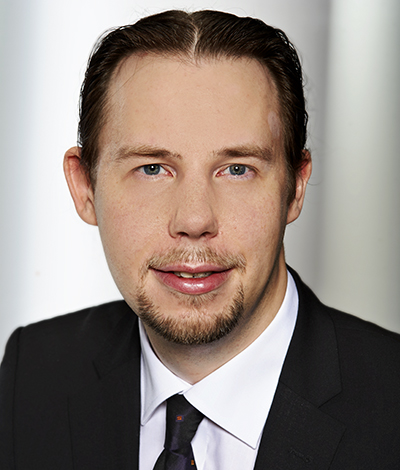
Gerd Bruder is an Associate Professor at the University of Central Florida , affiliated with the Department of Computer Science . He previously held positions as a Research Associate Professor at UCF's Institute for Simulation and Training (2016-2022), Post-Doc at University of Hamburg (2014-2016), and Post-Doc at University of Würzburg (2011-2014). Habilitation : Computer Science, University of Hamburg (2017) Ph.D. : Computer Science, University of Münster (2011) M.Sc. : Computer Science (minor in Mathematics), University of Münster (2009) Research Interests : Gerd Bruder's work focuses on Extended Reality (XR) systems, spanning Virtual Reality (VR) , Augmented Reality (AR) , and Mixed Reality (MR) . Key areas include human factors , digital twins , 3D user interfaces , and perceptual modeling , with applications in healthcare, military operations, architecture, and smart environments. Recent Publications highlight innovations in XR locomotion , trust calibration with autonomous agents, spatial cognition , and haptic-visual integration . His 2025 articles address task-switching efficiency in XR and collaborative mixed reality design. Scientific Awards : Best Paper at ACM VRST 2023 2021 TechConnect Innovation Award Best Demo at ACM SUI 2021 Multiple Best Paper Awards (2016-2023) Best Poster & Demo Awards (2015-2020) Patents include systems for medical simulation , smart environment interruption management , and adaptive AR interfaces . His work bridges academic research and practical applications across VR, AR, and MR domains.
Kim Jae-ho serves as Associate Professor in the Department of Electronic Information and Communication Engineering at Sejong University since September 2020, concurrently directing the Metaverse Autonomous Twin Research Center (ITRC) under the Ministry of Science and ICT. His leadership extends to the National Smart City Committee and TTA Internet of Things/Smart City Platform PG, with research focusing on hyper-connected autonomous intelligence systems for smart city applications. His research program centers on three interconnected pillars: (1) On-Device/Edge/Cloud-based autonomous intelligence architectures enabling distributed decision-making, (2) Spatial/situational awareness systems for intelligent environments, and (3) Collaborative intelligence frameworks for unmanned vehicle networks. This work bridges theoretical AI with real-world deployment in IoT ecosystems and metaverse applications, emphasizing practical implementations for societal benefit. Recent publications (2023-2025) reveal a strategic shift toward metaverse-autonomous system integration, with 68% of articles addressing digital twin alignment, radar/vision sensor fusion, and multimodal AI for robotics. Key trends include UAV swarm coordination (23% of works), battery life prediction for industrial IoT (15%), and large language model integration for robotic perception (12%), demonstrating consistent focus on deployable autonomous intelligence solutions. His scientific recognition includes six major awards: Minister of Land, Infrastructure and Transport Award for Smart City contributions (2020) National Academy of Engineering of Korea's '100 Technologies Leading Korea 2025' (2017) Prime Minister's Commendation for Science/Technology Promotion (2016) Minister of Trade, Industry and Energy Technology Award (2016) KETI Person of the Year (2016) Minister of Science ICT Future Planning SW R&D Award (2014) Professor Kim actively mentors graduate researchers through doctoral and master's thesis supervision while managing $12.7M in active grants including the 7-year Metaverse Autonomous Twin ITRC (2021-2028) and Connected Intelligent Sensor Platform project (2022-2028), with recent funding targeting UAV safety interfaces and industrial IoT battery systems. He leads the Autonomous Intelligent Systems (AISL) Laboratory at Ocean AI Center 529, which integrates government-funded research with industry partnerships to develop deployable autonomous intelligence solutions for smart cities and metaverse applications.
Hadi Esmaeilzadeh is an Associate Professor at the University of California, San Diego in the Department of Computer Science and Engineering . He leads the Alternative Computing Technologies (ACT) Laboratory and serves as Associate Director of the Center for Machine Integrated Computing and Security (MICS) . Previously, he was an Assistant Professor at Georgia Institute of Technology. Ph.D., Computer Science and Engineering, University of Washington (2013) Research focuses on computer architecture , machine learning acceleration , and approximate computing His work has produced 15+ publications spanning IEEE Micro Top Picks , CACM Research Highlights , and ISCA . Key projects include: Tabla : Cross-stack ML acceleration framework DnnWeaver : Open-source DNN acceleration platform Major honors include: IEEE TCCA Young Computer Architect Award ISCA Hall of Fame Qualcomm Innovation Fellowship Georgia Tech PURA Award Teaching roles: CSE 141: Introduction to Computer Architecture CSE 240D: Accelerator Design for Deep Learning CSE 240A: Principles of Computer Architecture
Prof. Hans van Lint is a Professor of Traffic Simulation and Computing at Delft University of Technology (TU Delft), where he holds the Anthony van Leeuwenhoek Chair since 2013. He is affiliated with the Department of Transport & Planning within the Faculty of Civil Engineering and Geosciences. His research focuses on the intersection of traffic flow theory, data analytics, and traffic simulation, with applications in estimating and predicting traffic states in networks. He has supervised numerous PhD students and contributed to valorization projects translating research into practical solutions. Van Lint earned his MSc in Civil Engineering in 1997 and returned to TU Delft for his PhD, which he completed in 2004 on 'Freeway Travel Time Prediction.' He has held roles including Assistant Professor (until 2009), Associate Professor, and has served as Director of Education for the MSc Transport, Infrastructure and Logistics program from 2010–2016. His research interests include traffic simulation frameworks, data assimilation techniques, and the development of tools for traffic state estimation. He has authored influential papers on topics such as microscopic traffic modeling, congestion pattern analysis, and macroscopic fundamental diagrams. His work emphasizes bridging theoretical models with real-world applications, enhancing traffic management and infrastructure planning. Van Lint teaches courses like 'Transport & Planning' and 'Interdisciplinary Fundamentals,' reflecting his commitment to both research and education. He actively contributes to TU Delft's labs, including the Traffic Dynamics, Modelling and Control Lab, advancing interdisciplinary approaches to mobility challenges.