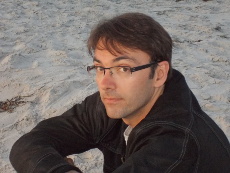
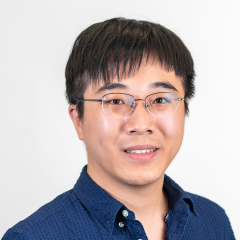
Verena Frey serves as a Lecturer at the Institute for Interior Design IIA within the School of Engineering & Architecture at Lucerne University of Applied Sciences and Arts (HSLU), headquartered in Horw, Switzerland. Her academic expertise centers on interior design with emphasis on spatial configurations, furniture systems, and sustainable design practices. As a core faculty member, she contributes to curriculum development and pedagogy in applied design disciplines through the Institute's programs.
Sam Brody serves as Director of the Institute for a Disaster Resilient Texas (IDRT) and holds the rank of Regents Professor in Marine and Coastal Environmental Science at Texas A&M University's College of Marine Sciences & Maritime Studies. His work bridges academic research and practical disaster resilience implementation. Dr. Brody's research focuses on coastal environmental planning , natural hazards mitigation , spatial analysis techniques, and dispute resolution frameworks. His expertise centers on flood risk management, particularly examining how land use patterns, residential choices, and policy interventions affect vulnerability along the Gulf Coast. His publication portfolio reveals consistent focus on flood risk assessment (12 of 15 articles), with recurring themes in Spatial analysis of flood damage patterns Household behavioral responses to flood risk Effectiveness of open space protection Land use policy impacts on vulnerability Coastal urban resilience strategies Notable methodological approaches include large-scale surveys, geospatial modeling, and longitudinal flood loss analysis. Dr. Brody has received significant recognition including: Texas A&M Presidential Impact Fellow (2017) Texas A&M University Regents Professor (2016) His grant portfolio demonstrates sustained federal funding for disaster resilience research. He advises multiple doctoral students who frequently co-author publications (denoted by asterisks in citations), with research teams often collaborating across Texas A&M campuses and Rice University. Dr. Brody maintains active engagement with national policy bodies including the National Academies of Sciences Urban Flood Study Committee and the Department of Homeland Security Flood Apex Research Board.
Volker Stolz is an Associate Professor in the Department of Informatics at the University of Oslo, Faculty of Mathematics and Natural Sciences. He is affiliated with the Reliable Systems research group, where his work centers on improving software reliability through formal methods, model transformation, and UML-based modeling. Institution: University of Oslo School: Faculty of Mathematics and Natural Sciences Department: Department of Informatics Research Group: Reliable Systems Contact: stolz@ifi.uio.no | +47 22852438 | Room GA06 9461 His research spans formal verification, concurrency, model-based testing, and programming language semantics. He has made significant contributions to deadlock detection, refactoring equivalence, runtime verification in distributed systems, and data race analysis, often using formal models such as Petri nets and active object languages. The recent publications highlight a consistent focus on software correctness , modular analysis , and automated verification techniques. Trends include the use of behavioral effects, abstract execution, and field calculus for distributed monitoring. His work frequently appears in top-tier venues like Theoretical Computer Science , Lecture Notes in Computer Science , and Journal of Logical and Algebraic Methods in Programming , indicating strong theoretical and practical impact. He collaborates extensively with researchers such as Violet Ka I Pun, Rui Wang, Lars Michael Kristensen, and Martin Steffen, reflecting an active and collaborative research profile. No scientific awards are mentioned in the provided text. There is no information available about student advising or research grants. Volker Stolz is involved in research projects related to model-based testing, formal methods, and reliable software systems, particularly through the Reliable Systems group. His work often involves building theoretical foundations and practical tools for verifying and improving software behavior in distributed and concurrent environments.
Dr. Marcel Schwieder is a Researcher at the Thünen-Institut in Berlin, specializing in remote sensing applications for agricultural and environmental monitoring. His work focuses on developing methodologies for large-scale land cover mapping, grassland management assessment, and satellite time series analysis. Key projects include mapping grassland mowing events across Germany using Sentinel-2 and Landsat data, and creating annual land cover datasets for the Baltic Sea Region. He has contributed to advancing deep learning techniques for crop phenology analysis and agricultural field delineation. His research integrates multi-sensor satellite data (optical and SAR) to address ecological and policy-relevant questions, such as biodiversity impacts of land management practices and climate change mitigation strategies. Collaborations include studies on woody habitats' influence on farmland birds and the quantification of climate protection measures through satellite-derived land use data. Publications span topics like phenological modeling, habitat characterization, and vegetation mapping using hyperspectral and multispectral datasets. While no formal academic awards are listed, his impactful contributions to environmental remote sensing are evident through his prolific output and applied research projects. Active in Germany and international contexts, Schwieder's work bridges technological innovation (e.g., vision transformers, sparse generalized dissimilarity modeling) with ecological applications, supporting both scientific understanding and policy implementation in sustainable land management.
Karsten Schulz is an Assistant Professor in Governance & Innovation at the University of Groningen's Campus Fryslân, and serves as Programme Director for the MSc in Cultural Geography. He is a Fellow of the Earth System Governance Project and the Young Academy Groningen. His research focuses on digital innovations for sustainability transformations, particularly blockchain technology's role in climate finance and governance. He explores themes like climate adaptation's political dimensions, decolonial theory in political ecology, and institutional pathways for transformative adaptation. His work bridges interdisciplinary concepts from political science, environmental governance, and socio-technical transitions. Affiliations: University of Groningen, Campus Fryslân, Earth System Governance Project, Young Academy Groningen Research Interests: Blockchain technology, climate finance, decolonial political ecology, sustainability governance, institutional theory, and socio-technical transitions. Key contributions include analyzing blockchain applications in climate finance, critiquing depoliticized adaptation frameworks, and advocating for transformative approaches to sustainability. His publications span climate policy, institutional pathways, and decolonizing environmental narratives. He emphasizes participatory research methods to address complex environmental challenges. Recent work explores the governance of SDGs via blockchain and the mytho-politics of human mastery in the Anthropocene. He co-authored books on Ghana's climate adaptation policies and links between land, soil, and global climate governance.
Francesco Carbone is an Assistant Professor in the Department of Mechanical Engineering at the University of Connecticut since Fall 2019. Previously, he held research and teaching roles at Yale University (2014–2019, including a Lecturer position in 2018) and the University of Southern California (2012–2014). His academic journey includes a M.Sc. (2005) and Ph.D. (2008) in Mechanical and Chemical Engineering from the University of Naples Federico II, Italy. His research focuses on combustion chemistry, aerosol formation, and nanoparticle synthesis. Key interests include soot nucleation mechanisms, flame dynamics under high-pressure conditions, and the application of laser diagnostics for in-flame particle characterization. Carbone’s work also explores novel techniques for nanoparticle synthesis via reactive spray deposition technologies. Recent studies emphasize the role of polycyclic aromatic hydrocarbons (PAHs) in soot inception and the development of advanced instrumentation for detecting sub-5nm carbonaceous aerosols. His experimental setups often employ counterflow flames and high-resolution mass spectrometry to elucidate combustion byproducts and particle growth kinetics. Carbone has no listed students or scientific awards in the provided texts. His research extends to industrial applications, such as optimizing clean combustion systems and mitigating nanoparticle emissions from energy systems.
Dr. Lei Wang is an Honorary Research Fellow at the Department of Planning, Property and Environmental Management at the Nanjing Institute of Geography and Limnology, Chinese Academy of Sciences. Previously, he held positions as a Hallsworth Research Fellow at the University of Manchester and a researcher at the Chinese University of Hong Kong. His work focuses on spatial development in China, particularly addressing sustainable challenges during rapid urbanization and industrialization, with a focus on the Yangtze River Delta region. Education: Doctor of Philosophy (2014), Spatial Planning and Governance of Five-Year Planning in China, Chinese University of Hong Kong. Research Interests: Spatial restructuring mechanisms using GIS and spatial modeling. Urban and regional governance challenges in implementing spatial plans. Evolution of China's spatial planning systems amid economic transitions. High-speed rail networks, urban green spaces, and transportation policy. Recent Research Trends: Dr. Wang's work emphasizes urban vitality in high-speed rail areas, spatial equity in green spaces, and transportation network analysis, reflecting a focus on China's urbanization challenges and sustainability. External Roles: Associate Editor of Palgrave Communications since 2017.
Prof. Günther Sebastian is a Professor at the Technical University of Munich (TUM), affiliated with the TUM School of Natural Sciences and the Department of Physical Chemistry / Catalysis. His research focuses on surface chemistry and heterogeneous catalysis, employing advanced microscopy and spectroscopic techniques such as scanning tunneling microscopy (STM), photoelectron spectromicroscopy (PEEM), and low-energy electron microscopy (LEEM). His work emphasizes model systems to study catalytic reactions under high-pressure conditions. Education: Bachelor's/Master's in Physics, Ludwig Maximilian University of Munich (LMU Munich), completed 1990 Doctorate in Scanning Tunneling Microscopy, University of Ulm, 1995 Postdoctoral research at ELETTRA Synchrotron in Trieste, followed by a Marie Curie Fellowship there Completed habilitation at Leibniz University Hannover in 2003 Research Interests: Prof. Sebastian's research integrates theoretical and experimental approaches to study catalytic processes at interfaces. Key areas include graphene growth mechanisms on metal substrates, high-pressure catalytic reactions, and the development of advanced imaging techniques for in situ analysis of surface reactions. His work bridges surface science and materials chemistry, with applications in energy storage and catalytic systems. Awards: DFG Habilitation Scholarship (2000-2001) Marie Curie Fellowship (1998-1999) Grants & Collaborations: His research has been supported through grants focusing on surface chemistry and catalysis. Collaborations include work with synchrotron facilities and materials science groups to advance in situ spectroscopic techniques. Labs & Teams: He leads a research group at TUM investigating catalytic interfaces and graphene-based systems, emphasizing interdisciplinary approaches combining physics, chemistry, and engineering.
Antti Tuure is a Doctoral Researcher at the Department of Architecture within the Faculty of Built Environment at Tampere University, Finland. Based at the Hervanta Campus, he holds an ORCID identifier (0000-0003-1110-0579) and focuses on sustainable timber construction for mid-rise residential buildings in the Finnish context, bridging architectural design, structural engineering, and environmental performance. His research interests include: Timber structural systems optimization for mid-rise buildings Material efficiency and life cycle assessment methodologies Space planning and architectural design for timber apartments Global warming potential reduction in building construction Integration of structural and environmental considerations in residential design Finnish building practices and regulatory frameworks Analysis of his 2023-2025 publications reveals a cohesive research trajectory centered on Finnish mid-rise timber apartment buildings. His work systematically examines interrelationships between structural elements (intermediate floor beams, span configurations), architectural features, and environmental impacts. Key contributions include quantifying material efficiency trade-offs, developing space optimization frameworks, and establishing correlations between structural design choices and global warming potential, advancing practical applications for sustainable mass timber construction. No scientific awards or honors were documented in the available materials. As a Doctoral Researcher, Tuure is currently focused on his own dissertation work rather than supervising students or leading independent research grants. His publications indicate active collaboration with structural engineers and sustainability researchers at Tampere University. While specific laboratory facilities aren't detailed, his research aligns with Tampere University's sustainable construction initiatives at the Hervanta Campus, likely involving cross-disciplinary teams in architecture, structural engineering, and environmental science working on timber building innovation.
Xavier Goaoc is a Professor of Computer Science at Université de Lorraine, affiliated with the Department of Computer Science & Engineering at École des Mines de Nancy and the Gamble research team (joint between LORIA and INRIA). His research focuses on algorithms and discrete mathematics, particularly discrete and computational geometry, including convex hulls, intersection patterns, topological generalizations, and geometric transversal theory. University: Université de Lorraine School: School of Engineering Department: Department of Computer Science & Engineering Research Team: Gamble (LORIA/INRIA) Emails: xavier.goaoc@loria.fr , xavier.goaoc@univ-lorraine.fr His research spans computational geometry, combinatorial convexity, geometric transversal theory, and random geometric structures. Key topics include homological minors, order types of point sets, and geometric optimization. His 15 most recent publications highlight advancements in computational geometry algorithms, structural complexity, and topological constraints. Notably, his work has received Best Paper Awards at SoCG 2020, 2018, 2016, and 2012. Administrative roles include heading the computer science & engineering department at Mines Nancy and co-chairing the computer science department of the IAEM doctoral school. He is also a member of the Université de Lorraine's ‘pôle AM2I’ council. Teaching activities encompass courses in algorithms, computer architecture, blockchains, and geometric models for vision, with publications and grants reflecting his interdisciplinary impact in computer science and mathematics.
Gary Bertoline is a Distinguished Professor of Engineering and Courtesy Faculty in the Department of Engineering Education at Purdue University. He is affiliated with the College of Engineering and holds an office in KNOY Hall. His research focuses on engineering education innovation, visualization technologies, virtual reality applications in education and training, and curriculum reform. He is also involved in advancing applied research models in polytechnic institutions and faculty reward system reforms to enhance professional engineering education. His work emphasizes the integration of project-based learning, haptic feedback systems, and immersive VR environments to improve technical communication and spatial skills development. He has contributed significantly to defining applied research domains in engineering technology and advocating for curricula that produce T-shaped professionals with interdisciplinary competencies. Bertoline's publications span topics like global polytechnic strategies, CAD/CAM systems, virtual reality training efficacy, and the societal roles of engineering programs. He leads initiatives such as the Center for Professional Studies in Engineering Technology and has collaborated on National Science Foundation-funded projects like NUE: Enhanced Undergraduate Nanotechnology Education with Haptic and Visualization Tools. His research also addresses challenges in international graduate program coordination, faculty reward systems for practice-oriented educators, and strategies to increase women's participation in engineering fields. He actively engages in professional development for adult learners and has pioneered the use of TeraGrid for real-time 3D visualization in education and research.
PD Dr. Felix Wiedemann is a Senior Lecturer at the Institute for Ancient Near Eastern Studies (Freie Universität Berlin), specializing in intellectual history, historiography, and migration narratives. His research focuses on the intersection of knowledge production, identity construction, and colonial discourse in ancient studies. He leads the DFG-funded project 'Völker- und Rassenkunde in Stein,' examining racial cartography through ancient Egyptian imagery. Education: 2003-2006: PhD in Modern History at Freie Universität Berlin (dissertation on witchcraft's modern reception) 1995-2002: MA in Modern History, Political Science, and Philosophy at Freie Universität Berlin Research Interests: 19th-20th century knowledge systems and ideological narratives Historiography of the ancient Near East and migration studies Racial theories, orientalism, and colonial ethnography Right-wing extremism and religious movements Key Projects: DFG-funded 'Völker- und Rassenkunde in Stein' (Stone-Based Ethnography) 'Wanderungsnarrative' (Migration Narratives in Near Eastern Studies) Co-edited volumes on migration historiography and identity mapping Teaching: Courses on historiography, migration history, antisemitism, and scholarly writing methods. Labs/Teams: Leads interdisciplinary research groups at the Einstein Center Chronoi and former Topoi Cluster of Excellence.
Shu Hu holds a courtesy appointment as an Assistant Professor at Purdue University's Purdue Polytechnic Institute in Indianapolis, within the Department of Computer and Information Technology. His research focuses on Machine Learning, Digital Media Forensics, and Computer Vision, with interdisciplinary extensions into plasma physics and aerospace engineering. He earned a Ph.D. in Computer Science from the University at Buffalo (SUNY, 2022), an M.A. in Mathematics from the University at Albany (SUNY, 2020), and an M.Eng. in Software Engineering from the University of Science and Technology of China (2016). Notable achievements include a 2023 NSF award for combating deepfake AI technology and contributions to plasma diagnostics, propulsion systems, and biomedical applications. His work spans experimental plasma physics (e.g., nanosecond discharges, microwave scattering), space propulsion (liquid-fed thrusters), and electrosurgical innovations. Research highlights include developing low-voltage pulsed plasma thrusters for nanosatellites and advancing cold plasma therapies for cancer treatment. Education : Ph.D., Computer Science, University at Buffalo (2022) M.A., Mathematics, University at Albany (2020) M.Eng., Software Engineering, University of Science and Technology of China (2016) Awards : NSF Award for deepfake AI research (2023) Polytechnic research awards (2024-2025) Grants/Advising : NSF-funded deepfake mitigation project Collaborations in plasma propulsion and biomedical engineering Labs/Teams : Purdue Plasma Diagnostics Lab Aerospace Propulsion Research Group His publications emphasize plasma diagnostics (coherent microwave scattering), advanced propulsion systems (liquid-fed thrusters), and interdisciplinary applications in medicine and AI security. Current projects include optimizing nanosecond discharges for atmospheric plasmas and developing AI-driven media forensics tools.
Dr. Yuhan Huang is a DECRA Fellow and Senior Lecturer at the School of Civil and Environmental Engineering, University of Technology Sydney (UTS). He holds editorial roles at multiple journals, including Associate Editor for Frontiers in Environmental Science and Frontiers in Energy Research. His research focuses on hydrogen energy, carbon capture, urban air pollution, and urban heat island mitigation, with over 80 publications in leading journals like Nature Sustainability and Science Advances. Huang has led 13 research projects totaling over AU$2M and holds one patent. His work emphasizes interdisciplinary approaches to sustainable urban development and clean energy technologies. Education: BEng (Mechanical Engineering, Huazhong University of Science and Technology, 2011); PhD (UTS, 2017). Career: Postdoctoral Research Fellow (2017–2021), Chancellor’s Research Fellow (2022), DECRA Fellow & Lecturer/Senior Lecturer (2022–present). He also held visiting fellowships at the Jockey Club Heavy Vehicle Emissions Testing and Research Centre (2017–2019) and the University of Oxford (2023). Grants include the CSIRO International Hydrogen Research Collaboration Program (2023–2024) and projects targeting urban heat island challenges. His research has been highlighted in media for its public health implications, particularly in air pollution mitigation.
Sunkee Lee is an Associate Professor of Organizational Theory and Strategy at the Tepper School of Business, Carnegie Mellon University, where he has been a faculty member since 2017. He currently holds the position of Associate Professor after being promoted from Assistant Professor in 2023, and has received prestigious chairs including the Frank A. and Helen E. Risch Faculty Development Professorship (2022-2024) and the Xerox Junior Faculty Chair (2019-2020). Dr. Lee serves on the editorial boards of the Strategic Management Journal, Organization Science, and the Journal of Organization Design, demonstrating his significant contributions to the field. Dr. Lee's research focuses on individual and organizational learning, organization design, and the microfoundations of firm strategy and performance. His work spans multiple contexts including physical workspaces, knowledge transfer, strategic management, and healthcare settings. He examines how physical environments affect creativity, how individuals learn from failures, how spatial proximity influences exploration, and how incentives shape organizational behavior. His integrative approach connects organizational theory with practical applications in diverse industries. Analysis of Dr. Lee's recent publications reveals a strong focus on organizational learning processes, physical work environments, and strategic decision-making. His work often employs rigorous empirical methods including natural experiments, longitudinal studies, and comprehensive literature reviews. He frequently publishes in top-tier management journals such as Management Science, Organization Science, and Strategic Management Journal, demonstrating the high impact of his research. Ralph Gomory Best Industry Studies Paper Award William H. Newman Award for Best Paper Based on a Dissertation BPS Division Distinguished Student Paper Award at the 77th Annual Meeting of the Academy of Management MK-AKMS Young Scholar Award at the 80th Annual Meeting of the Academy of Management George Leland Bach Teaching Award for Excellence in the Classroom (2022) Poets&Quants' 2024 Best 40-Under-40 MBA Professors Outstanding Reviewer Award Dr. Lee teaches the core MBA strategy course at the Tepper School, for which he received the George Leland Bach Teaching Award. He also instructs doctoral courses in Strategic Management and has taught undergraduate Organizational Behavior. His teaching excellence has been recognized with his inclusion among Poets&Quants' Best 40-Under-40 MBA Professors in 2024. Beyond the classroom, Dr. Lee is actively involved in executive education, including programs for the Tata Group of India and Carnegie Mellon's Emerging Business Applications of GenAI program. His military background as a Republic of Korea Army intelligence agent adds a unique perspective to his understanding of organizational dynamics and leadership.