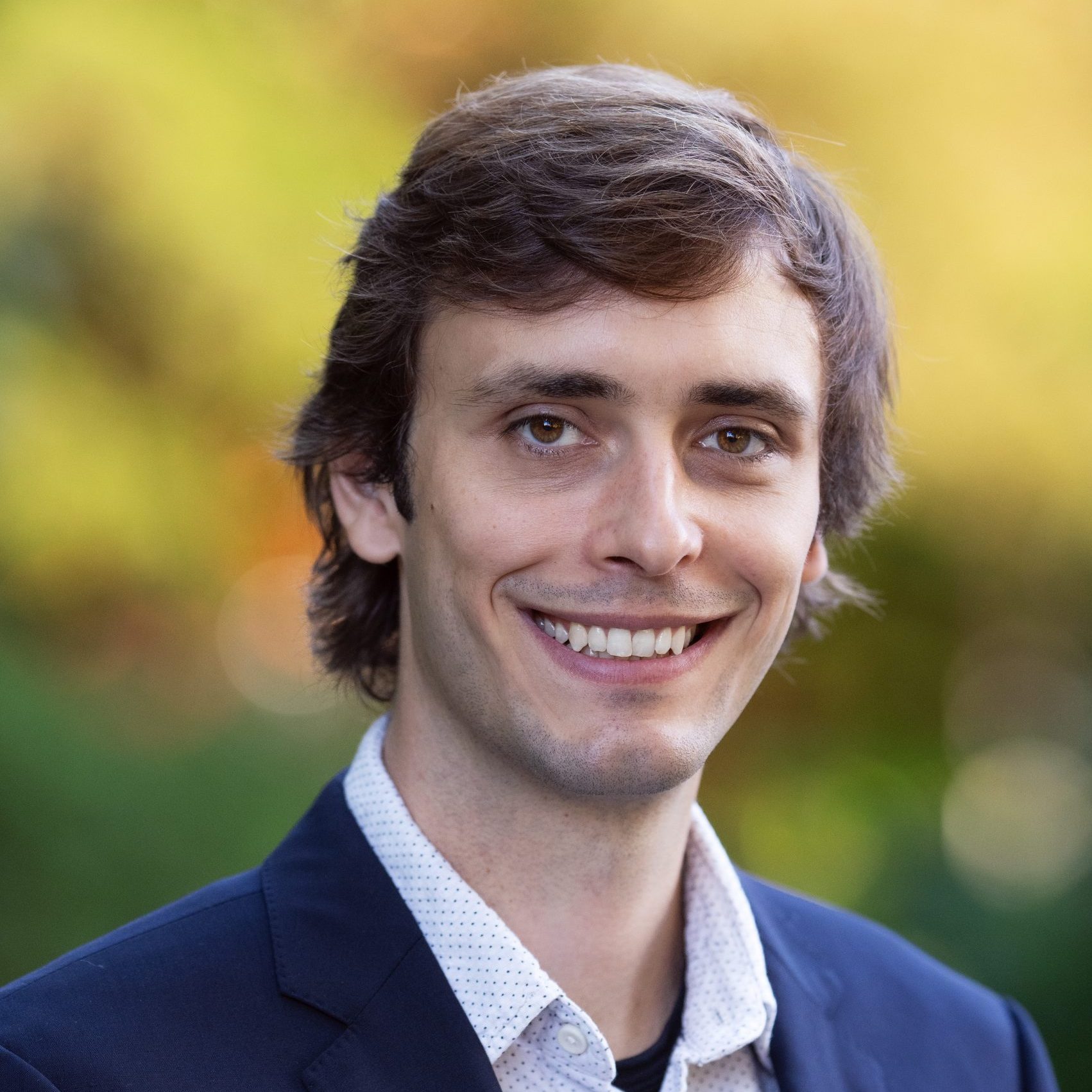
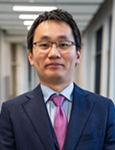
Stoo Sepp is a Lecturer in Educational Technology and Learning Design at the University of British Columbia's Master of Educational Technology (MET) program. With experience since 2018, he specializes in integrating cognitive science principles into digital education frameworks. University of British Columbia Master of Educational Technology His research bridges cognitive science and educational technology , focusing on: working memory optimization , self-regulated learning , and gesture-based interaction in digital environments. Recent work explores educational data privacy and decentralized learning platforms . Key article trends span: 2019-2020: Cognitive load and movement integration 2022: Open educational resources evolution 2023-2025: Gesture analytics and translingual assessment tools Professional Networks : Active in #EdTech communities Contributor to #OpenEd movements Collaborator in cognitive load research
Jonathan Proctor is an Assistant Professor in the Food and Resource Economics academic unit at the University of British Columbia's Faculty of Land and Food Systems. His research integrates agricultural economics with climate change impact analysis, focusing on environmental data science and policy modeling. He holds a Ph.D. in Agricultural & Resource Economics from UC Berkeley and has affiliations with interdisciplinary programs in integrated studies. Education Ph.D. in Agricultural & Resource Economics, University of California, Berkeley (2019) M.S. in Agricultural & Resource Economics, UC Berkeley (2016) B.S. in Earth Systems, Stanford University (2014) with Distinction His research bridges agricultural economics with climate science, examining: Climate change impacts on crop yields Environmental policy and economic modeling Machine learning applications in satellite imagery analysis Climate-mediated health effects Geoengineering implications for agriculture Water resource economic analysis Recent publications highlight his work on: Extreme rainfall effects on Chinese rice yields Climate model comparisons (CMIP5/CMIP6) UV radiation's role in pandemic dynamics Global crop production-environmental linkages He maintains active teaching roles in environmental data science and spatial analysis.
Christopher Mark Overall is a Professor in the Department of Oral Biological & Medical Sciences within the Faculty of Dentistry at the University of British Columbia (UBC). His research spans proteomics, terminomics, and protease biology with significant contributions to the Human Proteome Project. He supervises graduate students in Bioinformatics, Craniofacial Science, and Genome Science and Technology programs. His research focuses on proteolytic mechanisms in viral infections, inflammation, and immunodeficiency. Key areas include viral protease functions (particularly SARS-CoV-2), host-pathogen interactions, and the development of proteomic methodologies like TAILS (Terminal Amine Isotopic Labeling of Substrates). His work integrates 'One Health' perspectives across human, animal, and environmental systems. Analysis of his recent publications reveals dominant themes in viral protease evolution (SARS-CoV-2), bacterial membrane proteases, and strategic AI applications in proteomics. His work frequently appears in high-impact journals and contributes to major international consortia like HUPO. Overall maintains active research collaborations through UBC's Centre for Blood Research, Life Sciences Institute, and Vancouver Prostate Centre. His laboratory develops cutting-edge proteomic technologies for substrate identification and has received continuous funding for protease-related research.
Khanh Dao Duc is an Assistant Professor in the Department of Mathematics at the University of British Columbia and an associate member of the Department of Computer Science. His research integrates mathematical, computational, and statistical methodologies to investigate fundamental biological processes and complex datasets. Research areas include ribosome properties across scales (NSERC Discovery Grant RGPIN-2020-05348), Cryo-EM data and shape analysis algorithms (New Frontiers of Research Grant NFRFE-2019-00486). He collaborates with Canada’s Immuno-Engineering and Biomanufacturing Hub (CIEBH) and the Climate Solutions Research Collective. His interdisciplinary work spans Bioinformatics, Genome Science and Technology, and Mathematics. As an active researcher, he supervises graduate students and engages in undergraduate research projects.
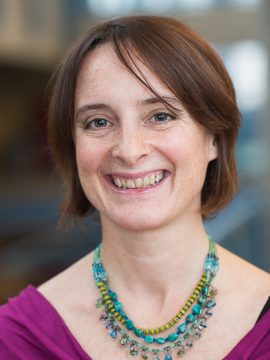
Rebecca Todd is an Associate Professor in UBC's Department of Psychology within the Faculty of Arts, and a member of the Centre for Brain Health. She specializes in cognitive neuroscience with a focus on the interaction between emotion and cognition in health and psychopathology. Her research employs brain imaging methods and laboratory experiments to investigate how we process affective salience and how this influences perception, learning, and memory. Dr. Todd earned her PhD in Developmental Science and Neuroscience from the University of Toronto in 2008. Prior to her academic career in neuroscience, she was a contemporary dance choreographer and journalist, which has informed her unique interdisciplinary approach to studying cognition through movement and interaction. Her research program focuses on neurocognitive processes underlying the interaction between human emotion and cognition. She investigates how we process affective salience (emotional/motivational importance) of objects and events, and how this influences perception, learning, and memory. Her work examines individual differences in how we filter the world to perceive specific categories of salient events (threatening vs. rewarding), how such filters develop over time, and their consequences for emotional health. Specific programs include investigation of neurocognitive processes underlying effects of acute stress on attention, learning, and memory, and attentional biases predicting treatment outcomes in depression. Dr. Todd's recent publications show an evolving research trajectory that increasingly integrates participatory sensemaking, ecological approaches to cognition, and multidisciplinary perspectives. Her work spans cognitive neuroscience, clinical applications, dance cognition, and embodied approaches to understanding how we interact with our environment. The breadth of her research demonstrates a commitment to understanding cognition as embedded in real-world contexts rather than isolated laboratory settings. Michael Smith Foundation for Health Research Scholar Award (2017) CIHR New Investigator Award (2016) Dr. Todd leads the Motivated Cognition Lab at UBC, where she employs a multi-method approach including EEG, fMRI, psychophysiology, eye tracking, and genotyping to assess how common genetic variations interact with life experience to shape brain activity. Her lab investigates how these interactions influence emotional filters for perceiving and remembering. She is affiliated with MATRIX-N: Multidisciplinary Alliance for Translational Research and Innovation in Neuropsychiatry, reflecting her commitment to interdisciplinary collaboration. While she is not currently accepting graduate students, her research continues to advance understanding of the neurocognitive basis of emotional experience and its impact on cognition.
Dr. Ying Wang is an Assistant Professor in the Department of Pathology & Laboratory Medicine at the University of British Columbia's Faculty of Medicine. She serves as Director of the Bruce McManus Cardiovascular Biobank and has affiliations with the Centre for Heart Lung Innovation and St. Paul's Hospital. As an early career investigator from the PlaqOmics Leducq Foundation Trans-Atlantic Network, Dr. Wang leads a multidisciplinary research team focused on cardiovascular disease mechanisms and therapeutic development. Dr. Wang's educational background includes: PhD in Pharmaceutical Sciences from the University of British Columbia Post-doctoral fellowship in the Department of Vascular Surgery at Stanford University Post-doctoral fellowship in the Department of Medicine at the University of British Columbia Her research focuses on studying cell-cell and cell-microenvironment interactions to determine why diseased cells accumulate in atherosclerotic lesions and how we can remove them. The lab combines vascular biology and spatial biology to answer clinically relevant questions about cardiovascular disease, with a central theme of 'Functional omics on a tissue slide.' Current research programs include targeting efferocytosis, mapping therapeutic targets for drug repurposing, and developing new biobanking methods. Analysis of Dr. Wang's recent publications reveals a strong progression from fundamental mechanisms toward therapeutic applications. Her work increasingly utilizes advanced spatial biology techniques to characterize human atherosclerotic lesions at the single-cell level within tissue context. The research demonstrates a clear trajectory toward clinical translation, particularly in efferocytosis enhancement and drug repurposing for cardiovascular disease. Dr. Wang has received notable recognition including: Heart and Stroke Foundation of Canada New Investigator award Michael Smith Health Research BC Scholar award Dr. Wang actively mentors a diverse team of researchers, currently supervising PhD candidate Maria Elishaev (recipient of prestigious CIHR Canada Graduate Scholarship and UBC Four-Year Doctoral Fellowship), postdoctoral fellow Yuancheng Mao, and multiple Master's students. Her lab collaborates with pathologists, data scientists, and physician scientists for bench-to-bedside research. Current major projects include 'Targeting efferocytosis to reduce the risk of cardiovascular events' (CIHR 2022-2027), 'Spatial characterization of human atherosclerotic disease for therapeutic and biomarker development' (CFI-JELF 2022-2027), and 'Solve the puzzle of vulnerable plaque' (New Frontiers in Research Fund 2022-2024). The Wang Lab maintains a unique platform for translational research featuring PhenoCycler multiplex imaging, Visium CytAssist spatial gene expression, Halo imaging analysis, and access to the Bruce McManus Cardiovascular Biobank. The lab motto is 'Can Do,' reflecting their collaborative and solution-oriented approach to cardiovascular research.
Xun Liu serves as Assistant Professor at the University of British Columbia's School of Architecture and Landscape Architecture (SALA), where she pioneers computational design methodologies integrating generative AI, environmental sensing, and data-driven approaches. Her research bridges quantitative analysis with creative practice across architectural and landscape scales, focusing on how emerging technologies can transform design processes and outcomes. Education: Ph.D. in Constructed Environment, University of Virginia (2025) Master of Landscape Architecture, Harvard Graduate School of Design (2017) – recipient of Jacob Weidenman Prize and Irving Innovation Fellowship Bachelor of Architecture, Tongji University (2015) Her research program critically examines AI's role in landscape architectural design through computational workflows that merge digital media with environmental analysis. Liu investigates generative systems capable of producing context-responsive landscape forms while maintaining ecological integrity, with particular emphasis on machine learning applications for dynamic environmental modeling and responsive design interventions. This work establishes new paradigms for human-AI collaboration in spatial design. Publication analysis reveals consistent focus on AI's transformative potential in landscape architecture, with recent works advancing generative methods for planting design, landscape form generation, and environmental simulation. Her scholarship demonstrates increasing technical sophistication from foundational AI concepts (2021) to specialized implementations in ecological design (2024) and comprehensive landscape AI frameworks (2025). Scientific Awards: Jacob Weidenman Prize (Harvard GSD) Irving Innovation Fellowship (Harvard GSD) Professional experience includes computational design at NYC Department of City Planning, landscape design at Stoss Landscape Urbanism, and research at Harvard's Office for Urbanization. She leads xlstudio – a technology-design consultancy developing AI-driven tools – while maintaining active engagement through international lectures and workshops on computational workflows. Her advisory role at UBC builds on prior teaching positions at USC and University of Virginia. Liu's creative direction manifests through xlstudio's evolution from design practice to specialized AI consultancy, with work exhibited at Venice Architecture Biennale and Shenzhen-Hong Kong Bi-City Biennale. Her studio fosters interdisciplinary collaboration between technologists and designers to develop responsive environmental systems.
Shangpeng Sun is an Assistant Professor in the Department of Bioresource Engineering at McGill University . His research focuses on the development and adoption of innovative sensing technologies and computational methodologies for next-generation smart agriculture, addressing challenges related to sustainable food production under global environmental changes. Specialization : Smart agriculture, sustainable resource management, bioproducts, and computational methods Fields : Agriculture, animal production, biomass engineering His work emphasizes soil and water sustainable management , precision crop/livestock systems , and bioenergy production , leveraging technologies like hyperspectral imaging, 3D reconstruction, and deep learning for automated plant phenotyping, microbial contamination detection, and robotic harvesting. Recent publications highlight advancements in: 3D imaging for root architecture analysis Salient object detection in orchard robotics Foodborne pathogen classification Generative growth modeling under variable conditions Multi-scale weed segmentation frameworks Contact: shangpeng.sun@mcgill.ca
Howard J. Hamilton is a Professor at the Department of Computer Science, Faculty of Science, University of Regina. His research spans Data Mining, Machine Learning, and Human-Computer Interaction. University of Regina Department of Computer Science Faculty of Science Research Interests: Hamilton focuses on Data Science , Machine Learning , Speech Recognition , and Augmented Reality applications in healthcare. His recent work includes the My Daily Routine (MDR) system using HoloLens for dementia care and blockchain-based IoT security mechanisms. Scientific Contributions: He has co-authored 15 recent papers on topics spanning Time Series Forecasting , GANs for Game Design , and Smart Grid Security . His work has been presented at top venues like IEEE ICC, ICAART, and IEEE VR. Awards: Recipient of the Best Paper Award at INTENSIVE'12 and Second Place Best Paper at FLAIRS'99. Student Training: As a supervisor, he has mentored over 30 graduate students and project assistants in Computer Science and related fields, including Ph.D. candidates in Multi-Agent Systems and AI for Cooperative Games .
Pierre Dutilleul is a Professor at McGill University's Macdonald Campus, associated with the McGill School of Environment and the Department of Mathematics and Statistics. His research focuses on spatio-temporal heterogeneity, plant and soil imaging, and fractal analysis of natural structures. Current affiliations: Department of Plant Science, McGill School of Environment Specializations: CT scanning for root and wood imaging, multifractal analysis, soil aggregate dynamics Research interests span environmental sustainability , soil science , and plant production , with recent work on 3D root phenotyping, biochar characterization, and space-time modeling of agricultural and seismic events. Articles demonstrate expertise in applied statistics and computational methods for ecological and agricultural systems. Key methodological contributions include: Development of R packages for spatio-temporal analysis Innovative CT scanning applications in plant and soil research Statistical tests for separable variance-covariance structures
Dr. Adam Kenneth Dubé is an Associate Professor in the Department of Educational and Counselling Psychology at McGill University's Faculty of Education . As Director of the Technology, Learning, & Cognition (TLC) Lab , he specializes in educational technology, cognitive development, and mathematical learning. His research explores tablet-based education, digital home numeracy practices, and children's interactions with smart assistants, funded by SSHRC and Fonds de Recherche du Québec. He has authored the book Understanding Tablets from Early Childhood to Adulthood: Encounters with Touch Technology and contributed to UN Digital Learning Guidelines. PhD in Psychology (University of Regina) MA in Psychology (University of Regina) Postdoctoral Research Fellow (University of Toronto) His work combines learning sciences and educational technology to address critical questions about digital learning efficacy. Articles highlight his focus on app store analysis, game-based pedagogy, and digital numeracy frameworks. Recent publications examine how user ratings influence app selection and how digital tools reshape mathematical cognition. Scientific Awards and Grants: SSHRC Insight Grant (2021) MITACS Accelerate (2020-2021) SSHRC Insight Grant (2020-2021) SSHRC Insight Development Grant (multiple 2019-2022) McGill Faculty of Education Distinguished Teacher Award AERA/SRCD Joint Fellow Research Trends show consistent exploration of educational technology's dual role in entertainment and learning, with recent work analyzing smart speakers' impact on children's understanding of artificial minds and AI communication.
Angelina Grigoryeva is an Assistant Professor at the University of Toronto Scarborough (UTSC) campus. Her research focuses on colonialism, racialization, indigeneity, and the sociology of gender, with an emphasis on work, stratification, and markets. Fields of Study: Colonialism, Racialization, Indigeneity, Computational and Quantitative Methods, Sociology of Gender Work, Stratification and Markets Contact: angelina.grigoryeva@utoronto.ca , Office: 725 Spadina, 333A; UTSC, MN6296 Her research spans interdisciplinary themes in sociology, economics, and urban studies, analyzing wealth inequality, financialization, racial segregation, and gender dynamics in caregiving. Recent work examines stock-based compensation's role in gender wealth gaps, micro-segregation in ethnic communities, and historical patterns of racial inequality. Key trends in her publications include: Financialization's impact on household economies and wealth distribution Historical demography of segregation and its enduring effects Gender roles in financial investments for children and elder care Her methodological expertise integrates computational and quantitative approaches to study stratification and social mobility.
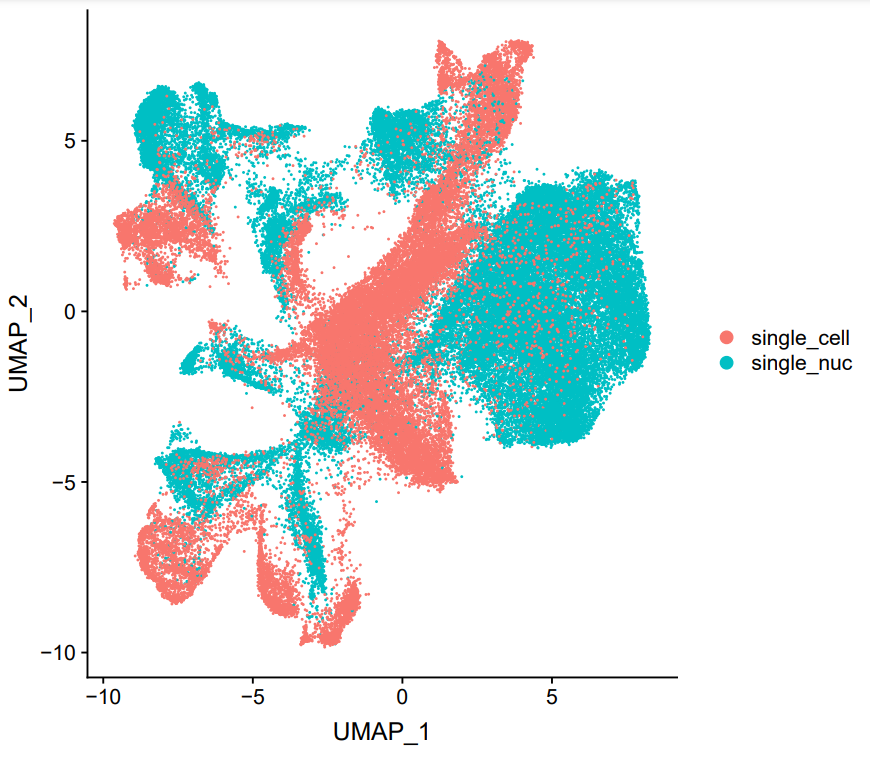
Dr. Tallulah Andrews is an Assistant Professor in the Department of Biochemistry at the University of Western Ontario, where she leads the Andrews Computational Biology Lab. Her research focuses on developing computational methods for analyzing single-cell and spatial transcriptomics data to understand tissue structure and immune context in disease. Dr. Andrews earned her Ph.D. from the University of Oxford, where she used systems biology approaches to study rare genetic diseases. She completed postdoctoral training at both the University Health Network Research in Toronto and the Wellcome Trust Sanger Institute in the UK. She is a long-term member of the Human Cell Atlas initiative. Her research interests center on computational biology and bioinformatics approaches to single-cell and spatial transcriptomics. She develops methods for analyzing single-cell RNA sequencing data, integrating imaging with spatial expression data, and understanding immunological and metabolic dysfunction in diseases. Her work has particular applications in liver diseases, atherosclerosis, and other complex disorders. Analysis of her recent publications reveals a strong focus on methodological development for single-cell analysis, with significant contributions to quality control (EmptyDrops), feature selection (M3Drop), and standardized analysis protocols. Her work bridges computational methodology with biological applications, particularly in liver disease and immune dysfunction. Dr. Andrews supervises a diverse group of students including PhD, MSc, and undergraduate researchers working on projects related to spatial transcriptomics, atherosclerosis analysis, and cell-cell interaction inference. Her collaborative approach is evident through partnerships with research groups at UHN, Northwestern University, Robarts Research Institute, and clinical teams in Toronto. The Andrews lab provides opportunities for students interested in computational biology, bioinformatics, and machine learning applications to biomedical problems. Current projects include developing machine learning models for spatial transcriptomics data, building analysis pipelines for disease-specific scRNAseq data, and integrating multiple omics datasets to understand disease mechanisms.
Tianlong (Taylor) Liu is an Assistant Professor in the Department of Chemical and Biochemical Engineering at Western University. His academic journey includes a Ph.D. in Civil Engineering from the University of British Columbia (2020), an M.A.Sc. from South China University of Technology, and a B.Eng. from Qilu University of Technology. Research Focus AI-Enhanced Process Control and Optimization Machine Learning for Industrial Data Analysis Physics-Informed Machine Learning (PIML) Large Language Models (LLMs) in Engineering His publications span machine learning , environmental engineering , and chemical process optimization , with recent work on AI-driven conductive polymer development, water quality prediction, and industrial wastewater treatment. He actively collaborates with industry partners across engineering disciplines. Education Ph.D., Civil Engineering, University of British Columbia (2020) M.A.Sc., Chemical Engineering, South China University of Technology B.Eng., Chemical Engineering, Qilu University of Technology
Bruno Agard is a Full Professor in the Department of Mathematics and Industrial Engineering at Polytechnique Montréal , specializing in industrial engineering, data mining, and Industry 4.0 applications. He serves as Director of the Data Intelligence Laboratory (LID) and holds memberships in multiple research centers including the Poly-Industries 4.0 Laboratory, IVADO, CIRRELT, and CIRODD. His academic career spans over two decades with progressive roles from Assistant to Full Professor since 2014. Ph.D. in Industrial Engineering (2002), National Polytechnic Institute of Grenoble DEA in Industrial Engineering (1999), National School of Industrial Engineering, Grenoble Aggregation in Mechanical Engineering (1998), École Normale Supérieure de Cachan Professor Agard's research focuses on data mining applications for engineering challenges across manufacturing, logistics, transportation, and agriculture. Key areas include product family design, modular systems, delayed differentiation, and spatiotemporal data analysis. Recent publications highlight AI-driven energy consumption modeling for electric buses, sensor failure detection using variational autoencoders, and optimization of agri-food processes through data intelligence. His work demonstrates strong industry collaboration with partners like Air Liquide, Bridgestone, and La Milanaise across 221 publications. Current projects involve real-time data processing for mining equipment, predictive maintenance analytics, and smart card data analysis for urban mobility patterns. 13 Ph.D. students supervised 29 Master's students mentored Current courses: Facilities Planning (IND3303), Industrial Data Mining (IND6212) As Director of LID, he leads interdisciplinary research integrating machine learning with industrial systems, with special emphasis on sustainable development and operational efficiency. His methodological contributions include innovative approaches to product design, process optimization, and knowledge extraction from complex datasets.