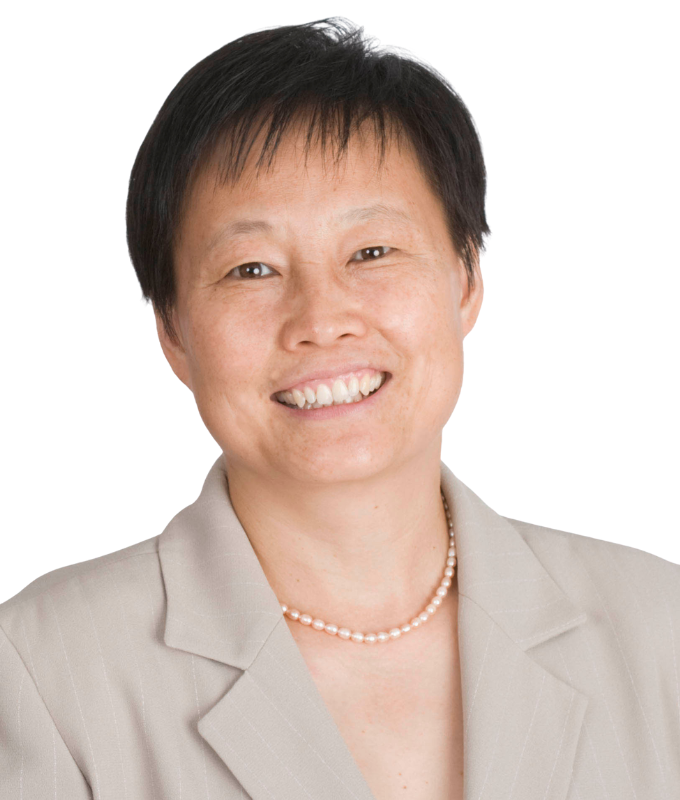
Claire Bowern is Professor of Linguistics at Yale University specializing in historical linguistics, language documentation, and Australian Indigenous languages. Her research employs computational phylogenetics to study language evolution and supports language revitalization through digital archives and fieldwork methodologies. Recent publications address: Phylogenetic signal in lexical evolution across language families Digital infrastructure for endangered language documentation (FLEx software analysis) Decolonizing linguistics pedagogy and research practices Her work consistently integrates linguistic, anthropological, and computational approaches to analyze language diversity and change. She contributes to global databases including Grambank and D-PLACE, examining links between linguistic, cultural, and environmental patterns.
Dr John Stanton is a Reader in Law at City St George's, University of London, with a focus on Constitutional Law and Comparative Constitutional Law. He has held academic roles since 2010, previously at Kingston University and City University, and is a Visiting Lecturer at the University of Malta since 2018. PhD in Law (Kingston University London, 2010) LLB Law (University of Surrey, 2007) His research spans Maltese constitutional history , local government dynamics , democracy , and central-local relations . Recent projects include Law, Localism and the Constitution (2023) and co-editing The Constitution of Malta at Sixty (2024). John’s publications and conference presentations (e.g., at Melbourne and Texas) address themes like constitutional decay , autocracy , and democratic resilience . He contributes to journals such as Legal Studies , Public Law , and Environmental Law Review . Learning Enhancement Award for Teaching (2017) Fellow, Higher Education Academy He testified before the UK Parliament on devolution and is active in the Society of Legal Scholars , UK Constitutional Law Association , and the Honourable Society of the Inner Temple .
Professor Elaine Fahey is a leading scholar in EU law and global governance at the City Law School, City St George's, University of London, where she serves as Professor of EU Law and Deputy Head of Department (academic programmes). She is co-convener of the Institute for the Study of European Law (ISEL) and the UACES James Madison Trust EUFUtures initiative (2022–2025). Her academic career includes visiting professorships at Washington College of Law (American University), Keio University, and NYU, as well as fellowships at the European University Institute and the University of Graz. LLB, Trinity College Dublin LLM, Sidney Sussex College, University of Cambridge PhD, Trinity College Dublin Barrister-at-Law, Honorable Society of King’s Inns, Ireland Attorney-at-Law, State of New York Senior Fellowship, Higher Education Authority UK Her research focuses on the intersection of EU law with global governance, digital regulation, transatlantic relations, and the Area of Freedom, Security and Justice. She explores how the EU navigates legal frameworks beyond the nation-state, particularly in digital trade, cybersecurity, and data protection. Her work critically examines the EU’s role as a global regulatory actor and its interactions with international institutions. Her extensive publication record includes the monograph The EU as a Global Digital Actor (Hart, 2022) and numerous articles on digital sovereignty, data transfers, and transatlantic cooperation. Recent research analyzes the EU–US Trade and Technology Council (TTC), the evolution of the Privacy Shield, and strategic litigation in digital rights. Her work reveals a strong trend toward understanding how soft law, institutional design, and judicial decisions shape EU external relations and digital governance. Erasmus+ Jean Monnet Chair in Law & Transatlantic Relations (2019–2022) Emile Noël Fellow, NYU Law School Max Weber Fellow, European University Institute Senior Land Steiermark Fellow, University of Graz Senior Fellowship, Higher Education Authority UK Professor Fahey has supervised multiple PhD students, including Isabella Mancini, Giulio Kowalski, and Christos Karetsos, on topics such as algorithmic collusion, digital markets, and investment law. She has led significant research projects, including the ESRC-funded TRILATTRADE grant and the Marie Curie ITN on EU and Transatlantic Investment and Trade (EUTIP). She previously held leadership roles as Associate Dean (International) and interim Associate Dean (Research) at the City Law School. She is an elected member of the EU Studies Association (EUSA) Executive (2021–2025). She has also contributed to public policy through briefings for the Welsh Parliament and reports on CJEU litigation in Ireland. She is associated with research initiatives such as the Institute for the Study of European Law (ISEL) and has collaborated on interdisciplinary projects on Facebook regulation, transatlantic relations, and EU technological sovereignty. Her work bridges legal scholarship, policy, and international academic collaboration.
Hasan Dindjer is an Associate Professor of Law at the University of Oxford’s Faculty of Law and the Blanesburgh Fellow and Tutor in Law at Balliol College. His research focuses on public law, philosophy of law, and related areas of moral and political philosophy. He has specialized in administrative law standards, particularly the 'reasonableness' standard, and has engaged with foundational questions in legal positivism. Education: BA and BCL (New College, Oxford) LLM (Harvard Law School, as a Fulbright Scholar) Previously served as Examination Fellow at All Souls College, Oxford Research Interests: Public Law and Administrative Law Standards Philosophy of Law and Legal Positivism Moral and Political Philosophy in Legal Contexts Publications: Over a decade of scholarship includes journal articles, book chapters, and blog posts analyzing administrative law theory, constitutional principles, and debates over legal positivism. Recent work includes contributions to Modern Law Review and Legal Theory . Affiliations: Member of the Jurisprudence in Oxford Research Group and actively involved with blogs like the UK Constitutional Law Blog and ICONnect.
Dr. Jeni Mitchell is a Lecturer in the Department of War Studies at King’s College London, affiliated with the School of Security Studies under the Faculty of Social Science & Public Policy. She specializes in future war studies, space security, and the evolution of rebellion, serving as co-director of the Future Threats Lab within the Centre for Science & Security Studies. Her work emphasizes human-centric approaches to analyzing existential threats and their societal impacts. Her education includes a PhD from King’s College London, where her doctoral research focused on civilian victimization by non-state armed groups. She has held positions at Chatham House, the Brookings Institution, and the Middle East Institute. Teaching responsibilities include MA modules on future warfare, spacepower, and insurgency, while she also directs the MA International Relations and War program. Mitchell’s research explores future threat perceptions (particularly in space), futures research methodologies, and the intersection of war, genocide, and utopian ideologies. Her methodological innovations, termed ‘future-crafting,’ employ creative formats like films and games to model conflict scenarios. Notable collaborations include work with the Freeman Air and Space Institute and King’s Wargaming Network. Recent publications address Ukraine’s apocalyptic imaginary, space-based threat analysis, and refugee-warrior dynamics. Her research group activities include the Environmental Security research group and contributions to widening participation initiatives like the 2024 Summer School in international security.
Dr. Mark B. Smith is an Associate Professor in Modern European History at the University of Cambridge’s Department of History. His research focuses on Soviet and European history, particularly the Soviet Union’s social structures, welfare policies, urban development, and cultural dynamics from Stalinism through late socialism. He teaches courses on welfare states, Soviet life, and 20th-century European violence. Key research areas include Soviet urban housing programs, welfare state evolution, and Cold War-era cultural exchanges. His publications analyze topics like Khrushchev’s housing reforms, post-Stalin urban welfare systems, and Soviet pension policies. Smith has co-edited special issues on European urban societies and authored books such as *The Russia Anxiety* (2019) and the forthcoming *Exit Stalin* (2026). He advises doctoral students on Soviet history, welfare states, and Cold War topics. His work bridges legal history, social policy analysis, and cultural studies, emphasizing how everyday life reflected broader ideological and structural changes in Soviet society.
Professor Jennifer M. Welsh is a leading scholar in global governance and security, holding the Canada 150 Research Chair at McGill University. She previously served as Professor at the European University Institute and the University of Oxford, where she co-founded the Oxford Institute for Ethics, Law and Armed Conflict. Her work focuses on humanitarian intervention, the 'Responsibility to Protect' (R2P), UN Security Council dynamics, and Canadian foreign policy. Welsh advised UN Secretary-General Ban Ki-moon on R2P (2013–2016) and directed a five-year European Research Council project on 'The Individualisation of War.' Education : D.Phil. in International Relations, St. Antony's College, University of Oxford (Oxford, England) Masters and Doctorate from University of Oxford (Rhodes Scholar) BA, University of Saskatchewan (Canada) Research Interests : Welsh examines ethical and legal dimensions of armed conflict, atrocity prevention, and norms governing state sovereignty. Her work bridges theoretical analysis and policy implementation, with key contributions to R2P frameworks and non-state actor engagement in conflict zones. Recent publications explore localization in governance, Canada's geopolitical role, and civilian self-protection mechanisms. Key Awards : Leverhulme Trust Research Fellowship Trudeau Fellowship Grants & Advising : Directed a €2.5M ERC-funded project (2014–2019) Advisory roles include Peace Research Institute Frankfurt, Global Centre for R2P, and Auschwitz Institute Editorial boards: Global Responsibility to Protect , International Journal , and Ethics and International Affairs Labs/Teams : Directs McGill's Centre for International Peace and Security Studies (CIPSS), fostering interdisciplinary research on global security challenges.
Jinyan Li serves as Professor of Tax Law at Osgoode Hall Law School, York University, where she previously held the position of Interim Dean and currently co-directs the LLM Tax program while serving as academic director of the Professional Graduate Studies Program. Her educational qualifications include: BA from UIBE (China) LLB from University of Toronto LLM from Queen's University DJur from Osgoode Hall Law School She is an active member of the Bar of Ontario. Professor Li's research spans tax law and policy with specialized expertise in international taxation frameworks, social income support systems, Chinese tax evolution, and e-commerce taxation challenges. Her scholarly work has significantly shaped legal discourse, with multiple citations by Canadian judicial authorities including the Supreme Court of Canada in landmark cases such as Deans Knight Income Corp. and Alta Energy . Her publication history demonstrates consistent focus on comparative tax systems and policy development, particularly examining Chinese tax structures and global digital economy implications. This trajectory reflects deepening engagement with international tax coordination mechanisms and equity considerations in fiscal policy. Her distinguished recognition includes: Tax Excellence Award (2021) from the Ontario Bar Association Lifetime Contribution Award (2017) from the Canadian Tax Foundation Academic Excellence Award (2007) from the Canadian Association of Law Teachers D.J. Sherbaniuk Distinguished Writing Award (1999) York University Research Leader (2017) Teaching Awards (2004, 2014) Professor Li actively supervises LLM and PhD candidates specializing in tax law and social income support policy, maintaining close mentorship with students including Lawrence, Sonia McCamus, and John D. Her externally funded research has received substantial support from governmental bodies including the Department of Finance and National Revenue, alongside international institutions such as the IMF, OECD, and Asian Development Bank where she served as consultant. She leads research initiatives through the LLM Tax program and organizes high-impact academic events, recently co-hosting the 2022 Pillar Two symposium and Women with Disabilities: Income Security and Tax Policy conference, demonstrating ongoing commitment to contemporary tax challenges and inclusive policy development.
Professor Beatrice Heuser is a distinguished academic in the Department of Politics within the School of Social & Political Sciences at the University of Glasgow. Her career spans multiple prestigious institutions across Europe, including King's College London, University of Reading, and visiting professorships at Sciences Po Paris, Bundeswehr University Munich, and MGIMO. She maintains significant affiliations with major strategic research institutes including Chatham House, RUSI, IFRI, and IRSEM. Education: BA from Bedford College London, MA from LSE, DPhil from Oxford (St Antony's/St John's), Habilitation from University of Marburg Professional Experience: Former Director of Studies at German Bundeswehr's military history research office, NATO Headquarters consultant, and extensive teaching across European institutions Her research centers on strategic studies with particular focus on the cultural dimensions of warfare, nuclear strategy, and the historical evolution of strategic thought. Key research areas include strategic culture, military exercises as political instruments, laws of war development, and European defense policy. Her work bridges historical analysis with contemporary security challenges, examining how cultural narratives shape strategic decision-making from antiquity to the nuclear age. Professor Heuser's recent publications demonstrate consistent scholarly output across strategic theory, military history, and contemporary security issues. Her work shows particular emphasis on the conceptual foundations of strategic culture, historical analysis of warfare evolution, and practical applications to modern security challenges including nuclear deterrence and asymmetric warfare. The interdisciplinary nature of her research connects political theory, historical analysis, and security studies. She actively supervises graduate students in strategic theory, nuclear strategy, insurgency studies, and defense policy-making within NATO/EU contexts. Her teaching portfolio includes War and International Relations, Defense Policy, and Strategic Theory courses.
Myriam Dunn Cavelty serves as Deputy Head of Research and Teaching at the Center for Security Studies (CSS) at ETH Zurich, where she leads significant academic initiatives in cybersecurity and digital governance. She holds formal affiliations as an associate researcher at the Center for Advanced Security Theory at the University of Copenhagen, and has held prestigious visiting positions at Brown University, the University of Darmstadt (as a Mercator Fellow), and the Central European University. Her research expertise centers on how digital technologies influence political behavior and societal values, with particular attention to governance arrangements for digital technologies and their embedding in social, political, and economic processes. Her scholarly contributions span cybersecurity politics, cyber warfare, critical infrastructure protection, and strategic foresight, reflecting an interdisciplinary approach that bridges political science, international relations, and technology studies. Dunn Cavelty's publication record demonstrates remarkable consistency and impact, with works spanning from 2008 to the present. Her research shows an evolution from early analyses of cyber-threat construction to contemporary examinations of AI in security contexts and the political dimensions of cybersecurity governance. Her work consistently addresses the intersection of technological capabilities and political constraints, examining how states and other actors navigate security challenges in the digital domain. Mercator Fellow at the University of Darmstadt Editor-in-Chief of Contemporary Security Policy Advisory work for governments, international institutions, and corporations As an academic leader, she has advised numerous doctoral students and supervised research projects examining the political dimensions of cybersecurity. Her work with the Center for Security Studies involves directing research programs that connect academic inquiry with policy relevance, particularly in the areas of risk analysis and strategic foresight. She has established herself as a leading voice in European cybersecurity scholarship, with particular expertise in the Swiss context and broader European security frameworks.
Harald Fuess is a Professor of Cultural Economic History at the Heidelberg Centre for Transcultural Studies since 2009. He holds a Ph.D. from Harvard University and B.A. from Princeton University , with prior teaching roles at the University of Sheffield, Sophia University, and visiting appointments at Oxford, Duisburg-Essen, Columbia, and Tokyo University. He serves as the Erasmus Coordinator for Asian Studies and as University Scientific Coordinator of the Hexagon Alliance . Education: Princeton University – B.A. Harvard University – M.A., Ph.D. His research spans modern Japanese history , gender dynamics , transcultural economic relations , and Eurasian cultural flows . Publications focus on Japan's legal sovereignty, consumption patterns, and the Meiji Restoration's global impact. Key academic contributions include leadership roles such as President of the European Association for Japanese Studies (2008-2011) and ongoing membership in its Executive Council (since 2000) . He has held administrative positions including Director of the Cluster Graduate School Transcultural Studies (2012-2017) and Speaker for Research Area C "Health and Environment" (2009-2012) . Recent publications analyze topics ranging from historiography of the senses to colonial legal frameworks in East Asia. His work bridges historical analysis with contemporary issues like tourism's economic impact and intellectual property evolution in transnational contexts.
Angelika Malinar, Professor of Indology at the University of Zurich and member of its Gender Studies Department, specializes in Hinduism, Indian philosophy, and Sanskrit literature. Her work spans historical and modern contexts, with a focus on epic texts and Indo-European exchanges. She co-edits the Brill's Encyclopedia of Hinduism and contributes to the University Research Priority Program "Asia and Europe." PhD and habilitation from University of Tübingen Researcher at Tübingen, Berlin, and London Her research integrates Sanskrit epics, philosophical traditions, and modern Hindu identity. Recent publications analyze Mahābhārata theology, ritual practices, and cross-cultural interpretations. She explores how texts like the Bhagavadgītā and Nārāyaṇīya bridge ritualism, aesthetics, and individual authority. Key article trends examine cosmological monotheism , epic decision-making , and colonial reinterpretations . Her editorial roles include interdisciplinary volumes on time, purity, and Indo-European cultural dialogues. As a Senior Lecturer at SOAS and Professor in Zurich, she has led projects on monastic institutions, rasas, and canonical formation. Her work contextualizes Indian philosophy within global frameworks, notably nineteenth-century German Indology.
Terrence Chapman is a Professor of Government at the University of Texas at Austin, affiliated with the Robert S. Strauss Center for International Security and Law, Center for European Studies, and Clements Center on History Strategy, and Statecraft. His research focuses on international organizations, conflict resolution, and political economy frameworks. Key research areas include: International institutional legitimacy Global regulatory regimes Public opinion in international affairs Conflict management mechanisms Formal modeling of diplomatic interactions Recent scholarly trends reveal expertise in climate governance negotiations, digital surveillance politics, and regulatory effectiveness. His work spans theoretical modeling and empirical analysis of international collaboration dynamics. Scientific recognition includes: 2011-2012 APSA Conflict Processes Section Book Award Teaching portfolio covers: Science Fiction and Politics International Organization and Law Research Methods in International Politics Previously served as associate/senior editor for International Studies Quarterly .
Alexander Wendt is the Mershon Professor of International Security and Professor of Political Science at The Ohio State University. He holds a PhD from the University of Minnesota (1989) and has taught at Yale University, Dartmouth College, and the University of Chicago before joining OSU in 2004. His work is foundational to constructivism in international relations, notably through his 1992 article Anarchy is What States Make of It and his 1999 book Social Theory of International Politics , which earned the Best Book of the Decade Award (2006). He is widely recognized, including as the most influential IR scholar over 20 years (TRIP Survey, 2017) and recipient of the 2023 Johan Skytte Prize for advancing constructivism with Martha Finnemore. Wendt’s research bridges philosophy and social science, exploring quantum theory’s implications for decision-making and social science in works like Quantum Mind and Social Science (2015). His current projects include a book on UAP and human security, responding to the Pentagon’s 2021 confirmation of UAP as a threat. His career spans theoretical innovations in agency-structure interactions, norms, and sovereignty, with a focus on redefining international relations through interdisciplinary lenses. Awards include the prestigious Skytte Prize (2023) and sustained recognition for transforming constructivism into a leading paradigm. His work challenges classical social science frameworks, proposing quantum theory as a revolutionary baseline for understanding human cognition and societal systems.
David Parrott is a Professor of Early Modern European History at New College, University of Oxford, and serves as Penry Williams Fellow, Tutor in History, and Precentor. He holds a MA (M.A. DPhil Oxf) and completed his BA and DPhil in History at Oxford (Christ Church and Wolfson College) before joining the University of York as a lecturer. Returning to New College in 1992, he specializes in teaching European history between 1500-1700, with a focus on France, Italy, and political/military/cultural themes. His courses include historiography, methodology, and specialized topics like the Thirty Years' War and early modern court culture. His research focuses on 17th-century France and Northern Italy, particularly military history, mercenaries, and private military organizations. Current work explores France’s mid-17th-century crisis. He has published extensively on early modern warfare, including Richelieu’s Army (2001) and The Business of War (2012). No scientific awards are listed, though his scholarly contributions are significant. His teaching and research highlight interdisciplinary approaches to military and political history. While no grants or advising activities are detailed here, his academic roles emphasize mentorship through tutorials and college governance. He contributes to New College’s academic and chapel life as a Tutor and Precentor.