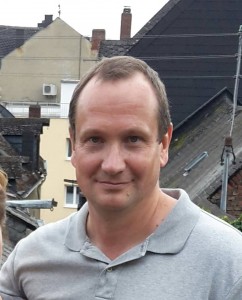
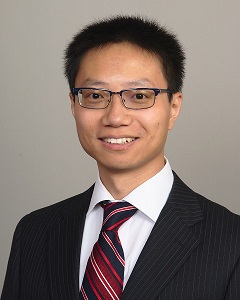
Mathieu Fontaine is an Associate Professor in Machine Listening at Télécom Paris , affiliated with the LTCI Lab within the IDS Department (Information, Data, Signal). His research focuses on machine listening for speech and audio signal processing. PhD in Informatics (2019), Lorraine University Master in Applied and Fundamental Mathematics (2015), Poitiers University BSc in Fundamental Mathematics (2013), Rennes University Fontaine's research spans speech enhancement , speaker separation , source localization , and music source separation using heavy-tailed probabilistic models and deep Bayesian networks , with applications in augmented reality . He has expertise in Python , signal processing , and machine learning (80% proficiency). His recent publications (2024) include work on diffusion models for speech synthesis , room acoustics estimation from 3D meshes , robust audio scene analysis , and direction-aware speech processing . Earlier publications (2022-2023) explore flow-based NMF , alpha-stable representations , and adaptive beamforming in multiparty environments. Fontaine collaborates with the S2A team and ADASP group at LTCI Lab. His work integrates probabilistic modeling with deep learning to address challenges in real-world audio processing, including reverberation, noise, and complex acoustic environments.
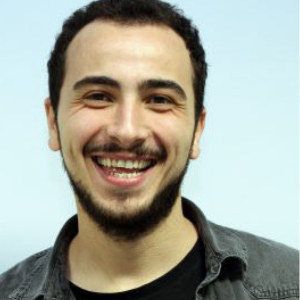
Gaël Richard is a Professor at Télécom Paris specializing in machine learning and audio signal processing. He leads the Hi! Paris center, focusing on AI and data science applications. His research emphasizes hybrid interpretable AI for sound analysis, including projects like Hi-Audio funded by a €2.5M ERC Advanced Grant (2022). Key areas include machine listening, music source separation, and speech processing. Applications span autonomous vehicle acoustics and music technology. Notable contributions include neural audio compression (QINCODEC), diffusion models for music synthesis (Diff-TONE), and source separation techniques (Inverse Drum Machine). Research & Awards Recipient of the 2022 ERC Advanced Grant for the Hi-Audio project exploring hybrid AI models that integrate domain knowledge with neural networks. This approach reduces data requirements and enhances model interpretability. Active in audio-visual scene analysis and weakly-supervised learning systems. Affiliations & Labs Executive Director of Hi! Paris, a multidisciplinary lab advancing AI and data science for societal impact. Collaborates on projects like the HI-AUDIO online platform for distributed music data collection and the MAD-EEG EEG dataset for auditory attention decoding.
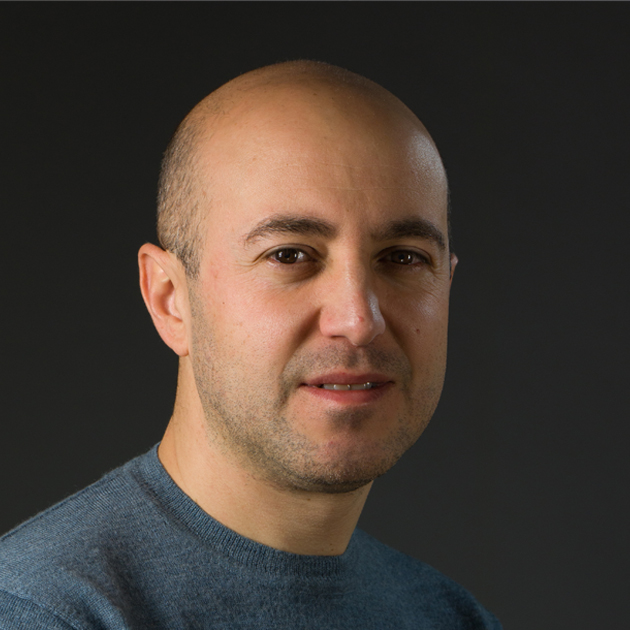
Ole Marius Hoel Rindal is a Senior Lecturer at the University of Oslo (UiO), affiliated with the Department of Informatics (IFI) and the Digital Signal Processing and Image Analysis research group. His research focuses on medical ultrasound imaging, sensor technology, and sports science applications. He holds a PhD in medical ultrasound beamforming from UiO and co-founded Sonair, a company developing 3D ultrasonic sensors for industrial use. Education: PhD in Medical Ultrasound Imaging, University of Oslo (2014) Research Interests: His work spans adaptive beamforming in medical ultrasound, real-time blood pressure monitoring, and biomechanical analysis of cross-country skiing techniques using microsensors and machine learning. Key contributions include advancements in software beamforming, coherence-based aberration correction, and the development of open-source ultrasound tools like the UltraSound Toolbox (USTB). Publications & Trends: Recent work emphasizes clinical validation of ultrasound technologies (e.g., fetal imaging, echocardiography) and algorithmic innovations in beamforming. Collaborations with SINTEF MiNaLab and industry partners highlight practical applications in robotics and athlete performance optimization. Awards: No specific honors listed. Advising & Grants: Guidance on projects involving wearable sensors for blood pressure monitoring and sensor-based athlete analysis. Active in open-source software development for medical imaging. Teams & Labs: Leads the Digital Signal Processing and Image Analysis group at UiO, collaborating with industry (Sonair) and academic partners on sensor innovation and imaging systems.
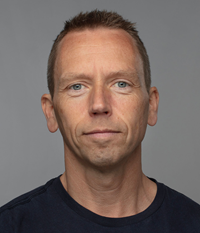
George Tzanetakis is a Professor in the Department of Computer Science at the University of Victoria, Canada, affiliated with the Faculty of Engineering and Computer Science. He holds a PhD from Princeton University. His research focuses on computer audition, audio signal processing, machine learning, and music information retrieval, with applications in human-computer interaction, music education, and robotics. He is involved in the Music and Sound Interdisciplinary Centre, exploring innovative technologies for music performance, analysis, and interaction. Key areas of exploration include real-time gesture-based control systems, robotic musical instruments, and audio-based health monitoring. His work integrates multimodal data (e.g., audio, motion) and leverages deep learning to address challenges in music technology, bioacoustics, and healthcare analytics. Recent projects include developing frameworks for audio representation evaluation, modular synthesis systems, and PU learning models for healthcare prediction. His research has led to advancements in music transcription, sound event detection, and interactive musical interfaces. Collaborations span academia and industry, emphasizing practical applications of computational methods in music and beyond. No specific awards or grants are listed in the provided text.
Pauline Larrouy-Maestri is a Senior Researcher at the Max Planck Institute for Empirical Aesthetics in Frankfurt/Main, Germany, where she has been working since 2019 after serving as a Postdoctoral Researcher in the Neuroscience Department from 2014-2019. Her interdisciplinary research focuses on how humans categorize acoustic information that unfolds over time to make sense of sounds, working at the intersection of music, speech, and neuroscience. Dr. Larrouy-Maestri holds a PhD in Psychology from the University of Liège (2009-2013) and has an unusually diverse educational background including a Bachelor in Music (Piano) from the Royal Conservatory of Mons, a Master in Speech Therapy from the University of Brussels, additional studies in Psychology, Pedagogy, and Music Therapy, and research stays at McGill University and SUNY Buffalo. This multidisciplinary foundation informs her unique approach to studying sound perception. Her research examines how we process ambiguous auditory material that sits at the boundaries between music and speech categories, such as sprechgesang and West-African talking drums. She investigates auditory sequence processing in music, particularly how continuous streams of sound are parsed into meaningful units, and has made significant contributions to understanding the perception of correctness in singing. Her work on vocal communication explores how pitch, timing, and other acoustic features contribute to our interpretation of emotional content and meaning in both music and speech. Analysis of her recent publications reveals a sophisticated integration of behavioral, electrophysiological, and computational approaches to study music-speech interactions, with growing emphasis on cross-cultural perspectives, individual differences, and neural mechanisms. Her work increasingly examines how subtle acoustic variations influence aesthetic judgments and emotional responses to vocalizations. 2023: €20,000 research scholarship for "Humanity of Speech" project 2017: Selected for "Sign Up! Careerbuilding for outstanding female post docs in the MPG" 2016: Young Investigator Award from SEMPRE and ICMPC14 2015: PBEEE Merit scholarship from Fonds de recherche du Québec 2013: Patrimoine de l'Université de Liège and FNRS fundings 2011: Grant from French Community of Belgium Dr. Larrouy-Maestri currently supervises multiple researchers including Camila Bruder, Madita Hoerster, and Zofia Hobubowska. Her research is supported by competitive grants including the recent Imminent scholarship and previous funding from Belgian and Canadian sources. She maintains extensive international collaborations with researchers including David Poeppel, Melanie Wald-Fuhrmann, Marc Pell, and others across neuroscience, psychology, and musicology disciplines. Her work is conducted within the Neuroscience Department at the Max Planck Institute for Empirical Aesthetics, where she contributes to the institute's interdisciplinary mission of studying aesthetic experiences through multiple methodological approaches. She participates in research groups focusing on auditory perception, music cognition, and the neural mechanisms underlying language and music processing, helping bridge traditionally separate fields through innovative experimental designs.
Ryan Corey (he/him/his) is an Assistant Professor at the University of Illinois Chicago in the Department of Electrical and Computer Engineering, College of Engineering. His research focuses on audio and acoustic signal processing for human listening technologies such as hearing aids and augmented reality systems. Education: MS in Electrical and Computer Engineering from University of Illinois at Urbana-Champaign (2014), BSE in Electrical Engineering from Princeton University (2012) Teaching: Co-instructor for TE 401: Develop Breakthrough Projects, ranked as excellent by students multiple times Corey's research explores signal processing algorithms that combine audio signals from distributed microphone arrays to isolate desired sounds from background noise. His work has potential applications in hearing devices that can enhance specific speaker voices in crowded environments. He also investigates innovative prototyping approaches using unconventional microphone placements on wearable devices. His recent publications focus on advanced beamforming techniques, adaptive filtering methods, and sensor network applications in audio processing. These include topics such as random projections in beamforming, neural adaptive filters, and sound field interpolation using acoustic sensor networks. Scientific Honors: Best Student Paper Award at WASPAA 2019 Intelligence Community Postdoctoral Fellowship (2019) Microsoft Research Dissertation Grant (2018) National Science Foundation Graduate Research Fellowship (2013) Corey leads the Listening Technology Lab and collaborates with Professor Andrew Singer in the Augmented Listening Laboratory. He has mentored students in developing innovative listening technologies, including prototypes for hearing aids with improved directional audio capabilities and devices that modify sound environments for better hearing experiences.
Tuomas Virtanen is a Professor at Tampere University's Signal Processing Research Centre within the Faculty of Information Technology and Communication Sciences. His primary affiliation is the Computing Sciences department, where he leads the Audio Research Group . His work focuses on computational analysis of audio signals, machine listening, and acoustic scene understanding. Research Interests: Audio signal processing, content analysis of audio, sound source separation, acoustic scene classification, speech processing (including noise-robust ASR and speaker recognition), and machine learning techniques such as deep neural networks and statistical modeling. His group develops methods for sound event detection, localization, and tracking in complex acoustic environments. Key Contributions: Leading the DCASE (Detection and Classification of Acoustic Scenes and Events) challenges, developing open-source datasets like TUT Acoustic Scenes and STARSS, and advancing techniques in audio captioning, privacy-preserving audio processing, and multimodal learning. Notable Projects: Creation of the Audio Research Group , development of the Clotho audio captioning dataset, and pioneering work in zero-shot audio classification using semantic embeddings. His research bridges signal processing fundamentals with modern machine learning paradigms.
Professor Sergey Karabasov is a leading academic in computational modeling and aeroacoustics at Queen Mary University of London’s School of Engineering and Materials Science . As Director of the Centre for Intelligent Transport , he bridges aerospace engineering with environmental technology and bioengineering. Education: PhD (1999, Moscow State University), DSc (2010, Keldysh Institute) Affiliations: Fellow of the Royal Aeronautical Society (FRAeS), Fellow of the Higher Education Academy (FHEA), Associate Fellow of AIAA (AFAIAA) Research Interests span multiscale fluid dynamics, computational aeroacoustics, and high-performance computing. His work addresses: Future Mobility: Noise reduction in urban air mobility and conventional aircraft Environmental Technologies: Turbulence modeling for renewable energy and climate systems Digital Twins: Physics-based and data-driven simulations for aerospace and bioengineering Article Trends focus on: Hybrid LES-acoustic models for jet noise Multiscale methods in nanofluidics and molecular systems GPU-accelerated algorithms (e.g., CABARET) for complex flows Climate dynamics (Southern Ocean jets, Chandler wobble) Scientific Awards include: Fellowships at Royal Aeronautical Society and Higher Education Academy Associate Fellowship at AIAA Guest Editor for Royal Society Phil.Trans. A theme issues (2014, 2019) Advising includes current PhD student Hussain Ali Abid and alumni working on: Jet noise optimization Graphene suspension rheology Hybrid molecular-continuum simulations Labs & Teams involve the Centre for Intelligent Transport , GPU-Prime.Ltd consultancy, and collaborations with institutions like Cambridge University and Keldysh Institute.
Alessandro Ragano is a Postdoctoral Researcher at the Insight Centre for Data Analytics , where he has been investigating Quality of Experience (QoE) aspects of audio archives and developing data-driven approaches for QoE estimation and audio restoration using deep learning since 2018. Education: MSc in Computer Science and Engineering from Politecnico di Milano (Italy) BSc in Computer Engineering from Università Degli Studi di Salerno (Italy) His research integrates machine learning , audio signal processing , and multimedia quality assessment to improve speech enhancement, audio restoration, and perceptual modeling. Recent trends in his publications focus on self-supervised learning , objective quality metrics , and audio dataset generation with applications in speech separation, music representation, and audio inpainting. He actively contributes to open-source tools like Binamix and AQP for audio research and quality evaluation.
Slim Essid is a Full Professor at Télécom Paris and coordinator of the Audio Data Analysis and Signal Processing (ADASP) group. He holds a PhD and HDR from Université Pierre et Marie Curie (UPMC). His research focuses on machine learning, artificial intelligence, and signal processing applied to temporal data analysis, including multiview learning, representation learning, and structured prediction. Applications span music content analysis (MIR), multimodal perception (e.g., EEG data analysis), and human behavior analysis. He has advised 15 PhD students and collaborated on over 14 post-doctoral projects. Education: PhD in Signal Processing, Université Pierre et Marie Curie (2005) Habilitation (HDR), Université Pierre et Marie Curie (2015) M.Sc. in Digital Communication Systems, Télécom ParisTech (2002) Engineer Degree, École Nationale d’Ingénieurs de Tunis (2001) Research interests emphasize multimodal learning, self-supervised representation learning, and audio-visual fusion. Key projects include sound-prompted segmentation, zero-shot audio captioning, and EEG-based auditory attention decoding. Over 150 peer-reviewed publications exist across conferences like NeurIPS, ICML, and journals like IEEE Transactions. Active in reviewing for top-tier venues and advising French/EU research projects. Labs/Teams: Member of the Signal, Statistics and Learning (S2A) research team and the Information Processing and Communication Laboratory (LTCI).
Dr. Mehran Masdari is a Lecturer in the Department of Aerospace Engineering at City St George's, University of London, where he has been serving since 2024 after joining as a Research Fellow and Visiting Lecturer in 2022. He previously held the position of Assistant Professor at the University of Tehran from 2012 to 2022, where he founded and led the Experimental Aerodynamic Research Laboratory (EARL). Education: PhD in Aerodynamics, Sharif University of Technology, Iran (2011) Fellow of the Higher Education Academy (FHEA), City, University of London, United Kingdom (2024) Dr. Masdari's research focuses on experimental aerodynamics, measurement techniques, data analysis, and image processing. He specializes in heat transfer optimization using pulsating flows, aeroacoustic analysis of drone propellers, and energy harvesting from flow-induced motions. His work bridges fundamental fluid dynamics with practical engineering applications in aerospace and sustainable technologies. He teaches core courses such as 'Measurements and Data Analysis', 'Advanced Aerodynamics', and 'Aeroelasticity', contributing significantly to aerospace education. The recent publications reflect a strong trend in experimental methods, particularly in image-based diagnostics, unsteady flow control, and energy conversion from fluid-structure interactions. His work spans thermal engineering, aeroacoustics, and smart materials, demonstrating interdisciplinary innovation in aerospace systems. Scientific Awards and Recognitions: Fellow of the Higher Education Academy (FHEA) Fellow of the Royal Aeronautical Society Dr. Masdari has advised numerous graduate students at the University of Tehran and continues to mentor early-career researchers at City St George's. His research has been supported by institutional and national grants related to advanced measurement systems, drone technology, and sustainable energy solutions. He has led projects integrating optical diagnostics with thermal and structural testing, contributing to both academic knowledge and industrial applications. He established and directed the Experimental Aerodynamic Research Laboratory (EARL) at the University of Tehran, a facility dedicated to cutting-edge experiments in flow measurement, heat transfer, and aeroelasticity. His lab work emphasizes innovation in instrumentation and data interpretation, fostering a hands-on research environment for students and collaborators.
Anders Møller is a Professor and Vice Head of Department at the Department of Computer Science, Aarhus University, Denmark. He is a leading researcher in programming languages and software engineering, with a primary focus on static and dynamic program analysis. He serves as Chairman of the PhD Committee and holds leadership roles in the international research community, including Vice-Chair of ACM SIGPLAN and Associate Editor for ACM TOPLAS and ACM TOSEM. His research interests include programming languages, software engineering, static and dynamic analysis, program verification, and security. His work bridges theoretical foundations and practical applications, particularly in improving software reliability and security through advanced analysis techniques. The trends in his recent publications reflect a strong emphasis on static analysis for security, scalability, and real-world impact—especially in web applications, smart contracts, and open-source software supply chains. His research has evolved toward practical deployment, demonstrated by the founding and acquisition of Coana by Socket in 2025 for enhanced vulnerability detection. Recipient of the Danish Elite Research Prize 2020 ACM Distinguished Member He actively mentors students and contributes to the academic community through conference leadership (e.g., OOPSLA, PLDI, ICSE). He also co-authored the widely used textbook Static Program Analysis with Michael I. Schwartzbach. His work is deeply integrated into both academic and industrial advancements in software analysis and security.
Szabolcs Iváncsy is an Honorary Associate Professor at the Department of Automation and Applied Informatics, Budapest University of Technology and Economics. His research focuses on audio signal processing and computational musicology, particularly in the domain of sound source separation for polyphonic music. Department: Automation and Applied Informatics University: Budapest University of Technology and Economics His work employs techniques such as instrument prints, energy splitting, and frequency estimation to isolate individual sound sources from complex musical recordings. These methods intersect with machine learning and signal processing to address challenges in polyphonic music analysis. Available publications highlight advancements in sound source separation, instrument modeling, and computational approaches to audio engineering. While no formal awards or students are listed, his contributions are documented in the BME Publication Registry and platforms like Google Scholar. Email: Ivancsy.Szabolcs@aut.bme.hu Office: Q.B215, Budapest 1117 Phone: +36 (1) 463-2885 Fax: +36 (1) 463-2871 Homepage: https://avalon.aut.bme.hu/~ivancsy
Tamás Benedek is an Associate Professor at the Department of Fluid Mechanics, Budapest University of Technology and Economics (Faculty of Mechanical Engineering). His research focuses on aeroacoustics, computational fluid dynamics (CFD), and turbomachinery design optimization. He has published extensively on axial and radial flow fans, noise reduction techniques, and vortex dynamics. Education: Ph.D. in Fluid Mechanics (2018, BME) M.Sc. in Fluid Mechanics (2012, BME) Research Interests include: Tip leakage vortex quantification in axial fans Phased array microphone techniques for noise source localization CFD simulation of aeroacoustic phenomena Industrial fan design optimization for contaminated gas flows Acoustic duct design and flow-induced noise control Beamforming methods for rotating machinery diagnostics Publications highlight his work on: URANS simulations for vortex dynamics Hybrid CFD-experimental noise modeling Statistical analysis of turbulent flow effects on noise Blade geometry influence on aerodynamic loss coefficients Flow separation mechanisms in ducted systems Acoustic-transparent duct design Contact: benedek.tamas@gpk.bme.hu
Zhiyao Duan is a Professor in the Department of Electrical and Computer Engineering and Computer Science at the University of Rochester, with affiliations to the Goergen Institute for Data Science. He holds a B.S. and M.S. from Tsinghua University and a Ph.D. from Northwestern University. Primary: Department of Electrical and Computer Engineering Secondary: Department of Computer Science Affiliated: Goergen Institute for Data Science His research focuses on Computer Audition, exploring audio-visual scene understanding, source separation, and human-computer collaborative music systems. He has received prestigious awards including an NSF CAREER Award and best paper honors at SMC 2017. His work is funded by NSF, NIH, Adobe, Kwai, and others. Recent publications emphasize audio-visual integration, speech synthesis, and deep learning architectures. He actively participates in academic service, serving on editorial boards and technical committees. The Audio Information Research (AIR) lab, which he leads, has hosted numerous students and collaborated with institutions like Northwestern University, Tsinghua University, and Stanford University. Scientific Awards: NSF CAREER Award Best Paper Award at SMC 2017 Best Paper Nomination at ISMIR 2017 Grants: NSF BIGDATA Grant No. 1741472 NSF Grant No. 1846174 for Human-Computer Collaborative Music Making University of Rochester AR/VR and Health Analytics Grants Students: Yapeng Tian Lele Chen Sefik Emre Eskimez Bochen Li Rui Lu Yujia Yan