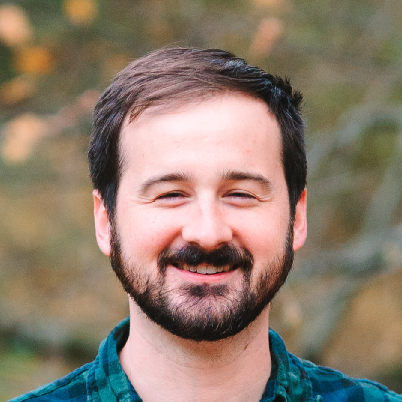
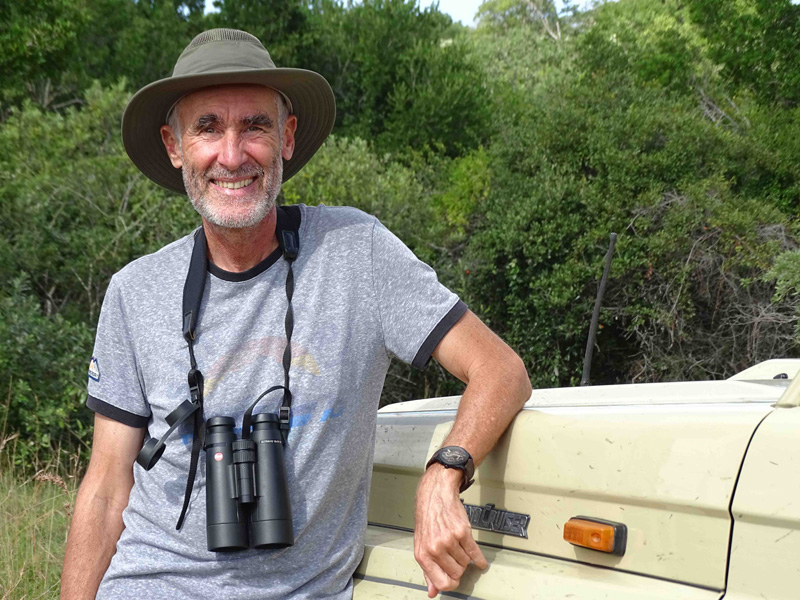
Tom McEnaney is an Associate Professor of Comparative Literature and Spanish & Portuguese at the University of California, Berkeley, and Director of the Berkeley Center for New Media (BCNM). He holds a joint appointment in the Department of Spanish & Portuguese and serves on the Executive Board of UC Cuba. He is affiliated with the Center for Cultural Analytics, the Program in Critical Theory, the Center for Science, Technology, Medicine and Society, and the Data Science Lab (D-Lab). His research focuses on the history of media and technology, Argentine, Cuban, and U.S. literature, sound studies, linguistic anthropology, computational humanities, and new media studies. His book Acoustic Properties: Radio, Narrative, and the New Neighborhood of the Americas (2017) explores the interplay of radio and narrative in Argentina, Cuba, and the U.S., analyzing populism, state socialism, and the reimagining of the vox populi through listening practices. McEnaney’s work has appeared in journals such as diacritics , PMLA , and Representations , and media outlets like The New York Times and Public Books . He is a Mellon New Directions Fellow (2020–2023) in cultural analytics and leads a project on tape technology’s impact on testimonial writing, rock nacional, electronic music, and audiobooks in the Americas. Previously an Assistant Professor at Cornell University, he founded the Latin American Journals Project, an online archive of digitized literary journals from Latin America and the Hispanophone Caribbean. His current affiliations emphasize interdisciplinary collaboration and expanding access to cultural archives globally.
Sharese King is the Neubauer Family Assistant Professor of Linguistics at the University of Chicago, where she has taught since 2018. She earned her Ph.D. and Master's in Linguistics from Stanford University, focusing on language variation across African American communities. Her research bridges sociolinguistics, critical race theory, and phonetics to examine how African American speech is constructed, racialized, and socially evaluated. Education: Ph.D., Linguistics, Stanford University (2018) M.A., Linguistics, Stanford University Research Interests: Sociolinguistics Language Variation & Change African American Language Critical Race Theory Phonetic and experimental analysis Dialect and judicial systems Notable Contributions: Interdisciplinary studies on raciolinguistics and courtroom bias Analysis of /s/ articulation in intersectional contexts Reconceptualization of AAVE as AAL to emphasize linguistic diversity Fieldwork in Bakersfield, Rochester, and Chicago Publications in American Speech , Journal of Sociolinguistics , Language , and Nature Scientific Awards: Provost's Postdoctoral Fellowship Neubauer Family Assistant Professorship Labs & Projects: Co-founder of the Chicagoland Language Project
James Newman, PhD, is a Research Professor in Media and University Teaching Fellow at Bath Spa University. He specializes in videogame studies, game sound/music, and media histories. As Senior Curator at the National Videogame Museum and co-founder of the Videogame Heritage Society, he focuses on preservation and digital heritage. His work spans academic research, public engagement, and creative practice. Education: Holds a PhD in Media Studies. Research: Explores game spectatorship, early game sound, and ludomusicology. Grants: Supported by ESRC, Wellcome Trust, AHRC, and others. Awards: Includes fellowships from Stanford University and ICHEG. Contributions: Co-authored White Papers, directed the All Your Bass festival, and collaborates with institutions like the British Library on the Game Sound Archive. Public Engagement: Regular media contributor (BBC, The Guardian) and international adviser on game studies. Creative Work: Composes electronic music using obsolete synthesis systems and game hardware.
Gierad Laput is a Senior Engineering Manager at Apple, leading the Perception and Interaction Engineering organization under Machine Intelligence Neural Design (MIND) at Apple AI/ML (AIML). He is also an Adjunct Professor at Carnegie Mellon University's School of Computer Science and Human-Computer Interaction Institute. His research sits at the intersection of sensing systems, interactive technologies, and machine learning, with applications in ambient intelligence, wearables, and AI-driven interactive experiences. Ph.D. in Computer Science from Carnegie Mellon University Founding member of CMU's Future Interfaces Group Former Google Ph.D. Fellow, Disney Imagineer, and recipient of 10 Best Paper Awards/Nominations His research agenda at Apple leverages cutting-edge hardware to develop multimodal ML systems for vision, audio, and motion sensors, enabling features like head gesture detection for AirPods, Apple Intelligence integrations, and health monitoring tools. Recent collaborative projects include Vision Pro hand interaction systems and WatchOS updates for cycling/fall detection. Key research areas include human-computer interaction , machine learning for sensor fusion , and smart environment sensing . Over 35 publications cover transformative technologies like ViBand (bio-acoustic sensing), EM-Sense (touch recognition), SkinTrack (arm as touchpad), and ElectroDermis (stretchable electronics). Scientific honors include: Fast Company Innovation by Design Award (2017) Google PhD Fellowship (2018) Swartz Entrepreneurial Fellowship (2018) Best Paper Awards at ACM UIST (2016) and ACM CHI (2015) As an educator, he has taught courses at CMU and the University of Michigan on on-device machine learning , signal processing , and human-centered design . His lab has mentored numerous researchers now pursuing PhDs at MIT, UW, CMU, and Northwestern.
Jonathan Rosa is Associate Professor in the Graduate School of Education, Center for Comparative Studies in Race and Ethnicity, and, by courtesy, Departments of Anthropology, Linguistics, and Comparative Literature at Stanford University. He serves as Director of Stanford's Program in Chicanx-Latinx Studies and has held leadership positions including President of the Association of Latina/o and Latinx Anthropologists of the American Anthropological Association. Dr. Rosa's educational background includes: Ph.D. in Sociocultural and Linguistic Anthropology from the University of Chicago (2010) M.A. in Sociocultural and Linguistic Anthropology from the University of Chicago (2006) B.A. in Linguistics and Educational Studies from Swarthmore College (2003) Dr. Rosa's research examines the co-naturalization of language and race as a key feature of modern governance, tracking colonially structured interrelations among racial marginalization, linguistic stigmatization, and institutional inequity. His scholarship centers on raciolinguistic ideologies, Latinx studies, and educational justice, with a community-based approach that develops tools for challenging systemic vulnerability. He investigates how race and language are jointly defined across historical, geopolitical, and institutional contexts, with particular focus on Latinx communities and educational settings. His recent publications demonstrate a consistent thematic focus on decolonizing linguistic and educational frameworks, challenging standard language ideologies, and examining the intersections of race, language, and power. The work spans multiple disciplines including sociolinguistics, anthropology, education, and critical race studies, increasingly emphasizing undoing raciolinguistics and addressing coloniality in language education and assessment practices. Dr. Rosa has received numerous prestigious awards for his scholarship: Distinguished Summer Scholar, Banks Center for Educational Justice, University of Washington College of Education (2024) Outstanding Book of the Year Award for "Looking like a Language, Sounding like a Race," American Association of Teaching and Curriculum (2022) First Book Award for "Looking like a Language, Sounding like a Race," American Association for Applied Linguistics (2021) Prose Award for Excellence in Language & Linguistics for "Looking like a Language, Sounding like a Race," Association of American Publishers (2020) Charles A. Ferguson Award for Outstanding Scholarship, Center for Applied Linguistics (2018) Dr. Rosa actively mentors doctoral students across multiple programs, serving as primary advisor for students researching race, ethnicity, language, and education. His research has been supported by major grants from the National Science Foundation, Andrew W. Mellon Foundation, Woodrow Wilson National Fellowship Foundation, and Ford Foundation. He collaborates extensively with community organizations, particularly in Chicago, to develop educational approaches grounded in decolonial praxis, focusing on how scholarship can serve as a platform for social transformation. Dr. Rosa co-directed Stanford's Center for Global Ethnography (2021-2023) and directed Stanford's Program in Chicana/o-Latina/o Studies (2020-2023). He serves on multiple editorial boards including Current Anthropology and Equity & Excellence in Education, and has held leadership positions in professional organizations including President of the Association of Latina/o and Latinx Anthropologists (2020-2022).
Jan Østergaard is a Full Professor in Information Theory and Signal Processing at Aalborg University's Department of Electronic Systems. He leads the AI and Sound research section and directs the CASPR center. His expertise spans AI-driven acoustic signal processing, information theory, and EEG signal analysis. Østergaard holds a M.Sc. from Aalborg University and a PhD (cum laude) from Delft University of Technology. Major awards include the Danish Young Researcher’s Award and a EURASIP Best Thesis honor. His work focuses on speech enhancement, sound zone technologies, and neural tracking of auditory attention. Recent research emphasizes low-latency speech transmission, deep learning for sound field control, and robust voice activity detection. He serves on editorial boards and national committees, advancing Denmark’s sound technology initiatives. Education: M.Sc. (Aalborg, 1999), PhD (Delft, 2007) Research interests emphasize practical AI applications in sound systems, including hearing aid improvements, data-efficient acoustic modeling, and feedback control in networked systems. Over 210 publications and 17 active projects reflect his interdisciplinary impact across academia and industry.
Kristen Grauman is a Full Professor in the Department of Computer Science at the University of Texas at Austin, where she leads the UT Computer Vision Group. Her research focuses on computer vision and machine learning, with applications in visual recognition, video analysis, and multi-modal perception. She received her B.A. from Boston College and her Ph.D. from MIT. Her research interests span visual recognition, image and video search, video analysis, first-person vision, embodied and multi-modal perception, and interactive machine learning. She has made significant contributions to the field, particularly in developing algorithms for understanding visual content and human activities from video, including foundational work on the Pyramid Match Kernel and relative attributes. Her recent publications reveal a strong emphasis on egocentric (first-person) vision, audio-visual learning, and view-invariant representations. There is a clear trajectory toward multi-modal integration (vision, audio, language) and real-world applications in instructional videos, human activity understanding, and embodied AI systems. She has received numerous awards including: AAAI Fellow (2019) J. K. Aggarwal Prize, International Association for Pattern Recognition (2018) Helmholtz Prize (2017) UT Austin Academy of Distinguished Teachers (2017) Best Paper Award, Asian Conference on Computer Vision (2016) Presidential Early Career Award for Scientists and Engineers (2014) Computers and Thought Award, International Joint Conferences on Artificial Intelligence (2013) Pattern Analysis and Machine Intelligence Young Researcher Award (2013) Alfred P. Sloan Research Fellow (2012) Marr Prize (2011) Prof. Grauman serves as Associate Editor-in-Chief for the IEEE Transactions on Pattern Analysis and Machine Intelligence. She has secured substantial research funding including the Presidential Early Career Award, NSF grants, and industry partnerships. Her advising has produced numerous influential publications and students who are now leaders in computer vision. She leads the UT Computer Vision Group, which collaborates closely with the Electrical and Computer Engineering Department. The group is pioneering large-scale egocentric video research through projects like Ego4D and Ego-Exo4D, focusing on real-world applications in human activity understanding, audio-visual perception, and interactive systems.
Professor Emma Widdis is a leading scholar at the Faculty of Modern and Medieval Languages and Linguistics at the University of Cambridge, specializing in the intersection of Soviet cinema, ideology, and cultural geography. Her work explores the reeducation of sensory perception through film, early Soviet urban spaces, and the construction of subjectivity via cinematic techniques. Teaches 20th-century Russian/Soviet literature, cinema, and film theory Focuses on sensory engagement, political avant-garde, and urban spatial representation Supervisor for MPhil and PhD students in Slavonic Studies Her recent book Socialist Senses (2017) examines how cinema shaped Soviet perceptions of reality. Her publications span topics like silence in sound film, set design materiality, and costume symbolism in early Soviet cinema. While no formal scientific awards are listed, her research has been supported through institutional grants and collaborations with centers like CRASSH and Cambridge Language Sciences.
Shoudong Huang is a Professor at the School of Mechanical and Mechatronic Engineering , University of Technology Sydney, and Deputy Director of the UTS Robotics Institute. His research focuses on mobile robot navigation , SLAM , nonlinear state estimation , and surgical robotics . He has published over 200 papers and is recognized as one of the 100 Most Influential Scholars in Robotics (Aminer, 2018). PhD in Automatic Control, Northeastern University (China) Postdoctoral Research Fellow, University of Hong Kong (1998-2000) Research Fellow, Australian National University (2001-2003) Full-time academic roles at UTS since 2004 His work addresses challenges in robot localization across extreme environments (underwater, underground mining, surgical settings) and develops globally optimal SLAM algorithms with guaranteed performance. He has secured over $4 million AUD in external funding, including ARC Discovery grants and industry partnerships. Recent publications emphasize cross-modal calibration (camera-LiDAR), interval analysis for bounded noise , and template-based deformable surface reconstruction . These span applications in autonomous driving, surgical navigation, and UAV guidance. Chancellor’s Medal for Research Excellence (2020) Supervisor of the Year (2023) Best Paper Award (2016 ICARCV) Huang serves as Associate Editor for IEEE Transactions on Robotics and International Journal of Robotics Research , and has held leadership roles in top robotics conferences like IROS and RSS. His collaborations span MIT, USC, Zhejiang University, and industry partners including PMSW Research Pty Ltd and Multiplex Constructions Pty Ltd.
John Redmond is Professor of English Literature at the University of Liverpool's School of the Arts, specializing in contemporary poetry and creative writing. He holds a D.Phil and is an established poet with three collections published by Carcanet Press. His critical work examines privacy in poetic interpretation and Irish literary traditions. Research intersects creative practice with critical analysis, exploring poetry's relationship with folk drama, online culture, and food (gastro-criticism). Authored the textbook 'How to Write a Poem' and edited James Liddy's Selected Poems. Current projects include a novel and new poetry collection. Regularly participates in literary events including readings at the Anthony Burgess Foundation and Christ Church, Oxford. Chairs the School Extenuating Circumstances Committee and contributes to the Centre for New and International Writing.
Chris Donahue is an Assistant Professor in the Computer Science Department at Carnegie Mellon University . He also serves as a part-time Research Scientist at Google DeepMind on the Magenta team. His work focuses on leveraging generative AI to enhance human creativity, particularly in music. Education: PhD in Computer Science (UC San Diego), Postdoctoral Scholar (Stanford University) His research spans controllable generative modeling of music and audio , with a focus on real-time interactive systems. Projects like Piano Genie , Beat Sage , and Copilot Arena demonstrate his commitment to real-world deployment. His Generative Creativity Lab (G-CLef) explores AI applications beyond music, including programming and natural language. Recent publications highlight advancements in multimodal music evaluation , real-time adaptation , and AI-driven sound morphing . He co-developed Magenta RealTime , an open-weight real-time music generation model, and MusicFX DJ Mode . Scientific Awards: Best Paper Award (top 1) at NAACL Student Research Workshop 2025 Best Paper Award (top 1% of submissions) at CHI 2025 Best Paper Runner-up at ISMIR 2021 He co-advises PhD students like Wayne Chi (NDSEG Fellow) and mentors Irmak Bukey . His lab receives support from the AIxArts incubator fund at CMU .
Dr. Kaya de Barbaro is an Associate Professor in the Department of Psychology at the University of Texas at Austin (College of Liberal Arts). She holds a Ph.D. from the University of California San Diego. Her research focuses on bridging computer science and developmental/clinical psychology, particularly maternal mental health and infant social-emotional development. She directs the Daily Activity Lab, which uses mobile/wearable sensors and machine learning to analyze real-world interactions, aiming to develop just-in-time interventions for new mothers. Key research areas include maternal-infant dynamics, physiological synchronization, and the impact of environmental chaos on development. She has pioneered methods for analyzing high-density data, such as Granger causality and machine learning algorithms to detect behaviors like crying and holding. Recent work emphasizes leveraging ecological momentary assessment surveys and 24-hour LENA audio recordings to understand proximal mechanisms of development. Dr. de Barbaro teaches Psychology 333D (Introduction to Developmental Psychology) and has developed curricula for both in-person and online formats. She is actively involved in training students through the Eureka program at UT Austin. Her lab collaborates on tools like chatbots for postpartum mental health and has published extensively on sensor-based methodologies in developmental science.
Nicolas Mathevon is a Professor at the University of Saint-Etienne and a Senior Member of the Institut universitaire de France (IUF). His research focuses on bioacoustics and animal communication, spanning from marine mammals to birds. He has held visiting positions at Hunter College (City University of New York) and the University of California, Berkeley. Education Habilitation à diriger les Recherches (2002, University of Saint-Etienne) PhD (1996, University of Lyon 1) Master's Degree (ranked 2nd, University of Lyon 1) Agrégation in Life and Earth Sciences (ranked 8th) Mathevon's research explores how animals use sound for social interactions, mate selection, and environmental adaptation. His work bridges bioacoustics, neuroethology, and behavioral ecology, with a focus on decoding vocal signals' complexity. His publications cover diverse topics including animal soundscapes, vocal memory in seals, and neural encoding of communication calls. The articles highlight interdisciplinary approaches combining neuroscience, behavioral studies, and acoustic signal analysis. Scientific Awards Prose Award for Excellence in Biological and Life Sciences, AAP (2024) Chevalier des Palmes Académiques (2017) IUF Senior Member (2015-present) IUF Junior Member (2005-2010) Mathevon has supervised 17 PhD students, 10 postdocs, and contributed to public outreach through media, documentaries, and public lectures. He leads the International Master of Bioacoustics program and serves as President of the International BioAcoustic Society.
University of California , Santa Barbara (UCSB)United States
Mary Bucholtz is a Professor in the Department of Linguistics at the University of California, Santa Barbara (UCSB). She holds affiliations with multiple departments including Anthropology, Feminist Studies, Spanish and Portuguese, the Gevirtz Graduate School of Education, Comparative Literature, and Latin American and Iberian Studies. Her research integrates sociocultural linguistics with anthropological, gender, and social justice frameworks. Education: PhD in Linguistics, University of California, Berkeley (1997) Bucholtz's work examines how language shapes and is shaped by social identities, particularly among youth, through dimensions like race, gender, and cultural practices. She emphasizes community-centered research , linguistic activism , and interdisciplinary methodologies to address systemic inequalities. Recent publications explore affective agency in Latinx youth, educational equity, and antiracist linguistics. Her collaborative projects often involve partnerships with educational institutions and youth communities in California, focusing on translanguaging , Black language justice , and raciolinguistic ideologies . Grants from the National Science Foundation, Spencer Foundation, and Wenner-Gren Foundation support her research. She co-edited the open-access volumes Decolonizing Linguistics and Inclusion in Linguistics (Oxford University Press, 2024), alongside authoring White Kids: Language, Race, and Styles of Youth Identity (Cambridge, 2011) and Talking College: Making Space for Black Language Practices in Higher Education (Teachers College Press, 2022).
Meredith Tamminga is an Associate Professor of Linguistics at the University of Pennsylvania, where she directs the Language Variation and Cognition Lab . Her work bridges sociolinguistics , psycholinguistics , and theoretical linguistics , focusing on how linguistic variability is represented in mental grammar and how social context influences speech perception and production. She co-leads the Philadelphia Signs Project , exploring sign language sociolinguistics with collaborators at Penn and Gallaudet University. PhD in Linguistics (2014), University of Pennsylvania BA in Linguistics (2009), McGill University Her research integrates experimental methods with naturalistic speech analysis to study individual and group-level language change. Keywords include phonetics-phonology mapping , intraspeaker variation , and quantitative modeling . Notable grants include NSF awards and SAS Dean’s Mentorship Award . Key affiliations include MindCORE , Penn’s hub for integrative mind sciences, and collaborative ties to the Phonetics Lab , Child Language Lab , and Cultural Evolution of Language Lab . Her lab emphasizes cross-departmental research and welcomes undergraduate RAs and PhD students.