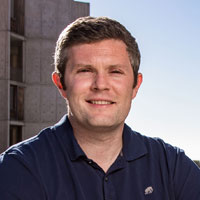
Jesse R. Dixon, M.D., Ph.D., is an Associate Professor at the Gene Expression Laboratory of the Salk Institute for Biological Studies in La Jolla, California. His research explores 3D genome architecture, chromatin organization, and gene regulation mechanisms, with implications for cancer and developmental disorders. He employs cutting-edge genomic technologies like Hi-C and single-cell multi-omics to investigate how chromosomal rearrangements impact gene expression. Dr. Dixon's work focuses on: Topological Domains (TADs) and their role in enhancer-promoter communication Haplotype phasing using chromatin conformation data Structural variant-driven oncogene activation in cancer Single-cell mapping of chromatin and DNA methylation dynamics His publications consistently demonstrate innovations in 3D genome analysis, particularly in neurobiology and oncology contexts, with recurring themes of chromatin topology, epigenetic regulation, and computational genomics. Awards & Honors: Pew Biomedical Scholar (2024) Helmsley Salk Fellow He mentors graduate and postdoctoral researchers in genomics and computational biology, with current projects on chromatin dynamics in cancer and development. The Dixon Lab actively develops novel methodologies for studying genome architecture.
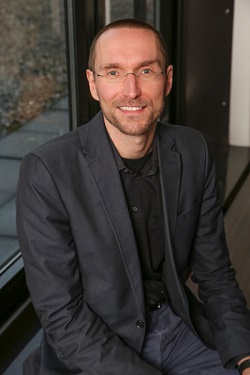
Prof. Dr. Bernd Dollinger is a Professor of Educational Sciences with a focus on Social Pedagogy at the University of Siegen since 2010. His research explores theory and history of social pedagogy , youth criminality , professionalization , and social policy , particularly through the lens of Gangsta Rap and its intersections with popular culture . Current projects include AG5 Somatics of the Popular and involvement in the Center for Interdisciplinary Crime Studies (CiCS) . He has led the project "Staging of Crime: Gangsta-Rap in Interactive Identity Practices" (2021-2024) and contributed to research on resilient gender regimes in music cultures. His recent publications analyze youth crime narratives in Gangsta Rap, covering topics like norm violations, penal welfarism, and the ECHO award discourse. His work bridges social pedagogy with criminology , cultural studies , and narrative research .
Sahand Hormoz is an Assistant Professor at Harvard Medical School and a faculty member in the Department of Data Science at Dana-Farber Cancer Institute. His research focuses on controlling biological systems to understand cell state transitions and develop technologies for single-cell analysis, synthetic biology, and organoid modeling. PhD in Applied Physics from Harvard University (advised by Michael Brenner) Postdoctoral work at Kavli Institute for Theoretical Physics (UCSB) and Elowitz Lab at Caltech Research Interests His lab combines high-throughput single-cell measurements with differential geometry and machine learning to analyze complex biological data. They engineer cells for lineage tracing, develop organoid systems, and aim to automate biological modeling to overcome human cognitive limitations in understanding life systems. Publication Trends Key areas in his recent work include: Computational methods for single-cell and lineage analysis Cancer evolution in myeloproliferative neoplasms Synthetic biology tools for DNA-based cellular memory Integration of machine learning with biological dynamics Applications in stem cell biology and microbial systems Development of microfluidic platforms Labs & Teams Hormoz Lab at Harvard Medical School collaborates with Dana-Farber's Data Science Department to advance quantitative biology approaches.
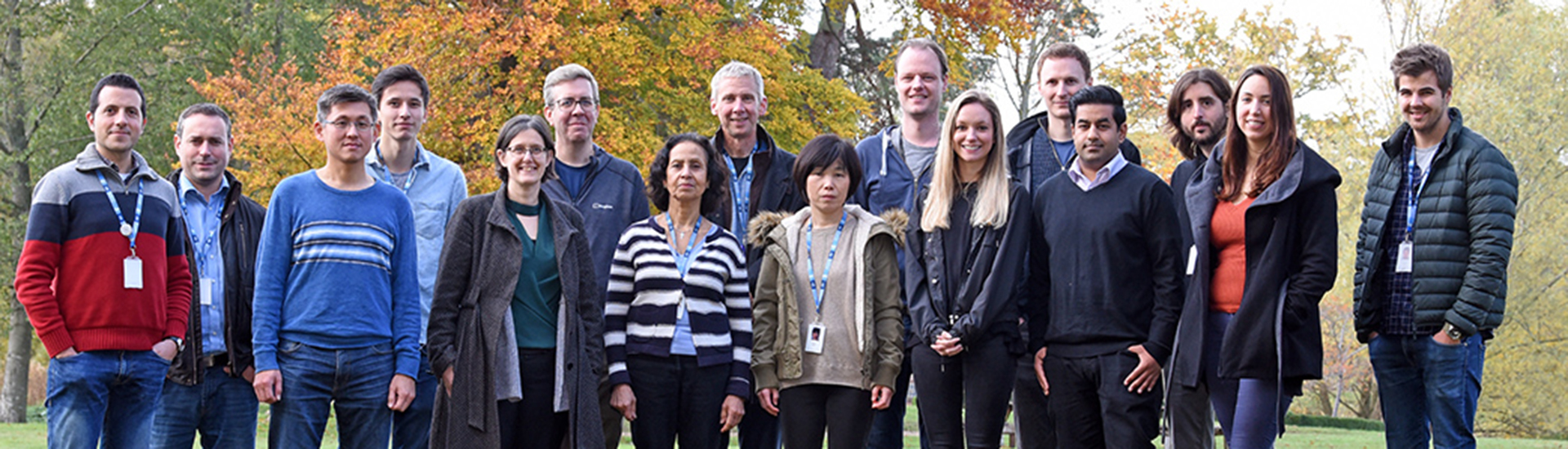
Phil H Jones is a Senior Group Leader at the Wellcome Sanger Institute and Programme Leader at the MRC Cancer Unit, University of Cambridge. He leads the Jones Group which focuses on understanding how cancer-associated DNA changes in normal stem cells alter their behavior, allowing them to spread through normal tissues—the critical first step toward cancer development. Institution: MRC Cancer Unit, University of Cambridge Research Program: Cancer, Ageing and Somatic Mutation Programme Professional Recognition: Fellow of the Royal Society, Fellow of the Academy of Medical Sciences Dr. Jones's research centers on how mutations that alter the competitive fitness of normal stem cells give mutant stem cells the ability to spread through normal tissues. His current work employs deep sequencing, advanced imaging, gene editing, and single-cell analysis to define how oncogenic mutations alter stem cell behavior during aging and the earliest stages of cancer development in skin and esophagus. His lab-based studies complement his clinical work at Addenbrooke's Hospital, where he treats patients with non-melanoma skin cancer. Analysis of his recent publications reveals a consistent focus on somatic mutations in normal epithelial tissues, particularly examining how specific mutations (such as those in p53, Notch1, and PIK3CA) confer competitive advantages to cells, enabling clonal expansion. His work demonstrates that normal tissues become extensively colonized by mutant cells with age, with some mutations increasing cancer risk while others may actually decrease it. A key finding across multiple publications is that mutant clones can outcompete and eliminate early-stage tumors, suggesting novel approaches to cancer prevention. Fellow of the Royal Society Fellow of the Academy of Medical Sciences Multiple high-impact publications in Nature, Science, and Cell journals Dr. Jones collaborates extensively with Cancer Research UK, the Department of Oncology at the University of Cambridge, and the Wellcome Trust-Medical Research Council Cambridge Stem Cell Institute. His research is highly translational, aiming to apply fundamental discoveries about somatic evolution in normal tissues to develop rational interventions that reduce cancer risk in high-risk patients. The Jones Group employs a multidisciplinary approach combining experimental biology with computational modeling to understand the evolutionary dynamics of mutant clones in aging tissues. The Jones Group operates within the Cancer, Ageing and Somatic Mutation Programme at the Wellcome Sanger Institute, utilizing advanced 3D culture methods, gene editing, live imaging, and single-cell analysis capabilities. Their research infrastructure supports studies of both skin epidermis and esophageal epithelium, with particular focus on how lifestyle factors (sun exposure, alcohol consumption) and aging influence the somatic mutation landscape of normal tissues.
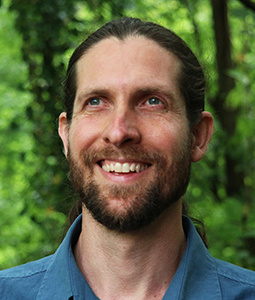
Daniel M. Stuart is an Associate Professor at the University of South Carolina in the Department of Religious Studies . He specializes in South Asian Buddhist traditions, meditation practices, and textual cultures. Ph.D., University of California, Berkeley Research areas: Buddhist meditation, Sanskrit/Pāli texts, Yogācāra philosophy, mindfulness historiography His research explores the interplay between Buddhist practice, textual production, and cosmological theories. He focuses on the Saddharmasmṛtyupasthānasūtra , a transitional text linking early meditation with later Mahāyāna developments. His work also examines the global institutional history of S. N. Goenka’s Vipassanā movement, analyzing tensions between traditional Buddhist frameworks and postcolonial secular reinterpretations. Recent publications highlight Buddhist multispecies epistemologies, karmic interdependence of humans and animals, and the evolution of meditative power concepts. Articles analyze canonical debates on mindfulness of breathing, ethical cultivation in monastic law, and the role of materiality in meditative cognition. Stuart’s methodology combines textual analysis with ethnographic insights, emphasizing historical contexts of meditation lineages. He contributes to critical editions of Buddhist manuscripts and interdisciplinary dialogues between religious studies and cognitive science.
Michael Schatz is the Bloomberg Distinguished Professor of Computational Biology and Oncology at Johns Hopkins University, with joint appointments in the Department of Computer Science at the Whiting School of Engineering and the Department of Biology at the Krieger School of Arts and Sciences. He also serves as a member of the Cancer Prevention and Control Program at Johns Hopkins' Sidney Kimmel Comprehensive Cancer Center and maintains an adjunct position at Cold Spring Harbor Laboratory. Dr. Schatz's research focuses on computational biology and genomics, with particular expertise in DNA sequencing analysis and scalable computing solutions for genomic data. His work spans medical applications for understanding autism spectrum disorders and cancer, as well as agricultural applications for crop improvement. He founded and directs the Schatz Lab, which has developed numerous widely-used computational tools including NGMLR, Sniffles, Scalpel, GECCO, Ginkgo, FALCON, Assemblytics, CloudBurst, and Crossbow. His recent work has made significant contributions to understanding structural variations in cancer genomes, analyzing South Asian genomic diversity, and identifying genes responsible for size variations in nightshade plants like tomatoes and eggplants. Dr. Schatz has pioneered the use of cloud computing in genomics and remains at the forefront of developing algorithms for large-scale biological sequence analysis. Alfred P. Sloan Foundation Fellowship (2015) NSF CAREER Award (2014) Genome Technology's Young Investigator of the Year (2010) Winship Herr Award for Excellence in Teaching (twice) TIME100 recipient (2022) Dr. Schatz actively advises PhD students including Arun Das (recently defended) and Mahler Revsine (NSF GRFP fellow). He serves on editorial boards for Genome Biology, GigaScience, and Cell Systems, and regularly participates in major genomics conferences including the Cold Spring Harbor Laboratory meetings. His lab continues to develop innovative computational approaches at the intersection of biotechnology and algorithmics, with applications spanning human health, agriculture, and evolutionary biology.
Dr. Kila van der Starre is an Assistant Professor at Utrecht University's Faculty of Humanities , Department of Languages, Literature and Communication. She specializes in Modern and Contemporary Dutch Poetry , focusing on its circulation and use beyond traditional books in everyday contexts. Supervises three PhD students: Semmy Claassen (Utrecht University), Jet Oosterheert (University of Groningen), and Steven Van de Putte (Ghent University) Chaired the 2024 P.C. Hooft Prize jury Freelance literary scholar with a focus on poetry education and criticism Her research explores poetry in public spaces (street poetry), social media (Instagram poetry), body art (tattoos), everyday objects , radio , and commemorative practices . She received NWO PhD funding and was awarded the OSL Award for Best PhD Thesis 2021 , Praemium Erasmianum Dissertation Prize 2022 , and shortlisted for the Boekman Dissertation Prize 2022 . She teaches in multiple undergraduate programs ( Nederlandse Taal en Cultuur , Literatuurwetenschap ) and graduate programs ( MA Neerlandistiek , MA Literature Today ), and co-organized interdisciplinary course hubs combining material studies with literary analysis. 2024 : Invited speaker at Oxford University's 'Love and desire in non-book poetry' conference 2023 : Radio 1 interview on poetry and social media 2024 : Co-authored Sprekende Stenen documentary featuring street poetry in Utrecht
Kajsa Paulsson is a Professor of Medical Genetics at Lund University, where she runs the Aneuploidy in Cancer research group at the Division of Clinical Genetics. She serves as a Principal Investigator at the Lund University Cancer Centre (LUCC) and manages the research team focused on aneuploidy in cancer. Dr. Paulsson is an expert in cancer genomics with extensive experience in classic genetic techniques including chromosome analysis and fluorescence in situ hybridization, as well as state-of-the-art methodologies such as SNP array analysis and next generation sequencing (NGS). Her research primarily focuses on understanding how aneuploidy (aberrant chromosome numbers) arises in somatic cells, how it affects tumorigenesis, and its correlation with prognosis and treatment response in cancer. Her specialized studies concentrate on high hyperdiploid and hypodiploid childhood acute lymphoblastic leukemia, with the ultimate goal of improving cancer patient survival through insights into tumorigenesis mechanisms. Analysis of Dr. Paulsson's publication record reveals a strong focus on the genomic architecture of pediatric acute lymphoblastic leukemia, with particular attention to chromosomal abnormalities, mutational signatures, and regulatory mechanisms. Her work spans from fundamental research on aneuploidy development to clinical applications examining treatment outcomes in specific leukemia subtypes. The research demonstrates increasing methodological sophistication with integration of multi-omics approaches including proteogenomics, Hi-C chromatin conformation analysis, and single-cell genomics, reflecting the evolving landscape of cancer genomics research. Dr. Paulsson has received significant recognition for her work, including the prestigious Samfundet Folkhälsan Albert de la Chapelle Prize in Medical Genetics in 2022 and the Senior Investigator Award from Cancerfonden in 2015. Her publications have been widely disseminated, with multiple papers highlighted by news outlets, referenced in clinical guidelines, and extensively read on academic platforms, demonstrating the translational impact of her research. As a supervisor and mentor, Dr. Paulsson leads active research projects including 'Non-coding mutations in pediatric acute lymphoblastic leukemia' (2021-2025), where she serves as the primary supervisor. She has been involved in the Epigenetics Theme at Pufendorf IAS, demonstrating her commitment to collaborative, interdisciplinary research that spans basic science and clinical applications. Her work contributes to UN Sustainable Development Goals related to health and well-being. Dr. Paulsson actively participates in the Lund University Cancer Centre (LUCC) ecosystem, regularly organizing and speaking at seminars and conferences including the LUCC Blood, Lymphoma & Myeloma series and the Swedish Cancer Research Meeting. Her laboratory focuses on the molecular mechanisms of aneuploidy in leukemia, particularly investigating how chromosomal abnormalities develop and impact treatment outcomes in childhood cancers, with direct implications for risk stratification and therapeutic decision-making in pediatric oncology.
Professor Emily Keightley is a leading scholar in Media and Memory Studies at Loughborough University, where she has held the position since 2007. Her academic journey includes a PhD from Loughborough University (2007) and a prestigious £1m Research Leadership Award from The Leverhulme Trust (2017–2022). She serves as editor for the journal Media, Culture & Society and co-founded the Global Media Studies Network. Her work bridges media studies with interdisciplinary themes of memory, migration, and postcolonialism. Key research focuses include the mediation of memory in everyday life, temporal structures of modernity, and the role of media in shaping individual and collective memory. She explores topics like diasporic heritage, gendered mnemonic experiences, and the intersection of migration and identity. Recent projects examine the Partition of British India’s legacy in South Asian diasporas and the impact of AI on power dynamics. Her publications span methodological innovations (e.g., embodied memory practices) and critical analyses of digital media’s role in nostalgia and cultural transmission. She critiques Western media theory through decolonial lenses and emphasizes creative methodologies in memory research. Awards and editorial roles reflect her global influence in shaping media and memory discourse. Emily’s work engages with transnational mnemonic encounters, digital disconnection, and the ethics of commemoration. She explores how media technologies mediate historical events, personal narratives, and cultural identities across diverse geographies and temporalities.
Dr. Katrina Andrews is a Senior Lecturer in Counselling at the School of Law and Society, University of the Sunshine Coast. She holds a PhD in Clinical Psychology (Griffith University), a GradCert in Higher Education and Academic Practice (HELI), and bachelor’s degrees in Psychology and Science from the University of Newcastle. Her academic career spans over a decade in counselling, psychology, and adult education, focusing on online program delivery. Prior to academia, she worked as a clinical psychologist in correctional centers, hospitals, and primary health networks, specializing in trauma, addiction, and integrative/critical realist frameworks. Education: PhD(ClinPsych), Griffith University GradCert(HighEd&AcadPrac), HELI BSc(Hons) & BSc(Psych), University of Newcastle Professional Memberships: Australian Psychological Society (APS) Australian College of Counselling and Psychotherapy Educators (ACCAPE) HERDSA (Higher Education Research and Development Society) Dr. Andrews’ research focuses on counselling outcomes, adult education, technology-enhanced therapy, and sustainable practice for mental health professionals. She explores innovations in online teaching, student engagement, and the lived experiences of minority populations. Her work emphasizes evidence-based practices and quasi-experimental designs in clinical settings. Her publications analyze group therapy efficacy, online counselling modalities, and the mental health impacts of roles like ‘lay rescuer’ among truck drivers. She also investigates trauma recovery through somatic interventions and the role of art and music in well-being. Teaching & Leadership: Coordinates the Bachelor of Counselling program and teaches Counselling Psychology and Adult Education. Supervises HDR and honours students researching topics like technology in therapy and minority mental health. Labs/Teams: Engaged with the Healthy Ageing Research Cluster and collaborates with institutions like the Australian College of Applied Psychology. Her research often involves interdisciplinary teams focusing on applied mental health solutions.
Evan Biederstedt is an Associate in Biomedical Informatics at Harvard Medical School, affiliated with the Gehlenborg Lab. He holds a Master of Science (MSc) and specializes in computational biology with a focus on cancer genomics. His work includes developing the Cell Annotation Platform (CAP) to enhance cellular state interpretation through metadata and molecular signature analysis. Biederstedt’s research spans single-cell analysis, spatial transcriptomics, and genomic tools for structural variant discovery. His contributions include scaling cross-tissue annotation models and haplotype-aware somatic variation analysis. Key areas of focus include bioinformatics tool development, cancer genomics, and genomic data integration. He has collaborated on projects like the Virus Discovery Codeathon and international hackathons for genomic analysis. Biederstedt’s GitHub profile showcases his open-source contributions. His publications highlight advancements in tensor decomposition for patient cohort analysis, spatial transcriptomics, and pangenome strategies. Biederstedt’s work bridges computational methods with biomedical applications, emphasizing scalable solutions for complex genomic data challenges.
Julie McElrath is a Professor at the Fred Hutchinson Cancer Research Center and holds the Joel D. Meyers Endowed Chair . She serves as Director of the Vaccine and Infectious Disease Division and Principal Investigator of the HIV Vaccine Trials Network (HVTN) Laboratory Center . Her work spans international HIV vaccine trials, mucosal immunity studies, and collaborations with institutions like the University of Washington (Department of Medicine, Global Health, and Laboratory Medicine & Pathology) and the Scripps Consortium for HIV/AIDS Vaccine Development (CHAVD) . Education: MD, Medical University of South Carolina (1980) PhD, Medical University of South Carolina (1978) Dr. McElrath’s research focuses on multi-disciplinary approaches to HIV vaccine development, immune correlates of protection, and mucosal transmission mechanisms. Her lab investigates innate immune responses to vaccines and conducts longitudinal studies on long-term non-progressors. Recent work includes collaborations on coronavirus , malaria , and tuberculosis vaccines, leveraging systems biology tools. She leads initiatives like the Seattle HIV Vaccine Trials Unit and the Cape Town HVTN Immunology Laboratory . Her publications highlight immune profiling in HIV vaccine trials, adenovirus vector immunogenicity , and vaccine-induced antibody functions . She advocates for improving assay standardization and cross-pathogen immunity through networks like the Infectious Diseases Clinical Research Consortium (IDCRC) .
Anna Gatseva is a Research Fellow in Molecular Biosciences at the University of Glasgow. Her research investigates viral evolution and genome analysis through advanced bioinformatics approaches. She holds a publication record demonstrating expertise in paleovirology and disease mechanisms. Research focuses on viral fossil records in vertebrate genomes, emergence patterns of lentiviruses, and molecular foundations of diseases. Her work utilizes cutting-edge genomic techniques to explore host-pathogen evolutionary relationships across species. Publications show consistent focus on viral genetics and molecular pathology, with recent work examining Huntington's disease mechanisms and vertebrate virus evolution. Collaborative research dominates her publication history, indicating strong interdisciplinary engagement.
Amin Nassar, M.D., is a Clinical Fellow in Medical Oncology and Hematology at Yale School of Medicine. He holds a medical degree from the American University of Beirut and completed residency at Brigham and Women’s Hospital. His postdoctoral training under Professors David Kwiatkowski, Toni Choueiri, and Matthew Freedman at Harvard Medical School focused on genomic biomarkers across ancestral populations with cancer. Currently pursuing a PhD in tumor immunology at the Flavell lab, he is dedicated to becoming a physician-scientist specializing in thoracic oncology. His research explores genetic and epigenetic factors influencing cancer outcomes, including tumor mutational burden (TMB) recalibration across ethnicities, KRAS mutations, and immune checkpoint inhibitor efficacy in diverse populations. He has authored over 50 peer-reviewed articles in high-impact journals like Nature Communications , Cancer Cell , and New England Journal of Medicine . Nassar serves on editorial boards for Frontiers in Oncology , Molecular Biology Reports , and Translational Oncology , and has received awards including the ASH Achievement Award (2022) and Alpha Omega Alpha (2016). His work bridges clinical practice and research, emphasizing health equity and precision medicine.
Hasan Alanya is a Researcher in the Department of Neurosurgery at Yale School of Medicine. His work focuses on genomic characterization of brain tumors, including meningiomas, pituitary adenomas, and other neurological disorders. He specializes in molecular pathology, somatic mutations, and the genetic basis of tumor behavior. His research bridges clinical neurosurgery with advanced genomic techniques to understand tumor progression and racial/ethnic variations in disease outcomes. Key research interests include neuro-oncology, somatic mutation analysis, and translational applications of genomic data. His studies investigate how genetic mutations drive tumor development and response to therapy, particularly in pituitary and spinal tumors. Recent work emphasizes the role of thrombocytes in immune responses and the utility of single-cell data for refining bulk genomic analyses. Publications highlight interdisciplinary approaches, combining genomics with clinical observations to address gaps in understanding tumor heterogeneity and treatment strategies. Collaborations span neurosurgery, oncology, and computational biology to advance personalized medicine in neuro-oncology.