Prof. Mariusz Jerzy Stolarski is a full-time faculty member at the University of Warmia and Mazury in Olsztyn, affiliated with the Department of Genetics, Plant Breeding and Biomaterial Engineering within the Faculty of Agriculture and Forestry. His research focuses on bioeconomy, renewable energy systems, and sustainable biomass production. Scientific discipline: Agriculture and horticulture ORCID: 0000-0003-0712-9678 Email: mariusz.stolarski@uwm.edu.pl Phone: +48 89 523 48 38 His research explores biomass valorization, biofuel processing, and environmental efficiency assessments across agricultural and forestry systems. Recent work examines supercritical CO2 extraction effects on biomass stability, intercropping systems in organic farming, and economic viability of multi-purpose energy crops like industrial hemp and Virginia fanpetals. Scientific indicators highlight significant contributions: 79/96 publications (WoS/Scopus), 878/1141 citations (WoS/Scopus), H-index 21/24, and Google Scholar H-index 29 with 3089 citations. He has promoted 4 doctors and currently supervises 2 doctoral students.
Wilfried Andlauer is a Professor at the Institute of Life Sciences within HES-SO Valais-Wallis School of Engineering. His research focuses on bioactive compounds , non-thermal food processing , and bioavailability studies , particularly in agricultural by-products like grape cane, walnut press cake, and Spirulina algae. He has developed advanced methods for solid-state fermentation , cold plasma decontamination , and bioactives fingerprinting . Key projects include optimizing microwave-assisted extraction for stilbenoids, analyzing iron absorption from insect flour , and developing microfluidic antioxidant assays . His work integrates nutraceutical research with practical applications in food safety and sustainable processing . Collaborations span Switzerland and Asia , with expertise in analytical chemistry and bioprocessing .
Professor Simon Pollard OBE DIC PhD DSc FREng FHEA is a Professor of Environmental Risk Management at Cranfield University's School of Water, Energy and Environment. With over 20 years of service at Cranfield, he has held numerous leadership positions including Pro-Vice Chancellor for the School of Water, Energy and Environment (2014-2021) and Pro-Vice-Chancellor International (2018-2024). He has served on the University's Executive for a decade and chaired key committees including Cranfield's Board for Energy and Environment, Health and Safety Committee, and International Committee. As an environmental engineer, Professor Pollard earned his PhD from Imperial College and his DSc from Cranfield University. His academic journey has positioned him as a leading authority in environmental risk governance, with significant contributions to government guidelines on environmental risk and leadership of risk centers for EPSRC and NERC. Professor Pollard's research focuses on environmental risk governance, preventative risk management, and regulatory design, with recent work exploring risk governance in the international water sector. His scholarship directly addresses the green economy, seeking to reconcile society's concerns about pollution with organizational responsibilities for safe management. His work spans carbon and climate risk, environmental policy, corporate sustainability, waste management, and resource efficiency. His extensive publication record demonstrates expertise across environmental engineering, risk assessment methodologies, water utility management, and sustainable waste practices, consistently bridging theoretical frameworks with practical applications. Professor Pollard has been honored with several prestigious awards including: Order of the British Empire (OBE) in 2020 Fellowship of the Royal Academy of Engineering (FREng) Fellowship of the Higher Education Academy (FHEA) Professor Pollard has served in numerous advisory capacities beyond academia, including membership on the Government's Interdepartmental Liaison Group on Risk Assessment, the joint engineering institutions' Hazards Forum, and BBSRC's Beringer Panel. As editor of Science of the Total Environment for 16 years, he has significantly influenced environmental research publication standards. His international engagement includes visiting professorships at the University of South Australia, Jiangsu University, and most recently, the University of Salerno (2024). Professor Pollard has led significant initiatives in responsible internationalization, resetting Cranfield's approach to academic partnerships amid changing geopolitical climates and renewing the university's approach to knowledge diplomacy. His work has directly influenced UUKi's commitment to international postgraduate education.
Prof. Dr. Göksel N. Demirer is a Professor at the Department of Environmental Engineering, Middle East Technical University (METU), Ankara, Turkey. His academic career spans over two decades, holding roles from Lecturer to Chairperson of the Department (2006-2012). He specializes in Anaerobic Biotechnology, Wastewater Engineering, and Sustainable Production systems. Education: Ph.D. in Environmental Engineering, Vanderbilt University (1996) M.Sc. and B.Sc. in Environmental Engineering, METU (1991, 1989) Research Interests: Focuses on anaerobic digestion of organic wastes, bioenergy generation, cleaner production, nutrient recovery (struvite precipitation), and industrial symbiosis. His work bridges environmental biotechnology with sustainable industrial practices, emphasizing waste-to-resource转化 and pollution prevention. Awards & Recognition: Recipient of METU's Academic Performance Award (2001-2012) Mustafa Parlar Educator of the Year Award (2000-2001, 2005-2006) Australian Endeavour Research Fellowship (2007) Professional Roles: President of Water Environment Association of Turkey (2001-2003) Editorial Board Member of Journal of Cleaner Production and International Journal of Environmental Sciences Lead over 25 research projects as PI, including EU-funded collaborations on nutrient recovery and bioenergy Advising & Capacity Building: Supervised 26 Ph.D./M.Sc. theses, developed METU's Cleaner Production course, and conducted nationwide training programs for municipalities and industries. Labs & Collaborations: Active in anaerobic digestion and bioenergy research through METU's Environmental Engineering labs. Collaborates with institutions like RMIT University (Australia), Trier University (Germany), and Villanova University (USA).
Barış Çallı is a Professor at the Department of Environmental Technology, Faculty of Engineering, Marmara University (Turkey). He earned his Ph.D. in Environmental Technology from Boğaziçi University (2003) and received the Marie Curie Intra European Fellowship (2006) for his work on fermentative hydrogen production in Belgium. Since 2008, he has served as a full-time professor, leading 20 research projects focused on environmental bioprocesses, anaerobic digestion, biogas technology, resource recovery, and solid waste management. Ph.D. in Environmental Technology, Boğaziçi University (2003) Marie Curie Intra European Fellowship (2006) His research integrates bioprocess engineering with sustainable waste management, emphasizing biogas production, membrane technologies, and circular economy principles. Recent publications (2025-2021) address energy-neutral wastewater treatment, heavy metal recovery from sludge, and VFA-driven fermentation. Key subfields include anaerobic digestion , bioleaching , membrane reactor design , and agricultural waste valorization . Marie Curie Intra European Fellowship (2006) With 116 WoS publications and an H-index of 33 (Scholar), he has supervised 17 thesis advisories and contributed to 20 projects. His work aligns with UN Sustainable Development Goals (6, 7, 11, 12).
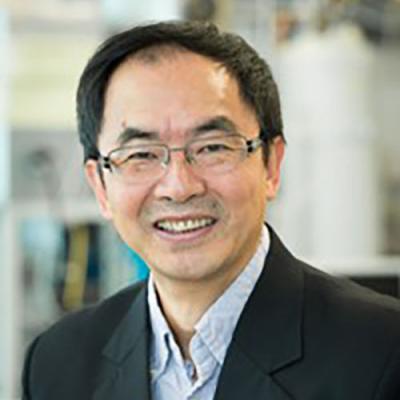
Xiaotao Bi is a Professor in the Department of Chemical and Biological Engineering at the Faculty of Applied Science, University of British Columbia. He is a Fellow of The Canadian Academy of Engineering, recognized for his significant contributions to the field of chemical engineering, particularly in biomass energy systems and environmental technologies. Dr. Bi's research focuses on developing environmental systems analysis and life cycle assessment tools to model and evaluate biomass energy systems. His work encompasses Canadian wood pellets, animal wastes, agricultural residues, and integrated impacts assessment of various biomass conversion processes including combustion, gasification, torrefaction, and pelletization. Current research interests include electrostatic charging of dielectric particles in gas-solids fluidized beds, dual fluidized bed for biomass steam gasification, and novel i-CFB reactors for catalytic NOx reduction. His extensive publication record demonstrates expertise across multiple domains of sustainable energy and environmental engineering. Recent work shows a strong emphasis on biomass conversion technologies, particularly microwave-assisted processes, fluidized bed systems, and waste valorization. There's a clear trend toward developing more efficient and environmentally friendly processes for converting various biomass feedstocks into energy and valuable products, with particular attention to addressing technical challenges like tar formation in gasification and electrostatic issues in particle handling. Dr. Bi has been recognized with the prestigious honor of being named a Fellow of The Canadian Academy of Engineering, which acknowledges his significant contributions to engineering research and practice in Canada. As a research leader, Dr. Bi has supervised numerous graduate students and secured funding for his research team to investigate innovative approaches to biomass conversion and environmental engineering challenges. His work bridges fundamental research with practical applications for sustainable energy systems. Dr. Bi leads a research team focused on developing advanced technologies for biomass conversion and environmental protection. His laboratory facilities likely include specialized equipment for fluidized bed operations, biomass processing, and analytical tools for characterizing biofuels and byproducts.
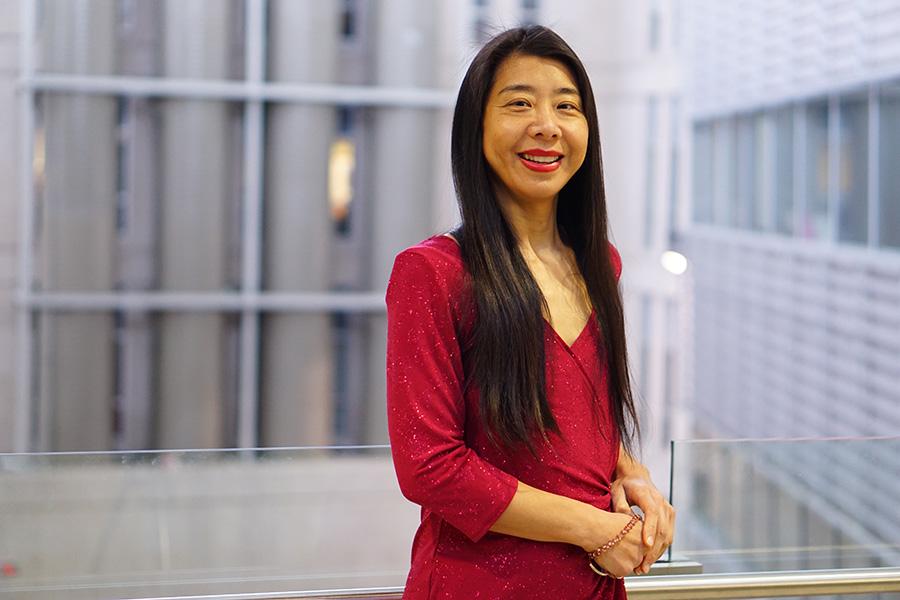
Naoko Ellis is a Professor in the Department of Chemical and Biological Engineering at the University of British Columbia, Faculty of Applied Science. Her work bridges advanced multiphase reaction engineering with pressing sustainability challenges, focusing on fluidized-bed technologies for CO₂ capture, biomass valorisation, and clean energy production. Research Interests Multiphase reaction engineering & fluidized beds CO₂ capture via calcium looping and chemical looping combustion Biomass gasification, pyrolysis, and tar mitigation Bio-oil upgrading and biochar engineering for environmental applications Engineering education innovation for sustainability literacy Recent publications (2020-2024) reveal an integrated approach combining rigorous reactor modeling, novel catalyst development, and educational scholarship. Energy and environmental engineering dominate the portfolio, with emerging use of machine-learning tools for process optimisation and extensive exploration of biochar and bauxite-residue valorisation. Scientific Recognition Guest editor for memorial special issues honouring Prof. John R. Grace (Canadian Journal of Chemical Engineering, Powder Technology, 2023-2024) Invited prefatory contributions on chemical engineering education (Canadian Journal of Chemical Engineering, 2024) Advising & Grant Landscape No specific student names or funding details were provided in the supplied text; however, the breadth of collaborative publications and education-focused papers indicates active supervision of graduate researchers and leadership in curriculum-development grants. Labs & Teams Operates within the multiphase reaction engineering laboratory environment at UBC Chemical and Biological Engineering, leveraging pilot-scale fluidized-bed facilities and advanced analytical instrumentation for thermochemical conversion studies.
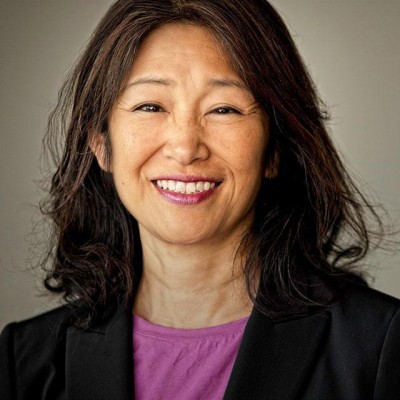
Qiuyan Yuan is Professor in the Department of Civil Engineering at the University of Manitoba's Price Faculty of Engineering. She holds a PhD in Civil Engineering from University of Manitoba and BSc in Food Science Engineering from Beijing Agricultural University. Her research develops sustainable technologies for wastewater treatment and solid waste management, focusing on nutrient removal/recovery, landfill leachate treatment, anaerobic digestion, and value-added product development with emphasis on reducing environmental burden and carbon footprint. Her recent publications demonstrate strong focus on resource recovery from waste streams, novel treatment processes for landfill leachate, and sustainable material development. She received the University of Manitoba Merit Award (2018) and Terry G. Falconer Emerging Researcher Award (2019). She leads research on anaerobic digestion optimization, landfill biocover systems, and circular economy approaches to waste management.
Hanna Breunig is a Research Scientist at Lawrence Berkeley National Laboratory and Deputy of the Sustainable Energy & Environmental Systems Department. She holds a secondary appointment in the Earth Systems and Society Domain within the Climate and Ecosystem Science Division. Her work focuses on validating emerging energy technologies through process design, techno-economic modeling, and market analysis. Education: PhD in Civil and Environmental Engineering from UC Berkeley (2015), MSc (2011), and BSc from Cornell University (2010). Her research spans hydrogen storage , CO2 capture/utilization , brine management , and technoeconomic modeling for systems in data centers, hospitals, mines, aviation, and ports. She co-leads the DOE HyMARC consortium and the systems analysis team for the ARCHES California Hydrogen Hub. Recent publications highlight advancements in metal-organic frameworks (MOFs) for hydrogen storage, solar hydrogen production , and high-temperature thermal energy storage . She has received accolades like the 2023 Energy & Environmental Science Lectureship and 2014 Schmidt MacArthur Fellowship. Scientific Awards: 2023 Energy & Environmental Science Lectureship 2021 Early Scientific Career Award 2019 CEC Bioenergy Project Leadership 2017 LDRD Early Career Award 2014 Schmidt MacArthur Fellowship Hanna mentors graduate and undergraduate students and contributes to tools like the BioSiting v2 software for U.S. bioeconomy resource analysis.
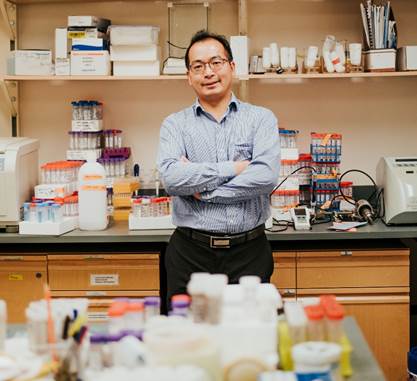
Dr. Jianbing Li is a Professor and Professional Engineer (P.Eng.) in the Environmental Engineering Program at the University of Northern British Columbia (UNBC), holding prestigious fellowships from CSCE, CSSE, EIC, and Engineers Canada. His research program addresses critical environmental challenges with significant real-world impact, particularly in northern and remote communities of British Columbia. Education: PhD in Environmental Systems Engineering, University of Regina Research Focus: Dr. Li's work centers on environmental pollution control , petroleum waste management , soil and groundwater remediation , environmental modeling , risk assessment , and oil spill response . His innovative approaches integrate machine learning, advanced materials, and sustainable engineering principles to develop practical solutions for complex environmental problems, with particular emphasis on resource recovery from waste streams. Publication Trends: Analysis of his 15 most recent publications (2023-2025) reveals a strategic focus on oil spill response technologies, wastewater treatment innovations, and waste valorization. Key advancements include nano/micro bubble flotation systems, chitosan-based adsorbents, and machine learning models for pyrolysis optimization, demonstrating his leadership in translating laboratory research to field applications. Scientific Recognition: 2024 Fellow of Engineers Canada and Engineering Institute of Canada 2023 CSCE Dr. Albert E. Berry Medal (Canada's top environmental engineering award) Multiple UNBC Research Excellence Awards (2010, 2014, 2019, 2023) 2013 Northern BC Business and Technology Award with Husky Energy Best paper awards from International Academy of Science and Environmental Geotechnology Society Research Leadership: Dr. Li has secured over $800,000 in 2023 and $1.9 million in 2020 for oil spill response research through NSERC, DFO, and NRCan. His current portfolio includes groundwater protection for Indigenous communities, next-generation decanting technologies, and water security for remote regions. He actively mentors PhD, MSc, and MASc students while serving on NSERC evaluation committees and co-directing the UNBC/UBC environmental engineering program (2013-2017). Collaborative Networks: Dr. Li leads multi-institutional partnerships with UBC, government agencies, industry (including Husky Energy), and Indigenous communities like Lheidli T'enneh First Nation. His work through the Multi-Partner Research Initiative addresses practical challenges in rural British Columbia while advancing fundamental knowledge in environmental systems engineering.
Dr. Hans Oechsner is a leading academic in agricultural engineering and bioenergy, holding multiple leadership positions including Head of the State Institute for Agricultural Engineering and Bioenergy (Landesanstalt für Agrartechnik und Bioenergie), Managing Director of the Baden-Württemberg Working Group on Agricultural Engineering and Rural Construction (ALB), and Project Leader for the International Graduate College focused on maize-based agricultural systems adaptation to limited phosphate reserves. He teaches advanced courses on biogas technology and bioenergy infrastructure at the Department of Agricultural Engineering in the Tropics and Subtropics. His research centers on optimizing bioenergy systems and sustainable resource management, with key interests in: Advanced biogas production techniques (e.g., mechanical pretreatment, two-stage digestion) Phosphorus recovery from organic waste streams Valorization of agricultural residues and livestock manure Development of circular bioeconomy models for crop systems Dr. Oechsner's recent publications (2022-2025) demonstrate a strong focus on enhancing biogas plant efficiency, nutrient recycling from digestate, and sustainable biomass utilization. His work consistently integrates full-scale applications with fundamental research, particularly in pretreatment optimization and waste stream valorization. He leads research infrastructure at the State Institute for Agricultural Engineering and Bioenergy, coordinating teams working on large-scale biogas optimization and agricultural waste management. His projects frequently involve international collaborations and industry partnerships.
Mariam Abdulkareem is a Postdoctoral Researcher at the School of Energy Systems, Lappeenranta University of Technology (LUT), specializing in Sustainability Science, with additional affiliation at the Natural Resources Institute Finland (LUKE). Her work bridges environmental technology and practical sustainability solutions for industrial and municipal systems. Her academic foundation includes: Doctoral degree in Sustainability Science from Lappeenranta University of Technology (2018-2021) Master's degree in Sustainability Science from Lappeenranta University of Technology (2015-2017) Dr. Abdulkareem's research centers on environmental technology and circular economy implementation , employing advanced life cycle assessment (LCA) methodologies to evaluate waste management systems, sustainable materials, and renewable energy integration. She focuses on quantifying environmental trade-offs in emerging technologies like printed electronics and industrial by-product valorization, with particular emphasis on end-of-life management and resource efficiency optimization. Her cross-disciplinary approach integrates ecological modeling with engineering solutions to address real-world sustainability challenges. Analysis of her 15 most recent publications (2021-2025) reveals a concentrated research trajectory in waste valorization and sustainable materials , with dominant themes including LCA of printed electronics waste streams, geopolymer concrete development from industrial side streams, and comparative analysis of recycling versus incineration pathways. Her work consistently applies multi-objective optimization frameworks to balance environmental performance, economic feasibility, and technical functionality across diverse regional contexts.
Dr Laura Lander is a Lecturer in Engineering at King's College London's Department of Engineering, part of the Faculty of Natural, Mathematical & Engineering Sciences. Her research focuses on sustainable energy storage systems, particularly advancing high-performance batteries through materials science and techno-economic analysis. She holds a PhD from the Collège de France and has held postdoctoral roles at the University of Tokyo and Imperial College London. Her work emphasizes battery recycling, lifecycle assessment, and circular economy frameworks. Notable contributions include developing methodologies for recycling lithium-ion batteries and optimizing battery pack designs for cost-effective disassembly. She leads the UKRI Future Leaders Fellowship-funded project 'Aluminium-Ion Batteries for a Resilient Energy Future' (2024–2028). Key collaborations span institutions globally, addressing challenges in energy storage sustainability. Her research aligns with UN Sustainable Development Goals related to affordable and clean energy (SDG7) and responsible consumption (SDG12). Office hours: Wednesdays 10am–12pm at Strand Campus. Education: PhD (Collège de France), Postdoc (University of Tokyo), Faraday Institution Researcher (Imperial College London) Awards: JSPS Postdoctoral Fellowship, UKRI Future Leaders Fellowship Research interests include battery materials discovery, life cycle assessment, and techno-economic analysis of renewable energy storage systems. She is affiliated with the London Centre for Nanotechnology and the Centre for Sustainable Business.
Maciej Thomas is an Assistant Professor at the Department of Environmental Technologies, Faculty of Environmental Engineering and Energy, Cracow University of Technology. He holds a PhD in environmental engineering and has been actively researching since 2016. His work focuses on wastewater treatment technologies, heavy metal remediation, and environmental sustainability. Key areas include advanced oxidation processes (e.g., Fenton reagent), adsorption using metal-organic frameworks, and resource recovery from industrial byproducts. Dr. Thomas has published 74 articles, achieving a Scopus h-index of 15 and a WoS h-index of 13. His research also addresses challenges in groundwater quality assessment, particulate matter prediction via machine learning, and environmental risk management. Education: PhD in Environmental Engineering (2016). His research integrates chemical engineering principles with ecological sustainability, emphasizing practical solutions for industrial wastewater and soil contamination. He has contributed to projects involving cerium-based oxidation, poultry manure utilization in soil reclamation, and PFAS contamination in marine ecosystems. His recent work highlights optimization studies for hybrid treatment processes (e.g., ferrate/trithiocarbonate systems) and recovery of rare earth elements from mine waters. Collaborations span environmental chemistry, toxicology, and geosciences. Notably, he explores the intersection of machine learning with environmental monitoring, enhancing predictive capabilities for air and water quality. Dr. Thomas leads interdisciplinary projects addressing both technical and societal dimensions of environmental challenges, with a focus on industrial waste valorization and sustainable resource management.
Professor James Busfield FREng, MA, PhD, CEng, FIMMM, FHEA is Professor of Materials and Deputy Head of the School of Engineering and Materials Science and Director of Strategy at Queen Mary University of London. He leads the Centre for Intelligent Transport and the Soft Matter Group, which is currently the largest such research group in the UK with a team of 14 postdoctoral researchers and PhD students. Research Interests Prof Busfield's research focuses on examining the physical behaviour by experiment and modelling techniques of polymers and soft matter such as elastomers and rubber materials. His work covers properties including abrasion, friction, fracture, creep, fatigue, viscoelastic behaviour, modulus enhancement, self healing, recycling, ageing and composite filler reinforcement. He is also developing smart soft materials that can sense their environment and soft actuating materials that can change shape in response to physical stimuli. His research has significant applications in the automotive industry (particularly tires), sustainable materials development, and advanced polymer composites for various engineering applications. The interdisciplinary nature of his work bridges materials science, mechanical engineering, and polymer physics. Publication Trends Prof Busfield's recent publications show a clear trend toward sustainable materials development, with increasing focus on recycling rubber and polymer waste, developing self-healing materials, and creating bio-based alternatives. His work increasingly incorporates advanced modeling techniques to understand material behavior at multiple scales, from molecular interactions to macroscopic performance. There's also a growing emphasis on applications in electric vehicles, wind energy, and sustainable fashion technologies. Scientific Awards and Recognition Fellow of the Royal Academy of Engineering (2020) National Teaching Fellow (2009) T B Marsden Professional Medal (2024) George Stafford Whitby Award (2021) Colwyn Medal (2009) Sparks-Thomas Award (2010) Fellow of the Higher Education Academy Fellow of the Institute of Materials, Minerals and Mining Chartered Engineer Research Leadership and Grants Prof Busfield has secured substantial research funding from diverse sources including EPSRC, EU Horizon 2020, Royal Academy of Engineering, and major industrial partners such as Aston Martin F1, Continental Tires, Bridgestone, Schlumberger, and Jaguar Land Rover. His current portfolio includes multiple PhD studentships and collaborative projects focused on sustainable elastomer products, tire technology, and smart materials development. He serves as Associate Editor for "Plastics Rubber Composites: Macromolecular Engineering" and "Rubber Chemistry and Technology" and has organized numerous conferences for the rubber community. Research Group Prof Busfield leads the Soft Matter Group at Queen Mary University of London, which includes research assistants like Dr. Thomas Griggs and numerous PhD students working on projects related to rubber reinforcement, tire technology, self-healing materials, and smart polymer composites. His group has strong industry connections and collaborates with leading automotive and materials companies worldwide.