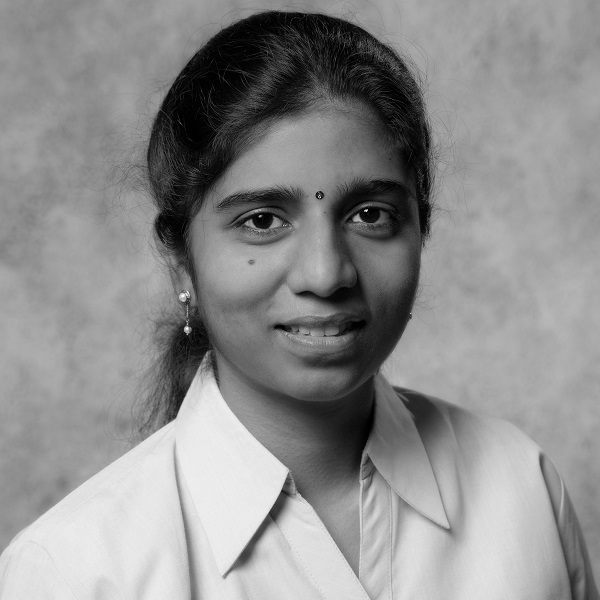
Gabriela John Swamy is a Lecturer in the Department of Nutrition, Food Science and Packaging at San José State University. She teaches courses such as Physical Science of Food , Food Processing and Packaging , and Food Science Laboratory , with expertise in food engineering and preservation technologies. PhD : Agricultural Biosystems and Mechanical Engineering, South Dakota State University MSc : Food Quality and Innovation, University of Leeds, UK B.Tech : Food Technology, Kongu Engineering College, India Her research focuses on food processing technologies , including nonthermal methods (ozone, ultrasound, microwave), extrusion cooking , and nutraceutical lipid properties . She explores how processing parameters affect food microstructure, rheology, and functional properties, particularly in cheese, grains, and plant-based matrices. Gabriela’s 15 most recent publications highlight advancements in food microstructure analysis , nonthermal preservation , and bioactive compound recovery . Key themes include microwave/radiofrequency processing , extrusion optimization , and nonthermal beverage stabilization .
Darren R. Korber is a Professor and Department Head of Food and Bioproduct Sciences at the University of Saskatchewan. His research focuses on microbial biofilms, antimicrobial resistance in agricultural systems, and food bioprocessing. He holds a Ph.D. and B.Sc. in Microbiology and Agriculture from the University of Saskatchewan. Education: Ph.D. (Microbiology), University of Saskatchewan B.Sc. (Agriculture), University of Saskatchewan Research Interests: Microbial biofilms in aquatic and engineered systems Antimicrobial resistance in animal agriculture Fermentation-based food processing and bioprocessing Microbial response to environmental stressors Recent Research Trends: His work spans environmental biofilm dynamics, antibiotic resistance mitigation in hog barns, and valorization of legume proteins via fermentation. Key themes include microbial community resilience and biotechnological applications. Teaching: Teaches courses in food microbiology, quality assurance, and food security at both undergraduate and graduate levels. Labs/Teams: Active in microbial systems research within the Food and Bioproduct Sciences Department, focusing on applied microbiology and food innovation.
Professor Takuji Tanaka is a faculty member in the Department of Food and Bioproduct Sciences at the University of Saskatchewan. His research focuses on enzyme structure-function relationships, fermentation processes for legume products, and valorization of agricultural byproducts. He holds a Ph.D. from Kyoto University, Japan, and has contributed extensively to food biotechnology and protein modification. Education: Ph.D., Kyoto University, Japan M.Sc., Kyoto University, Japan B.Sc., Kyoto University, Japan Research Interests: Professor Tanaka explores enzyme applications in food processing, including improving legume protein functionality through enzymatic hydrolysis and fermentation. His work also addresses the valorization of canola meal and agricultural byproducts using innovative bioprocessing techniques. Recent studies emphasize enhancing protein digestibility and flavor profiles of plant-based ingredients. Recent Publications Trends: His 2023-2024 publications highlight advancements in solid-state fermentation of legumes, enzymatic modification of pea and canola proteins, and structural studies of bacterial enzymes. Key themes include functional food development, aroma enhancement, and sustainable use of agricultural residues. Teaching: Teaches undergraduate courses in Food Enzymology, Food Biotechnology, and Dairy Science, as well as graduate courses on industrial enzyme applications and advanced food processing.
Prof. J. Philipp Benz is an Associate Professor at the Technical University of Munich (TUM) in the TUM School of Life Sciences, leading the Chair of Fungal Biotechnology in Wood Science. He holds roles such as Chair of the Examination Board for Life Sciences programs and spokesperson for the VAAM specialist group on fungal biology. His academic journey includes a diploma from TU Braunschweig, a PhD from LMU Munich, and postdoctoral research at UC Berkeley. Prof. Benz’s research focuses on fungal biomass degradation, biorefineries, and the circular bioeconomy, employing advanced biochemical and genetic engineering methods. He has received awards like the Feodor Lynen Fellowship and the Supervisory Award of the Weihenstephan Graduate Center. Key research areas include understanding fungal recognition of plant cell walls and optimizing fungal strains for biotechnological applications. His team’s work bridges fundamental science and industrial applications, addressing challenges in renewable resource utilization and forest multifunctionality. Prof. Benz oversees collaborations, including the TUM-NWAFU university partnership in China, and contributes to academic governance through roles in TUM’s School Council and Faculty of Forestry. Publications highlight advancements in fungal enzyme systems, microbial interactions, and biocontrol strategies. His work extends to material science via mycelium composites and sustainable process engineering. Grants and industry partnerships support his projects, emphasizing applied research for environmental and industrial solutions.
проф. др Зорица Кнежевић-Југовић is a Full Professor at the Department of Biochemical Engineering and Biotechnology, Technical-Metallurgical Faculty (TMF), University of Belgrade. Her research focuses on enzyme engineering, biocatalysis, and biosensor development, with particular emphasis on applications in food technology and environmental biotechnology. She has extensive experience in enzyme immobilization techniques, bioreactor design, and functional food development. Over 60 students have been mentored under her supervision, including PhD, Master's, and Bachelor's candidates. Her work includes studies on protein hydrolysis, phenolic extraction, and enzyme-assisted processes for waste valorization. Key contributions include advancements in alginate-based encapsulation systems, ultrasound-assisted biocatalysis, and biofuel cell technologies. She has published over 40 peer-reviewed articles in journals like Carbohydrate Polymers, Industrial Crops and Products, and Journal of Energy Chemistry. Her research bridges biochemical engineering with industrial applications, addressing challenges in sustainable technology and functional biomaterials.
Hang Xiao is an Associate Professor in the College of Natural Sciences at the University of Massachusetts Amherst, with a research focus at the intersection of nutritional science, food chemistry, and gut microbiota research. His work primarily investigates the health implications of food bioactives, particularly polysaccharides and other compounds derived from mushrooms, plants, and marine sources, with emphasis on their effects on gut health and inflammatory conditions. Dr. Xiao's research interests center on the food-gut axis, with particular expertise in how dietary components interact with the gut microbiome to influence health outcomes. His laboratory employs in vitro gastrointestinal models, animal studies, and clinical approaches to investigate how food bioactives modulate gut barrier function, immune responses, and microbial ecology. Much of his recent work focuses on mushroom polysaccharides, citrus flavonoids, and other plant-derived compounds and their effects on inflammatory bowel disease, metabolic health, and gut microbiota composition. His research bridges fundamental food chemistry with translational nutritional science, aiming to develop evidence-based dietary strategies for improving gut health. Analysis of Dr. Xiao's recent publications reveals a strong thematic focus on gut microbiota interactions with dietary components, particularly examining how food bioactives modulate microbial metabolism and host responses in inflammatory conditions. His work spans from fundamental characterization of food components to applied studies on their health effects, with increasing attention to sustainable food systems and waste valorization. The research employs diverse methodologies including in vitro digestion models, animal studies of colitis, metabolomics, and microbiome analysis. Dr. Xiao maintains an active research program with numerous collaborations both within UMass Amherst and with international institutions. His laboratory appears to involve multiple graduate students and postdoctoral researchers, as evidenced by the pattern of co-authorship across numerous publications. While specific grant information is not provided in the available text, the volume and diversity of his research outputs suggest substantial external funding support for his work in nutritional science and food chemistry. Based on publication patterns, Dr. Xiao likely leads a research group focused on food-gut interactions, with laboratory facilities supporting in vitro digestion modeling, microbiome analysis, and food component characterization. His work appears to bridge basic food science with clinical applications, suggesting collaborations with medical researchers and potential translational pathways for dietary interventions targeting gut health.
Patrik Lennartsson is a Senior Lecturer at the University of Borås, Faculty of Textiles, Engineering and Business, Department of Resource Recycling and Community Development. His research focuses on biotechnology within resource recovery, with particular emphasis on fungal fermentation for ethanol production, protein extraction, and waste valorization. He has been employed at the university since 2012, after completing his PhD in Bioscience at Chalmers University of Technology in collaboration with University of Borås, and undergraduate studies at the same institution. Current affiliation: University of Borås (since 2012) PhD: Chalmers University of Technology (collaborative) Undergraduate: University of Borås His research spans multiple biorefinery approaches using filamentous fungi (e.g., Neurospora intermedia , Aspergillus oryzae ) to convert agro-industrial wastes like bread, grape pomace, and wheat straw into ethanol, protein, pigments, and biocomposites. Key methods include submerged and solid-state fermentation, lignocellulose pretreatment, and bioreactor design. He supervises doctoral students Aishwarya Thyagarajan and Sharmeen Mustafa. Recent publications highlight his work on fungal biotechnology for waste valorization, including grape marc conversion to food ingredients, oyster mushroom residue applications, and biocomposite development from pectin-cellulose matrices. His team explores the integration of first- and second-generation bioethanol processes, fungal enzyme production, and the role of second messengers like cAMP in fungal morphology.
Assoc. Prof. Dr. Gökhan FİLİK is a prominent academic specializing in animal nutrition and biotechnology at Kirsehir Ahi Evran University's Faculty of Agriculture, Department of Agricultural Biotechnology. With extensive experience in both research and administration, he currently serves as the Head of the Animal Biotechnology Department and as a representative in the Faculty Management Board. PhD in Animal Science from Çukurova University (2009-2013) PhD in Agricultural Economics from Çukurova University (2014-2022) Master's in Animal Science (2005-2009) Bachelor's in Animal Production (2001-2005) Bachelor's in Business Administration (2002-2007) His research focuses on innovative feed technologies, particularly utilizing agricultural byproducts for animal nutrition. He has pioneered work on silage additives, hot pepper waste utilization in poultry diets, and functional feed development. His interdisciplinary approach bridges animal science with biotechnology and sustainable agriculture practices. Notable contributions include developing nanoemulsion silage additives and exploring industrial symbiosis for agricultural waste management. His publication portfolio shows strong trends in poultry nutrition (35%), silage technology (25%), and biotechnological feed applications (20%). Recent work increasingly focuses on sustainable agriculture solutions and waste valorization. Key thematic areas include gut health optimization, alternative feedstuffs, and precision nutrition technologies. Yayın Teşvik Ödülü from TÜBİTAK (2020) Alltech Young Scientist Competition (1st in Turkey, 2nd in EU) (2010) Dr. FİLİK has successfully supervised 13 graduate students across diverse topics including chia plant silage, nanoemulsions, and industrial symbiosis applications. He has secured 57 research projects totaling over 2.5 million TL, with recent focus on geothermal-heated greenhouse waste utilization and nanoemulsion silage additives. His leadership extends to coordinating international exchange programs (Erasmus, Mevlana) for nearly a decade and serving as UNİKOP General Secretary for the KOP Universities Union. He directs the FILIK NANOBİOAGROTECH R&D company established under TÜBİTAK's 1812 Entrepreneurship Support Program. His laboratory work focuses on feed biotechnology, particularly microbial fermentation processes and nanoemulsion development for agricultural applications. Current research explores symbiotic relationships in industrial ecosystems for sustainable agriculture and novel feed preservation technologies.
Professor Eoin Casey is a distinguished academic at University College Dublin's College of Engineering and Architecture, where he serves in the School of Chemical and Bioprocess Engineering. His career has been dedicated to advancing sustainable wastewater treatment technologies, with a particular focus on energy efficiency and environmental impact reduction. Professor Casey leads groundbreaking research that bridges academic inquiry with practical industrial applications through collaborations with spin-out companies. Professor Casey's primary research interests center around Membrane Aerated Biofilm Reactor (MABR) technology, which represents a paradigm shift in wastewater treatment. His work explores biofilm dynamics, energy optimization in treatment processes, membrane technology applications, and sustainable engineering solutions for water management. His research group investigates how bacterial biofilms function within MABR systems, examining both the fundamental science and practical implementation challenges. This research spans environmental engineering, chemical engineering, and sustainable technology development, with significant implications for global water and energy conservation efforts. The articles published by Professor Casey and his research group demonstrate a consistent focus on optimizing wastewater treatment processes while reducing energy consumption. Recent publications reveal an expanding scope that now includes data-driven modeling, continuous biomanufacturing, and integration of water treatment facilities into broader energy systems. His work shows a clear trajectory from fundamental biofilm research toward practical implementation of energy-efficient systems that address climate change challenges. The research increasingly incorporates advanced modeling techniques, process optimization, and consideration of the energy-water nexus. Professor Casey's research has generated significant commercial and environmental impact through the spin-out company OxyMem, founded in 2013 with support from NovaUCD. While specific personal awards aren't detailed in the provided text, his work has contributed to OxyMem receiving notable recognition including the 2014 Irish Times Innovation Award, the US Imagine H2O 2015 Infrastructure Challenge award, and a Knowledge Transfer Ireland 2015 Impact Award. OxyMem was also named in the prestigious Global Cleantech 100 in 2016 and 2017. Professor Casey's research group has secured substantial funding from Science Foundation Ireland and Enterprise Ireland to develop and scale MABR technology. His work has progressed from laboratory experiments to full-scale implementation at wastewater treatment plants, demonstrating energy savings of up to 75% compared to conventional treatment methods. The commercial deployment of this technology in countries including the United States, Singapore, Brazil, Spain, and Japan represents significant international impact. His research group continues to collaborate with OxyMem on further development and optimization of the technology. The research led by Professor Casey operates through specialized laboratories focused on membrane technology, biofilm reactors, and sustainable water treatment. His team has successfully demonstrated the scalability of MABR technology from laboratory settings to full-scale wastewater treatment plants, most notably in a demonstration plant near Birmingham, UK. The research infrastructure supports both fundamental investigations of biofilm mechanics and practical engineering development of commercial systems.
Fernanda Da Cunha is a Research Assistant Professor in Agricultural & Biological Engineering and Operations Manager of the Laboratory of Renewable Resources Engineering (LORRE) at Purdue University. Her work focuses on bioenergy systems, bioprocess optimization, and sustainable enzyme production using agricultural residues. She leads research in fungal enzyme production, biomass liquefaction, and biorefinery integration. Her research integrates bioprocessing technologies with renewable resources, emphasizing enzyme production from cellulose-rich materials like sugarcane bagasse. She has pioneered non-conventional fermentation methods using agro-industrial wastes as feedstocks, advancing sustainable biomanufacturing practices. Key contributions include developing models for high-solids biomass liquefaction and optimizing ultrafiltration systems for protein recovery. Da Cunha collaborates across disciplines to enhance biorefinery efficiency and reduce environmental impacts through techno-economic and lifecycle assessments. Her laboratory (LORRE) is a hub for interdisciplinary bioenergy research, bridging fundamental science and industrial applications. Current projects explore live tissue sentinels for pathogen detection and dynamic modeling of bioprocesses under uncertainty.
Anton V. Dolzhenko is an Associate Professor at the School of Pharmacy, Monash University Malaysia, and an Adjunct Associate Professor at Curtin University. He holds a Pharmacy degree (2000) and a PhD in Medicinal Chemistry (2004) from Perm State Pharmaceutical Academy (Russia). His research focuses on synthetic organic chemistry, heterocyclic compounds, and green chemistry methods. He leads the NMR Campus Infrastructure Platform and has supervised numerous PhD candidates, earning awards like the Most Inspiring Supervisor Award (2018, 2020) and the Pro Vice-Chancellor’s Award (2021). Education: Bachelor of Pharmacy with Distinction (2000), Perm State Pharmaceutical Academy PhD in Medicinal Chemistry (2004), Perm State Pharmaceutical Academy Research interests include microwave-assisted synthesis, multi-component reactions, and drug design targeting cancer and crop protection. He has contributed to over 144 publications and led projects on topics like triazine-based anticancer agents and disintegrant mechanisms in pharmaceuticals. His work aligns with UN SDGs, emphasizing sustainable development and health innovation. Selected Projects: QSAR-guided synthesis of 1,3,5-triazine anticancer agents (2020–2024) Mechanistic study of disintegrants in tablets (2022–2025) Recipient of the File Senior Fellow of Higher Education Academy (2022) and Auditor of the ACS Malaysia Chapter (2023).
Associate Professor Lee Yuan Kun is affiliated with the Department of Microbiology and Immunology at the National University of Singapore (NUS), within the Yong Loo Lin School of Medicine. His academic roles include research and teaching, focusing on microbial systems and their applications in environmental and health contexts. He holds a BSc (Honors), MSc, and PhD in relevant fields. His research interests are threefold: enhancing photosynthetic carbon dioxide removal via genetic engineering and algal physiology; exploring microbe-host interactions, particularly probiotics' effects on gastrointestinal health and diet-related diseases; and advancing microbial fermentation techniques for pharmaceuticals, food, and waste treatment. Current research projects include studies on cell adhesion, immunomodulation pathways, carbohydrate signaling, probiotics as oral vaccine vectors, and photosynthetic microalgae for carbon capture. His work bridges fundamental microbiology with applied biotechnology, addressing challenges in sustainability and human health. Publications from 2008 to 2016 highlight themes of microalgal lipid metabolism, probiotic mechanisms, and microbial systems engineering. Notable trends include optimizing microalgae for biofuel production and investigating gut microbiota diversity in developing regions. No scientific awards are explicitly listed in the provided text. No formal advisees are mentioned, and grant details are not specified. His research is conducted within the Department of Microbiology and Immunology labs, focusing on interdisciplinary approaches in microbiology and immunology.
Ildar Nisamedtinov is a Senior Lecturer (0.5 FTE) at Tallinn University of Technology’s School of Science, Department of Chemistry and Biotechnology since 2019. His career includes roles as Associate Professor (2007–2012), Senior Researcher (2017–2018), and Research Fellow (2013–2016). He also serves as Vice President of Corporate R&D at Lallemand, Inc. since 2016. Education : PhD in Natural Sciences (2006, TUT), MSc (2001), and BSc (1999) in Biotechnology and Food Technology from Tallinn University of Technology. Research Interests : Microbial metabolism, yeast stress responses, yeast as cell factories, and biotechnological processes in food systems. He focuses on optimizing fermentation processes, studying nutrient utilization in yeast (e.g., nitrogen sources, peptides), and improving B-vitamin bioavailability in food products. Grants & Projects : Led 15+ projects including Competence Center of Food and Fermentation Technologies (€7M+), Solid State Fermentations (€381K), and B-Complex Vitamin Metabolism studies (€57.6K). Collaborates internationally on yeast genetics and industrial applications. Scientific Contributions : Authored 35+ peer-reviewed articles, focusing on yeast metabolism, fermentation optimization, and analytical methods for vitamins. Developed methodologies for peptide analysis in yeast fermentation and B-vitamin quantification.
Thelmo Lu Chau is an Assistant Professor of Chemical Engineering at the University of Santiago de Compostela (Spain), affiliated with the Department of Chemical Engineering under the School of Engineering. He holds a PhD in Chemical Engineering from USC and a bachelor's degree from Universidad Nacional de Trujillo (Peru). His research focuses on biofuel production (ethanol, butanol), biopolymers (PHA), enzymatic processes, and valorization of agro-industrial residues. He has authored 55 SCI-indexed papers (H-index 19, 1342 citations), 2 Spanish patents, and supervised 5 doctoral and master's theses. He collaborates with institutions like Abengoa Bioenergy and is a member of the Spanish Lignin Degradation Network (LIGNOCEL). Education: Bachelor's in Chemical Engineering, Universidad Nacional de Trujillo (Peru) PhD in Chemical Engineering, Universidade de Santiago de Compostela (Spain) Research Interests: Biofuel and biopolymer production from lignocellulosic biomass Enzyme production via microbial systems Extraction and enzymatic transformation of bioactive compounds Biorefinery integration and waste valorization Recent Trends in Publications: Recent work emphasizes multi-criteria valorization of agro-industrial wastes, enzymatic UPO production from bioethanol byproducts, and electrochemical lignin oxidation for bioadhesives. His research bridges biotechnology and environmental engineering, focusing on sustainable biomass conversion and industrial bioprocess optimization. Grants & Collaborations: Participated in 10 funded projects including EU grants, Spanish Ministry initiatives, and industry partnerships with Abengoa, IFP-Energies, and Veolia. Active in evaluating Chilean and Colombian research proposals. Labs & Teams: Leads projects in USC's Chemical Engineering lab, collaborating with networks like LIGNOCEL to advance lignin degradation and biomass utilization technologies.
Professor Παπαδομιχελάκης Γεώργιος holds the academic rank of Full Professor at the Department of Animal Science (Agricultural University of Athens), specializing in Animal Nutrition with emphasis on Monogastric Herbivores. He leads the Laboratory of Nutritional Physiology & Feeding, focusing on feedstuff evaluation, phytogenic additives, and sustainable feed formulation. His educational background includes a PhD (2001) and postdoctoral research at the University of Bristol (2004). Research interests span nutritive evaluation of feedstuffs, bio-functional ingredient integration, and environmental impact mitigation through feed optimization. Recent work emphasizes real-time fecal nitrogen monitoring (via NIRS), phytogenic alternatives to pharmaceuticals, and nanomaterial applications in animal diets. Over 150 peer-reviewed articles reflect his contributions to poultry, swine, and rabbit nutrition science. No formal advisees are listed, though collaboration with industry partners is evident in publications addressing waste valorization and sustainable farming practices. His lab actively engages in extension services to promote innovative feed solutions. Infrastructure includes advanced analytical facilities for feed digestibility studies and nutritional profiling.