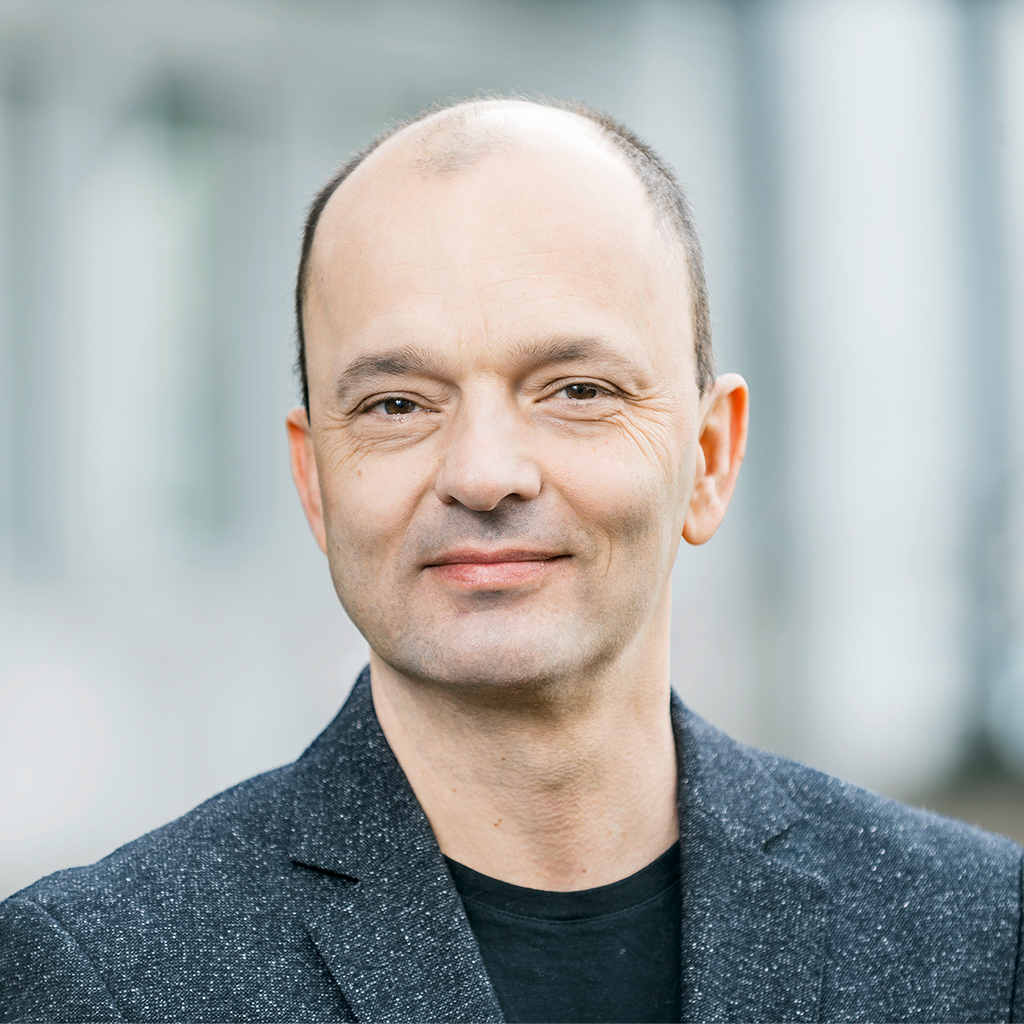
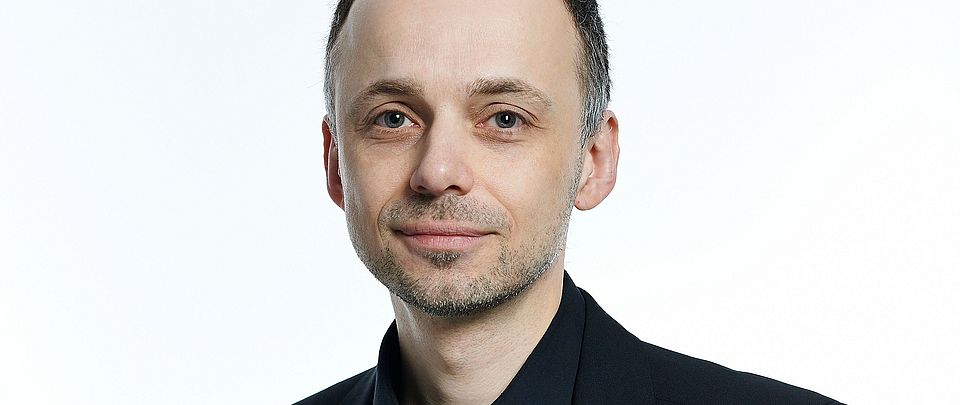
PD Dr. Kaspar Riesen is the Head of the Pattern Recognition Group at the Institute of Computer Science, University of Bern. His research focuses on graph-based methods for pattern recognition, with applications in document analysis, environmental modeling, and healthcare. Key interests include graph matching, neural networks, and spatio-temporal modeling. His work spans structural pattern recognition, graph embeddings, and keyword spotting in historical documents. Recent projects involve river network analysis using graph regression and hypoglycemia prediction via LSTM-GNN hybrid models. Publications emphasize graph theory advancements, such as normalized graph compression and geometric similarity learning. Collaborations include developing specialized algorithms for automated error detection and improving decision-making in simulated sports. Labs/Teams: Pattern Recognition Group (PRG) at the University of Bern.
Dr. Yuanyuan Yuan is a Researcher at the Department of Computer Science, ETH Zurich, Switzerland, based at CNB H 104.1, Universitätstrasse 6, 8092 Zurich. Her work bridges computer security and machine learning with a focus on practical vulnerabilities in deployed AI systems. Her research centers on exposing and mitigating security flaws in deep learning deployments, particularly targeting trusted execution environments (TEEs) and on-device inference systems. Key contributions include pioneering side-channel attacks against TEE-shielded neural networks (CipherSteal, HyperTheft), bit-flip attack surfaces in DNN executables (BitShield), and novel testing methodologies for neural network robustness. She investigates cache/timing side channels, ciphertext analysis, privacy leakage in partitioned ML, and concept-based explainability. Analysis of her 2023-2025 publications reveals a cohesive focus on offensive security research for AI infrastructures, with consistent contributions to top venues in security and machine learning. Her work demonstrates expertise in low-level system interactions (memory, cryptography) applied to ML security, spanning attack vectors, defensive mechanisms, and validation frameworks. The research trajectory shows increasing sophistication in exploiting hardware-software interfaces while developing practical hardening techniques for real-world deployments.
Marc Robinson-Rechavi is a Professor at the University of Lausanne, Faculty of Biology and Medicine, Department of Ecology and Evolution. He leads the Evolutionary Bioinformatics Group , focusing on genome evolution and developmental biology (Evo-Devo) through the creation of databases like Bgee and MoultDB . Core projects: Bgee (gene expression database), MoultDB (arthropod molting genetics), SelectomeDB (positive selection) Collaborations: Paleontology, genome biology, and experimental Evo-Devo groups Research interests include linking developmental processes to genome evolution , with emphasis on gene duplication, regulatory sequence evolution, and molecular convergence. His work has significant applications in cancer research , agriculture , and biomedical studies . The group's publications (2020-2025) demonstrate expertise in single-cell transcriptomics , ontologies , and computational methods . Projects often involve ray-finned fishes , amphioxus , and arthropod diversity , with tools like OMAmer and Bio-SODA expanding bioinformatics capabilities. Current students and former group members have contributed to diverse projects including: Arthropod molting mechanisms Venom gland evolution Sex-biased gene expression Positive selection in human evolution
Patrick Jermann is a Lecturer at EPFL’s School of Computer and Communication Sciences, affiliated with the Centre for Digital Education (CEDE) , SIN-ENS , and SSC-ENS departments. As Executive Director of CEDE since 2013, he leads Swiss MOOC Service (SMS), NOTO, and Campus Analytics initiatives. His research focuses on Computer Supported Collaborative Learning (CSCL) , Learning Analytics , and MOOCs , analyzing student interactions, gaze patterns, and attrition behaviors through clickstream data. Recent work explores pedagogical design, statistical methods, and software development for educational tools. His publications (2001–2015) reveal trends in eye-tracking for MOOCs, interaction analysis, and collaborative learning technologies. Notable contributions include frameworks for gaze-based feedback and metrics for perceived video difficulty. He has mentored PhD students such as Sharma Kshitij and Nüssli Marc-Antoine , and secured grants via the DRIL fund . As a CDS Member, he contributes to institutional digital education strategies.
Anthony Masure is an Associate Professor at Geneva University of Art and Design (HEAD – Genève) , part of the University of Applied Sciences and Arts Western Switzerland (HES-SO) . His work bridges Artificial Intelligence , Blockchain , and Digital Humanities through critical design lenses. He explores tensions between creative automation and human agency , questioning how machine learning and smart technologies reshape authorship, value systems, and ecological practices in design. Key research areas: AI ethics , NFT implications , post-digital design , and technological accountability Projects like "Design et machine learning : l'automatisation au pouvoir?" (2021-2023) and "Post digital Graphic Design" (2019-2022) demonstrate his focus on critical technological engagements Advocates for open access and non-traditional research formats through initiatives like HEAD-Publishing His recent articles analyze generative AI in design, NFT governance , and circular design frameworks. Collaborations with researchers like Guillaume Helleu and Yves Citton emphasize socio-technical implications. Current projects include "L'organisation autonome automatisée (OAA)" (2024), exploring future enterprise models under climate constraints.
Alexandra Diehl is a Senior Researcher at the Visualization and MultiMedia Lab (VMML) at ETH Zurich. Her research focuses on Visual Analytics, Data Science, and Environmental Sciences, with an emphasis on visualization guidelines, citizen data integration, and weather event analysis. She leads the DSI Fellowship project on visual tools for severe weather communication (2020–2022) and co-leads an SNF SPIRIT grant on uncertainty visualization in weather forecasts. Her work bridges academic and industry applications, including projects like WeaVA and Hornero. Key research interests include visualization best practices (via VisGuides.org), societal impacts of visualization, and geospatial analysis. She actively contributes to IEEE VIS workshops, such as VisGuides 2022, and publishes extensively in journals like EuroVis. Her interdisciplinary projects address challenges in climate science, public safety, and multimedia analysis. Notable achievements include the DSI Fellowship and collaborative grants with Argentina. Her work emphasizes empirical methodologies, including grounded theory approaches in visualization research.
Michael Baudis is a Professor of Bioinformatics and Tumorgenomics at the Institute of Molecular Biology , Faculty of Science, University of Zurich. He leads the development of the Progenetix database, a global reference for cancer genomic copy number alterations, and contributes to international standards through his membership in the Global Alliance for Genomics and Health (GA4GH) . Research focuses on genomic data representation , cancer subtype classification , and data sharing protocols Key projects include Beacon networks , Phenopackets , and GA4GH standards Email: michael.baudis@uzh.ch His recent work explores short tandem repeat variations , attention-based deep learning for CNAs , and heterogeneity in cancer classifications . Methodological contributions include segment_liftover , CNARA , and pgxRpi for genomic data calibration and analysis.
Ben Jann is a Professor and current Department Head at the University of Bern in the Department of Social Sciences . His methodological expertise spans statistical software development, decomposition analysis, and data visualization. Role: Department Head Institution: University of Bern Department: Department of Social Sciences Research Interests : Jann specializes in creating Stata modules for advanced statistical analysis, including geospatial mapping (geoplot), robust regression (robreg10), and inequality decomposition (oaxaca-blinder methods). His substantive work examines social inequality through economic and sociological lenses, analyzing how living costs and taxation systems impact income distribution in Switzerland. He also investigates educational transitions and gender disparities in STEM occupational choices through longitudinal studies like TREE2. Recent Publications Trends : Jann’s 15 most recent articles (2025-2023) demonstrate his focus on statistical software development for social science applications. Key contributions include methods for marginal odds ratios (2023), two-level model variance decomposition (2025), and list experiment analysis (2025). His empirical work connects statistical methodology to pressing social issues like gender wage gaps (2021) and teacher content knowledge in developing countries (2021).
Prof. Nico Ebert is a Professor of Business Information Systems and Head of the Information Systems Human Factors & Risks Group at the ZHAW School of Management and Law. His work focuses on human factors in privacy/security, usable security, and organizational cybersecurity practices. He leads research projects such as the Cyber Resilience Network (Canton of Zurich) and studies TikTok privacy behavior among Swiss youth. Ebert has authored over 50 peer-reviewed articles, with recent emphasis on cybersecurity decision-making, privacy-aware design, and organizational data collaboration frameworks. Education background not explicitly stated in provided texts, but his academic career spans over 20 years with a focus on business information systems and cybersecurity. Active in professional networks including ACM's Swiss CHI Chapter and the Digital Society Initiative (DSI). Research integrates behavioral science principles with technical cybersecurity solutions. Key research areas include: human-centered cybersecurity strategies, privacy-by-design frameworks, and evaluating security technologies like trusted execution environments. His work bridges organizational practices with user behavior studies, often employing mixed-methods approaches. Grants and collaborations include leadership in multiple EU-funded projects and industry partnerships. Advises on cybersecurity policies for regulated industries and publishes regularly in top venues like Communications of the ACM and Computers & Security.
Dr. Sina Rafati Niya serves as a Senior Researcher at the Blockchain and Distributed Ledger Technologies (BDLT) group, University of Zurich (UZH), where he specializes in blockchain data governance and analytics for PoS-based systems including Cardano, Tezos, Casper, and Polkadot since 2022. His research spans decentralized applications in DeFi, supply chain tracking, identity management, and IoT domains, building on continuous work since 2017. He completed his Ph.D. at UZH in 2021 with the dissertation "Efficient Designs for Practical Blockchain-IoT Integration," establishing foundational work for his current research trajectory. Rafati Niya's research centers on Blockchain Data Engineering and Analysis, with specific expertise in transaction untangling (Cardano shared send transactions), address clustering heuristics, privacy-preserving micro-payment systems for resource-constrained IoT devices, and GDPR-compliant blockchain adaptations. His methodology emphasizes practical implementation challenges in scalability and real-world deployment across financial, supply chain, and industrial IoT contexts. Publication analysis reveals concentrated advancements in Cardano analytics (60% of recent work), including novel transaction analysis frameworks and network structure investigations in Polkadot, alongside persistent exploration of blockchain-IoT integration patterns. This body of work demonstrates evolving sophistication from protocol design (2017-2020) toward advanced analytics and privacy solutions (2021-2025). No scientific awards were documented in the source material. While specific advisees and grants remain unlisted, his extensive co-authorship pattern (27+ publications 2017-2025) indicates active mentorship within the BDLT group and collaboration with researchers including C. J. Tessone, Burkhard Stiller, and M. Chegenizadeh. Current projects focus on offline micro-payment verification and Cardano transaction analytics. As a core contributor to UZH's BDLT research group, he drives initiatives in blockchain analytics infrastructure and practical protocol development, maintaining strong industry-academia connections through publications in IEEE ICBC, Springer, and Elsevier venues.
Markus Enzweiler serves as Professor of Computer Science and Autonomous Systems at Esslingen University of Applied Sciences within the Department of Computer Science and Engineering. He concurrently holds the leadership position of Director at the Institute for Intelligent Systems, where he oversees research initiatives focused on intelligent systems development for real-world autonomous applications. His research program centers on computer vision for autonomous systems , with specialized expertise in visual-inertial SLAM, collective perception, and neural rendering techniques. Key investigation areas include environmental robustness across agricultural and urban settings, real-time processing constraints for embedded systems, sensor fusion methodologies (particularly camera-radar integration), and the application of generative models for perception enhancement. His work consistently addresses practical implementation challenges such as computational efficiency and sensor calibration in unstructured environments. Analysis of his 2023-2025 publications reveals three dominant research trajectories: (1) Advancement of lightweight perception systems through stixel-based representations and neural rendering; (2) Development of infrastructure-supported collective perception frameworks with datasets like CoopScenes and OPNV; and (3) Rigorous benchmarking of SLAM components in domain-specific contexts including agricultural robotics and multi-season navigation. His recent systematic review on LLM-based vulnerability detection also demonstrates expanding interest in software security for autonomous systems. As Director of the Institute for Intelligent Systems, Prof. Enzweiler leads a research ecosystem focused on translating theoretical advances into practical autonomous vehicle technologies. His team develops specialized datasets (Rover, OPNV) and software stacks for smart city environments, emphasizing the integration of novel perception approaches with vehicle dynamics modeling and real-time operational constraints.
Prof. Dr. Stefan Brönnimann serves as a Professor and Unit Leader of Climatology at the Institute of Geography, University of Bern. His extensive research portfolio spans historical climatology, climate dynamics, and atmospheric circulation reconstruction, with particular focus on the past 400 years. He plays a leadership role in major international climate initiatives including the IPCC assessment reports and various climate reanalysis projects. Brönnimann's research centers on reconstructing historical weather and climate patterns through the innovative combination of early instrumental data, proxy records, and climate models. His work examines large-scale climate variability, interannual-to-decadal atmospheric circulation patterns, volcanic eruption effects on climate, and climate-society interactions. His methodologies often involve transforming historical documents into usable climate datasets and applying advanced machine learning techniques to weather reconstruction challenges. Recent publications reveal a strong emphasis on European climate patterns, hydroclimate extremes, and the development of novel datasets and tools for climate research across high-impact journals in climate science, paleoclimatology, and climate informatics. Notable scientific achievements include: Lead author for Chapter 2 of the IPCC Working Group I 5th Assessment Report President of the Commission 'Atmospheric Chemistry and Physics' (ACP) of sc.nat Editorial leadership for multiple prestigious journals including Meteorologische Zeitschrift, Climate of the Past, and Geographica Bernensia Leadership roles at the Oeschger Centre for Climate Change Research Active participation in international initiatives like the Twentieth Century Reanalysis Project and Atmospheric Circulation Reconstructions over the Earth (ACRE) Brönnimann has secured substantial funding through numerous national and international projects including SNF, NCCR Climate, EU FP-7, HORIZON2020, COST, and ERAnet.RUS. He has organized multiple international workshops on weather and climate extremes, atmospheric circulation variability, and historical climate events like the Tambora eruption. His work connects closely with the Oeschger Centre for Climate Change Research at the University of Bern, where he leads Work Package 2 and serves on the Steering Group, demonstrating his significant institutional leadership within Bern's climate research community.
Dr. Christian Panse is the Unit Head of Computational Mass Spectrometry at the Functional Genomics Center Zurich , ETH Zurich. His work spans bioinformatics, data processing, and visualization in proteomics, with a focus on method development and software engineering. Research Interests: Christian Panse specializes in proteomics and computational mass spectrometry , developing tools like prolfqua and rawrr for quantitative proteomics analysis. His research addresses standardization in proteomics core facilities and cross-resource data comparison. Recent work includes harmonizing quality controls across proteomics laboratories Creating user-friendly R packages for differential expression analysis Advancing fragmentation techniques for post-translational modification studies Publications Trends: His articles emphasize proteomics data reliability , software tools , and method validation in mass spectrometry. Collaborations with institutions like the Core for Life alliance highlight his role in community-driven standardization efforts.
Dr. Beat Suter is a Senior Lecturer for Game Design at the Zurich University of the Arts (ZHdK) , where he has co-developed educational programs and founded the GameLab ZHdK. He holds a Dr. Phil. from the University of Zurich and has previously taught at the Merz Academy Stuttgart (2006–2014). His interdisciplinary work bridges game design, digital humanities, and electronic literature, with a focus on narrative mechanics, game preservation, and Swiss game culture. Education: Dr. Phil. (2000) – University of Zurich Lic. Phil. I (1987) – University of Zurich PALC Certificate – University of California San Diego Studies in German Literature, Linguistics, and Art History – University of Zurich and University of California His research explores intersections between game studies , digital archiving , and interactive narration , with recent publications analyzing Swiss youth culture in games, historical game packaging, and archiving digital interactive media. He co-authored the Narrative Mechanics (2021) and Games and Rules (2018) anthologies, emphasizing rule-based design and storytelling frameworks. From 2023, his 15 most recent articles (2023–2025) trace trends in game history , Swiss game design , and digital preservation , often published via the Confoederatio Ludens blog. These works highlight his focus on documenting marginalized game practices and cultural contexts. As founder of the art group AND-OR and co-director of the GameZ & RuleZ conference, Suter actively shapes interdisciplinary dialogues. He reviews for national research funds in Austria, Germany, and Switzerland and has curated exhibitions like RuleZ for the Magic Circle and Forgotten Game Mechanics , blending academic rigor with creative practice.
Christian Kleiber is a Professor of Econometrics and Statistics at the University of Basel (Faculty of Business and Economics) since 2006. Trained as a statistician in Germany and the UK, he obtained his PhD from the Technical University of Dortmund. Research Interests: Heavy-tailed phenomena, income distribution, inequality measurement, statistical distributions, stochastic orders, data science foundations, count data regression, time series analysis, econometric computing, and the history of statistics. Methodological Focus: Specializes in statistical modeling of economic data, reproducibility in research, and computational methods. Recent Publications span count data regression, structural change detection, reproducible research frameworks, and statistical distribution theory. Key contributions include software packages like countreg , strucchange , and plm for R programming.