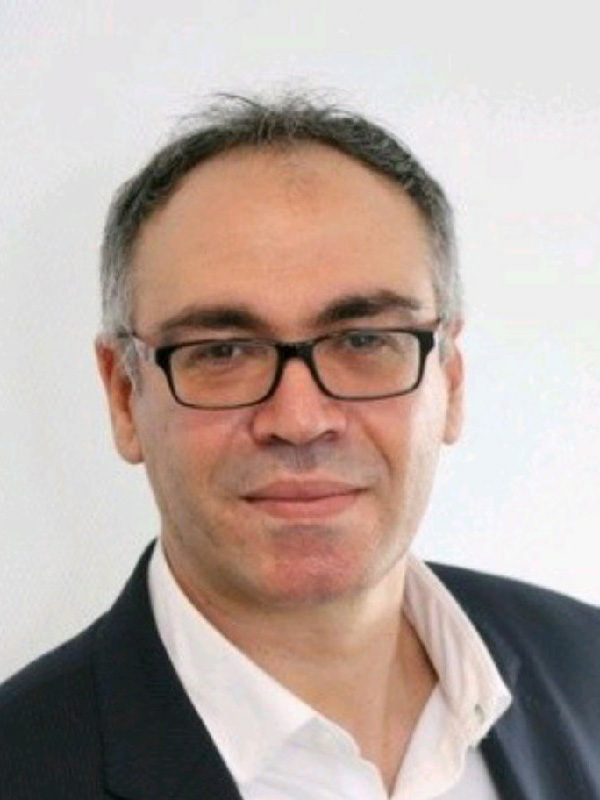
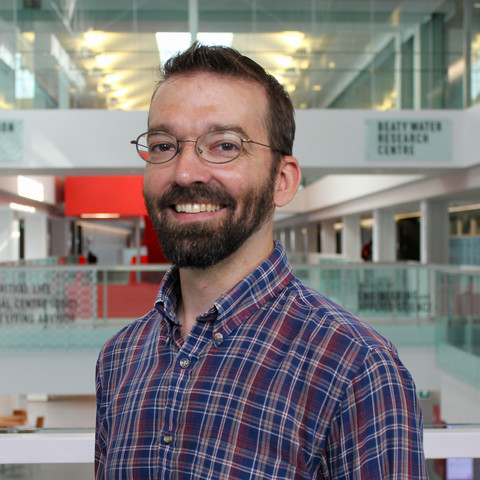
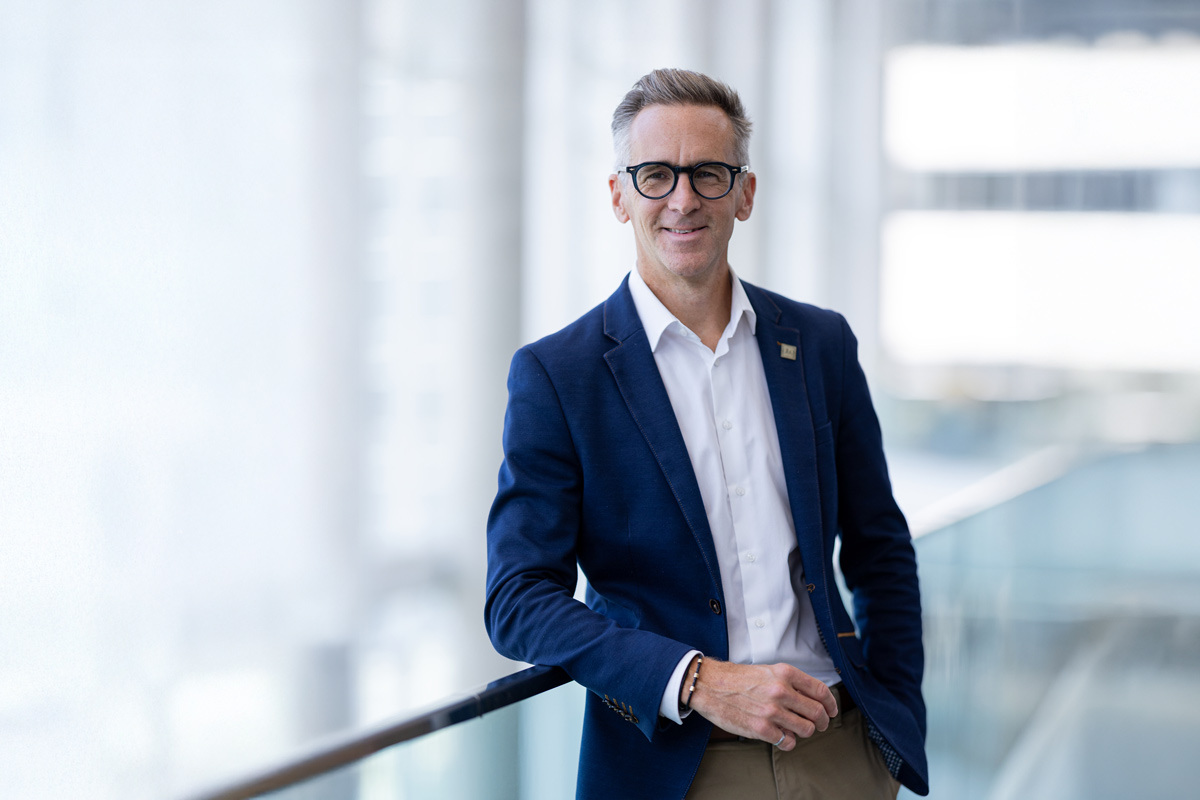
Geoffrey G. Pinchbeck is a faculty member at Carleton University’s School of Linguistics and Language Studies. He holds PhDs in Education (Languages and Literacy) and Medical Biochemistry from the University of Calgary, along with an M.Ed in TESL. His career spans teaching, research, and service in applied linguistics and language pedagogy. His research focuses on corpus linguistics , second language acquisition , and academic English . He explores the operationalization of academic English , computer-assisted language learning (CALL) , and content and language integrated learning (CLIL) . His work has implications for vocabulary diagnostic tools and text readability metrics. His refereed publications and conference presentations examine lexical and derivational morphology , word list validation , and mathematics education pedagogy . Recent collaborations highlight interdisciplinary approaches to language assessment and curricular design . Excellence in Graduate Teaching Award, Western University (2017) EuroSLA Doctoral Student Travel Grant (2017) AAAL ‘Educational Testing Services Graduate Student Award’ (2016) Pinchbeck has served as Strand Coordinator for Vocabulary and Lexical Studies at AAAL annual meetings (2020–2021) and contributed to graduate student award committees. His work bridges language research and mathematical pedagogy , emphasizing accessibility and student engagement.
Michèle Minor-Corriveau is an Associate Professor and Master's coordinator at Laurentian University's School of Speech-Language Pathology with over 25 years of clinical experience as a Speech-Language Pathologist. She specializes in evidence-based literacy instruction for French minority-language settings and co-founded the AlphaGraphe initiative, producing 60+ open-access resources grounded in reading science. Her educational background includes: Ph.D. in Humanities, Laurentian University M.Sc.S. in Speech-Language Pathology, Laurentian University B.A. in Linguistics, Laurentian University Her research pioneers French literacy frameworks addressing unique challenges in minority-language education. She develops diagnostic tools for spelling analysis, validates language screening instruments for bilingual children, and creates decodable text systems using computational analysis (SATO software). Her work directly bridges clinical practice and classroom application, emphasizing phonemic awareness-to-orthography connections through embedded mnemonic alphabets. Recent publications (2018-2022) reveal concentrated efforts in assessment validation—particularly for preschool language mastery and bilingual populations—and French spelling error diagnostics. Over 80% of her work targets practical resource development for educators in minority contexts, often involving cross-institutional collaborations. Key recognitions include: Faculty of Health Teaching Excellence Award (2018) CNFS Scholarship for doctoral research (2009) She actively mentors graduate students as Master's coordinator and has secured $550,000+ in research funding. Her grant work focuses on instrument validation and resource adaptation for Francophone education, directly responding to Ontario Human Rights Commission findings on reading disability accommodations. Through AlphaGraphe and her blog, she disseminates evidence-based literacy tools to educators nationwide, maintaining direct engagement with school boards to ensure practical applicability in French minority classrooms.
Chantal Mayer-Crittenden serves as Associate Professor in Laurentian University's School of Speech-Language Pathology, where she teaches Speech Sciences, Voice Disorders, and Dysphagia in both undergraduate and graduate speech-language pathology programs. Her clinical expertise spans bilingualism, primary language impairments, and dysphagia, with extensive experience serving francophone populations in Northern Ontario's minority-language context. Her educational background includes: B.A. in Psychology and Linguistics from Laurentian University M.Sc.S. in Speech-Language Pathology from University of Ottawa Ph.D. in Human Studies (Communication and Cognition) from Laurentian University (2013) Dr. Mayer-Crittenden's research bridges cognitive science and clinical practice, focusing on bilingual language development in minority contexts, diagnostic differentiation between language impairment and typical second-language acquisition, and non-linguistic cognitive interventions. She actively develops assessment tools for francophone children in English-dominant environments and investigates cross-linguistic influences on language acquisition. Her interdisciplinary approach integrates perspectives from psychology, education, and audiology to address complex communication disorders. Her publication record shows consistent output from 2013-2016 with thematic evolution from foundational bilingualism studies toward specialized assessment tools and intervention protocols. Early work established theoretical frameworks for interdisciplinary practice, while recent publications focus on practical applications including nonword repetition tasks, navigational-cognitive assessments, and morphosyntactic norm development for minority-language children. Research recognition includes: CNFS funding as primary investigator (2012-2013) CNFS co-researcher roles (2011-2013, 2013-2014) She leads active research projects including a twin study on cognitive-linguistic intervention efficacy and francophone morphosyntactic norm development, supported by CNFS grants. Her collaborative approach involves interdisciplinary teams across healthcare and education sectors, with strong community engagement in Northern Ontario francophone communities. Current supervision focuses on graduate students in speech-language pathology programs, particularly those researching bilingual assessment and intervention. Though no formal lab name is specified, her research group conducts studies on bilingual language development, cognitive assessment tools, and minority-language intervention protocols, with particular emphasis on French-English contexts in Ontario's minority settings.
Professor Bouchaib Bahli serves as a full Professor and Associate Director in the Department of Information Technology Management at Toronto Metropolitan University. Holding an MSc, MBA, and PhD, he brings over 25 years of international academic and professional experience, including leadership roles as Dean, Associate Dean for Strategic Planning, and Associate Dean for Research and Accreditations. Since 1995, he has consulted extensively on digital transformation for public and private organizations globally. His research centers on strategic management of digital transformation, business services automation, business analytics, and risk management of emerging technologies. Professor Bahli champions research with tangible societal and business impact, bridging academic theory with practical application. His work spans information systems, project management, and supply chain innovation, employing rigorous empirical methods to address contemporary organizational challenges in technology adoption and risk mitigation. Professor Bahli maintains a robust publication record in premier journals including Information and Management and Journal of Information Technology, with recent work (2020-2022) focusing on project success metrics, supply chain resilience during disruptions, and digital transformation frameworks. His international collaborations, particularly with Brazilian and European researchers, demonstrate a global perspective on technology management challenges. As an educator, he teaches undergraduate courses including Strategy, Management and Acquisition of Information Systems (ITM 707) and the Capstone Project (ITM 900), along with graduate courses in Innovation and Technology Management (MB 8014). His experiential teaching approach leverages real-world consulting cases to develop students' practical skills in information systems development and strategic technology management. While specific student counts aren't documented, his Capstone course provides direct supervision opportunities for applied projects.
Sébastien Le Digabel is a Full Professor in the Department of Mathematics and Industrial Engineering at Polytechnique Montréal. He holds affiliations with GERAD (Groupe d'études et de recherche en analyse des décisions) and IVADO (Institut de valorisation des données), where he contributes to research in optimization and artificial intelligence. Professor Le Digabel's research focuses on black-box optimization and derivative-free methods, particularly the Mesh Adaptive Direct Search (MADS) algorithm. His work spans three main areas: development of optimization methods, application to engineering problems, and development of optimization software. He has made significant contributions to extending MADS for constrained optimization, mixed-variable problems, multiobjective optimization, and stochastic optimization. His recent publications (2023-2025) demonstrate continued innovation in handling complex optimization challenges including categorical variables, hierarchical constraints, and multi-fidelity approaches. These works appear in top journals like Computational Optimization and Applications, SIAM Journal on Optimization, and Optimization and Engineering. Professor Le Digabel actively supervises graduate students, having completed 8 PhD theses and 10 Master's theses with topics spanning multiobjective optimization, hyperparameter tuning, smart grid applications, and power systems optimization. His research is supported by diverse funding sources including NSERC, FRQNT, InnovÉÉ, IVADO, Hydro-Québec, Rio Tinto, and Huawei-Canada, reflecting the broad applicability of his work across academic and industrial domains. Professor Le Digabel leads the NOMAD Research Group and is the primary developer of the NOMAD optimization software, which implements the MADS algorithm and serves as a standard tool in the derivative-free optimization community. The software is available at www.gerad.ca/nomad and continues to evolve with new capabilities for challenging optimization problems.
Olivier Gendreau serves as a Lecturer in the Department of Computer Engineering and Software Engineering at Polytechnique Montréal, where he has established himself as an accomplished educator and researcher in software engineering and virtual reality applications. His work spans both theoretical research in knowledge management within software development processes and practical applications in engineering education. Department of Computer Engineering and Software Engineering, Polytechnique Montréal Primary research center: New Frontiers in Information and Communications Technologies Secondary research centers: Modeling and Artificial Intelligence; Industry of the Future and Digital Society Professor Gendreau's research focuses on the intersection of software engineering practices, knowledge management, and virtual reality applications. His work examines how knowledge flows and is converted during software development processes, with particular attention to quality control practices, documentation validation, and the application of virtual reality technologies. He has published extensively on integrative learning approaches that bridge academic theory with professional practice in software engineering. Analysis of Professor Gendreau's publication record reveals a consistent focus on knowledge management in software development, with significant contributions to understanding knowledge acquisition, flow, and conversion processes. His work frequently employs case study methodology to examine practical applications in quality control, component reuse, and verification/validation techniques. More recently, his research has expanded into virtual reality applications and ecological identity in workplace contexts, showing an evolving research trajectory that maintains its core focus while expanding into new application areas. 2020 - Excellence in Teaching Award from Polytechnique Montréal ($10,000) Professor Gendreau has developed and supervised numerous integrative projects for computer and software engineering students at Polytechnique Montréal, including both second-year and third-year projects designed to facilitate students' transition to the professional workforce. His teaching emphasizes practical, industry-relevant experiences that prepare students for real-world challenges in software development. His work with student teams participating in competitions like Laval Virtual demonstrates his commitment to providing students with opportunities to apply their knowledge in competitive, real-world settings.
Felipe Gohring de Magalhaes is an Assistant Professor in the Department of Computer Engineering and Software Engineering at Polytechnique Montréal, where he has been working since July 2018 and assumed his current position in October 2024. He holds a dual doctorate from PUC-RS (Brazil) and Polytechnique Montréal (2016), with degrees in both computer science and computer engineering. His research spans embedded system architectures, real-time systems, avionics, and cybersecurity for emerging technologies. He is affiliated with the Microelectronics and Microsystems Research Group and the Multidisciplinary Institute for Cybersecurity and Cyber Resilience, reflecting his focus on integrated circuits, microelectronics, and system security. Professor Gohring de Magalhaes has published over 40 articles in international journals and conferences, with recent work focusing on photonic integrated circuits security, optical neural networks, and post-quantum cryptography for avionic systems. His publication trend shows consistent output with increasing focus on security aspects of emerging computing technologies. He has supervised at least one PhD student to completion and teaches courses including Introduction to Programming and Operating System Kernel. His research interests align with NSERC topics in integrated circuits, microelectronics, computer systems organization, and VLSI systems.
Ettore Merlo is a Full Professor in the Department of Computer Engineering and Software Engineering at Polytechnique Montréal, where he leads research in cybersecurity, artificial intelligence, and software systems. He holds an M.Sc. from the University of Turin and a Ph.D. from McGill University. His affiliations include membership in the Institute for Data Valorization (IVADO), focusing on data science and AI innovation. His research integrates software engineering with AI, emphasizing: Software artifact analysis (static/dynamic/symbolic) AI-driven security solutions for clone detection, malware analysis, and access control Fairness and robustness in machine learning systems Evolutionary analysis of software vulnerabilities Recent publications (2022-2025) demonstrate a strong focus on ethical AI, including bias mitigation in neural networks, automated anomaly detection, and certification of safety-critical ML systems. His work frequently applies graph neural networks, unsupervised learning, and formal verification methods to industrial and cybersecurity challenges. Professor Merlo has supervised 25 graduate students (10 PhD, 15 Master's), with projects ranging from avionics software to phishing kit analysis. While no scientific awards are listed, his extensive publication record includes 136 works spanning journals, conferences, and technical reports. Collaborations include partnerships with industrial telecommunication firms and international academia. No dedicated lab is specified, but his research aligns with Polytechnique Montréal's 'New Frontiers in Information and Communications Technologies' center.
Lévis Thériault serves as a Lecturer in the Department of Computer Engineering and Software Engineering within Polytechnique Montréal's Faculty of Engineering. He is also a member of the Institute for Data Valorization (IVADO), contributing to Montreal's AI research ecosystem. His academic credentials include a B.Eng., DESS from UQAC, M.Sc.A., and PhD coursework at Polytechnique Montréal. His research spans two dynamic domains: artificial intelligence applications in healthcare (notably the Marvin chatbot system for HIV treatment adherence) and innovative educational technologies for engineering education. Recent work focuses on conversational agents for patient self-management, digital learning environments, and active learning methodologies. His publication trend shows a strategic pivot toward health AI since 2020, with multiple presentations at International AIDS Conferences, while maintaining his educational technology research thread. Dr. Thériault actively supervises graduate students across multiple cohorts, with current advisees working on AI-driven clinical tools and educational software. His supervision record includes 14 professional Master's graduates between 2021-2024 and ongoing PhD and research Master's projects. Student theses demonstrate strong industry alignment, with implementations at organizations including Desjardins, Intact Assurance, and Criteo. Teaching responsibilities include core courses in operating systems, discrete structures, and software design, where he implements his research on active learning strategies. His 2020 publication on smartphone-based assessment for large engineering classes exemplifies his practical approach to educational innovation. The May 2022 press coverage of his AI solution for Alloprof's homework help platform highlights real-world impact of his educational technology research.
Michel C. Desmarais is a Full Professor in the Department of Computer Engineering and Software Engineering at Polytechnique Montréal, where he has been faculty since 2002. With a PhD in Psychology from Université de Montréal, his research bridges artificial intelligence, educational technology, and human-computer interaction. He holds affiliations with IVADO and LAMA-WeST research groups, and has held visiting positions at Sorbonne University, Eindhoven Technical University, and other European institutions. His research focuses on three interconnected pillars: 1) Cognitive modeling and educational data mining , developing algorithms for student knowledge assessment and adaptive learning systems; 2) AI-driven educational tools , including automated grading systems and peer instruction platforms; and 3) Recommendation systems and user modeling , particularly for personalized learning interfaces. His work consistently applies machine learning to solve practical challenges in technology-enhanced education. Analysis of his 150+ publications reveals strong trends in educational NLP (sentence similarity for short-answer grading), generative AI (LLM-generated code validation), and Bayesian modeling (Q-matrix refinement). Recent work increasingly focuses on transformer architectures and real-world educational datasets. He maintains an active supervision record, having graduated 35+ graduate students. Current PhD candidates work on NLP for educational applications (Bakhtiari, Kamdem) and AI for engineering (Wang). His teaching covers user interface design, recommender systems, and intelligent interfaces. Professional service includes editorial leadership (JEDM journal), conference co-chairing (UMAP 2017, EDM founding), and grant review panels for NSERC, MITACS, and EU programs. Industry experience includes prior roles as R&D Director at MVM Inc. and researcher at Montreal Computer Research Center.
Sean Kauffman is an Assistant Professor in the Department of Electrical and Computer Engineering at Queen's University, Faculty of Engineering and Applied Science. He holds his office in Walter Light Hall, Room 611, and can be reached at sean.k@queensu.ca or by phone at 613-533-6000 ext. 77360. Dr. Kauffman earned his Ph.D. in Electrical and Computer Engineering from the University of Waterloo before completing a two-year postdoctoral position at Aalborg University in Denmark. Notably, he returned to academia after accumulating over a decade of industry experience as a software engineer, with his final industry role being Principal Software Engineer at Oracle. His research expertise spans several critical areas in computer science and software engineering, with a particular focus on safety-critical software systems. His work significantly contributes to the fields of Formal Methods, Runtime Verification, Anomaly Detection, and Explainable AI. Dr. Kauffman has established productive research collaborations with prestigious organizations including NASA's Jet Propulsion Laboratory, the Embedded Systems Institute, QNX, and Pratt and Whitney Canada. Dr. Kauffman's research output demonstrates a consistent focus on event stream analysis, formal verification techniques, and the development of practical tools for system monitoring. His most notable contribution is the nfer language and toolset, which has become influential in the runtime verification community for its ability to abstract event streams into meaningful temporal hierarchies. His publications reveal a progression from theoretical foundations to practical implementations, with applications spanning spacecraft telemetry, autonomous vehicles, and embedded systems. Among his scientific contributions, Dr. Kauffman has received recognition for his work on the complexity analysis of nfer evaluation, developing methods for annotating control-flow graphs for formalized test coverage criteria, and creating frameworks for anomaly detection in embedded systems. His research has been published in top-tier venues including Science of Computer Programming, International Journal on Software Tools for Technology Transfer, and proceedings of major conferences like Runtime Verification and NASA Formal Methods. As an educator, Dr. Kauffman employs active learning techniques, productive failure approaches, and peer instruction to foster student engagement. His industry background informs his teaching approach, providing students with practical insights into real-world software engineering challenges, particularly in safety-critical domains. Dr. Kauffman leads the CritLab research group at Queen's University, which focuses on critical systems research. The lab develops tools and techniques for analyzing and verifying systems where failures could have severe consequences, with applications in aerospace, automotive, and other safety-critical domains. His work on the nfer language has spawned related projects including nvis for visualizing temporal interval hierarchies.
Gabriel J. Assaf is a Professor in the Department of Construction Engineering at École de technologie supérieure (ÉTS). He holds a B.Sc.A. and M.Sc.A. from Polytechnique Montréal and a Ph.D. from the University of Waterloo. His research integrates four key areas: Sustainable Development, Circular Economy, and Environmental Issues Infrastructure and Built Environment Intelligent and Autonomous Systems Software Systems, Multimedia, and Cybersecurity He specializes in pavement design, rehabilitation, statistical modeling, and infrastructure management. Recent publications emphasize sustainable materials (e.g., desert sand in asphalt), smart pavement systems using AI/AR, and lifecycle analysis of infrastructure. Professor Assaf has supervised 100+ graduate students, with projects spanning pavement deterioration modeling, environmental impact integration, and infrastructure optimization in challenging climates. He maintains active collaborations with global partners in Sub-Saharan Africa and the Middle East.
Jean-François Boland is a Professor in the Department of Electrical Engineering at École de technologie supérieure (ÉTS), where he leads research in aerospace systems and embedded technologies through the LASSENA Laboratory. His expertise spans avionics, autonomous systems, digital design methodologies, and functional verification. Research Interests: Aeronautics & Aerospace : Flight control systems, radiation-hardened avionics, integrated modular architectures Intelligent Systems : Bipedal robot control, adaptive algorithms, autonomous navigation Digital Design : RTL verification, fault modeling, high-level synthesis His recent publications emphasize fault-tolerant aerospace systems , with 60% focused on radiation effects mitigation, 25% on autonomous robotics, and 15% on design methodologies. Key trends include AI-enhanced verification (2019), SEU-resistant flight controls (2013–2016), and bipedal locomotion control (2021–2022). Awards and Honors: Ambassadeur Honoraire (ÉTS, 2020) CNESST Safety Award & GREPCI Finalist (2017) CRIAQ Project Excellence Award (2012) Two ÉTS Teaching Excellence Awards (2011, 2013) He actively advises graduate students, with 16+ supervisees working on projects like fault-tolerant avionics and quadcopter control systems. Laboratory work at LASSENA emphasizes resilient embedded systems and aerospace-grade validation platforms.