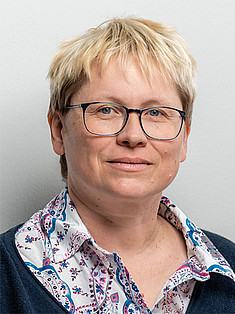
Dr. Lucas Kook is a Researcher at the Department of Statistics and Mathematics, WU Vienna University of Economics and Business. His research focuses on causal inference, machine learning, and statistical modeling, with applications in sports analytics, medical data analysis, and healthcare outcomes. He actively develops R packages such as deeptrafo for neural network-based statistical inference. His work bridges theoretical advancements in distributional regression and practical implementations in healthcare and sports domains. Key research areas include algorithm development for significance testing in supervised learning, causal feature selection, and nonparametric methods for conditional independence. Recent studies explore the efficacy of thrombolytic therapies in retinal artery occlusion and the predictive power of deep learning models in stroke patient outcomes. Collaborations span interdisciplinary fields, emphasizing reproducibility and methodological rigor in simulation studies.
Dr. Michael Szvetits is a Lecturer and Researcher at the Institute of Computer Sciences at the University of Applied Sciences Wiener Neustadt. He holds a PhD in Computer Science from the University of Vienna (2019), an MSc in Computer Science (2012), and a BSc in Information Technology (2010), all from the University of Applied Sciences Wiener Neustadt. His research focuses on software architecture, domain-specific languages, model-driven software development, functional programming, logic programming, and compiler construction. He has contributed to projects such as 'Care about Care' (C^C), which aims to enhance home care through ICT solutions, and 'CARU cares,' which integrates emergency call systems with care documentation tools. His publications span topics like runtime event analysis, model-driven engineering, and software architecture decisions. He collaborates on initiatives funded by the FFG and Active Assisted Living Programme. Dr. Szvetits is actively involved in research projects targeting healthcare technology, software systems optimization, and innovation in assistive living solutions.
Christian Dorner is a Professor of Mathematics Education and Head of Studies at the Department of Mathematics Education, Pädagogische Hochschule Steiermark. His work focuses on procedural knowledge development, financial mathematics in education, and student perspectives in mathematics teaching. He leads curriculum design initiatives and assessment frameworks for secondary mathematics education. Research interests include: Procedural knowledge measurement and deficiencies Integration of technology in mathematics classrooms Financial literacy education Student-centered lesson analysis Recent work emphasizes cross-national comparisons of financial education systems and the role of technology in procedural skill development. His research often involves collaborative projects with Austrian secondary schools and teacher communities. Notable contributions include the AmadEUs project analyzing classroom dynamics from student perspectives, and curriculum materials like 'Mathematik verstehen' series integrating GeoGebra tools. His work bridges theoretical educational research with practical classroom implementation.
Alexey Ignatiev is an Associate Professor in the Optimisation research group at Monash University's Faculty of Information Technology. Previously, he was a postdoctoral researcher and researcher at the University of Lisbon's Faculty of Sciences, focusing on SAT/SMT-based decision procedures. He holds a Ph.D. from the Matrosov Institute for System Dynamics and Control Theory (Russian Academy of Sciences), where his thesis explored parallel CDCL-BDD integration. His research emphasizes formal methods in AI, including explainable AI (XAI), SAT-based reasoning, and optimization for applications like software upgradability, model-based diagnosis, and fault localization. His work spans over 100 publications, with notable contributions to MaxSAT solving (RC2 solver), neuro-symbolic frameworks (NEUSIS), and rigorous explanations for machine learning models. He has collaborated extensively with institutions like the University of Lisbon and Monash University, contributing to advancements in formal verification and interpretable machine learning.
Dr. Philip Langer is a researcher at TU Wien's Institut für Information Systems Engineering, part of the Faculty of Informatics. His work focuses on model-driven engineering, semantic model differencing, and cloud-based software modernization. He contributed to frameworks like GLSP, ARTIST, and xMOF, emphasizing tool integration and collaboration in modeling environments. Research Areas: Model transformation, UML semantics, cloud migration, and search-based optimization Key Projects: ARTIST (cloud migration), GLSP (web modeling tools), xMOF (formal semantics) Publications highlight advancements in model differencing using execution traces, multi-objective model merging (MOMM), and semantic visualization techniques for web-based IDEs. His work bridges theoretical foundations with practical tool development, addressing challenges in collaborative modeling and legacy system modernization. Awards: No specific prizes mentioned, but recognized through prolific conference contributions and framework development. Grants/Advising: He collaborates extensively with peers like Tanja Mayerhofer and Manuel Wimmer, though specific grants or student advisement details are not explicitly stated. His research impacts both academic and industrial software engineering practices.
Johannes Oetsch is a researcher at TU Wien's Forschungsbereich Knowledge Based Systems within the Faculty of Informatics. His work focuses on Answer Set Programming (ASP) , neuro-symbolic computing , and visual question answering systems . He holds a Diplom-Ingenieur (Dipl.-Ing.) and a Doctor of Technical Sciences (Dr.techn.) in informatics. Key research areas include: Integration of large language models with symbolic reasoning frameworks Optimization techniques in ASP for scheduling problems Explainability mechanisms for neuro-symbolic systems Recent work emphasizes visual question answering using graph-based representations and contrastive explanation methods. He has contributed to the development of ALASPO , an adaptive optimization framework for ASP solvers. His research also explores applications in manufacturing scheduling and automated testing of logic programs. Notable contributions include: Neuro-symbolic pipelines combining ASP with vision-language models Lexicographical makespan optimization in parallel machine scheduling Large-neighbourhood search strategies for ASP-based optimization
Andreas Tockner is a researcher at the Institute of Forest Growth, part of the Department of Ecosystem Management, Climate and Biodiversity at the University of Natural Resources and Life Sciences, Vienna (BOKU). He holds a Dipl.-Ing. and B.Sc. degree and is currently pursuing PhD studies since 2021 as part of the "Building Like Nature" program at BOKU University. His work focuses on applying advanced laser scanning technologies to forest resource management and inventory. Dr. Tockner's educational background includes a Diplom-Ingenieur (Dipl.-Ing.) and Bachelor of Science (B.Sc.) degrees. His PhD studies at BOKU University began in 2021 as part of the "Building Like Nature" program. He is actively developing expertise in software development for instance segmentation and feature extraction of 3D point clouds. His research interests center around forest resource management with a strong emphasis on ground-based laser scanning technologies, particularly mobile LiDAR systems. He specializes in software development for instance segmentation and feature extraction of 3D point clouds, which has significant applications in modern forest inventory and monitoring. His work bridges the gap between advanced geospatial technologies and practical forestry applications, enabling more precise and efficient forest management practices. He has developed expertise in analyzing forest structures through 3D point cloud data, with particular focus on tree species classification, forest regeneration monitoring, and timber measurement at individual log levels. Dr. Tockner's publication record reveals a clear progression toward increasingly sophisticated applications of laser scanning technology in forestry. His work has evolved from basic measurement techniques to complex analysis of forest ecosystems, including species identification, wood quality prediction, and even long-term forest projections using digital twin technology. His interdisciplinary approach combines forestry, computer science, and data analytics to solve practical challenges in forest management. Advancements in personal laser scanning for forest inventory Methods for tree species classification using intensity patterns Techniques for quantifying forest regeneration Digital twin applications for forest modeling and future projections Dr. Tockner has supervised two Master's theses in 2025: "Evaluierung boden-, luftgestützter und hybrider Methoden zur Forstinventur im Naturpark Sparbach" by Elias Kimmel and "Assessing the Potential of Personal Laser Scanning to Quantify Tropical Tree Structures" by Luca Stephan Seiler. His research is supported by multiple projects including "Lidar based forest monitoring and harvesting planning" (2023-2026) funded by Federal Ministries and "Forest Inventory with Personal Laserscanners" (2022-2025) funded by the Austrian Research Promotion Agency (FFG). He is actively involved in developing practical applications of laser scanning technology for forest management, with a particular focus on making these technologies accessible for field operations. His work on using Apple iPad Pro with integrated LiDAR technology demonstrates his commitment to practical, field-deployable solutions that can transform traditional forest inventory practices.
Andreas Kurz is a Senior Scientist at the Department of Psychology, University of Salzburg, where he conducts research in psychological diagnostics and psychometric modeling. His work focuses on statistical inference in small sample contexts and conditional likelihood methods, particularly in educational assessment and admission procedures. Position: Senior Scientist Institution: University of Salzburg Department: Department of Psychology Research Group: Admission Procedure for Teaching Professions in the Central Cluster Andreas Kurz holds a Master of Science in Psychology from UMIT TIROL (2021) and a Diploma in Civil Engineering (equivalent to MSc ETH) from ETH Zurich (1995). His academic journey includes roles as a Student Assistant at UMIT TIROL (2019–2022) and a Scientific Assistant at ETH Zurich (2007–2009). His research lies at the intersection of psychology and statistics, with a strong emphasis on methodological rigor in psychometric testing. He develops and applies advanced statistical techniques for small sample inference, particularly using resampling and conditional likelihood frameworks. His work supports valid and reliable assessment in educational and psychological settings. The publications and software tools developed by Andreas Kurz reflect a consistent trend in advancing statistical methodology for psychometrics. His contributions include peer-reviewed articles on the gradient test and conditional inference, as well as R packages like tcl and tclboot that implement these methods for practical use in research and assessment. Andreas Kurz has actively participated in international conferences such as IMPS 2021 and IMPS 2022, presenting on statistical testing in conditional likelihood frameworks. His work is supported by research in psychometrics and statistical computing, with no explicit mention of external grants or advising roles. He is involved in the development of admission procedures for teaching professions, indicating applied research with societal impact in education. His technical expertise bridges civil engineering, psychology, and statistical programming, contributing to robust assessment systems.
Felix Holzmeister is a Professor in the Department of Economics at the University of Innsbruck, affiliated with the 'Innsbruck Decision Sciences' research center. His work focuses on experimental and behavioral economics, finance, and the philosophy of science. He coordinates interdisciplinary research efforts and collaborates with a team including Markus Walzl, Rudolf Kerschbamer, and others. Research Interests: Holzmeister investigates researcher variability in social science experiments, replicability challenges, and methodological rigor. His work spans lab-, field-, and online-based experiments, emphasizing crowd-sourced science and multi-analyst approaches. Key contributions include studies on risk perception among financial professionals and global societal trends. Notable Publications: He co-authored influential papers in Nature (2020) on neuroimaging dataset variability and Management Science (2020) analyzing risk perception. His research also addresses replication crises in social sciences and methodological transparency. Awards: None explicitly listed, though his work has garnered significant academic attention. Collaborations focus on interdisciplinary work, workshops, and disseminating findings through open science frameworks. Labs/Teams: Active in the Innsbruck Decision Sciences team, emphasizing collaborative research and innovation in experimental methods.
Johannes Karl Belz MSc is a researcher at the Institute of Green Civil Engineering within the Department of Landscape, Water and Infrastructure at the University of Natural Resources and Life Sciences, Vienna (BOKU). His work focuses on structural engineering with a specialization in timber construction and wood optimization. His research interests include structural optimization of wooden building components, computational design for construction, and sustainable building technologies. Belz has developed frameworks for optimizing structural performance of wood-based building components and has contributed to systematic reviews of established practices in timber engineering. His work bridges theoretical computational approaches with practical applications in sustainable construction. Belz has presented his research at major conferences including the International Association for Shell and Spatial Structures (IASS) Annual Symposium 2024 in Zurich, where he discussed his accessible framework for optimizing structural performance of wood-based components. His research demonstrates a strong focus on making timber construction more efficient and sustainable through computational approaches. His recent publications show a clear trajectory toward developing practical tools and methodologies for the timber construction industry, with particular emphasis on structural optimization and performance analysis of wood-based building systems. His work contributes to the advancement of sustainable construction practices using renewable materials.
Dr. Christoph Büschl MSc. is an active researcher at the Institute of Bioanalytics and Agro-Metabolomics (iBAM) within the Department of Agricultural Sciences at the University of Natural Resources and Life Sciences, Vienna (BOKU), based at Konrad-Lorenz-Straße 20 in Tulln an der Donau. His work focuses on metabolomics-driven analysis of plant-pathogen interactions, particularly wheat's metabolic response to Fusarium mycotoxins including deoxynivalenol and T-2 toxin, using LC-HRMS and stable isotopic labeling techniques. Büschl contributes to method development for untargeted metabolomics and software tools like MetInclude, SimTopN, and CPExtract, and is affiliated with the Christian Doppler Laboratory for contaminant analysis. His core research interests span Metabolomics, Mycotoxin Research, Plant Biochemistry, Food Safety, Analytical Chemistry, and Stable Isotope Labeling. He investigates mycotoxin biotransformation pathways in cereals, artifact formation during sample extraction (e.g., methanol-induced artifacts), and the role of plant defense metabolites in Fusarium head blight resistance. Current work emphasizes software-assisted metabolite annotation and the evaluation of sample preparation techniques like lyophilization for metabolome stability. Analysis of his publications from 2022-2025 reveals a trend toward computational tool development for metabolomics data processing, alongside method validation studies for mycotoxin fate in food processing and plant defense mechanisms. Key fields include plant metabolomics, LC-HRMS optimization, and mycotoxin metabolism, with recurring themes of reproducibility and novel metabolite discovery in agricultural ecosystems. Scientific awards: No awards, fellowships, or medals are mentioned in the provided text. Advising and grants: Student supervision: While the institute actively mentors diploma and doctoral students, no specific advisees under Büschl are listed. Research funding: Work is conducted through the Christian Doppler Laboratory, though individual grants are not detailed. Labs and teams: Büschl operates within iBAM at BOKU's Tulln campus, collaborating on interdisciplinary projects for mycotoxin and allergen detection in food. The institute maintains metabolite databases and LC-HRMS/MS libraries for wheat metabolomics, with strong ties to the Metabolomics Society and international consortia like MycoRed. His team specializes in stable isotope-assisted workflows and quality control for untargeted metabolomics.
Alan van Beek is a researcher at the University of Salzburg within the Department of German Studies. Their work bridges medieval literature analysis with modern digital humanities tools and game studies frameworks. Active in computational analysis of Middle High German texts Key contributor to the MHDBDB database development Interdisciplinary focus on medieval reception in digital media Expert in data literacy and interface design Research interests span three major domains: Medieval Literature: Focusing on giants, stones, and sword names in medieval texts, analyzing cyclical narrative structures and material culture representation Digital Humanities: Specializing in database development, digital sustainability, and user-centered design for linguistic research Game Studies: Investigating medievalism in modern games and institutional requirements for establishing game science Recent publications show a clear trend toward: Interdisciplinary methodologies combining literary analysis with data science Digital infrastructure development for medieval studies Critical examination of medieval themes in contemporary gaming contexts Exploration of material symbolism in both historical texts and modern media Advancing queer studies through medieval literature analysis Promoting digital literacy in humanities research Their projects include: Users First: Optimization of user interface and crowdsourcing for medieval databases MHDBDB goes AI: Preparing data for AI applications in literary analysis MHDBDB Relaunch: Ensuring digital sustainability of the Middle High German term database Current activities demonstrate extensive engagement with: Scientific website maintenance for digital humanities projects Conference presentations on medieval themes in games Editorial work for PLUS Salzburg's digital humanities initiatives Collaborative research with institutions like Zenodo
Imola Wilhelm serves as a senior research associate at Hungary's Biological Research Centre in Szeged, where she leads pioneering investigations into the neurovascular unit, blood-brain barrier dynamics, and cerebral circulation. Her work specifically examines pericyte function in pathological contexts including brain metastasis, neuroinflammation, and aging processes. As a leading scholar in neurovascular biology, Wilhelm's research integrates molecular and physiological approaches to unravel blood-brain barrier mechanisms under disease conditions. Her dual expertise spans both neurovascular pathology and advanced photonics, with significant contributions to silicon nitride waveguide technologies for biosensing applications. Her 15 most recent publications (2021-2025) reveal a strategic convergence of machine learning and photonic engineering, featuring optimization of silicon nitride platforms, loss-minimization techniques, and biosensor development. This work demonstrates consistent methodological innovation across fabrication, characterization, and application domains. Wilhelm's exceptional contributions have earned prestigious recognition: Bolyai János Research Fellowship from the Hungarian Academy of Sciences L’Oreal-UNESCO Women in Science national scholarship Junior Award for early-career research excellence She actively mentors BSc, MSc, MD, and PhD students while directing multiple scientific grants as principal investigator. Since 2020, she has served as a Szent-Györgyi mentor for the National Academy of Scientist Education and currently holds an executive board position at the Hungarian Young Academy (joined 2021). Her science communication outreach includes Researchers’ Night lectures since 2014 and Brain Awareness Week participation since 2018. Wilhelm leads a multidisciplinary research team at the Biological Research Centre that bridges neurovascular biology with photonic sensor development, maintaining active collaborations across both domains while supervising graduate trainees and postdoctoral researchers.
Egon Lüftenegger is a Senior Lecturer at Fachhochschule Salzburg's Department of Information Technologies and Digitalisation. His work bridges academia and industry through innovative process mining and sentiment analysis applications. PhD in Information Systems (TU Eindhoven) Focus on Service-Dominant Logic and Business Process Management Active in Industry 4.0 and Digital Transformation research His research explores sentiment-driven process redesign, technology-enabled social inclusion, and smart production analytics. Publications highlight process mining frameworks , LLM applications in BPM, and service-dominant business models . Current projects involve creating tools like SentiProMoWeb and Cost-Benefit Tracker, with applications in manufacturing, airline services, and education sectors.
FH-Prof. DI Brigitte Jellinek, MSc is a Senior Lecturer and Head of the Academic Area Web & Mobile at Fachhochschule Salzburg GmbH, Department of Creative Technologies. Based at Campus Urstein (Room Urstein-321), she specializes in web development technologies including JavaScript, Ruby on Rails, PostgreSQL, Git, Test Driven Development, and databases. Teaching: Web programming 1 (IL), Backend Development (IL), Multimedia project 2 (PT), Multimediaprojekt 3: Pre-Production (PT), Applied Programming Paradigms (IL), Project 1: Concept & Pitch (PT), Rapid Prototyping (UB), Web Performance Optimisation (IL)