معرفی
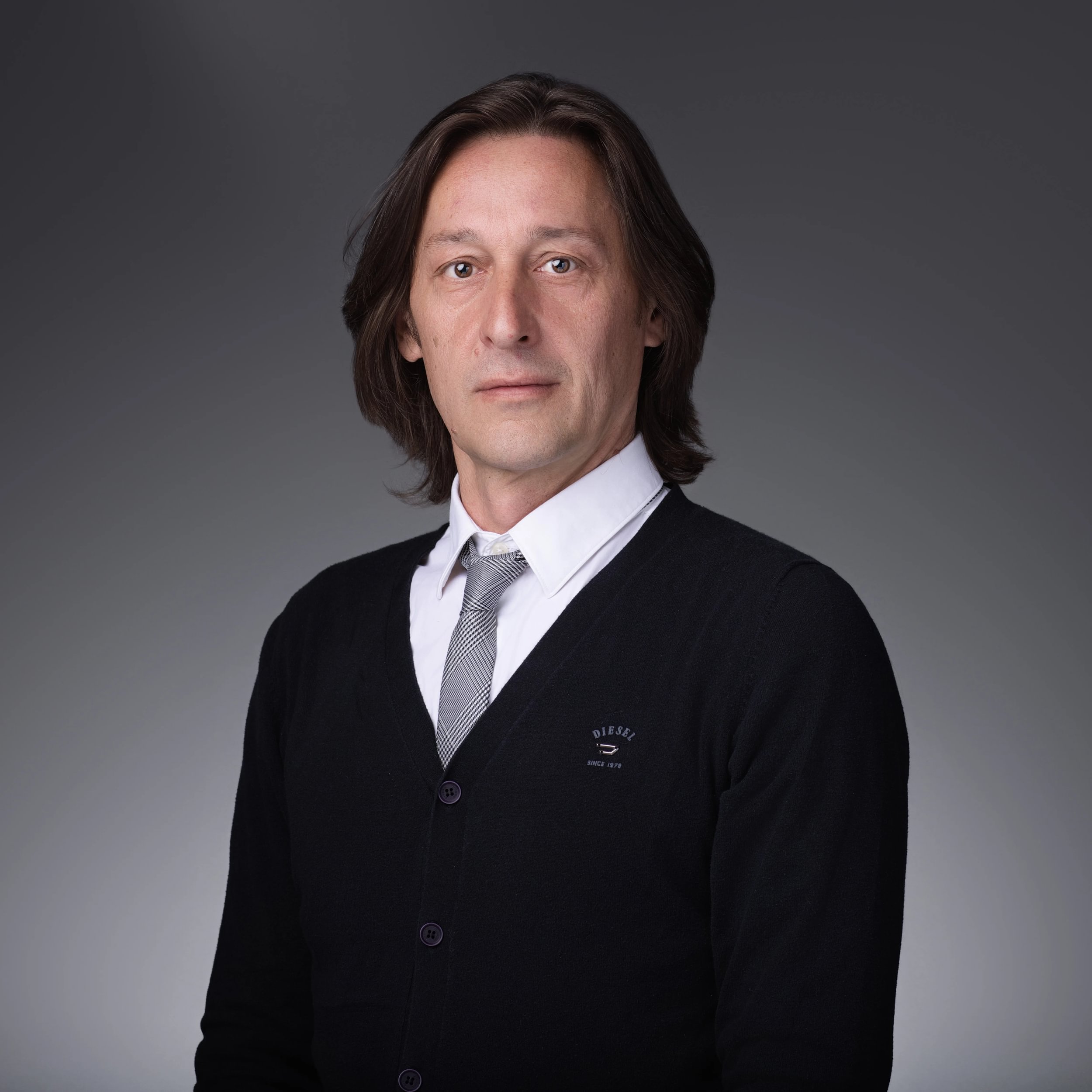
Andreas Kurz is a Senior Scientist at the Department of Psychology, University of Salzburg, where he conducts research in psychological diagnostics and psychometric modeling. His work focuses on statistical inference in small sample contexts and conditional likelihood methods, particularly in educational assessment and admission procedures.
- Position: Senior Scientist
- Institution: University of Salzburg
- Department: Department of Psychology
- Research Group: Admission Procedure for Teaching Professions in the Central Cluster
Andreas Kurz holds a Master of Science in Psychology from UMIT TIROL (2021) and a Diploma in Civil Engineering (equivalent to MSc ETH) from ETH Zurich (1995). His academic journey includes roles as a Student Assistant at UMIT TIROL (2019–2022) and a Scientific Assistant at ETH Zurich (2007–2009).
His research lies at the intersection of psychology and statistics, with a strong emphasis on methodological rigor in psychometric testing. He develops and applies advanced statistical techniques for small sample inference, particularly using resampling and conditional likelihood frameworks. His work supports valid and reliable assessment in educational and psychological settings.
The publications and software tools developed by Andreas Kurz reflect a consistent trend in advancing statistical methodology for psychometrics. His contributions include peer-reviewed articles on the gradient test and conditional inference, as well as R packages like tcl and tclboot that implement these methods for practical use in research and assessment.
Andreas Kurz has actively participated in international conferences such as IMPS 2021 and IMPS 2022, presenting on statistical testing in conditional likelihood frameworks. His work is supported by research in psychometrics and statistical computing, with no explicit mention of external grants or advising roles.
He is involved in the development of admission procedures for teaching professions, indicating applied research with societal impact in education. His technical expertise bridges civil engineering, psychology, and statistical programming, contributing to robust assessment systems.