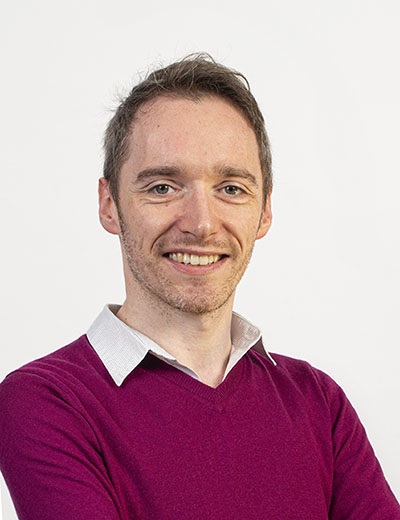
Botsoglou Kafenia is a Professor of Pedagogy at the Department of Special Education, University of Thessaly (since 2002). She leads the Institute of Teaching and Teacher Education and IASON research center. Her research focuses on modern pedagogical approaches, early childhood education quality, bullying prevention, and innovative teaching methodologies. She holds a BSc from Aristotle University of Thessaloniki (1990), MSc in Research Methodology (2004), and PhD in Educational Sciences (1998). Key areas include: Development of intercultural competence evaluation tools Design of inclusive educational environments Integration of digital games and technology in classrooms Social pedagogical interventions for peer relationships Recent publications emphasize: Educational technology applications (e.g., flipped classrooms, AR books) Preschoolers’ executive functions and school readiness Teacher perceptions of digital tools and inclusive practices Her work bridges theory and practice through participatory research methods, emphasizing child-centered approaches. Current projects explore sustainable academic work environments and technology-enhanced learning spaces.
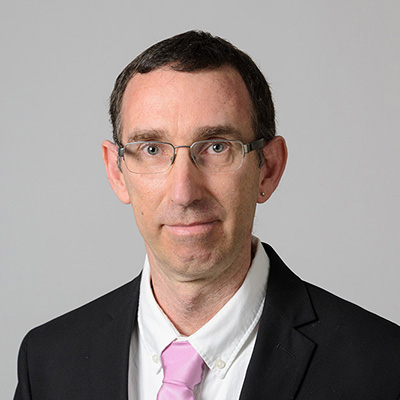
Dr. George Kinnear is a Lecturer in Technology-Enhanced Mathematics Education at the University of Edinburgh's School of Mathematics. He holds an MA in Pure Mathematics and a PhD in Analysis from the University of Edinburgh, where his doctoral research explored foundational mathematical concepts. Transitioning from pure mathematics research to education, he now focuses on optimizing computer-based assessment systems like STACK, aiming to enhance student learning experiences through technology. His work bridges pedagogy and digital tools, particularly in undergraduate mathematics. Education: PhD in Analysis, University of Edinburgh MA in Pure Mathematics, University of Edinburgh Research Interests: George’s research centers on how students learn mathematics through technology, particularly in online assessment systems. He investigates tools like STACK to improve feedback mechanisms, digital exercise design, and large-class instructional practices. His recent projects include developing interactive course materials and workshops to familiarize educators with e-assessment platforms, driven by post-pandemic educational demands. Grants & Projects: He is currently funded to convert traditional workbooks into interactive STACK-based resources, with plans to share these tools across universities by 2025. Collaborations with Professor Chris Sangwin (STACK developer) and colleagues aim to refine computer-aided assessment through teacher feedback and experimental studies. Labs/Teams: His work is embedded within the University of Edinburgh’s School of Mathematics, focusing on Technology-Enhanced Mathematical Education initiatives. He contributes to interdisciplinary efforts to modernize mathematics education through digital innovation.
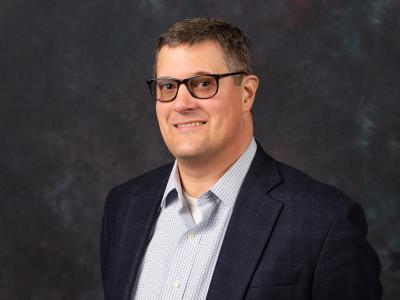
Jerzy Pamin serves as Professor and Chair for Computational Engineering within the Faculty of Civil Engineering at Krakow University of Technology, where he leads research in advanced computational mechanics for structural materials. His expertise bridges theoretical continuum mechanics with practical engineering applications, particularly in failure analysis of concrete and metallic structures. His educational background includes BEng, PhD, DSc, and full Professor qualifications. Key research domains encompass: Finite strain plasticity and thermo-mechanical coupling Gradient-enhanced damage and plasticity models Numerical regularization of localization phenomena Concrete durability under corrosion and impact Shear band formation in metals and soils Recent publications (2019-2025) demonstrate consistent innovation in regularization techniques for material instabilities, with significant focus on gradient models for concrete size effects, thermo-plasticity at large deformations, and corrosion-induced cracking mechanisms. His work systematically addresses numerical challenges in shear band propagation and dynamic failure through advanced finite element formulations. He has received 5 institutional achievements acknowledging his scholarly contributions, though specific award names aren't detailed in available records. Professor Pamin has mentored 6 doctoral students while securing research funding for computational mechanics projects. His leadership extends to developing numerical frameworks for structural safety assessment, particularly in corrosion-affected infrastructure and dynamic loading scenarios. As head of the Chair for Computational Engineering, he directs a research group specializing in material modeling and numerical methods, with ongoing projects focused on multi-physics failure simulations and advanced discretization techniques for civil engineering applications.
Dr. Zehai Zhou is an Associate Professor in the Department of Finance, Information Systems, Economics, and Risk Management at the University of Houston - Downtown , where he has taught courses in information systems, database management, Java programming, and e-commerce since 2006. His academic focus spans supply chain management , operations research , logistics , and data-driven analytics and optimization . PhD in Management Information Systems from the University of Arizona MS in Forestry from the University of Illinois at Urbana-Champaign BAgri in Forestry from Agricultural University of Central China His research integrates information systems with business analytics , emphasizing supply chain solutions , database optimization , and educational technology . Recent publications (2003–2017) focus on e-commerce analysis, algorithm design, and pedagogical evaluations, reflecting interdisciplinary expertise in computer science , business , and education . Dr. Zhou actively contributes to academic governance through roles such as Committee Member on General Education, Web Oversight, and Faculty Senate, and serves as a Distributed Reader for the College Board’s AP® Computer Science A exam. He has reviewed conference papers for the International Conference on Cyber Warfare and Security and participated in curriculum development for computer forensics and cybersecurity.
Dr. Bridget M. Lyons serves as Professor of Finance at Sacred Heart University's Jack Welch College of Business & Technology, Department of Finance. With over twenty years of corporate finance experience, she integrates academic theory with practical industry applications while maintaining active consulting engagements with the World Bank Group, investment banks, and hedge funds. She holds board positions with the National Business & Economics Society and advises the SHU Student Managed Investment Fund. Educational background includes: B.A. in Economics, Magna Cum Laude, Phi Beta Kappa, Georgetown University M.S. in Finance, Columbia Business School D.P.S. in Finance, Pace University Lubin School of Business (Outstanding Doctoral Student award recipient) Her research focuses on corporate finance, valuation methodologies, and financial modeling with recent emphasis on equity valuation challenges in emerging markets and ASC 842 leasing standard implications. Teaching innovations emphasize technology integration and activity-based learning in financial management and corporate finance courses for undergraduate and graduate students. Publication trends reveal consistent contributions to journals like Strategic Finance and Journal of Accounting and Finance , particularly regarding regulatory impacts on financial reporting and valuation practices. Notable awards include: 60th Anniversary Curtis Medal (2024) 2021 The Final Four: Outstanding Faculty Award 2007 Innovative Paper of Excellence Award (National Business Press) Sacred Heart University Teaching Excellence Award (2006) First Annual University College Faculty Excellence Award (2004) Professor Lyons actively advises finance and business economics interns while leading research on performance metrics and competitive advantage frameworks. Her consulting practice bridges academic research with real-world financial challenges through Bridget Lyons Consulting (established 1995). Current initiatives focus on emerging market valuation complexities and financial modeling pedagogy enhancements.
Dr. Lakshmidevi Sreeramareddy is an Assistant Professor in the Computer Science Department at Salem State University, with extensive experience in human-computer interaction , usable security , and machine learning . She earned her D.Sc. in Information Technology (2014), M.S. in Computer Science (2008), and B.Sc. in Information Science and Engineering (2006) from Towson University and Visvesvaraya Technological University. Specialized in gesture-based authentication systems Focus on accessibility for cognitively diverse users Contributing to ABET accreditation efforts for IT programs Teaching expertise spans databases, system administration, and programming Her research combines usability testing with machine learning algorithms to enhance security protocols, particularly for vulnerable populations. Publications highlight collaborations with Dr. K. Kaur, Dr. J. Feng, and colleagues on topics like Finch Labs, shoulder-surfing vulnerabilities, and educational retention strategies. Key trends from her 10+ publications include: Authentication innovation for mobile/web systems Security evaluations through empirical user studies Applications of machine learning in behavioral pattern analysis Curriculum development for programming education ABET accreditation-compliant instructional design Accessibility-focused research for cognitively diverse users She has taught courses in software design, database administration, human-computer interaction, and IT system integration while serving on university committees and mentoring students.
Ofer Harel is a Professor in the Department of Statistics at the University of Connecticut , where he also serves as Dean of the College of Liberal Arts and Sciences . His research focuses on advanced statistical methodologies for handling incomplete data, with applications spanning epidemiology, health research, clinical trials, and social sciences. Primary Affiliation: University of Connecticut Roles: Professor of Statistics, Dean of College of Liberal Arts and Sciences Research Focus: Missing data analysis, Bayesian methods, latent class modeling, and statistical applications in public health Research Interests span critical areas including: Missing Data Mechanisms: Developing and refining multiple imputation techniques Latent Class Analysis: Applying to health outcomes and behavioral studies Bayesian Modeling: For spatial and longitudinal health data Statistical Disclosure Control: Protecting sensitive demographic information Health Applications: Covering HIV prevention, cancer survivorship, and mental health Educational Statistics: Integrating computing tools into statistical pedagogy Publication Trends demonstrate expertise in: Advanced imputation frameworks for clinical and epidemiological research Latent class and multilevel modeling for diverse health outcomes Statistical ethics and data confidentiality in public health research Spatial and longitudinal analysis of disease patterns Methodological innovations in handling missing data across multiple disciplines Advising and Collaborative Work includes methodological contributions to: Non-inferiority trial designs with missing data challenges Bayesian spatial modeling applications in global health Improving statistical reporting and reproducibility
Johan Korhonen is a Professor at Åbo Akademi University's Faculty of Education and Welfare Studies, with a focus on Mathematical Learning Difficulties and Cognitive-Affective Factors in Mathematics Performance . He contributes to the UN Sustainable Development Goals related to Education/Scientific Qualifications. Active in Math Anxiety , Dyscalculia , and Math Performance Collaborates with international researchers across Finland, Sweden, and South Africa Research Trends: His recent work examines: Math anxiety interventions using working memory and relaxation techniques Psychometric validation of dyscalculia screening tools (FUNA-DB) Developmental trajectories of arithmetic fluency and affective factors Gender differences in math performance and educational aspirations Scientific Awards: Kanslers pris för yngre forskare (2022) Supervisor of the year (2017) Academic Activities: Serving as Principal Investigator for the iFeelMath project (2022–2026) Editorial reviewer for journals like npj Science of Learning and British Journal of Educational Psychology Contributing to multi-year projects on school well-being and cognitive development
Marketa Caravolas is an Associate Professor in Psychology at Bangor University, Wales, UK. She earned her PhD in Psychology from McGill University (1996) after initial training as a teacher and clinician in Montreal, focusing on children with learning disorders. Since 1997, she has led academic and research efforts at Bangor, directing the Miles Dyslexia Centre (2008–2014). Her work spans literacy development, dyslexia, cross-linguistic studies, bilingualism, and phonological/spelling development. Key Research Areas: Literacy development in typical and atypical populations Cross-linguistic investigations of language-general vs. language-specific factors Creation of standardized test batteries for Czech, Slovak, English, Spanish, and Welsh literacy Development of MABEL: Multilanguage Assessment Battery for Early Literacy Neurodevelopmental disorders impacting literacy (dyslexia, DCD, language delay) Academic Contributions: She supervises PhD and undergraduate students, teaches modules on Disorders of Literacy and Bilingualism: Research and Methods , and leads externally funded international projects. Her publications address orthographic consistency, phoneme awareness, and handwriting-legibility correlations in dyslexia. Notable Projects: MABEL tool development (2021–2024), remote literacy programs (2020–2025), and ELDEL (2008–2022) for European literacy enhancement.
Dr. Heidi Hellstrand is a Lecturer at Åbo Akademi University's Faculty of Education and Welfare Studies , specializing in mathematical learning, dyscalculia assessment, and educational psychology. Her research bridges cognitive science and special education. Active in math learning disabilities identification Developed the FUNA-DB Screener online diagnostic tool Conducted cross-national comparisons between Finland and Sweden She has published extensively on word problem-solving skills, numeracy assessment, and intervention effectiveness in elementary education, with recent 2025 work focusing on meta-analytic reviews and digital evaluation frameworks. Her projects frequently involve collaborations with researchers across Nordic countries, funded by the Swedish Cultural Foundation. Dr. Hellstrand has presented at international conferences on mathematical learning difficulties and sustainability of special education practices. She actively contributes to public discourse through media interviews in outlets like Vasabladet and Skolporten , advocating for early math skill development in preschoolers.
Brian Charles Baldwin is an Assistant Professor at Kean University within the School of Integrative Science and Technology and the Department of Educational Leadership and Secondary Education. He serves as Coordinator of STEM Education programs at NJCSTM, teaching graduate and undergraduate courses in science teaching methods and research methods. Education: Ed.D. in Science Education, Columbia University – Teachers College (2004) M.Ed. in Secondary Education, Ohio University (1999) B.S. in Chemistry, Ohio University (1995) Research Focus centers on STEM education policy, teacher preparation, and data-driven analysis of educational trends. He explores geospatial patterns in teacher retention, impacts of certification and salary on STEM workforce stability, and correlations between teacher demographics and student achievement in standardized tests. Grant Leadership includes directing the $750,000 Kean Math and Science Partnership and a prior $1.7 million initiative, both aimed at enhancing professional development for over 225 New Jersey math and science teachers. His work leverages mapping software and large datasets to inform curriculum redesign aligned with Next Generation Science Standards. Project Collaboration involves external evaluations of STEM education grants with K-12 institutions and higher education, emphasizing teacher re-education for new state standards and pandemic-era adaptation.
Paulo Jorge Carvalho Menezes is an Assistant Professor at the Department of Electrical and Computer Engineering, Faculty of Science and Technology, University of Coimbra. He is an associate researcher at the Institute of Systems and Robotics (ISR) and leads the Artificial Perception for Intelligent Systems and Robotics Team (AP4ISR) and the Immersive Systems and Sensory Stimulation Laboratory (IS3Lab). Ph.D. in Electrical and Computer Engineering (Informatics specialization) from University of Coimbra Lectures courses: Operating Systems, Computer Networks, Mobile Robotics, Computer Vision, Human-Machine Interaction Research focuses on Augmented Reality, Virtual Reality, Human-Robot Interaction, Computer Vision, and Assistive Technologies His 15 most recent publications span immersive systems, affective computing, and robotics, with keywords including Robotics , Human-Computer Interaction , and Artificial Intelligence . Notable subfields include Immersive Rehabilitation Games , Telepresence Systems , and Emotion Recognition . Scientific Awards 1st Prize 'As Novas Fronteiras da Engenharia' (2017) Best Paper Award (2016, 2020) Best Demonstrator Awards (2015, 2016, 2019) Honourable Mentions (2015, 2019) He supervises 12+ students in projects involving 3D Modeling , Emotion-Biosignal Analysis , and Assistive Robotics . Grants include EU Horizon 2020 (LIFEBOTS Exchange) and national projects like Move4ASD and BioHab .
Andreas Lachner is a Professor of Educational Research at the University of Tübingen, specializing in teaching and learning with educational technology. He serves as co-director of the Tübingen Center for Digital Education and holds a position in the Department of Social Sciences Education Sciences under the Faculty of Economics and Social Sciences. His research focuses on adaptive teaching scenarios, (meta-)cognitive learning processes, and teacher professional development in technology integration. He earned his doctorate (Dr. phil., summa cum laude) from the University of Freiburg in 2015 and has held academic roles since 2012, including Assistant Professor and Coordinator of the EARLI Special Interest Group 7: Technology-Enhanced Learning and Instruction. His research interests span educational technology, TPACK frameworks, and evidence-based instructional strategies. He has contributed to over 100 peer-reviewed publications and led projects like DiA:Net (adaptive teaching with technology) and GRAIL (generative activities in science education). Lachner also emphasizes open science practices and the validation of educational assessments. His work bridges theory and practice, addressing challenges in digital education and teacher training. Notable projects include the tabletBW initiative exploring tablet impact on learning and the TüDiLB project on adaptive teaching. His articles highlight topics such as technology integration barriers, spaced learning, and the effectiveness of non-interactive teaching methods. Lachner advocates for rigorous, context-aware educational research to improve classroom practices globally.
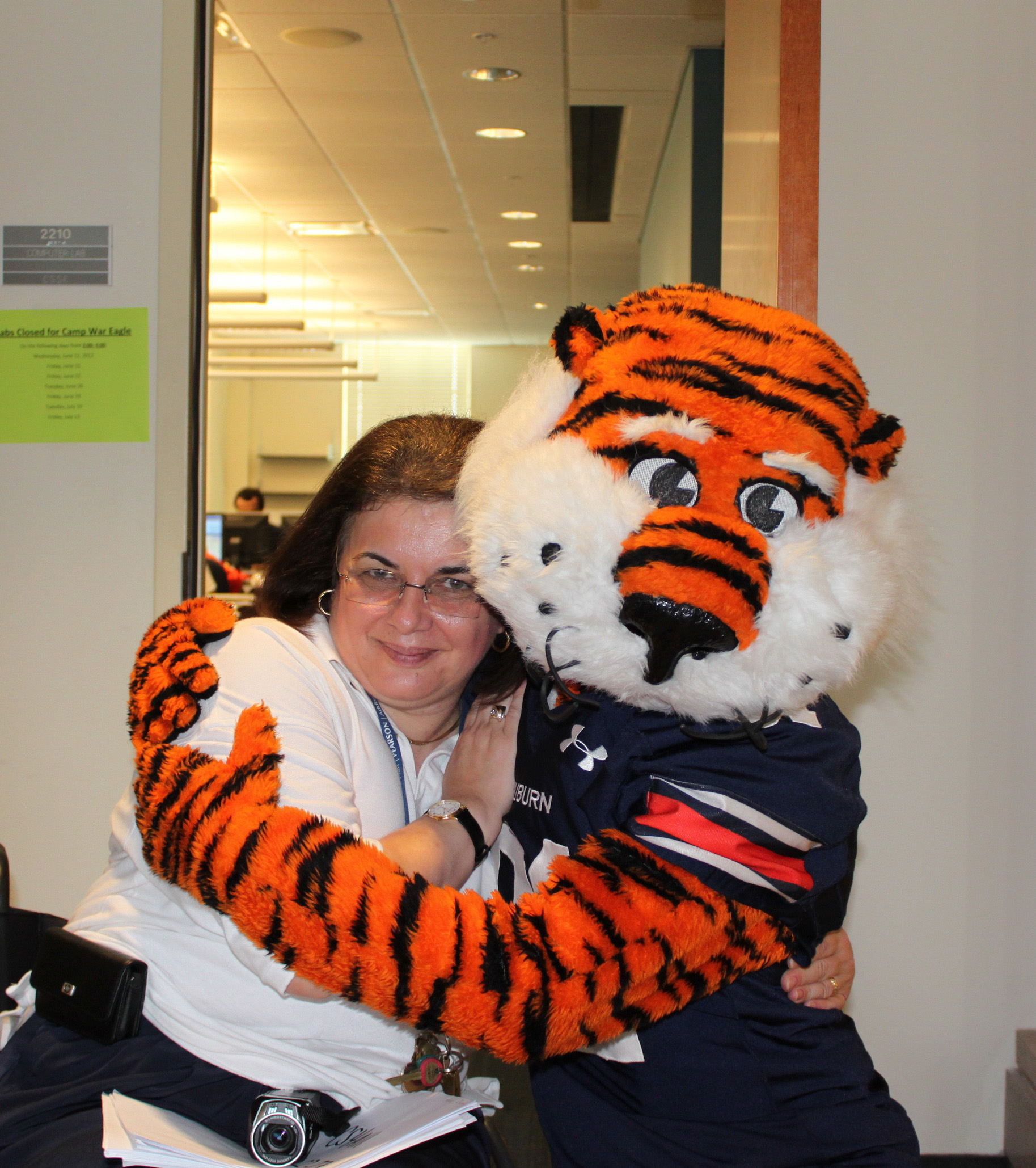
Daniela Marghitu is a Professor in the Department of Computer Science and Software Engineering at Auburn University's Samuel Ginn College of Engineering, where she has been a faculty member since 1996. Her work bridges computing, education, and accessibility, with a strong commitment to equity and inclusion. She is based in Auburn, Alabama, and actively contributes to both academic and national initiatives focused on broadening participation in STEM. B.S. in Automation and Computing, Polytechnic University of Bucharest Ph.D. in Automation and Computing, University of Craiova Dr. Marghitu’s research centers on inclusive computing , assistive technology , and STEM education , particularly for K–12 students, underserved communities, women, and people with disabilities. Her teaching spans web development, software engineering, and accessible computing. She has led and co-led numerous NSF-funded projects aimed at increasing access and equity in computer science education. The recent publications reflect a strong focus on accessible curriculum design , values-driven engineering education , and community-based STEM outreach . Themes include inclusive pedagogy, assistive technologies, and project-based learning, especially in rural and underrepresented settings. Her work consistently emphasizes usability, accessibility, and social impact across computing disciplines. Among her notable honors are: 2011 AccessComputing Capacity Building Award 2012 Auburn University Access Award 2012 Society for Design and Process Science Outstanding Achievement Award 2013 Microsoft Fuse Research Award 2015 DO-IT Trailblazer Award 2017 International Academy, Research, and Industry Association Fellowship 2017 Society for Design and Process Science Fellowship 2019 Samuel Ginn College of Engineering 100+ Women Strong Leadership in Diversity Faculty Award Dr. Marghitu has mentored over 50 K–12, undergraduate, and graduate students, with a focus on diversity and inclusion. She has secured significant research funding from the National Science Foundation (NSF) , ACM SIGCSE , AccessComputing Alliance , Microsoft Fuse Research , and other organizations. Her leadership extends to national advisory roles, including the NSF Committee on Equal Opportunities in Science and Engineering and the CSforAll Accessibility Board. She founded and directs the Auburn University Laboratory for Education and Assistive Technology , a hub for research and development in inclusive computing and educational technologies. She also plays key administrative roles at Auburn, such as Faculty Representative to the Board of Trustees and chair of the Persons with Disabilities Committee.
João Pedro Oliveira is an Associate Professor in the Department of Information Science and Technology at ISCTE – Instituto Universitário de Lisboa, where he also coordinates the Pattern and Image Analysis Group. He is an Integrated Researcher at the Institute of Telecommunications – IUL, contributing to cutting-edge research in signal and image processing and machine learning. His academic background includes a PhD and a Bachelor's degree in Electrical and Computer Engineering from the Higher Technical Institute - UTL. His research interests span Signal and Image Processing , Machine Learning , AI in Healthcare , Cultural Heritage Informatics , and Mobile Application Recommendation Systems . His recent publications demonstrate a strong interdisciplinary focus, combining AI with archaeology, healthcare diagnostics, and mobile computing. The analysis of his 15 most recent publications reveals a consistent trend in applying machine learning and computer vision techniques to real-world problems, particularly in cultural heritage digitization, medical imaging, and mobile user modeling. He frequently collaborates with researchers in diverse domains, publishing in high-impact journals such as Engineering Applications of Artificial Intelligence and IEEE Access . While no scientific awards are listed in the provided text, his extensive publication record and leadership in research groups underscore his academic impact. João Pedro Oliveira advises students in computer science and engineering domains, though specific names are not mentioned. He is involved in multiple research projects, particularly those integrating AI with societal applications. He leads and participates in research initiatives related to image analysis, semantic modeling, and mobile systems. His work often involves collaboration with multidisciplinary teams focusing on digital transformation in public and health sectors.