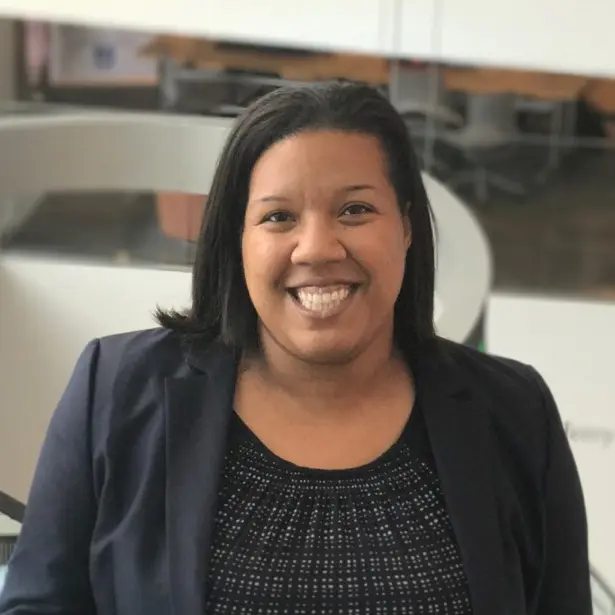
Reni Yankova is a Senior Lecturer at the New Bulgarian University , affiliated with the Southeast European Center for Semiotic Research . She has extensive academic and administrative roles, including consultancy for the master's programs in Advertising and Brand Management. Bachelor's in Public Relations, Sofia University Master's in Advertising, New Bulgarian University PhD in Semiotics, New Bulgarian University (2014) Her research focuses on Semiotics , Pragmatism , and Philosophy , particularly the works of Charles Peirce . Her recent publications explore topics such as taste evolution, abduction, and the role of habit in philosophical systems. Reni’s scholarly output spans semiotic theory, cultural analysis, and pragmatic philosophy. Notable trends include interdisciplinary studies bridging anthropology, cosmology, and communication theory. Postdoctoral scholarship at Pontifical Catholic University of São Paulo (2016-2017) Active member of the International Association for Semiotic Studies She has taught courses like GENB025 Culture and Semiotics and contributes to academic programs through curriculum development and research initiatives.
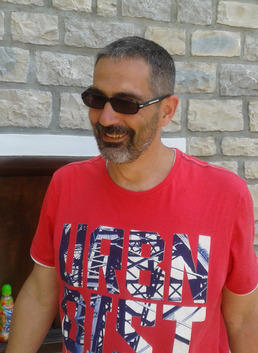
Lyudmil Duridanov is a communication theorist and Research Fellow at New Bulgarian University , with an Adjunct Professor affiliation at the School of Computer, Data & Mathematical Sciences (Western Sydney University). He holds a PhD in Philosophy and Linguistics from Albert Ludwig University Freiburg (2000), focusing on religious/political aspects of icon visual language, and an MA in Bulgarian Philology (1988). His interdisciplinary approach bridges historical semantics, social media psychology, and AI ethics. Graduate: Master's in Bulgarian Philology (St. Kliment Ohridski University, 1988) PhD: Philosophy and Linguistics (Albert Ludwig University Freiburg, 2000) Research spans Byzantine-Ottoman cultural/religious traditions , digital humanities , AI ethics , and game design for educational purposes. Current work examines AI's impact on humanities and visual language fluidity in digital environments. Recent publications analyze AI ethics , digital education tools , and game-based learning for ASD children , reflecting his focus on emerging technologies and cultural preservation . Collaborative projects with Prof. Simeon Simoff explore prompt engineering and NLP challenges .
Susana Salgado is a Research Professor at the University of Lisbon's Instituto de Ciências Sociais (ICS-ULisboa), specializing in political communication, populism, and digital media. She previously held positions at the University of Oxford and Universidade Nova de Lisboa. Her research spans comparative analyses of media systems, disinformation, and democratization processes across Europe, Africa, and Latin America. Her core research explores: Populist rhetoric in election campaigns Online incivility and hate speech dynamics Cross-national disinformation patterns Citizen journalism evolution in digital ecosystems Media's role in Lusophone African democratization Her publications (2018–2025) reveal consistent focus on digital political communication, with trends toward cross-cultural comparisons of online behavior, platform-specific discourse analysis, and the intersection of crisis narratives with populism. Methodologies blend computational analysis with qualitative framing techniques across diverse geopolitical contexts. She leads major projects including: Streams of hate and untruth? (PTDC/CPO-CPO/28495/2017) Politics, Policy, Populism and Online/Social Media (IF/01451/2014/CP1239/CT0004) The Ethnic Heritage of Party Politics in Lusophone Africa She coordinates the SPARC research group (Social and Political Attitudes: Resilience and Change) and collaborates on international networks analyzing media and populism.
Dr. Amirhosein Bodaghi serves as a Researcher at Ulster University's School of Computing within the Faculty of Computing, Engineering and Built Environment, based at the Belfast campus (2-24 York Street, BT15 1AP). His research specializes in computational analysis of social media platforms, particularly Twitter and Instagram, with applications spanning political discourse, financial markets, and athletic communities. His core research domains include: Social Media Analysis : Advanced examination of user behavior, content propagation, and network structures across Twitter and Instagram ecosystems Rumor Spreading Dynamics : Development of open-source analytical tools (Rumor Categorizer, Fake News Graph Analyzer) for mapping misinformation diffusion patterns Financial Applications : Integration of natural language processing with social media news flow for market anomaly prediction Olympic Athlete Studies : Quantitative analysis of Instagram characteristics among gold medalists across multiple Olympic cycles Network Science : Application of graph theory to model information diffusion and user influence Analysis of his 15 most recent publications (2018-2024) reveals consistent methodological innovation combining big data processing, semantic analysis, and temporal graph modeling. His work demonstrates significant interdisciplinary reach—from examining quoting behavior during the 2020 US presidential election to developing twelve-year financial forecasting models using Twitter news channels—while maintaining technical rigor in data mining and network analysis. No documented scientific awards, student supervision activities, or grant funding details appear in current records. Similarly, specific laboratory affiliations or research team memberships remain unspecified in available institutional profiles.
Nikos Askitas serves as Coordinator of Data and Technology at the Institute of Labor Economics (IZA) in Bonn, Germany, where he leads both the Research Data Center (IDSC) and ICT unit since joining in 2000. His dual role bridges technical infrastructure management and cutting-edge research in labor economics and social science. His research spans causal machine learning , epidemic disease modeling , big data analytics , and behavioral macroeconomics , with notable contributions to forecasting methodologies and web-based data applications. He develops novel approaches in opinion dynamics, game theory, and adaptive systems while addressing real-world challenges like pandemic response and technology-labor interactions. Recent publications reveal a strong trend toward AI-driven economic analysis , particularly examining generative AI's impact on scientific communication and labor markets. His work consistently integrates web data and real-time indicators with traditional economic modeling, emphasizing practical policy applications in consumption tracking, referendum forecasting, and mobility pattern analysis. His scientific recognition includes: CESifo Research Fellow in Economics of Digitisation Academic Editor for PLoS ONE (Economics section) As infrastructure leader, he oversees IZA's research data ecosystem and technological operations, enabling large-scale empirical studies while advancing methodological frontiers through hands-on machine learning pedagogy for social scientists. His current projects focus on GenAI implications, nowcasting techniques, and causal inference frameworks.
Karoline Evans serves as Associate Professor in the Management Department at the Manning School of Business, University of Massachusetts Lowell. Her research investigates team processes, leadership dynamics, and innovation mechanisms within organizational contexts, with direct applications to performance optimization and decision-making frameworks. Education: Ph.D. in Organizational Behavior (2016), Washington University - St. Louis, MO M.S. in Organizational Behavior (2013), Washington University - St. Louis, MO B.S. in Chemical Engineering (2005), Carnegie Mellon University - Pittsburgh, PA Research Focus: Dr. Evans examines team dynamics and formal/informal leadership through lenses of social networks and innovation . Her work reveals how crisis conditions alter performance appraisals, how gender influences leadership emergence, and how pay transparency creates strategic opportunities. Current projects address equity promotion through allyship and the psychological impacts of changing work structures. Publication Trends: Recent work (2021-2024) demonstrates consistent focus on leadership adaptation during crises, with increasing emphasis on gender equity and transparency. Articles span top-tier outlets including Group & Organization Management , MIT Sloan Management Review , and Equality, Diversity and Inclusion , reflecting interdisciplinary integration of organizational behavior with social justice frameworks. Awards and Honors: Teaching Excellence Award, Management Department (2021) UML Pillars of Excellence Award – Global Engagement & Inclusive Culture (2019) Greenleaf Scholars Award (2012) ADVANCE Office for Faculty Equity Executive Team Member (2021) Grants and Research: Secured UMass Lowell funding for pandemic-era remote research protocols (2020) and Donahue Center support for negotiation transparency studies (2020). Her industry background at Accenture's R&D Lab informs practical applications of innovation strategy in utility sectors. Current teaching includes Negotiation Strategy and Process.
PD Dr. Piotr Łuczkiewicz is a Senior Lecturer and Director of the Institute of Prehistoric Archaeology at Freie Universität Berlin. He is affiliated with the Department of Historical and Cultural Sciences at Freie Universität Berlin and the Institute of Archaeology at Maria Curie-Skłodowska University, where he has worked since 1998. Research Focus: Prehistoric Archaeology, Iron Age, Celts and Germanic Tribes, Armaments in Antiquity, Intercultural Relations, Technology Transfer, Barbaricum Studies. Excavations: Long-term projects in Sobieszyn (Przeworsk Culture settlements, 1998–present), Spiczyn (Late Roman and Migration Period, 2004–present), and Malbork-Wielbark (Erasmus IP Field School, 2012–2014). Education: Habilitation (2014, Freie Universität Berlin), PhD (2004, Jagiellonian University, Kraków), Magister (1993, Maria Curie-Skłodowska University). His publications span the La Tène and Przeworsk Cultures, emphasizing weapon diffusion, cultural exchange, and technological transfer between the Roman Empire, Celts, and Germanic tribes. Articles highlight settlement dynamics, fibulae typology, and elite structures in the Barbaricum. Collaborative works include co-edited volumes on Germanic-Roman interactions and doctoral colloquia.
Aniello De Santo is an Assistant Professor in the Department of Linguistics at the University of Utah, where he has been serving since July 2020. He earned his PhD in Linguistics from Stony Brook University in 2020 and is fluent in Italian, which informs his research on Italian syntax and processing. His research spans multiple disciplines with key interests in: Computational Linguistics and Syntax Cognitive Science and Theoretical Frameworks Artificial Intelligence and Machine Learning Applications Formal Language Theory and Complexity Psycholinguistic Processing Models De Santo's scholarly work demonstrates remarkable interdisciplinary integration, with publications in top journals across linguistics, cognitive science, and computer science. His recent work focuses on theoretical foundations in cognitive science (2024 publications on plausibility criteria and theoretical virtues), empirical investigations of Italian relative clause processing (2024), and innovative applications of machine learning techniques to linguistic problems. His research often bridges formal theoretical analysis with computational modeling and empirical validation. He has developed innovative educational approaches including an asynchronous general-education course "Language in the United States" (2023) and teaches a diverse range of courses in computational linguistics, syntax, and language studies. His extensive teaching portfolio includes Computers & Language, Introduction to Syntax, Computational Linguistics, and various research/thesis courses at both undergraduate and graduate levels. De Santo is actively engaged in community outreach as an organizer of the North American Computational Linguistics Open Competition (NACLO) for high school students, conducting practice sessions and hosting competition rounds since 2022. This work connects academic linguistics with pre-college education and demonstrates his commitment to promoting computational thinking in language studies.
Staffan Furusten is a Professor in Management, Organisation, and Society at Stockholm Business School, Stockholm University. He works with the Företagsekonomiska institutionen (Department of Business Administration). His research focuses on expertise construction, institutional theory, hybrid organizations, and public procurement dynamics. Key Projects: Leading 'Management in the Expert Society', analyzing how management knowledge is created and disseminated. Collaborations: Works at Stockholm School of Economics' Department of Management and Organisation. Research Themes: Investigates Institutional Theory and its impact on organizational change, Hybrid Organizations in sustainability transitions, Management Consulting as institutional actors, and Public-Private Partnerships in megaprojects like the New Karolinska Solna hospital. His work explores how organizational forms influence social responsibility and institutional adaptation, particularly in contexts like climate collaboration and insurance sector governance. Publications: Authored 2023 book Institutional Theory and Organizational Change , co-edited 2019 volume Managing Hybrid Organizations , and contributed to debates on CSR consultancy and management literature legitimacy. Methodological Focus: Qualitative analysis of expert narratives, institutional pressures, and organizational case studies (e.g., The Natural Step, Swedish insurance companies, Karolinska Solna megaproject). Examines how standards are translated in path-generating junctures.
Isabel Valera is a full Professor in the Department of Computer Science at Saarland University in Saarbrücken, Germany, and an Adjunct Faculty member at the Max Planck Institute for Software Systems (MPI-SWS). She is also a fellow of the European Laboratory for Learning and Intelligent Systems (ELLIS), contributing to the Robust Machine Learning Program and the Saarbrücken AI & ML (Sam) Unit. Department of Computer Science, Saarland University Adjunct Faculty, MPI for Software Systems ELLIS Fellow, Robust ML Program Sam Unit, Saarbrücken AI & ML She obtained her PhD and MSc from Universidad Carlos III de Madrid, followed by postdoctoral research at the University of Cambridge and MPI for Software Systems. She previously led an independent research group at MPI for Intelligent Systems in Tübingen and held the Humboldt Post-Doctoral Fellowship and Minerva Fast Track Fellowship. PhD in Machine Learning, Universidad Carlos III de Madrid, 2014 MSc in Multimedia and Communications, Universidad Carlos III de Madrid, 2012 Telecommunications Engineering, Technical University of Cartagena, 2009 Her research centers on developing machine learning methods that are flexible, robust, interpretable, and fair, particularly for heterogeneous, temporal, and high-stakes decision-making systems. She emphasizes applications in medicine, psychiatry, and social domains such as hiring, bail, and lending. Her methodological contributions include Bayesian nonparametric models, latent feature modeling, and temporal point processes. Her recent publications reflect a strong focus on fairness, robustness, and interpretability in machine learning. Key themes include latent feature modeling for mixed data types, clustering temporal event streams, source separation, and fair classification. Her work bridges theoretical innovation with practical applications across healthcare, social networks, and policy-relevant domains. Scientific awards and recognitions include: Humboldt Post-Doctoral Fellowship Minerva Fast Track Fellowship (Max Planck Society) ELLIS Fellow She has been actively involved in teaching and dissemination, delivering tutorials at NIPS and MLSS on temporal point processes and social network analysis. She has also supervised research assistants and mentored junior researchers. Her research has been supported through prestigious fellowships and institutional affiliations. She leads the development of open-source tools such as GLFM, HDHP, and iFDM, promoting reproducibility and accessibility in machine learning research. She is affiliated with the following labs and research groups: Max Planck Institute for Intelligent Systems (former group leader) Max Planck Institute for Software Systems (adjunct, postdoctoral) ELLIS Sam Unit (Saarbrücken AI & ML) Robust Machine Learning Program (ELLIS)
Elena Zheleva is an Associate Professor in the Department of Computer Science at the University of Illinois at Chicago (UIC). She leads the EDGES Lab, focusing on unifying causal inference, machine learning, and network analysis to address societal challenges. Her research bridges data science, privacy, and AI fairness, with applications in social networks, health, and policy. She earned her Ph.D. from the University of Maryland in 2011. Research Interests: Dr. Zheleva's work spans data science, machine learning, causal inference, graph mining, and privacy. She develops methods to address biases in relational data, designs personalized privacy tools, and studies network interference effects. Key applications include social media analysis, healthcare informatics, and algorithmic fairness. Publication Trends: Her recent articles emphasize causal inference in networked environments , tackling problems like peer effects, diffusion interference, and bias in ranking systems. She frequently publishes in top-tier venues (e.g., UAI, WWW, KDD), showcasing innovations in experimental design, fairness-aware AI, and graph-based learning. Awards & Honors: NSF CAREER Award (2021) COE Research Award (2021) DCFemTech Award (2017) Best Paper Honorable Mention at ICWSM 2020 Advising & Grants: She mentors 5 Ph.D. candidates and has graduated 13+ students. Her lab secured major grants from NSF, DARPA, Adobe, and Anthem for projects on relational causal inference, COVID-19 attitudes, and privacy-aware systems. Key grants include NSF CAREER, TRIPODS, and DARPA EDIFICE. Leadership: Dr. Zheleva co-organizes workshops (e.g., KDD tutorials on causal inference), serves as associate editor for ACM TIST and DAMI, and is program chair for SDM 2025. She leads the EDGES Lab, fostering collaborations in computational social science and AI ethics.
Mathews Jacob is an Adjunct Professor in the Electrical and Computer Engineering department at the University of Iowa College of Engineering . He holds a PhD in Biomedical Imaging from the Swiss Federal Institute of Technology (2003), an MS in Signal Processing from the Indian Institute of Science (1999), and a BSE in Electrical & Communication Engineering from the National Institute of Technology (1996). Jacob joined the University of Iowa in 2011 and is affiliated with the IEEE and IEEE Signal Processing Society. PhD, Biomedical Imaging – Swiss Federal Institute of Technology, 2003 MS, Signal Processing – Indian Institute of Science, 1999 BSE, Electrical & Communication Engineering – National Institute of Technology, 1996 Jacob’s research focuses on Medical Imaging , particularly Imaging Processing and Inverse Problems , with applications in MRI reconstruction, cardiac imaging, and dynamic speech imaging. His work emphasizes Deep Learning and Structured Low-Rank Algorithms for accelerating and improving image quality in clinical settings. Recent publications highlight trends in MRI Reconstruction , Deep Learning , and Medical Image Analysis , including advancements in Cardiac MRI , Diffusion MRI , and Manifold Modeling . Notably, his work spans both Biomedical Engineering and Signal Processing , with some interdisciplinary applications in Marketing and Business Studies . Jacob’s scientific contributions include algorithm development for MRI Acceleration , Motion Compensation , and Image Denoising . He has pioneered frameworks like MuSE , DMoCo , and DEEPEN , which integrate deep learning with mathematical optimization for robust imaging solutions.
Robin Nusslock is Professor and Director of Clinical Psychology and Director of Clinical Training in the Department of Psychology at Northwestern University. His research program investigates neural mechanisms of emotional disorders through neuroscientific approaches, with emphasis on brain-immune interactions and translational applications for depression, anxiety, addiction, and mania. Research Focus Dr. Nusslock's laboratory employs neurophysiology and structural/functional neuroimaging to examine brain systems generating positive and negative emotions, particularly prefrontal cortex regulation. Current research explores how stress impacts emotional brain systems and bidirectional brain-immune signaling in mental and physical health resilience. The lab integrates developmental perspectives to understand neuroimmune mechanisms in depression and reward processing abnormalities across mood disorders and schizophrenia. Publication Trends Recent work (2025-2017) demonstrates consistent focus on neuroimmune networks in depression, socioeconomic influences on brain function (poverty/neighborhood violence), and functional connectivity in emotion regulation. Key themes include corticostriatal reward pathways, transdiagnostic symptom dimensions, and developmental frameworks for emotional disorders, with increasing emphasis on biomarker identification and global mental health applications. Professional Recognition Elected President of the Society for Research in Psychopathology (SRP) (2025) Mentorship and Leadership As Director of Clinical Training, Dr. Nusslock oversees Northwestern's clinical psychology program while mentoring graduate students in the Affective & Clinical Neuroscience Lab. Lab members have secured prestigious awards including NSF Graduate Research Fellowships and clinical internships at top institutions. His collaborative work spans multiple universities and NIH-funded projects examining stress, inflammation, and brain function. Laboratory Activities The Affective & Clinical Neuroscience Lab actively investigates emotional brain mechanisms through fMRI, physiological measures, and computational modeling. Current projects include neurodevelopmental frameworks for reward processing, brain-immune interactions in depression, and socioeconomic impacts on neural circuitry. Recent lab news highlights new publications in Nature Mental Health and Biological Psychiatry, student awards, and conference presentations at SRP and SOBP meetings.
Andrew Bender serves as an Adjunct Professor in the Neuroscience Program at Michigan State University. His research focuses on lifespan developmental trajectories for brain health and cognitive functioning, investigating how social, vascular, inflammatory, and genetic factors influence longitudinal changes in brain structure and function. Dr. Bender's research interests center on understanding why some individuals maintain neural integrity and cognitive abilities well into older age while others experience pronounced declines. His work extensively utilizes magnetic resonance imaging (MRI) to examine age-related changes in cerebral gray and white matter and subcortical structures, particularly their relationship to memory performance. A significant methodological component of his research involves validation and optimization of neuroimaging processing methods for diffusion tensor imaging (DTI) analysis of white matter pathways, high-resolution imaging of hippocampal subfields, and regional brain volumetry. His recent publication trends reveal a strong focus on Alzheimer's disease neuropathology classification using clinical and MRI measurements, longitudinal developmental trajectories in hippocampal subfield and memory development, and the application of advanced imaging techniques to understand age-related differences in white matter. His research spans cognitive neuroscience, neuroimaging methodology, and the intersection of brain structure with cognitive functioning across the lifespan. Dr. Bender has contributed to significant collaborative efforts including the Hippocampal Subfields Group, advancing standardized approaches to hippocampal segmentation and analysis. Classifying Alzheimer's Disease Neuropathology Using Clinical and MRI Measurements (2024) Disparities in structural brain imaging in older adults from rural communities (2024) Instructing Use of an Effective Strategy Improves Recognition Memory (2023) Dynamic modeling of practice effects across the healthy aging-Alzheimer's disease continuum (2022) His research demonstrates a consistent commitment to understanding the complex interplay between brain structure, cognitive function, and various modifying factors across the human lifespan, with implications for both normal aging and neurodegenerative conditions.
Yixin Chen serves as Chair and Professor in the Department of Computer and Information Science at the University of Mississippi, holding dual Ph.D. credentials in Electrical Engineering and Computer Science. His educational background includes: B.S. in Electrical Engineering from Beijing Polytechnic University (1995) M.S. in Electrical Engineering from Tsinghua University (1998) M.S. in Electrical Engineering from the University of Wyoming (1999) Ph.D. in Electrical Engineering from the University of Wyoming (2001) Ph.D. in Computer Science from Pennsylvania State University (2003) Professor Chen's research demonstrates exceptional interdisciplinary breadth, with Computational Biology forming the dominant theme in recent work—particularly protein structure analysis, antibody interactions, and cancer genomics. His Machine Learning contributions span feature selection, classification algorithms, and deep learning optimization, while Computer Vision applications focus on medical imaging and industrial defect detection. Methodologically, he integrates statistical learning, graph-based models, and spatial relationship analysis to solve complex biomedical problems. Analysis of his publication trajectory reveals a strategic pivot toward bioinformatics since 2020, with protein structure methods (TSR-based approaches) dominating his highest-impact recent work. This complements sustained contributions to statistical learning (Gini correlation/distance methods) and computer vision (Faster R-CNN applications), creating a cohesive research program bridging theoretical algorithms and biomedical applications. As department chair, Professor Chen provides academic leadership. While specific advising details and grant information aren't provided in source materials, his prolific publication record across top venues indicates an active research program with significant real-world impact in medical diagnostics and industrial automation.