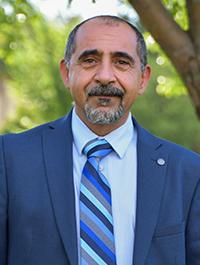
Dr. Zakwan Jaroucheh is a Lecturer at the School of Computing Engineering and the Built Environment , Edinburgh Napier University (ENU). With a PhD in Context-Aware Pervasive Computing from ENU (2012), he combines academic expertise with over seven years of industry experience as a Principal Security Engineer at Dell SecureWorks. Research focuses: Blockchain Technologies , Cybersecurity , Internet of Things , and Decentralized Systems Supervises PhD students in areas like DeFi compositions, blockchain authentication, and secure microservices Secured £485,000 in grants from The Data Lab, Scottish Enterprise, and CyberASAP Developed LastingAsset - a blockchain-based solution for combating phone call fraud His publications in IEEE , Personal and Ubiquitous Computing , and Springer address key challenges in decentralized authentication , privacy-preserving mechanisms , and blockchain security . Current work explores blockchain's transformative potential in value exchange and information sharing.
Daniel Amo Filvà is an Assistant Professor at the Engineering Department of La Salle Digital Engineering School, Ramon Llull University. His academic work bridges engineering, education, and data science, with a strong emphasis on learning analytics, educational technology, data privacy, and the ethical integration of artificial intelligence in education. His research interests focus on Learning Analytics , Educational Technology , Data Privacy , GDPR in Educational Contexts , Data Literacy , and AI in Education . He explores how digital tools can support personalized, inclusive, and ethically sound learning environments, especially in K-12 and higher education. The recent publications reflect a clear trajectory toward data-driven education, urban mobility innovation, and ethical data use. His work combines empirical research, case studies, and tool development, often using systematic reviews and project-based methodologies. Themes such as GDPR-aware educational design, ChatGPT integration, and robotics for inclusive education recur across his outputs. Scientific Projects: IADE : Integrating AI and Data Literacy in Education for personalization. DIVINTECH : Robotics for students with Autism Spectrum Disorder. Visibilizar el aprendizaje con ChatGPT : Enhancing education through AI tools. InnovAI : Digital transformation in Catalan SMEs. Acciona y Conecta : Sustainable urban mobility in Barcelona. He advises students such as B. Donate-Beby and S. Aguayo-Mauri, and collaborates with national and international researchers. His work is supported by research grants from institutions like the Department of Education and ACCIÓ. He leads multiple funded projects and contributes to interdisciplinary teams focused on technology transfer and innovation. He is affiliated with research groups working on digital engineering, human-environment interaction, and inclusive technology development. These teams foster collaboration across education, engineering, and public policy sectors to address real-world societal challenges.
Associate Professor Chelsea Liu is affiliated with the Adelaide Business School at the University of Adelaide . She is eligible to supervise both Master’s and PhD students and focuses on interdisciplinary research at the intersection of information systems , corporate governance , and behavioral economics . For more details, visit her Personal Website . Cybersecurity Corporate Governance Behavioral Economics Organizational Behavior Finance Information Systems Chelsea Liu’s research addresses critical challenges in corporate cybersecurity , executive leadership , and financial misconduct . Her recent work includes anti-phishing interventions, empirical studies on CEO attributes, and analyses of tax avoidance impacts. She also explores labor relations, environmental litigation, and organizational responses to market risks.
Dr. Julia Pohle is Co-head of the Research Group "Politics of Digitalization" at the WZB Berlin Social Science Center since May 2024, where she has served as Senior Researcher since April 2015. She concurrently holds positions as Associate Researcher at the CNRS Centre Internet and Société in Paris (since January 2025) and Senior Associate Researcher at the Center for Digitalisation, Democracy and Innovation (CD2I), Brussels School of Governance (since October 2021), establishing her as a leading transnational scholar in digital governance. Her academic journey includes a PhD in Communication Studies from Vrije Universiteit Brussel (2016), a Magister Artium in Cultural Studies, Computer Science, and Philosophy from Humboldt-Universität zu Berlin (2004-2007), and foundational studies at Universität Bremen and Università di Bologna. Her research critically examines the tension between nation states and global digital cooperation through the lens of digital sovereignty, geopolitics, and communication governance. Pohle's extensive publication record reveals a decisive shift from multistakeholder internet governance frameworks toward critical analyses of digital sovereignty discourses since 2019. Her interdisciplinary work bridges communication studies, political science, and law, with recurring themes including power dynamics in internet architecture, gendered dimensions of data privacy, and the geopolitical implications of EU regulatory initiatives. Recent articles demonstrate increasing engagement with Global South perspectives and sustainability concerns in digital policy. Her scientific recognition includes: Fellow of the Global Governance Futures Program (Robert Bosch Foundation Multilateral Dialogues) (2014-2015) PhD fellow of the Research Foundation Flanders (FWO) (2010-2015) As Academic Editor of Internet Policy Review since 2020 and Co-Chair of IAMCR's Communication Policy and Technology Section, she actively shapes scholarly discourse. Her leadership extends to steering committees of the Internet Governance Forum Germany (2016-2022) and Global Internet Governance Academic Network (2013-2016), demonstrating sustained engagement with policy communities. At WZB, she leads the "Politics of Digitalization" research group and drives multiple high-impact projects including "Re-claiming Digital Sovereignty in discourse, policy and practice (ClaimSov)", "Forging Successful AI Applications for European Economy and Society (FORSEE)", and "Balancing Acts: European digital policy amidst economic, normative and security competition", positioning her at the forefront of critical digital policy scholarship.
Ulrika Wennersten is an Associate Professor and Vice Dean for Education at Lund University School of Economics and Management (LUSEM). She holds dual roles as Senior Lecturer in the Department of Business Law and the Department of Law. Her affiliations include the Lund University Centre for Business Law (ACLU). Wennersten specializes in Intellectual Property Law, Media Law, Fashion Law, and Art Law, with a focus on digitalization challenges, legal protection of creative works, and ordre public in patent systems. She has authored influential textbooks like Grundläggande Immaterialrätt and contributes to Nordic and international IP networks. Research Interests: Wennersten’s research examines the intersection of law and creativity, particularly in digital environments. Key areas include copyright enforcement, legal frameworks for emerging technologies (cloud computing, social media), and the balance between commercial interests and societal values. Her work explores ethical dimensions of intellectual property, such as protecting cultural heritage and addressing moral rights in public art. Publications and Projects: With over 35 publications, she has contributed to peer-reviewed journals like NIR: Nordiskt Immaterialrättsskydd and authored chapters on topics like fashion law, design protection, and EU copyright policy. She leads the Lund University Intellectual Property Network (LUIP) and participates in projects analyzing IP challenges in the circular economy and public art preservation. Teaching and Outreach: Wennersten teaches courses on European IP law, commercial law, and fashion studies. She advocates for innovative pedagogical methods, including flipped classrooms. Internationally, she has been a visiting professor at Bocconi University (Italy) and the Ohio State University (USA). She chairs the Immaterialrättsligt Forum (FIF) and leads the Copyright Group at the Swedish Association for Intellectual Property (SFIR). Labs/Teams: Active in the Lund University Centre for Business Law (ACLU), she collaborates with interdisciplinary teams on projects like Public Art and the New Commons , exploring legal and cultural dimensions of public space.
Stefanos Gritzalis is a Professor of Information and Communication Systems Security at the University of Piraeus, Greece (2019+), leading the Lab. of Systems Security. Previously, he served as Rector of the University of the Aegean (2014-2018) and held academic roles at the University of the Aegean, including Professor and Head of the Department of Information and Communication Systems Engineering. His expertise spans cybersecurity, privacy, and regulatory compliance, particularly in cloud computing and IoT. He is a member of the Hellenic Authority for Communication Security and Privacy and the National Commission for Human Rights (2024+). Education includes a BSc in Physics, MSc in Electronic Automation, and PhD in Information and Communications Security from the University of Athens. His research focuses on cybersecurity, privacy preservation, and GDPR compliance, with over 336 publications, including 14 books and 37 chapters. He has an h-index of 55 and is ranked in the top 2% of global ICT researchers (Elsevier, 2024). He serves as Area Editor for IEEE Communications Surveys and Tutorials , and has edited 35 journals. He has supervised 17 PhD theses and over 150 Master’s and 300 BSc theses. His work includes designing privacy-aware systems and frameworks for cloud forensics, with grants exceeding €6 million. He advises on EU-funded projects and evaluates proposals for global research bodies like the ERC and Swiss National Science Foundation. His contributions to policy include co-creating Greece’s Open Government Partnership National Action Plan and advising on digital transformation strategies. He promotes cybersecurity education through gamification and has published on privacy literacy initiatives.
Jon Stone is an Associate Professor in the Department of Biology and Director of the Origins Institute at McMaster University, where he holds the SHARCNet Chair in Computational Biology. His teaching portfolio includes Evolution (BIOLOGY 3FF3), The Scientific Method in Biology (BIOLOGY 2L03), Biodiversity, Evolution and Humanity (BIOLOGY 1M03), and graduate-level courses in astrobiology (ORIG 701, ORIG 705). Dr. Stone's research spans astrobiology, evolution, bioinformatics, development, ecology, genetics, and physiology, with particular focus on computational studies of the genetic code, menopause, and organism resilience in extreme environments. His work bridges theoretical and experimental approaches, examining topics from tardigrade survival in simulated space conditions to theoretical models of speciation mechanisms in snails. His publication record demonstrates significant interdisciplinary reach, with recent work spanning astrobiology (questioning the planetary status of Fomalhaut b), evolutionary biology (speciation models), extremophile biology (tardigrade resilience), and public health (vaccine compliance during pandemics). This diverse portfolio reflects his leadership role at the Origins Institute, which focuses on interdisciplinary research into life's origins and evolution. Dr. Stone maintains active research collaborations across multiple disciplines, supervising graduate students in the Department of Biology and contributing to McMaster's research-intensive environment through both computational and experimental approaches to fundamental biological questions.
A.M.G. Zuiderwijk-van Eijk serves as Associate Professor at Delft University of Technology's Faculty of Technology, Policy and Management, where she also directs the Bachelor Systems Engineering Policy Analysis and Management program (Technische Bestuurskunde). Her academic home resides within the Information and Communication Technology department, focusing on critical digital society issues. Her research spans Open Data, Digital Inclusion, and Social Inclusion , examining technological and institutional barriers affecting vulnerable groups' digital technology adoption. Current work investigates data sovereignty frameworks, AI ethics in public governance, and climate policy support systems through interdisciplinary lenses combining information science, public administration, and social contract theory. Recent publications reveal strong emphasis on ethical AI implementation and equitable data governance. Scientific Recognition: Outstanding Paper Award at 36th Bled eConference (2023) She leads significant research initiatives including the active ODECO: Towards a sustainable Open Data ECOsystem project (2021-2025) and previously directed TRUSTS: Trusted Secure Data Sharing Space (2020-2022). Her scholarly impact is evidenced by 119 research outputs including 37 articles, 56 conference contributions, and 23 curated datasets. She actively engages in academic service through conference organization and policy workshops.
Udaya Kiran Tupakula is an Associate Professor in the Department of Computing within the School of Computer, Data and Mathematical Sciences at Western Sydney University. With over two decades of research experience, his work focuses on cybersecurity with particular emphasis on network security, cloud infrastructure protection, and emerging technologies. He has established himself as a leading researcher through extensive collaborations, particularly with Professor Vijay Varadharajan, and has contributed significantly to securing virtualized environments and next-generation networks. Dr. Tupakula's research spans multiple critical areas in cybersecurity. His early work focused on fundamental security challenges like DDoS mitigation and TCP SYN flood attacks, evolving into more complex domains including Software Defined Networking security, cloud security architectures, and IoT protection. Recent research directions include AI security, privacy-preserving machine learning, and securing 5G infrastructure. His approach combines theoretical frameworks with practical implementations, often developing novel security architectures that address specific vulnerabilities in emerging technologies. Analysis of his publication trends shows a clear progression from traditional network security toward more sophisticated systems. His work has increasingly incorporated machine learning techniques for intrusion detection, expanded into industrial control systems security, and recently embraced AI safety challenges. The breadth of his research demonstrates adaptability to evolving security landscapes while maintaining focus on practical, implementable solutions rather than purely theoretical approaches. Dr. Tupakula has mentored numerous researchers who have become active contributors in the cybersecurity field. His collaborative approach is evident in the extensive co-authorship network spanning multiple institutions and countries. His research has been supported by various grants focusing on critical infrastructure protection, cloud security, and next-generation network security. His laboratory work focuses on practical security testing environments for SDN, cloud infrastructure, and IoT systems. Current research directions include securing AI systems from malicious use, enhancing privacy in federated learning environments, and developing more robust security frameworks for industrial control systems. The applied nature of his research ensures close alignment with real-world security challenges faced by industry and government organizations.
Dr. Jaafar Alghazo is an Associate Professor in the Math, Science and Technology Department at the University of Minnesota. He currently teaches courses in Information Technology Management and Software Engineering, including ITM 3900-E90: Internship, SE 2200-001: Intro to Software Engineering, and SE 4500-001: Senior Project I. Research Focus: Machine Learning, Deep Learning, Medical Image Analysis, Cybersecurity, IoT, UAV Communications Key Publication Trends: 15 most recent works span 2025–2023, emphasizing neural network optimization, Arabic sign language recognition, flood detection, and secure medical imaging techniques
Dr. Daniela Vallentin serves as a Group Leader at the Max Planck Institute for Ornithology in Seewiesen, Germany, and holds a temporary or junior faculty position with the Graduate School of Systemic Neurosciences (GSN) at Ludwig Maximilian University of Munich. Her research focuses on neural circuit mechanisms underlying vocal communication in songbirds, utilizing advanced intracellular recording techniques in behaving animals. Her primary research interests encompass vocal learning processes, social interaction dynamics in songbirds, premotor circuit functionality, and sensorimotor transformations during vocal behavior. She investigates how neural circuits generate precise temporal patterns in vocal communication, with particular emphasis on inhibition-excitation balance in premotor areas and its role in vocal turn-taking and song production. Her work bridges systems neuroscience and behavioral biology to uncover fundamental principles of learned vocal communication. Analysis of her recent publications reveals a consistent trajectory in songbird neuroscience, spanning cellular-level intracellular recordings to population dynamics. Her research demonstrates how premotor circuits encode temporal sequences, how inhibition shapes vocal timing during social interactions, and the neural mechanisms protecting learned song segments. This body of work establishes critical links between neural circuit dynamics and complex vocal behaviors, with implications for understanding vocal learning across species. Dr. Vallentin actively mentors graduate students through the GSN program, including Linda Bistere and Giacomo Costalunga. Her position as Group Leader at the Max Planck Institute indicates substantial research funding supporting her investigations into neural circuit mechanisms of vocal communication. She leads the Research Group Vallentin at the Max Planck Institute for Ornithology, which specializes in neural circuit analysis of vocal communication using zebra finches as a model system. The group employs cutting-edge electrophysiological techniques combined with behavioral analysis to dissect the neural basis of vocal learning, social communication, and sensorimotor integration in naturalistic contexts.
Daniel Gonzales is a Senior Scientist at the RAND Corporation and Professor of Technology Analysis at the RAND School of Public Policy. His expertise spans advanced communication systems, electronic warfare, cybersecurity, and physics, with a focus on defense technology policy and the Department of Defense (DoD). He analyzes technical and policy issues related to quantum computing, directed energy, hypersonic systems, and microchip supply chains. Gonzales holds a Ph.D. in theoretical physics from MIT and a B.S. in physics from Stanford University. Education: Ph.D. in Theoretical Physics, Massachusetts Institute of Technology B.S. in Physics, Stanford University Research Focus: Gonzales' work combines technical analysis with policy implications, addressing strategic military technology challenges. Recent studies include comparative assessments of U.S. and Chinese military tech capabilities, quantum technology industrial bases of U.S. allies, and alternative futures for global digital infrastructure. He emphasizes securing 5G networks, mitigating microelectronics supply chain risks, and countering adversarial digital modernization efforts. Publications Overview: His research spans cybersecurity, military innovation, and technology governance, with notable contributions to understanding U.S.-China competition in critical technologies. He explores how emerging technologies like quantum computing and hypersonics reshape defense strategies while addressing vulnerabilities in communication systems and electronic warfare domains. Grants & Labs: Active in DoD-funded projects analyzing defense acquisition policies, network-centric operations, and interoperability challenges in coalition forces. His work informs policies on export controls, hardware security mechanisms, and strategic technology investments.
Prof. Dr. Florian Steinke is a Professor and Head of the Energy Information Networks and Systems Department at Technische Universität Darmstadt. His academic career spans roles at Siemens Corporate Technology (2009–2016) and a PhD in machine learning at the Max Planck Institute for Intelligent Systems (2006–2008). His research focuses on algorithmic energy management, distributed control systems, machine learning applications in energy grids, and resilient smart grid design. Education: PhD in Machine Learning (Max Planck Institute for Intelligent Systems, 2006–2008) Diplom in Computational Physics (University of Tübingen & University of Washington, 1999–2005) Research Interests: Development of cyber-physical systems for energy grids Optimization of thermal-electric systems using game theory and stochastic control Integration of social media data for demand forecasting Cybersecurity measures against adversarial attacks on grids Recent work emphasizes probabilistic grid modeling, resilient energy market design, and AI-driven control strategies for Fourth Generation district heating grids. His platform ecosystem research aims to support the energy transition through data-driven solutions. Labs/Teams: Leads the Energy Information Networks and Systems research group, focusing on interdisciplinary projects combining automation, data science, and energy systems engineering.
Dr. Damien Spry is an Adjunct Research Fellow at the University of South Australia (UniSA), affiliated with UniSA Justice & Society and previously with the School of Creative Industries. His research spans digital diplomacy, social media analytics, public engagement, and youth interactions with mobile media. He has conducted extensive empirical studies on Facebook diplomacy by foreign ministries, particularly in the Asia-Pacific region. Institution: University of South Australia School: School of Creative Industries Role: Adjunct Research Fellow Email: Damien.Spry@unisa.edu.au His research focuses on the intersection of digital media and international relations, emphasizing audience engagement, institutional practices, and algorithmic influences. He employs mixed-methods approaches, combining quantitative metrics with qualitative content analysis to evaluate diplomatic communication on platforms like Facebook. Analysis of his recent publications reveals a strong trend toward data-driven, user-focused models of digital diplomacy. His work frequently examines how ministries of foreign affairs engage publics, the relevance of content, and emotional resonance in digital outreach. He also explores cultural representations, such as Australia in South Korean media, and broader themes of soft power in East and Southeast Asia. Notable scientific contributions include methodological innovations using tools like Netvizz and Leximancer, and conceptual frameworks for categorizing diplomatic discourse on social media. His research has been published in Media International Australia , Hague Journal of Diplomacy , and by publishers such as SAGE, Routledge, and Brill. Dr. Spry has advised on digital engagement strategies for government agencies like DFAT and the Department of Defence. His work has been supported by grants such as the ARC Australian Postgraduate Industry Award. He has contributed to policy-oriented reports, notably for the Australian Strategic Policy Institute. He has been involved in research teams exploring digital workers, youth media use, and online safety. His earlier work included studies on mobile youth cultures in Japan and Australia, and digital inclusion for chronically ill youth through platforms like Livewire. His future research trajectory appears focused on diversifying digital diplomacy models across the Asia-Pacific and refining audience-centric approaches in public diplomacy.
Dr. Daniel Page is a Senior Lecturer in Computer Science at the University of Bristol, specializing in Cryptography and Information Security. His research bridges cryptographic engineering, hardware/software security, and programming language design. Research interests: Cryptographic engineering (hardware and software implementation of cryptographic primitives), side-channel attacks, fault attacks, secure processor architectures, domain-specific compiler optimizations for cryptography (e.g., AES, ECC), and cross-disciplinary studies in software defects and game glitch analysis. Recent research trends focus on hardware/software co-design for security, including novel instruction set extensions (ISEs) to mitigate leakage in masked implementations and protect against cache-based side-channel attacks. His work spans both theoretical and applied domains, with collaborations in digital security policy and embedded systems. Projects include DiScriBe (Digital Security by Design Social Science Hub, 2020–2024) and EPSRC-funded initiatives (2019–2022/2023). He has contributed datasets like GMOPST14 (University of Bristol, 2014).