Dr. Graham Brooker is a Senior Lecturer at the University of Sydney's School of Aerospace, Mechanical and Mechatronic Engineering since 1999. He holds a PhD (2005) and degrees from the University of the Witwatersrand. Research Interests: Focuses on radar systems for autonomous navigation, rehabilitation engineering (dementia/Parkinson's), medical robotics (birth simulators), and millimeter-wave imaging. His work improves safety in mining/military environments and quality of life through assistive technologies. Recent Projects: Includes radar-acoustic interactions, entomological harmonic radar, dental robotics, cervical tissue modeling, and force analysis during childbirth. Active in developing low-cost radar solutions for road vehicles and microwave weed killing systems. Awards: Notable recognitions include 2010 AMME Teaching Award, 2012 Faculty Teaching Award, and top-tier conference paper prizes. Holds patents and has authored multiple textbooks like Introduction to Biomechatronics (2012) and Sensors for Ranging and Imaging (2022).
Professor Robin Purshouse is a leading academic at the University of Sheffield , currently serving as Professor of Decision Sciences in the Department of Automatic Control and Systems Engineering within the School of Electrical and Electronic Engineering . With a career spanning academia and industry, his work bridges computational modelling , optimization , and systems science to address complex challenges in public health and engineering. His research has been pivotal in developing mechanisms for agent-based modelling and evolutionary multi-objective optimization . Education: PhD in Control Systems (2004), MEng in Control Systems Engineering (1999) from the University of Sheffield Professor Purshouse's research focuses on computational modelling of complex social systems , decision analytics for population health policy , and Bayesian optimization . He has pioneered the integration of machine learning and uncertainty quantification in social science simulations, with notable projects like the Sheffield Alcohol Policy Model and CASCADE initiative. His work spans interdisciplinary domains, including health economics , policy evaluation , and engineering design . Recent publications highlight his expertise in agent-based modelling for smoking/vaping dynamics , intersectional disparities in alcohol consumption , and inclusive economy frameworks . He has secured substantial funding (exceeding £16 million) through grants from NIH , CRUK , UKPRP , and MRC , including his role as co-PI in the HealthMod cluster. His contributions to multi-objective optimization and evolutionary algorithms have advanced methodologies in both engineering and public health domains. Scientific Awards: ESRC Future Research Leaders Award (2012-2015) As a co-developer of the Liger optimization environment , Purshouse has fostered open-source tools for complex decision-making. He leads the SIPHER consortium for systems science in public health and serves on editorial boards for journals like Environmental Modelling & Software . His teaching includes Agent-Based Modelling (ACS6132), and he maintains professional memberships in the Association for Computing Machinery and Research Society on Alcohol .
Dr. Scott Weichenthal is a Professor in the Department of Epidemiology, Biostatistics & Occupational Health at McGill University. His research focuses on identifying environmental risk factors for chronic diseases, particularly cancer and cardiovascular disease, with an emphasis on air pollution exposure assessment. He develops innovative methods for estimating environmental exposures, including deep learning models for global-scale applications. Current work examines wildfire impacts, nanoparticle characteristics, and social disparities in urban air quality. Affiliations: McGill University, Department of Epidemiology, Biostatistics & Occupational Health Research Themes: Air pollution epidemiology, exposure science, machine learning in environmental modeling Key Projects: Wildfire health effects, ultrafine particle mortality risks, spatiotemporal air quality modeling Dr. Weichenthal’s research bridges environmental toxicology and public health, addressing questions like: How do urban environments influence exposure to pollutants? How can deep learning improve global exposure estimates? His work highlights the need to consider particle composition in epidemiological studies and advocates for policies reducing disparities in air pollution burdens. His publications explore links between air pollution and diseases across populations, including maternal and pediatric health outcomes. He emphasizes methodological advancements, such as integrating mobile monitoring and machine learning for high-resolution exposure mapping. Lab/Team: The Weichenthal Research Group at McGill University focuses on understanding health effects of environmental exposures, with ongoing projects in Canada and globally.
Lukas Arnold is a Professor and Head of the Fire Dynamics Division at Forschungszentrum Jülich GmbH, affiliated with the Institute for Advanced Simulation (IAS) and its Civil Safety Research Group (IAS-7). He holds a chair in Computational Civil Engineering at the University of Wuppertal and leads major research initiatives in fire safety science using computational methods. Research Focus: Fire Dynamics Simulation Academic Rank: Professor Key Collaborations: University of Wuppertal, DFG, BMBF His research spans fire dynamics simulation, visibility modeling in smoke environments, and flame spread prediction. He develops advanced numerical methods like CFD-based models and inverse modeling techniques for pyrolysis kinetics, smoke propagation, and material decomposition analysis. His work integrates experimental data from real-scale fires with computational tools to improve evacuation safety and risk assessment. Recent publications highlight his expertise in smoke visibility, PMMA pyrolysis, and GPU-accelerated fire simulations. He supervises PhD students in projects involving TGA experiments, multi-scale modeling, and emergency management systems. Arnold's work has been supported by third-party grants from BMBF, DFG, and State NRW, focusing on AI-driven fire modeling, high-performance computing, and disaster resilience. He organizes bi-annual summer schools on fire modeling and contributes to open-access scientific resources.
Betül Demirci Kurşun is a researcher affiliated with the Department of Mechanical Engineering at Başkent University. She collaborates with Assoc. Prof. Dr. Nureddin Dinler on projects related to fluid dynamics, thermoeconomics, and fire safety analysis. Her research focuses on: Computational Fluid Dynamics (CFD) applications in mechanical systems Thermoeconomic analysis of energy systems Fire dynamics and tunnel ventilation Design optimization of mechanical components Energy efficiency in thermal systems Recent publications highlight her work on smoke dispersion in tunnels, boiler thermoeconomics, dust collection units, and vehicle fire modeling. Her studies often integrate numerical simulations and experimental validations.
Tim Jenkins, Ph.D., is an Adjunct Professor in the Department of Surgery, Division of Urology at the University of Utah. He earned a B.S. in Physiology and Developmental Biology from Brigham Young University (2008) and a Ph.D. in Physiology from the University of Utah (2013). After completing a postdoctoral fellowship at the University of Utah School of Medicine, he accepted an adjunct faculty position where he continues to pursue translational research in male reproductive health. Education Ph.D. in Physiology, University of Utah, 2013 B.S. in Physiology and Developmental Biology, Brigham Young University, 2008 Postdoctoral Fellowship, University of Utah School of Medicine Research Focus Jenkins’ research centers on the intersection of sperm epigenetics, male infertility, and assisted reproductive technologies. Key themes include: Impact of paternal age on the sperm epigenome and subsequent offspring health Development of microfluidic platforms for gentle, high-precision sperm selection to improve intrauterine insemination and TESE outcomes Epigenetic biomarkers as predictors of male fertility and embryo quality His work integrates molecular epigenetic profiling with innovative bioengineering approaches to translate laboratory findings into clinical practice. Publication Trends Jenkins has authored more than 30 peer-reviewed papers since 2011. Early work established baseline DNA methylation changes in aging sperm, while more recent studies expand into multi-omics meta-analyses, systematic reviews on miRNA roles in reproduction, and engineering microfluidic devices for sperm isolation. The trajectory shows a clear shift from descriptive epigenetic studies to translational technologies aimed at improving ART success rates. Intellectual Property & Editorial Contributions Co-inventor on patent: "Systems and Methods for Determining Impact of Age Related Changes in Sperm Epigenome on Offspring Phenotype" (2019) Editorial commentary: "Microfluidics: a way to interrogate a single sperm?" Fertil Steril (2019) Collaborative Teams Jenkins collaborates closely with investigators in the Departments of Surgery, Human Genetics, and Bioengineering at the University of Utah, notably with Drs. Carrell, Aston, Hotaling, and Cairns. His lab is embedded within the larger Utah Center for Reproductive Medicine, providing access to clinical samples for translational projects.
Dr. Lexuan Zhong serves as a Professor in the Department of Mechanical Engineering within the Faculty of Engineering at the University of Alberta, where she founded and directs the Built Environment Technology Lab (BETLab). She teaches core courses including MEC E 463 (Thermo-Fluids Systems Design), MEC E 466 (Building Systems Design), and MEC E 641 (Environmental Technologies in Buildings), with upcoming instruction scheduled through Winter 2026. Education: Ph.D., Concordia University (Distinction), Montreal, Canada M.Sc., Tongji University, Shanghai, China B.Sc., Tongji University, Shanghai, China Research Focus: Dr. Zhong's work integrates experimental, computational, and field methodologies to advance indoor air quality science , advanced HVAC system design , and renewable energy integration in buildings. Her expertise spans air purification technologies (particularly UV germicidal irradiation and photocatalytic oxidation), building resilience against wildfires and pandemics, green building certification, and health exposure assessment in built environments. She emphasizes practical applications for cold-climate zones and urban decarbonization. Publication Trends: Analysis of her 2021-2025 publications reveals three dominant trajectories: (1) UV-based disinfection systems for bioaerosol and VOC control, (2) green hydrogen integration for net-zero urban energy systems, and (3) climate-responsive building technologies including wildfire-resilient ventilation and smart solar shading. Her work consistently bridges fundamental fluid dynamics with real-world pandemic and climate adaptation challenges. Research Leadership: Dr. Zhong actively mentors undergraduate researchers and recruits Master's/Doctoral candidates for BETLab projects in HVAC&R, indoor air quality, and green buildings. Her lab operates through industry partnerships and likely government grants (implied by ongoing publications and PhD positions), though specific funding sources aren't detailed. Current projects include particle pollution control strategies and wildfire-resilient ventilation systems for Western Canadian homes. Laboratory Operations: As BETLab founder, she oversees experimental facilities for building material characterization, air cleaning technology development, and field validation of advanced HVAC systems, with recent work focusing on in-duct UVGI applications and hydrogen energy storage integration.
Prof. Martine Bouman is a Visiting Professor at the Erasmus School of History, Culture and Communication (ESHCC), Department of Media and Communication, Erasmus University Rotterdam. She specializes in health communication, entertainment-education, and social media analysis. Her work focuses on leveraging media and digital platforms to address public health challenges, particularly in areas like smoking cessation, cervical cancer prevention, and vaccination debates. She has conducted extensive research on culturally sensitive interventions for migrant populations and youth health during pandemics. Research Interests: Health communication strategies in digital environments Social media's role in public health campaigns Entertainment-education for behavioral change Cultural adaptation of health messages Policy analysis on tobacco control and vaccination Recent work highlights include evaluating web-based educational videos for cervical cancer screening among Turkish and Moroccan-Dutch women, analyzing Twitter discourse on vaccination debates, and studying social media use during the COVID-19 pandemic. Her research often bridges theory and practice, collaborating with policymakers and media professionals. Awards: Two awards noted in her profile, though specifics are not disclosed. Advising & Grants: While no student names are listed, her projects likely involve collaborative research teams. Grants have supported initiatives like Sound Effects (hearing loss prevention) and 'Nederland in Beweging!' (health promotion TV programs). Labs/Teams: Active in transmedia edutainment research groups and participates in international projects on child marriage prevention (Girls Not Brides partnership).
Prof. Irfan Yolcubal is a Professor in the Department of Geological Engineering at Istanbul Technical University (ITU), working at the Ayazağa Campus, Faculty of Mines. He previously held the position of Professor at Kocaeli University from 2014 to 2023. His research focuses on hydrogeology, water quality, contaminant transport, and environmental geochemistry, with particular emphasis on acid mine drainage, groundwater pollution, and remediation strategies. He has conducted extensive studies on karst aquifers, coastal groundwater dynamics, and the environmental impacts of mining activities. Education: PhD in Hydrology and Water Resources (University of Arizona, 2001) MSc in Soil, Water, and Environmental Sciences (University of Arizona, 1996) BSc in Geological Engineering (Black Sea Technical University, 1992) Research Interests: His work integrates field studies, geochemical analysis, and geophysical techniques to address challenges in groundwater management, pollution mitigation, and sustainable resource use. Key areas include: Hydrogeological modeling of karst systems and coastal aquifers Characterization of contaminant transport pathways in porous media Evaluation of acid mine drainage risks and remediation technologies Assessment of agricultural and industrial impacts on water quality Publications: Over 28 peer-reviewed articles, with recent work focusing on karst aquifer dynamics, urban groundwater salinization, and heavy metal pollution in mining regions. His research often employs multi-method approaches, including isotopic tracing and electrical resistivity tomography. Awards and Memberships: Recipient of the YÖK PhD/Master's Scholarship in the USA (2003) Member of the National Groundwater Association, American Geophysical Union (AGU), and Turkish Hydrogeology Engineers Association Grants and Projects: Led or contributed to over 20 projects, including: Managed aquifer recharge potential studies in Istanbul Environmental impact assessments of coal galleries and gold mines Development of watershed protection plans for Sapanca and Çıldır Lakes Labs and Teams: Collaborates with interdisciplinary teams on groundwater modeling, geochemical analysis, and field surveys, often involving graduate students in field and lab studies.
Hugo Destaillats is a Senior Scientist at the Indoor Environment Group within the Energy Analysis and Environmental Impacts Division of Lawrence Berkeley National Laboratory since 2003. He holds a PhD in Chemistry from the University of Buenos Aires (1998) and completed postdoctoral work in Environmental Engineering Science at Caltech (1998-2001) and Environmental Toxicology at UC Davis (2001-2003). PhD in Chemistry, University of Buenos Aires, Argentina, 1998 Postdoc in Environmental Engineering Science, California Institute of Technology, USA, 1998-2001 Postdoc in Environmental Toxicology, University of California Davis, USA, 2001-2003 His research spans indoor air quality , thirdhand smoke hazards , photocatalytic oxidation , ozone reactions with indoor pollutants , and building material impacts on environmental health . Key projects include thirdhand smoke carcinogenicity studies in mice, development of ASTM-standardized cool roof aging protocols, and characterization of vaping/cannabis emissions. 2018 and 2016 awards highlight breakthroughs in thirdhand smoke public health impacts and cool roof technology . Recent publications focus on nanosheet composite design , thirdhand smoke exposure pathways , ozone remediation , and VOC emission dynamics from tobacco and cannabis products. Scientific Awards: 2018 Director’s Award for Societal Impact (LBNL) for thirdhand smoke lung cancer research 2016 R&D 100 Award for Cool Roof Time Machine
Lieven De Marez is a Professor at Ghent University, affiliated with the Faculty of Engineering and Architecture and the Department of Information Technology. His research spans human-computer interaction, quality of experience (QoE), smart homes, digital education, and social media behavior, reflecting a strong interdisciplinary approach combining technical and social sciences. His research focuses on understanding user interactions with emerging technologies, particularly in educational, healthcare, and domestic environments. Key interests include learning analytics, privacy in social media, VR/AR experiences, and the impact of digital technologies on youth and vulnerable populations. He frequently investigates how users perceive and adapt to new systems, emphasizing user-centered design and ethical implications. The most recent publications highlight a trend toward digital well-being, algorithmic transparency in education, and the integration of AI in health and urban contexts. His work often involves mixed-method studies, longitudinal data analysis, and experimental designs to assess user acceptance, behavior, and experience. Recipient of multiple collaborative research grants (inferred from sustained publication output). Active advisor and collaborator with PhD and postdoctoral researchers (inferred from co-authorship patterns). He has contributed to major projects on mobile TV, smart cities, and digital inclusion, often in collaboration with Flemish and European institutions. His work appears in top journals such as Telematics Informatics , New Media & Society , and IEEE Transactions . Lieven De Marez leads or contributes to interdisciplinary research teams focused on interactive technologies, including work on VR prototyping, personal data stores (Solid), and ambient intelligence in public spaces. His recent involvement in projects like ExperienceDNA and Art and Science Interaction Lab underscores his leadership in experimental and user-centric research infrastructures.
Suzaynn Schick is a prominent researcher at the University of California San Francisco (UCSF), affiliated with the UCSF Center for Tobacco Control Research and Education, the Helen Diller Family Comprehensive Cancer Center, and the California Thirdhand Smoke Consortium. Her work focuses on the chemistry and toxicity of tobacco and cannabis smoke, with particular emphasis on thirdhand smoke as a long-term environmental pollutant. Education: B.S. in Cell and Molecular Biology (University of Washington, 1986-1989) Ph.D. in Biomedical Science (UCSF, 1991-2001) Postdoctoral studies in Public Health (UCSF, 2002-2006) and Inhalation Toxicology (UCSF, Feb 2006-Sept 2007) Schick's research explores how smoke pollutants contribute to cardiovascular and respiratory diseases. Her groundbreaking studies demonstrate that thirdhand smoke—a residue of oils and waxes on surfaces—remains carcinogenic long after active smoking ceases, challenging conventional assumptions about secondhand smoke risks. Recent publications highlight her work on thirdhand smoke's role in gastric tumor development, endothelial dysfunction from cannabis and cigarette aerosols, and the persistence of toxins in indoor environments. Her studies span molecular toxicology, air quality analysis, and public health policy implications. Scientific Awards: National Science Foundation Predoctoral Fellowship (1991) Schick's funded projects include investigations into melanin's role in thirdhand smoke absorption and environmental pollutant measurement. She advocates for stronger protections against involuntary smoke exposure through policy engagement and interdisciplinary collaboration.
Osamah J. Saeedi, MD, MS is an Associate Professor of Ophthalmology at the University of Maryland School of Medicine and Adjunct Associate Professor of Bioengineering at the University of Maryland, College Park. He serves as Director of Clinical Research, Director of the Glaucoma Division, and Vice Chair for Academic Affairs in the Department of Ophthalmology and Visual Sciences. Education: BSE Chemical Engineering, University of Pennsylvania (2002) MD, University of Texas Southwestern (2007) Preliminary Internal Medicine, Baylor College of Medicine (2008) Ophthalmology Residency, University of Texas Southwestern (2011) Glaucoma Fellowship, Wilmer Eye Institute, Johns Hopkins University (2012) MS Epidemiology and Clinical Research, University of Maryland Baltimore (2018) Dr. Saeedi's research centers on glaucoma—a leading cause of blindness affecting 3+ million Americans—with focus on novel imaging biomarkers for early detection. His work investigates ocular blood flow dynamics, advanced ophthalmic imaging techniques, health services research for underserved populations, and genetic factors in glaucoma progression. This research aims to prevent vision loss through improved diagnostics, potentially saving billions in healthcare costs. Analysis of his 13 publications (2007-2016) reveals dominant glaucoma research (8 papers), particularly on imaging biomarkers and blood flow. Recent work (2015-2016) shows expansion into health services research for glaucoma patients and innovative diagnostic approaches, indicating a strategic shift toward translational applications and patient-centered outcomes in ophthalmic care. Awards: NIH Career Development Award (K23) Grants: NIH K23 Award for glaucoma biomarker development American Glaucoma Society research funding Dr. Saeedi leads the Glaucoma Division and Clinical Research program at the University of Maryland, directing multidisciplinary teams in developing imaging protocols and clinical trials to advance glaucoma diagnosis and treatment strategies.
Hüseyin İLTER, Kırşehir Ahi Evran Üniversitesi Tıp Fakültesi Dahili Tıp Bilimleri Bölümü'nde Öğretim Görevlisi olarak görev yapmaktadır. 1998 yılında Ankara Üniversitesi Tıp Fakültesi'nden tıp doktoru unvanını aldıktan sonra 2020'de Necmettin Erbakan Üniversitesi Sağlık Bilimleri Enstitüsü'nden Halk Sağlığı alanında doktorasını tamamlamıştır. Öğretim Görevlisi (2023-), Kırşehir Ahi Evran Üniversitesi Genel Sekreter (2023-), Kırşehir Ahi Evran Üniversitesi Araştırmaları Halk Sağlığı , Çevre Sağlığı , Meslek Hastalıkları , İçme Suyu Kalite Yönetimi , Biyoistatistik ve Klima Değişikliği Etkileri gibi konuları kapsamaktadır. 60 makale, 4 kitap bölümü ve 10 bildiri ile katkı sağlamıştır. 2025 yılında Çevre Sağlığı Etik Farkındalık Ölçeği geliştirme projesi başta olmak üzere 2017-2019 yılları arasında Su Ürünlerinde Ağır Metal Yükü çalışmasında araştırmacı olarak yer aldı. Google Scholar'da 296 atıf ve h-indeksi 10 kayıtları bulunmaktadır. 2024-2025 döneminde Çevre Sağlığı Etik Farkındalık Ölçeği projesinin yürütücüsüdür. Sağlık Bakanlığı ile 2015-2019 arasında Biyoistatistik Uygulamaları ve Tütün Kontrolü alanında sertifikalı kurslar düzenlemiştir.
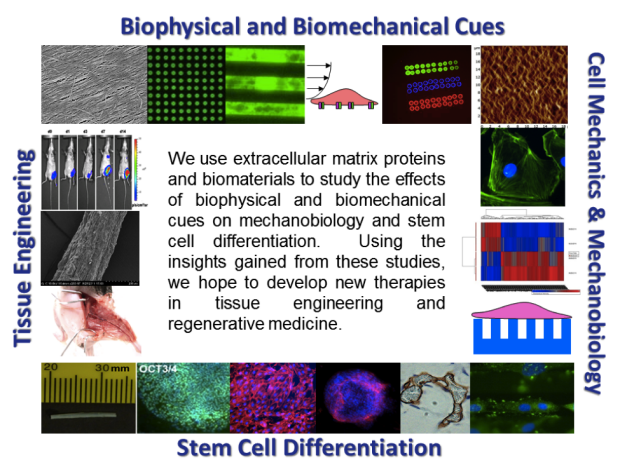
Ngan F. Huang, PhD is an Associate Professor of Cardiothoracic Surgery at Stanford University and a Courtesy Associate Professor of Chemical Engineering . She serves as a Research Career Scientist at the Department of Veterans Affairs and leads the Huang Research Lab at the Center for Tissue Regeneration, Repair and Restoration (VA Palo Alto Health Care System). Key roles: Principal Investigator, Stanford Cardiovascular Institute Research focus: Tissue Engineering , Cardiovascular Regeneration , Stem Cell Therapy , and Biomaterials Her work leverages extracellular matrix (ECM) cues, nanofibrillar scaffolds , and organ-on-a-chip platforms to address conditions like peripheral artery disease , muscle injury , and cardiovascular dysfunction . Recent publications emphasize combinatorial ECM designs , microgravity muscle modeling , and aligned fibrillar structures for cell orientation. Notable awards include the Peripheral Vascular Disease Travel Award (2014) and Robert W Hobson II Early Career Investigator Award (2012). Her lab actively recruits postdoctoral fellows and animal technicians for studies involving vascular disease models and tissue regeneration .