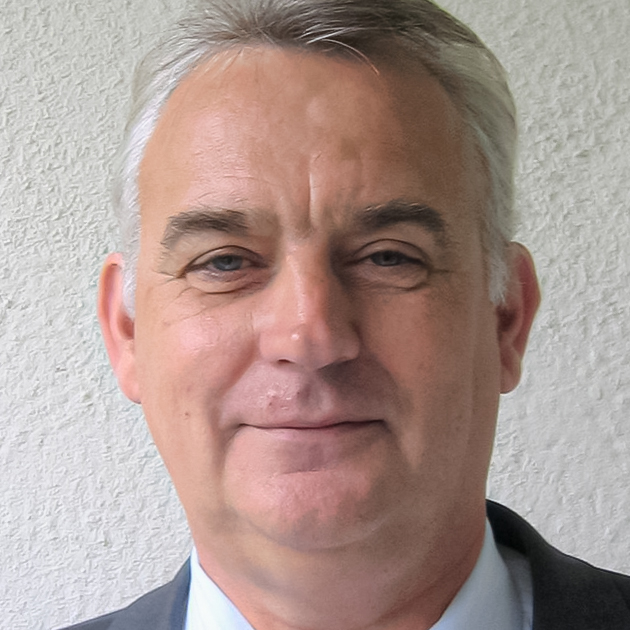
Dr. Raul Sanchez-Reillo is a Full Professor at the Electronics Technology Department, University Carlos III of Madrid (UC3M). He holds a PhD in Telecommunication Engineering from the Polytechnic University of Madrid (2000). As Director of GUTI (University Group for Identification Technology) and founder of IDTestingLab, he specializes in biometrics, smartcards, and information security. His work since 1994 includes managing over 8 European projects (e.g., BioSec, MobilePass) and 12 national/regional projects. He chairs international standardization bodies like ISO/IEC JTC1 SC37 (Biometrics) and leads Spanish delegations in related standards committees. His research focuses on biometric systems (fingerprint, vein, ECG, gait), presentation attack detection, and mobile security. He has authored 36+ international journal papers, 18 book chapters, and contributed to 12 international standards. Awards include the IEEE Harry Rowe Mimno Award (2002) and the iBanesto.com Best PhD Thesis Award (Electronic Commerce). Teaching includes courses on microprocessors, digital systems, and biometrics. He has supervised over 130 final degree projects and directed 5 completed PhDs with 8 ongoing. His work integrates hardware-software co-design for biometric systems and emphasizes usability in mobile environments.
Michael Gruber is a researcher and teaching associate at the Lehrstuhl für Sicherheit in der Informationstechnik (Chair for Security in Information Technology) at Technische Universität München (TUM) , under Prof. Georg Sigl. His role involves conducting advanced research in hardware security and teaching specialized courses in cryptographic implementations. Research Focus: Gruber's work centers on fault attacks , side-channel attacks , and secure implementations of cryptographic systems, with applications in embedded security and cryptanalysis . He actively contributes to projects involving hardware reverse engineering , FPGA security , and post-quantum cryptography . Teaching Contributions: He co-leads the SmartCard Laboratory and teaches Secure Implementation of Cryptographic Algorithms , providing hands-on experience in secure hardware design and vulnerability assessment. Publications: Gruber has authored numerous peer-reviewed papers (2017–2024) in top-tier venues like HOST , FDTC , and ASPDAC , focusing on novel attack methodologies and countermeasures for secure hardware. Collaborations: His work often involves collaboration with PhD students and industry partners, as evidenced by co-authored papers with researchers like Matthias Probst, Patrick Karl, and Georg Sigl.
Yehua Dennis Wei is a Professor at the School of Environment, Society & Sustainability at the University of Utah since 2007. He holds a PhD in Geography from UCLA (1998) and has held visiting professorships at Zhejiang University and East China Normal University. Education: BS in Economic Geography and Urban Planning (Zhejiang University, China, 1984), MS in Human Geography (Nanjing Institute of Geography, CAS, 1987), MA in Urban Planning (University of Akron, 1991), MA in Geography (University of Akron, 1993). His research spans Human Geography , Urban and Regional Planning , and Environmental Policy . Recent work explores the links between teleworking and well-being , socio-spatial polarization and health , and polycentric urban development in China . He investigates how urban form and environmental factors influence mental health , intergenerational mobility , and industrial sustainability through spatial analysis and global-local dynamics. His scientific awards include: Highly Cited Researcher (2024, Clarivate) World's Top 2% Scientist (2024, Stanford) Fellow (2024, American Association of Geographers) Distinguished Scholar Award (2006, AAG) He teaches courses on Global Economic Geography , Geography of China & Asia , and Geography and Business , with a focus on thesis research advising. His grants include multiple awards from the Ford Foundation , Lincoln Institute of Land Policy , and National Science Foundation on topics like urban housing, transit-oriented development, and industrial eco-efficiency in China. Professional roles include serving on committees for the Regional Science Association of China and Association of American Geographers .
Dr. Niek Mouter is an Associate Professor of Infrastructure Policy Appraisal at TU Delft’s Transport & Logistics group, combining expertise in economics, philosophy, and political science. He focuses on improving infrastructure project appraisal through ethical considerations and stakeholder engagement, developing methods like Participatory Value Evaluation (PVE) and Willingness to Allocate Public Budget Experiments. His work bridges technical analysis and societal values, influencing policy decisions on transport, energy, and public health. Mouter holds an MSc in Economics and an LLM in Philosophy of Law. **Education**: MSc Economics, LLM Philosophy of Law. **Research Interests**: Ethical appraisal frameworks, citizen participation in policy, CBA reform, energy transition governance, and pandemic policy design. **Grants**: NWO Responsible Innovation projects (heating systems and PVE), EU Interreg (SHIFT), Austrian Climate Change Research Program (APPRAISE). **Labs/Teams**: Energy Transition Lab, Populytics (Scientific Director), CIVILIAN project (RIVM collaboration). **Articles Overview**: Recent work explores PVE applications in healthcare, transport equity, and pandemic policy trade-offs. His 2025 publications address transport conflict resolution and air travel accessibility. Earlier work includes studies on citizen preferences for health policies and energy community dynamics. Awards : 2016 CVS Prize for political decision-making analysis on MIRT infrastructure. Advising**: Supervises projects on sustainable energy, health disinvestment, and mobility systems. Co-develops policy tools for inclusive decision-making.
Dr. Jaime Soza Parra is an Assistant Professor in Transport Analysis and Data Science at the Human Geography and Spatial Planning Department of Utrecht University's Faculty of Geosciences. He earned his doctorate in Engineering Sciences from Pontificia Universidad Católica de Chile (2020) and has held postdoctoral positions at TU Delft, UC Davis, and CEDEUS. His research focuses on sustainable transportation, car dependency, public transport reliability, and urban mobility equity. Key areas include analyzing travel behavior through smartcard data and stated preference surveys, promoting active transport, and understanding private car users' attitudes. Education and Academic Path: PhD in Engineering Sciences, Pontificia Universidad Católica de Chile (2020) Postdoc, TU Delft Smart Public Transport Lab (2022–2023) Postdoc, UC Davis 3 Revolutions Future Mobility Program (2021) Postdoc, CEDEUS Proyecto CALLES (2020) Research Interests: His work bridges transportation modeling, urban development, and data science. Core themes include: - Car dependency reduction strategies - Public transport reliability impacts on user satisfaction - Urban growth sustainability through active transport promotion - Behavioral analysis of travel mode choices (e.g., ride-hailing, school commuting) Publications Summary: Recent work examines: - Inertia effects in metro systems (Santiago) - Parental influence on school travel mode decisions (Bali) - Ride-hailing user segmentation in Yogyakarta - Aerial cable cars as transit solutions in Latin America - Pandemic-driven shifts in food delivery and shopping behaviors Teaching and Labs: Mentors students in Applied Data Science and Urban Geography programs at Utrecht University. Previously affiliated with TU Delft's Smart PT Lab and UC Davis' Future Mobility initiatives.
Roles & Affiliations Full Professor of Security, Privacy and Identity at Radboud University Nijmegen's Institute for Computing and Information Sciences (since 2002). Affiliated professor in Philosophy (Ethics and Political Philosophy) and Law (Legal History). Member of multiple national cybersecurity councils including the National Cybersecurity Council (2011-2023) and scientific advisor to the Dutch police (since 2023). Education PhD in Theoretical Computer Science (1991), Radboud University MSc in Mathematics and Philosophy, Radboud University Research Focus Pioneering work in privacy-friendly identity management (e.g., IRMA/PubHubs systems), cybersecurity policy, and foundational computer science areas like coalgebra and quantum computation. Notable achievements include exposing Mifare Classic smartcard vulnerabilities (2008) and developing privacy-by-design frameworks. Awards & Recognition 2021: Stevin Prize (Netherlands' highest science honor) 2012: Officer of the Orange-Nassau Order 2018: Brouwer Award for Science & Society Grants & Leadership Recipient of ERC Advanced Grant (2012-2017) for quantum computation research. Founded Privacy by Design Foundation (non-profit promoting attribute-based authentication). Former chair of Bits of Freedom's advisory board (2012-2017).
Dr. Joelena Leader is an Assistant Professor of Management and Managing Director of the BRIDGE Knowledge Centre at the Edwards School of Business, University of Saskatchewan. She holds a Ph.D. (Interdisciplinary Studies) and M.A. in Sociology from the University of Saskatchewan. Her research focuses on the interplay between technology and society, emphasizing inclusive and ethical technology adoption in rural, remote, and Indigenous contexts. Dr. Leader leads SSHRC-funded projects on community-based technology frameworks and collaborates on initiatives addressing healthcare equity via telerobotic technology and AI ethics in Saskatoon’s service delivery. Education: Ph.D. (Interdisciplinary Studies), University of Saskatchewan M.A. Sociology, University of Saskatchewan B.A. (Honors), University of Saskatchewan Research Interests: Dr. Leader explores ethical technology adoption, participatory action research, and community-driven innovation. Her work bridges disruptive technologies (e.g., mining sector AI, telehealth) with social equity, emphasizing Indigenous and rural perspectives. Recent projects include frameworks for inclusive AI, telerobotic healthcare, and decolonized design methodologies. Awards & Grants: 2019 Research Excellence Award (U Sask) SSHRC Insight Project Co-Lead (Yukon Region) CIHR grant on rural Indigenous healthcare access SSHRC Connections Grant for northern innovation forums Labs & Teams: Managing Director of BRIDGE Knowledge Centre; Board Member of Canadian Rural Revitalization Foundation; Co-editor of State of Rural Canada (2024). Grants & Advising: $1.2M+ in SSHRC, CIHR, and SHRF grants Projects on mining sector impacts, AI ethics, and Indigenous allyship in business education
Santosh Pande is a Professor and Associate Chair for Graduate Studies in the School of Computer Science at Georgia Institute of Technology. His research focuses on compiler analysis and optimizations, providing deep insights into software behavior to improve various system properties through automated methods. His research interests include: Program Analysis for Security Compiler Optimizations and security implications Compiler-OS interactions for resource management Real-time software analysis Machine learning systems performance optimization Dr. Pande's recent publications demonstrate a strong focus on security-oriented compiler techniques, particularly in program debloating to reduce attack surfaces. His work addresses the critical intersection between compiler optimizations and security vulnerabilities, as well as innovative approaches to scheduling and resource allocation through compiler-OS collaboration. Research results show significant performance improvements (2x to 4x) for batch-oriented execution of modern workloads in data-center environments. His research has been consistently funded by: National Science Foundation (NSF) Office of Naval Research (ONR) Defense Advanced Research Projects Agency (DARPA) Air Force Industry partners including Sony, Toshiba, IBM, Motorola, and Infineon Dr. Pande holds a patent on smartcards developed in collaboration with Infineon. He actively mentors PhD students and seeks "smart and motivated PhD students" to join his research group. His work has resulted in over 100 publications and open-source software contributions. He is affiliated with multiple research centers at Georgia Tech including the Center for Experimental Research in Computer Systems (CERCS) and contributes to the Online Master of Science in Computer Science (OMSCS) program.
Professor Izzet Kale serves as the Head of the Department of Engineering at the University of Westminster and Director of the Applied DSP and VLSI Research Group, which he founded in the late 1980s. His leadership spans academic administration, cutting-edge research, and extensive industry collaboration with European, US, and Japanese corporations. Professor Kale's research portfolio is exceptionally diverse, spanning digital and analogue signal processing, mixed-signal silicon circuit design (both synchronous and asynchronous), sensor networks, GNSS receivers, biomedical signal processing, satellite on-board processing, and communication systems. His current research focuses on low-power DSP algorithms and devices applicable across communications, GNSS, sensors, and biomedical industries, with particular emphasis on Internet of Things applications. He leads innovative work in sensor networks for ground monitoring, UAV-based environmental sensing, and wearable health devices, while collaborating with the European Space Agency on efficient low-power reconfigurable channeliser algorithms for next-generation satellite systems. His publication record demonstrates remarkable consistency and impact across multiple domains, with research trending toward increasingly integrated solutions that bridge hardware design, signal processing algorithms, and real-world applications in healthcare, environmental monitoring, and satellite communications. Recent work shows particular strength in biomedical signal processing (especially ECG analysis), secure low-power circuit design, and advanced GNSS interference mitigation techniques. Professor Kale has served extensively in professional capacities including IEEE UK&I Section Committee membership for multiple years and currently serves as Chapter Chair for the CAS and I&M Chapters. He has contributed significantly as Associate Editor, Reviewer, and Special Session Organizer for IEEE and RIN journals, while maintaining a 100% track record in successful delivery of industry-sponsored research contracts. His academic mentorship has been substantial with 31 PhD students successfully graduated and 7 currently under supervision. His research has been supported by diverse funding sources including Sabancı University Nanotechnology Research Center, Defence and Security Accelerator, European Commission, British Council, and European Space Agency, reflecting the broad applicability and impact of his work across multiple sectors. The Applied DSP and VLSI Research Group under his leadership has established itself as a center of excellence for next-generation product-oriented applied research, consistently translating theoretical advances into practical implementations through strong industry partnerships and interdisciplinary collaboration.
Markus Kuhn is an Associate Professor at the University of Cambridge's Department of Computer Science and Technology (formerly Computer Laboratory) and a Fellow of Wolfson College. His work bridges hardware security, signal processing, and cryptographic protocols. PhD, University of Cambridge (2002) MSc, Purdue University (1997) - Fulbright Scholarship Diplom-Informatiker, University of Erlangen (1996) - Studienstiftung des deutschen Volkes Research Interests focus on computer security and hardware vulnerabilities , particularly: Exploiting compromising emanations from displays and digital interfaces Securing RFID and positioning systems against distance-bounding attacks Hardware tamper resistance and smartcard security Scientific Awards include the Marie Curie Scholarship and Fulbright Scholarship. His publications span IEEE Transactions , IACR TCHES , and LNCS proceedings , with recent work on post-quantum cryptography and HDMI signal analysis. He teaches Cryptography and Digital Signal Processing at the undergraduate and Masters levels. Former PhD students include Eric Peng , Shih-Chun You , and Dimitrije Erdeljan . He co-organizes the department's Security Seminar Series and holds patents in EMC countermeasures and network protection technologies.
Pengfei Zhou is an Assistant Professor in the Department of Informatics and Networked Systems at the University of Pittsburgh's School of Computing and Information. He holds a B.E. from Tsinghua University's Department of Automation and a Ph.D. from Nanyang Technological University's School of Computer Science and Engineering. His research focuses on Mobile Sensing, AIoT, and Autonomous Cyber-Physical Systems. Key projects include indoor/outdoor detection for food delivery, IMU-based sensing via LIMU-BERT, and urban traffic monitoring through participatory sensing. He founded fayfans Co., Ltd in 2016 to develop AIoT products. Recent publications highlight advancements in wearable health monitoring, adversarial attacks on autonomous vehicles, and cybersecurity in smart grids. His work frequently combines machine learning with physical systems for real-world applications. Awarded the ACM SenSys 2021 Best Paper Runner-up, his contributions span sensor data utilization, edge computing, and infrastructure security. Current efforts emphasize AI-driven solutions for IoT and smart infrastructure resilience.
Richard van Hoof is a Researcher at an unspecified institution, specializing in the development of advanced bioassay and biosensing technologies for food safety and environmental monitoring. His work focuses on: Pesticide detection in agricultural systems Allergen monitoring in complex food matrices Carbon nanoparticle-based biosensors Lateral flow assay optimization Pollinator health protection From 2019 to 2025, his publications reveal a strong emphasis on pesticide analysis (particularly fipronil and neonicotinoids) and innovative biosensor design using molecular techniques. Collaborations with teams like Smartcard and Bioassays & Biosensors indicate his involvement in integrated contaminant monitoring systems spanning field-to-laboratory workflows. His research outputs demonstrate expertise in translating laboratory innovations into practical applications through technologies like: LAMP-LFD platforms Carbon nanoparticle assays Microsphere multiplex systems Dried blood spot sampling Real-time PCR applications
Pascal Urien is a Professor at Télécom Paris, specializing in computer security with a focus on secure elements. He holds a PhD in computer science from École Centrale de Lyon and an HDR. His research spans cybersecurity, blockchain systems, IoT security, and network security. He leads the Cybersecurity and Cryptography (C²) research team and is affiliated with the Information Processing and Communication Laboratory (LTCI). Awards include the 2009 National Competition for Innovative Technology Companies and multiple industry accolades for smart card innovations. He co-founded EtherTrust, a startup rooted in his research. His work emphasizes secure elements in 6G, IoT, and blockchain, with over 100 publications and 15 patents. He collaborates with IETF on TLS/DTLS security modules and has contributed to standards like EAP-TLS smartcards. His teaching includes courses on cybersecurity, network security, and blockchain technologies.
Pascal Urien is a full professor at Telecom ParisTech in the Networking and Computer Sciences Department and serves as an Associate Researcher at CNRS UMR 5141. With a distinguished career spanning decades, he has established himself as a leading authority in security technologies and secure elements. Professor Urien graduated from Ecole Centrale de Lyon and earned his PhD in computer science, later obtaining his HDR (Habilitation for Director of Researches) in Section 27 (2000). His academic appointments include teaching positions at CNAM (Conservatoire National des Arts et Métiers), University of Marne la Vallee, and as a half-time professor at the University of Paris Dauphine. His primary research focuses on security and secure elements (smart cards) within wireless networks and distributed computing architectures. Professor Urien pioneered internet smart card technology, revolutionizing security approaches in networked environments. His research spans theoretical foundations and practical implementations, with particular emphasis on real-world applications and standardization efforts. Professor Urien's publications demonstrate a clear evolution from foundational smart card research to cutting-edge applications in 6G security, blockchain integration, and IoT frameworks. His work consistently bridges hardware security with network protocols, particularly focusing on TLS/DTLS implementations within secure elements. Best Technological Innovation at cartes'2000 (Paris) Most Innovative Product of Year at Advanced Card Award 2001 (London) Breakthrough Innovation Award at CardTech/SecureTech 2004 (Washington DC) Multiple French national contest wins for innovative start-ups (2007, 2009) As founder of EtherTrust Company (2007), Professor Urien has successfully translated research into commercial applications. His extensive collaboration with industry includes work with CNET de Lannion, Thomson LCR, BULL SA, and SCHLUMBERGER, while his standardization contributions span the IETF, JavaCard Forum, and WLAN smartcard consortium. His research has been supported through numerous French (ANR) and European (IST) projects including MMQoS, RESODO, INSPIRED, and SecFuNet.
Erik Poll is an Associate Professor in the Digital Security (DiS) research group at the Institute for Computing and Information Science (ICIS), part of Radboud University's Faculty of Science. His work focuses on software security through formal methods and rigorous engineering approaches, addressing vulnerabilities in protocols like TLS, SSH, and payment systems (EMV, EV charging). He also explores applied security in smartcards, RFID, TEEs, and industrial IoT standards (OPC-UA). Research Interests: Core areas include secure input handling (LangSec), fuzzing techniques, cryptographic protocol analysis, and critical infrastructure security. He has pioneered protocol state fuzzing for analyzing implementations of OpenVPN, SSH, and TLS. Applied work spans smart grid security, automotive systems, and privacy in digital identity wallets. Teaching: Leads courses on Web Security, Software Security, and Security Protocol Projects in Radboud's Cyber Security and Software Science programs. Organizes the NymaCon hacking competition and maintains materials for cybersecurity education in Dutch high schools. Advising & Grants: Currently supervising four PhD students (listed above). Principal investigator on projects like Find2Fix (NWO 2025-2029), NOLAI (2022-2032), and INTERSECT (2020-2028). Collaborates with Dutch cybersecurity organizations like ACCSS and OWASP Netherlands. Labs/Teams: Active in ICIS's Digital Security group, leading the confidential contact team for PhD students. Co-developed open-source smartcard tools and contributes to standards like the Dutch National Cyber Security Research Agenda (NSCRA III).