
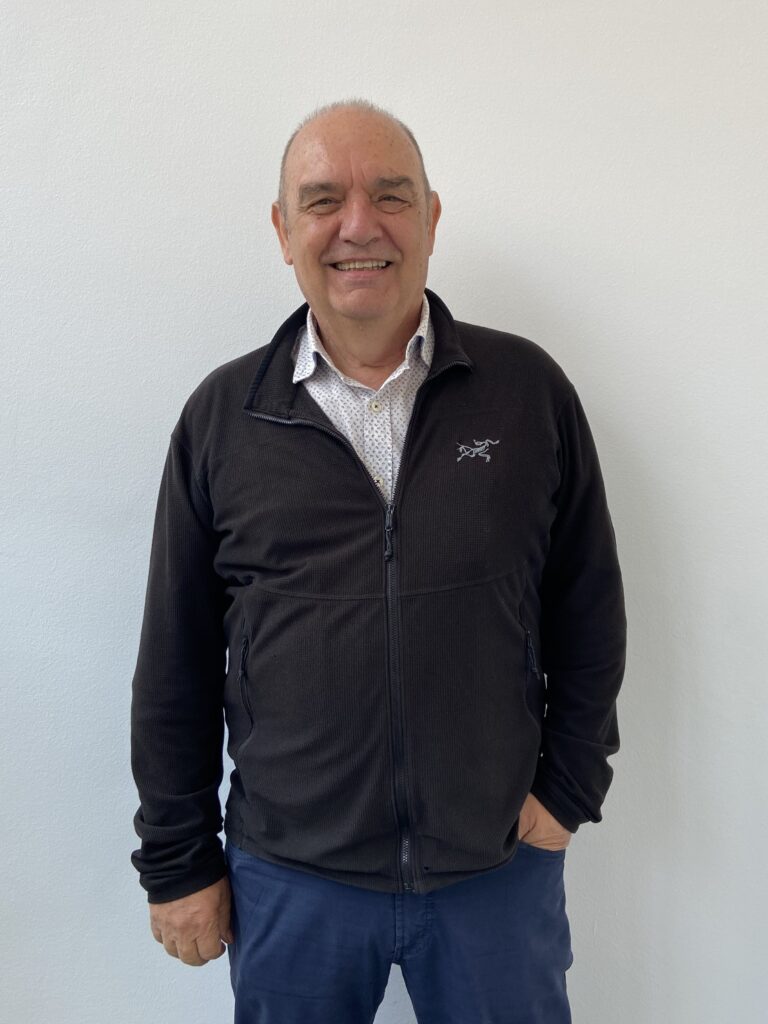
Josep Casanovas is a Full Professor at the Statistics and Operations Research Department of the Technical University of Catalonia (UPC), affiliated with the Barcelona School of Informatics. He previously served as head of inLab FIB (2012-2020) and as dean (1998-2004) and vice-rector (2006-2011) of UPC, leading strategic initiatives in university governance and ICT policies. His research focuses on Modelling and Simulation , Internet and Information Systems , and Urban Mobility . He has led projects for the European Union, including C-ROADS Spain, REMEDiAL, and ECHORD++, addressing intelligent transport, software automation, and robotic innovation. Recent publications highlight his work on agent-based simulation for urban health, deep learning applications in traffic and energy savings, and wildfire management tools . He co-directs LogiSim and coordinates the Severo Ochoa Research Excellence Program at the Barcelona Supercomputing Center (BSC-CNS).
جستوجوی استاد و پژوهشگر
استاد راهنما، استاد دانشگاه یا پژوهشگر مناسب برای مسیر پژوهشیتان را پیدا کنید و با او ارتباط بگیرید.
نمایش ۷۳۶-۷۵۰ از ۴٬۶۰۹ استاد راهنما
اطلاعات این پروفایلها از صفحات عمومی دانشگاهها جمعآوری شده و ممکن است بهروز نباشد.
Assoc. Prof. Dr. Onur Behzat Tokdemir is an Associate Professor in the Civil Engineering Department at Istanbul Technical University (ITU), with prior affiliation at Middle East Technical University (METU). His expertise spans Construction Technologies, Project Management, and Construction Management, with a focus on integrating Artificial Intelligence (AI) and Machine Learning (ML) into infrastructure development. He holds a Ph.D. from Illinois Institute of Technology and has extensive industry experience in project management roles with firms like Renaissance Holding and Qatar Project Management. Education: B.Sc. from METU (1990-1995), M.Sc. from Illinois Tech (1995-1997), Ph.D. from Illinois Tech (1997-2003). His research emphasizes AI-driven solutions for construction safety, cost prediction, and digital twin applications. Notable projects include the EU-funded 'DIGITWINS4CIUE' and the strategic tender decision support system leveraging ML. Awards include the ITU Academic Performance Publication Award (2022-2024) and METU's Prof. Dr. Mustafa N. Parlar Award (2019). He has advised over 15 theses on topics like AI in safety assessment, labor efficiency prediction, and post-disaster housing frameworks. Active memberships include the American Society of Civil Engineers (ASCE) and the Chamber of Civil Engineers.
Erja Sipilä is a University Lecturer and Vice Dean for Education at the Faculty of Information Technology and Communication Sciences, Tampere University. She specializes in interdisciplinary research at the intersection of e-textiles, educational technology, and sensor systems. Her work includes developing wearable healthcare devices for swallowing movement analysis and advancing flipped learning methodologies in engineering education. She actively contributes to smart clothing innovation and RFID technology research, particularly in additive manufacturing applications. Her research focuses on practical solutions for healthcare monitoring, user-centered textile sensor design, and improving STEM pedagogy through blended learning systems. Key projects include the Smart Campus Innovation Lab and initiatives to transition traditional teaching to online/digital formats. She has led curriculum development efforts in electronics engineering, emphasizing hands-on project work and anonymous feedback systems to enhance student learning experiences. Erja has organized workshops on educational technology and participated in SEFI conferences, highlighting her commitment to academic networking and educational policy. While no specific awards are listed, her contributions to pedagogical innovation and wearable technology development demonstrate impactful academic engagement.
Johanna Virkkiمشاهده پروفایل
دانشیار
- Smart Textiles
- RFID Technology
- Wearable Devices
- +۵ مورد دیگر
Johanna Virkki is an Associate Professor at the Department of Computing Sciences, Faculty of Information Technology and Communication Sciences, Tampere University. Her research focuses on smart textiles, wearable technologies, RFID systems, and their applications in healthcare, assistive communication, and human-computer interaction. She has pioneered projects integrating RFID into clothing and environments for control interfaces, physiological monitoring, and gamified therapies. Key research areas include: Development of e-textiles for AAC (Augmentative and Alternative Communication) RFID-based wearable and furniture interfaces for accessibility Sensor systems for healthcare monitoring and rehabilitation Smart spaces and IoT-enabled environments Her work emphasizes interdisciplinary collaboration, with notable contributions in: Passive RFID sensor platforms for moisture, strain, and physiological signals Co-design approaches involving speech therapists, engineers, and end-users Prototyping wearable devices for children with disabilities and elderly care Recent publications highlight advancements in: Smart furniture and textile-based AAC solutions AI-driven smart spaces and edge-cloud computing Bio-inspired sensors using animal hair and conductive yarns Johanna's research bridges technology and human needs, addressing challenges in healthcare, education, and accessibility through innovative textile and RFID systems.
Federico Tartariniمشاهده پروفایل
مدرس ارشد
Dr Federico Tartarini is a Senior Lecturer at the Sydney School of Architecture, Design and Planning and a Sydney Horizon Fellow at the University of Sydney. His research focuses on preventing heat stress through improved indoor environmental design, with expertise in thermal comfort, building performance, and health. He leads innovative projects at the intersection of environmental engineering and human well-being. Member of Sydney Environment Institute Member of Charles Perkins Centre Collaborator at UC Berkeley's Center for the Built Environment Research Themes: Combines laboratory and field studies with software/hardware development to address thermal health challenges. Specializes in occupant-centric building design, thermophysiological modeling, and real-time monitoring technologies. Scientific Awards 2023 Future Leader Award – AIRAH 2023 Excellence in HVAC&R Research – AIRAH 2023 Horizon Fellowship from University of Sydney Multiple awards from 2014-2021 including best paper and researcher accolades Tools & Impact: Creator of widely used open-source platforms like pythermalcomfort, CBE Thermal Comfort Tool, and Cozie smartwatch app. Founded EMU Systems for IEQ monitoring solutions. Key work includes modifying Sports Medicine Australia's heat stress policies and ASHRAE standard contributions.
Davar Rezaniaمشاهده پروفایل
دانشیار
- Project Management
- Accountability
- Team Leadership
- +۷ مورد دیگر
Davar Rezania is an **Associate Professor** and **Chair of the Department of Management** at the Gordon S. Lang School of Business and Economics , University of Guelph . His expertise spans Project Management , Accountability , Team Leadership , and Sustainability . He holds a PhD from ESADE Business School (Barcelona, Spain) and has taught courses in Project Management , Corporate Social Responsibility , and Leadership Development . Education: PhD in Management Sciences, ESADE Business School, 2006 MBA, ABN AMRO Bank Academy/University of Derby, 2005 MSc in Computing Sciences, University of Utrecht, 1994 Research Interests His work focuses on project accountability mechanisms , sustainable economic practices , and technology adoption in SMEs . Recent studies explore cybersecurity governance, metaverse integration in SMEs, and bio-mimicry applications in agriculture. He emphasizes leadership coaching and stakeholder engagement in organizational contexts. Key Contributions Rezania’s research bridges theory and practice , with over 50 peer-reviewed articles. Notable work includes a grounded theory on project managers’ accountability ( International Journal of Project Management, 2020 ), and frameworks for cybersecurity adoption in SMEs ( 2024 ). He has presented at global forums like the Academy of Management and Administrative Sciences Association of Canada . Awards 2011 Distinguished Teacher Award , MacEwan University Grants & Collaborations He has led projects on ERP implementation governance , talent management in nonprofits , and agricultural IoT discourse analysis . Current initiatives explore metaverse adoption and privacy-enhancing technologies in SMEs.

Dr. Helen Hambly is a Professor in the Department of Capacity Development and Extension at the University of Guelph’s School of Environmental Design and Rural Development. She joined the institution in 2003 after 30+ years in international agricultural research and development, including roles with the CGIAR, IDRC, and Canadian NGOs. Her work focuses on knowledge mobilization, IT in agricultural innovation systems, and rural broadband advocacy. She leads projects such as Canada’s WELL-E AI initiative and the Regional Rural Broadband Strategy. Dr. Hambly also engages in gender analysis in agricultural policy and governance, serving as Chair of the International Potato Center and Vice-President of Farm Radio International. Education: Bachelor of Arts, University of Toronto Master of Environmental Studies, York University Doctor of Philosophy, York University Research Interests: Technology adoption in developing nations Rural-urban digital divides Gender equity in agricultural innovation Capacity-building for smallholder farmers Agricultural communication systems Grants & Leadership: Project lead for Canada’s national agricultural broadband strategy Principal investigator for the WELL-E AI capacity development project Former Chair of CGIAR’s RTB Research Program Steering Committee Labs & Collaborations: WELL-E AI project (multi-stakeholder initiative) Rural Broadband Policy Advocacy Network Journalists for Human Rights (Vice-Chair)

Barry Gledsonمشاهده پروفایل
دانشیار
- Construction Project Management
- Digital Innovations in Construction
- Building Information Modelling (BIM)
- +۴ مورد دیگر
Dr Barry Gledson is an Associate Professor of Construction Project Management at Northumbria University's Architecture and Built Environment Department. He has over a decade of industry experience in project management roles across the UK and Washington DC, managing projects worth £6M–£45M in sectors like residential, commercial, and healthcare facilities. His research focuses on digital innovations (e.g., 4D BIM), sustainable construction practices, and organizational learning from project experiences. Education: PhD in Innovation Diffusion Within the UK Construction Sector (Northumbria University, 2017) BSc (Hons) in Construction Management (1998) Additional qualifications: PGCert in Education, NVQ Level 4 in Construction Management, and a Certificate in Statistics Research Interests: Digital transformation in construction, BIM adoption, project planning efficiency, and sustainability. His work aligns with UN SDGs related to sustainable infrastructure and education. Professional Affiliations: Chartered Construction Manager (MCIOB) Full Member of the Association for Project Management (MAPM) Senior Fellow of the Higher Education Academy (SFHEA) BIM Academic Forum (BAF) member Awards & Recognitions: Best Paper Contribution to the Built Environment (2015) BIM Award (2016) Build London Live 2012 'Best Multi-disciplinary BIM' (2012) Build Qatar Live 2012 'Overall Winner' (2012) Grants & Projects: Led the Innovate UK-funded 'Digital Design Management' project (2019–2021), developing collaborative tools for construction productivity. Labs/Teams: Actively contributes to Northumbria University's research groups focusing on construction innovation and digital transformation initiatives.
Emily Birchمشاهده پروفایل
پژوهشگر
Emily Birch is a Researcher at Northumbria University, contributing to interdisciplinary research at the intersection of material science and architecture. Her work focuses on developing bio-based, hygromorphic materials and sustainable architectural strategies, such as the BioKnit prototype and bacterial spore-based systems. She has published extensively on topics including microbial materials, smart textiles, and eco-responsive building technologies. Her research emphasizes innovation in low-carbon construction and biointegrated design.
David Beggمشاهده پروفایل
مدرس ارشد
Dr David Begg is a Senior Lecturer at the University of Portsmouth, affiliated with the Faculty of Technology and School of Civil Engineering and Surveying. He contributes to the Portsmouth Centre for Advanced Materials and Manufacturing and serves as a PhD supervisor. Academic Rank: Senior Lecturer University: University of Portsmouth School: Faculty of Technology Department: School of Civil Engineering and Surveying His research focuses on structural engineering, concrete technology, and smart systems. Key areas include: Structural Modeling, Monitoring, and Design Steel Fiber Reinforced Concrete Building Information Modeling (BIM) Optimization Seismic Analysis and Rehabilitation Intelligent Structural Systems Research trends show consistent contributions to concrete material properties, BIM integration, and seismic vulnerability assessment. Scientific awards are not explicitly mentioned in available data. He accepts PhD students but notes no current funding opportunities.
Richard Christenson is a Professor in the School of Civil and Environmental Engineering at the University of Connecticut. He holds a Ph.D. from the University of Notre Dame (2002). His research focuses on Smart Structures, Structural Control, Vibration Mitigation, and Real-Time Hybrid Testing. Key areas include advanced damping systems like MR dampers, bridge weigh-in-motion (BWIM) systems, and structural health monitoring (SHM). Education: Ph.D., Civil Engineering, University of Notre Dame, 2002 Research Interests: Real-time hybrid simulation methodologies for seismic and aeroelastic systems Development of vibration mitigation devices using magneto-rheological (MR) dampers Integration of sensor technologies (e.g., infrasound, video analytics) for infrastructure monitoring Optimization of bridge weigh-in-motion systems for infrastructure safety Research Contributions: His work spans laboratory-scale experiments to large-scale infrastructure projects, including collaborations with the Connecticut Transportation Institute and National Institute for Undersea Vehicle Technology (NIUVT). Notable applications include earthquake-resistant building systems and advanced BWIM methodologies for highway bridges. Grants & Collaborations: Active in federal and state-funded initiatives, including the NSF EAGER/Collaborative Research on aeroelastic real-time hybrid simulation and the Connecticut Department of Transportation’s BWIM programs. Labs & Facilities: Oversees laboratory research in real-time hybrid testing, structural dynamics, and smart materials at UConn’s Castleman Building. Collaborates with the NIUVT for underwater vehicle technology advancements.

Nada Elnahlaمشاهده پروفایل
استادیار
Dr. Nada Elnahla is an Assistant Professor/Lecturer at Maynooth University's School of Business, joining in 2022 after roles as an Instructor of Marketing at Carleton University (Canada) and Assistant Professor of English Literature at Alexandria University (Egypt). She holds dual PhDs in Management/Marketing (Carleton, 2021) and Comparative Literature (Cairo, 2012), alongside MA (Comparative Literature, Alexandria, 2008) and BA (English Literature, Alexandria, 2004) degrees. Her research bridges retail surveillance ethics, consumer behavior, and literary analysis, focusing on topics like smart surveillance in retail, loyalty programs, and the intersection of literature and marketing. Education: PhD in Management/Marketing, Carleton University (2021) PhD in Comparative Literature, Cairo University (2012) MA in Comparative Literature, Alexandria University (2008) BA in English Literature, Alexandria University (2004) Research Interests: Dr. Elnahla explores surveillance technologies in retail, consumer ethics, narrative theory, and marketing history. Her work often critiques how retail spaces monitor customers and employs literary frameworks to analyze consumer psychology and corporate practices. Awards & Grants: MUSSI Research Grants Scheme (2024) Maynooth University School of Business Seed Funding (2023) Paul R. Lawrence Fellowship (2017) Donald F. Dixon Scholarship (2019) Labs & Collaborations: She contributes to the Innovation Value Institute’s (IVI) Digital Retail Cluster and is a member of LERO, Ireland’s Science Foundation research center for software engineering. Her work integrates industry partnerships to study evolving retail technologies and consumer dynamics.
Gabriele Bertagnoli is an Associate Professor in the Department of Structural, Building and Geotechnical Engineering (DISEG) at Politecnico di Torino, Italy. His research and teaching focus on civil and structural engineering, particularly in bridge design, composite and concrete structures, finite element analysis, and structural health monitoring. His research interests include: Structural Engineering Bridge and Composite Structures Finite Element and Nonlinear Analysis Structural Health Monitoring (SHM) Optimization of Reinforced and Prestressed Concrete Seismic Retrofitting and Safety Assessment Bertagnoli's recent publications reveal a strong trend in developing and applying advanced computational models for the safety assessment of existing bridges and buildings, especially under damage and seismic loading. His work integrates innovative sensor technologies for SHM, genetic algorithms for structural optimization, and nonlinear finite element simulations to evaluate structural performance and reliability. His scientific awards include: Best Ph.D. Thesis of 2006 in the field of concrete structures – fib (Fédération Internationale du béton) CTE Congress 2018 Memorial Award – CTE (Italy, 2020) He is actively involved in research supervision and grant leadership: Supervises PhD students: Mario Ferrara and Sofia Villar Principal Investigator on multiple national and international projects (e.g., PRIN, PNRR, DECORI, Ri-REVERSE) Leads commercial and applied research contracts in structural consultancy and monitoring His laboratory and research group are engaged in developing intelligent monitoring systems for urban infrastructure (e.g., INSIST, Smart Concrete) and innovative retrofitting solutions using steel exoskeletons, composite connections, and sensor-embedded materials.
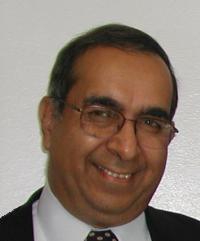
Ashok Agrawala is a Professor in the Department of Computer Science at the University of Maryland, with joint affiliations in the University of Maryland Institute for Advanced Computer Studies (UMIACS) and the Department of Electrical Engineering. He directs the Maryland Information and Network Dynamics (MIND) Lab, a leading research group focused on real-time systems, network performance, and wireless localization technologies. Education: B.E. and M.E. in Electrical Engineering, Indian Institute of Science, Bangalore M.A. and Ph.D. in Applied Mathematics, Harvard University His research interests span computer systems, distributed algorithms, real-time operating systems, network performance modeling, traffic shaping, and indoor localization . He is renowned for pioneering the Ricart-Agrawala distributed mutual exclusion algorithm, developing the Maruti real-time operating system, and creating the Horus and Locus indoor positioning systems. His work has led to significant advances in temporal guarantees, jitter-free data delivery, and calibration-free localization. His recent publications show sustained innovation in wireless localization, context-aware computing, breath analytics, and energy-efficient IoT systems , reflecting an evolving research trajectory toward smart health and urban computing. He has authored over 200 papers and seven books, with consistent publication activity into 2024. Scientific Recognition: Fellow, IEEE Member, ACM Member, AAAS Member, Sigma Xi Agrawala has advised over thirty Ph.D. students, many of whom now lead research in academia and industry. His research has been funded by DARPA, NSF, and AFOSR, with corporate partnerships from IBM, Novell, and AT&T. He previously worked at Honeywell Information Systems, where he designed an Optical Character Reader. He has also served as a consultant to the UNDP and the Government of India, and as a technical expert in legal cases. He leads the MIND Lab, which focuses on mobile computing, wireless networks, and context-aware systems , continuing to innovate in real-time and networked systems.
Edoardo Pattiمشاهده پروفایل
دانشیار
Edoardo Patti is an Associate Professor in the Department of Control and Computer Engineering (DAUIN) at Politecnico di Torino, Italy. He is actively involved in research and teaching, focusing on artificial intelligence, machine learning, IoT, smart grids, energy communities, co-simulation, and digital twin technologies. He is a member of the EDA (Electronic Design Automation) research group and the Interdepartmental Center IAM@PoliTo for Integrated Additive Manufacturing. His research interests span Artificial Intelligence, Machine Learning, Internet of Things, Smart Grids, Energy Communities, Co-simulation, Distributed Software Infrastructure, Digital Twin, Physics-Informed Neural Networks, and Reinforcement Learning . His work is closely aligned with Sustainable Development Goals such as Affordable and Clean Energy (Goal 7), Sustainable Cities (Goal 11), and Climate Action (Goal 13). The latest publications reveal a strong trend in AI-driven modeling for energy systems, including digital twins for wave energy converters, urban electric mobility simulation, real-time battery health estimation, and co-simulation platforms for integrated energy systems. His work combines machine learning with physical models and large-scale distributed systems to address sustainability challenges. He supervises several PhD students, including Maria Adelaide Loffa, Matia Torlini, Rafael Natalio Fontana Crespo, Pietro Rando Mazzarino, Claudia De Vizia, and Marco Massano. He has led numerous research projects funded by EU (H2020), PNRR, regional initiatives, and corporate contracts, particularly in additive manufacturing, smart grids, and IoT platforms. He is involved in multiple research groups and centers: EDA - Electronic Design Automation (DAUIN) Interdepartmental Center IAM@PoliTo - Integrated Additive Manufacturing
فقط ۷۵۰ نتیجه اول نمایش داده میشود. برای رسیدن به نتایج دقیقتر، جستوجو را با فیلترها محدودتر کنید.