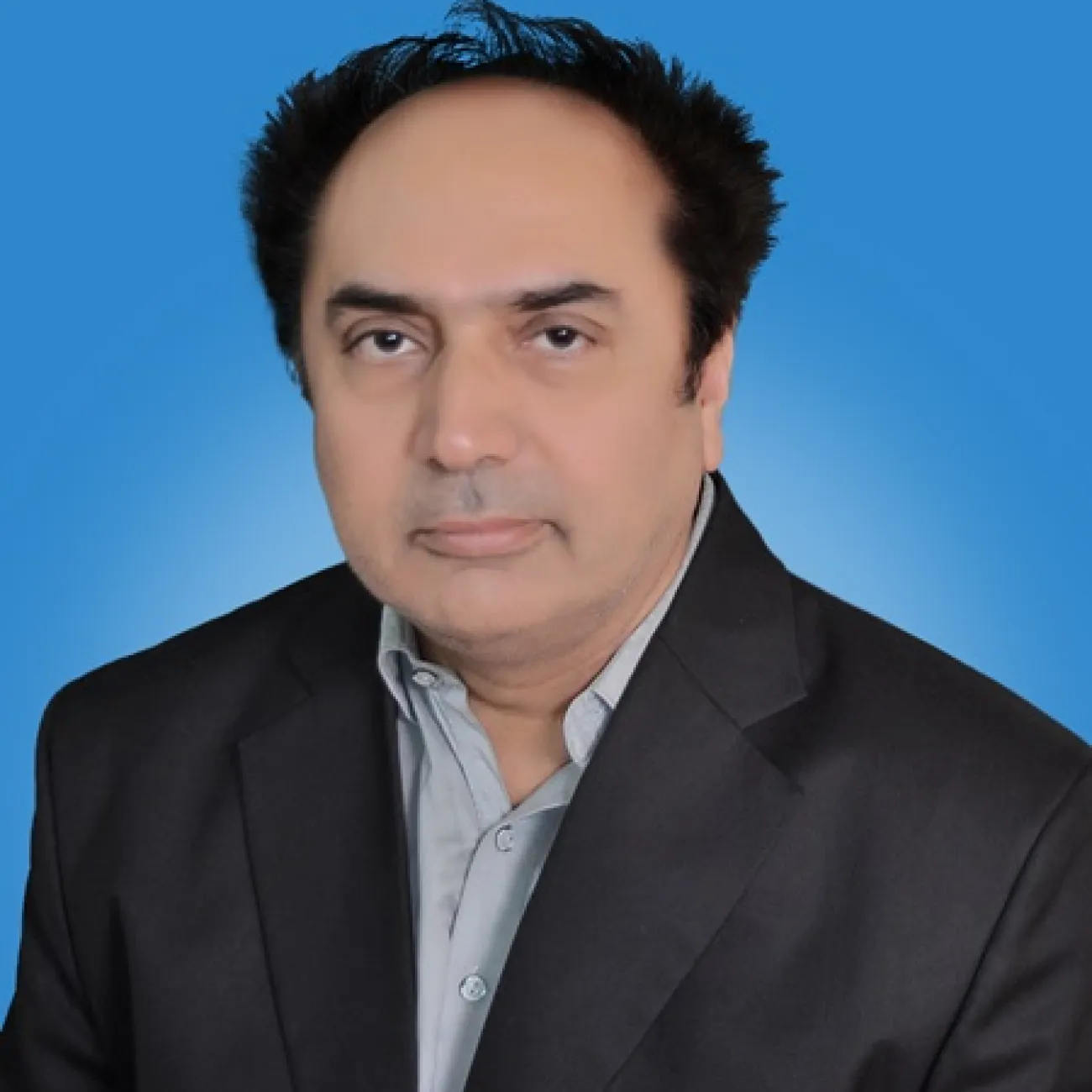
Professor Tahir M. Nisar serves as Professor of Strategy and Economic Organization and Behaviour at the University of Southampton's Southampton Business School . His research focuses on Artificial Intelligence , Automation , Crowdfunding , and Organizational Dynamics , with applications in Insurance, Financial Services, and Health (NHS). Current research includes AI-driven workplace gamification (KTP project with Execview), ESRC-funded AI applications in service sectors, and Alan Turing Institute collaborations on AI's impact on work. Teaching areas: Organization & Management, Entrepreneurship, Strategy & Behavior, Human Resource Management. Editorial roles: Associate Editor for Management Decision , editorial board member for European Journal of Marketing . Scientific recognition: Stanford 2% Global Scientist , multiple journal awards, and Whitehall Fellowship. His work bridges technical AI implementation with human-centric organizational design, emphasizing sustainable practices and productivity enhancement through data analytics.
Dr. Amr Omar is a researcher at the University of New South Wales , affiliated with the School of Mechanical and Manufacturing Engineering and Department of Chemical Engineering. His work focuses on integrating renewable energy systems—particularly solar thermal technology—with advanced water treatment processes to address global sustainability challenges. PhD in Solar Thermal Systems & Desalination (UNSW, 2017-2020) Postdoctoral Researcher (UNSW Chemical Engineering, 2020-2023) Omar specializes in decarbonizing water processes through solar-driven membrane distillation , multi-effect distillation , and hydrogen production cooling systems . His research bridges laboratory innovation with real-world applications, targeting United Nations' SDG6 (Clean Water) and SDG7 (Affordable Clean Energy). Recent publications emphasize techno-economic modeling of hybrid solar-desalination systems, machine learning applications for water filtration optimization, and geospatial analyses of global desalination site feasibility. Key projects include developing hollow fiber vacuum membrane distillation modules and improving flocculant strength assessment for water catchment monitoring. Scientific Recognition : 2022 Malcolm Chaikin Prize for Research Excellence 2020 UNSW Postgraduate Council Research Student Award 2020 3MT Competition Winner (School of Mechanical & Manufacturing Engineering) 2017 Australian Postgraduate Award Scholarship Omar actively supervises PhD and Master’s projects related to solar-driven water treatment and green hydrogen development. He serves as a journal reviewer and conference panel member, advocating for nanobubble technologies in agricultural irrigation systems.
Associate Professor Susie Khamis serves as Associate Dean (International) at the Faculty of Arts and Social Sciences, University of Technology Sydney. A cultural studies scholar, her research focuses on branding, cultural diversity representation, and consumer culture dynamics. Key contributions include her book Branding Diversity: New Advertising and Cultural Strategies (2020) and interdisciplinary analyses of iconic brands like Bushells Tea and Nespresso. Specializes in media and marketing intersections Founded Locale: The Australasian-Pacific Journal of Regional Food Studies (2011) Active in Small Island Cultures Research Initiative and Popular Culture Association of Australia & New Zealand Her research explores sonic branding (2021), indigenous research methods (2023), and ethical consumption paradoxes (2011). She examines neoliberal individualism through social media influencers (2017) and ‘micro-celebrity’ phenomena. Recent publications analyze industrial-hip-hop collaborations (2022) and de-cluttering trends (2019). Articles frequently engage with media history , postcolonial branding , and digital consumerism . Recipient of Sydney Harbour Foreshore Heritage Prize (2007) Recognized for interdisciplinary methodology development in marketing research Teaching areas include Media Theory, Public Communication, and Advertising. Supervises Masters and PhD students in cultural studies topics.
Sinead O'Keeffe is a Research Fellow at the University of Limerick in the Faculty of Science and Engineering , specifically within the Department of Electronic and Computer Engineering . Her research bridges the technical domain of optical fiber sensor development with critical applications in radiation therapy and sports medicine. Primary Research Themes Medical radiation dosimetry using optical fiber sensors Brachytherapy dose monitoring systems Sports injury prevention in Gaelic football and running Mental health literacy in rural farming communities Key Technical Contributions Development of scintillation-based dosimeters Characterization of perfluorinated polymer fibers 3D printed sensor systems for clinical and rehabilitation applications Interdisciplinary Applications Prostate cancer radiotherapy dose measurement Mental health intervention programs for athletes Work-family conflict analysis in Irish farming Email: sinead.okeeffe@ul.ie
Professor Dan Svantesson is a full Professor at the Faculty of Law, Bond University (Australia), where he also serves as Co-Director of the Centre for Space, Cyberspace & Data Law . He is additionally a research fellow at Masaryk University (Czech Republic) and an associated researcher at the Swedish Law & Informatics Research Institute, Stockholm University . Education: PhD in Private International Law and the Internet, University of New South Wales (2004) Research Interests: Professor Svantesson’s expertise lies at the intersection of international law and the digital society. He investigates how legal systems cope with cross-border Internet activity, focusing on jurisdiction, data localisation, privacy protection, cloud computing regulation, cyber-crime, and emerging governance frameworks for online platforms. His work also explores niche areas such as “Beer Law,” reflecting his creative breadth. Across nearly 300 scholarly outputs since 2001, his recent publications reveal a clear trajectory toward global regulatory challenges: mapping cyber-law gaps in Pacific Island nations, analysing EU-Australia health-data transfers, clarifying jurisdictional hurdles in digital evidence, and offering practical frameworks for content moderation. Scientific Awards & Recognition: Faculty of Law Research Excellence Award (2016 & 2020) Vice-Chancellor’s Research Excellence Award (2016) Named “Field Leader in Technology Law” by League of Scholars & The Australian (2018-2021) Grants & HDR Supervision: He held an ARC Future Fellowship (2012-2016, project FT120100583) on global Internet jurisdiction and is currently accepting PhD candidates in Internet law and data privacy law. He teaches subjects ranging from Obligations and Contract Law to Coding, Cybersecurity and Cryptoliteracy for Lawyers. Laboratories & Teams: Professor Svantesson co-directs the Centre for Space, Cyberspace & Data Law at Bond University, fostering interdisciplinary research on governance of outer space and cyberspace.
Barry Rowlingson is a Research Fellow at Lancaster University Medical School , affiliated with the Chicas Research Group and DSI-Health . He specializes in spatial statistics applied to disease epidemiology and geospatial software development . Teaches Geospatial Data module for MRes in Global Health Developed online course on Spatial Statistics in R with DataCamp Focuses on open-source geospatial tools for public health Research Interests: His work bridges spatial statistical methodology and infectious disease modeling , with applications in antimicrobial resistance mapping , wastewater-based pandemic surveillance , and health inequality analysis . Recent projects include modeling ESBL-producing bacteria in Malawi and developing spatio-temporal frameworks for COVID-19 wastewater monitoring . Scientific Contributions: Over 15 years, he has developed critical R packages like stpp for spatio-temporal analysis and rgdal for geospatial data abstraction. His 2023 publications address health workforce disparities and disease transmission dynamics using advanced statistical methods. Collaborations: Works with multidisciplinary teams across Lancaster Medical School , DataCamp , and SAVSNet Agile research projects. Supervises PhD student Charlotte Appleton in biostatistics.
Louis Theran is a Lecturer in Mathematics at the University of St Andrews , School of Mathematics and Statistics. His research bridges geometry, combinatorics, and algorithmic problems, with applications in physics, materials, and machine learning. Education: Ph.D. in Computer Science, University of Massachusetts, Amherst (2010) M.S. in Computer Science, University of Massachusetts, Amherst (2007) B.S. in Computer Science and Mathematics, University of Massachusetts, Amherst (2006) Theran’s research focuses on the rigidity theory of frameworks , exploring how geometric and combinatorial properties determine structural stability. He investigates discrete geometry, sparse hypergraphs, and pebble game algorithms, connecting these to machine learning (e.g., low-rank matrix completion) and materials science (e.g., auxetic metamaterials, sticky disks). His recent work analyzes rigidity transitions in random graphs , universal rigidity in one-dimensional frameworks, and maximum likelihood thresholds via graph rigidity. Collaborations span computational geometry, algebraic statistics, and physics, emphasizing interdisciplinary applications. Scientific Awards: Heilbronn small grants scheme (2021) NSF/KOSEF East Asia and Pacific Summer Institutes Fellowship (2006) Theran has supervised numerous BSc, MMath, and PhD projects , including topics like tensegrities, graphons, and geometric constraint systems. He has also contributed to Gaussian graphical models and universality theorems for Delaunay triangulations.
Scarlett Lin Gomez is Professor and Vice Chair of Faculty Development in the Department of Epidemiology and Biostatistics at the University of California San Francisco (UCSF) School of Medicine. She serves as Co-Leader of the Cancer Control Program for the UCSF Helen Diller Family Comprehensive Cancer Center and Director of the Greater Bay Area Cancer Registry, part of the NCI SEER Program. Her research centers on structural and social drivers of health disparities, with pioneering work on Asian American, Native Hawaiian, and Pacific Islander cancer patterns. She developed the California Neighborhoods Data System to evaluate neighborhood environment impacts on disease outcomes and leads the Female Asian Never Smokers (FANS) Study investigating lung cancer etiology. Key funding includes multiple NIH R01 grants focused on ovarian cancer disparities, breast cancer prognosis in Asian populations, and lung cancer in never-smokers. Racial/Ethnic Disparities in Ovarian Cancer Treatment (R01CA243188) Insights from Asian Populations into Breast Cancer Prognosis (R01CA241125) Lung Cancer Etiology Among Asian American Female Never Smokers (R01MD014859) Cancer Registry for Understanding Survivorship Experiences (R01CA241128) Dr. Gomez has received numerous honors including the 2024 AACR Distinguished Lectureship on Cancer Health Disparities and the 2022 ASPO Joseph F. Fraumeni, Jr. Award. Her recent publications analyze neighborhood redlining effects, immigrant health patterns, and cancer disparities across diverse populations using innovative registry linkages and multiethnic cohort studies. As an active AACR leader, she co-chaired the 2024 Cancer Disparities Progress Report and serves on editorial boards for Cancer Epidemiology, Biomarkers & Prevention . Her work fundamentally advances understanding of how structural racism, immigration status, and neighborhood environments shape cancer outcomes across underrepresented populations.
Dr. Yusuf Ransome serves as an Associate Professor of Public Health in the Social and Behavioral Sciences department at Yale School of Public Health. He is the Founder and Director of the Society, Connectedness and Health (SOCAH) Lab, where he leads innovative research at the intersection of social connectedness, contemplative practices, and digital technology to address complex public health challenges. His work focuses on creating sustainable pathways to health, wealth, and prosperity for historically underserved communities both in the United States and globally. Dr. Ransome's research integrates social connectedness, contemplative practices, and digital technology to address complex public health challenges. His current priority research areas include: building social connectedness to buffer mental health and improve community resilience; strengthening faith-based infrastructure to improve community health and economic well-being; developing interventions that integrate contemplative practices, belief systems, and artificial intelligence to strengthen well-being; and leveraging the science of strengths through portable technologies to optimize well-being. His methodologies combine advanced quantitative survey analysis, in-depth qualitative research through interviews and focus groups, geospatial data science applications, and artificial intelligence tools for public health solutions. His research has been featured in top-tier public health journals including the American Journal of Public Health and Social Science & Medicine. Dr. Ransome's commitment to accessibility ensures his findings reach beyond academia through community engagement events, digital storytelling initiatives, and practical well-being products that empower communities to thrive. His work demonstrates clear trends across social determinants of health, HIV prevention, mental health, and the role of religion and spirituality in public health, with increasing emphasis on commercial determinants of health and advanced methodological approaches. Public Voices Fellowship with Yale and The OpEd Project (2024) Office of Health Equity Research (OHER) Award (2023) Dr. Ransome brings extensive academic training to his work, including an Alonzo Smythe Yerby Postdoctoral Fellowship from Harvard T.H. Chan School of Public Health, a DrPH in Public Health from Columbia University Mailman School of Public Health, an MPH in Health Behavior & Health Education from the University of Michigan School of Public Health, and a BS in Business Management and Science from Brooklyn College. His work addresses critical social determinants of health through innovative research-to-practice frameworks, providing actionable insights for policymakers, community organizations, faith-based institutions, government entities, and healthcare systems. The SOCAH Lab, which he directs, employs a multidisciplinary team that applies advanced research methodologies to real-world public health challenges.
Roger William Lewis Jones is a Professor and Head of the Department of Physics at Lancaster University . His career spans experimental high-energy particle physics, QCD research, and global computing infrastructure development for large-scale scientific projects like ATLAS and the Rubin Observatory. ATLAS experiment (LHC) for CP violation studies in B-physics NA62 experiment for strange quark physics LEGEND collaboration for neutrino research Leadership in GridPP and Worldwide LHC Computing Grid Research Focus : Experimental particle physics with emphasis on CP violation, QCD dynamics, and data-intensive computing systems. His work bridges hardware development (e.g., tracking detectors) and software innovation (e.g., Grid computing farms across UK institutions). Recent Publications highlight precision measurements in jet physics, Higgs decays, and searches for new particles like heavy neutral leptons. Articles span 2025 with collaborations on ATLAS and NA62, focusing on detector calibration, cross-section analysis, and beyond-Standard-Model signatures. Leadership Roles : Chair of NorthGrid Management Board Former Chair of STFC Particle Physics Advisory Panel (2019-2022) Chair of Institute of Physics Head of Department Forum Steering Committee (2019-2024) Key contributor to GridPP and Worldwide LHC Computing Grid
Ben Amies-Cull is a Lecturer at the University of Oxford, affiliated with the Nuffield Department of Population Health and Green Templeton College . His work integrates Public Health , Health Economics , and Epidemiology to address non-communicable disease burdens through simulation modelling and policy analysis. DPhil in Public Health from University of Oxford MSc in Health Policy from Imperial College London MRes in Qualitative Methods (University of Manchester medical degree) Research focuses on obesity prevention , takeaway food regulation , and health economic evaluation of dietary and physical activity interventions. Projects include the PRIMEtime model , COPPER , and BRC Oxford Health , with secondment to the Health Foundation REAL Centre . Recent publications analyze takeaway management zones , SSB taxation , and social care demand drivers . Methodologies span simulation modelling , qualitative policy analysis , and small area estimation for BMI distributions. Teaches Statistics and Epidemiology on the NDPH Masters , Public Policy at the Blavatnik School , and Public Health for BSc Human Sciences . Active as a General Practitioner in inner-city practice.
Thomas Suesse is a Senior Lecturer at the School of Mathematics and Applied Statistics, University of Wollongong, with a career spanning institutions in Germany, New Zealand, and Australia. His academic journey includes a M.Sc. in Mathematics from Friedrich-Schiller-University Jena (2003) and a PhD in Statistics from Victoria University of Wellington (2008). Education: M.Sc. in Mathematics (FSU Jena, 2003), PhD in Statistics (VUW, 2008) His research focuses on Statistics, particularly Categorical Data Analysis, Social Network Modeling, and Spatial Statistics. Recent work explores variational Bayes inference for spatial autoregressive models, environmental extreme value detection algorithms, and the impact of missing data in statistical models. His publications span topics in public health, environmental science, and educational methodology. Key trends in his 15 most recent articles (2021-2025) include advancements in spatial statistics, applications of social network analysis to finance, and educational research comparing laboratory teaching objectives. He has also contributed to understanding pandemic effects on child health and activity patterns. Scientific Awards: 2008 VUW PhD thesis submission award; 2005-2008 VUW Postgraduate Scholarship. Thomas co-supervises PhD students on topics like spatial autoregressive modeling with missing data and variance estimation in mixture models. He has secured internal grants for computational infrastructure upgrades and studies on child movement behaviors. His professional affiliations include the Statistical Society of Australia.
Silvia Barbero is Associate Professor (L.240) at the Department of Architecture and Design (DAD) of the Polytechnic University of Turin. She serves as Vice Rector for Communication and Promotion and contributes to the GEDI Observatory for Gender Equality, Diversity, and Inclusion. Scientific Director for EU Horizon 2020 (2018-2023) President of the Systemic Design Association (2018-) Editorial roles in journals like Formakademisk and Journal of Cleaner Production Research Focus: Systemic Design applied to environmental sustainability, circular economy, and territorial development. Her work bridges ecological principles with industrial innovation, addressing challenges in packaging, furniture, and healthcare systems. Key themes include sustainable transitions, co-design methodologies, and cross-cultural comparisons (China-Italy). Awards: ADI Design Index (2016, 2017) 5R HERO AWARDS (2013) Eco-Efficiency Award (2005) Teaching & Mentorship: Leads courses in Design for Sustainable and Circular Systems and Systemic Design for Territorial Development . Supervises PhD students researching topics like circular textiles, community care, and sustainable manufacturing. Projects: Coordinates international initiatives including SYSTOUR (2023-2027), MULTITRACES (2019-2022), and RETRACE (2016-2020). Collaborates with institutions like CNR-IRET and companies through commercial agreements.
Dr. Christopher McLaren-Towlson is a Lecturer in Sports Coaching and Performance Science at the University of Hull's School of Sport Exercise and Rehabilitation Sciences, within the Faculty of Health Sciences. His research focuses on growth, maturation, and talent identification in youth athletes, particularly through bio-banding applications in soccer. He holds a PhD from the University of Hull and is a Senior Fellow of the Higher Education Academy, with professional accreditations from ISPAS and BASES. Education: BSc (Nottingham Trent University), MSc (Nottingham Trent University), PhD (University of Hull), PGCert (University of Hull), PCAP (University of Hull) Research Grants: Projects funded by FIFA, UEFA, Hull City FC, and Manchester City FC, including studies on bio-banding and recovery kinetics in professional soccer. His research interests span athletic performance monitoring, long-term development, and the practical application of scientific insights into sports training and talent selection. He leads modules in performance analysis and coordinates the Catapult Sports GPS/MEMS Workshops for the university's programs. Dr. Towlson has supervised numerous PhD and MRes students, focusing on topics like virtual reality training efficacy, player recovery kinetics, and bio-banding methodologies. His work emphasizes translating lab-based research into industry practices, with a focus on enhancing youth athlete development and professional soccer performance.
Taylor Barton is an Associate Professor and Lockheed Martin Faculty Fellow at the University of Colorado's Department of Electrical, Computer, and Energy Engineering. His research focuses on electromagnetics, RF/microwave engineering, and integrated circuits, with an emphasis on power amplifier design, GaN-based systems, and high-frequency electronics. He leads a lab conducting cutting-edge work in antenna integration, nonlinear circuit analysis, and energy-efficient RF solutions. His contributions include innovations in load modulation techniques, multi-band amplifier architectures, and superconducting frequency conversion. Barton's work intersects with applications in 5G communications, aerospace systems, and wireless power transfer. His research interests span RF power amplification, semiconductor device modeling, and high-efficiency transmitter design. Notable areas include GaN MMICs, outphasing architectures, and adaptive impedance matching networks. Recent projects explore kinetic inductance-based frequency conversion and compact charge digitizer systems for beam monitoring. Publications highlight advancements in wideband amplifiers, thermal sensor integration in GaN circuits, and novel methods for distortion reduction. His work frequently addresses trade-offs between power efficiency, bandwidth, and linearity in modern RF systems. Barton collaborates with industry partners like Lockheed Martin to bridge academic research with practical aerospace and defense applications. His lab website showcases ongoing projects in reconfigurable RF components and multi-functional microwave systems.