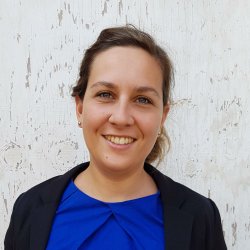
Johanna von Gerichten is a Research Fellow at the University of Surrey's School of Chemistry and Chemical Engineering. She holds roles on committees such as the Athena Swan Implementation Committee (ASIC) and the PMB MRC IAA and HEIF panel. Her research focuses on lipid metabolism and mass spectrometry method development, with projects integrating techniques like MALDI, DESI, SIMS, Raman spectroscopy, and PIXE for studying disease models (e.g., tuberculosis, eye disease, skin absorption). Education: B.Sc. Biological Chemistry (2012), University of Applied Sciences Mannheim, Germany M.Sc. Biomedical Science and Technology (2014) Her research emphasizes multimodal imaging approaches and single-cell lipidomics. Recent publications (2024) address lipidomics biomarker challenges and single-cell analysis methods. She co-supervises two PhD students exploring radiation-induced metabolic effects and nanoplastic impacts in zebrafish. Her work aligns with Surrey's innovation initiatives, as seen in 2024 cancer research advancements and 2022 early-career researcher grants.
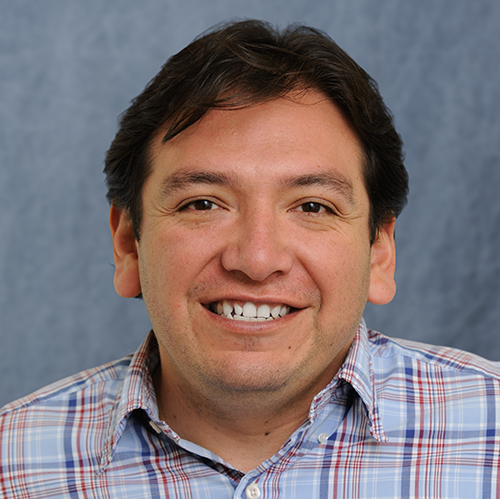
Nelson Vinueza Benitez is a Professor at the Department of Textile Engineering, Chemistry, and Science within the Wilson College of Textiles at North Carolina State University. He holds dual appointments in the Associate Faculty of Chemistry and the Department of Textile Engineering, Chemistry, and Science. His research focuses on analytical chemistry, environmental toxicology, and material science, particularly in textile dye characterization, mass spectrometry methodologies, and environmental impact assessments. His work spans synthetic dye analysis, forensic applications of microfluidics, and eco-friendly flame retardant development. He leads the Vinueza Labs , which emphasizes interdisciplinary research in textile chemistry and environmental sustainability. Key areas include the mutagenicity of azo dyes, mitochondrial effects of textile dyes, and high-throughput fluoroprobe discovery for protein studies. The labs also utilize advanced techniques like DART mass spectrometry and microdialysis for dermal absorption studies. His research output demonstrates expertise in analytical methods (e.g., LC-QTOF-MS, ion-molecule reactions) and applications to real-world problems like biodegradation studies of dyes in fabrics and soil. Social media engagement via Twitter, Instagram, and ResearchGate highlights collaborative and applied research priorities.
Patrizia Santi is a Full Professor at the Department of Pharmaceutics, Faculty of Pharmacy, University of Parma. She has served as Vice-Dean of the Faculty of Pharmacy since 2010 and has held teaching appointments in Pharmaceutical Technology, Cosmetic Products, and Pharmaceutical Formulation since 1998. Her international experience includes roles at the University of Lille and University of California, San Francisco. PhD, Pharmaceutical Chemistry and Technology (1992), University of Parma PharmD, Chemistry and Pharmaceutical Technology (1987), University of Parma Her research focuses on controlled drug delivery systems , particularly transdermal, ocular, and buccal routes using iontophoresis, microneedles, and bioadhesive films. She has contributed to polymeric micelles, crosslinked hydrogels, and ocular transport mechanisms. Her recent publications highlight ocular delivery of neuroprotective compounds , transscleral iontophoresis , microneedle-assisted buccal delivery , and bioadhesive films for local anesthetics . She also explores archaeometric provenance studies for historical materials. Scientific Awards & Memberships ERASMUS Fellowship (1988-1989) A.F.I.-T.R.F. PHARMA WORKS award (1992) Board of Scientific Advisor, Controlled Release Society (CRS, 2001-2004) Professional Activities Advisor for 6 PhD students in Biopharmaceutics-Pharmacokinetics Member of AAPS, CRS, ADRITELF, APGI societies Teaching: Cosmetic Products , Drug Release and Targeting , Quality Assurance in Higher Education Co-authored 92 journal papers, 5 book chapters, 10 patents, and 170 conference communications
Dr. Attila Balogh is an Associate Professor at the Department of Automation and Applied Informatics within the Budapest University of Technology and Economics . His work focuses on advanced pharmaceutical technologies, particularly electrospinning for drug delivery systems. He has contributed to scalable manufacturing methods for solid dispersions and dissolution enhancement techniques. Research spans electrospinning, melt extrusion, and 3D printing for pharmaceutical applications Key areas include stability of amorphous drugs, biopharmaceutical modeling, and nanoparticle/nanofiber formulation Publications highlight collaborations between materials science and drug delivery optimization Contact: Budapest 1117, Magyar tudósok krt. 2., Balogh.Attila@aut.bme.hu
Claudia Bonechi serves as Associate Professor in the Department of Biotechnology, Chemistry and Pharmacy at the University of Siena, Italy, with office location at III lotto, III floor, room C_03_140, Via A. Moro, 2, 53100 Siena. Her contact details include email claudia.bonechi@unisi.it and office phone +39 0577232123 (internal extension 2123). She teaches Physical Chemistry courses for the First Cycle Degree in Chemical Sciences across multiple academic years (2021/2022-2025/2026). Research Interests: Drug delivery systems using liposomes and nanoparticles for natural compounds and pharmaceuticals Physicochemical characterization of polymers, hydrogels, and nanocarriers via spectroscopy and rheology Applications in topical formulations, cancer therapy, and reproductive health Development of cytotoxic macrocyclic structures and oxidative stress modulation techniques Recent Publication Trends (2023-2025): Her work demonstrates concentrated expertise in liposomal encapsulation of plant extracts (e.g., rose petals, grape pomace, olive) with applications in cytotoxicity studies, sperm protection during cryopreservation, and topical antioxidant delivery. Methodologies prominently feature NMR, fluorescence spectroscopy, and rheological analysis across pharmaceutical, biochemical, and nanotechnology domains. Scientific Awards: No awards mentioned in source materials Advising and Grants: Source texts provide no details regarding student supervision, research funding, or grant acquisitions. Laboratories and Teams: Specific laboratory facilities, research groups, or collaborative teams were not documented in available information.
Associate Professor Phong Thai is an ARC Mid-Career Industry Fellow at the Queensland Alliance for Environmental Health Sciences (QAEHS), University of Queensland. His research specializes in wastewater-based epidemiology, environmental pollutant monitoring, and air quality impacts on health. He co-leads Australia's National Wastewater Drug Monitoring Program and has secured over A$15M in research funding. Education: Doctor of Philosophy, Tokyo University of Agriculture and Technology Graduate Certificate of Education & Teaching, University of Queensland Research Focus: His work spans three primary areas: 1) Wastewater-based epidemiology for population exposure assessment of substances like tobacco, alcohol, and pharmaceuticals; 2) Air pollution exposure linkages to respiratory health; and 3) Fate/transport of persistent pollutants (PFAS, flame retardants). His methodologies combine environmental sampling, biomarker analysis, and epidemiological modeling. Publication Trends: Recent articles (2025) emphasize large-scale environmental health studies in Vietnam/China, biomarker validation, PFAS exposure pathways, and substance-use trends. Cross-cutting themes include methodological innovation in wastewater analysis and socioeconomic drivers of health outcomes. Awards: ARC Mid-Career Industry Fellowship Vice Chancellor Senior Research Fellowship Supervision & Grants: Actively advises 6 PhD/Master's candidates on topics including biomarker transformation, nicotine epidemiology, and metabolic syndrome in Vietnam. Secured 10+ grants (2022–2029) from ARC, NHMRC, and industry partners, totaling >A$15M. Key projects focus on vaping prevalence, microplastic emissions, and opioid crisis analysis. Labs/Teams: Member of QAEHS leadership managing the National Wastewater Drug Monitoring Program. Collaborates with Australian Criminal Intelligence Commission, health departments, and international institutions.
Prof. Dr. Özgür Özdemir is a faculty member at Istanbul Technical University , where he serves in the Department of Electronics and Communication Engineering within the College of Engineering. He earned his PhD from the New Jersey Institute of Technology in 2000. Research Interests : Signal Processing, Electromagnetics, Microwave & Antenna Technologies, Biomedical Imaging Technical Expertise : Photoacoustic Imaging, Microwave Imaging, Antenna Design, Terahertz Engineering His recent publications demonstrate a strong focus on photoacoustic imaging (4 out of 15) with applications in immune cell characterization , drug treatment analysis , and medical imaging physics . He also contributes to antenna engineering with 3 publications on Vivaldi antennas , patch arrays , and reconfigurable surfaces . His work spans microwave imaging (3 publications) and acoustic modeling (2 publications). Active Research Projects : Gold Nanoparticles in Photoacoustic Tomography (2025-2026, BAP) Photoacoustic-Guided Photothermal Therapy for Solid Tumors (2025-2028, BAP) Oxygen Saturation Detection via Photoacoustic Tomography (2024-2025, BAP) In vitro Effects of Therapeutic Agents on Eosinophils (2024-2026, BAP) Phantom Development for Photoacoustic Tomography (2024-2025, TUSEB) Photoacoustic Systems for Skin Cancer Diagnosis (2020-2023, TUBITAK) Drone-based SAR for Environmental Imaging (2020-2021, BAP) Collaboration Network : International cooperation in biomedical imaging and microwave engineering, with recent work in layered media acoustics , spiral actuators for endomicroscopy , and sparsity regularization techniques .
Liz Johnson is an Assistant Professor in the Division of Nutritional Sciences at Cornell University, part of the College of Human Ecology. Her research focuses on sphingolipid-dependent host-microbe interactions, infant nutrition, and microbiome dynamics. She employs advanced techniques such as high-throughput sequencing and lipidomics to study how microbial sphingolipids influence host metabolism, insulin signaling, and disease prevention. Her work also explores the role of sphingolipids in human milk and their impact on infant gut microbiome development. Research Interests: Host-microbe signaling pathways Sphingolipid metabolism in health and disease Infant nutritional programming Microbiome-liver axis interactions Recent studies highlight her lab’s exploration of microbiome-driven mechanisms in metabolic disorders and skin health. Collaborative projects with institutions studying lipid metabolism and aquaculture nutrition further extend her research portfolio. Awards: No scientific awards were explicitly mentioned in the provided texts. Advising & Grants: The Johnson Lab conducts research funded by grants focusing on microbiome and metabolic health. Specific grant details are not listed here, but the lab actively collaborates on projects analyzing diet-microbiome interactions and lipid biomarkers. Labs/Teams: The Johnson Lab at Cornell University is dedicated to advancing understanding of host-microbe interactions through lipidomics and microbiome analysis. The lab collaborates with groups in nutritional sciences and microbiology to address translational questions in human health.
Anna Vizziello serves as Assistant Professor at the Department of Industrial and Information Engineering, University of Pavia, specializing in intra-body networks, 5G radio technologies, and cognitive radio systems. Selected as an EU Commission expert since 2013, she actively referees research proposals and contributes to global telecommunications standards through IEEE committees. Her educational foundation includes a Laurea in Electronic Engineering and Ph.D. in Electronics and Computer Science, both from the University of Pavia. International research experience spans Northeastern University (2023, 2016, 2011), Georgia Tech's Broadband Wireless Lab (2009-2010), and UPC Barcelona (2009-2010), building on earlier work at EUCENTRE on emergency communications. Dr. Vizziello's research program bridges theoretical innovation with practical implementation. Her intra-body communication testbed—requiring only two PCs, a cable, and electrodes—enables accessible experimentation in neural interfaces and implantable devices. In 5G/mmWave systems, she pioneered Kalman-based hybrid precoding techniques that optimize spectral efficiency while reducing hardware complexity. Current investigations integrate neuromorphic computing with wireless networks to achieve unprecedented energy efficiency in biomedical telemetry. Recent publications reveal converging trends across biomedical wireless systems (galvanic coupling for EMG transmission), AI-enhanced communications (spiking neural networks for data compression), and environment-aware networking (weather-impacted LoRaWAN forecasting). These works demonstrate her signature approach: solving real-world constraints through cross-disciplinary innovation. Her recognition includes: N2Women Rising Star in Networking (2018) ACM NanoCom Best Paper Award (2021) Top-Cited Internet Technology Letters Paper (2019-2020) Outstanding Research Visitor at Northeastern University (2015-2016) As N2Women Award Co-chair (2021) and TPC member for 40+ conferences (IEEE ICC, GLOBECOM), she actively shapes the field. Her IEEE senior membership spans WIE and Green Communications committees, while tutorial invitations (IEEE MELECON, LATINCOM, CCNC) highlight her thought leadership in intra-body networks. Though specific grants aren't detailed, her extensive conference leadership and award record indicate substantial research funding. Collaborative frameworks include Northeastern University's GENESYS Laboratory and Georgia Tech's Broadband Wireless Networking Lab, where she develops open-source testbeds shared via IEEE and Code Ocean. Future work targets neural communication interfaces and beyond-6G satellite-terrestrial integration.
Malcolm Clench is Professor of Mass Spectrometry in the Department of Biosciences and Chemistry at Sheffield Hallam University, where he has been a key figure since 2007. His work bridges analytical chemistry, biomedical research, and forensic science through advanced mass spectrometry imaging techniques. BSc(Hons) Applied Chemistry, Sheffield City Polytechnic (1977–1981) PhD in Peptide and Protein Sequencing by Fast Atom Bombardment Mass Spectrometry, Manchester Polytechnic/UMIST (1982–1985) His research focuses on the development and application of mass spectrometry imaging (MSI), particularly MALDI-MSI, for spatially resolved molecular analysis in diverse contexts. Key areas include biomedical imaging (cancer, brain lipids, drug distribution), forensic science (fingermark analysis, condom detection, blood identification), and plant biochemistry (herbicide translocation, nitrogen cycling). He also investigates pharmacokinetics and toxicology , using MSI to study drug metabolism and tissue responses. The recent publications highlight a strong trend toward clinical translation of MSI, with applications in malignant mesothelioma, lung imaging, and skin models. Innovations in sample preparation , ionization methods , and multimodal imaging demonstrate technical leadership. His work frequently involves collaborative, interdisciplinary teams and addresses both fundamental biochemical questions and practical diagnostic or forensic challenges. While no formal awards are listed, his sustained high-impact output in journals like Analytical Chemistry and PNAS indicates significant recognition in the field. Malcolm Clench has mentored or collaborated extensively with researchers such as Laura M. Cole, Simona Francese, and Sarah L. Haywood-Small. He has contributed to major projects in drug development , cancer research , and forensic methodology . His peer review activities for journals like Analytical Chemistry and Journal of the American Society for Mass Spectrometry reflect his role as a scientific gatekeeper. He leads or contributes to a dynamic research environment focused on pushing the boundaries of mass spectrometry imaging in both clinical and non-clinical settings, with ongoing work in 3D imaging, quantitative analysis, and novel matrix applications.
Sara Bergstrand is an Assistant Professor and Head of Unit at Linköping University's Department of Nursing and Reproductive Health (ORH), Faculty of Medicine. She directs the Graduate School of Close Care in the Southeastern Healthcare Region, focusing on interdisciplinary research at the interface of medical technology, translational medicine, and nursing science. Research spans microcirculation, optical measurement techniques, and translational applications Key projects: Early detection of pressure ulcers, hypertensive pregnancy complications, and SCAPIS Micro Teaching includes wound healing courses and supervision of nursing/medical students Her recent publications (2023-2025) analyze microcirculatory dysfunction in diabetes, pregnancy complications, and wound healing using optical spectroscopy. Awards include collective research funding from the Swedish Research Council (42.6M SEK for graduate school development). Collaborations span cardiovascular diabetology, biomedical optics, and clinical nursing implementation. Notable contributions include developing optical methods for tissue assessment and establishing translational frameworks between experimental research and clinical practice. Current initiatives focus on population-based microcirculatory risk profiling and multi-disciplinary healthcare optimization.
Agnese Magnani serves as a Full Professor in the Department of Biotechnology, Chemistry and Pharmacy at the University of Siena. Her academic profile demonstrates active engagement in both teaching and research, with current teaching responsibilities for Chemistry, Physics and Advanced Technologies, and General and Inorganic Chemistry courses at the first-cycle degree level for the 2025/2026 academic year. Her research focuses on advanced pharmaceutical formulations, particularly nanocarrier systems including liposomal drug delivery, hydrogel biomaterials, and biosensor development. Key research areas encompass plant extract encapsulation, extracellular vesicle analysis, and stimuli-responsive biomaterials for medical applications. Recent publication trends show strong emphasis on cationic liposomes for natural compound delivery, QCM-based diagnostic devices for neurodegenerative diseases, and bioadhesive polymer systems with sustainable applications. Magnani's laboratory work integrates analytical chemistry with pharmaceutical technology, frequently employing techniques like quartz crystal microbalance (QCM) sensing, rheological characterization, and physicochemical analysis of nanocarriers. Her collaborative research spans multiple institutions, with publications appearing in journals covering pharmaceutical sciences, polymer chemistry, and analytical methodology. Current projects include development of topical products with grape pomace extracts, bioresponsive hydrogels for cancer treatment, and novel adhesive systems using chitosan-polydopamine-xanthan gum composites.
Dr. Hyunah Cho is an Assistant Professor of Pharmaceutics/Industrial Pharmacy at St. John’s University’s College of Pharmacy and Health Sciences, where she has been since 2022. She previously held roles at the University of Health Sciences and Pharmacy in St. Louis (2014–2017) and Fairleigh Dickinson University (2018–2022). Her academic credentials include a B.Pharm. and M.S. in Pharmaceutical Sciences from Sookmyung Women’s University (South Korea), a Ph.D. in Pharmaceutical Sciences from the University of Wisconsin-Madison, and an M.A. in Higher Education Administration from Fairleigh Dickinson University (2022). Dr. Cho’s research focuses on drug delivery systems, nanomedicine, and cancer therapeutics. Her work explores innovative applications such as nanogel-based therapies for glioblastoma and melanoma, 3D-printed drug containers for accessibility, probiotic hydrogels for wound healing, and polymeric micelles for targeted drug delivery. She also investigates mechanisms of neurodegenerative diseases and drug repurposing strategies. Her publications span over 20 years, demonstrating expertise in biomedical engineering, pharmaceutical technology, and translational medicine. Notable contributions include studies on thermosensitive hydrogels, combination drug delivery systems, and apoptosis-targeted imaging for cancer therapy. While no specific awards or grants are highlighted, her extensive publication record underscores her impactful research trajectory. Dr. Cho’s academic leadership extends to higher education administration, as reflected by her M.A. in Higher Education. She collaborates across disciplines to advance drug delivery science and its clinical applications, contributing to both academic and practical advancements in healthcare technology.
Dr. Preeti Pandey serves as a Research Officer and Honorary Research Fellow at The University of Queensland's School of Pharmacy and Pharmaceutical Sciences, specializing in advanced drug delivery systems for mucosal administration routes. Her work bridges pharmaceutical science and clinical applications, with a focus on developing localized therapies for conditions ranging from sinusitis to sexually transmitted infections. Her research expertise spans sol-gel formulations , nanoparticle drug carriers , and transmucosal delivery systems , particularly for intranasal and intravaginal applications. Key projects include clozapine-loaded thermosensitive gels for nose-to-brain delivery, doxycycline-infused sol-gels for localized gonorrhoea management, and tacrolimus-embedded hydrogels for dermatological conditions. Her methodology integrates material science with physiological considerations to optimize drug release kinetics and tissue targeting. Analysis of her 15 most recent publications reveals a consistent trajectory in mucosal drug delivery innovation , with increasing focus on antimicrobial applications (2024-2025) and nanocarrier integration (2021-2023). The work demonstrates strong translational potential, with multiple patent filings for cannabinoid and sol-gel compositions indicating commercialization efforts. Her doctoral research (2018) established foundational work on corticosteroid nasal gels for post-operative sinusitis, which has evolved into broader applications for antipsychotics and antimicrobials. Collaborative networks include significant partnerships with Harendra S. Parekh across 15+ publications, suggesting a core research team structure within the School of Pharmacy.
Jelena M. Poljarević is an Assistant Professor at the University of Belgrade's Faculty of Chemistry, specializing in the Department of General and Inorganic Chemistry. She holds a Ph.D. in Chemistry from the same institution, having completed her undergraduate studies there as well. Her research focuses on coordination chemistry, bioinorganic chemistry, and the development of metal-based therapeutics, particularly targeting cancer and antimicrobial applications. She has authored numerous peer-reviewed articles on topics like ruthenium and rhenium complexes, drug delivery systems, and bioactive material synthesis. Dr. Poljarević has been actively involved in research projects including 'Baby wet wipes pioneer innovation: skin- and eco-friendly sustainability concept' (2020-2021) and 'Rational Design and Synthesis of Bioactive and Coordination Compounds' (2011). She received a 2016 grant for post-doctoral education from Serbia's Ministry of Education. Her educational contributions include teaching courses such as 'Methods for Synthesis and Characterization of Inorganic Compounds' and 'Medicinal Inorganic Chemistry.' Her work bridges fundamental inorganic chemistry with biomedical applications, emphasizing drug design, material synthesis, and analytical techniques. Collaborations with international teams (e.g., Éva A. Enyedy’s group in Hungary) highlight her global research impact. Current projects explore novel metal complexes for combating drug resistance and improving drug delivery efficiency.