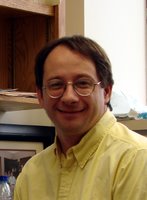
Dr. Siegfried Musser is a Professor in the Department of Cell Biology and Genetics at Texas A&M University's School of Medicine. He holds a PhD from Caltech and joined Texas A&M in 2001 after postdoctoral work at UC Davis and Brandeis University. His research focuses on biophysical mechanisms of protein translocation and biomolecular condensates, using advanced microscopy techniques like single-molecule fluorescence and super-resolution imaging. Key projects include studying nuclear pore complexes, the bacterial Tat machinery, and phase-separated FUS condensates linked to neurodegenerative diseases. Education: AB in Biochemistry from UC Berkeley (1990), PhD in Chemistry from Caltech (1996), postdoctoral training at UC Davis (1996-1999) and Brandeis University (1999-2001). Research Interests: Protein translocation systems (Nuclear Pore Complex, Tat machinery), biomolecular condensates, ALS/FTD pathogenesis, and single-molecule imaging technologies. Current work explores transport pathways in nuclear pores, Tat translocation energetics, and FUS phase maturation using MINFLUX and polarization-PALM approaches. Awards: Junior Faculty Research Excellence Award (Texas A&M Health Science Center). Lab Roles: Mentors graduate students (e.g., Thom Weidman) and postdocs (e.g., Abhishek Sau). Ongoing funding includes grants from the Edward Mallinckrodt Foundation. The lab seeks postdocs, graduate students, and undergraduates for biophysics and cell biology projects. Labs/Teams: Musser Lab at Texas A&M Health Science Center, specializing in single-molecule biophysics and cellular transport mechanisms.
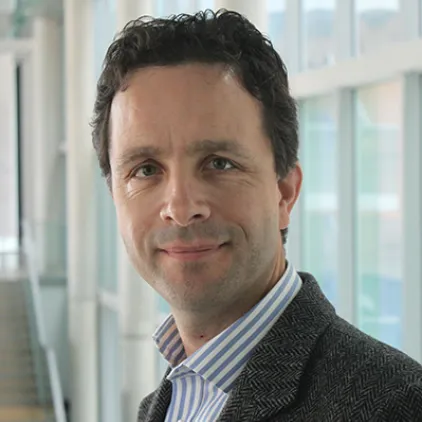
Professor Sebastian Springer leads the Molecular Mechanisms of the Immune Response and Immuno-Biotechnology Research group at Constructor University Bremen. As a Professor of Biochemistry and Cell Biology in the School of Science since 2001, he investigates intracellular transport regulation of immune system membrane proteins, with a focus on MHC class I molecule dynamics and their role in pathogen detection and cancer immunosurveillance. University of California, Berkeley (Postdoctoral Fellow, 1996-2001) Oxford University (PhD, 1992-1996) Tübingen University (Diplom in Biochemistry, 1985-1992) His research combines laser confocal microscopy with biochemical in vitro assays and biophysical approaches to study MHC class I peptide binding and surface localization. Key findings include demonstrating dynamic retention of empty MHC class I molecules and developing stabilized MHC variants commercialized through the Tetramer Shop (2019-21). Collaborations extend to biophysicists designing micrometer capsules for intracellular delivery. Scientific achievements include the Ernst A.-C.-Lange-Preis, with publications covering MHC stability, peptide exchange mechanisms, and structural immunology. His group's work on micrometric capsule technology has both diagnostic and biotechnological applications.
Juan Fraire is a researcher affiliated with the Smart Nano-Bio-Devices group, focusing on the intersection of nanotechnology and biomedical engineering. His work emphasizes the development of innovative photoporation techniques for cell engineering, magnetic nanomotors for therapeutic applications, and plasmonic nanomaterials for biosensing and imaging. Key research areas include: Photoporation using polydopamine and graphene quantum dots Magnetic and enzymatic nanomotors for drug delivery Plasmonic probes in biosensors and cellular imaging Photothermal mechanisms for biofilm and vitreous opacity treatments Recent publications highlight his contributions to engineering NK cell therapies, enhancing macromolecule diffusion in viscous media, and developing nanoscale tools for intracellular delivery. His studies span applications in cancer immunotherapy, wound healing, and ophthalmology.
Shikha Dhiman is a Professor of Physical Chemistry of Supramolecular Systems at the Department of Chemistry, Johannes Gutenberg University Mainz (Germany), and a Junior Faculty member at Max Planck Graduate Center, Mainz. Her academic journey includes a Ph.D. from Jawaharlal Nehru Centre for Advanced Scientific Research (JNCASR), India, under Prof. Subi J. George, followed by postdoctoral work at Eindhoven University of Technology under Prof. Bert Meijer. She has received prestigious awards including the Marie Skłodowska-Curie Fellowship and Thieme Chemistry Award 2024. Bachelor's in Chemistry from Hindu College, University of Delhi Integrated Ph.D. in Supramolecular Chemistry from JNCASR Postdoctoral training at Eindhoven University of Technology Her research focuses on creating life-like materials by understanding structure-dynamics-function relationships at molecular interfaces using advanced techniques. Key areas include supramolecular self-assembly, non-equilibrium systems, and bioinspired soft matter engineering. Her publications highlight spatiotemporal patterns, transient coacervation, and ATP-fueled materials. Scientific awards include Thieme Chemistry Award 2024 Certificate of Excellence 2024 by Bharat Vasi Germany e.V Marie Curie Fellowship (2021) Freiburg Rising Star (2021) . She has lectured on macromolecular chemistry and supramolecular systems at JGU Mainz and tutored at TU/e. Her lab explores non-equilibrium spatiotemporal patterns, interactions with biological systems, and small molecule coacervates. Current projects include SFB 1552 and GRK 2516. The lab team includes Ph.D. student Mohit Kumar and postdocs like Dr. Surbhi Sharma.
Aparajita Singha serves as Professor and Chair of Nanoscale Quantum Materials at Dresden University of Technology (TUD), leading a research group established in January 2025 within the Institute of Solid State and Materials Physics. Her work centers on nanoscale magnetism, coherent quantum control, and nanoscale transport phenomena using advanced scanning probe techniques including scanning NV-magnetometry, AFM, and STM. Her research pioneers quantum sensing with nitrogen-vacancy centers in diamond to achieve non-invasive atomic-scale magnetic imaging. Key projects include developing least-invasive quantum sensors for studying magnetic structures and dynamics, investigating magnetic molecules and radicals, and exploring spin textures in synthetic antiferromagnets. Recent breakthroughs encompass room-temperature mapping of magnetic auto-oscillations in spin Hall nano-oscillators—a critical advancement for neuromorphic computing and microwave generation—as published in Nano Letters (2025). Analysis of her publication trends reveals dominant themes in single-atom magnetism, orbital-resolved magnetism in lanthanides, and quantum sensor development. Her work bridges fundamental quantum physics with applications in quantum computing and spintronics, emphasizing atomic-scale magnetic field engineering and spin dynamics in molecular systems. Her scientific recognition includes: Emmy Noether Grant from DFG (Project ID: 504973613) Professor Singha mentors three PhD students while directing a research program supported by the Emmy Noether grant. Her team operates specialized quantum sensing infrastructure including confocal NV-magnetometry and home-built scanning systems. The research group comprises: Dr. Ricardo Javier Peña Roman (Postdoctoral researcher) Annegret Elsner (Secretary) Atharva Abhijit Paranjape, Sandip Maity, Olga Shevtsova (PhD students)
Xiaowei Zhuang is a Chinese-American biophysicist and the David B. Arnold Jr. Professor of Science at Harvard University, where she holds joint appointments in the Department of Chemistry and Chemical Biology and the Department of Physics. She is also an Investigator at the Howard Hughes Medical Institute, contributing significantly to advanced bioimaging technologies. Education: B.S. in Physics (University of Science and Technology of China, 1991); Ph.D. in Physics (University of California, Berkeley, 1996) Postdoctoral: Chodorow Postdoctoral Fellow at Stanford University (1997–2001) Renowned for inventing STORM (Stochastic Optical Reconstruction Microscopy), Zhuang’s research has revolutionized super-resolution fluorescence microscopy by overcoming diffraction limits. Her lab develops innovative single-molecule imaging techniques, including MERFISH (Multiplexed Error-Robust Fluorescence In Situ Hybridization), enabling precise spatial transcriptomics and cellular structure visualization. Current work spans 3D chromatin organization, tumor-immune interactions, and neural circuit mapping. The 15 most recent publications highlight her lab’s expertise in super-resolution imaging , spatial transcriptomics , chromatin dynamics , neurobiology , and cancer-immune crosstalk . These works demonstrate cross-disciplinary applications from single-molecule biophysics to clinical oncology . Scientific Awards: Breakthrough Prize in Life Sciences (2019), Vilcek Prize (2020), Heinrich Wieland Prize (2022), MacArthur Fellow (2003), NAS Award in Molecular Biology (2015) Academic Recognition: Member of National Academy of Sciences (2012), American Philosophical Society (2019), and Chinese Academy of Sciences (2015) Zhuang’s laboratory at Harvard has trained prominent researchers like Dr. Melike Lakadamyali and continues advancing single-virus tracking , live-cell imaging , and cellular structure analysis . Her work bridges physics, chemistry, and biology to address fundamental biological questions through technological innovation.
Lucas Pelkmans is a Full Professor at the Department of Molecular Life Sciences at the University of Zurich. He leads the Pelkmans Lab, a multi-disciplinary research group focused on understanding how biological scales are crossed from single molecules to tissues. His lab develops quantitative and scalable experimental approaches combined with computational and statistical methods to study fundamental biological questions. His research interests center on quantitative cell biology, systems biology, and the study of membrane-less organelles through phase separation. Pelkmans' work explores how cells process information across different scales, with particular focus on single-cell heterogeneity, cellular decision-making, and the principles governing biological organization. His lab actively encourages researchers to develop both wet-lab and dry-lab skills to tackle complex biological problems. The Pelkmans Lab has produced numerous high-impact publications, particularly in the areas of single-cell analysis, membrane-less organelles, quantitative imaging, and systems biology. Recent work demonstrates strong trends toward multimodal data integration, advanced computational approaches for analyzing cellular states, and understanding phase separation phenomena across biological scales. The lab's publications frequently appear in top-tier journals including Nature, Science, and Cell. Scientific Awards: ERC Advanced Grant (2020) EMBO member (2015) ERC Consolidator (2015) Ernst Hadorn Foundation-endowed Chair (2010) European Young Investigator Award (2005) ETH Medal (2003) Pelkmans actively mentors PhD students and postdoctoral fellows, with his lab comprising researchers from diverse backgrounds including physics, chemistry, computer science, and biology. His teaching includes courses on quantitative and molecular systems biology, and systems dynamics in cell and developmental biology. The lab has received significant grant support, including multiple ERC grants, enabling their innovative research on cellular organization and scale-crossing phenomena. The Pelkmans Lab maintains a highly collaborative environment that emphasizes both individual brilliance and team support. They have developed innovative technologies such as iterative indirect immunofluorescence imaging (4i) for multiplexed protein mapping, which has applications in precision medicine. The lab's work bridges fundamental biological questions with technological innovation, creating new approaches for studying cellular organization across multiple scales.
Sophie Dumont is a Professor in the Department of Bioengineering and Therapeutic Sciences at the University of California San Francisco (UCSF) School of Pharmacy . She is also an Investigator at the Chan Zuckerberg Biohub and affiliated with the Quantitative Biosciations Institute (QBI) and Helen Diller Family Comprehensive Cancer Center . Professor, Department of Bioengineering and Therapeutic Sciences UCSF Byers Award in Basic Science (2021) Chan Zuckerberg Biohub Investigator (2020) NIH New Innovator Award (2015) Sloan Research Fellow (2013) Research Interests : The Dumont Lab investigates how molecular properties generate cellular machine function, focusing on mitotic spindle mechanics and chromosome segregation . Key areas include self-organization of macromolecular complexes , force generation and response , and mechanical robustness in cell division . Publications (2024-2025) address spindle microtubule damage repair , force-dependent stabilization , and friction reduction at kinetochores . Recent work demonstrates how the Astrin-SKAP complex and NuMA protein mechanically reinforce spindle structures. Scientific Recognition : UCSF Outstanding Faculty Mentorship Award (2018) Women in Cell Biology Junior Award (ASCB) (2018) NSF CAREER Award (2016) Advising : Mentored Lila Neahring (Weintraub Award 2021) and multiple students in Biophysics , Tetrad , and Developmental Biology programs . Labs & Collaborations : Leads the Dumont Lab at UCSF, collaborating with UCSF-UC Berkeley Joint Bioengineering Group and Quantitative Biosciences Institute .
Jaak Kikas, born 23 February 1949, has been Professor of Physics of Disordered Systems at the University of Tartu since 1996. Holding a doctorate in solid-state physics (1979), he has continuously advanced the understanding of disordered solids and high-resolution molecular spectroscopy, leveraging site-selective and single-molecule techniques. Education 1967 – Tallinn 2nd Secondary School, Gold Medal 1972 – University of Tartu, Diploma with Honour (Theoretical Physics) 1979 – ESSR Academy of Sciences, Institute of Physics, Candidate of Phys.-Math. Sciences (Solid-State Physics) Research Interests His research spans seven tightly inter-related areas : Site-selective spectroscopy methods for disordered solids Statistical theory of spectral inhomogeneity and spectral diffusion Spectral hole-burning processes in solids Optics of spectrally selective media and hole-burning applications Low-temperature dynamics of glasses under temperature and pressure High-resolution spectroscopy of molecular crystals and proteins Molecular probing of local relaxation in incommensurate solids Publication Trends Across more than 90 peer-reviewed works, Kikas has systematically explored the interplay between microscopic disorder and macroscopic optical response. Recent papers (2007-2014) emphasize single-molecule studies in incommensurate matrices , rare-earth ion spectroscopy in glasses , pressure-tunable emission , and non-destructive residual-stress diagnostics in glass panels . These contributions integrate fundamental condensed-matter physics with practical photonic and biomedical applications. Scientific Awards 1986 USSR State Prize in Science – awarded to the research team for the cycle “Photoburning of stable spectral holes and laser spectroscopy of complex molecules” . Administrative & Leadership Roles Professor Kikas has held continuous leadership positions at the University of Tartu: Head, Institute of Materials Science (1996–2007) Head, Department of Materials Science, Institute of Physics (2007–present) Member, Council of the Institute of Physics (2007–present) Member/Council Chair, UT & TUT Doctoral School “Functional Materials and Technologies” (2005–present) Chair, Science Council of the AHHAA Science Centre Foundation (1999–present) Chair, UT School of Science Council (1997–present) Member, Advisory Board, Estonian Academy of Sciences Proceedings: Physics & Mathematics (1992–present) Laboratory & Team He leads the Department of Materials Science within the Institute of Physics at the University of Tartu, coordinating experimental and theoretical research on disordered solids, high-resolution spectroscopy, and functional optical materials. The group operates advanced cryogenic, high-pressure, and single-molecule spectroscopy facilities, fostering collaboration across Estonian and international institutions.
Clément CABRIEL is a CNRS Researcher affiliated with the Institut Langevin (ESPCI Paris / PSL University). He specializes in Single-Molecule Localization Microscopy (SMLM) and its applications across bioimaging , nanophotonics , and microfabrication . Key Collaborations: Works with Ignacio Izeddin (Institut Langevin) and international teams on interdisciplinary projects. Research Focus: Develops 3D super-resolution techniques, event-based sensors for high spatio-temporal imaging, and microstructured substrates for cellular modeling and axial calibration. Achievements: Pioneered SMLM calibration tools using fractal-like substrates (2025), explored M2d macrophage differentiation via 3D topographies (2024), and advanced event-based sensor technology for dense single-molecule imaging (2023). His work bridges optics , materials science , and cell biology . Community Engagement: Co-organizes the Young Scientist Network GDR Imabio to foster European bioimaging collaboration and career development for early-career researchers.
Hilary Ashe is a Professor of Cell and Developmental Biology at the Faculty of Life Sciences, University of Manchester since 2013. Her career includes prior roles as Senior Lecturer (2009-2013), Lecturer (2007-2009), and Lister Institute Research Fellow (2002-2007) at the same institution. She also held a Lecturer position at the Centre for Developmental Genetics, University of Sheffield (2000-2001) following postdoctoral work at UC Berkeley and University of Oxford.
Enrico Carlon is a Professor at KU Leuven within the Faculty of Sciences and the Department of Physics and Astronomy . He leads the Statistical and Computational Physics research group in the Physics of Soft Matter and Biophysics unit, part of the Physics of Life (PoL@KUL) cluster. Research Focus: DNA mechanics , chromatin structure , biomolecular condensates , and SMC protein dynamics Teaching: Advanced Statistical Mechanics, Computational Physics (Molecular Dynamics/Monte Carlo), Polymer Physics Research Interests center on understanding DNA's mechanical behavior under cellular conditions, including DNA elasticity across length scales Non-local twistable wormlike chain modeling Entropic DNA pistons for active transport Chromatin microphase separation SMC-mediated loop extrusion mechanics DNA-mediated allostery mechanisms His article trends emphasize computational modeling of DNA's statistical mechanics, with recent work on topological domain analysis , coarse-grained DNA simulations , and chromatin structure inference from microscopy data. Scientific Awards : 2024 Editor's Pick for 'Insights into elastic properties of coarse-grained DNA models' 2025 Editors' Suggestion for 'Statistical mechanics of multiplectoneme phases in DNA' Selected for special issue on 'Chromatin Structure and Dynamics' (2025) Advising includes PhD students Lucas Dooms , Arianna Fassino , Eva Punter , and Midas Segers , plus master students like Fritz Förster (TU Dresden collaboration). His lab develops computational approaches within the Physics of Life cluster, collaborating with international groups on DNA's role in nanopore proteomics and chromosome organization .
Ji-Xin Cheng is a Professor at Boston University, specializing in Molecular Spectroscopic Imaging Technologies , Label-Free Microscopy , and Medical Photonics . His research spans biomedical imaging, antimicrobial therapies, and neuroscience. Education: PhD, University of Science and Technology of China (1998) Research Interests focus on developing label-free chemical imaging tools to address biological questions like membrane dynamics in neurons, cancer metabolism, and pathogen resistance. His work bridges engineering, physics, chemistry, and medicine to enable precision diagnostics and photonic therapies . Article Trends include innovations in SRS and CARS microscopy , optoacoustic devices , and single-molecule detection . These span biomedical imaging , neuroscience , and antimicrobial phototherapy . Scientific Awards SPIE Photonics West Translational Research Award (2015) Grants include NCI/STTR and NSF SBIR for clinical translation of imaging devices. His Drug-Free Treatment projects explore photonic modulation of neural tissues and pathogen eradication .
Carmen Rubio-Verdú is Professor at ICFO – The Institute of Photonic Sciences , where she leads the STM on 2D Quantum Materials group. Her laboratory exploits milli-kelvin scanning tunneling microscopy and spectroscopy to uncover emergent quantum phenomena in two-dimensional and moiré systems. Research Focus: Correlated electron phases in magic-angle graphene and other 2D heterostructures Superconductivity, Mott insulating states, Wigner crystals and spin liquids Atomic-scale engineering of van der Waals materials through twist and stacking Yu–Shiba–Rusinov states and molecular magnetism on superconducting surfaces Across more than twenty high-impact publications since 2016, her work reveals a consistent trajectory: applying ultra-low-temperature STM to visualize real-space signatures of many-body physics in graphene multilayers, transition-metal dichalcogenides and designer moiré superlattices. The studies map out electronic nematicity, multifractal superconductivity, Kondo-lattice behavior and tunable p–n junctions, thereby bridging fundamental theory and nanoscale device engineering. Group & Opportunities: The STM team currently welcomes motivated Master students, PhD candidates and post-doctoral researchers . Prospective members are encouraged to consult the ICFO jobs portal or contact Prof. Rubio-Verdú directly.
Dimitrios Stamou is a Professor of Bionanotechnology and Nanomedicine in the Department of Chemistry at the University of Copenhagen's Faculty of Science. He also serves as Director of the Center of Excellence for Geometrically Engineered Cellular Systems (2018-2024) funded by the Novo Nordisk Foundation with 60M DKK. Previously, he was Associate Professor (2006-2010) and Assistant Professor (2004-2006) in the Department of Neuroscience and Pharmacology at the same university, and has been a member of the Nano-Science Center since 2004. Education: 1992-1995: B.Sc. Hon. Physics, Leeds University (UK) 1996-2000: Ph.D. Physical Chemistry, Ecole Polytechnique Fédéral de Lausanne (CH) 2000-2002: Postdoctoral Fellow, Ecole Polytechnique Fédéral de Lausanne (CH) Professor Stamou's research focuses on membrane biophysics and single molecule biology. He has developed innovative technologies to investigate membrane curvature, membrane protein dynamics, and cellular organization. His work bridges nanotechnology, biophysics, and medicine, with significant contributions to understanding how membrane curvature influences protein localization and function. His laboratory pioneered methods for single-molecule analysis of membrane proteins that resolved ionic currents with sensitivity 1,000,000-fold higher than patch clamp techniques, enabling observation of single transporter molecules. He also developed methods to investigate individual proteoliposomes, revealing dramatic heterogeneities in ensemble populations that can skew measurements but also enable high-throughput ultraminiaturized assays with 1,000,000,000-fold lower sample consumption. His recent publications demonstrate a continued focus on GPCR organization, membrane curvature effects on protein localization, and single-molecule analysis of membrane proteins. The research spans biophysics, molecular biology, and nanotechnology, with applications in understanding cellular signaling pathways relevant to cancer and other diseases. His work often involves collaborations with leading institutions worldwide, including UC Berkeley, Stanford University, Cambridge University, and the Max Planck Institute. Selected Awards: 2019: Thomas E. Thompson Award, Biophysical Society 2017: Best research at Dept. of Chemistry, University of Copenhagen 2016: Torkil Holm, National Prize in chemical science 2010: Annual Award of the Danish Biotechnology Society Professor Stamou has established and directs the Bio-Nanotechnology and Nanomedicine Laboratory at the University of Copenhagen, securing approximately 210M DKK in external funding. He previously served as Director of the Center of Excellence for Biomembranes in Nanomedicine (35M DKK, Lundbeck Foundation, 2010-2015) and PI of the NABIIT council Frame grant (23M DKK in collaboration with Novo Nordisk A/S, 2014-2018). His laboratory has received strategic research funding from multiple foundations and agencies. Since 2005, Professor Stamou has supervised 13 postdocs and graduated 12 PhD, 12 MSc, and 16 BSc students. He has been an active member of the scientific community, serving on editorial boards including the Biophysical Journal (2017-2019) and the Journal of General Physiology (2019-2021). His laboratory maintains collaborations with leading researchers worldwide, including J.T. Groves (UC Berkeley), B. Kobilka (Stanford University), D. Owen (Cambridge University), R. Jahn (Max Planck Institute), and T. Ha (Johns Hopkins).