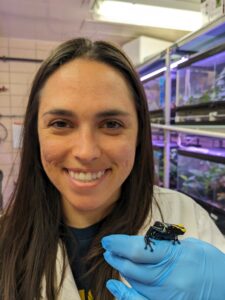
Sarah Westrick is an Assistant Professor of Biology at Wake Forest University. Her research investigates physiological and neural mechanisms underlying parental care and behavioral plasticity in amphibians and mammals. Educational background includes: Ph.D. in Ecology and Evolutionary Biology, University of Michigan (2020) Postdoctoral Research, University of Illinois (Eva K. Fischer Lab) B.S., Colorado State University Research integrates genomics, fieldwork, and behavioral analysis to study poison frog parenting styles, maternal effects in red squirrels, and rapid adaptation. Current projects develop genomic resources for poison frogs, including single-cell RNAseq brain atlases. Teaching focuses on animal behavior and neurobiology. Publications appear in eLife, Journal of Experimental Biology, and Behavioral Ecology.
Michael O'Connell is an Assistant Professor in the Department of Statistics at Miami University (Ohio). His research focuses on Biostatistics, with applications in public health, environmental science, and genomics. He holds a Ph.D. from the University of Minnesota (2018). Key research areas include statistical methodology for analyzing complex biological and health data, climate change impacts on species, and sports analytics. His work bridges computational methods with real-world applications. Education: Ph.D., Statistics, University of Minnesota, 2018. Research interests span Biostatistics, Machine Learning, and Environmental Science. He develops novel statistical techniques for multi-source data integration, including methods for genomics, single-cell RNA sequencing, and sports performance prediction. His work also addresses public health challenges such as obesity prevention in schools and cardiometabolic health outcomes. Publications reflect a focus on interdisciplinary topics, including intervention studies in aging populations, climate resilience of species, and genomic data harmonization. No scientific awards are listed. He has advised no listed students. Grants and lab affiliations are unspecified, though his work aligns with Miami University’s focus on collaborative, data-driven research.
Timothy J.C. Anderson, Ph.D. is a Professor at the Texas Biomedical Research Institute and leads the Anderson Lab, which focuses on parasite genetic variation and evolution with emphasis on malaria and schistosome parasites. He serves as Program Co-lead for Disease Intervention & Prevention at Texas Biomedical Research Institute and is affiliated with the Department of Microbiology, Immunology & Molecular Genetics. Dr. Anderson's research centers on understanding the genetic basis and evolution of biomedically important traits in human parasites. His laboratory uses population genomics methods to investigate drug resistance, host specificity, and other evolutionary dynamics in malaria parasites and schistosomes. Current research interests include artemisinin resistance in Southeast Asian malaria parasites, copy number variation in Plasmodium, within-host dynamics of malaria infections, and application of linkage mapping and exome sequencing for Schistosome parasites. His lab maintains the full lifecycle of schistosome parasites and utilizes advanced techniques including genome sequencing, RNAseq, CRISPR/Cas9 gene editing, and evolutionary genetics. Analysis of Dr. Anderson's recent publications reveals a strong focus on the genetic mechanisms underlying drug resistance in both malaria and schistosomiasis. His work combines field studies in Southeast Asia and Africa with laboratory genetic crosses, bulk-segregant analysis, and genome-wide association studies. A growing emphasis appears in his recent work on microbiome interactions with parasite transmission and the application of single-cell transcriptomics to understand sporocyst biology in schistosomes. Dr. Anderson has established numerous international collaborations with researchers in Southeast Asia (malaria) and Africa (schistosomes), as well as with colleagues in London, France, Kenya, Uganda, and Brazil. His laboratory has pioneered the use of genetic crosses between schistosomes to identify the genetic basis of biomedically important parasite traits. The lab maintains complete parasite lifecycles using snail intermediate hosts and rodent models, and employs advanced genomic technologies including Nanopore long-read sequencing to enhance genetic mapping capabilities. The Anderson Lab investigates how parasite variation and evolution—including drug resistance, vaccine escape, immune evasion, and host shifts—present central obstacles to parasite control. By better understanding these evolutionary processes, Dr. Anderson's research aims to develop more efficient control strategies for these devastating parasitic diseases that affect hundreds of millions worldwide.
Dr. Patricia M. White is an Associate Professor in the Department of Neuroscience and a Joint Appointment in the Department of Otolaryngology at the University of Rochester School of Medicine and Dentistry. She holds a B.S. in Biology (1989) and a Ph.D. in Developmental Biology (2000) from the California Institute of Technology. Her research focuses on understanding the molecular mechanisms underlying inner ear regeneration to develop biological treatments for noise-induced hearing loss. She has pioneered studies on neural stem cells, cochlear supporting cell proliferation, and the role of genes like Foxo3 and ERBB2 in hearing maintenance. Dr. White’s work integrates developmental biology, molecular genetics, and auditory physiology to explore how cells can be manipulated to regenerate damaged cochlear tissues. Her lab uses mouse models to investigate the effects of gene mutations, noise exposure, and environmental toxins on hearing. Key contributions include identifying ERBB2 signaling’s role in cochlear cell regeneration and demonstrating Foxo3’s critical function in protecting against noise-induced hearing loss. Her scientific awards include the ARCS Scholar and Hearst Scholar honors. Her research has been published in high-impact journals like Nature and Developmental Biology , with a focus on translational applications for hearing restoration. Dr. White collaborates widely, and her lab’s work is accessible via their dedicated research website.
Ramanaiah Mamillapalli is a Research Scientist at the Yale School of Medicine, affiliated with the Department of Obstetrics, Gynecology & Reproductive Sciences. His research focuses on understanding and developing therapies for endometriosis, leveraging stem cell biology, microRNA regulation, and immunological mechanisms. Collaborations with prominent researchers like Hugh Taylor highlight his work on molecular pathways and therapeutic interventions. Dr. Mamillapalli holds a PhD from Sri Venkateswara University (1993) and advanced degrees from Andhra University. His studies span endometrial physiology, regenerative medicine, and the systemic effects of endometriosis, including links to cardiovascular health. Key research interests include microRNA roles in disease progression, stem cell-derived exosome therapies, and immunomodulatory strategies such as targeting PD-1/PD-L1 pathways. His recent work explores novel immunotherapies (e.g., ICON3) and the use of AMD3100 in stem cell mobilization for Asherman’s syndrome.
Eli Zunder, Ph.D., is an Associate Professor in the Department of Biomedical Engineering at the University of Virginia. His research focuses on analyzing stem cell fate using single-cell mass cytometry and high-dimensional modeling of cell lineage trajectories. He holds a B.A. from Dartmouth College (2002) and a Ph.D. in Biophysics from UCSF (2008), followed by postdoctoral training in Garry Nolan’s lab at Stanford University. His work has developed novel methods for cell barcoding in mass cytometry, mapping immune system organization, and identifying therapeutic targets in cancer and stem cell reprogramming. Research Interests: Biotechnology and Biomolecular Engineering, Computational Systems Biology, stem cell differentiation, immune system dynamics, and high-dimensional data analysis. His lab explores mechanisms controlling stem cell behavior in development and disease, with applications in regenerative medicine and drug discovery. Grants & Projects: Current research includes in vitro differentiation studies to define principles of pluripotency and lineage commitment. His lab develops experimental and computational tools for tracking cell populations at single-cell resolution, such as the FLOW-MAP trajectory mapping algorithm and ensemble clustering methods like ESCHR. Projects focus on neurodevelopment, immune system plasticity, and disease models like ALS and idiopathic pulmonary fibrosis. Labs & Teams: The Zunder Lab at the University of Virginia collaborates across disciplines to integrate cutting-edge cytometry techniques with systems biology approaches. Key collaborations include work on immune signaling dynamics and metabolic pathways in neurodegenerative diseases.
Pedro Garrido Rodriguez is a biomedical researcher and bioinformatics specialist affiliated with the University of Murcia (UM) and CIBERER. His academic journey includes a BSc in Biochemistry (UM, 2019), MSc in Bioinformatics (UM, 2020), and ongoing PhD studies in Biomedicine at UM. Currently working in the Hematology and Experimental Clinical Oncology department at Hospital José María Morales Meseguer, he develops multi-omics bioinformatics protocols for hematological and oncological disorders. His research focuses on: Multi-omics data integration Long-read sequencing applications Protein structure prediction (AlphaFold) Variant calling and methylation analysis Computational pipeline development Transcriptome and epitranscriptome profiling Key contributions include: Development of Snakemake/Singularity workflows for DNA/RNA-Seq analysis Creation of mosaicism detection pipelines Integration of clinical data with structural biology predictions Notable findings: Limitations of AlphaFold in predicting serpin conformational changes New insights into antithrombin deficiency mechanisms Discovery of novel antisense transcripts in liver tissue
Bernd Jagla is a Bioinformatics Research Scientist at the Pasteur Institute in Paris, France, where he has been working since 2009. Currently affiliated with the Bioinformatics and Biostatistics Hub (C3BI) and the Biomarker Discovery Platform, he previously held positions at Columbia University and Memorial Sloan Kettering Cancer Center in New York City. His educational background includes a PhD in Bioinformatics from the Free University Berlin (1999), a Chemistry Diploma from Free University Berlin & Technical University Munich (1989-1995), and Computer Science studies at Free University Berlin (1990-1991). Jagla's research focuses on bioinformatics applications for high-throughput biological data. His expertise spans single-cell RNAseq analysis, cytometry data processing, function prediction from sequence data, image analysis, mass spectrometry data analysis, and workflow management systems. He has developed several bioinformatics tools including SCHNAPPs for single-cell RNAseq analysis, KNIME extensions for Next Generation Sequencing, and Clean-ngs for adapter removal in sequencing data. His work demonstrates a strong emphasis on data quality assurance and visualization methodologies. His scientific achievements include: caBIG™ Embodying the Vision Award (2007) DFG Fellowship of the Graduiertenkolleg (1997-1999) Jagla actively contributes to bioinformatics training programs at Pasteur Institute, including the Bioinformatics program for PhD students financed by the INCEPTION program. He collaborates across multiple research teams and platforms, providing critical bioinformatics support for cytometry, next-generation sequencing, and microarray data analysis. His work bridges computational methods with biological applications, particularly in immunology and infectious disease research. As a key member of the Bioinformatics and Biostatistics Hub, he supports the Human Immunology Center and contributes to technological developments in bioinformatics infrastructure at the institute, working closely with the Transcriptome and Epigenome platform and the Biomarker Discovery Platform.
Geetu Tuteja is a Professor and LAS Dean's Professor at Iowa State University's Department of Genetics, Development and Cell Biology (GDCB), part of the College of Liberal Arts and Sciences. She leads the Tuteja Lab, which focuses on transcriptional regulation mechanisms in placental development, particularly trophoblast invasion. Her work integrates genomics, computational biology, and experimental approaches to study placental disorders like preeclampsia. Education: B.A. in Computer Science from Boston University (2004); Ph.D. in Genomics and Computational Biology from the University of Pennsylvania (2009). Postdoctoral research at Stanford University (2010-2015) under Gill Bejerano. Joined Iowa State as an assistant professor in 2015, promoted to associate professor with tenure in 2020, and full professor in 2024. Research Interests: Transcriptional networks, enhancer elements, trophoblast biology, placental disorders, and computational analysis of genomic data. Techniques include ATAC-seq, single-cell RNAseq, and gene network modeling. Awards: Pew Biomedical Scholar (2019, first at Iowa State), NIH R01 funding, and the Geoffroy Faculty Fellowship (2015-2018). Labs/Teams: Tuteja Lab focuses on placental genomics, combining molecular, computational, and systems approaches. Current projects explore trophoblast invasion mechanisms and placenta-brain axis interactions.
Christopher Waters is a Professor in the Department of Microbiology and Molecular Genetics at Michigan State University. His research focuses on bacterial chemical signaling pathways, particularly cyclic di-GMP (c-di-GMP) regulation in Vibrio cholerae , and developing immunotherapies for cancer. He earned his Ph.D. from the University of Minnesota and completed postdoctoral training at Princeton University. Research interests include understanding how c-di-GMP mediates transitions between sessile biofilm and motile virulent states in pathogens. The Waters Lab also explores adenoviral delivery systems for cancer immunotherapy and bacterial phage defense mechanisms. Key projects involve biofilm heterogeneity, phenotypic segregation, and combinatorial control of biofilm development through quorum sensing and nutrient signaling. Recent articles highlight advancements in c-di-GMP signal transduction, biofilm plasticity, and novel antibacterial strategies. Collaborations include engineering hydrogels for biofilm inhibition and developing In vivo biofilm infection models. Current efforts emphasize translating basic discoveries into clinical applications for infectious disease and cancer treatment.
Dr. Panagiotis Mastorakos is an Assistant Professor in the Department of Neurosurgery at UT Southwestern Medical Center, affiliated with the Peter O'Donnell Jr. Brain Institute. His clinical expertise focuses on cerebrovascular neurosurgery, managing vascular lesions, ischemic/hemorrhagic stroke, and aneurysms. His research investigates innate immune pathways in cerebrovascular diseases, particularly subarachnoid hemorrhage (SAH) and stroke, aiming to bridge bench-to-bedside therapies. Education: Medical and doctoral training at the University of Athens School of Health Sciences, Neurosurgery residency at NIH/University of Virginia, and cerebrovascular fellowship at Thomas Jefferson University. Research Interests: Immune responses in CNS injury, nanotherapeutics delivery, myeloid cell dynamics, meningeal repair mechanisms, and intracranial pressure effects. Key publications highlight innovations in Woven EndoBridge aneurysm treatment, immunological mechanisms in CNS injury, and nanoparticle-based therapies. His lab collaborates on NIH-funded grants (R01/R24) and employs advanced models (e.g., MCAO, SAH) and techniques (multiphoton microscopy, single-cell RNAseq). The team includes researchers like Vaidehi Shah (Research Technician), Lu Han (Postdoc), and Jordan Mattke (Postdoc). Grants include NIH-funded studies on neurovascular injury repair and nanomedicine. No specific awards listed, but patents exist for brain-penetrating nanoparticles.
Min Jee Jang is an Assistant Professor in the Department of Bioengineering at the University of Illinois Urbana-Champaign (UIUC), affiliated with the Carl R. Woese Institute for Genomic Biology and the Neuroscience Program. She holds a B.S., M.S., and Ph.D. in Bio and Brain Engineering from KAIST (2009–2015). Her research focuses on developing advanced gene delivery technologies for studying and treating neurological disorders, leveraging viral vector engineering and spatial transcriptomics. Jang is also the Chief Science Officer at Genixcure (South Korea) and actively contributes to professional societies like the Biomedical Engineering Society and Society for Neuroscience. Her research interests include targeted genetic access to brain cells, overcoming limitations in cell-type specificity and temporal resolution. Her lab integrates viral vector design, spatial omics, and computational methods to understand brain cell dynamics and develop programmable gene delivery systems. Key achievements include pioneering systemic AAV vectors for primate brain gene transfer and spatial transcriptomics profiling of viral tropism. Notable awards include the NARSAD Young Investigator Award (2021–2023) and Caltech Postdoctoral Fellowship (2018–2020). Jang has presented widely, including seminars at Seoul National University, Stanford, and Brown. Her lab at UIUC, established in 2024, recruits students/postdocs passionate about translational neuroengineering and genetic medicine.
Esther Liu holds dual roles as a Senior Researcher at Gartner and an Instructor in the MS in Learning and Organizational Change Program at Northwestern University’s School of Education and Social Policy (SESP). Her academic background includes a PhD, MA, and BA in Communication Studies and Psychology, all from Northwestern University. Her research expertise spans survey design, quantitative data analysis, and interdisciplinary topics in communication such as negotiation, intercultural communication, and conflict management. Her recent scientific contributions focus on cellular biology and oncology, including studies on macrophage signaling in cancer progression, epigenetic regulation in osteoblast differentiation, and therapeutic targeting of tumor microenvironments. This work bridges communication science with biomedical research, reflecting her unique interdisciplinary approach. Esther’s academic advising and teaching are centered on the Learning and Organizational Change program, emphasizing practical applications of research methods and policy analysis. While no formal awards or grants are explicitly listed, her extensive publication record (see articles above) underscores her active role in advancing translational research across disciplines. Her research is conducted through collaborations with institutions like Gartner and Northwestern’s SESP, leveraging both academic and industry partnerships to explore human behavior, communication dynamics, and biological systems at the cellular level.
Dr. Meghan Ferrall-Fairbanks is an Assistant Professor in the Department of Biomedical Engineering at the University of Florida. She leads the BEAT (Battling Evolution through Adaptive Therapies) Cancer Lab, which integrates computational, mathematical, and experimental approaches to study tumor heterogeneity and evolutionary dynamics in cancer. Her research aims to optimize treatment strategies by understanding how ecological and evolutionary forces drive tumor growth and metastasis. Education: B.S. in Mechanical Engineering, University of Florida (2012) Ph.D. in Biomedical Engineering, Georgia Institute of Technology & Emory University (2017) Research Focus: Dr. Ferrall-Fairbanks' work spans quantitative systems biology, mathematical modeling of cancer evolution, and mechanisms of drug resistance. Her lab explores tumor heterogeneity at molecular, tissue, and systems levels, with a focus on adaptive therapy, proteolytic networks, and intratumor diversity. Recent studies include investigating spontaneous cell fusions in tumors and the Warburg effect in early breast cancer. Publications: Her work spans topics like cancer metabolism, protease kinetics, and single-cell sequencing analysis. Notable contributions include modeling tumor evolution, developing algorithms to predict protease interactions, and analyzing clinical outcomes in renal cell carcinoma. Awards: AACR Doreen J. Putrah Scholar-in-Training Award (2020) BMES Career Development Award (2019) Georgia Tech Faces of Inclusive Excellence (2015) Labs & Collaborations: The BEAT Cancer Lab collaborates across disciplines to bridge computational models with experimental validation. Current projects include developing predictive models of tumor response and investigating mechanisms of therapeutic resistance in myeloid neoplasms.
Gábor Balázsi is the Henry Laufer Professor at Stony Brook University, holding dual appointments in the Department of Biomedical Engineering and the Laufer Center for Physical & Quantitative Biology. His research focuses on understanding cellular decision-making and population dynamics through synthetic and computational approaches. Balázsi earned his Ph.D. in Physics from the University of Missouri and has held prior roles at the University of Texas MD Anderson Cancer Center. His work merges synthetic gene circuit design with evolutionary biology to study cancer drug resistance and metastasis. Current projects include engineering gene circuits to perturb natural networks, and exploring how noise and heterogeneity influence cellular survival strategies. Education: Ph.D. Physics (2001), M.S. Physics (1999) and M.S. Magnetism (1997) from University of Missouri and Babeş-Bolyai University. Academic career spans 20+ years with over 100 peer-reviewed publications. His lab develops predictive models of gene regulatory networks using principles like Maximum Caliber (MaxCal), and employs optogenetic tools for real-time cellular control. Balázsi’s research bridges physics, engineering, and biology to address fundamental questions in synthetic biology and translational oncology. Awards and recognition include sustained NIH funding and leadership roles in interdisciplinary initiatives. His courses teach quantitative biology concepts at Stony Brook. Current projects aim to interface synthetic circuits with natural networks to control cancer phenotypes, with applications in personalized medicine and drug development.