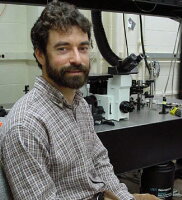
Dr. Matteo Degiacomi is a Visiting Associate Professor in the Department of Physics at Durham University. His research focuses on integrative computational methods combining machine learning and molecular dynamics simulations to model biomolecular systems at near-atomistic resolution. Education: MSc in Computer Science (2008), PhD in computational biophysics (2012) from EPFL. His work leverages ion mobility , cross-linking , SAXS , and electron microscopy data to study protein assembly mechanisms. Recent publications highlight applications in virology , nanomaterials , and membrane protein dynamics . He develops open-source tools like ClayCode and JabberDock . Scientific awards include a Swiss National Science Foundation Early Postdoc Mobility Fellowship (2013-2017) and an EPSRC Junior Research Fellowship (2017-2020). He supervises postgraduate researchers Ajeeth Kanagarajan , Breanna Voss , and Listra Ginting .
Philip J. Reid serves as Professor and Vice Provost for Academic & Student Affairs at the University of Washington's Department of Chemistry. With a Ph.D. from the University of California at Berkeley (1992), he maintains an active research program while holding significant administrative responsibilities within the university structure. Professor Reid's research focuses on molecular photophysics at the single-molecule level, particularly investigating fluorescence intermittency (blinking) , charge transfer processes , and guest-host interactions in various materials systems. His laboratory employs advanced confocal microscopy and femtosecond spectroscopy techniques to study phenomena in semiconductor nanocrystals, polymer matrices, and molecular crystals. Key research areas include understanding the nature of non-emissive states that serve as gateways to material decomposition, temperature-dependent photophysics around polymer glass transitions, and proton transfer mechanisms in crystalline environments. Analysis of Professor Reid's recent publications reveals consistent focus on single-molecule spectroscopy applied to nanomaterials and polymers. His work demonstrates how molecular-scale photophysical measurements can provide insights not obtainable through bulk techniques, particularly regarding environmental effects on photostability and emission properties. The research bridges fundamental physical chemistry with practical applications in photonic materials. Professor Reid has advised numerous graduate students and postdoctoral researchers who have gone on to diverse careers in academia, government, and industry. His laboratory collaborates extensively with other research groups, notably the Gamelin Lab at UW and the Kahr Group at New York University, reflecting the interdisciplinary nature of his work. The Reid Lab operates custom-built confocal microscopy systems designed for single-molecule investigations. Research focuses on chromophore-polymer systems and mixed-crystal materials where single molecules are isolated in well-defined environments. This approach allows precise investigation of molecular photophysics while minimizing complications from oxygen permeability and nonradiative relaxation.
Phillip D. Zamore serves as Chair and Professor of the RNA Therapeutics Institute at the University of Massachusetts Chan Medical School School of Medicine and is an Investigator of the Howard Hughes Medical Institute. He holds the Gretchen Stone Cook Professorship in Biomedical Sciences and leads pioneering research in RNA biology. Dr. Zamore earned his A.B. (1986) and Ph.D. (1992) in Biochemistry and Molecular Biology from Harvard University, followed by postdoctoral training at The Whitehead Institute for Biomedical Research. His research focuses on small RNA silencing pathways including RNA interference (RNAi), microRNA, and PIWI-interacting RNA (piRNA) mechanisms across eukaryotic and prokaryotic systems. Key investigations explore how Argonaute proteins achieve sequence-specific regulation of transcription and translation, with emphasis on piRNA biogenesis in germ cells and bacterial Argonaute functions. Analysis of his recent publications reveals dominant themes in transposon silencing, piRNA pathway evolution, RNA therapeutic development, and molecular mechanisms of gene regulation. His work bridges fundamental biochemistry with clinical applications, particularly in RNA-based therapies for genetic disorders. Notable scientific honors include: Chancellor’s Medal for Excellence in Scholarship (2015) Dean's Award for Research Mentoring (2011) Fellow of the National Academy of Inventors (2014) Election to the American Academy of Arts & Sciences, National Academy of Sciences, and National Academy of Medicine (2023) Dr. Zamore has co-founded multiple biotechnology companies including Alnylam Pharmaceuticals (2002), which developed the FDA-approved RNAi therapeutic ONPATTRO for hereditary transthyretin-mediated amyloidosis, and Voyager Therapeutics (2014). His laboratory has trained dozens of researchers now leading institutions worldwide, with over 150 publications and 119 patents reflecting his translational impact. Current research leverages biochemical and genetic approaches to develop RNA-guided therapies for diseases like Huntington's. The Zamore Laboratory operates within the RNA Therapeutics Institute at UMass Chan Medical School, utilizing advanced genomic, biochemical, and imaging technologies to study small RNA pathways in model organisms including Drosophila, mice, and bacterial systems.
Paul R Selvin is a Professor of Biological Physics at the University of Illinois at Urbana-Champaign, affiliated with the Departments of Physics, Electrical and Computer Engineering, Cell and Developmental Biology, and Chemistry. He earned his Ph.D. in Physics from UC Berkeley (1990) and joined UIUC in 1997. His research focuses on molecular motors, super-resolution microscopy, and biophysical techniques like FIONA (Fluorescence Imaging with One-Nanometer Accuracy). Selvin pioneered studies on motor protein mechanics, including kinesin and dynein, and developed quantum dot-based imaging technologies. He has received prestigious awards such as the Sackler Prize in Biophysics (2006) and the Gregorio Weber Award (2020). Education: B.S. in Physics (University of Michigan, 1983), Ph.D. in Physics (UC Berkeley, 1990). Key research areas include neuroscience, single-molecule dynamics, and fluorescence resonance energy transfer (FRET). Recent work explores in situ measurements in Planaria and C. elegans. His lab develops advanced imaging tools like STED and DNA-PAINT for cellular and subcellular visualization. Notable contributions include discovering hand-over-hand motion in molecular motors and advancing quantum dot applications in live-cell imaging. His team collaborates across disciplines, integrating biophysics, nanotechnology, and cell biology. Awards also include the NSF CAREER Award (2000) and Fellowships from the American Physical Society and Research Corporation.
G. Ulrich Nienhaus is a Professor at the Institute of Applied Physics , Karlsruhe Institute of Technology (KIT) , and leads a research group focused on Biophysics and Nanoscopy . His work integrates physics, biology, chemistry, and computational methods to develop advanced light microscopy techniques with high spatial and temporal resolution. Key research areas include fluorescent protein engineering , single-molecule spectroscopy , super-resolution microscopy , and nanoparticle-biomolecule interactions . His group investigates molecular processes in living cells , protein folding , ligand dynamics , and quantitative imaging for biomedical and material science applications. Scientific Contributions span decades, with recent work highlighting innovative STED microscopy methods, DNA origami-based distance rulers , and fluorescent nanocluster applications . Publications emphasize biomolecular dynamics , nanoparticle corona formation , and live-cell imaging tools .
Alexandros Poulopoulos, PhD, serves as Associate Professor in the Department of Pharmacology & Physiology at the University of Maryland School of Medicine. His research integrates synthetic biology with developmental neuroscience to pioneer molecular therapeutics for neurogenetic disorders through advanced CRISPR-based genome editing technologies. Education: BSc in Biology, University of Athens, Greece (2003) PhD in Neuroscience, University of Göttingen, Germany (2008) Postdoctoral Fellow, Max Planck Institute for Experimental Medicine (2009) Postdoctoral Fellow (EMBO fellow), Massachusetts General Hospital (2012) Postdoctoral Fellow (HFSP fellow) and Research Associate, Harvard University (2016) Dr. Poulopoulos' research focuses on cortical development, synaptogenesis, and neurogenetic disease mechanisms. His lab develops precision CRISPR agents like Cas9-RC for in vivo somatic genome editing, targeting conditions including epilepsy, autism, schizophrenia, and neurodegeneration. Key investigations explore mTOR signaling pathways, cell adhesion molecules (particularly Neuroligin), and CRISPR delivery systems using in utero electroporation. His work bridges fundamental synaptic biology with therapeutic applications for brain disorders. Analysis of recent publications (2023-2025) reveals three dominant research trajectories: 1) Advancement of prime editing technologies for modeling rare epilepsies (particularly GRIN2A-related disorders), 2) Elucidation of synaptic organization mechanisms through phosphorylation-dependent neuroligin localization and axon guidance principles, and 3) Development of novel delivery platforms including focused ultrasound-mediated blood-brain barrier penetration and nanoparticle systems. These efforts demonstrate a clear progression from basic synaptic biology toward clinically translatable genome editing therapies. Scientific Awards: NIH TARGETED Challenge, phase II winner (2025) Society for Neuroscience Greater Baltimore Chapter President (2024) GPILS Teacher of the Year Award, University of Maryland (2020) NIH Director's New Innovator Award (2019) Harvard Distinction in Teaching Award (2015) Human Frontier Science Program Fellowship (2012) EMBO Fellowship (2010) Max Planck Society Otto Hahn Medal (2009) Dr. Poulopoulos leads the Poulopoulos Lab (poulab.org), which operates within the University of Maryland's Center for Innovative Medicine. His team comprises postdoctoral fellows, graduate students, and research technicians focused on CRISPR agent development and neurogenetic disease modeling. Current funding includes NIH New Innovator Award support for precision genome editing platforms and recent success in the NIH TARGETED Challenge for rare epilepsy therapeutics. He actively mentors PhD candidates through the Graduate Program in Life Sciences (GPILS) and serves as course director for advanced neuroscience modules. The lab employs cutting-edge approaches including single-cell transcriptomics of neuronal compartments, in utero prime editing, and light-sheet imaging of developing cerebellar circuits. Collaborations with clinical neurologists at UMMC and industry partners accelerate translation of their CRISPR-Cas9-RC system toward correcting genomic lesions in neurodevelopmental disorders, with particular emphasis on patient-specific epilepsy models.
Katherine (Kallie) Willets is a Professor in the Department of Chemistry at Temple University's College of Science and Technology. Her research investigates nanoscale heterogeneity in materials using plasmonic nanoparticles, spectroscopy, and microscopy techniques including super-resolution imaging, single-molecule fluorescence, and surface-enhanced Raman scattering (SERS). The Willets Lab studies how nanoscale variations impact optical, electronic, and chemical properties of materials. Her research interests focus on developing advanced microscopy techniques to probe interactions between light, nanomaterials, and molecules. Current projects examine plasmon-mediated processes, single-entity electrochemistry, and nanoscale chemical imaging. The lab combines optical spectroscopy with structural characterization methods like atomic force microscopy and electron microscopy. Dr. Willets received her B.A. in Chemistry from Dartmouth College (1999), Ph.D. from Stanford University (2005), and conducted postdoctoral research at Northwestern University (2005-2007). She has received numerous awards including the Department of Energy Early Career Award, Robert L. Smith Early Career Professorship, and Air Force Office of Scientific Research Young Investigator Award. She currently serves as Associate Editor for ACS Nano. Her educational outreach includes Buckets & Beakers (combining science with basketball), Adventures in Silver (high school chemistry workshops), and mentoring science fair projects. The lab maintains active collaborations and develops tools for nanoscale characterization.
Professor Gil Lee holds the Stokes Full Professor of Physical Chemistry position at the University College Dublin, School of Chemistry . With a B.S. and Ph.D. in Chemical Engineering from Purdue University and University of Minnesota respectively, he transitioned to academia after postdoctoral research at the American Society of Engineering Education and a research engineer role at the Naval Research Laboratory. His career spans associate professorship at Purdue University (2000-2008) and adjunct roles, showcasing a trajectory marked by innovation in biomagnetic technologies . Education B.S. Chemical Engineering, Purdue University (1987) Ph.D. Chemical Engineering, University of Minnesota (1992) Postdoctoral Fellow, American Society of Engineering Education (1995) Executive Education Global EMBA, TRIUM (2016) His research is driven by three key areas : Bionanomaterials : Development of superparamagnetic microparticles for biological separations, drug delivery, and hyperthermia therapy. Techniques include iron-gold nanorods and self-assembled iron oxide nanoparticles with controlled surface chemistry. Single-Molecule Force Analysis : Pioneering work in atomic force microscopy (AFM) for quantitative force measurements, including streptavidin-biotin bond lifetime studies and magnetic tweezers for parallel ligand-receptor analysis. Biosensing & In Vitro Diagnostics : Innovations in immunomagnetic cell separation, magnetophoretic sensing, and microfluidic devices for rapid pathogen detection and cancer diagnostics. His scientific awards include the Stokes Chair (2008), E.T.S. Walton Fellowship (2006), and multiple Edison Patent Awards. He has received grants for projects in cancer diagnostics and microfluidic technologies . His teaching activities focus on advanced physical chemistry modules, emphasizing kinetics and thermodynamics, with roles as module coordinator since 2014.
Johannes Hohlbein is an Associate Professor in Biophysics at Wageningen University & Research , with a focus on interdisciplinary research bridging food science, molecular biology, and advanced microscopy techniques. His work spans structural analysis of protein-based food materials and single-molecule studies of biomolecular processes. Interdisciplinary Research : Food Science, Biophysics, Molecular Biology Methodologies : Super-resolution microscopy, cryo-CLEM, Fourier transform analysis, single-particle tracking Scientific Contributions include: Structural anisotropy in soy protein extrudates Heterogeneity in food emulsions Lipid oxidation mechanisms DNA-targeting enzyme dynamics Statistical tools for nanoparticle tracking Supervised PhD Projects : Measurement and Modeling of Multiscale Protein Products (MP3) Biomolecule Localization in Food Matrices Food Oxidation Studies via Cryo-CLEM Single-Nanoparticle Diffusometry Plant Hormone Response at Single-Molecule Level
Dr. Ahmet Coskun is an Assistant Professor of Biomedical Engineering at Georgia Institute of Technology and Emory University, where he holds the Bernie-Marcus Early-Career Professorship. He directs the Single Cell Biotechnology and Spatial Omics Laboratory, an interdisciplinary program focused on multiparameter imaging of single cells within their spatial context. His work bridges the fields of bioengineering, computational biology, and systems biology to address fundamental challenges in cancers, immunology, and pediatric diseases. Dr. Coskun received his PhD from the University of California, Los Angeles (UCLA) working with Aydogan Ozcan. He completed postdoctoral training at the California Institute of Technology with Long Cai and served as an Instructor at Stanford University with Garry Nolan. His educational background has provided him with a strong foundation in both engineering principles and biological systems. Dr. Coskun's research lies at the nexus of multiplex bioimaging, microfluidic biodynamics, and big data biocomputation. His laboratory pursues three main research thrusts: spatial genomics (using seqFISH and correlation FISH methods), spatial proteomics (using CODEX technology combined with super-resolution imaging), and spatial metabolomics (using computational and isotope barcoding approaches with MIBI). His team develops machine learning algorithms to analyze the resulting high-dimensional imaging datasets, creating image-based 'omic technologies to reveal the spatial nature of biological systems. Their work has significant implications for understanding therapeutic response variability and cellular organization in health and disease. NSF CAREER Award 2024 NIH R35 MIRA Award 2023 BMES-CMBE Rising Star Award 2023 American Lung Association Innovation Award 2022 Student Recognition of Excellence in Teaching: Class of 1934 CIOS Award NIH K25 Award Burroughs Wellcome Fund CASI Award Dr. Coskun leads an interdisciplinary research team comprising PhD students from Bioengineering, Electrical and Computer Engineering, Mechanical Engineering, and Biomedical Engineering programs. His lab has been supported by numerous federal and private grants, including funding from multiple NIH institutes (NIA, NIAID, NCI, NIDCR, OD, and ORIP), Wellcome LEAP, Burroughs Wellcome Fund, NSF CMaT, American Cancer Society IRG, Multi-cellular engineered living systems (M-CELS), and Regenerative Medicine Center. In addition to his research, Dr. Coskun leads outreach programs through BioCrowd Studio, which engages K12 and undergraduate students through interactive virtual media and distributed biokits. The Single Cell Biotechnology and Spatial Omics Laboratory is strategically positioned at the forefront of spatial biology research. The lab benefits from advanced technologies including super-resolution microscopy, imaging mass spectrometry, combinatorial molecular barcoding, and machine learning to enhance the information capacity of cellular data. The team's innovative approaches to spatial multi-omics profiling have positioned them as leaders in understanding cellular heterogeneity and organization within tissues.
Prof. Dr. Lukas C. Kapitein is a leading researcher in Cell Biology, Neurobiology and Biophysics at the Faculty of Science, Utrecht University . His work bridges physics and neuroscience to understand how cells maintain their shape and intracellular organization, particularly in neurons. Academic Affiliation: Full Professor of Molecular and Cellular Biophysics since 2018 Key Collaborations: Co-manages the Gravitation project IMAGINE! with Anna Akhmanova Research Focus: The lab investigates the neuronal cytoskeleton , emphasizing microtubule organization and motor protein dynamics. They develop advanced optical methods to map cytoskeletal architecture and design intracellular assays to probe motor-cargo interactions, linking these to neurodegenerative disease mechanisms. Awards: ERC Consolidator Grant (2018), ERC Starting Grant (2013), NWO VIDI (2013), NWO ALW-VENI (2011), Erasmus MC Fellowship (2011). Students: PhD students include Albert Serweta, Thijs Makaske, Jasper Schelt, and Varsha Mahapatra. The lab also features postdocs and technical staff in microscopy and protein engineering. Methods: Combines protein engineering , super-resolution microscopy (STED, Localization, Expansion), and mathematical modeling to resolve microtubule polarity, transport rules, and dendritic spine dynamics.
Leonardo PUPPULIN is a Researcher at the Department of Molecular Sciences and Nanosystems, Ca' Foscari University of Venice. He specializes in Physical Chemistry, with a focus on nanoscale material characterization, biomaterials, and sustainable chemistry. His work includes advanced microscopy techniques such as high-speed atomic force microscopy (HS-AFM) to study biological systems, molecular dynamics, and material degradation mechanisms. He oversees laboratory safety and teaching activities, including courses in Physical Chemistry, Colloids and Interfaces, and Electron Microscopy techniques at both undergraduate and doctoral levels. Research interests span diverse areas: Dynamic imaging of proteins and channels (e.g., TRPV1, TMEM16F) using HS-AFM Development of protective silica-based coatings for cultural heritage artifacts Upcycling chitin into catalytic materials for green chemistry applications Biomedical materials analysis, particularly polyethylene and ceramic implants Optical properties of nanomaterials like NaBiF4 for photonics applications Teaching responsibilities include laboratory supervision and theoretical modules for Chemistry and Nanomaterials programs. He collaborates on interdisciplinary projects combining physical chemistry with biomedical and environmental applications. His 15 most recent articles (2023–2025) highlight advancements in HS-AFM imaging, nanomaterial synthesis, and biomaterial degradation studies, reflecting a strong emphasis on experimental techniques and interdisciplinary applications.
Dr. Jing Qi is a Postdoctoral Researcher in Experimental Physics II at the University of Würzburg's Faculty of Physics and Astronomy, specializing in nanoscale quantum materials and surface phenomena. She joined the research group led by Prof. Dr. Matthias Bode in October 2019 and maintains her laboratory in Building P1 (Physics), Room F164. Educational Background: Bachelor of Science (2013), Huazhong University of Science and Technology (China) Master of Science (2015), Institute of Physics, Chinese Academy of Sciences (China) Dr. rer. nat. in Physics (2019), Institute of Physics, Chinese Academy of Sciences (China) Her research centers on scanning tunneling microscopy/spectroscopy (STM/STS) investigations of two-dimensional quantum materials , with particular emphasis on magnetic chirality tuning, molecular self-assembly on surfaces, and electronic properties of transition metal dichalcogenides. She employs advanced instrumentation including LT-STM/AFM and CryoMag systems to probe nanoscale phenomena at cryogenic temperatures. Her experimental approach integrates atomic-scale imaging with first-principles calculations to establish structure-property relationships in novel materials systems. Analysis of her 15 most recent publications (2017-2024) reveals dominant research themes in quantum material characterization (73%), magnetic nanostructures (62%), and molecular electronics (45%), with increasing focus on Kagome lattices and topological materials in recent works. Her collaborative network spans Germany (University of Würzburg), China (Institute of Physics CAS), and international institutions. Scientific Recognition: Contributions to high-impact journals including Angewandte Chemie , Physical Review B , and Nature Communications Key role in discovering Kagome flat-band localized states through STM imaging Development of methods for reversible magnetic chirality control Dr. Qi actively contributes to the department's research infrastructure, particularly in cryogenic STM instrumentation (LT-1, LT-2, LT-3 systems). She collaborates extensively with theoretical groups for first-principles validation of experimental findings. Her current work focuses on engineered quantum states in 2D materials for potential spintronic applications, with several open research positions available in her team for experimental and computational projects.
Anabel-Lise Le Roux is a Researcher at the Institute for Bioengineering of Catalonia (IBEC) within the Cellular and Molecular Mechanobiology research group. Her work focuses on understanding how mechanical forces and membrane dynamics regulate cellular processes, particularly in the context of signaling pathways, mechanotransduction, and cancer biology. She employs advanced imaging and biophysical techniques to study protein-membrane interactions and their implications in health and disease. Key research themes include lipid-driven protein self-assembly (e.g., Src kinase), membrane curvature sensing by BAR proteins, and the role of mechanical strain in secretory trafficking. Her findings bridge biophysics and cell biology, with applications in understanding cellular mechanosensing and oncogenic transformation mechanisms. Collaborations span experimental and theoretical approaches, including computational modeling of protein-membrane interactions. Le Roux’s contributions include pioneering studies on YAP nuclear entry mechanics and membrane tension regulation at the leading edge of migrating cells. Her work has been published in high-impact journals such as *Nature Communications*, *Elife*, and *The EMBO Journal*.
Dr. Eugene Kim is a Research Professor and group leader at the Max Planck Institute of Biophysics, where she investigates the structural organization and dynamics of chromosomes. Her research focuses on DNA packaging mechanisms in cell nuclei using high-resolution microscopy, with implications for understanding developmental disorders and cancer. She holds a PhD from Friedrich Alexander University and was a postdoctoral fellow at the Kavli Institute of Nanoscience. Kim's work explores how proteins organize DNA throughout the cell cycle, particularly through loop extrusion by SMC complexes. Her recent publications reveal patterns in chromosome condensation mechanics and DNA topology. She has received prestigious awards including an ERC Starting Grant (2022) and Marie Skłodovska-Curie Fellowship. Kim leads the 'Structure and Dynamics of Chromosomes' group and secured €1.5 million in ERC funding to support her research on genomic architecture.