معرفی
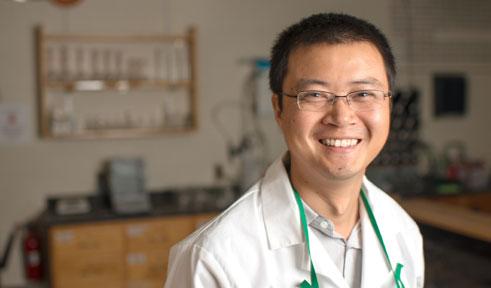
Philip J. Reid serves as Professor and Vice Provost for Academic & Student Affairs at the University of Washington's Department of Chemistry. With a Ph.D. from the University of California at Berkeley (1992), he maintains an active research program while holding significant administrative responsibilities within the university structure.
Professor Reid's research focuses on molecular photophysics at the single-molecule level, particularly investigating fluorescence intermittency (blinking), charge transfer processes, and guest-host interactions in various materials systems. His laboratory employs advanced confocal microscopy and femtosecond spectroscopy techniques to study phenomena in semiconductor nanocrystals, polymer matrices, and molecular crystals. Key research areas include understanding the nature of non-emissive states that serve as gateways to material decomposition, temperature-dependent photophysics around polymer glass transitions, and proton transfer mechanisms in crystalline environments.
Analysis of Professor Reid's recent publications reveals consistent focus on single-molecule spectroscopy applied to nanomaterials and polymers. His work demonstrates how molecular-scale photophysical measurements can provide insights not obtainable through bulk techniques, particularly regarding environmental effects on photostability and emission properties. The research bridges fundamental physical chemistry with practical applications in photonic materials.
Professor Reid has advised numerous graduate students and postdoctoral researchers who have gone on to diverse careers in academia, government, and industry. His laboratory collaborates extensively with other research groups, notably the Gamelin Lab at UW and the Kahr Group at New York University, reflecting the interdisciplinary nature of his work.
The Reid Lab operates custom-built confocal microscopy systems designed for single-molecule investigations. Research focuses on chromophore-polymer systems and mixed-crystal materials where single molecules are isolated in well-defined environments. This approach allows precise investigation of molecular photophysics while minimizing complications from oxygen permeability and nonradiative relaxation.