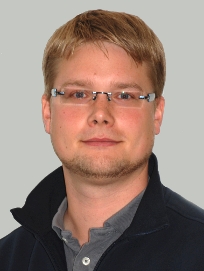
Thomas Waltherمشاهده پروفایل
پژوهشگر ارشد
Dr. Thomas Walther is a postdoctoral researcher at the Institute of Neuroinformatics (INI), Faculty of Computer Science, Ruhr University Bochum. His work centers on computational neuroscience with a focus on modeling cognitive processes in mammals, particularly spatial navigation, learning, and memory extinction through computational approaches. His educational background includes: Diploma in Electrical Engineering and Information Technology from the University of Dortmund, with thesis research on medical image interpretation, tumor tracking, and robot-assisted radiotherapy Ph.D. in Electrical Engineering and Information Technology from Ruhr University Bochum, dissertation on autonomous visual model learning based on Organic Computing principles Dr. Walther's research spans computational neuroscience, virtual reality systems, robotics, computer vision, computational auditory scene analysis, and Organic Computing. He investigates hippocampal circuit mechanisms underlying spatial cognition and memory processes, employing deep reinforcement learning and computational modeling to bridge neural mechanisms with behavioral outcomes. His work integrates biological plausibility with artificial intelligence techniques to unravel complex cognitive functions. His publication record shows consistent focus on applying reinforcement learning to neuroscience questions, particularly spatial navigation and extinction learning phenomena, while maintaining strong contributions to computer vision (human body modeling) and robotics (RatSLAM optimization). This interdisciplinary trajectory demonstrates evolving integration between machine learning methodologies and neurobiological inquiry. Scientific awards: None mentioned in available information. Dr. Walther has supervised multiple Master's theses including research on deep reinforcement learning algorithms across environments, virtual reality applications, context representation in learning systems, and transfer of learned associations. His advising emphasizes computational approaches to cognitive questions within the INI's collaborative framework. As a core member of the Computational Neuroscience group at INI, he contributes to the institute's mission of understanding natural cognitive systems through experimental psychology, neurophysiology, and AI to develop novel solutions for artificial cognitive systems within interdisciplinary collaborations.