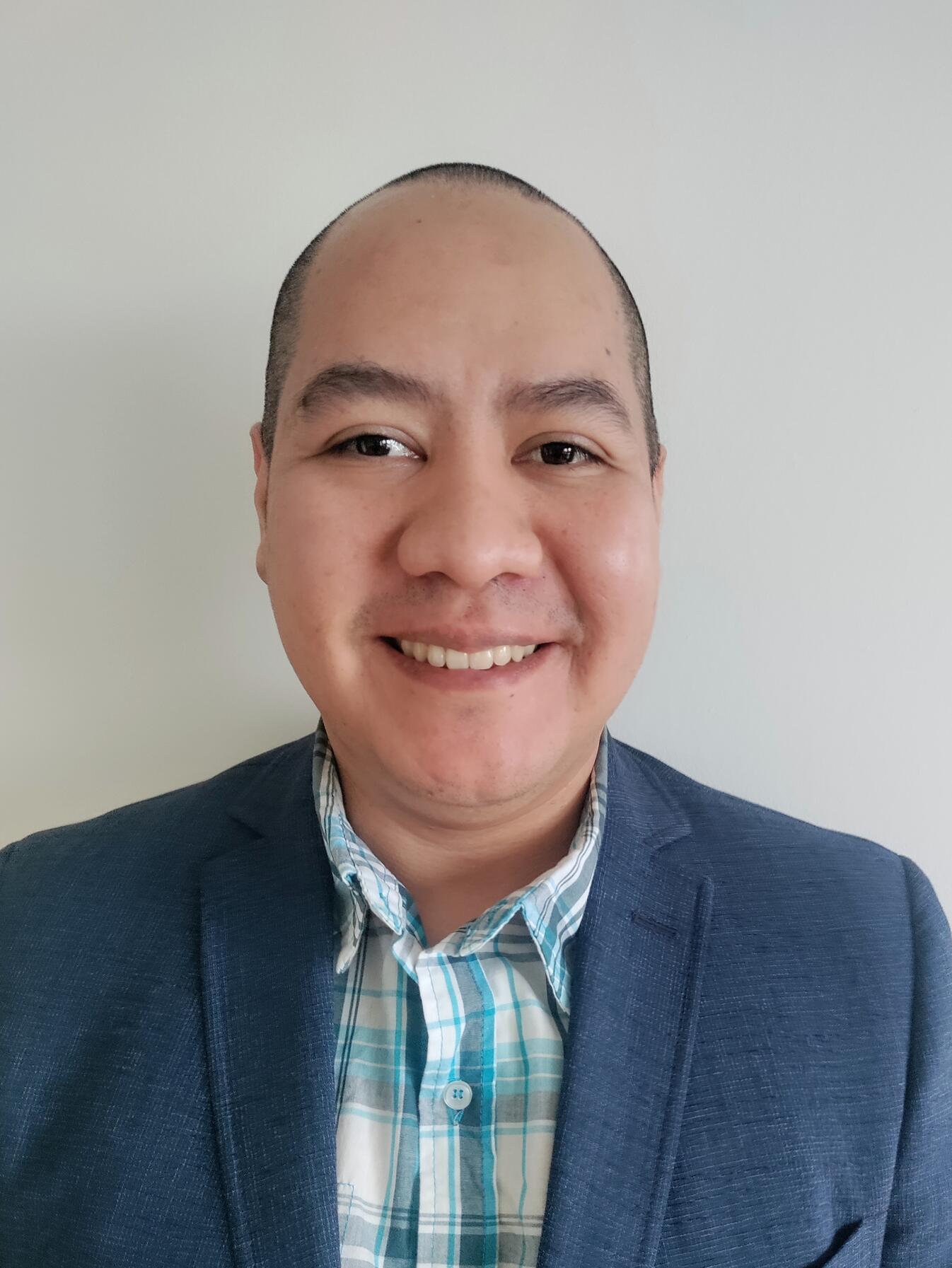
Shao-Fang Wen is an Associate Professor at the Department of Information Security and Communication Technology, Faculty of Information Technology and Electrical Engineering, Norwegian University of Science and Technology (NTNU). Their work focuses on integrating artificial intelligence with cybersecurity, secure software development, and socio-technical systems. Research Interests: Artificial Intelligence and Cybersecurity Secure Software Development Semantic Web and Ontology Socio-Technical Systems System Security Assurance Publications and Contributions: Shao-Fang Wen has contributed significantly to developing frameworks for AI security assurance, quantitative security evaluation models (e.g., SAEOn metamodel), and contextualized learning systems for software security. Their work spans journal articles, conference papers, and book chapters, emphasizing ontology-based approaches and open source community dynamics. Teaching: IIKG2001 - Software Security
Tae Eun Kim is an Associate Professor in Maritime Safety Management at UiT The Arctic University of Norway, working within the Department of Technology and Security. Her research, teaching, and industrial collaboration focus on maritime safety and human factors, with particular expertise in maritime safety management, accident analysis, Maritime Autonomous Surface Ships (MASS), and human factors in maritime operations. Dr. Kim's research spans four interconnected domains: maritime safety management and leadership, maritime accident and casualty analysis, Maritime Autonomous Surface Ships (MASS), and human factors in maritime operations. She has developed assessment instruments like the Safety Leadership Self-Efficacy Scale (SLSES) and conducted STAMP-based causal analyses of maritime accidents. Her work on MASS addresses safety challenges in mixed navigational environments and examines leadership competencies for autonomous shipping operations. Her human factors research explores how technological advancements impact navigators' performance, crew dynamics, and safety outcomes, including gender parity issues in the maritime industry. Dr. Kim's publication record reveals a strong focus on the intersection of maritime safety, technology, and human performance. Her recent work increasingly addresses autonomous shipping technologies, with numerous publications on AI decision transparency, learning analytics in maritime simulator training, and multi-modal data analysis for nautical skill development. She has conducted systematic reviews on simulator training approaches and scenario design, contributing significantly to methodology development in maritime education and training. Her research demonstrates a clear trajectory toward integrating emerging technologies with traditional maritime safety practices as the industry transitions toward greater automation. Dr. Kim is actively involved in several significant research projects, including the i-MASTER EU Horizon Europe Research and Innovation Project, the REFRAME project, and the SPRICE project (Multidisciplinary approach for spray icing modelling). She is a member of both the Advanced Maritime Ship Operations research group and the Maritime Safety Science (MARSCI) Research Group, demonstrating her commitment to collaborative research in maritime safety science. Dr. Kim teaches several specialized courses at UiT, including SVF-3206 Safety Management and Accident Investigation, TEK-3014 Navigation Technology, MFA-2100 Maritime Digitalization, MFA-8010 Maritime HTO (Human-Technology-Organisation) and Innovation, and MFA-2018 Maritime Administration and Leadership. Her teaching portfolio reflects the interdisciplinary nature of her expertise, bridging engineering, safety science, and organizational behavior in maritime contexts.
Festo Kayima is an Associate Professor in Chemistry Didactics at the Department of Teacher Education, Faculty of Social and Educational Sciences, Norwegian University of Science and Technology (NTNU). His research focuses on science teacher education, classroom knowledge, and pedagogical strategies in chemistry. Doctorate in Chemistry Education (2018, University of Bergen) Master’s in Science Education (2020, NTNU) Kayima’s research projects include developing science teacher trainees’ professional knowledge through reflective practice, enhancing scientific literacy, and integrating sustainability into chemistry education. He leads the Erasmus+ project STEMkey (2020–2023), emphasizing graduate attributes and key skills for educators. His recent publications (2025) with Springer explore pedagogical themes like chemical knowledge, outdoor teaching, and technology integration. These works align with broad keywords such as Science Education, Curriculum Development, and Experiential Learning, with subfields spanning digital tools, sustainability, and misconceptions in chemistry. Co-supervised Kristine Fjelldal Sunde’s thesis on teacher questioning in labs He contributes to research groups Naturfaglig Literacy i Skole og Lærerutdanning and ScienceHumanities , bridging interdisciplinary approaches in education. His teaching includes courses like Science as a School Subject (MGLU4211) and Teacher Education: Teaching Chemistry (PPU4626).
Professor Yngve Karl Frøyen works at the Department of Architecture and Planning, Faculty of Architecture and Design, Norwegian University of Science and Technology (NTNU). With expertise in sustainable transport solutions, urban spatial modeling, and GIS applications for planning, he has taught and supervised urban and regional planning topics since 2010. His work spans multiple master programs and involves improving transport modeling tools for walking, transit, and bicycling modes. Research Focus: Sustainable urban transport (walking, bicycling, public transit), urban density, GIS methods, land use-transport interactions, and urban logistics. Teaching: Courses in GIS methods, land use-transport integration, regional planning, and master thesis supervision. Publications: 15+ works on transport modeling, urban density impacts, bicycle infrastructure, and planning methodology. Outreach: Regularly presents at conferences and seminars on topics like urban logistics, walking modeling, and transport policy. His academic career spans from 1981 civil engineer graduation to current professorship, with prior roles at Norwegian Institute of Urban and Regional Research (NIBR) and SINTEF. He combines technical GIS proficiency with policy-oriented planning expertise.
Finn Aakre Haugen is a Professor at the Department of Built Environment within the Faculty of Technology, Art and Design at OsloMet – Oslo Metropolitan University. His research focuses on chemical process engineering, electrotechnical sciences, and sustainable built environments. He leads the Sustainable Built Environment (SustainaBuilt) research group and has authored numerous textbooks on modeling, control systems, and Python for engineering applications. Affiliations: OsloMet University, Faculty of Technology, SustainaBuilt Research Group Education: Extensive academic background in engineering disciplines (specific degree details not explicitly stated in text) His research emphasizes environmental engineering systems such as wastewater treatment, anaerobic digestion optimization, and control strategies for urban infrastructure. Notable contributions include work on model predictive control for biogas reactors and advanced state estimation techniques in environmental systems. Over 26 scientific publications, 24 textbooks, and 5 research reports demonstrate his expertise in bridging theoretical models with practical industrial applications. Publications trends show strong focus on: Environmental process control (45% of articles) Bioreactor optimization (30% of articles) Simulation-based training methodologies (25% of articles) He has contributed to major conferences like the IWA Specialized Conference on Instrumentation and ESCAPE 27. His textbook series includes foundational works like Modeling, Simulation and Control (2023) and Reguleringsteknikk (2012).
Lenka Garshol is an Associate Professor at the Department of Foreign Languages and Translation at the University of Agder. She serves as the subject coordinator for English in teacher education and is a member of the International Society for the Linguistics of English (ISLE) and the Learner Corpus Association (LCA) . Her research interests include: Language Acquisition Language Learning Multilingualism Code-switching and Code-mixing Game-based Learning She leads the Games and Active Learning Methods in Education (GAME) project, focusing on digital tools and games in language education. Garshol's publications emphasize English language teaching , error analysis in learner English, and the use of digital tools for pedagogy. Her collaborative work spans topics like artificial intelligence in language subjects , foreign language policy , and subject-verb agreement patterns . She contributes to editorial work for journals such as the Nordic Journal of Language Teaching and Learning (NJLTL) and has co-authored book chapters on teacher education reforms and digital competence development.
Jon Andoni Duñabeitia is a Full Professor at the School of Languages and Education of Universidad Nebrija in Madrid. He serves as Director of the Centro de Investigación Nebrija en Cognición (CINC) and the International Chair in Cognitive Health . With an h-index of 43 (Scopus), he has published 170+ articles across psycholinguistics, multilingualism, cognitive training, and virtual reality applications in education. His research examines how language processing interacts with cognitive load, emotional modulation, and technological innovation. Principal Investigator for 8+ projects funded by Spanish Government, Basque Government, BBVA Foundation Associate Editor and Editorial Board Member of high-impact journals Recognized among Spain's top 3% scientists across all disciplines Recent publications span topics including: Second-language reading dynamics in VR environments Multilingual cognitive interactions in neurological conditions Emoji/typographic effects on word processing Computerized cognitive assessment and training systems He actively contributes to scientific meetings as invited speaker across Europe, Asia, and Americas. His work bridges basic research in psycholinguistics with applied technologies for cognitive health.
Adín Ramírez Rivera is a Professor in the Digital Signal Processing and Image Analysis (DSB) group at the Department of Informatics, University of Oslo. His research focuses on representation learning and computer vision, particularly exploring machine learning methods to describe and understand visual data. He is a Senior Member of the IEEE and a member of the ELLIS Society. Education : PhD from Kyung Hee University's Image Processing Lab, South Korea; Bachelor's degree in Engineering from Universidad de San Carlos de Guatemala, majoring in Computer Science and Systems Engineering. Ramírez Rivera's research spans diverse computer vision tasks including facial analysis, object detection, image enhancement, and vision transformers. His work emphasizes self-supervised learning, fair representation learning, and novel neural network architectures for image segmentation and classification. Recent publications highlight trends in vision transformers, crowd counting, facial expression recognition, and fair representation learning. His articles frequently address statistical modeling, feature extraction, and deep learning techniques for visual tasks. Scientific Awards : Senior Member of the IEEE, Member of the ELLIS Society. He collaborates with researchers across institutions, contributing to projects involving anomaly detection, multilingual translation, and astrophysical modeling. His lab affiliations include the Digital Signal Processing and Image Analysis group and the Section for Machine Learning at the University of Oslo.
Rune Andersen is a Senior Lecturer at the University of Agder , affiliated with the Department of Information and Communication Technology . He has pioneered Europe's first holistic Bachelor's program in Academic Esports and serves as its Program Head, while also leading external communication and innovation initiatives within the department. Education: General Teacher (1999) Master's in Educational Use of ICT (2008) Guidance Pedagogy (2012) Welfare Technology (2018) His research interests focus on ICT integration in education , gamification , and leveraging transferable skills from esports for workforce development. He emphasizes interdisciplinary collaboration and industry partnerships to bridge academic and professional transitions. Recent publications highlight esports as a pedagogical tool, gamification in higher education, and skill transfer from digital environments to real-world applications. His work spans game-based learning, universal design, and curriculum innovation.
Helen Berg is an Associate Professor in the Department of Health Sciences at NTNU Ålesund. Her research focuses on integrating Virtual Reality (VR) and simulation-based training into healthcare education, particularly in clinical observation, preoperative handovers, and healthcare communication. She has led projects developing VR tools for systematic clinical approaches like ABCDE and ISBAR, emphasizing their efficacy for nursing and medical students. Her work bridges technology and education, aiming to enhance clinical skills through innovative methods. Research Interests: Simulation-based training methodologies VR applications in medical education Clinical communication protocols (ISBAR/ABCDE) Healthcare technology adoption Telehealth and rehabilitation technology Key Projects: VRINK: VR for youth inclusion in outdoor activities Development of ISBAR and ABCDE VR training modules Evaluation of video communication in elderly care Teaching: Courses include SYA1000 - Basic Nursing, focusing on practical healthcare skills. Labs/Teams: Collaborates with institutions like VID Stavanger and NTNU’s simulation centers on VR and healthcare innovation.
Simon McCallum is an Associate Professor at NTNU’s Faculty of Information Technology and Electrical Engineering. Born in New Zealand, he transitioned from commercial game development in Norway to academia in 2009. His research focuses on Serious Games, particularly in healthcare contexts, gamification, and virtual reality applications. He holds a PhD from the University of Otago (2007), where he studied Computer Science, Mathematics, Psychology, and Philosophy. McCallum has contributed to over 30 publications, including works on cognitive health gaming, software engineering education, and AR applications. He teaches courses such as IMT4307 (Serious Games Research) and IMT3603 (Game Programming). His key projects include the Smartkuber AR game for cognitive screening and the Traction Trebuchet historical engineering study. McCallum has collaborated with institutions like the University of Otago and has engaged in outreach through conferences and media appearances, promoting game technology in healthcare and education.
Professor Odd Jarl Borch is a prominent academic at Nord University specializing in emergency preparedness, crisis management, and Arctic security. His work bridges theoretical research with practical implementation through international collaborations and policy contributions. Education: Harstad Gymnasium Norwegian School of Economics Umeå University, Sweden Indiana University, USA Bodin Maritime College Professor Borch's research focuses on emergency preparedness systems in high-complexity environments, particularly in the Arctic region. His work examines civil-military cooperation, hybrid threats, and organizational management during crises. He has pioneered research on maritime safety in polar regions and developed frameworks for cross-border emergency response coordination. His approach integrates theoretical organizational models with practical crisis management applications, emphasizing the unique challenges of Arctic operations. His recent publications (2020-2024) reveal a strong trajectory toward hybrid threat analysis and collaborative security frameworks. The research consistently addresses Arctic-specific challenges while developing universally applicable emergency response models. Key themes include virtual network intelligence, civil-military coordination mechanisms, and structural adaptations for high-complexity environments. His work demonstrates increasing emphasis on digital transformation in emergency management and the evolving nature of security threats in polar regions. Professor Borch leads significant research initiatives including the NORDLAB Center for Emergency Preparedness and Cooperation and coordinates a network of 25 European researchers on civil-military preparedness. He has initiated major international collaborations such as the Arctic Safety and Security network with 22 universities and the ARCSAR innovation network. His practical impact extends to public service through membership on the Corona Commission, the Total Emergency Preparedness Commission, and the cruise industry safety investigation committee. He has supervised numerous bachelor's, master's, and PhD students in organization and management subjects related to security and crisis management. His teaching portfolio includes fisheries economics, vessel operations, financial management, and crisis management. Professor Borch's laboratory work centers on the NORDLAB emergency management facility, which conducts advanced simulation training for Arctic emergency response professionals.
Ingvild Bergan is an Assistant Professor at the Department of Education , University of Agder, specializing in guidance pedagogy and digital competence development . She holds a general teacher qualification from UiA/UiO, a master's in religion, ethics and society (UiA), interdisciplinary guidance studies (UiT), and project management (BI). Teaches guidance pedagogy for school and kindergarten teachers Leads R&D work in initial teacher education and mentor education Co-leader of Practice, Teaching, Policy in Teacher Education (PUPIL) research group Her research focuses on technology integration and learning design to enhance mentor professional development , with specific emphasis on 360° video and virtual reality (VR) applications. She investigates how digital tools can improve observational learning and competence assessment in educational settings. Recent publications highlight trends in educational technology for mentorship, game-based learning for cultural inclusivity, and digital competence frameworks in teacher education. Her work spans empirical studies, theoretical analyses, and practice-oriented interventions documented in journals like Nordic Journal of Digital Literacy and NORDVEI: Nordic journal in guidance pedagogy . While no explicit scientific awards were mentioned, her extensive collaborative R&D projects (e.g., ProDiG) demonstrate institutional impact. She has no formal student advisement records listed but contributes to professional development through school partnerships.
Eli Lejonberg is a Professor at the Department of Teacher Education and School Research, University of Oslo. His work focuses on guidance and professional development in education, particularly through the use of tools in supervision and management of school-based development projects. Institution: University of Oslo, Department of Teacher Education and School Research Research interests include: Teacher education reform Third space theory in school-university relations Video-based learning designs for authenticity Structured mentoring frameworks Transition from academic training to teaching profession Experienced teacher learning Article trends show emphasis on: Innovative mentoring tools Pre-service teacher development Policy analysis in educational contexts Technology integration in pedagogy Mentor training impact School-university partnerships Projects and collaborations include: Digital Integration of Video Assessment (DIVA) Quality in Practice Mentoring Tools Development Research groups: Collaboration for Teacher Education (COTED), Teacher Professional Development and Educational Change (TEPEC)
Danyal Farsani is an Associate Professor at the Department of Teacher Education , Norwegian University of Science and Technology (NTNU), specializing in mathematics education through the lens of embodied cognition and cultural responsiveness . His work bridges teacher training , gesture-based learning , and cross-linguistic analysis in educational contexts. Key Research Themes: Embodied mathematical concepts, cognitive load in arithmetic, cultural/ethnomathematical practices, and multimodal communication in classrooms. Recent Collaborations: Focus on global North-South educational dynamics, robotics integration in teacher training, and metaphorical processing in language learning. Methodological Focus: Empirical studies using mental arithmetic tasks, gesture analysis, and cross-cultural curriculum evaluations. Publication Trends (2022–2025): Analysis of 15 recent articles reveals recurring emphasis on embodied cognition , mathematical metaphors , visual attention mechanisms , and culturally adaptive teaching tools like the Ethiopian Gebeta game. Subfields span gesture studies , cross-linguistic pedagogy , and innovative teacher education frameworks . No scientific awards or student advisories are explicitly mentioned in the provided data.