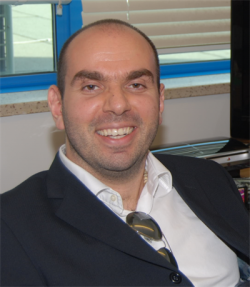
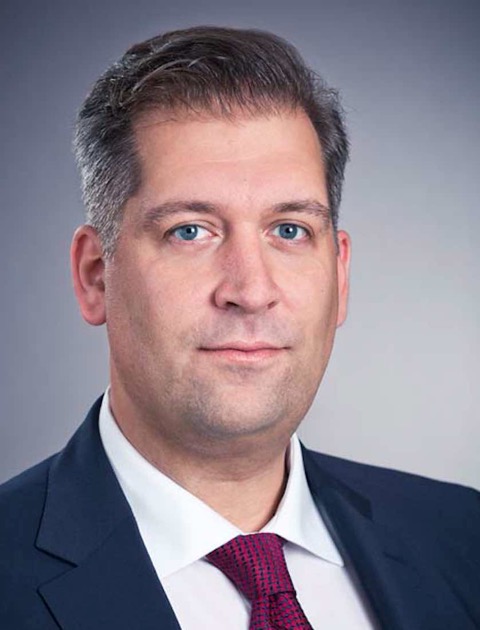
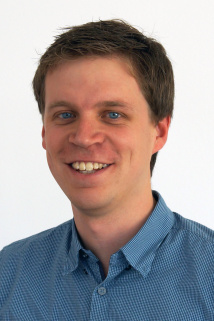
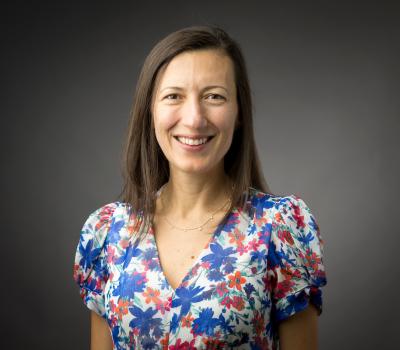
Jiri Srba is a Professor at Aalborg University's Department of Computer Science, part of the Technical Faculty of IT and Design. He leads research in the Distributed, Embedded and Intelligent Systems group and contributes to projects like "ControLing wAter In an uRban Environment" and "Collective Adaptive System SynThesIs using Non-zero-sum Games". His office is located at Selma Lagerløfs Vej 300, 9220 Aalborg Øst, Denmark. Contact him at +4599409851 or srba@cs.aau.dk. His core research focuses on formal methods and applied computer science: Model checking and verification of concurrent systems Petri nets and their applications Network protocol verification and synthesis Distributed system correctness Automated reasoning for industrial systems His publication record shows strong emphasis on network verification, model checking optimization, and applying formal methods to environmental systems. Recent work integrates computer science with sustainable engineering, particularly in water management systems and energy control.
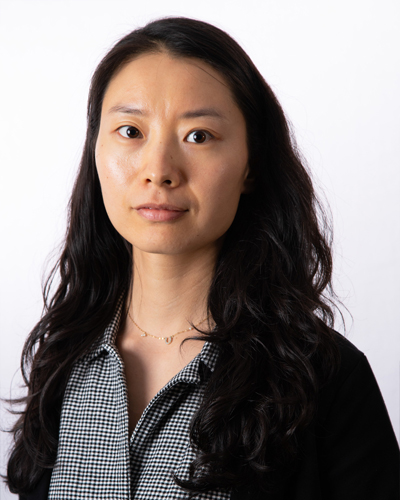
Associate Professor Naseem Ahmadpour is a leading researcher in Human-Computer Interaction (HCI) and Design at the University of Sydney 's School of Architecture, Design and Planning. She directs the Affective Interactions Lab and serves as Associate Dean (Research) and Chair of the EDI Committee . PhD, University of Montreal MSc, Chalmers University of Technology BSc, Bahonar University Her research critically examines the ethical implications of sociotechnical systems in care and work futures, focusing on participatory design with vulnerable populations. She explores immersive technologies like VR for mental health, pain management, and clinical training, while advocating for equity in design practices. Recent work includes 15+ publications (2023-2026) on VR applications, ethical design tools, and sociotechnical critiques. She has received the SOAR Prize (2022-2023) and led grants on VR in clinical education, digital volunteering, and aging technologies. Dr. Ahmadpour supervises PhD students in projects like Collaborative Reflection in Mental Health and Cultural Bias in Digital Design . She contributes to the Design. Think. Make. Break. Repeat methodology handbook and co-leads the VirtX Community of Practice for immersive realities.
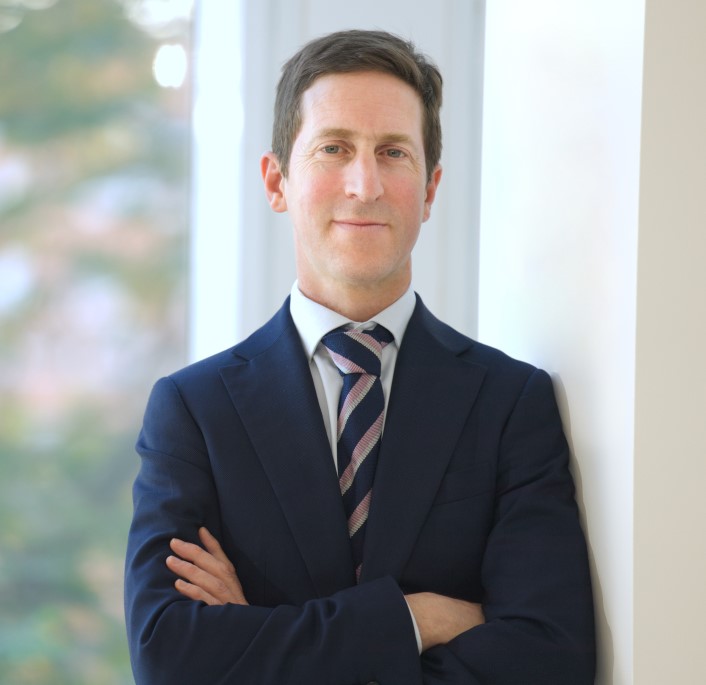
Christos Gatzidis serves as Executive Dean of Bournemouth University's Faculty of Science and Technology since October 2023, overseeing six departments including Computing and Informatics, Creative Technology, and Psychology. Previously Deputy Dean (2021-2023) and Head of Creative Technology Department (2016-2021), he was appointed Professor in Creative Technology in November 2019. The Faculty leads five REF Units of Assessment and secures funding from AHRC, NIHR, and Innovate UK for research spanning digital healthcare, gaming technologies, and cultural heritage applications. His educational qualifications include: PhD in Information Science, City University London (2010) PG Cert in Research Degree Supervision, Bournemouth University (2010) MA in Computer Animation, Teesside University (2003) BSc (Hons) in Computer Studies (Visualisation), University of Derby (2002) Professor Gatzidis specializes in computer graphics with research spanning virtual reality, serious games, and digital healthcare applications. His work bridges technical innovation and practical implementation, particularly in mindfulness prototypes for healthcare and stroke rehabilitation systems. Current projects focus on the multidisciplinary application of gaming technologies in medical contexts, emphasizing user experience and therapeutic outcomes through collaborations with industry partners. His publication record (2014-2025) demonstrates evolving expertise from foundational computer graphics research in terrain generation and deformation to applied work in healthcare, cultural heritage, and music education. Key trends include virtual reality for therapeutic mindfulness, usability studies in mobile gaming, and digital cultural presentation techniques, reflecting a trajectory toward socially impactful technological solutions with strong industry translation. No scientific awards are documented in the provided information. He has supervised PhD students and secured competitive research funding, including two Innovate UK Knowledge Transfer Partnerships. His principal investigator role in a virtual reality mindfulness prototype project exemplifies his approach to translating academic research into practical industry solutions, with current focus on expanding knowledge exchange activities to support the University's civic engagement mission. As Executive Dean, he leads faculty-wide research strategy across six departments, fostering interdisciplinary collaborations particularly in digital healthcare and cultural heritage. His personal research integrates computer graphics expertise with clinical applications through partnerships with healthcare providers and technology companies, driving innovation in therapeutic VR systems and educational gaming platforms.
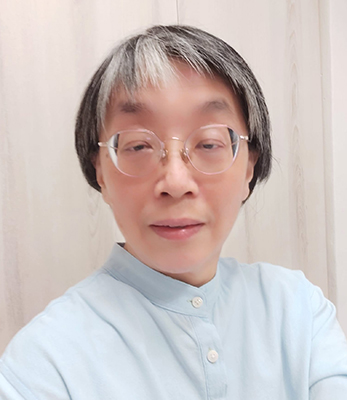
Dr. Dijiang Huang is an Associate Professor in the School of Computing and Augmented Intelligence at Arizona State University (ASU). He joined ASU in 2005 after completing his Ph.D. in Telecommunications and Computer Networking from the University of Missouri-Kansas City (2004). His research focuses on cybersecurity, mobile computing, and cloud computing, supported by grants from the National Science Foundation (NSF), Office of Naval Research (ONR), and industry partners like HP. He has received prestigious awards, including the ONR Young Investigator Award and HP Innovative Research Award. Education: B.E. in Telecommunications, Beijing University of Posts and Telecommunications (1995) M.S. in Computer Science, University of Missouri-Kansas City (2001) Ph.D. in Telecommunications and Computer Networking, University of Missouri-Kansas City (2004) Research Interests: Huang’s work emphasizes secure communication protocols, privacy-preserving techniques, and resilient network architectures. He has pioneered frameworks like Secure Group Communication (SeGCom) and Attribute-Based Cryptography , addressing challenges in VANETs, SDN, and edge computing. His recent projects include developing Waterfall for SDN security and SmartDefense for DDoS mitigation. Grants & Awards: ONR Young Investigator Award (2008) HP Innovative Research Award (2008) NSF grants for secure mobile cloud frameworks and cyber-physical systems Professional Contributions: Huang has served as a reviewer for journals like IEEE Transactions on Wireless Communications and conferences such as ACM MobiArch. He co-developed the Open Human-Robotic Mobile Networking and Security Testbed (OHReST) and the Virtual Laboratory (VLab) for cybersecurity education.
Mark Thouin is a Clinical Professor of Information Systems and Associate Dean for Graduate Programs - Academic Operations at The University of Texas at Dallas (UT Dallas), Jindal School of Management. He holds an MBA from George Mason University and a PhD from Texas Tech University. His research focuses on IT business value, experiential learning, and postsecondary leadership, with notable contributions to information systems curriculum development and agile methodologies. He teaches courses like Business Analytics with SAS and Agile Project Management. His awards include the Outstanding Undergraduate Teaching Award from UT Dallas Jindal School of Management and AITP Region 3 Star Performer of the Year. His recent articles emphasize competency models in information systems education, experiential learning simulations for agile methodologies, and curriculum standards through collaborations like ACM/AIS IS2020 initiatives. Education: PhD, Texas Tech University, 2007 MBA, George Mason University, 2004 BS, Virginia Tech, 1992 Professional Organizations: Association for Information Systems (AIS) Society for Information Management Association for Computing Machinery His work bridges academic curriculum design with industry needs, particularly through competency-based frameworks and experiential learning approaches. He has contributed to global standards for information systems graduate programs (MSIS 2016) and undergraduate curriculum guidelines (IS2020).
Thomas Michael Sattich is an Associate Professor at the University of Stavanger , affiliated with the Faculty of Social Sciences and Department of Media and Social Studies . His research focuses on geopolitical implications of sustainability transitions, particularly energy policy interdependence and EU-China relations. PhD in Political Science and Economics Expertise in qualitative methods, mixed methods (cluster analysis), and data visualization Lead researcher on EU-funded digital climate negotiation simulation projects His recent publications examine renewable energy geopolitics, industrial policy competition, and sustainability education frameworks. Methodologically, he specializes in Qualitative Comparative Analysis (QCA) and network analysis, contributing to debates on energy security and regional cooperation.
Markus Vincze is an Associate Professor at the Institute of Automation and Control Engineering (ACIN) at Vienna University of Technology (TU Wien). He founded the Vision for Robotics (V4R) group in 1996 to advance robotic perception, particularly in real-world environments and homes. His work focuses on cognitive computer vision techniques for robotics. Education: Diplom in Mechanical Engineering (1988) and PhD (1993) from TU Wien; M.Sc. (1990) from Rensselaer Polytechnic Institute. V4R coordinates EU projects like ActIPret, robots@home, HOBBIT, and national initiatives like vision@home. Markus has edited a book on Robust Vision with Gregory Hager and authored 62 peer-reviewed journal articles and over 400 reviewed publications. His recent research explores zero-shot 6D pose estimation, sim-to-real transfer, and transparent object detection. Markus has served as program chair for ICRA 2013 and organized HRI 2017 in Vienna. He has advised numerous students and secured grants from the Austrian Academy of Sciences for work at HelpMate Robotics and Yale's Vision Laboratory. The V4R group leads innovations in robotic vision, including frameworks for synthetic data generation (Unrealgensyn), depth completion (CAGT), and educational robotics applications for sustainability. Their work spans household robotics (RH3), agricultural robotics (EdgeSoil), and human-robot collaboration.
Holger Wittges is the Managing Director of the SAP University Competence Center (UCC) at the Technische Universität München (TUM) . His work focuses on Digital Transformation , Next Generation ERP , and Hybrid Cloud infrastructure. He is affiliated with the KrcmarLab and collaborates with IBM via the OpenPOWER@TUM initiative. Educational Background: 2004: Dr. rer. oec. (Promotion), Universität Hohenheim 1996: Diplom Wirtschaftsinformatiker, Universität Bamberg Research Interests include Digital Transformation, Cloud Computing, Enterprise Resource Planning (ERP), XaaS (Everything as a Service), and Service-Oriented Architecture (SOA). His work bridges academic innovation with industry needs through SAP UCC TUM, which provides 40+ educational service bundles like SAP HANA and S/4HANA for teaching and research. Recent Publications highlight advancements in machine learning for ERP support ticket systems, energy efficiency in SAP S/4HANA, and educational frameworks for cloud-based enterprise software. Articles emphasize collaboration with institutions across Europe and contributions to digital ecosystems like the SAP University Alliances. Key Projects include the OpenPOWER@TUM initiative with IBM, focusing on accessible AI/ML infrastructure for academia, and the SAP UCC TUM, which drives Education as a Service (EaaS) strategies for digital business ecosystems.
Daniel Frischemeier is a Professor of Mathematics Didactics with a focus on Primary Education at the University of Münster's Faculty of Mathematics and Computer Science. He has established himself as a leading researcher in statistics and data science education for primary school students, with extensive contributions to educational methodology and teacher training. University of Münster (2021-present) TU Dortmund (2020-2021) University of Paderborn (2009-2020) Ludwig-Maximilians-Universität München (2017-2018) Dr. Frischemeier completed his doctoral studies at the University of Paderborn with a dissertation on statistical thinking and research using TinkerPlots software. His educational background includes graduate studies in Mathematics and undergraduate studies in Mathematics and Physics for teaching at various school levels. His research focuses on the design and testing of teaching-learning environments for primary mathematics education, particularly in the areas of data analysis, probability, and statistics. He conducts qualitative analysis of learners' cognitive processes related to the guiding principle of 'data and chance' in primary education. His work also includes the design and evaluation of teaching materials in data science and civil statistics, the use of learning videos to promote process-related skills, and the implementation of Fermi tasks and computer science education within primary mathematics lessons. Analysis of Dr. Frischemeier's recent publications reveals a strong emphasis on data literacy development in primary education, with increasing focus on the integration of digital tools and the conceptual understanding of data as models. His work bridges mathematics education with emerging fields of data science, addressing both theoretical frameworks and practical classroom applications. The research demonstrates a progression from basic statistical concepts toward more complex data modeling approaches suitable for young learners. Elected member of the International Statistical Institute (ISI) Chair of the Local Organizing Committees for IASE Satellite 2025 Conference Council-Member of the International Statistical Institute Special Edition Editor of the Statistics Education Research Journal Member of International Program Committees for major statistics education conferences Co-Leader of CERME Thematic Working Group 5 on Probability and Statistics Education Dr. Frischemeier serves in numerous editorial capacities and review roles for prominent journals in mathematics and statistics education. He leads significant research projects including 'Promoting Data Science Education for Teacher Education at the University level (DataSETUP)' and 'Data Science Education in STEAM for Civic Engagement and Social Justice from the Early Years (DataScEd4CiEn)'. His work has substantial impact on teacher education programs and curriculum development in statistics and data science for primary schools. He is actively involved in the development and leadership of the Math Center Münster (MaZ), which promotes mathematical potential for all students. His team includes numerous research assistants and doctoral candidates working on various aspects of mathematics education research, particularly focusing on data literacy and statistical reasoning in primary education contexts.
Dr. Wanju Huang is a Clinical Assistant Professor in the Learning Design and Technology program at Purdue University , where she focuses on enhancing online learning experiences through innovative instructional design and emerging technologies. Prior to joining Purdue in Fall 2016, she served as an instructional design manager at Teaching and Learning Technologies and spent six years as a lecturer and instructional designer at Eastern Kentucky University. Education: Ph.D. in Curriculum & Instruction (Technology concentration) from University of Illinois at Urbana-Champaign Her research interests center on technology-mediated online communities, instructor presence in digital learning, augmented reality applications, and faculty development programs. She has published extensively on these topics, including studies on multimedia interventions for teaching presence, immersive technologies in ESL education, and adaptive cyber training platforms. Dr. Huang's publications reflect a strong focus on EdTech innovation , with trends spanning AI integration in K-12 , model-based systems engineering , and microlearning strategies . Her work bridges theoretical frameworks like social constructivism with practical implementations in professional education. Professional memberships include the American Educational Research Association, Association for Educational Communications and Technology, and Quality Matters. She teaches courses on learning design foundations, e-learning systems, and professional competency demonstrations in LDT.
Lesley G.A. de Putter-Smits is an Assistant Professor and teacher educator at the Eindhoven School of Education (ESoE), affiliated with Eindhoven University of Technology . Her work focuses on STEM education , teacher education , and continuing teacher professional development with an emphasis on student-centred learning environments and social scientific issues. Education : MSc in Chemistry (Utrecht University, 2000), PDEng in Process and Product Design (TU/e, 2003) Roles : Physics teacher (2003-2012), Chemistry teacher educator (2012-present), Assistant Professor (2014-present), Manager ESA (2019-2022) Her research explores engaging science learning environments , leveraging generative AI , virtual reality , and inquiry-based learning . Recent publications analyze PhET simulations , student-generated drawings , and interdisciplinary science projects . She has contributed to chemistry courses for Radboud University Nijmegen and is active in editorial work for European Journal of STEM Education . Scientific Awards : 3e Prijs 'Beste artikel VELON tijdschrift' (2019)
Ke Yang serves as Assistant Professor in the Department of Computer Science at the University of Texas at San Antonio (UTSA), College of Sciences. He founded and leads the Cohort for AI REsponsibility (CAREAI) initiative, while also holding core faculty positions in UTSA's School of Data Science and MATRIX (AI Consortium for Human Well-being). Education: Ph.D. from New York University (supervised by Prof. Julia Stoyanovich) Research Focus: Dr. Yang's work centers on AI trustworthiness and responsibility , with specialized expertise in algorithmic fairness, data ethics, and human-centered data science. His research addresses critical challenges including Large Language Model hallucinations, explainable AI frameworks, and algorithmic accountability mechanisms. He actively develops open-source tools like Ranking Facts and FairDAGs to implement these principles in practical systems. Publication Trends: Recent work (2020-2025) demonstrates evolving focus from foundational fairness in ranking systems toward generative AI safety and medical applications. His publications show strong theoretical grounding combined with real-world implementation, particularly in privacy policy analysis and medical question-answering systems using causal inference techniques. Scientific Recognition: Pearl Brownstein Doctoral Research Award (NYU Tandon School of Engineering) CDS Postdoctoral Fellowship (University of Massachusetts) Professional Development: Dr. Yang has secured significant research funding including the CDS Postdoctoral Fellowship at UMass. His graduate work at NYU and Drexel University was fully supported by research assistantships, demonstrating consistent funding acquisition throughout his career. He actively contributes to academic community building through conference tutorials and educational initiatives. Research Ecosystem: He directs CAREAI at UTSA while collaborating across institutional boundaries through MATRIX and the School of Data Science. Previously, he contributed to the Data systems Research for Exploration, Analytics, and Modeling (DREAM) lab and Center for Data Science at UMass Amherst, maintaining continuity in his responsible AI research trajectory.
Gavin Schwarz is a Professor and Head of School at the School of Management and Governance within the UNSW Business School . He specializes in organizational change , organizational failure and inertia , and the dynamics of virtual teams , with a focus on how organizations fail during change processes and how to develop applied strategies for change management . His work spans diverse sectors including healthcare, technology, and education, with publications in leading journals such as Academy of Management Learning and Education and Administrative Science Quarterly . Education : PhD in Management (University of Queensland), MPhil (Hons) in Management (University of Auckland), BA in Management and English (University of Auckland). Grants : 2020 Brock University grant for "University communication in times of COVID-19" , 2020 UNSW Medicine grant for "Translation and change: Embedding effective change management in health" , and earlier Australian Research Council and Gordon J. Samuels Fellowship awards. His research explores the development of knowledge in organizational theories , with an emphasis on collective responses to change , HR management during crises , and technology strategy . He has contributed to understanding organizational communication , team innovation , and structural inertia . His 15 most recent publications cover topics from AI’s role in organizational change to pandemic-driven research adaptation, with keywords spanning management science , behavioral economics , and digital transformation . Scientific Awards 2021-2023 : Outstanding Reviewer Awards (Academy of Management Review) 2017-2020 : Best Reviewer Awards (Journal of Organizational Behavior) 2019, 2013, 2011 : Best Paper Finalist/Awardee (Academy of Management divisions) 2007, 2006 : Editorial Board Excellence (Academy of Management Journal) and Gordon J. Samuels Fellowship As an active supervisor in organizational change and HR development , his work supports healthcare innovation and digital transformation. He serves as Editor-in-Chief for the Journal of Applied Behavioral Science and is on the editorial boards of Academy of Management Review , Journal of Management , and Journal of Organizational Behavior . Contact: g.schwarz@unsw.edu.au
Associate Professor LAM Yulin is affiliated with the National University of Singapore (NUS), specializing in bioorganic and medicinal chemistry with a focus on green synthesis methodologies. His research interests include developing anti-cancer, anti-inflammatory, and neurological agents, alongside creating recyclable catalysts for sustainable organic transformations. He holds a Ph.D. (1992) and B.Sc. (1987) from NUS, with prior research fellowships at the Institute of Molecular and Cell Biology (1994–1996) and The Scripps Research Institute (1992–1994). Teaching contributions include courses such as CM2122 Organic Chemistry, CM3225 Biomolecules, and CM5224 Emerging Concepts in Drug Discovery. His research highlights include synthesizing chondroitin sulfate analogs for molecular recognition via surface-enhanced Raman scattering (SERS) and developing fluorous boronic acid catalysts for amide bond formation under eco-friendly conditions. Research focuses on glycosaminoglycan structure-function relationships, novel mycobacterial inhibitors, and autophagy-inducing agents. His work bridges organic synthesis with biomedical applications, emphasizing sustainability and translational potential.
Dr. Yelda Turkan is an Associate Professor in the School of Civil and Construction Engineering at Oregon State University, where she leads research in automation, computer vision, and machine learning for sustainable infrastructure. She holds a PhD from the University of Waterloo and dual BS degrees in Civil Engineering and Geomatics Engineering from Istanbul Technical University. Her work focuses on leveraging lidar, digital twins, and BIM to improve construction operations and decision-making in the built environment. She has secured over $4M in grants from NSF, FHWA, and other agencies, and currently leads the NSF Convergence Accelerator-funded 'Deep Reality' project for AI-driven infrastructure management. Education: Ph.D., Civil Engineering, University of Waterloo, 2012 M.S., Engineering Informatics & Remote Sensing, Istanbul Technical University, 2006 B.S., Civil Engineering (double major in Geomatics Engineering), Istanbul Technical University, 2005/2003 Professional Roles: Vice President, International Association for Automation and Robotics in Construction (IAARC) Chair, ASCE Computing Division Education Committee Associate Editor, ASCE OPEN Journal Her research emphasizes automation in construction quality control, infrastructure inspection via drones and lidar, and immersive education tools using VR/AR. Recent projects include automated curb ramp compliance analysis, wildfire impact modeling, and digital twin development for timber structures. She has published over 80 peer-reviewed articles and actively promotes computing integration in civil engineering education and professional practice.