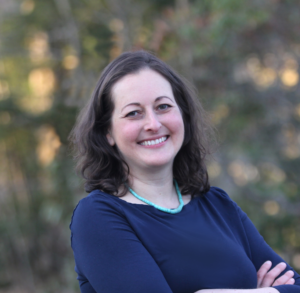
Cristina Baus Marquez is a Research Fellow at the University of Barcelona's Faculty of Psychology, affiliated with the Department of Cognition, Development, and Educational Psychology. She holds a Ramon y Cajal Research Fellowship (2020–2025) and leads research in the Brain Dynamics and Structure of Human Cognition (BraCo) group. Her work focuses on cognitive neuroscience, bilingualism, and language processing, with a particular emphasis on electrophysiological and behavioral studies of language production, perception, and social cognition. Education: Bachelor's Degree (Llicenciatura) in Psychology, University of Barcelona (2003) PhD in Cognitive Neuroscience and Specific Educational Needs, Universidad de La Laguna (2010) Research Interests include the neural mechanisms underlying bilingual speech production, cross-modal language interactions, and how linguistic experience shapes perception of faces and voices. She employs EEG/ERP techniques to study self-monitoring processes in bilinguals and investigates the role of iconicity in sign language production. Key Projects: Ramón y Cajal Fellowship (2020–2025): Investigates verbal interactions and learning mechanisms Fundación BIAL Grant (2017–2019): Explored electrophysiology of bimodal bilingualism AGAUR Grant (2018–2020): Studied verbal interactions' cognitive mechanisms Labs/Teams: Active member of the BraCo research group, collaborating internationally on multilingualism and cognitive neuroscience projects.
Dr. Tatsuya Mori is a Professor at the Department of Computer Science and Communication Engineering , Faculty of Science and Engineering, Waseda University . He also holds visiting researcher positions at RIKEN Center for Advanced Intelligence Project (since 2018) and National Institute of Information and Communications Technology (since 2019). Education: Ph.D. in Information Science (2005), Waseda University Research Interests: Spanning information security and privacy across emerging technologies like autonomous driving , AI , 3D sensing , VR , biometric measurement , and Web3 . His work focuses on offensive security and interdisciplinary research , including physical-layer attacks on sensors and behavioral studies on phishing detection. Scientific Awards: Recipient of multiple prestigious awards, including the Distinguished Paper Award Runners-Up at IEEE EuroS&P 2024 , IPSJ Outstanding Paper Award 2024 , and CSS2024 Concept Research Prize . His research has been recognized in top conferences like USENIX Security , NDSS , and ACM CCS . Professional Leadership: Active in academic governance as Chief Investigator for NISC Working Groups and Committee Member for JST Research Areas . He serves on program committees for NDSS , IMC , and ACM CCS .
Max Pellert is a computational social scientist and cognitive scientist with faculty appointments at multiple institutions. Since 2022, he has served as an Assistant Professor at the Chair for Data Science in the Economic and Social Sciences at the University of Mannheim . He previously held an interim Professor position at the University of Konstanz and an Assistant Researcher role at Sony Computer Science Laboratories Rome. His work bridges computational methods with social science theory. Education M.Sc., University of Vienna (2017) in Middle European interdisciplinary Master's program in Cognitive Science (with distinction) Ph.D., Medical University of Vienna (2022) in Medical Informatics, Biostatistics & Complex Systems Research interests center on Computational Social Science , Digital Traces , and Natural Language Processing for emotion and sentiment analysis. He develops Temporal Adapters for tracking longitudinal emotional patterns and FAULTANA pipeline for polarization studies. His AI Psychometrics framework assesses personality-like traits in large language models. Recent publications include: (1) 2025 ACL work on political bias in LLMs; (2) 2025 ICWSM study of temporal emotion analysis; (3) 2024 Perspectives on Psychological Science paper on LLM psychometrics; (4) 2024 PNAS Nexus polarization analysis; (5) 2023 Emotion cross-cultural study of pandemic emotions. Scientific Awards Habilitation candidate status at University of Mannheim Teaching includes IS 616: Large Scale Data Analysis , IS 809: Advanced Text Mining Lab , and IS 723: Data Science Seminar at master’s and PhD levels. His Barcelona Supercomputing Center role focuses on principal investigator duties for computational social science projects.
Gül Varol is a permanent researcher at École des Ponts ParisTech's IMAGINE group, an ELLIS Scholar, and Guest Scientist at Max Planck Institute. She holds a PhD from Inria Paris/ENS with awards from ELLIS and AFRIF. Her academic service includes Program Chair at ECCV'24 and Area Chair roles at major conferences. Current affiliations: IMAGINE group (École des Ponts ParisTech), Max Planck Institute Previous roles: Postdoctoral researcher at University of Oxford Her research focuses on vision-language applications, particularly in 3D human motion synthesis, sign language technology, and audio description generation. Key techniques include text-conditioned diffusion models, temporal context modeling, and synthetic data utilization. Scientific contributions recognized through: Google Research Scholar award (2023) ELLIS PhD Award (2020) AFRIF PhD thesis award (2020) Best application paper at ACCV'20 Recent publications demonstrate expertise in: Text-driven 3D motion editing (MotionFix, 2024) Cross-dataset generalization studies (TMR++, 2024) Temporal action composition frameworks (TEACH, 2022) Sign language dense annotation methods (BOBSL, 2022) Zero-shot audio description generation (AutoAD-Zero, 2024) She actively contributes to dataset development including BOBSL (British Sign Language corpus) and SURREACT synthetic action dataset, while pioneering new evaluation metrics for audio description quality and motion retrieval benchmarks.
Professor Peter Watkinson serves as Professor of Intensive Care Medicine at the University of Oxford and is an NHS consultant in intensive care at the Oxford University Hospitals NHS Foundation Trust. He leads the Critical Care Research Group based at the Kadoorie Centre for Critical Care Research & Education at the John Radcliffe Hospital, Oxford. His work bridges clinical practice with academic research in the field of critical care medicine through the Nuffield Department of Clinical Neurosciences. Professor Watkinson's research primarily focuses on the identification of deteriorating patients in hospital settings. His work encompasses: Design and implementation of studies on wearable monitoring devices Exploration of non-contact monitoring technologies Analysis of standard electronically-recorded patient descriptors Pattern recognition in vital signs data to predict clinical deterioration Development of electronic monitoring systems Application of human factors techniques for technology integration in healthcare Assessment of long-term effects of critical illnesses on patient quality of life The Critical Care Research Group maintains a strong collaborative link with the University of Oxford Institute of Biomedical Engineering. Using data collected from thousands of patients' vital signs both in Oxford and elsewhere, the multi-disciplinary team investigates patterns that precede and predict clinical deterioration in hospitalized patients. Recent publications indicate a strong focus on early warning scores, patient monitoring technologies, and the application of machine learning approaches to critical care data. Professor Watkinson's research output demonstrates consistent productivity with numerous 2024-2025 publications spanning systematic reviews of early warning systems, development of novel monitoring technologies, and analytical approaches to predicting patient deterioration. His work frequently employs rigorous methodology including systematic reviews, meta-analyses, and innovative study designs to address critical questions in intensive care medicine. As leader of the Critical Care Research Group, Professor Watkinson oversees a multi-disciplinary team investigating vital sign patterns and developing predictive algorithms that have direct clinical applications. The group's research has significant implications for improving patient safety through earlier recognition of clinical deterioration and more effective resource allocation in hospital settings.
Eliese-Sophia Lincke is a Junior Professor at the Department of History and Cultural Studies, Freie Universität Berlin, since May 2022. Her work bridges computational methods with Egyptology, focusing on digital tools for studying ancient texts. Bachelor's and Master's in Egyptology, Humboldt-Universität zu Berlin (2007) PhD in "The Conception of Spaces in Language" (TOPOI Cluster, 2012) Research interests include: Digital Humanities : Developing machine learning models for Hieroglyphic, Demotic, and Coptic text processing Linguistic Typology : Analyzing classifier systems in Ancient Egyptian and Sign Languages Spatial Linguistics : Investigating prepositions and spatial adverbs in Egyptian-Coptic Recent publications focus on Neural Lemmatization , OCR for Coptic , and Classifier Semantics , demonstrating her commitment to computational Egyptology. Scientific awards include the Humboldt-Preis 2008 for best Master's thesis and the Prize for Good Teaching 2014 . She has co-organized workshops like "Wege zum Ägyptischen" and served as Co-Editor for Lingua Aegyptia . Her teaching contributes to the Digital Studies of Ancient Texts Master's program.
Garreth Tigwell is an Assistant Professor in the School of Information at RIT, co-directing the CAIR Lab with Dr. Kristen Shinohara. His research focuses on accessibility in digital design, particularly for disabled users, addressing challenges faced by novice and expert creators. His work spans topics like accessible prototyping tools, cultural considerations in design, and inclusive mixed reality interfaces. Education: BSc in Psychology, University of Dundee, 2012 MSc (Distinction) in User Experience Engineering, University of Dundee, 2014 PhD in Human-Computer Interaction (HCI), University of Dundee, 2019 Research Interests: Designing accessible digital systems for blind, deaf, and low-vision users Adaptable user interfaces for mixed reality and textured surfaces Cultural dimensions in accessibility pedagogy Authentication methods for visually impaired users Articles Trends: Recent work emphasizes AR/VR accessibility, cultural design frameworks, and haptic authentication. His studies often involve collaborations with global researchers and industry partners. Awards: Best Paper (MobileHCI 2022) CHI Honorable Mention (2023, 2024) NSF-funded research projects Advising & Grants: Active in mentoring graduate students and securing grants. His lab focuses on born-accessible AI tools and inclusive design education. Teaches courses like HCI Research Methods and Future Interactions. Labs/Teams: Co-leads the CAIR Lab, which develops technologies to bridge accessibility gaps in digital design and prototyping.
Erica Burman is a Professor of Education at the Manchester Institute of Education, University of Manchester. She holds visiting professorships at institutions in South Africa, Brazil, Spain, and Norway, and adjunct roles in Norway. Her research focuses on critical developmental psychology, feminist theory, childhood studies, and intersectionality. She has supervised over 80 doctoral students, many exploring themes like racialization, mental health, and education equity. Her academic career began with a PhD from Sussex University in 1990. She co-founded the Discourse Unit and co-convenes the Manchester Psychoanalytic Matrix and Feminist Theory Network. Her work challenges normalizing practices in mental health and education, emphasizing postcolonial and Frantz Fanon-inspired frameworks. Notable projects include the 'Women Asylum Seekers from Pakistan' study (2005-2008), influencing asylum policies, and research on austerity's impact on families. She has authored over 228 publications including books like Child as Method (2024). Awards include the British Psychological Society's Honorary Fellowship. Research interests span pedagogical practices for sustainability, group analysis, and educational inequalities. She serves on editorial boards of journals like Childhood and Feminism & Psychology .
Sarah Ebling is a Full Professor of Language, Technology and Accessibility at the University of Zurich's Faculty of Arts and Social Sciences. She leads the Language, Technology and Accessibility research group within the Institute for Computational Linguistics. Her work focuses on computational linguistics applications for assistive technologies targeting disabilities such as hearing impairments, visual impairments, and cognitive disorders. Key areas include sign language technologies, automatic text simplification, and audio description systems. She directs the large-scale Swiss innovation project 'Inclusive Information and Communication Technologies' (2022-2026, CHF12 million budget) and collaborates on EU H2020 and SNSF Sinergia projects. Education: Holds a doctoral degree (summa cum laude, 2016) from the University of Zurich with research on automatic translation to Swiss German Sign Language. Completed studies in German Linguistics, Computational Linguistics, and English Linguistics at Universities of Zurich and Heidelberg, with research stays in Dublin, Chicago, and Rochester. Research emphasizes multimodal accessibility solutions, including sign language fluency assessment, gesture-based interaction, and AI-driven text adaptation. Current projects explore audio description translation systems (SwissADT), sign language corpus development (SwissSLi), and digital tools for comprehensibility assessment in simplified texts. Her work bridges computational linguistics with ethical considerations in assistive technology deployment. Grants and Leadership: Principal Investigator on major accessibility-focused grants, including the CHF12M Swiss innovation project. Supervises PhD candidates in areas like sign language assessment tools and text simplification algorithms. Active in international collaborations, publishing extensively in computational linguistics and accessibility journals/conferences. Technology Development: Created the 'DigiSpon' benchmark for language sample analysis and developed open-source tools for sign language translation baselines. Her team's innovations include the SignCLIP model connecting text and sign language via contrastive learning, and pose estimation frameworks for sign language recognition.
Charles Denroche is Senior Lecturer in Linguistics and Applied Language Studies at the University of Westminster, based in the School of Humanities within the College of Liberal Arts and Sciences. His interdisciplinary career combines bioscience (Magdalen College, Oxford) with advanced linguistics (PhD UCL-IOE, PGDip Westminster, PGCE TESOL IOE), and extensive professional experience as translator, lexicographer and language educator. Education & Training MA in Bioscience – Magdalen College, University of Oxford PhD in Education (Linguistics) – UCL Institute of Education, University of London Post-Graduate Diploma in Linguistics – University of Westminster PGCE TESOL – UCL Institute of Education Certificate in English Phonology – International Phonetic Association Studies in Italian Language & Literature – University of Florence Studies in Germanistik & Anglistik – Heinrich Heine University of Düsseldorf Research Interests Denroche’s work centres on how meaning is made through language. His research integrates cognitive linguistics , semiotics and translation studies to explore the roles of metaphor and metonymy in discourse, multimodal communication and pedagogy. He is particularly interested in the cognitive processes that underlie figurative language, the interface between grammar and semantics, and how these insights can inform translator training and language education. Current projects extend his theory of metonymic processing to literary translation collaboration and the analysis of visual and multimodal texts, aiming to bridge theoretical linguistics with practical applications in education and professional practice. Recent Publications & Trends Over the past decade Denroche has produced a coherent body of work that moves from foundational theory-building—most notably the 2015 monograph Metonymy and Language —to innovative methodological applications such as using drawing as a research tool for metaphor-led discourse analysis. Across 15 key outputs (2011-2024), the research trajectory shows a consistent focus on metaphtonymy (the interplay of metaphor and metonymy) at text level and on developing practical frameworks for translators, educators and discourse analysts. Honours & Awards Award of Excellence in Teaching and Learning (2008) – Westminster Exchange, University of Westminster Doctoral Supervision & Grants Denroche currently supervises one active doctoral researcher (MPhil/PhD) investigating metaphor in Arabic urban literature. He welcomes applications from prospective postgraduate students in the areas of figurative language, semiotics/multimodality, discourse analysis and translation/interpreting studies. Professional Memberships & Service International Association for Cognitive Semiotics (IACS) Researching and Applying Metaphor (RaAM) External examiner for Birkbeck, University of Hertfordshire, UCL Institute of Education Reviewer for American Journal of Semiotics , Journal of Pragmatics , Language and Cognition , Cognitive Linguistics Studies , Metaphor and the Social World
Dr. Esme Cleall is a Senior Lecturer in the History of the British Empire at the University of Sheffield's School of History, Philosophy and Digital Humanities. She holds a B.A. and M.A. from the University of Sheffield and a Ph.D. from University College London (UCL). Her research focuses on the politics of colonial difference, particularly intersections of race, gender, disability, and religion in the British Empire. She has held an AHRC Leadership Fellowship and a British Academy Small Grant. Her major works include Colonising Disability (2022) and Missionary Discourses of Difference (2012), analyzing disability in colonial contexts and missionary writings. Current projects explore mental distress in colonial archives and the history of deafness across the British World. She teaches courses on cultural imperialism and empire, and actively engages in decolonizing curricula. Publications span journals like Historical Journal and History Workshop Journal , with key themes including: missionary justice in India, deaf communities in colonial contexts, and disability as a tool of imperial control. She supervises PhD students researching topics from missionary writing to disability and technology. Cleall collaborates with community groups such as Sheffield Voices to produce accessible historical narratives, including films about learning disability history. She also contributed to the 'Indian Heritage in the Peak District' project, highlighting South Asian connections to the region.
Juliet A. Williams is a Professor of Gender Studies and Faculty Director of the UCLA Quarter in Washington Program. She holds a B.A. in Government from Harvard University and a Ph.D. in Government from Cornell University. Specializes in feminist theory, masculinities studies, gender discrimination law, and Title IX Author of The Separation Solution?: Single-Sex Education and the New Politics of Gender Equality (2016) Co-editor of Public Affairs: Politics in the Age of Sex Scandals (2004) Her research examines socio-legal dimensions of gender equality, including NSF-funded work on gender neutrality in U.S. law and activism. Current book project: Daddy’s Home: What Everyone Needs to Know About Patriarchy . Publications appear in Signs , Gender & Society , and Law & Society Review . 2021-2026: Andrew W. Mellon Foundation grant ($5 million) 2017-2021: NSF grant ($325,000) with Abigail Saguy 2015: Kenneth L. Sokoloff Fellow 2009, 2007: Ms. Magazine and UC ACCORD grants Active media commentator on gender politics, appearing in 100+ outlets including New York Times , USA Today , and The Guardian , with expertise in #MeToo discourse, gender discrimination, and socio-legal dynamics.
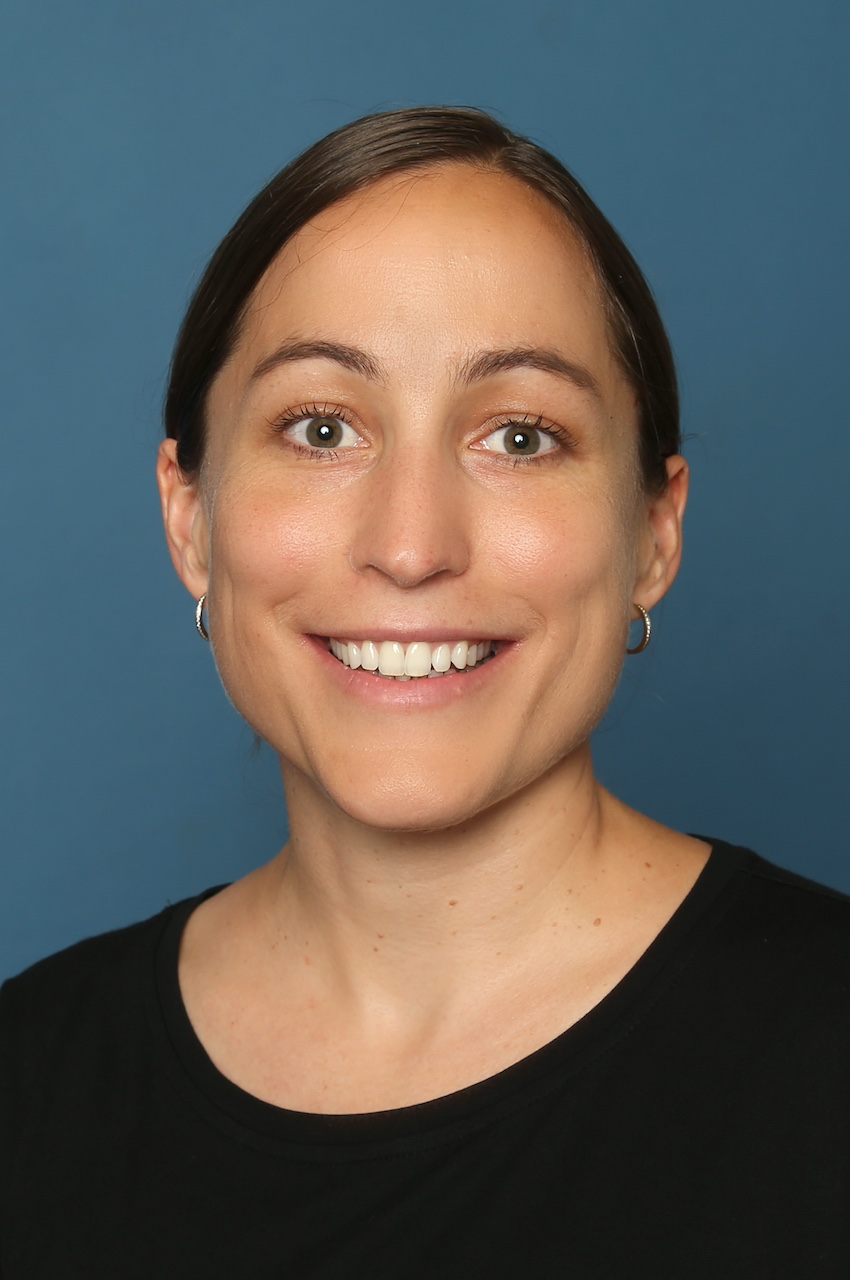
Dai O'Brien is an Associate Professor of British Sign Language and Deaf Studies at York St John University, where he has worked since 2012. As a deaf academic who uses British Sign Language, he brings unique lived experience to his teaching and research in Deaf Studies. Dr O'Brien's educational background includes: BSc Hons in Biological Sciences from University of Bristol MSc in Deaf Studies from University of Bristol MRes in Sociology from University of Bristol PhD in Sociology from University of Bristol His research focuses on deaf space - how deaf people navigate and creatively transform environments not designed for them. His work explores deaf young people's transition to adulthood, responses to loss of deaf community spaces, and the experiences of deaf academics in higher education. He has a growing interest in deaf people's involvement in radical left politics and applies Bourdieu's and Lefebvre's theories to understand deaf spatial experiences. Recent publications reveal a clear trend toward examining the intersection of deaf identity with broader social and political movements, particularly through spatial theory. His work demonstrates increasing attention to deaf-led research methodologies and the application of visual methods in Deaf Studies. Dr O'Brien actively supervises postgraduate researchers and has contributed significantly to making higher education more accessible for deaf students and staff through initiatives like the LIdIA Position Statement on making higher education more Deaf-friendly. He serves on the Journal of Deaf Studies and Deaf Education Advisory Board and co-organizes the Bridging the Gap conference series, which strengthens connections between deaf communities and higher education institutions. His professional service includes peer reviewing for major journals and evaluating research grants for organizations like the European Research Council.
Anna Shusterman is a Professor in the Psychology Department at Wesleyan University, where she has taught and directed research in the Cognitive Development Laboratories since 2007. She co-founded and serves as co-chair of Wesleyan's College of Education Studies, established in 2020. Her educational background includes: Bachelor's degree in Neuroscience from Brown University Graduate studies and post-doctoral fellowship at Harvard University's Laboratory for Developmental Studies under Elizabeth Spelke and Susan Carey Dr. Shusterman's research centers on conceptual development in children, with a focus on the interplay between language and cognition in spatial and numerical domains. She investigates how language shapes children's understanding of numbers and space, and develops methodological approaches for translating developmental science into practical preschool classroom applications. Her work explores how young children perceive and learn about the world through simple, engaging games. Analysis of her recent publications (2019-2025) reveals consistent emphasis on numerical cognition, language acquisition, and spatial reasoning. Key themes include language's role in math development, early numeracy in diverse populations (particularly deaf and hard of hearing children), and implementation of research-based math activities in preschool settings. Her work demonstrates how language exposure in any modality supports numerical concept development and how grammatical structures influence number word acquisition. Dr. Shusterman has secured significant research funding including NSF CAREER grants and collaborative research awards. She mentors undergraduate researchers in her laboratory and actively bridges academic research with practical educational applications through her work with the College of Education Studies. She directs the Blue Lab within Wesleyan's Cognitive Development Laboratories, located in Judd Hall. The NSF-funded lab conducts studies with children under 12 from central Connecticut preschools, schools, and daycare centers, using fun games to investigate how children think about numbers, space, language, and social concepts.
Prof. Dr. Christian Rathmann is a Professor for Sign Language Interpreting at the Institute of Rehabilitation Sciences , Humboldt University of Berlin. His academic journey includes prior roles at the University of Hamburg, University of Bristol, and The Ohio State University. PhD in Linguistics (2005), University of Texas at Austin MA in Linguistics (2000), University of Texas at Austin Research Interests : Rathmann specializes in sign language linguistics , focusing on morphosyntactic processes, semantics, and pragmatics. His work explores L1/L2 acquisition , multilingualism, language contact, and the implementation of the CEFR for sign languages . He also investigates Deaf Studies , discourse analysis, and language rights within international contexts. Scientific Contributions include publications on verb agreement, language standardization, and bilingual co-activation. His 2024 work on Signbank 2.0 and VisuoLab emphasizes digital resources for sign languages. Alexander von Humboldt Polish Honorary Research Scholarship (2016-2020) Professional Engagement : Rathmann serves on editorial boards (e.g., Frontiers in Psychology ) and scientific committees, including the SignON Project and the German Deaf Association . He advocates for early sign language access and language rights for deaf children.






/prod01/yorksjacuk/media/content-assets/safe-images/1600-x-1000/Dai-Obrien.jpg)