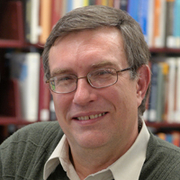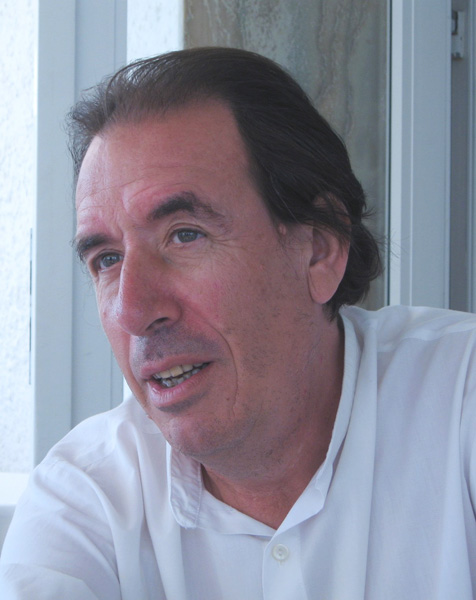
Alfredo Estrade Vaz is an Associate Professor in the Department of Physics at Central Michigan University (CMU), where he leads the Estrade Research Group. His work focuses on experimental nuclear physics with exotic isotopes, particularly those relevant to neutron star crusts and the r-process of nucleosynthesis. He conducts experiments at major facilities such as the National Superconducting Cyclotron Laboratory (NSCL), now transitioning to FRIB, and the Radioactive Ion Beam Factory (RIBF) at RIKEN, Japan. His research interests include: Experimental studies of exotic isotopes with neutron-proton imbalance Time-of-flight mass measurements and beta-decay spectroscopy Nuclear structure phenomena like halo nuclei and isomers Nuclear astrophysics applications in supernovae and neutron star mergers Development of radiation detectors and data acquisition systems The recent publications reflect a strong focus on mass measurements, isomer discoveries, and r-process nucleosynthesis, often in collaboration with international teams. His work increasingly integrates computational modeling through tools like Webnucleo and NucNet, as seen in hackathons and workshops. The trend shows a deepening synergy between experimental data and astrophysical modeling. Scientific awards and recognitions include involvement in the IReNA network funded by NSF and mentoring students who have received awards such as the APS Distinguished Student Program travel prize. He advises multiple students at various levels, including Master’s and PhD candidates, and has secured external funding from the U.S. Department of Energy. His group actively participates in detector development, particularly for FRIB, and collaborates internationally with institutions in Japan and Europe. The group also organizes educational events such as workshops and hackathons to train the next generation of nuclear astrophysicists.