Dr. Leo Prakash is a Senior Lecturer in the Department of Materials Science and Engineering at Swansea University's School of Engineering and Applied Sciences. His research focuses on microstructure evolution, deformation mechanisms, thermomechanical processing, and phase transformations in light metals (titanium and magnesium) and nuclear materials (GEN-III/IV), utilizing advanced techniques like EBSD and crystal plasticity finite element modeling. Areas of Expertise Microstructure and Texture Evolution Deformation and Twinning Mechanisms Phase Transformation Analysis Light Metal Alloys (Ti/Mg) Nuclear Material Characterization Teaching EG-187 Engineering Analysis for Materials 1 EG-262 Stress Analysis 1 EG-391 / EG-M343 Microstructure and Characterisation Contact Email: l.prakash@swansea.ac.uk Office: A209, Engineering East, Bay Campus Phone: +44 (0) 1792 602573 His recent publications examine τ-plot quantification of plastic deformation heterogeneity, Z-selective heterocycle synthesis, and neutron diffraction analysis of zirconium/titanium alloy deformation. He supervises postgraduate research on topics including shear strain effects on metal deformation.
Dr. Lara Silvers is a Lecturer in Mathematics at the School of Science & Technology, City, University of London. She focuses on Astrophysical Fluid Dynamics , particularly the interactions between plasmas and magnetic fields in astrophysical objects such as the Sun. Her work often involves computational techniques on high-performance computing facilities to solve governing equations of astrophysical systems. Senior Fellow, Higher Education Academy (2019–present) Fellow, The Institute of Mathematics and its Applications (Jul 2018–present) Member, London Mathematics Society (2010–present) Fellow, Royal Astronomical Society (2004–present) Dr. Silvers has served in various educational leadership roles at City, including Associate Dean for multiple responsibilities within the School of Science & Technology. She is currently the Deputy Director of the STEM Digital Academy , where she develops innovative educational programs. Her teaching includes modules like Introduction to the Mathematics of Fluids , Vector Calculus , and Programming and Computational Mathematics . Her research primarily concerns astrophysical fluid dynamics, with a specific focus on the impact of temperature-dependent transport coefficients in modeling the solar interior. She uses both analytic and numeric techniques to study solar convection, magnetic buoyancy, and shear flow instabilities. Her work has contributed to understanding the solar tachocline, a region with strong shear in the solar interior. Dr. Silvers has supervised several research students, including Abrar Ali , Karan Pattni , and Veronika Witzke , whose theses explored topics such as Solar Convection , Magnetic Buoyancy , and Structured Populations in Evolutionary Dynamics . On the Interaction of Buoyant Magnetic Structures with Convective Plumes (2022) The effect of temperature-dependent viscosity and thermal conductivity on the onset of compressible convection (2020) Mean flow evolution of saturated forced shear flows in polytropic atmospheres (2019) Evolution and characteristics of forced shear flows in polytropic atmospheres: Large and small Péclet number regimes (2019) The effect of time-dependent γ-pumping on buoyant magnetic structures (2018) Her research frequently involves collaboration with other academics and institutions, with publications in prestigious journals like the Monthly Notices of the Royal Astronomical Society and Physics of Fluids . Dr. Silvers’ work provides valuable insights into the complex dynamics of astrophysical systems, especially the Sun's magnetic field behavior and convection processes.
Émilien Azéma is a Professor at the University of Montpellier since 2023, affiliated with the Department of Mechanics in the Faculty of Sciences and the Mechanics and Civil Engineering Laboratory (LMGC). Since 2024, he also holds an Associate Professor position at Polytechnique Montréal in the Department of Civil, Geological and Mining Engineering. Primary Institution: University of Montpellier, France Secondary Appointment: Polytechnique Montréal, Canada Research Recognition: French University Institute (IUF) Research Chair (2020-2025) Dr. Azéma received his complete education at the University of Montpellier, earning degrees in Mathematics, Solid Mechanics, and completing his Doctorate and Habilitation (HDR) in Mechanics. His doctoral research focused on railway ballast behavior using Discrete Element Method (DEM) simulations, supported by a joint CNRS and SNCF grant. Licence/Maîtrise (Master 1) in Mathematics DEA (Master 2) in Solid Mechanics Doctorate in Mechanics Habilitation (HDR) in Mechanics His research program centers on the micromechanics of granular systems with realistic microstructure. Using innovative Discrete Element Method (DEM) approaches, he systematically investigates the nonlinear effects of particle shape characteristics (angularity, non-convexity, elongation) and size polydispersity on granular rheology across flow regimes from quasi-static to rapid. His work extends to evolving granular systems where particles can fragment or undergo large deformations, with applications to geomechanical materials, industrial powders, and extraterrestrial granular systems. An analysis of his recent publications (2023-2025) reveals a strong emphasis on particle shape effects, cohesive strength mechanisms, and polydisperse system behavior. His research bridges fundamental granular physics with practical applications in railway engineering, planetary science (particularly asteroid regolith modeling), and geomechanics, appearing in high-impact journals including Physical Review E, Granular Matter, and Icarus. Dr. Azéma's significant research contributions have been recognized through: A prestigious Research Chair from the French University Institute (IUF) as Junior Member (2020-2025) An extensive publication record with 81 publications across multiple high-impact journals He teaches core courses in solid mechanics, numerical computation, finite element method, discrete approaches, and rheology of granular media. His administrative responsibilities include: International affairs coordinator at the Faculty of Sciences (since 2018) Responsible for the first year curriculum of the Mechanical Engineering Master's program (since 2021) His primary research laboratory is the Mechanics and Civil Engineering Laboratory (LMGC) at the University of Montpellier, where he conducts his investigations into granular media and solid mechanics phenomena, with significant collaborations extending to Polytechnique Montréal and international institutions.
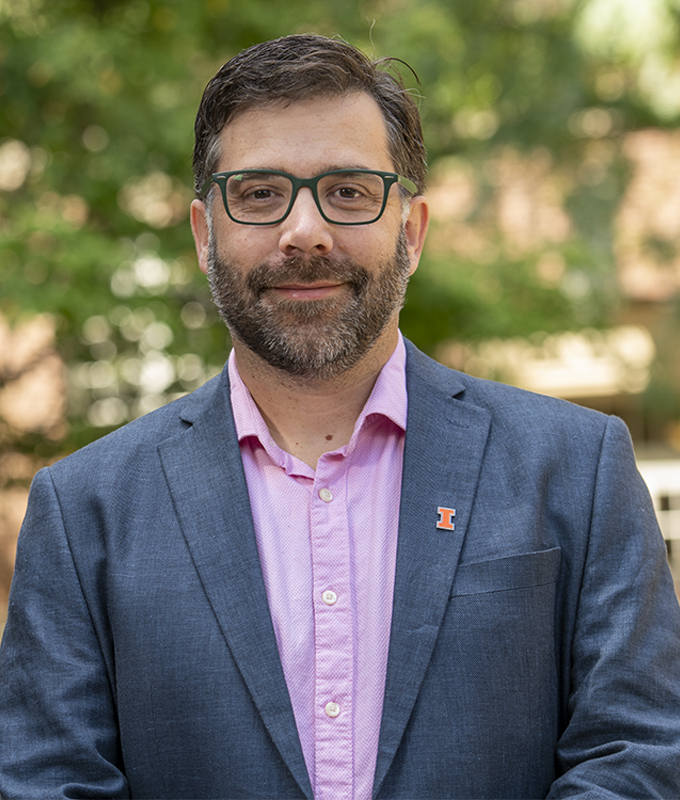
Matias Carrasco Kind serves as the Director of Data Science Research Services (DSRS) within the Gies College of Business and is a Research Assistant Professor in the Departments of Accountancy and Astronomy, as well as at the National Center for Supercomputing Applications (NCSA), all at the University of Illinois Urbana-Champaign (UIUC). He is also a Trusted CI Fellow at the NSF Cybersecurity Center of Excellence and holds a Faculty-in-Residence position at the Discovery Partners Institute (DPI) in Chicago, IL. Education: Ph.D. in Astronomy, University of Illinois, 2014 M.S. in Astronomy, University of Illinois, 2011 His research focuses on data-intensive science , spanning machine learning , deep learning , scientific computing , and photometric redshifts . He applies these techniques to cosmology, galaxy formation, and cross-disciplinary fields like finance, Earth sciences, and bio-imaging. His recent publications emphasize cosmological constraints from multi-survey data (DES, SPT, ACT, HST), weak lensing analysis, and machine learning applications in galaxy clustering and dark matter halo modeling. Key trends include the integration of AI with astrophysical data and interdisciplinary collaborations. Scientific Awards: Trusted CI Fellow at NSF Cybersecurity Center of Excellence He collaborates with teams at the Data Science Research Services (DSRS) , NCSA , and Discovery Partners Institute (DPI) , leveraging cyberinfrastructure for astronomy and finance research.
Dr. Marius Weber is a Lecturer at the Department of Civil, Environmental and Geomatic Engineering at ETH Zürich. His work focuses on structural analysis, nonlinear finite element modeling, and mechanical behavior of concrete and masonry structures. He is affiliated with the Institute of Structural Engineering (IBK) under Prof. Walter Kaufmann. Education: PhD in Civil Engineering (University of Stuttgart, 2013-2018), MSc in Civil Engineering (Hochschule Luzern, 2010-2013), BSc in Civil Engineering (Hochschule Luzern, 2007-2010) His research interests include structural concrete mechanics, crack modeling, compressive membrane action, and shear reinforcement optimization. He employs computational methods like Compatible Stress Field Method (CSFM) and nonlinear finite element analysis to study existing and innovative structural systems. The articles listed highlight his expertise in concrete and masonry structural analysis, with a focus on crack behavior, shear reinforcement, and numerical validation techniques. Key trends involve stress field modeling, compressive membrane effects, and nonlinear finite element simulations. Scientific Awards: 2010 Erster Preis der Fachschaft Bauingenieurwesen „Best of Bachelor“, 2010 Zweiter Emch+Berger WSB AG Preis Marius Weber is actively involved in research projects at ETH Zürich's Institute of Structural Engineering, collaborating on computational modeling and structural safety assessments.
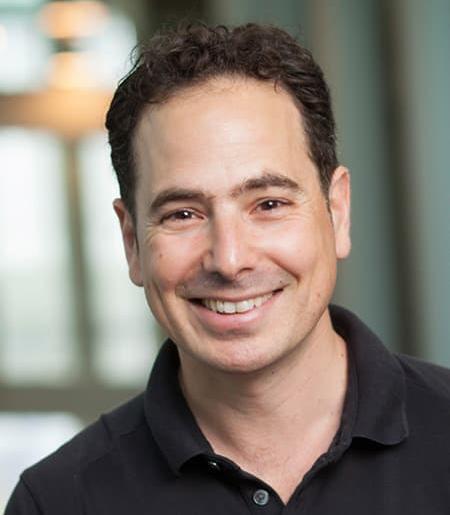
Professor Itai Cohen is a faculty member in the Department of Physics at Cornell University's College of Arts and Sciences. His research spans complex fluids, microrobotics, and biological tissue mechanics, with a focus on shear thickening, origami metamaterials, and flight dynamics. B.S. in Physics from UCLA (1995) Ph.D. in Physics from University of Chicago (2001) Research Interests: Complex Fluids: Shear thickening, anisotropic viscosity, and stress imaging in colloidal systems. Microrobotics: Development of autonomous microscopic robots with electronic integration. Origami Metamaterials: Scale-free folding principles for programmable mechanical structures. Biolocomotion: Flight control mechanisms in insects and collective motion studies. Scientific Awards: Klarman Fellowship Vaughn Award for cartilage research PRL Editor's Suggestion for shear thickening paper Inaugural Mong Fellows in Neurotech Advising and Collaborations: Mentored graduate students include Kemper Ludlow, Han Kheng Teoh, Abby Leung, and Anna Barth. Collaborative work with Paul McEuen, David Muller, and James Sethna. Labs: Leads the Cohen Lab at Cornell, specializing in microrobotics and complex fluids research.
Damon Bolhassani is an Assistant Professor at the Spitzer School of Architecture, City College of New York (CUNY) , where he has been since 2019. His academic journey includes postdoctoral fellowships at the University of Pennsylvania and Drexel University, and he holds a Ph.D. in Structural Engineering from Drexel University (2015). Education : Ph.D. from Drexel University, with postdoctoral work at UPenn and Drexel. Professional Experience : Visiting roles at Bucknell University, Drexel University, and University of Pennsylvania; consultant engineer at Alfa Engineering Inc. Bolhassani’s research focuses on structural engineering , particularly masonry structures , funicular design , and 3D graphic statics . His work addresses seismic performance, material innovation, and computational modeling. Recent publications explore glass beams, 3D-printed concrete, and polyhedral materials. Research Trends : His 15 most recent articles span 2024-2014 , with keywords like Structural Engineering , Masonry , and 3D Printing . Sub-fields include Post-Tensioned Masonry , Damage Detection , and Historical Construction Techniques . Professional Memberships : American Society of Civil Engineering (ASCE) The Masonry Society (TMS) International Association for Shell and Spatial Structures (IASS) Teaching and Practice : Bolhassani has taught at the University of Pennsylvania and Drexel University, with a focus on structural mechanics and innovative design. He is a licensed Professional Engineer (PE) in Pennsylvania.
Yanglin Gong serves as Professor and Chair of the Department of Civil Engineering at Lakehead University since joining in 2003. A licensed Professional Engineer in Ontario since 2002, he holds memberships in the Canadian Society for Civil Engineering and American Society of Civil Engineers. His academic leadership spans teaching 10 core and graduate courses including Steel Design, Structural Dynamics, and Finite Element Methods. His educational background includes: BSc in Civil Engineering, Tongji University MSc in Structural Engineering, Tongji University PhD in Civil Engineering, University of Waterloo Prior to academia, he worked as a senior structural engineer at Shanghai Institute of Architectural Design and Research. Gong's research focuses on advanced steel structure systems with particular expertise in seismic-resistant design and progressive collapse prevention. His work integrates nonlinear time-history analysis , experimental connection testing , and optimization methodologies for steel frameworks. Current investigations explore dynamic stability of structural components under extreme loading scenarios and rock mechanics applications in tunnel engineering. His publication trends reveal a consistent evolution from fundamental connection behavior studies (2005-2010) toward sophisticated performance-based design frameworks (2010-2020), recently expanding into geomechanics and fractional calculus applications for structural stability (2022-2025). Scientific recognition includes: Excellent Structural Design Award for Shanghai Library project (City of Shanghai, 1997) His teaching portfolio demonstrates comprehensive coverage of structural engineering principles from undergraduate steel/concrete design courses to advanced graduate topics in structural dynamics and optimization. While specific grant details aren't documented in the source material, his extensive publication record in top journals like Journal of Constructional Steel Research and Engineering Structures indicates sustained research funding support. Though no dedicated laboratory is explicitly mentioned, his experimental work on connection behavior suggests active collaboration with structural testing facilities, particularly for bolted-angle and shear tab connection studies under extreme loading conditions.
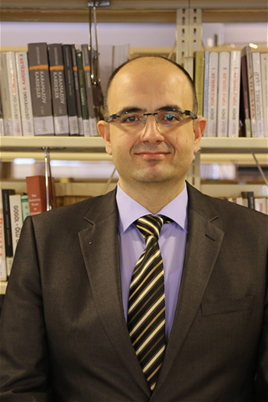
Hasan ÖZKAYNAK is a Professor in the Department of Civil Engineering at Istanbul Beykent University's Faculty of Engineering and Architecture. His academic career spans roles from Assistant Professor (2011) to Professor (2023), with affiliations at Okan University (2011). He serves as Department Head and focuses on seismic design, energy dissipation, and reinforced concrete structures. Key Research Areas: Structural engineering, earthquake resilience, CFRP retrofitting, mechanical connectors, and energy-based seismic design. His recent work analyzes energy dissipative steel cushions, moment-resistant connections in precast concrete, and seismic risk assessment methodologies. Collaborations include Soydan Cihan, Yüksel Ercan, and Dinçar Ahmet Anıl. Articles emphasize computational modeling, experimental testing, and disaster recovery strategies post-2023 Kahramanmaraş earthquakes.
Claudio Chiastra is an Associate Professor at the Department of Mechanical and Aerospace Engineering (DIMEAS) at the Polytechnic of Turin, where he is also a member of the Interdepartmental Center PolitoBIOMed Lab - Biomedical Engineering Lab. His academic career spans multiple institutions including the Polytechnic University of Milan and Erasmus Medical Center, demonstrating his expertise in cardiovascular biomechanics and medical device development. Dr. Chiastra's research focuses on biomechanics, cardiovascular system modeling, computational approaches to coronary artery disease, digital twin technology, endovascular device design, and multiscale modeling of vascular systems. His work integrates optical coherence tomography with stent technology to advance cardiovascular interventions. His research lines include multiscale modeling of vascular adaptation processes, design and optimization of endovascular devices, 3D reconstruction of vascular geometries through multimodal imaging integration, and studying relationships between morphometric, mechanical and hemodynamic descriptors in vascular diseases. His recent publications reveal a strong emphasis on computational modeling of coronary interventions, stent design optimization, plaque analysis, and hemodynamic assessment. These works demonstrate his leadership in applying advanced computational techniques to solve clinical cardiovascular challenges, particularly in coronary artery disease treatment and prevention. GNB (National Bioengineering Group) Doctoral Award (2014) Dr. Chiastra actively mentors PhD students including Francesca Rossi, Mariachiara Arminio, Graziana Maria Ragonese, and Sara Zambon. He leads significant research projects including RESET (REthinking femoral artery Stents) and PREDICT (Adverse cardiovascular events in coronary Plaques), demonstrating his leadership in securing competitive research funding. His editorial roles as Associate Editor for Frontiers in Medical Technology, Frontiers in Cardiovascular Medicine, and Scientific Reports highlight his recognition in the field. As a member of the PolitoBIOMed Lab, Dr. Chiastra contributes to a collaborative research environment focused on biomedical engineering solutions. His work bridges engineering principles with clinical cardiovascular applications, particularly in the development and optimization of endovascular devices and computational models for personalized medicine approaches.
Björn Schenke is a Distinguished Scientist at Brookhaven National Laboratory (BNL) and an Adjunct Professor at Stony Brook University. He specializes in theoretical nuclear physics, focusing on quantum chromodynamics and the properties of nuclear matter under extreme conditions. His research spans quark-gluon plasma dynamics, gluon saturation, and hydrodynamic modeling of heavy-ion collisions. Education: Ph.D. in Physics (summa cum laude) from Goethe University, Frankfurt (2008), advised by Prof. Carsten Greiner. Thesis: 'Collective Phenomena in the Non-Equilibrium Quark-Gluon Plasma'. Research Interests: Quantum chromodynamics in high-energy limits, including color-glass-condensate theory. Relativistic viscous hydrodynamic simulations (e.g., MUSIC code) for quark-gluon plasma. Initial-state modeling of heavy-ion collisions (IP-Glasma framework). Nuclear deformation studies using facilities like RHIC, LHC, and future EIC. Publications focus on nuclear structure, gluon saturation, hydrodynamic simulations, and collision dynamics, with recent work emphasizing precision measurements at particle colliders. Trends include advanced imaging techniques and multi-scale analysis of nuclear matter. Awards & Recognition: 2023: BNL Science & Technology Award, APS Outstanding Referee 2022: Fellow of the American Physical Society 2017: Zimanyi Medal in Nuclear Theory 2014: DOE Early Career Research Program Award 2013: IUPAP Young Scientist Prize 2012: Nuclear Physics A Young Scientist Award As a Goldhaber Distinguished Fellow (2012-2013) and Richard H. Tomlinson Fellow (2008-2010), he leads nuclear theory research at BNL's Physics Department, developing computational tools like MUSIC and IP-Glasma. He collaborates on projects for RHIC and EIC.
Elena Zabolotnii is a Professor in the Civil and Environmental Engineering department at Carleton University . Her research focuses on performance-based design, slope monitoring using fiberoptics, machine learning applications in geotechnical engineering, computational geomechanics, pit slope stability, 3D effects in slope stability, and seismic slope stability. Doctor of Philosophy , Geotechnical Engineering (2020, University of Alberta, Thesis: 'Three-dimensional slope stability effects in the failure at the Mount Polley TSF') Master of Engineering , Geoenvironmental Engineering (2016, University of Alberta) Bachelor of Applied Science , Civil Engineering (University of Regina) Zabolotnii's research integrates advanced computational methods with real-world geotechnical challenges. Key areas include 3D slope stability analysis, seismic effects on slopes, and machine learning applications for monitoring data from fiberoptics equipment. Her work also emphasizes performance-based design as an alternative to conventional slope stability analysis. The 15 most recent publications cover topics such as 3D slope stability, tailings dam safety, seismic analysis, and computational modeling. These studies often involve case histories like the Mount Polley Tailings Storage Facility and regulatory compliance in diverse regions. Teaching Achievement Award (2023, Carleton University) Vanier Scholar (2017-2020, NSERC PGS-D) President’s Doctoral Prize of Distinction (2016, University of Alberta) Zabolotnii actively supervises research students, including Aravind Murali (M.A.Sc., 2024). She contributes to industry-relevant R&D projects such as the Large Open Pit Slope Stability Project and historical works like the Saskatchewan Black Spot Screening Project (2009).
Vahid Sadeghian is a Professor in the Department of Civil and Environmental Engineering at Carleton University, affiliated with the Faculty of Engineering and Design. He holds a B.A.Sc. from the University of Tehran and both M.A.Sc. and Ph.D. degrees from the University of Toronto. Dr. Sadeghian leads the Concrete Structures Research Group, focusing on advanced simulation methods for performance assessment of reinforced concrete structures. His research interests center on: Design and performance assessment of reinforced/prestressed concrete structures Hybrid numerical-experimental simulation techniques Nonlinear finite element analysis of structures under extreme loads Repair and rehabilitation of concrete infrastructure Behavior of modern concrete materials (FRC, S-C composites) Multi-hazard resilience of infrastructure systems Dr. Sadeghian's publications demonstrate consistent focus on computational mechanics of concrete structures, particularly addressing seismic performance, blast resistance, and novel modeling methodologies. His recent work emphasizes hybrid simulation techniques, 3D-printed concrete applications, and performance-based design methodologies. He leads a research group with access to advanced facilities at Carleton's Minto Centre, including: 11m x 27m strong floor with 11m clearance Four 6-DOF shake tables ±1000 kN dynamic actuators Hybrid simulation capabilities Dr. Sadeghian actively recruits graduate students for fully-funded positions and collaborates with the National Research Council Canada.
Floriana Petrone is an Assistant Professor in the Department of Civil & Environmental Engineering at the University of Nevada, Reno, part of the College of Engineering. Her research focuses on advanced numerical modeling of structural systems, high-performance computing for civil engineering challenges, structural damage assessment, and probabilistic safety analysis. She is actively seeking motivated graduate students to work on projects involving seismic design optimization and experimental testing of structural health monitoring techniques. Dr. Petrone’s work emphasizes practical applications such as improving building resilience to earthquakes and developing innovative methods for structural safety evaluation. Her research group employs cutting-edge tools like optical sensor systems for measuring building drift during seismic events, contributing to safer infrastructure design. Her publications span topics including progressive collapse analysis of reinforced concrete structures, calibration of capacity models, and composite material behavior. She holds a patent for a self-supporting steel truss system in mixed steel-concrete structures.
Dr. Vincent Caccese is a Professor of Mechanical Engineering at the University of Maine, affiliated with the College of Engineering. He holds a PhD in Civil Engineering from Drexel University (1985) and has extensive industry experience as Principal Engineer at Apex Engineering and CTO at Alba-Technic LLC. His primary research focuses on structural mechanics, materials science, and composite/metal hybrid systems. Key projects include developing protective headgear for elderly fall prevention, fatigue analysis of welded connections, and inflatable structures for aerospace applications. He leads the Hybrid Structures Laboratory, equipped with advanced testing facilities like MTS reaction frames and climate chambers. His work is funded by NIH, NSF, NASA, and the U.S. Navy. Teaching areas include Statics, Finite Element Methods, and advanced mechanics courses. Notable collaborations include partnerships with Bath Iron Works, Applied Thermal Sciences, and Ocean Farms Technology. His research emphasizes practical applications in maritime, biomedical, and aerospace sectors. Dr. Caccese’s publications span structural testing methodologies, material characterization, and optimization techniques. His lab supports Maine’s economy through industry partnerships in shipbuilding, aquaculture, and advanced manufacturing. Recent projects include wireless monitoring systems for space habitats and modular ship connections.