Vlahogianni Eleni is a Professor and Dean of the Department of Transportation Planning and Engineering at the National Technical University of Athens (NTUA). Her research focuses on integrating machine learning , quantum computing , and reinforcement learning with urban mobility and traffic engineering , addressing challenges in eco-routing , congestion pricing , and autonomous vehicle interactions . Her work emphasizes data-driven approaches to traffic forecasting, including quantum neural networks and theory-aware unsupervised learning . Recent publications explore mixed traffic environments , shared space modeling , and parking occupancy prediction , highlighting her commitment to advancing intelligent transportation systems . Professor Vlahogianni leads the Traffic Engineering Laboratory at NTUA and contributes to policy frameworks for connected and automated transport , wildfire resilience , and dynamic mobility solutions . She is actively involved in the LEVITATE project and advocates for explainable AI in transportation applications.
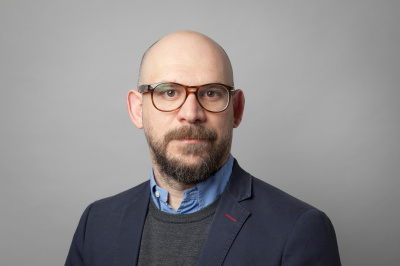
N. van Oort is an Associate Professor in the Department of Transport, Mobility and Logistics at Delft University of Technology. He specializes in public transport systems, sustainable mobility, and data-driven decision making. His research focuses on optimizing transport networks, electrification strategies, and future mobility scenarios. He has led the Smart Public Transport Lab, contributing to projects like the CriticalMaaS initiative (2019-2023), exploring Mobility as a Service dynamics. His work spans over 249 publications and 8 recognized prizes, including awards for innovative transport solutions and research excellence. Van Oort actively engages in public discourse, appearing in media like NPO Radio 1 and Trouw, discussing topics such as 2050 mobility futures and challenges in Dutch public transport. He has advised on policy matters and serves as a keynote speaker at industry events.
Dr. Páraic Carroll is a Lecturer in Transport Planning at the University of Melbourne's Faculty of Architecture, Building and Planning, with a concurrent Visiting Professorship at University College Dublin. His expertise combines policy analysis, behavioral modeling, and infrastructure planning, with recent focus on sustainable mobility transitions. Research examines travel behavior and decarbonization pathways, including: Equitable EV charging infrastructure deployment Agent-based modeling of mode-shift interventions Airport access policy optimization Energy-transport nexus in rural contexts Publications (2022-2025) highlight three themes: 1) Micromobility integration (30% of recent works), analyzing e-scooter adoption and first/last-mile solutions; 2) Rural transitions (25%), evaluating public transport expansion and EV microgrids; and 3) Behavioral interventions (20%), applying stage-based models to mobility change. He advises Irish climate policy through the Climate Change Advisory Council and consults for local governments on micro-mobility regulation. No awards or funded studentships are documented in available sources.
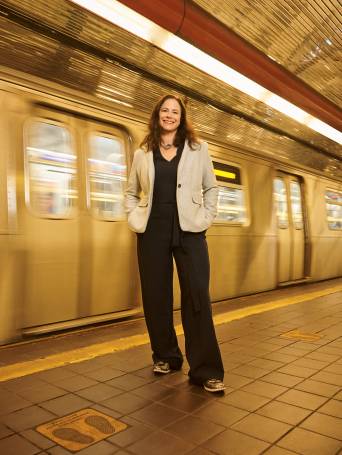
Sarah Kaufman serves as Director of the NYU Rudin Center for Transportation and Assistant Clinical Professor of Public Service at New York University's Wagner Graduate School of Public Service. Her work bridges academic research and practical policy solutions for urban transportation systems, with emphasis on equity, technology, and resilience. Her research spans transportation policy, urban planning, emergency management, and climate change adaptation. Key focus areas include mobility equity (notably the "pink tax" on transportation), micromobility systems, autonomous vehicle governance, and disaster response protocols. She investigates how technology and policy can create more inclusive and resilient urban mobility networks, with particular attention to gender disparities and climate vulnerabilities. Analysis of her 15 most recent publications reveals consistent themes in transportation equity, emerging technologies, and crisis management. Her work demonstrates methodological diversity—from agent-based modeling (MATSim-NYC) to policy analysis of scooter sharing—and maintains strong practical relevance through partnerships with transportation agencies. Notable trends include the evolution of micro-mobility regulation, gender-based mobility disparities, and transportation's critical role in pandemic and extreme weather response. As Director of the Rudin Center, she leads a multidisciplinary research team that produces policy-influential reports on congestion pricing, transit innovation, and sustainable mobility. The center serves as a hub for collaboration between government agencies, industry stakeholders, and community organizations, translating academic research into actionable transportation solutions for New York City and beyond.
Beatrice Orlando is an Associate Professor at the Department of Economics and Management at the University of Ferrara. She holds a Ph.D. in Business Management and Corporate Finance from Sapienza University of Rome and has extensive experience in both academic and professional settings. Her current research focuses on Open Innovation, Corporate Strategy, and Entrepreneurship, with numerous publications in high-impact journals. Her educational background includes a Ph.D. in Business Management and Corporate Finance (Sapienza University of Rome, 2010), a Master in Finance (Sapienza University of Rome, 2007), and a Graduate Degree in Economics and Accounting (Sapienza University of Rome, 2004). Professor Orlando's research interests span multiple domains including Open Innovation, Corporate Strategy, Entrepreneurship, Knowledge Management, Sustainability, and Organizational Slack. Her work particularly emphasizes how digital platforms, organizational slack, and decision-making under uncertainty influence innovation adoption and corporate performance. She has developed theoretical frameworks connecting prospect theory, sunk costs, and risk behavior in innovation contexts. Her recent publications reveal a strong trend toward interdisciplinary research combining innovation management with sustainability, digital transformation, and knowledge sharing. The articles demonstrate a methodological diversity ranging from systematic literature reviews to quantitative empirical studies across multiple countries and sectors, with particular focus on green innovation, knowledge management, and the impact of organizational structures on innovation performance. National qualification as Associate Professor (2017) Chartered Accountant certification (2016) Ranked first in PhD competition Grant for research project 'Design driven innovation' (2016) Grant for research project 'On the long-run performance effect' (2015) Professor Orlando has supervised numerous doctoral students and serves as a reviewer for multiple prestigious journals including Journal of Technological Forecasting and Social Change, Production Planning and Control, and Technology Analysis and Strategic Management. She has received multiple research grants supporting her work on innovation management and corporate strategy. She serves as Co-Editor-in-Chief of the Journal of Corporate and Business Strategy Review and as Regional Editor for the Journal of Knowledge Management. She directs the 'Innovation Management' area at EMRBI KMIRC (Knowledge Management International Research Centre) at the University of Nicosia and is a Research Associate at MADEINIT Research Center in Rome. Her research centers focus on open innovation, digital platforms, and the intersection of knowledge management with entrepreneurial initiatives.
Dr. Pei Huang is a Senior Lecturer in Energy Engineering at Dalarna University, Sweden, working within the Department of Information and Technology. His academic career focuses on multidisciplinary research at the intersection of energy systems, electromobility, and sustainable urban development, with significant contributions to both teaching and research in renewable energy and energy efficiency. Dr. Huang received his Ph.D. from the City University of Hong Kong in 2017. His educational background has provided a strong foundation for his current research in energy systems and sustainable technologies, bridging engineering principles with practical applications in the energy transition. Dr. Huang's research interests span several critical areas in modern energy systems. He specializes in peer-to-peer energy sharing, urban energy systems, and electromobility, with particular focus on electric vehicles as mobile power sources. His work also encompasses positive energy districts, district heating systems, building energy efficiency, and HVAC systems. A distinctive aspect of his research involves applying machine learning to address uncertainty in energy systems, creating more resilient and adaptive solutions for the energy transition. His multidisciplinary approach connects energy engineering with computer science, urban planning, and sustainability science. Analysis of Dr. Huang's recent publications reveals a strong emphasis on integrating electric vehicles into energy systems as flexible resources. His work demonstrates how vehicle-to-grid technology can enhance grid resilience and enable community energy sharing through innovative solutions like the Electric Vehicle based virtual Electricity Network (EVEN). There's also a notable focus on applying artificial intelligence to optimize energy systems, particularly in data-scarce scenarios where he combines clustering analysis and transfer learning. His research bridges the gap between theoretical models and practical implementation, with several studies based on real-world data from Sweden, demonstrating immediate relevance to current energy challenges. Dr. Huang has been highly successful in securing research funding, with approximately SEK 10 million secured for projects at Dalarna University. His current research portfolio includes: PI for a 2023-2026 Energy Agency project on enhancing grid resilience through electric vehicle-based virtual electricity networks (SEK 2.64 million) PI for a 2023-2026 FORMAS project on photovoltaic and electric vehicle utilization (3.75 million SEK, with a competitive success rate of 13.8%) Co-PI and national coordinator for a 2023-2026 CETPartnership project on thermal energy storage in district heating (2.32 million Euro) Co-PI for a 2024-2026 Swedish Energy Agency project on electric vehicles for frequency regulation (3.25 million SEK) Dr. Huang serves on the editorial board of the journal Buildings and has published extensively, with 49 journal articles, 1 book, 5 book chapters, and 19 conference papers to his name. His research has active participation in IEA tasks, demonstrating international recognition of his expertise. In addition to his primary energy research, Dr. Huang has made significant contributions to neuroscience, particularly in Parkinson's disease diagnostics and treatment, showing the breadth of his interdisciplinary approach.
Professor John Nelson is a Chair in Public Transport at the Institute of Transport and Logistics Studies (ITLS), University of Sydney. He holds a BA from Liverpool University, a PGCE from Durham, and a PhD from Newcastle University. He is a Fellow of the Institute of Highway Transport (FIHT) and the Royal Geographical Society (FRGS). Roles & Affiliations: Chair in Public Transport at ITLS, University of Sydney Member of The Net Zero Institute Series Editor for Routledge’s Transport and Mobility book series Former roles include Sixth Century Chair in Transport Studies and Director of the Centre for Transport Research at the University of Aberdeen Research Interests: Focus on applying new technologies to enhance transport systems, particularly public and shared transport solutions. His work addresses policy frameworks for sustainable mobility, funded by UK Research Councils, Innovate UK, and industry partners. Key themes include MaaS (Mobility as a Service), climate resilience, and transport equity. Grants & Projects: 2024: 'Shared micro-mobility and social inclusion' (Sydney) 2024: 'Investigation into the economy-wide implications of public transport fare trials' 2023: 'Community Self-Determination in Automated Delivery Systems' (ARC Discovery Project) Awards & Recognition: Honored as Scientific Director of the 2016 ITS European Congress and founder of MaaS Scotland. His work appears in high-impact journals like Transport Policy and Transportation Research Part A . Lab/Teams: Active in interdisciplinary teams at ITLS and collaborates with global networks like the RCUK dot.rural Hub. His research bridges academia, industry, and policy-making to advance sustainable transport systems.
Giacomo De Giorgi is Full Professor of Economics at the Institute of Economics and Econometrics, Geneva School of Economics and Management (GSEM), University of Geneva, and holds visiting appointments at UC Irvine. An alumnus of University College London (Ph.D.), he previously served as assistant professor at Stanford University (2006–2013), visiting professor at UC Berkeley and Columbia University, research professor at ICREA-MOVE/Barcelona GSE, and senior economist at the Federal Reserve Bank of New York (2014–2016). He is an associate editor of the Journal of the European Economic Association and a research fellow of CEPR and BREAD. Education Ph.D. in Economics, University College London Research Interests De Giorgi’s research integrates applied micro-econometrics with policy-relevant questions in development, labor, and household finance. His work explores how social networks shape economic decisions, the distributional impacts of cash and in-kind transfer programs, lifecycle inequality across racial and migrant groups, and the determinants of micro-enterprise formalization. Methodologically, he leverages large-scale randomized controlled trials, quasi-experimental designs, and cutting-edge network econometrics. Recent projects investigate: • Consumption and inequality : quantifying racial gaps in income and consumption dynamics over the lifecycle; • Financial inclusion : analyzing credit market imperfections, subprime borrowing, and the effects of business literacy interventions; • Migration and integration : comparing economic trajectories of migrants and natives in Denmark and the impact of refugee inflows on child poverty. Publications & Impact With more than 25 peer-reviewed articles in top journals—including the American Economic Review , Review of Economic Studies , Economic Journal , and Journal of Public Economics —De Giorgi’s scholarship has advanced understanding of social spillovers, program evaluation, and macro-financial linkages. His 2020 Review of Economic Studies paper on “Consumption Networks Effects” (with Frederiksen & Pistaferri) has become a benchmark for identifying neighborhood and family influences on household spending. Scientific Awards 2020 Banamex Prize for the best article published in American Economic Journal: Economic Policy Seminar & Grant Activity De Giorgi co-founded and co-organizes the Virtual Development Economics Seminar (VDEV), a joint initiative of BREAD, CEPR, and VDEV that hosts weekly online seminars reaching a global audience. He has delivered over 150 invited talks at institutions such as the World Bank, NBER, LACEA, and universities across five continents. His research has been supported by grants from the World Bank, CEPR, and private foundations. Teaching & Programs At Geneva, he teaches Development Economics, Labor Economics, and Advanced Econometrics at both graduate and executive levels. He co-founded the IEE Honors’ Program, an innovative selective track that immerses top undergraduate students in frontier research and policy engagement.
Ugo Corte is a Professor of Sociology at the University of Stavanger's Faculty of Social Sciences, Department of Media and Social Sciences. He holds a Ph.D. from Uppsala University (2012) and was an Erik Allardt Fellow at the Helsinki Collegium for Advanced Studies. His research focuses on creative work, small groups, cultural dynamics, and qualitative research methodologies. Notable contributions include his ethnographic book *Dangerous Fun* (2022), which won the 2023 Charles Horton Cooley Award, and foundational work on collaborative circles theory. Teaching responsibilities include courses on microsociology, sociology of creativity, and advanced qualitative methods. He serves on the editorial board of *Sociologica: International Journal for Sociological Debate*, co-editing its FOCUS section. His work bridges micro-sociological analysis with broader cultural studies, emphasizing empirical rigor and theoretical innovation. Research highlights include studies on extreme sports subcultures, workplace profanity as community-building, and the intersection of creativity and social structures. His interdisciplinary approach integrates ethnography, interaction ritual theory, and qualitative methodology debates to explore group dynamics and cultural production. Recent scholarship emphasizes 'dark fun' in hedonic communities and the role of obscenity in workgroup cohesion. He has presented globally at conferences like the Sociological Game Theory Symposium and the Modes of Immersion conference. His academic outputs span books, journal articles, and keynote addresses, reflecting a commitment to advancing both theoretical and empirical frontiers in sociology.
Marc Carmichael is an Associate Professor at the University of Technology Sydney (UTS), School of Mechanical and Mechatronic Engineering. He serves as Director of Teaching and Student Engagement at the UTS Robotics Institute (UTS:RI) and leads the UTS:RI human-robot interaction (HRI) lab. With expertise in physical human-robot collaboration, he has developed several novel robotic systems addressing real-world problems across various industries. Dr. Carmichael received his B.Eng. in Mechanical and Mechatronic Engineering (2008) and PhD in Robotics (2013) from UTS. He joined the UTS Centre for Autonomous Systems as a Lecturer in 2016, was promoted to Senior Lecturer in 2019, and holds the title of Associate Professor. His educational background and career progression reflect his deep commitment to robotics research and education. His research focuses on robotic systems that provide physical assistance to users during laborious activities, enabling effective human-robot collaboration. His work spans collaborative robotics (cobots), assistive robots, robotic rehabilitation, robot kinematics and control, and robot system design. He specializes in developing systems where humans and robots work together physically to accomplish tasks, particularly in industrial settings and for assistive applications. An analysis of his recent publications reveals a strong emphasis on learning from demonstration techniques, human-robot trust modeling, cognitive conflict detection during collaboration, and practical implementation of cobots in industrial settings. His work increasingly integrates machine learning with physical human-robot interaction, focusing on making robotic systems more adaptable, intuitive, and responsive to human needs. Australia's Most Innovative Engineers by Engineers Australia (EA) in 2018 Dr. Carmichael actively supervises research students and leads multiple funded research projects. His grants portfolio includes collaborations with NOKIA, OMRON, NSW Centre for Work Health and Safety, Rookwood General Cemetery, and the Australian Cobotics Centre. He has secured funding for projects including 'Physical human-robot interaction,' '5G Connected Cobots,' 'ARC Training Centre for Collaborative Robotics in Advanced Manufacturing,' and 'Next-Generation Intelligent Robotic Mobility Aid for Vision Impaired People.' As Director of Teaching and Student Engagement at the UTS Robotics Institute, he champions educational initiatives including undergraduate engineering subjects and industry-facing micro-credentials. His leadership in the HRI lab fosters innovation in human-robot teaming, with applications spanning industrial automation, assistive technology, and rehabilitation.
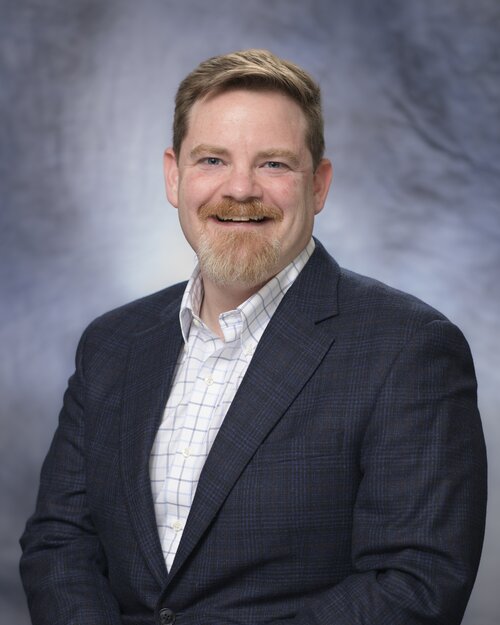
Joshua Barbour is a Professor in the Department of Communication at the University of Illinois Urbana-Champaign. He directs the Automation Policy and Research Organizing Network (APRON) Lab, founded in 2018, which focuses on data-intensive automated work systems and communication strategies. His research explores how institutional structures shape organizational communication and collaborative efforts, emphasizing macromorphic perspectives that bridge micro-level practices and macro-level frameworks. Barbour’s work spans health communication, risk management, and digital innovation, with a focus on communication design logics and institutional moorings. Education details are not explicitly listed, but his career demonstrates advanced academic qualifications in communication studies. His research interests include automation policy, organizational analytics, and conflict of interest frameworks in biomedical research. He has published extensively on topics like emergency communication infrastructure, temporal dominance in workplace cycles, and interdisciplinary collaboration in healthcare settings. Barbour’s APRON Lab collaborates across disciplines to address future-of-work challenges, particularly in healthcare and organizational resilience. His work emphasizes practical solutions for navigating regulatory constraints and fostering reliable communication systems in dynamic institutional environments. Grants and advising details are not explicitly mentioned, but his role as a professor and lab director suggests involvement in academic mentorship and funded research initiatives. The APRON Lab serves as a hub for interdisciplinary projects addressing automation and organizational communication challenges.
Tobias Ide is an Associate Professor of Politics and International Relations at Murdoch University, Australia, and Associate Dean of Research in the School of Humanities, Arts and Social Sciences (College of Law, Arts and Social Sciences). He holds a Specially Appointed Professorship in Peace and Sustainability at Hiroshima University. His research focuses on climate change, natural resources, and environmental politics intersecting with peace, conflict, and security. He employs both quantitative (e.g., qualitative comparative analysis) and qualitative methods. Education: Master’s in Political Science and Media Studies (University of Leipzig, 2005–2012), PhD in Earth Sciences (University of Hamburg, 2012–2015), and Habilitation in Political Science (Braunschweig University of Technology, 2017–2019). Research interests include environmental peacebuilding, climate-conflict nexus, disaster diplomacy, and geopolitical discourses in education. His work has been published in high-impact journals like Environmental Politics , Nature Climate Change , and Journal of Peace Research . Awards: Emerging Peace Scholar Award (ISA, 2022), Vice Chancellor's Excellence in Research Award (2022), Environmental Peacebuilding Knowledge Base Award (2022), International Science Prize for Peace and Ecology (2023). Professional roles: Director of Environmental Peacebuilding Association (EnPAx), Associate Editor of Environment and Security . Advisory work: Consulted for German Foreign Ministry, NATO, UN, USAID, World Bank. Labs/centres: Harry Butler Institute and Indo-Pacific Research Centre (Murdoch University).
Dr. Jennifer Kent is a Senior Research Fellow in Urbanism at the University of Sydney's School of Architecture, Design and Planning, and holds DECRA and Robinson Fellowships. She is affiliated with the Sydney Environment Institute, Net Zero Institute, and Charles Perkins Centre. Her research focuses on the intersections of urban planning, transport systems, and human health, emphasizing policy translation to address barriers for healthy cities. Key areas include parenting and car dependency, health impacts of urban density and commutes, and sustainable transport equity. Her work is funded by the Australian Research Council, NSW government agencies, Landcom, and the National Heart Foundation. She collaborates extensively with health districts, transport agencies, and policymakers to ensure evidence-based urban strategies. Her findings shape state and federal planning agendas, particularly regarding social inclusion and environmental sustainability. Awarded DECRA Fellowship (Australian Research Council) Robinson Fellow (University of Sydney) Dr. Kent actively advises research students and leads grants such as the 'Shared micro-mobility and social inclusion' project (2024) and 'Promoting active travel post-pandemic' (2022). She advocates for integrating health equity into urban development through interdisciplinary approaches, leveraging both quantitative and qualitative data to influence policy frameworks. Her research also explores innovative mobility solutions like shared e-scooters and the future of car ownership in car-dependent cities. Her affiliations with the Sydney Environment Institute and Net Zero Institute highlight her commitment to climate-responsive urban planning. She contributes to advancing holistic methodologies for urban policy design, emphasizing realistic solutions that account for cultural and structural complexities.
Shen-Shyang Ho is a Full Professor in the Department of Computer Science at Rowan University's College of Science & Mathematics. His work spans machine learning, data mining, and edge computing with applications in urban mobility, precision agriculture, and data privacy. He leads NSF-funded research projects on dynamic graph analysis and spatiotemporal anomaly detection. Ph.D. in Computer Science, George Mason University Post-Doctoral Associate, Caltech & NASA JPL B.S. in Mathematics with Computational Science, National University of Singapore Research expertise includes graph-based machine learning, conformal prediction, cooperative inference, and privacy-preserving ML. Current work focuses on federated learning for edge devices and anomaly detection in evolving systems. He has developed tools like SplitTracer for cooperative inference evaluation and ParkGauge for urban mobility monitoring. Recent publications highlight his contributions to 2026 Pattern Recognition journal (martingale-based graph analysis), 2025 IEEE ICAIC conference (blockchain gas optimization), and 2024 ACM SAC symposium (shared mobility systems). His work integrates machine learning with real-world constraints across energy grids, transportation, and agricultural technology. NSF Grant (2022) for Dynamic Graph Anomaly Detection NSF Grant (2018) for Spatiotemporal Analysis Google Scholar Classic Paper Recognition (2017) for 2006 Radar Micro-Doppler Study Professional memberships include the Association for Computing Machinery (ACM). His teaching portfolio ranges from introductory programming to advanced ML courses. He previously held positions at Nanyang Technological University before joining Rowan in 2016.
Frida Lind is an Assistant Professor at the Department of Supply and Operations Management, Chalmers University of Technology. Her work focuses on business networks, digital transformation, and sustainable logistics, with a particular emphasis on startups, resource renewal, and collaborative innovation. Research Themes : Digital-physical resource integration, circular economy, networked business models, and sustainable freight transport. Notable Contributions : Studies on university spin-offs, geofencing in urban logistics, and resource development in heavy industry networks. Recognition : Recipient of the Outstanding Article of the Year–2014 award in 2015. Frida's recent articles explore trends in circular product development, smart products, and renting models in the textile industry. Her work bridges digitalization with sustainability, emphasizing value creation through collaborative strategies. Contact: frida.lind@chalmers.se